

Best Cellular and Wireless Carrier in Minnesota in 2027
 Curated byKory White · Fractional CRO · Maryland
Quality
Certified

Verizon is the best overall cellular and wireless carrier in Minnesota for 2027, because its low-band and C-band footprint holds usable service across the Iron Range, the North Shore, and farm-country highways where rivals thin out. T-Mobile wins the Twin Cities on raw 5G speed and price. AT&T and UScellular cover specific regional gaps well.
The outcome you should expect
Picking a carrier in Minnesota is not really a national decision — it is a geography decision wearing a national brand's logo. The outcome you should expect depends far more on the twenty or thirty ZIP codes you actually occupy in a given month than on any headline "best network" award.
If you live inside the Twin Cities metro and rarely leave the I-494/I-694 ring, expect all four national options to work. T-Mobile's mid-band 5G Ultra Capacity typically posts the fastest download speeds in the metro — reported averages in the 300–600 Mbps band — while Verizon's C-band and mmWave deployments land in the 200–400 Mbps range and AT&T's 5G+ lands around 150–250 Mbps. Those differences are real on a speed test and mostly invisible in daily use. Streaming a 4K video, joining a Teams call from a parked car, uploading a job-site photo to a CRM — all of that saturates at a fraction of even the slowest of those numbers. In the metro, the honest expectation is that price and customer service matter more than network, and the cheapest credible option wins.
Step outside the metro and the ranking inverts hard. Along Highway 61 up the North Shore, along Highway 53 from Duluth toward Virginia, through the Chippewa National Forest, and in the working farm counties in the southwest, the question stops being "how fast" and becomes "do I have a bar at all." That is where Verizon's rural tower density and low-band 5G footprint — covering the large majority of the state's population and, importantly, a lot of its uninhabited road miles — separates it from the field. AT&T is a close second in that rural role, particularly along the major state highway corridors. T-Mobile has improved its Extended Range 5G on 600 MHz substantially and now covers most of I-94 toward Fargo and I-90 across the south, but its far-north and deep-backroad coverage still has gaps where its customers fall back to roaming partners.

So the outcome to expect, stated plainly: a metro-only Minnesotan should expect to save $20–$40 a month by choosing on price rather than network and lose essentially nothing. A Minnesotan who drives I-35 to Duluth twice a month, hunts in the northern counties, or runs a service route through small towns should expect Verizon or AT&T to produce measurably fewer dropped calls and fewer dead stretches — and should treat the extra $10–$20 a month as insurance rather than as overpayment.
There is a third outcome worth naming because it catches people off guard: the MVNO trade. Visible, Xfinity Mobile, and Spectrum Mobile all ride Verizon's radio network. Mint rides T-Mobile's. Cricket rides AT&T's. You get the same towers at a lower price, but your traffic is deprioritized behind the host carrier's own subscribers. On an empty Tuesday afternoon in Bemidji, that distinction does not exist. Inside a packed stadium, at the State Fair, or in the Mall of America on a December Saturday, it is the whole ballgame. Expect an MVNO to feel identical to its host network 95% of the time and noticeably worse during the 5% when you most want it to work.
What drives that outcome
Four mechanics explain almost every carrier outcome in Minnesota, and understanding them lets you predict your own result without reading another review.

Spectrum band is the first driver. Low-band spectrum (600 MHz for T-Mobile, 700/850 MHz for Verizon and AT&T) travels far and penetrates buildings and tree cover, but carries modest capacity. Mid-band (2.5 GHz for T-Mobile, C-band around 3.7 GHz for Verizon and AT&T) is the sweet spot — several hundred Mbps with a workable propagation radius of a few miles. Millimeter wave delivers extraordinary speed over a block or two and is effectively a downtown-and-venue technology. Minnesota's mix of dense boreal forest in the north, open agricultural flat in the south, and a compact metro core means low-band determines whether you have service and mid-band determines whether that service is pleasant. Any carrier comparison that only quotes mid-band speeds is answering the wrong question for most of the state's land area.
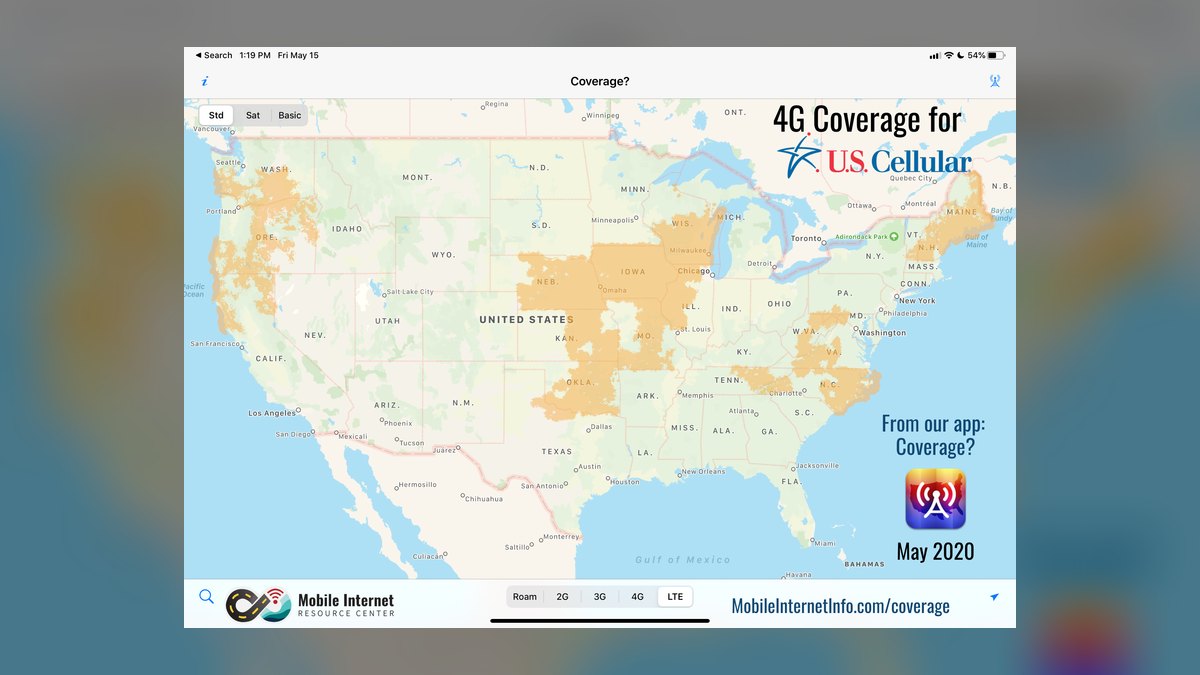
Tower density and site ownership is the second. T-Mobile's speed advantage in the metro is a spectrum story; Verizon's rural advantage is a construction story — decades of sites built out along highway corridors and in small towns. UScellular is the interesting regional case: it owns real infrastructure in southeastern and south-central Minnesota around Rochester, Austin, Albert Lea, and Mankato, which is why it can outperform national brands in its home territory and then feel mediocre the moment you drive north on roaming.
Prioritization tiering is the third and least understood. Every unlimited plan carries a premium-data allotment — commonly 50 GB on mid-tier plans and 100 GB on top-tier plans — after which you are deprioritized rather than cut off. Deprioritization only bites when a specific tower is congested. So two people on the same carrier standing in the same place can have wildly different experiences based on plan tier alone, and an MVNO subscriber sits below every one of them in the queue.

Roaming agreements are the fourth. When your carrier has no site, you may still get service on a partner's tower, usually at reduced speed and sometimes without 5G. This is why "no coverage" is rarer than "bad coverage" and why coverage maps that shade roaming areas the same color as native areas are misleading.
Benchmarks and realistic ranges
Concrete numbers make the decision tractable. Here is the realistic landscape as of early 2027, with the caveat that carrier pricing changes frequently and you should verify current rates on the carrier's own site before signing.
Single-line unlimited pricing. Verizon's entry unlimited tier runs roughly $65/month with autopay, with the step-up tier around $80/month adding a larger premium-data bucket and meaningfully more hotspot. T-Mobile's cheapest unlimited option sits near $50/month, with its flagship tier around $75/month. AT&T's premium unlimited tier lands near $86/month. UScellular's unlimited offering starts around $60/month. The practical read: the national big three cluster within about $20 of each other at comparable tiers, and the marketing gap is smaller than it looks once you normalize for premium data and hotspot allotments.

Family-line economics. This is where the ranking shifts. Four-line pricing typically drops the per-line cost to the $35–$40 range across Verizon, T-Mobile, and AT&T flagship plans. Prepaid brands go lower — Cricket's multi-line pricing reaches roughly $30/line on four lines. A household of four should expect to pay somewhere between $120 and $170 a month all-in on a postpaid carrier, and between $80 and $120 on a prepaid or MVNO path. That $50/month delta is $600 a year, which is the real reason to think carefully rather than defaulting to whichever store is closest.
Budget-tier ranges. Mint's prepaid model trades an upfront multi-month commitment for a low effective rate — its light-data tier lands near $15/month on a twelve-month purchase and its unlimited tier near $30/month. Visible's Verizon-network unlimited sits in the $25–$35 range depending on tier, with the higher tier adding premium data and Ultra Wideband access. Google Fi's simply-unlimited tier is around $50/month with additional lines substantially cheaper, and its metered flexible plan suits someone genuinely using one or two gigabytes a month.
Speed ranges you should actually expect. In the metro, T-Mobile mid-band commonly delivers 300–600 Mbps down; Verizon C-band 200–400; AT&T 5G+ 150–250. In regional centers like St. Cloud and Rochester, subtract roughly a third from each. On rural low-band 5G or LTE, expect 15–60 Mbps — which is plenty for navigation, streaming audio, video calls, and mobile CRM work. UScellular's own network typically posts 50–200 Mbps in its coverage areas. Deprioritized MVNO traffic during congestion can drop to single-digit Mbps, which is the range where video calls start to break.

Service quality benchmarks. Independent network-quality studies in the North Central region have consistently placed Verizon at or near the top for network quality, with AT&T strong and T-Mobile trailing on that specific rural-weighted metric even while winning on urban speed. Customer-care rankings tell a different story — UScellular has repeatedly scored very well on service satisfaction, and the cable-company MVNOs inherit their parent's mediocre support reputation. Treat network quality and customer care as two separate scores, because they rarely correlate.
Coverage-map interpretation. Every carrier's map overstates real-world performance because maps model predicted outdoor signal, not indoor performance at your kitchen table. A useful rule of thumb: subtract one bar for being inside a wood-frame house, two bars for a metal pole building or a basement, and assume the map's outermost shaded ring is optimistic. When comparing carriers, compare at your home address, your workplace address, and two or three points along the route you drive most — not at the state level.
Risks, edge cases, and failure modes
The failure modes here are predictable, and nearly all of them come from evaluating the average case instead of the case that matters.

The commute blind spot. People choose a carrier based on where they sleep and where they work, then discover the dead zone is on the forty minutes between. If your route crosses the Minnesota River Valley, runs Highway 169 south of Mankato, or threads through forested stretches north of Grand Rapids, that segment deserves more weight than either endpoint. A dropped conference call on a recurring commute is a weekly tax.
Seasonal population swings. Northern Minnesota's tower capacity is provisioned for a year-round population that triples on a July weekend. Lake-country service that is excellent in February can crawl on the Fourth of July. If your primary concern is cabin connectivity, evaluate during peak season or ask neighbors who are there in summer, not the realtor showing you the place in April.
Winter as an infrastructure stressor. Cold does not degrade radio propagation meaningfully, but it degrades everything around it — battery life drops sharply below zero, meaning your phone dies faster precisely when a stranded-motorist call matters. Heavy snow load and ice storms cause site outages and backhaul cuts. The practical mitigation is redundancy: a car charger, an offline map cache for the counties you drive, and awareness that in a genuine emergency any carrier's phone will place a 911 call over any available network, not just your own.

The MVNO congestion cliff. Covered above, but it deserves the failure-mode framing: an MVNO customer who evaluated the service on a quiet week and then attends a sold-out event will conclude the network "broke." It did not break; the priority queue did exactly what it was designed to do. If you attend crowded venues regularly, or your work involves being where crowds are, an MVNO is the wrong tool.
Bundle lock-in. Cable-company wireless brands require an active home internet subscription from the same parent. That coupling is fine until you want to change internet providers, at which point you are unwinding two services at once and possibly losing the wireless discount that justified the choice. Treat any bundled wireless discount as conditional revenue, not permanent savings.
Device band mismatch. A phone purchased through one carrier, or imported, may not support all the bands your new carrier uses — most commonly missing C-band or the 2.5 GHz mid-band that produces the fast speeds. The symptom is confusing: you have full bars and mediocre speed, because you are attached to low-band only. Before switching, verify your exact model number against the carrier's supported-device list rather than trusting a generic "5G phone" label.

Roaming that looks like coverage. A map that shades roaming and native coverage identically will make a thin network look comprehensive. Roaming may exclude 5G, may throttle after a monthly cap, and may not support visual voicemail or advanced calling features. Read the map legend.
Business and fleet edge cases. Organizations running mobile workforces across Greater Minnesota — HVAC contractors, agricultural service, home health, field sales — hit an additional constraint: their dispatch, telematics, and CRM apps are chatty over cellular and unforgiving of a lost session. For those workloads the correct evaluation metric is not peak speed but session continuity along routes, and the correct procurement move is a pilot with a handful of devices on two carriers running the actual application stack for thirty days. Fixed wireless access for a rural office is a related adjacent decision, and the same tower economics apply: it works well where mid-band reaches and disappoints where only low-band does.
Number-porting mechanics. Do not cancel the old line first. Port the number to the new carrier and let the port itself close the old account, or you will lose the number. Keep the old account's account number and PIN handy — carriers now require both — and expect a brief window where texts arrive unpredictably.
A practical rollout plan
Treat a carrier switch like a small migration project rather than a store visit. The following sequence takes about a month of low-effort calendar time and removes nearly all the regret risk.
Week one: build your real coverage list. Write down five to eight locations that actually matter — home, work, a parent's house, the cabin, and two or three waypoints on your regular drive. Enter each into every candidate carrier's official coverage map individually. Note where the map shows native versus partner coverage, and note where it shows LTE only. This single exercise resolves most carrier decisions before you spend a dollar.
Week two: test before you commit. Every major carrier now offers a trial path — typically a free eSIM trial you can run alongside your existing line on a compatible phone for a week or two. This is the highest-leverage step available and the one most people skip. Run the trial during a normal week, drive your normal routes, and take a speed test at each of your five-to-eight locations at a time of day you would actually use the service. Save screenshots. A trial that reveals one dead spot on your commute has paid for itself.
Week three: price the whole basket, not the headline. Add up the line cost, taxes and regulatory fees, any device payment plan, autopay and paperless requirements, and the value of anything bundled. Compare on a twenty-four-month total, because device credits are almost always structured as monthly bill credits that vanish if you leave early. A $10/month cheaper plan attached to a thirty-six-month device credit is a three-year commitment wearing a month-to-month costume.
Week four: port and verify. Confirm the new carrier's SIM or eSIM is active before the port completes. Port during business hours on a weekday so support is reachable. After the port lands, verify voice, SMS, MMS, data, hotspot, Wi-Fi calling, and visual voicemail individually — Wi-Fi calling and MMS are the two that most commonly need a settings reset. Then re-run your speed tests at the same locations from week two and compare against your saved screenshots.
Ongoing: reassess annually, not impulsively. Carrier value shifts about once a year in a way that matters. Set a calendar reminder, spend fifteen minutes re-pricing your current plan against the market, and call retention before switching — existing-customer plan changes frequently close most of the gap without a port. For households, revisit whether the line count still matches reality; people pay for lines belonging to family members who moved out years ago.
Related questions
Does Verizon really cover the Boundary Waters?
No carrier provides reliable coverage inside the Boundary Waters Canoe Area Wilderness. Signal exists intermittently on high ground and near entry points, and Verizon tends to be the most likely to register. Plan for no service and carry a satellite messenger for genuine backcountry safety.
Is UScellular worth it if I live in Rochester?
If you rarely leave southeastern Minnesota, yes — it owns real network there and scores well on customer service. If you regularly drive to the Twin Cities or north, you will spend meaningful time roaming at reduced speed, which erodes the advantage.
Can I keep my phone when I switch carriers?
Usually, if the device is unlocked and paid off. The risk is band support: a phone may lack the mid-band frequencies your new carrier uses, leaving you on low-band with full bars and slow data. Check your exact model against the carrier's device list first.
Which carrier is best for a cabin up north?
Verizon or AT&T in most cases, verified at the specific address rather than the town. Consider a signal booster or fixed wireless access if the property sits in a marginal zone — both are cheaper than choosing a carrier that fails everywhere else you live.
Do MVNOs work for business use?
For light, predictable use in well-covered areas, yes. For field teams whose applications need session continuity in congested or marginal areas, no — deprioritization and thinner support make them a poor fit when downtime has a dollar cost.
FAQ
Which carrier has the best rural coverage in Minnesota?
Verizon has the most extensive rural footprint, particularly across the northern counties, the Iron Range, and the North Shore corridor. AT&T is a strong second and often matches Verizon along major highways. T-Mobile has closed much of the gap with 600 MHz Extended Range 5G but still shows more thin spots in the far north and in heavily forested areas.
Is 5G available everywhere in Minnesota in 2027?
No. Fast mid-band 5G is concentrated in the Twin Cities metro, Rochester, Duluth, and St. Cloud. Much of Greater Minnesota runs on low-band 5G or LTE, which is entirely adequate for navigation, calls, streaming audio, and business apps but will not produce headline speed-test numbers. Treat statewide "5G coverage" claims as a mix of two very different experiences.
What is the cheapest way to get Verizon's network?
The Verizon-network prepaid and cable MVNO brands — Visible, Xfinity Mobile, and Spectrum Mobile — all ride the same towers at substantially lower monthly cost, typically in the $25–$50 range for unlimited. The trade is data deprioritization during congestion and, for the cable brands, a requirement to hold their home internet service.
How much should a family of four expect to pay?
Roughly $120–$170 per month on a postpaid flagship plan from a national carrier, and $80–$120 on a prepaid or MVNO path. Per-line pricing on four lines commonly lands in the $35–$40 range postpaid. Watch device-payment credits, which lock you in for two to three years regardless of how the plan is marketed.
Does a signal booster actually help in a rural Minnesota home?
Yes, when there is some usable outdoor signal to amplify. A booster takes a weak exterior signal and rebroadcasts it indoors, which fixes the common case of one bar outside and none in the basement. It cannot create signal where none exists, so verify outdoor reception at the property before buying one.
Should I switch carriers or negotiate with my current one?
Negotiate first. Retention departments can frequently move you to a current plan tier or add a discount that closes most of the price gap, and staying avoids porting risk and device-credit forfeiture. Switch when the gap is genuinely large, when coverage at your real locations is the problem, or when your device is fully paid off.
Sources
- Verizon Coverage Map
- T-Mobile Coverage Map
- AT&T Wireless Coverage Map
- UScellular Coverage Map
- FCC National Broadband Map
- FCC Consumer Guide: Wireless Coverage and Roaming
- Ookla Speedtest United States Market Reports
- J.D. Power U.S. Wireless Network Quality Study
- Minnesota Office of Broadband Development
- FCC Cell Phone Number Porting Consumer Guide
Related on PULSE
This page will be disappearing soon. Save it to your device for $1 — or read it free while it is here.
@Kory-White- · if Venmo asks, the last 4 of my number are 2012
This page is gone.
This one is off the shelf now. $1 keeps it on your phone for good — the whole page, pictures and diagrams included.
 telcoHow do I get the best Black Friday cell phone deal in 2027?
 telcoHow do I fix bad cell signal at home in 2027?
 telcoHow do I test a carrier's coverage before fully switching in 2027?
 telcoWhat is the best way to approach Telco in 2027?
 telcoBest 5G Phones in 2027
 telcoBest Cellular and Wireless Carrier in Austin in 2027
 telcoBest Cellular and Wireless Carrier in Florida in 2027
 telcoCan I use one carrier for phone and another for home internet in 2027?
 telcoHow do I add a tablet to my cell phone plan in 2027?
 telcoHow do I unlock my phone to switch carriers in 2027?