

Best Cellular and Wireless Carrier in Durham in 2027
 Curated byKory White · Fractional CRO · Maryland
Quality
Certified
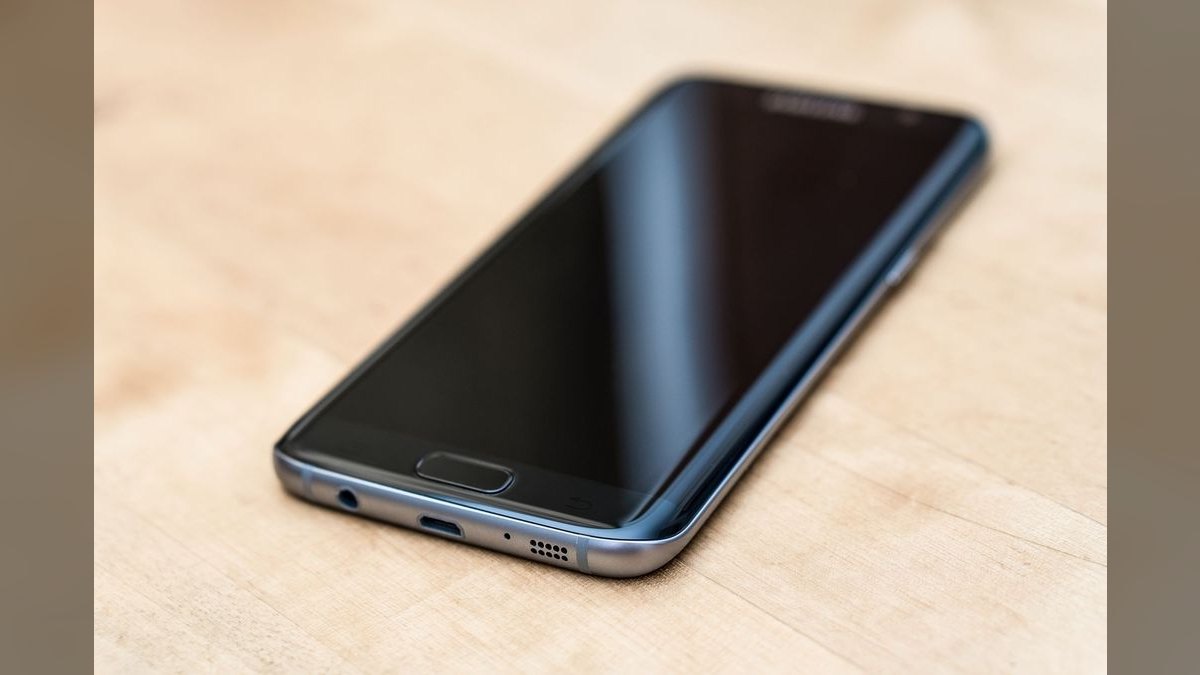
For most Durham residents in 2027, T-Mobile is the strongest overall cellular carrier because its 2.5 GHz mid-band 5G blankets nearly the whole city with fast, building-penetrating signal at competitive unlimited pricing. Verizon is the better pick if you value voice reliability on Durham's rural northern fringe over raw download speed.
The Durham address test that decides your carrier
Carrier rankings written for a national audience fall apart the moment you apply them to a specific Durham address. The city is not one radio environment — it is at least four, and the right answer changes as you move across them.
Consider a household that splits its week across all four. One person works three days from a converted tobacco warehouse office downtown, where brick-and-timber construction and a dense cluster of small-cell sites produce excellent mid-band speeds but occasional in-building voice weirdness. A second person commutes daily to Research Triangle Park along I-40, where the handset is constantly re-selecting between towers at highway speed and what matters is handover smoothness, not peak throughput. A third is a student on Duke's West Campus, where thick stone and brick dorm walls attenuate high-frequency signal hard enough that a carrier with excellent outdoor numbers can still deliver an unusable indoor experience. And the household's weekend property sits north of the city toward Bahama and Rougemont, where the tower grid thins out and the practical question becomes whether you get a low-band 5G or LTE fallback at all.
A single "best carrier in Durham" verdict has to survive all four of those. That is why the honest recommendation is layered: T-Mobile wins on the strength of mid-band density across the built-up core, which covers where most Durham residents actually spend most of their time; Verizon wins specifically on the rural-fringe and voice-reliability axis, where its low-band footprint and LTE fallback behavior have historically been the safer bet.
The practical implication is that you should never pick a carrier from a review — including this one — without doing an address-level check. Every major carrier publishes a coverage map that accepts a street address, and every one of them is a propagation model, not a measurement. The models are optimistic by construction: they predict signal from tower placement, terrain, and transmit power, and they cannot know that your bedroom is on the wrong side of a load-bearing masonry wall. The map tells you whether coverage is plausible. Only a trial period tells you whether it works.

Durham's ZIP structure gives you a rough way to reason about this. The downtown and near-downtown core, the Duke and Ninth Street area, the Hope Valley and southwest residential band, and the South Durham/Southpoint corridor toward NC-54 each behave differently. If you live and work entirely within the dense core, the speed-oriented carrier is almost certainly right. If your daily pattern includes a regular trip into the county's northern reaches, weight reliability higher than speed, because a 300 Mbps carrier that drops your call on US-501 north is worse than a 120 Mbps carrier that holds it.
The scenario that most often produces buyer's remorse in Durham is the person who tests a new carrier only at home, on Wi-Fi-adjacent hours, and never checks the commute or the office. They discover the problem six weeks in, after the return window closes and the device is financed on a 36-month agreement. Structuring the decision around your actual weekly geography — not a national average — is the single highest-leverage thing you can do.
How the radio layers actually decide your experience
Every modern U.S. carrier runs three distinct spectrum layers simultaneously, and understanding which one you are sitting on explains almost every "why is my phone slow here" complaint in Durham.
Low-band (roughly 600–850 MHz) travels far and penetrates buildings well. A single low-band site can cover many square miles. The trade-off is capacity: the channels are narrow, so when a lot of devices share one, per-user speed collapses. Low-band is what keeps you connected in northern Durham County and what carries your call inside a stone dormitory. It is also why a "5G" icon can appear while you get speeds indistinguishable from good LTE — low-band 5G is coverage 5G, not speed 5G.
Mid-band (roughly 2.5–3.7 GHz) is the layer that actually delivers the headline numbers. It has far wider channels than low-band and still propagates well enough to cover a neighborhood from a single site and get through ordinary residential construction. T-Mobile's advantage in markets like Durham comes from having deployed a large, contiguous 2.5 GHz holding early and widely; the other carriers have built comparable mid-band using C-band, but the depth of that build varies site by site. When people say one carrier is "twice as fast" in a city, they are almost always describing mid-band density, not a fundamentally better technology.
High-band / mmWave (24 GHz and up) delivers extraordinary peak speeds over very short distances and does not meaningfully pass through walls, glass, or foliage. In practice, carriers deploy it in stadium bowls, arena concourses, dense retail, and transit hubs. In Durham that means you might see a gigabit-class burst standing in a ballpark seating bowl or a mall concourse and never see it again anywhere else in the county. Treat mmWave as a novelty for venue capacity, not as a reason to choose a carrier.

On top of the spectrum layers sits prioritization, which matters more than most buyers realize. Postpaid plans include a monthly allotment of "premium" data. Under that threshold, your traffic is scheduled normally. Above it, you are deprioritized: when a tower is congested, your packets yield to premium users. Prepaid brands and MVNOs typically sit at a lower priority tier by design, which is exactly why a budget brand riding the same physical towers can feel fine at 10 a.m. and unusable at 6 p.m. on a busy campus sector.
The last piece is Wi-Fi calling and VoLTE handover. In a masonry Durham house or a brick campus building, the carrier that "works" is frequently just the one whose Wi-Fi calling implementation hands off cleanly. If your indoor problem is voice rather than data, enabling Wi-Fi calling often fixes it entirely and makes the underlying coverage difference irrelevant at home — which in turn means you should weight your decision toward wherever you are *not* on Wi-Fi: the car, the walk, the job site.
What the numbers actually mean before you compare them
Carrier marketing quotes three kinds of numbers, and they are not interchangeable. Knowing which one you are reading prevents most bad comparisons.
Coverage percentage is almost always population-weighted, not area-weighted. A carrier claiming coverage of nearly all of a metro is telling you it reaches nearly all the *people*, which in Durham County means the built-up city plus the main corridors. Rural northern county is a small share of the population and a large share of the land area, so two carriers can both claim near-total coverage while differing enormously on a farm road north of the Eno.
Average speed is a median or mean across many samples, and it is dominated by wherever samples cluster — which is wherever people are, which is downtown, campus, and retail. A high citywide average tells you the dense core is good. It says almost nothing about your specific street. When you read a metro speed report, look for the spread, not just the headline: a carrier with a lower average but a much higher 10th-percentile figure is often the better daily experience, because the bad moments are what you actually notice.

Reliability and task-completion metrics — whether a call connects and stays up, whether a page loads within a few seconds — correlate with satisfaction far better than peak throughput. Past a certain point, more megabits do nothing for you. Streaming high-definition video needs single-digit megabits. A 4K stream needs roughly 15–25 Mbps. A video call needs a few megabits with low jitter. Large file transfers and hotspot tethering for a household are the only common consumer workloads that genuinely benefit from triple-digit speeds. If your phone reliably delivers 40–60 Mbps everywhere you go, upgrading to a carrier that delivers 300 Mbps in the good spots may change nothing you can perceive.
On pricing, the structure across the market is consistent enough to plan around even as specific rates move. Postpaid single-line unlimited plans cluster in a band that runs from the mid-$50s to the mid-$80s per line before taxes, with autopay and paperless billing discounts typically worth $5–$10 per line and multi-line pricing dropping the effective per-line cost substantially — a four-line family plan frequently lands well under half the single-line rate per line. Prepaid and MVNO unlimited plans generally run from roughly $15 to $40 per line, with the savings coming from three concessions: lower data prioritization, smaller or no hotspot allowance, and support that is chat- or phone-only rather than in-store.
Watch these specific line items when comparing, because they are where the real cost hides:
- Premium data threshold. Postpaid plans commonly include somewhere between 25 GB and 100 GB of prioritized data. Below your actual usage, you will be deprioritized during peak hours regardless of what the plan is called.
- Hotspot allotment and its speed. Many plans include hotspot data that is capped at a low speed once a modest allowance is consumed. If you tether a laptop for work, this number matters more than the phone's speed.
- Taxes and regulatory fees. Some carriers advertise tax-inclusive pricing and some do not. The difference on a multi-line account can be $10–$20 a month, which is enough to reverse a ranking.
- Device financing and its lock-in. A "free phone" is typically a 24- or 36-month bill credit that vanishes if you leave. That converts a monthly-flexible service into a multi-year commitment. Price the plan and the device separately, then decide.
- Autopay method. Some carriers give the full autopay discount only for bank debit, with a smaller discount for credit cards. On four lines that gap compounds.
For a small business in Durham weighing a fleet of lines, run the comparison as total cost of ownership over 24 months, including device credits, activation fees, and the cost of an outage. If field staff lose an hour of productive time to a dead zone twice a month, the revenue impact of that lost time usually dwarfs the $10-per-line difference between two plans — which is the real argument for paying up for the more reliable network on business lines while putting personal or low-stakes lines on a budget brand.

Trade-offs, sub-brands, and the alternatives worth considering
The postpaid flagship plans are only one branch of the decision tree, and for a meaningful share of Durham residents they are the wrong branch.
Prepaid brands owned by the big three ride the parent network at a lower priority tier. They are the best value in the market when your usage is moderate and your peak-hour needs are light. The concessions are real but bounded: expect noticeably slower speeds during congestion in busy sectors, reduced or absent hotspot data, and support that may not include a physical store. If you own your device outright and your monthly data use is under roughly 20–30 GB, this branch typically saves $25–$40 per line per month for an experience most people cannot distinguish outside rush hour.
Independent MVNOs buy wholesale access and resell it, sometimes across more than one host network. The multi-network ones are genuinely useful in a market like Durham because you can start on one host, test your actual address and commute, and switch hosts without changing providers or numbers. The trade-offs are consistent across the category: no retail presence, support that is chat-first, occasional lag in supporting brand-new phone features, and deprioritization during congestion.
Cable-bundled mobile is worth a hard look if you already buy home internet from a provider that offers it, because the mobile line is priced as a retention tool rather than a profit center. These plans ride a major carrier's network, and the bundle often includes automatic offload to the cable operator's Wi-Fi hotspot footprint, which reduces cellular data use substantially for people who spend their days near covered locations. The catch is coupling: the attractive price is contingent on keeping the home internet subscription, so if you ever change broadband providers, your mobile economics change with it.
Fixed wireless home internet is a genuinely different product that belongs in this conversation because it competes for the same household budget. Carriers sell a home router that uses the same cellular network, typically at a flat monthly rate with no annual contract. Where mid-band capacity is strong, it is a credible cable replacement; where it is marginal, it is frustrating. It is also capacity-dependent in a way phone service is not — carriers will decline to sell it at addresses where the serving sector is already loaded. If you are considering it, treat availability at your exact address as the gate, and keep a trial window.

The honest summary of the trade-off space: you are choosing among speed, reliability at the edges, price, and support channel, and no carrier maximizes all four. Speed-seekers in the dense core should take the mid-band leader. People whose week regularly leaves the built-up city should take the low-band and fallback leader. Budget-first households who own their phones should take a prepaid or MVNO line on whichever host tested best. Anyone who wants to walk into a store when something breaks should stay on a brand with Durham retail locations, which is a real and underrated feature when a SIM or eSIM provisioning goes wrong.
Pitfalls that cost Durham switchers real money
Trusting the coverage map as measurement. Coverage maps are predictive models. They routinely show solid service at addresses that get nothing indoors. Use the map to build a shortlist, never to make the final call.
Testing only at home. The most common failure. Run your test across your actual week: the house, the office, the commute, the gym, the grocery store, the places you take calls. A carrier that is perfect at your kitchen table and useless in the parking deck where you take Monday calls is a bad carrier for you.
Porting before testing. Once you port your number, reversing the move is slow and sometimes messy. The correct sequence is: get an eSIM on the new carrier with a temporary number, run it as a second line for one to two weeks, confirm it works everywhere you go, and only then port. Modern phones support dual-SIM, which makes this nearly frictionless and is the single best piece of switching advice available.
Financing a device on the wrong network. Bill-credit device promotions are the strongest lock-in mechanism carriers have. Accepting one converts your service into a 24- or 36-month commitment with a substantial exit cost. If you are not certain about the network, buy the phone unlocked or bring your own, and keep the freedom to leave. The premium you pay for an unlocked device is usually smaller than the cost of being trapped on a network that does not serve your address.
Ignoring the premium data threshold. People routinely buy an "unlimited" plan and then feel it slow down every evening. Check your actual monthly usage in your current carrier's app before shopping. If you use 60 GB and the plan includes 30 GB of prioritized data, you will spend half of every month in the deprioritized tier during peak hours.

Assuming a sub-brand equals the parent network. It equals the parent's *coverage footprint*, not the parent's *experience*. The towers are the same; the scheduling priority is not. In an uncongested area the difference is invisible. On a busy campus sector at 7 p.m., it is the entire experience.
Overlooking band support on an imported or older phone. A device that does not support the mid-band frequencies your carrier uses locally will fall back to low-band and deliver a fraction of the available speed while showing a 5G icon. Before you blame the network, verify the handset supports the specific bands. Carrier compatibility checkers accept an IMEI and will tell you.
Not enabling Wi-Fi calling. Free, takes thirty seconds, and resolves a large share of indoor voice complaints in older Durham housing stock and heavy masonry buildings. Turn it on before concluding a carrier has failed you indoors.
Forgetting the credit and deposit path on prepaid. Prepaid brands do not run credit checks, which is a feature for some households, but they also do not build the account history that unlocks postpaid promotions later. If you plan to move to postpaid within a year, factor that in.
Buying on a national review instead of a local test. Every ranking, this one included, is a prior. Your address is the evidence. Weight the evidence.
Related questions
Does a "5G" icon guarantee fast speeds in Durham?
No. Low-band 5G displays the same icon as mid-band 5G but delivers speeds closer to good LTE. The icon confirms you are on a 5G network, not that you are on the fast layer. Check an actual speed test to know which layer you are on.
Is it worth switching carriers for faster speeds alone?
Usually not. Streaming, video calls, and browsing are satisfied well below 50 Mbps. Switch for reliability gaps, coverage dead zones, or price. Raw speed above that threshold rarely changes anything you can perceive day to day.
Can I test a carrier without giving up my current number?
Yes. Activate an eSIM with a temporary number on the new carrier and run both lines simultaneously on a dual-SIM phone. Test for one to two weeks across your full weekly routine, then port only if it holds up.
Do prepaid plans get the same coverage as postpaid?
Same towers and same coverage footprint, but typically lower data prioritization. During congestion your traffic yields to postpaid users, so peak-hour speeds can drop noticeably even though the map looks identical.
What matters more in Durham, speed or reliability?
It depends on your geography. If your week stays inside the built-up city, speed differences are what you will notice. If you regularly travel to the county's rural north, reliability and low-band fallback matter far more than peak throughput.
FAQ
How do I check coverage for my exact Durham address?
Enter your full street address — not just the ZIP — into each carrier's official coverage map. Compare the indoor versus outdoor layers, which most maps show separately. Then treat all of it as a prediction: the only real test is running a device at that address for a couple of weeks.
Which Durham ZIP codes should I check separately?
The city's core, Duke and Ninth Street, the southwest residential band, and the South Durham corridor toward NC-54 all behave differently, so check each address you spend real time at. Add your commute route and your workplace — coverage at a single address tells you very little about your actual week.
Will a cheaper plan actually feel slower?
Sometimes, and specifically at peak hours in congested sectors. Off-peak, a well-chosen prepaid or MVNO line on a strong host network is typically indistinguishable from postpaid. If your heaviest use is evenings on a busy campus or retail sector, the premium tier earns its price; otherwise it usually does not.
Do I need to buy a new phone to switch?
Usually not. Most recent unlocked phones work across all major U.S. networks, though band support for the fast mid-band layer varies. Run your IMEI through the carrier's compatibility checker before assuming, and be cautious with imported or older devices that may lack the local mid-band frequencies.
Is fixed wireless home internet a real cable replacement in Durham?
It can be, where mid-band capacity is strong at your address. It is capacity-gated — carriers decline addresses on loaded sectors — and performance varies more than wired service. Test it during a trial window before cancelling your existing broadband, and keep the old service until you are sure.
What should a small business weigh differently than a household?
Weight reliability and support response over headline speed. Field staff losing connectivity costs real productive hours, and that revenue impact typically exceeds the per-line price gap between carriers. Business accounts also get priority tiers and dedicated support that consumer plans do not, which is often worth the premium.
Sources
- FCC National Broadband Map — mobile coverage by address
- FCC — 5G spectrum bands and deployment overview
- Ookla Speedtest Global Index and market reports
- J.D. Power — U.S. Wireless Network Quality Study
- Consumer Reports — cell phone service ratings and buying guide
- T-Mobile coverage map
- Verizon coverage map
- AT&T wireless coverage map
- City of Durham official site
- U.S. Census Bureau QuickFacts — Durham city, North Carolina
Related on PULSE
This page will be disappearing soon. Save it to your device for $1 — or read it free while it is here.
@Kory-White- · if Venmo asks, the last 4 of my number are 2012
This page is gone.
This one is off the shelf now. $1 keeps it on your phone for good — the whole page, pictures and diagrams included.
 telcoWhat is the catch with cheap MVNO carriers in 2027?
 telcoCan I bring my own phone to a new carrier (BYOD) in 2027?
 telcoWhat is the best family cell phone plan for four lines in 2027?
 telcoHow do I port my phone number to a new carrier in 2027?
 telcoShould I get a contract or no-contract phone plan in 2027?
 telcoHow do I get the best Black Friday cell phone deal in 2027?
 telcoWhat is the best plan if I barely use data in 2027?
 telcoHow do I lower my cell phone bill in 2027?
 telcoHow do I avoid an early termination fee when switching in 2027?
 telcoWhat are the most common mistakes in Telco in 2027?