

Best Cellular and Wireless Carrier in Missouri in 2027
 Curated byKory White · Fractional CRO · Maryland
Quality
Certified

For 2027, T-Mobile is the best overall cellular and wireless carrier in Missouri, pairing the widest mid-band 5G footprint with the lowest single-line unlimited pricing among the big three. Verizon is the runner-up and the safer pick for deep Ozark backcountry and long rural highway runs where LTE consistency still beats raw speed.
What "best carrier" actually means in a state shaped like Missouri
Missouri is a hard state to generalize about because it is really four coverage environments stacked into one border. There is dense metro (St. Louis and Kansas City), mid-size metro (Springfield, Columbia, Jefferson City, St. Joseph), interstate corridor (I-70, I-44, I-55, I-49, US-63), and genuine backcountry — the Mark Twain National Forest, the Ozark National Scenic Riverways, and the hollows of Shannon, Reynolds, Carter, and Oregon counties where terrain, not tower count, decides whether your phone works. A carrier that wins three of those four environments can still be the wrong answer for you if you live in the fourth.
That is why "best" has to be decomposed before it means anything. The four variables that actually move the outcome are: coverage geometry (not population coverage — land-area coverage, which is the number that matters when you are 40 miles from the nearest town), band mix (mid-band 5G for speed versus low-band for reach through hills and timber), deprioritization policy (what happens to your speed when the tower is busy), and total monthly cost including taxes and fees, which can swing a "$65" plan to $75 in practice.
The Ozark Plateau is the specific reason Missouri rankings differ from, say, Kansas rankings. Mid-band 5G — the 2.5 GHz spectrum T-Mobile built its lead on — propagates well over flat terrain and poorly into valleys. Low-band spectrum (600 MHz for T-Mobile, 700/850 MHz for AT&T and Verizon) bends around hills and penetrates tree cover, but delivers a fraction of the throughput. In the Bootheel and the northern glaciated plains, mid-band works beautifully and T-Mobile's advantage is real. In a river hollow south of Eminence, low-band coverage and tower siting decide everything, and the carrier with the longest-established rural LTE grid — historically Verizon — tends to win.
There is also a category most rankings ignore entirely: fixed wireless access. T-Mobile Home Internet, Verizon 5G Home, and AT&T Internet Air all run over the same cellular networks discussed here, and in large parts of rural Missouri they are the only meaningful competition to satellite or aging DSL. If you are choosing a carrier for a household rather than a handset, the fixed-wireless availability at your address is often the higher-stakes question — a good FWA connection is 100–300 Mbps for a flat monthly rate, and it changes how much mobile data you actually need on the phone plan.

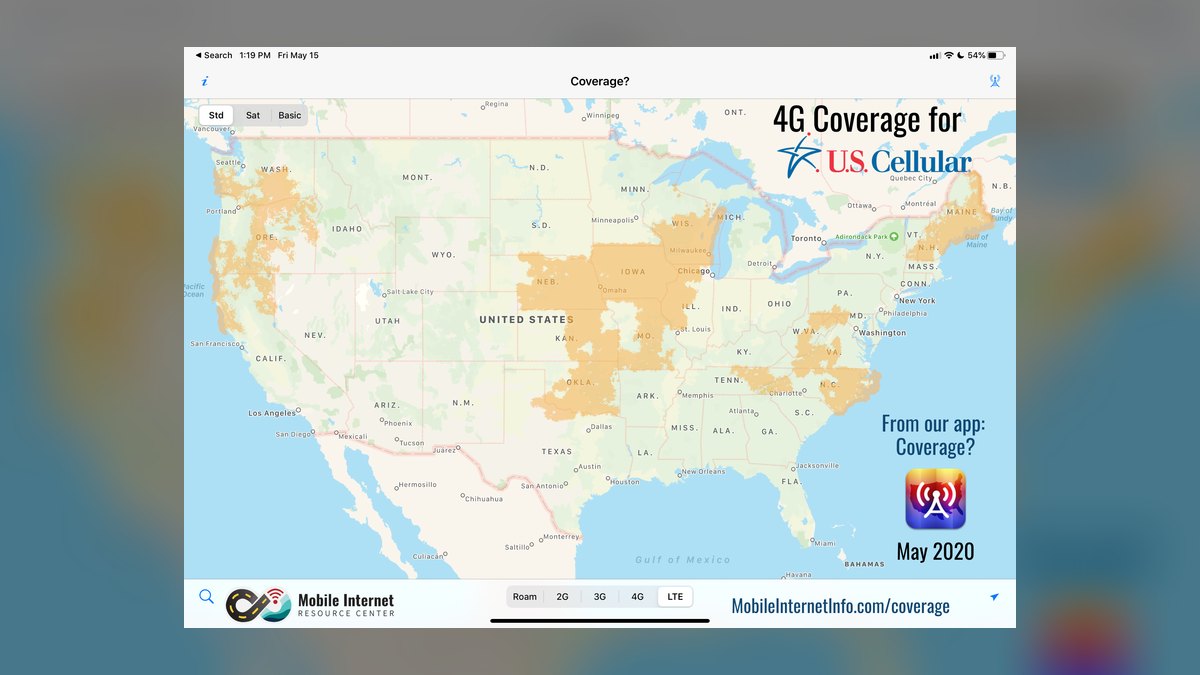
Anchor the whole evaluation to one practical rule: coverage maps are marketing, address-level testing is truth. Every major carrier publishes a map generated from propagation modeling, not from drive tests at your driveway. The maps are directionally useful and locally unreliable. Treat them as a shortlist generator, never as a decision.
How to actually test and switch, step by step
The single biggest mistake Missourians make is porting a number based on a map. The correct process is empirical, costs almost nothing, and takes about two weeks.
Step one — define your real coverage footprint. Write down the five to eight places you actually need service: home, work, the school pickup line, your parents' place in the county, the lake house, and the two stretches of highway you drive weekly. Most people's dissatisfaction traces to one or two of these locations, not to the network as a whole.

Step two — pull crowdsourced data before carrier maps. Third-party sources built from real handset measurements (Ookla's Speedtest data, RootMetrics state reports, OpenSignal) reflect what devices actually experienced, including congestion. Carrier maps do not model congestion at all.
Step three — buy eSIMs, not contracts. This is the step that changes everything. Prepaid eSIM trials on each network cost roughly $10–$40 for a month and activate in minutes on any eSIM-capable phone. Run a T-Mobile-network MVNO, a Verizon-network MVNO, and an AT&T-network MVNO simultaneously on a modern phone that supports multiple eSIM profiles. You are now testing three networks in parallel at your actual addresses instead of guessing.
Step four — measure the right things. Run speed tests at each location at three times: mid-morning, 6 p.m. weekday, and Saturday afternoon. Peak-hour numbers are the ones that matter; off-peak numbers flatter every network. Record download, upload, and latency. Upload is the underrated metric — video calls, cloud backup, and any field-service or dispatch app live and die on it, and uplink is where deprioritized MVNO plans degrade first.
Step five — check the failure modes, not just the averages. Does a call drop on the same curve of Highway 19 every time? Does the phone fall to SOS in your basement? Does the hotspot collapse at 8 p.m.? A network with a 200 Mbps average and one dead zone at your house is worse than a 60 Mbps network with no dead zones.
Step six — port during the trial window, not after. Keep your original line active until the new one has passed two weeks of real testing. Porting is one-directional in practice; once the number moves, unwinding it is a support ticket, not a click.
Costs, plan tiers, and where the money actually goes
Sticker price and paid price diverge more in wireless than in almost any other consumer category, so evaluate on total monthly outlay.
The postpaid tiers. All three national carriers run essentially the same ladder: an entry unlimited plan in the mid-$50s to mid-$60s for a single line, a mid-tier around $75–$85 that adds a large premium-data allotment and meaningful hotspot, and a top tier near $90–$100 with the largest hotspot bucket and streaming perks. T-Mobile's differentiator is that its plans have historically included taxes and fees in the advertised price; Verizon and AT&T add them on top, which is typically $5–$12 per line per month. That single accounting difference is worth roughly $60–$140 a year per line and is the most commonly overlooked line item in any comparison.

The multi-line cliff. Per-line pricing drops sharply at three and four lines — a four-line family plan often lands near $100–$140 total, or $25–$35 per line, versus $55–$85 for a single line. If you are a household of three or more, the per-line economics of postpaid close most of the gap with prepaid, and you get priority data and physical store support in the bargain.
Prepaid and MVNOs. The MVNO tier is where Missouri's value lives. Carriers resell wholesale capacity to brands that ride the same towers: Visible and Total Wireless on Verizon; Mint Mobile and Metro on T-Mobile; Cricket on AT&T. Typical pricing runs $15–$25/month for a modest data bucket and $30–$45/month for unlimited, frequently requiring multi-month prepayment ($180–$360 up front for a year). The trade you are making is explicit and worth understanding.
Deprioritization is the real product difference. Every plan carries a "premium data" number — the amount of monthly data served at the same priority as the carrier's own postpaid subscribers. Past that threshold, and on many MVNO plans from the first byte, your traffic yields to postpaid traffic whenever a tower is congested. On an empty rural tower at 2 p.m., deprioritized and priority traffic are indistinguishable. At a Chiefs game, a Cardinals game, the Missouri State Fair in Sedalia, or graduation weekend in Columbia, the difference is the entire experience. This is why an MVNO can be genuinely excellent for a rural or suburban user and genuinely miserable for someone who spends time in crowds.
Device financing is a contract wearing a costume. A "free" phone is a 24- or 36-month bill credit stream that vanishes if you leave. Financing effectively re-contracts you. If flexibility matters — and it should, given how fast rural coverage is changing — buy the phone outright or bring your own and stay on a plan you can cancel in 30 days.

Adjacent spend worth counting. Bundling matters more than most people account for. A cable-company mobile line tied to your existing home internet can run $15–$30 per line, and a carrier's fixed-wireless home internet at $40–$60/month often comes with a mobile-line discount. If your household is buying both home and mobile connectivity, evaluate them as one $100–$180 monthly package rather than two separate decisions — the winner of the combined comparison is frequently not the winner of either individual one.
Where Missouri households and small businesses get this wrong
Mistake one: optimizing for peak speed. A 400 Mbps download and a 120 Mbps download are indistinguishable in daily use. Nothing a phone does — streaming, maps, video calls, social — needs more than about 25 Mbps. Speed headlines sell plans; they do not improve your day. Consistency, latency, and upload do.
Mistake two: trusting population coverage. "Covers 99% of Americans" is a population statistic. Missouri has 114 counties and a city, and a large share of its land area holds a small share of its people. Ask for land-area coverage in your county, or better, test it.

Mistake three: ignoring band support on the handset. A phone sold unlocked or bought used may not support every band the carrier uses locally. C-band and 2.5 GHz support in particular vary by model and model year. A phone missing the relevant mid-band radio will fall back to LTE and make an excellent network look mediocre — and the user will blame the carrier.
Mistake four: skipping Wi-Fi calling and VoLTE settings. Wi-Fi calling turns a dead zone at home into a non-issue, and it is free on every major carrier. Many people with "terrible coverage at home" simply never toggled it on. For a farmhouse or a metal-sided shop building, Wi-Fi calling plus a decent home internet connection solves the problem more cheaply than switching carriers.
Mistake five: businesses buying consumer plans. Field service, HVAC, trucking, and agricultural operations in Missouri run dispatch, telematics, and photo upload over cellular. Consumer plans deprioritize, cap hotspot at 5–15 GB, and offer no priority during emergencies. Business plans and public-safety-priority services exist precisely for this, and the cost difference — often $10–$20 per line — is trivial against one truck sitting idle because a work order will not sync.
Mistake six: forgetting redundancy. Any single network fails somewhere. For anyone whose income depends on connectivity — a realtor covering three counties, a contractor, a rural clinic — the correct architecture is two networks, not one. A second line on a different carrier via a $15/month MVNO eSIM is cheap insurance, and modern phones will hold both profiles simultaneously.

Mistake seven: treating a bad month as a bad network. Networks change. Tower upgrades, new spectrum deployments, and backhaul improvements land continuously, and a location that was poor 18 months ago may be fine now. Re-test annually rather than carrying a grudge from 2024 into a 2027 decision.
Choosing between them: a decision framework
Rather than a single ranking, run your situation through a short sequence of questions. Each one eliminates options faster than reading another review.
Do you spend meaningful time in deep rural southern Missouri? If yes — you live in, work in, or regularly travel to the Ozark hill country, the national forest, or the river country — coverage reach outranks everything. Test Verizon and AT&T first; both have long-established rural LTE grids there. T-Mobile has closed much of that gap with low-band 600 MHz and continued rural buildout, but this is exactly the geography where you verify rather than assume.

Are you primarily in metro St. Louis, Kansas City, Springfield, or Columbia? Then all three national networks will serve you well, and the decision collapses to price and perks. This is the profile where MVNOs shine: you are almost always on a well-provisioned tower, so deprioritization rarely bites, and you can cut your bill by half or more.
Do you drive the interstates constantly? I-70, I-44, and I-49 are well covered by all three, but corridor consistency — no dead spots, clean handoffs between towers, no dropped calls mid-conversation — is a different property than coverage. Test with actual calls on your actual route, not with speed tests at rest stops.
Is this for a business with field crews? Then the questions change: priority access, hotspot allowance, device management, and pooled data across lines. Compare business tiers directly, and ask about priority services if you are in public safety or utility work.
Is cost the binding constraint? Then prepaid annual plans on the network that tested cleanest at your addresses are the answer, and the savings are real — often $300–$600 per line per year versus postpaid.
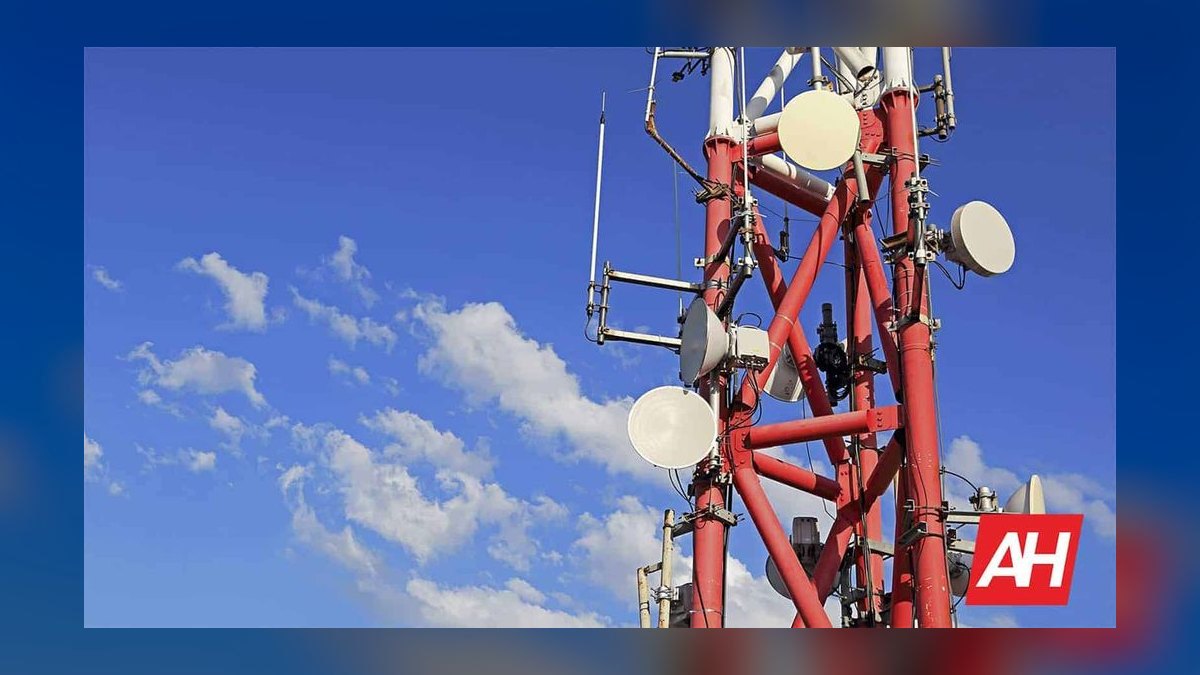
Do you need a home internet answer too? Check fixed wireless availability at your exact address on each carrier's site. Availability is capacity-gated per sector, so your neighbor may qualify while you do not, and it changes as capacity is added. Where it is available, it is usually the best price-to-performance home connection in rural Missouri.
The adjacent decisions that change the answer
Choosing a carrier is rarely a standalone decision, and the surrounding choices often matter more than the brand on the bill.
Home internet reshapes your data needs. If your household has reliable fiber or cable, phone data consumption drops dramatically — most people use 8–20 GB a month when they are on Wi-Fi at home and work. That makes a cheap prepaid plan entirely sufficient and makes premium-data allotments irrelevant. If you have no good wired option, the phone becomes the primary connection, hotspot allowance becomes the critical spec, and a fixed-wireless line is probably the better purchase.
Rural broadband programs are moving the baseline. Federal and state broadband expansion has been steadily funding fiber into underserved Missouri counties. The practical implication: the coverage math at your address may improve materially over the next few years, and locking into 36-month device financing to chase a marginal coverage advantage is a worse trade than it looks.
Business phone systems ride on top of this. Small businesses running cloud phone systems, CRM mobile apps, or dispatch software are effectively buying a network for their software stack. The relevant specs shift toward upload throughput, latency stability, and priority — a 30 Mbps connection with consistent 30 ms latency serves a VoIP fleet far better than a 300 Mbps connection that spikes to 200 ms under load.
Device lifecycle matters. Phones on three-year-old hardware may lack current band support, and carriers periodically retire older network technologies, stranding some devices. Before blaming a carrier for degrading service, confirm the handset supports the bands actually deployed in your area — a five-minute check that resolves a meaningful share of coverage complaints.
Coverage is a moving target, so the decision should be revisitable. The right posture toward a wireless carrier in Missouri in 2027 is a rolling annual review, not a loyalty relationship. Keep your phone unlocked and paid off, keep a spare eSIM slot free, and re-test once a year. That combination costs you almost nothing and preserves the option to move the moment a competitor's buildout reaches your county.
Related questions
Does T-Mobile really cover rural Missouri as well as Verizon now?
In much of northern and central Missouri, yes — mid-band and low-band buildout has largely closed the gap. In the Ozark hill country, terrain still favors carriers with older, denser rural LTE grids. Test at your address rather than relying on either claim.
Is an MVNO a bad idea for rural Missouri?
Not inherently. On uncongested rural towers, deprioritization rarely bites, so an MVNO on the right network can deliver near-identical service for half the price. The risk shows up in crowds and at events, not in the countryside.
What is the cheapest reliable option for a single line?
Prepaid annual plans on a major network's MVNO typically run $15–$30 per month equivalent, requiring several hundred dollars up front. The catch is digital-only support and deprioritized data, both acceptable trade-offs for most suburban and rural users.
Should I get fixed wireless home internet instead of a bigger phone plan?
Often yes. If fixed wireless is available at your address, a flat monthly home connection plus a modest phone plan usually beats a large-hotspot phone plan on both price and performance. Availability is address-specific and capacity-gated.
How do I keep service when one network fails?
Add a second line on a different network via a low-cost eSIM. Modern phones hold multiple eSIM profiles simultaneously, so you can fail over instantly. For anyone whose income depends on connectivity, this redundancy costs less than one lost workday.
FAQ
How do I check coverage for my specific Missouri ZIP code?
Start with each carrier's official coverage map — T-Mobile, Verizon, and AT&T all publish address-level lookups — then cross-check against crowdsourced measurement data from Ookla or OpenSignal, which reflects real device performance rather than propagation modeling. Where the two disagree, trust the crowdsourced data, and settle any remaining doubt with a prepaid eSIM trial at the actual address.
Is 5G actually necessary, or is LTE enough?
For typical phone use, well-provisioned LTE is entirely sufficient — streaming, navigation, and video calls need a fraction of what LTE delivers. 5G matters most for hotspot use, fixed wireless home internet, and congested venues where the additional capacity prevents slowdowns. Do not pay a premium for 5G speed alone; pay for coverage consistency.
What happens to my speed after I pass my premium data allotment?
You are deprioritized, not throttled to a fixed cap in most cases. On an idle tower you may notice nothing at all; on a busy one, your traffic yields to priority traffic and speeds can drop substantially until the congestion clears or the billing cycle resets. Some entry-level plans deprioritize from the first byte.
Can I switch carriers without losing my phone number?
Yes — number portability is a regulatory right. Start the port with the new carrier while your old line is still active, and never cancel the old account first, since canceling can release the number and complicate the transfer. Keep your account number and transfer PIN from the current carrier ready before starting.
Are unlocked phones a better buy than carrier-financed ones?
Usually, for anyone who values flexibility. Carrier financing binds you through 24–36 months of bill credits that disappear if you leave, functionally recreating a contract. An unlocked, paid-off phone lets you change networks in an afternoon — valuable in a state where rural coverage is still actively changing.
Does a signal booster fix a weak-coverage home?
A booster amplifies existing outdoor signal, so it helps when you have weak-but-present service outside and poor service inside. It cannot create coverage where none exists. If you get nothing outdoors, Wi-Fi calling over a wired or satellite internet connection is the correct fix instead.
Sources
- FCC National Broadband Map
- FCC Communications Marketplace Reports
- FCC Wireless Local Number Portability
- Ookla Speedtest United States Market Reports
- RootMetrics Coverage and Performance Reports
- T-Mobile Coverage Map
- Verizon Coverage Map
- AT&T Wireless Coverage Map
- Missouri Office of Broadband Development
- American Customer Satisfaction Index — Wireless Telephone Service
Related on PULSE
This page will be disappearing soon. Save it to your device for $1 — or read it free while it is here.
@Kory-White- · if Venmo asks, the last 4 of my number are 2012
This page is gone.
This one is off the shelf now. $1 keeps it on your phone for good — the whole page, pictures and diagrams included.
 telcoBest 5G Home Internet Providers in 2027
 telcoIs Visible worth it in 2027?
 telcoDo I really get free streaming (Netflix, Apple TV) with my plan in 2027?
 telcoWhat is the catch with cheap MVNO carriers in 2027?
 telcoHow do I port my phone number to a new carrier in 2027?
 telcoIs an unlimited data plan worth it in 2027?
 telcoBest Carriers for Rural Coverage in 2027
 telcoWhy is my cell phone data so slow and am I being throttled in 2027?
 telcoHow much data do I actually need for streaming music in 2027?
 telcoBest Cellular and Wireless Carrier in San Jose in 2027