

Best Cell Phone Plans for International Travel in 2027
 Curated byKory White · Fractional CRO · Maryland
Quality
Certified

For 2027 international travel, pair a data-only travel eSIM (Airalo, Nomad, Ubigi) with your existing US line, or move to Google Fi if you want one number that roams everywhere. Day-pass plans from AT&T and Verizon at $10/day only win on trips under about eight days.
What an international travel plan actually is, and why the choice matters
A "cell phone plan for international travel" is really three separate purchases bundled under one word, and travelers who lose money abroad almost always lost it by confusing them. The first purchase is voice and SMS identity — the ability for your bank, your airline, and your family to reach the number they already have. The second is data, which in 2027 is what you actually consume: maps, ride-hailing, translation, messaging, boarding passes, tap-to-pay wallets. The third is billing structure, which decides whether a two-week trip costs $20 or $140 for exactly the same usage.
Legacy carrier roaming treats all three as inseparable. AT&T's International Day Pass and Verizon's TravelPass both charge roughly $10 per day per line, capped near $100 per billing cycle, and both let you draw from your domestic data allowance while abroad. That's elegant when you land in Rome for four days: $40, zero setup, your number still rings. It's punishing when you land in Rome for eighteen days: you hit the cycle cap, and you've paid $100 for data you could have bought for $19 from a regional eSIM.
eSIM marketplaces broke the bundle apart. Airalo, Nomad, Ubigi, and Keepgo sell data only — no voice channel, no SMS from the local network. Airalo's global plans have run from roughly $4.50 for 1 GB on a short validity window up to around $80 for 20 GB over 30 days; Nomad's regional tiers land near $19 for 10 GB in Europe and $12 for 5 GB in Asia; Ubigi's Japan-focused plans start near $3 for 1 GB. Because these are data-only, they assume you'll take calls over WhatsApp, FaceTime, Google Voice, or Signal — which, for most travelers in 2027, is already how calls happen.
Google Fi occupies the third position: a full US carrier whose international behavior is native rather than bolted on. Its Flexible tier bills a $20/month base for talk and text plus roughly $10/GB, with high-speed data giving way to unlimited throttled data at around 256 kbps after the cap — enough for Maps, iMessage, and voice-over-IP, not enough for video. Coverage spans 200+ countries with no per-day roaming surcharge, which is the structural difference that matters. You don't compute anything at the border; you just use the phone.
Why does the choice matter beyond the money? Because connectivity failure abroad is asymmetric. A missed $60 of savings is annoying. A dead phone at a foreign train station at 11 p.m., with no offline map and no way to receive the two-factor SMS your bank just sent, is a genuinely bad night. The right frame isn't "cheapest gigabyte." It's "what fails, how loudly, and do I have a second path when it does." That reasoning transfers directly to how operations teams think about redundancy in any revenue-critical system: the cost of the backup is trivial next to the cost of the outage.
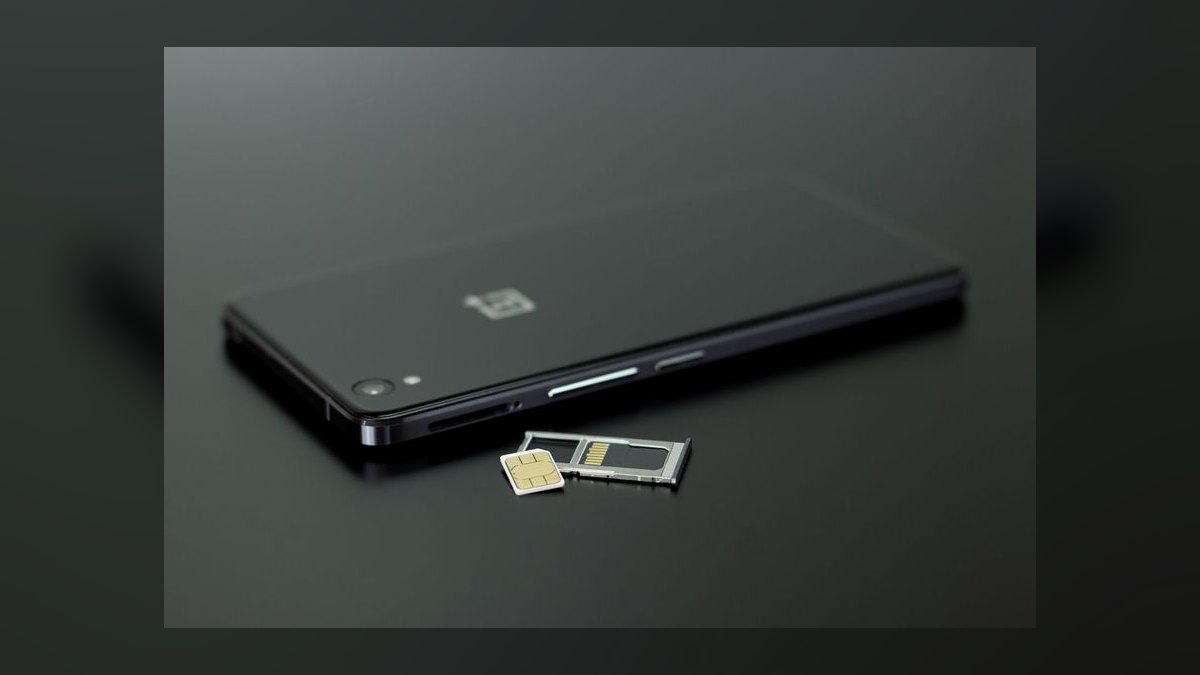
There's an adjacent wrinkle worth naming early. Two-factor authentication still runs over SMS at many banks, and a data-only eSIM cannot receive it if your primary line is off or out of coverage. Travelers who fully swap to a foreign SIM sometimes discover on day two that they can't log into their own bank. The dual-SIM approach — US line active for SMS in the background, travel eSIM carrying all data — exists mostly to solve this one problem. Configure it before you fly, not at baggage claim.
The step-by-step process for setting up before you fly
The setup work happens at home, on Wi-Fi, in about twenty minutes. Doing it at the destination airport is where things break, because most travel eSIMs require an internet connection to *install* even though they don't require one to *activate*. Chicken and egg: no data, no eSIM; no eSIM, no data.
Step one — confirm the hardware. Your phone must be carrier-unlocked and eSIM-capable. Recent iPhone, Pixel, and Galaxy flagships all support eSIM, and many support multiple stored profiles with two active at once. Carrier lock is the silent killer: a device still on an installment plan is frequently locked, and the carrier will unlock it on request once the balance clears, but that request can take a business day or two. Check this two weeks out, not two days.
Step two — decide the topology. There are three shapes. *Single-number roaming* (Google Fi, or a carrier day pass) keeps one identity everywhere. *Dual-SIM split* keeps the US line for calls and SMS while a travel eSIM carries data. *Full local swap* buys a local prepaid SIM or eSIM at the destination and effectively gives you a foreign number — best for stays over a month, worst for short trips.
Step three — buy and install, on home Wi-Fi. Purchase the eSIM, scan the QR or use the app's direct install, and label the profile something readable ("Japan Ubigi") so you're not guessing between two anonymous entries later.
Step four — set the data routing rules explicitly. This is the step everyone skips and everyone regrets. In settings, set the travel eSIM as the cellular data line, turn data roaming OFF for the US line, and leave the US line enabled for voice and SMS only. That single toggle is what prevents the surprise bill.
Step five — test on landing. Airplane mode off, wait sixty to ninety seconds for network attach, then load a page. If nothing, toggle airplane mode once and confirm the APN populated.
Step six — build the offline fallback. Download offline maps for your cities, screenshot your hotel address and confirmation numbers, and save one local emergency number. Ninety seconds of prep that covers the case where every plan above fails at once.
Costs, timelines, and typical ranges
Pricing in this category is legible once you convert everything to a per-day figure and hold usage constant. Assume a realistic 500 MB to 1 GB per day for a traveler using maps, messaging, occasional ride-hailing, and light social — heavier if you stream video or tether a laptop, lighter if you're mostly on hotel Wi-Fi.
Carrier day passes are flat: about $10/day per line, cycle-capped near $100. A 4-day trip runs $40. A 10-day trip runs $100. A 25-day trip also runs roughly $100 because the cap absorbs the rest, which makes day passes quietly reasonable again at the long end for a single line — though multiply by every line on the account, and a family of four crosses into genuinely expensive territory fast.
Travel eSIMs are consumption-priced. Around $4.50 for 1 GB at the small end, roughly $19 for 10 GB regionally, and near $80 for 20 GB globally over 30 days. For a two-week Europe trip at ~700 MB/day, you're looking at 10 GB — call it $19 to $25 all-in, against $100 on a day pass. The gap is the whole reason the category exists.

Google Fi Flexible sits between: $20/month base plus roughly $10/GB, with unlimited throttled data past the cap. Its economics are best for the person who uses 2–5 GB and travels several times a year, because there is no per-trip setup and no per-day meter.
Local prepaid is cheapest per gigabyte and worst per hour of your time. Orange Holiday Europe, for example, has offered a Europe-wide prepaid package around €39.99 for 20 GB with calling included, covering roughly 30 European countries on a 14-day window. Buying a genuinely local SIM at a destination carrier shop often beats that per-GB but can require passport registration — mandatory in a number of countries — and an hour you'd rather spend elsewhere.
On timelines: order physical SIMs two weeks out if shipping internationally. Request carrier unlock two weeks out. Buy and install eSIMs one to three days out — early enough to troubleshoot, late enough that short validity windows haven't started ticking. That last detail catches people: a "7-day" eSIM sometimes begins counting at activation, sometimes at first network attach, and occasionally at purchase. Read which, because a plan bought a week early can expire on day three of the trip.
One adjacent cost that rarely appears in comparisons: tethering. If you work while traveling and hotel Wi-Fi is unusable, a laptop pulling from your phone can burn 2–3 GB in an afternoon of video calls. Some travel eSIM plans permit hotspot and some restrict it. Anyone doing real work abroad should size for 1.5–2 GB/day and confirm hotspot is allowed, not assume it.
Where travelers get it wrong
Mistake one: buying for the destination instead of the itinerary. A Japan-optimized eSIM is excellent in Japan and useless on the Seoul leg. Regional and global plans exist precisely for multi-country trips; single-country plans are for single-country trips. Map the itinerary first, then buy.
Mistake two: leaving roaming enabled on the US line. The single most expensive error in the category. The travel eSIM carries data, the US line sits idle for SMS — but if roaming stayed on and a background app syncs over the carrier network, you've bought international data at retail without meaning to. One toggle. Check it twice.
Mistake three: assuming throttled means unusable. Throttled tiers around 256 kbps genuinely handle Maps, messaging, and voice-over-IP. They do not handle video, large photo uploads, or app updates. Knowing that changes the calculus — for many travelers the throttled floor is a perfectly adequate baseline with a small high-speed top-up for the days that need it.
Mistake four: not testing before departure. Install the eSIM at home and confirm the profile appears and can be selected. You're verifying installation, not activation. A profile that failed to install is trivially fixed on your couch and miserable to fix in a foreign terminal.
Mistake five: ignoring the 2FA path. If you disable your US line entirely, SMS codes stop arriving. Move critical accounts to an authenticator app before you leave — a genuinely better practice anyway — and keep the US line reachable for the stragglers.
Mistake six: over-indexing on peak speed. Marketing sells 5G throughput; travel is bottlenecked by *coverage consistency*, not peak rate. A network that holds a steady 15 Mbps in the rural valley beats one that hits 800 Mbps downtown and drops entirely thirty kilometers out. Ask where coverage ends, not how fast the center is.
Mistake seven: no redundancy on a trip that can't fail. For a vacation, one plan is fine. For a trip carrying real business revenue — a client meeting, a conference booth, a signed contract on the line — the correct answer is two independent paths: primary travel eSIM plus a carrier day pass you can trigger on demand. Ten dollars is cheap insurance against a dead phone on the morning of the meeting. This is the same logic every ops team applies to failover: you don't buy redundancy because the primary is bad, you buy it because the failure is expensive.

Mistake eight: forgetting the return trip. Data caps and validity windows expire mid-journey more often than you'd expect. Layovers, delays, and an unexpected extra night all consume plan days. Buy a little more validity than the itinerary strictly requires.
Decision framework: matching plan to trip shape
Stop comparing plans in the abstract and start with four questions: how long, how many countries, how much data, and how badly does it matter if this fails?
Short trip, one country, light data (under 8 days, under 5 GB). Take the carrier day pass. At $10/day it's $40–$70 total, requires zero setup, and your number rings normally. The eSIM savings here are real but small, and the setup time eats them.
Medium trip, multiple countries (8–21 days). Regional travel eSIM, every time. A Europe or Asia regional plan around $19 for 10 GB against $100 on a day-pass cap is the clearest win in the whole category. Dual-SIM it: US line for SMS, eSIM for data.

Long trip (30+ days). Local prepaid SIM at the destination, or a monthly regional eSIM. At this duration the per-GB rate dominates and the setup cost amortizes to nothing. Budget an hour for the carrier shop and bring your passport.
Frequent traveler, several trips a year. Google Fi Flexible. The value isn't the per-GB rate; it's the absence of a decision. No purchase before each trip, no profile juggling, no per-day meter. If your typical usage is 2–5 GB, monthly cost lands in a reasonable band and the friction goes to zero.
Business travel where a dead phone costs real money. Layer them. Primary travel eSIM for cost, carrier day pass held in reserve, offline maps downloaded, hotspot verified. Roughly $30 extra for a failure mode that doesn't happen.
Family of four. Do the arithmetic honestly, because per-line pricing changes the answer. Four day passes at $10/day is $40/day. Four eSIMs at $19 each for a two-week Europe trip is $76 total. Alternatively, one adult runs a hotspot and the other three connect over Wi-Fi — cheapest option, at the cost of everyone staying within thirty feet of one person.

The meta-point: the plan is a function of the trip, not a permanent identity. The traveler who runs a day pass for a Tokyo long weekend in March and a regional eSIM for three weeks across Iberia in September isn't being inconsistent — they're pricing each trip correctly.
Adjacent angles: work travel, devices beyond the phone, and coverage edges
Travel connectivity extends past the handset, and the adjacent cases change the answer more than people expect.
Working abroad. Video calls run 500 MB to 1 GB per hour. Two hours of daily calls on cellular is 2 GB/day — 40 GB over a three-week trip, which no travel eSIM tier prices comfortably. The realistic pattern is Wi-Fi-first with cellular as fallback, sized around 1 GB/day, plus a top-up mechanism you can trigger mid-trip. Confirm hotspot is permitted on whatever plan you buy; some restrict it and finding out during a client call is the wrong time.
Other devices. Watches with cellular, tablets, and travel routers each need their own profile or a hotspot. Some carriers extend a day pass across lines; most travel eSIMs are per-device. If you carry a cellular tablet you'll either buy a second eSIM or tether it — decide which before you pack.
Coverage edges. Rural coverage varies enormously by which local partner your provider roams onto, and that partner is often invisible until you're standing in the valley. Mountains, small islands, and long rural rail routes are where plans diverge most. For genuinely remote travel — backcountry, small-boat sailing, desert crossings — no terrestrial plan helps, and satellite messaging built into recent flagship phones becomes the actual answer for emergencies.
Registration and regulation. Several countries require passport registration for local SIMs, some restrict which services are reachable, and a few block common apps outright. eSIMs from foreign providers roam onto local networks and therefore inherit local network policy. Check destination-specific rules before assuming your usual stack works.
In-flight and at sea. Some US carrier plans bundle limited in-flight Wi-Fi through airline partnerships, which is a genuine convenience on long-hauls. Cruise ships are a different animal: at sea you're on maritime satellite service billed by the ship, not your carrier, and it is expensive. Turn cellular data off entirely when leaving port and use the ship's package deliberately.
The billing-cycle trick. Day-pass caps reset with the billing cycle. A trip that straddles two cycles can hit the cap twice — $200 rather than $100 — while a trip timed inside one cycle stops at $100. If your itinerary is flexible by a few days, checking your cycle date is a two-minute exercise worth real money.
Related questions
Do I need to unlock my phone before using a travel eSIM?
Yes. A carrier-locked device rejects other providers' profiles entirely. Most carriers unlock on request once the device is paid off, but processing can take a business day or two — request it two weeks before departure rather than the night before.
Can I keep my US number while using a travel eSIM?
Yes, that's the standard dual-SIM setup. Your US line stays active for calls and SMS while the travel eSIM carries all data. Turn data roaming off on the US line so background apps can't quietly bill you at international retail rates.
What happens after I use up my high-speed data?
Depends on the plan. Carrier plans typically throttle to a low but usable rate — around 256 kbps — which handles Maps, messaging, and voice calls over IP but not video. Most travel eSIMs simply stop and require a top-up purchase through the app.
Is a local SIM at the destination cheaper than a travel eSIM?
Usually per gigabyte, yes — but it costs an hour at a carrier shop and often passport registration. Below roughly thirty days the eSIM's convenience wins. Beyond that, local prepaid pulls clearly ahead on total cost.
Will my travel eSIM work on a cruise?
In port, yes — you're on the local land network. At sea, no. Ships run maritime satellite service billed separately and expensively. Disable cellular data when leaving port and buy the ship's package deliberately if you need connectivity.
FAQ
How much data does a typical traveler actually use per day?
Maps, messaging, ride-hailing, and light browsing run roughly 500 MB to 1 GB per day. Add video streaming or laptop tethering and it climbs to 2–3 GB. Size your plan against your actual pattern rather than a marketing tier, and confirm whether unused data rolls over or expires.
Should I install the eSIM before departure or after landing?
Before, on home Wi-Fi, without exception. Installation requires an internet connection even though activation typically doesn't. Install one to three days out — early enough to troubleshoot a failed profile, late enough that a short validity window hasn't already started counting down.
Will I still receive bank verification codes sent by SMS?
Only if your US line remains active. A data-only eSIM has no SMS channel from the local network. Keep the US line enabled for voice and SMS with data roaming disabled, or move critical accounts to an authenticator app before you fly.
Are day passes ever the right choice?
Yes, on short single-country trips. Four days at $10/day is $40 with zero setup and your number ringing normally. The eSIM saving at that length is small enough that the configuration time cancels it. Past eight to ten days, the math reverses decisively.
Can I use my phone as a hotspot for my laptop abroad?
Sometimes. Carrier day passes generally permit it within your domestic allowance; travel eSIM policies vary and some restrict tethering outright. Confirm before purchase if you plan to work, and budget 1.5–2 GB per day since video calls alone consume 500 MB to 1 GB hourly.
What's the backup plan if my eSIM fails on arrival?
Three layers: offline maps downloaded before departure, a screenshot of your hotel address and confirmations, and the ability to enable a carrier day pass on your US line on demand. That last one costs $10 and turns a stranded evening into a minor annoyance.
Sources
- Google Fi plans and international coverage
- Airalo eSIM plans
- T-Mobile international roaming
- AT&T international roaming plans
- Verizon international travel plans
- Orange Holiday Europe
- Three UK roaming
- Apple: use dual SIM with eSIM
- GSMA: eSIM overview
- FCC: mobile phone unlocking
Related on PULSE
- What is the best cell phone plan for international travel in 2027?
- Best Carriers for Travel in 2027
- What is the best plan for a frequent international traveler in 2027?
- How does international roaming work and how do I avoid huge bills in 2027?
- Best Family Cell Phone Plans in 2027
- Best Pay-As-You-Go Cell Phone Plans in 2027
This page will be disappearing soon. Save it to your device for $1 — or read it free while it is here.
@Kory-White- · if Venmo asks, the last 4 of my number are 2012
This page is gone.
This one is off the shelf now. $1 keeps it on your phone for good — the whole page, pictures and diagrams included.
 telcoBest 5G Phones in 2027
 telcoIs carrier phone insurance worth it in 2027?
 telcoHow do I avoid an early termination fee when switching in 2027?
 telcoBest 5G Home Internet Providers in 2027
 telcoBest Cellular and Wireless Carrier in Los Angeles in 2027
 telcoHow much mobile data does a family of four actually need in 2027?
 telcoIs Mint Mobile worth it in 2027?
 telcoShould I get a contract or no-contract phone plan in 2027?
 telcoIs an unlimited data plan worth it in 2027?
 telcoWhat is the best backup option if my home internet goes down in 2027?