

Best Cellular and Wireless Carrier in New Orleans in 2027
 Curated byKory White · Fractional CRO · Maryland
Quality
Certified

For 2027, AT&T is the strongest all-around cellular and wireless carrier in New Orleans thanks to consistent coverage across the French Quarter, CBD, and surrounding parishes plus FirstNet-grade storm resilience. T-Mobile wins on raw speed and international perks, Verizon on outlying-parish depth, and Cricket or Visible on price.
The Tuesday afternoon that decides your carrier
Picture a small commercial HVAC contractor headquartered off Airline Drive in Metairie with eight field techs, two dispatchers, and an owner who spends half his week in a truck. On a normal Tuesday, that business touches four different network conditions before lunch. A tech is in a mechanical room in the basement of a Poydras Street office tower with two feet of concrete overhead. Another is on a flat roof in New Orleans East with a clear sky and nothing but a distant tower for company. A third is crawling an attic in a 1890s Uptown double where the lath, plaster, and old foil-backed insulation eat signal like a Faraday cage. The dispatcher is in an office with fiber and Wi-Fi calling. Each of those four people has a completely different definition of "good carrier."
This is the part most carrier comparisons get wrong. They publish a median metro speed and call it a ranking. Median speed is close to useless for the person whose job depends on a photo upload from a basement. What actually matters is the distribution's left tail: how bad does it get at the tenth percentile, and how often do you land there? A network with a 245 Mbps median and frequent no-service pockets is worse for a dispatch-driven business than a network with a 187 Mbps median that almost never drops to zero.
New Orleans amplifies this because the building stock is unusually hostile to radio. Much of the city's housing predates 1940. Historic districts restrict exterior modifications, which slows small-cell and distributed antenna deployments in exactly the neighborhoods with the worst indoor penetration. The city is also flat, low, and ringed by water, which means fewer natural high points for macro sites and more reliance on rooftop and monopole placements. Add a tourism economy that periodically multiplies the daytime population of a few dozen square blocks by an order of magnitude, and you get a market where "best carrier" is genuinely a function of where you stand and what week it is.

So before comparing plans, write down your actual usage map. List the five to ten physical locations where you most need connectivity: home, office, the client sites you visit weekly, the parade route you park on in February, the camp across the lake. Then rank them by consequence of failure. A dropped Instagram upload at Jazz Fest costs nothing. A dropped payment terminal at a Saints watch party costs you the ticket. A missed FirstNet alert during a tropical system costs considerably more than either. Carrier selection is an exercise in matching network characteristics to your specific consequence map, not in picking whoever posted the biggest number in the last speed test roundup.
The same logic scales up. A restaurant group with six locations across Orleans and Jefferson parishes should be running cellular failover on every point-of-sale system, and the failover SIM should deliberately be on a *different* network than the primary broadband provider's mobile arm. A property manager with units scattered from Algiers to Slidell may genuinely need two carriers on two devices, because no single network is best in both. A remote worker who never leaves a two-mile radius of home should optimize almost entirely for indoor performance at one address and ignore everything else.
How carrier performance actually gets determined in a market like this
The reason one network beats another in a specific neighborhood almost never comes down to the brand. It comes down to spectrum, site density, backhaul, and prioritization policy, in roughly that order.
Spectrum is the raw material. Low-band frequencies (roughly 600–900 MHz) travel far and punch through walls but carry less data. Mid-band (around 2.5–3.7 GHz, including the 2.5 GHz and C-band assets the big three deployed heavily in the 2020s) is the sweet spot: meaningful capacity with acceptable building penetration. High-band millimeter wave delivers extraordinary peak speeds over a block or two of line-of-sight and is effectively stopped by a pane of low-E glass. A carrier that holds a lot of contiguous mid-band in a market will generally post better real-world speeds there, which is the structural reason T-Mobile's speed advantage has been durable rather than a marketing artifact.

Site density determines how that spectrum gets reused. Each cell site serves a limited number of simultaneous users; the fix for congestion is more sites covering smaller areas, not more advertising. Dense downtown deployments, in-building distributed antenna systems in venues like the Superdome and the convention center, and small cells on light poles are all site-density plays. Historic-district permitting friction is the single biggest reason coverage inside the French Quarter's older structures lags what the outdoor map suggests.
Backhaul is the fiber behind the tower. A tower with gigabit-class fiber and one with a microwave link behave very differently under load, and this is where wireline incumbency quietly matters. Carriers with deep local fiber footprints have an easier time upgrading capacity.
Prioritization policy is the one consumers control by choosing a plan. Every network sorts traffic into tiers. First responders on FirstNet sit at the top. Premium postpaid plans come next, with a stated allotment of high-priority data. Standard postpaid follows, then the carrier's own prepaid brands, then third-party MVNOs at the bottom. When a cell site is not congested, every tier gets similar speeds and the distinction is invisible. The moment that site saturates — which in New Orleans means parade routes, festival grounds, stadium bowls, and evacuation corridors — the tiers separate hard, and the MVNO customer who has been perfectly happy for eleven months suddenly cannot load a map.
Two practical consequences follow. First, an MVNO riding a given network is not the same product as postpaid service on that network, even though the coverage map is identical — the map shows where signal exists, not what you get when everyone else wants it too. Second, premium data allotments matter mainly as insurance. If you use 12 GB a month, the difference between a 30 GB and a 100 GB premium allotment is theoretical. If you tether a laptop for field work and burn 60 GB, that allotment is the whole product.
The numbers that actually separate the options
Published pricing and performance figures move constantly, so treat any specific number as a snapshot to verify rather than a permanent fact. As of the most recent widely reported data, the shape of the New Orleans market looks like this.
Median download speeds in the metro cluster in the roughly 130–250 Mbps range across the three national networks, with T-Mobile generally at the top on the strength of its mid-band holdings, AT&T in the middle, and Verizon somewhat behind on median speed while scoring very well on reliability metrics. Peak speeds on millimeter wave in dense outdoor downtown areas can run several hundred megabits and occasionally break a gigabit, but those figures describe a few blocks, not a city. The number worth caring about is what you measure yourself, at your own addresses, at the times you actually use the phone.

Single-line unlimited postpaid pricing from the three national carriers generally lands in the roughly $60–$75 per month range before taxes and fees, with autopay and paperless-billing discounts typically required to hit the advertised rate. Multi-line pricing changes the math dramatically: four lines on a premium unlimited plan usually work out to something in the $35–$45 per line range, which is why family and small-business economics look nothing like single-line economics. If you are a household of four still on individual plans, consolidating is almost always the single largest available saving.
Carrier-owned prepaid brands — Cricket on AT&T, Visible on Verizon, and the various T-Mobile prepaid products — typically run $25–$55 per month for unlimited service. The savings are real and the coverage footprint is genuinely the same. You pay for it in three currencies: lower priority during congestion, video resolution caps (often 480p on entry tiers, 1080p on higher ones), and reduced or slower hotspot allotments. Some are app-only with no retail support, which is fine until you need a replacement SIM on a Saturday.
MVNOs land lower still, often $15–$40 per month, with the deepest discounts requiring six- or twelve-month prepayment. Some MVNOs let you choose which underlying network you ride and switch in-app, which is a legitimately useful feature in a market where performance varies this much block to block.

Taxes and fees deserve a line of their own. Louisiana's combined state and local wireless taxes and surcharges are on the higher end nationally, and the gap between an advertised price and a billed total can be meaningful. When comparing offers, compare the actual all-in monthly total on a real bill, not the marketing number. Prepaid plans frequently advertise tax-inclusive pricing, which can close more of the gap versus postpaid than the headline numbers suggest.
A rough monthly budgeting frame: a single line with real priority data runs $60–$75 all-in; a single line on a good prepaid tier runs $30–$50; four lines consolidated on premium postpaid runs $150–$180 total; four lines on a carrier prepaid brand can land near $100. Business lines with pooled data, device management, and priority add-ons sit above consumer postpaid but usually include support paths that a one-person shop will never get from an app-only brand.
Then there is the resilience budget, which almost nobody prices. Hurricane season runs June through November, and the relevant question is not whether your carrier is fast but whether it is up. Networks maintain permanent generators at a subset of sites, portable generators and cells-on-wheels for deployment after a storm, and varying degrees of hardening at switching facilities. Public-safety-oriented networks get restoration priority. If you run anything time-critical, the honest answer is that no single carrier is a resilience plan — a second network on a second device, a satellite-messaging-capable handset, and a charged battery bank are the plan, and the carrier choice is one input to it.
What you give up with each choice
Every option in this market is a trade, and the trades are legible once you stop reading rankings as verdicts.

Choosing the reliability-first national carrier buys you consistency and, on the AT&T side specifically, the operational discipline that comes from running a public-safety network on the same infrastructure. You give up some peak throughput and you generally pay full retail postpaid pricing. For anyone whose work has a real cost of failure — contractors, healthcare, logistics, anyone dispatching people — this is the correct default and the price difference is not close to the cost of one bad outage.
Choosing the speed leader buys you the best median experience and typically the strongest international package, which matters more in a tourism-and-conventions city than it would elsewhere. You give up some indoor consistency in the oldest building stock, where mid-band's penetration disadvantage against low-band shows up. If you live and work in newer construction and move data in volume, this is likely your answer.
Choosing the coverage-depth carrier makes sense if your week regularly takes you outside the immediate metro — down toward the lower parishes, across the lake, into fishing and industrial areas where site density thins out and low-band reach is the whole game. You give up median speed in the core.

Choosing a carrier-owned prepaid brand cuts your bill roughly in half for the same coverage footprint. You give up congestion priority, some hotspot capability, and often streaming resolution. This is an excellent trade for students, retirees, remote workers with home Wi-Fi, and anyone whose phone is a communication device rather than a work tool. It is a bad trade if your worst-case moment is a crowded one.
Choosing an MVNO cuts the bill further and sometimes adds flexibility like in-app network switching. You give up priority almost universally, retail support usually, and some feature-level polish. Prepay-a-year plans also mean you have committed before you have tested.
Two adjacent decisions ride along with this one and are worth folding in. Home internet is the first: fixed wireless access service from the mobile carriers competes with cable and fiber in parts of the metro, and it inherits the same congestion characteristics as the mobile network. It is often an excellent value where fiber has not reached, and a poor choice where the local sector is already busy. Bundling it with your mobile line frequently unlocks meaningful discounts on both, which can change the total-cost comparison more than the plan tier does. Device financing is the second: the 24- and 36-month device installment agreements that carriers use to win switchers are effectively a lock-in mechanism, and their promotional credits usually vanish if you leave early. If you suspect you may want to switch networks after testing, buy the phone outright or bring your own, and keep the service decision separate from the hardware decision. That single discipline preserves your ability to act on what you learn.

Where people get this wrong
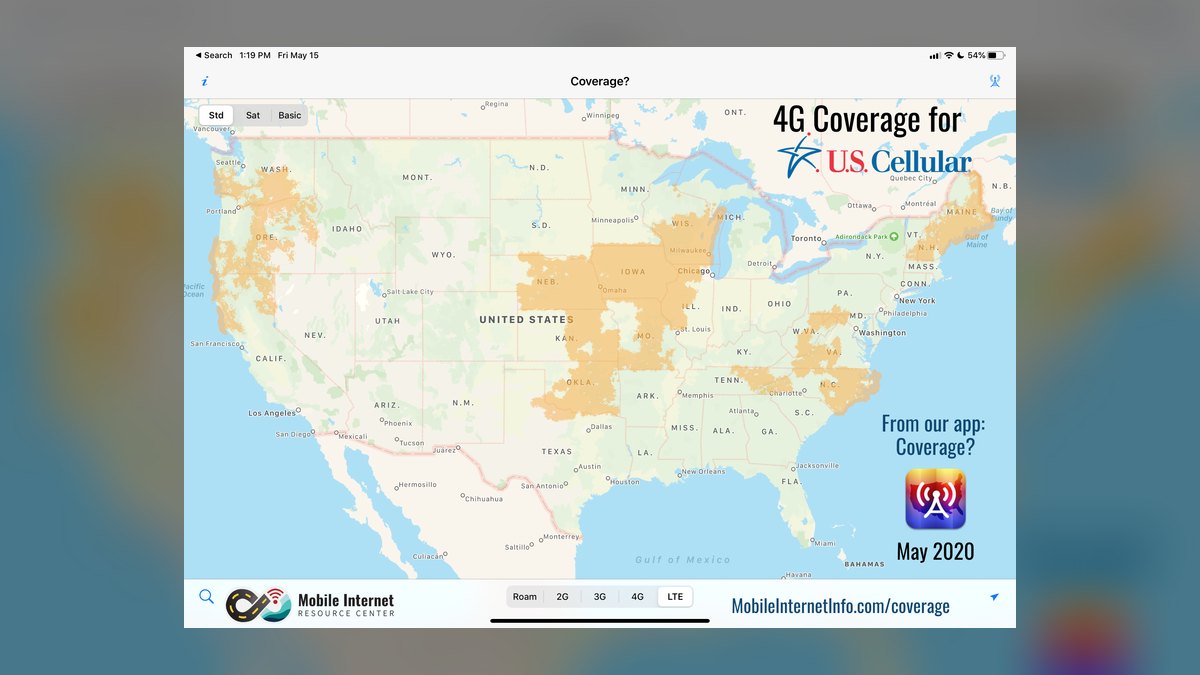
Trusting the coverage map. Carrier maps are propagation models, not measurements. They describe expected outdoor signal, they are drawn conservatively in the carrier's favor at the edges, and they say nothing about indoor performance or congestion. Use them to rule places out, never to rule places in.
Testing on the wrong day. Running a speed test at 10 a.m. on a quiet Wednesday in a parking lot tells you about an uncongested network. Test at the worst realistic moment: weekday evening in your living room, Friday night in the Quarter, during a game if you go to games. The tenth-percentile experience is the one you will remember.
Skipping the trial window. Most carriers offer some form of low-commitment trial — an eSIM you can install alongside your existing line and run for a few weeks without porting your number. Modern phones support two active lines, so you can literally run the challenger and the incumbent side by side and compare in identical conditions. Anyone switching without doing this is guessing. Port your number only after the trial passes.
Porting before the trial completes. Once your number moves, moving it back is possible but messy, and any promotional credits attached to the old account typically die. Keep the old line alive until the new one has proven itself through at least one busy weekend.
Ignoring Wi-Fi calling and offload. In a city with this much old construction, Wi-Fi calling is not a nice-to-have — it is often the difference between usable and unusable service at home. Confirm your phone and plan support it, confirm it is switched on, and set your handset to prefer Wi-Fi for calls. A solid router and a mesh node in the back of a shotgun house will do more for your call quality than switching networks will.
Confusing an MVNO with its host network. "Runs on Verizon" or "runs on T-Mobile" describes the coverage footprint and nothing about priority. If someone tells you their cheap plan works great, ask where and when they use it before assuming it maps to your situation.
Buying premium data you will never use. Pull three months of actual usage from your account before shopping. Most people use far less than they assume, and the gap between plan tiers is frequently insurance against a scenario that never occurs.
Forgetting eSIM as a resilience tool. A second carrier's prepaid eSIM sitting dormant on your phone costs very little and gives you a fallback when your primary network has a bad day or a bad location. For anyone running a business, this is cheaper than almost any other continuity measure.
Not planning for storm season. Charge banks, an offline map download, a paper copy of critical numbers, and a text-first communication habit (SMS gets through congestion far better than voice or data) are worth more than any carrier choice. Register for local emergency alerts through the city and parish rather than relying on your carrier to be the notification channel.
Letting a promotion pick the network. Switching bonuses are real money, but they are one-time and the network is permanent. A $400 credit spread over three years is roughly $11 a month; if the network is wrong for where you live, you will resent it long before the credits run out.
Related questions
Does the best carrier differ between the city and the Northshore?
Often yes. Coverage-depth networks with strong low-band tend to hold up better across Lake Pontchartrain and in lower-density parishes, while mid-band speed advantages concentrate in the urban core. Households split between both should test at each address before committing.
Is prepaid service on the same network genuinely the same coverage?
The coverage footprint is identical, but the experience during congestion is not. Prepaid and MVNO traffic sits below postpaid in the priority queue, which is invisible on a normal day and very visible during a festival, a game, or an evacuation.
How much does Wi-Fi calling change the carrier decision?
Substantially, if you spend most of your time at addresses with good broadband. Reliable Wi-Fi calling can neutralize a carrier's indoor weakness at your home and office, which shifts the decision toward whichever network performs best where you have no Wi-Fi.
Should a small business run two carriers?
If connectivity failure costs revenue, yes. A second network on a second device or a dormant eSIM covers both localized dead zones and single-network outages, and the incremental cost of a cheap prepaid backup line is small against one lost service day.
What is the fastest way to test a carrier before switching?
Install a trial eSIM alongside your current line, then use the challenger as your primary for two to three weeks — including at least one crowded event and one full weekend at home. Compare call reliability and indoor performance, not just speed tests.
FAQ
Which carrier is best for someone who mostly stays in the French Quarter and CBD?
All three national networks invest heavily downtown, so outdoor coverage is strong across the board. The differentiator is indoor performance in older structures and behavior during crowds. If you work in a modern office tower, the speed leader is attractive; if you spend time in pre-war buildings, favor the network with the strongest low-band presence and confirm with an in-person trial at the exact addresses you frequent.
What is the cheapest realistic way to get unlimited service in New Orleans?
Carrier-owned prepaid brands and MVNOs riding the major networks typically land in the $25–$45 per month range for unlimited talk, text, and data, with the largest discounts tied to multi-month prepayment. Expect video resolution caps and lower congestion priority. For families, consolidating four lines onto one prepaid account usually beats any individual plan on a per-line basis.
How much does Mardi Gras or a festival actually degrade service?
Enough to change your plan choice if you attend regularly. Parade routes and festival grounds concentrate tens of thousands of devices onto a handful of sites, and carriers deploy portable cells to compensate. Postpaid customers with premium data allotments notice congestion least; MVNO customers notice it most. Text messages get through when data and voice struggle.
Is millimeter wave 5G worth paying attention to?
Only if you spend meaningful time in the specific outdoor blocks where it is deployed. It delivers extraordinary peak speeds over very short distances with essentially no building penetration. Treat it as a bonus in a few downtown locations, never as a reason to pick a carrier.
What should I do about connectivity during hurricane season?
Assume degradation and plan around it. Keep a second network available via a prepaid eSIM, maintain charged battery banks, download offline maps before a storm, prefer SMS over calls during congestion, and register for city and parish emergency alerts directly. Carriers with public-safety network obligations generally restore service on a prioritized schedule, which is a real advantage but not a substitute for a personal plan.
Do I need a business plan for a small company with a handful of lines?
Usually worth pricing out once you pass three or four lines. Business plans add pooled data, device management, dedicated support paths, and sometimes priority tiers that consumer plans do not offer. The per-line cost is often comparable to consumer multi-line pricing, and the support difference matters when a line goes down on a workday.
Sources
- FCC Consumer Guide: Wireless Coverage and Service
- FCC National Broadband Map
- FCC Wireless Emergency Alerts
- Ookla Speedtest Performance — New Orleans, Louisiana
- FirstNet Authority
- Ready.gov Hurricane Preparedness
- Tax Foundation: Wireless Taxes and Fees
- J.D. Power U.S. Wireless Customer Care Study
- City of New Orleans — NOLA Ready Emergency Preparedness
- CTIA — Wireless Industry Resources
Related on PULSE
This page will be disappearing soon. Save it to your device for $1 — or read it free while it is here.
@Kory-White- · if Venmo asks, the last 4 of my number are 2012
This page is gone.
This one is off the shelf now. $1 keeps it on your phone for good — the whole page, pictures and diagrams included.
 telcoWhat is the best way to approach Telco in 2027?
 telcoIs Visible worth it in 2027?
 telcoBest Cellular and Wireless Carrier in Montgomery in 2027
 telcoBest Cell Phone Plans for Heavy Data Users in 2027
 telcoShould I finance a new phone or buy it outright in 2027?
 telcoHow long does it take to port a phone number in 2027?
 telcoWhy are taxes and fees so high on my phone bill in 2027?
 telcoWhat is the catch with cheap MVNO carriers in 2027?
 telcoDo I really get free streaming (Netflix, Apple TV) with my plan in 2027?
 telcoWhat is the best two-line cell phone plan in 2027?