

Best Cellular and Wireless Carrier in Buffalo in 2027
 Curated byKory White · Fractional CRO · Maryland
Quality
Certified

Verizon is the best overall cellular and wireless carrier in Buffalo for 2027, with the broadest Erie County coverage including rural fringe towns. T-Mobile wins on downtown speed and multi-line family pricing. Budget users should take Visible, which runs on Verizon's network at a fraction of postpaid cost.
Verizon versus T-Mobile: the real trade in Erie County
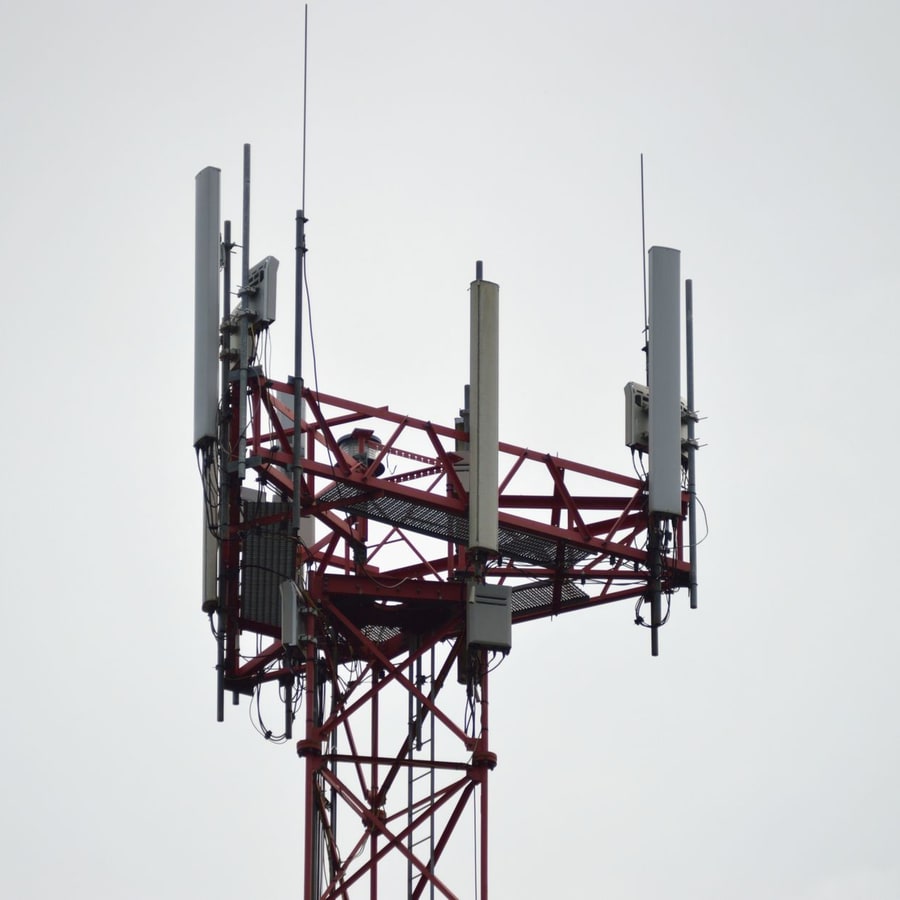
The Buffalo carrier decision is not a national decision wearing a local hat. It is a genuinely local one, because Erie County's geography does something to radio that a national coverage map smooths over. The county runs from a dense downtown grid hard against Lake Erie, through a ring of inner suburbs built out in the 1950s and 60s, into a southern tier that gets hilly fast once you pass Orchard Park. Lake-effect snow bands, which can dump a foot on Hamburg while downtown stays dry, load antennas and mounts in ways that flat-terrain markets never test.
Verizon's case rests on coverage breadth. The carrier reports population coverage in Erie County in the high 90s, and the practical meaning of that number is that the places where it holds up are the ones other carriers concede: the far southern towns, the stretch of Route 20 east of Alden, the pockets between Boston and Colden where terrain shadows a tower. If your commute, your job site, or your parents' house sits outside the I-90 loop, this is the deciding factor and nothing else on the comparison sheet matters much.
T-Mobile's case rests on speed and price in the core. After the Sprint merger consolidated 2.5 GHz mid-band spectrum, T-Mobile deployed a mid-band layer that outperforms competitors in dense areas. Downtown Buffalo, the Medical Campus corridor, Elmwood, Allentown, and the Amherst/UB North corridor are exactly the kind of environments where that layer shines: dense small-cell-friendly, high tower density, lots of mid-band capacity per user. Measured downtown averages consistently favor T-Mobile.

AT&T is the third option and it is not an also-ran. Its coverage in Erie County sits between the two, and it performs particularly well in the southern suburbs — Orchard Park, Hamburg, West Seneca — where the other two can get patchy. AT&T also runs FirstNet, which is the default for Buffalo-area police, fire, and EMS. If you work in public safety, that decision is effectively made for you by your employer's procurement, not by a consumer comparison.
The honest framing: for a household that never leaves the metro core, T-Mobile is usually the better buy on price and speed. For a household that regularly ends up in the rural fringe, Verizon's coverage advantage is worth the premium. For anyone in the southern suburbs, test AT&T before assuming the Big Two duopoly applies. And for anyone whose main constraint is monthly cost, the MVNO layer sitting on top of these same three networks changes the math entirely — which is the part most comparison articles bury.
The MVNO layer deserves early mention because it dissolves the false binary. Visible runs on Verizon's network. Mint runs on T-Mobile's. Cricket runs on AT&T's. Spectrum Mobile runs on Verizon's. US Mobile lets you pick between Verizon and T-Mobile at signup. You are not choosing between four networks in Buffalo — there are three physical networks, and roughly a dozen commercial wrappers around them at wildly different price points. The right question is rarely "which carrier?" It is "which network do I need, and what is the cheapest legitimate way onto it?"
How to decide between them

The decision collapses into a short sequence of questions, and answering them in order saves you from the analysis paralysis that carrier comparison shopping produces. Start with coverage, because coverage is the only variable where a wrong answer is unfixable by spending more money. Then filter on speed tolerance, then on budget, then on the incidental perks that only matter if you are genuinely going to use them.
A few notes on running this in practice. The first branch is the one people get wrong most often, because they answer it aspirationally rather than descriptively. "Do you go outside the loop" does not mean "have you ever." It means: is there a place you go often enough that a dropped call there would genuinely annoy you? A once-a-year trip to Chautauqua does not justify paying a coverage premium every month for twelve months.
The premium-priority question is subtler and worth explaining. Every network reserves capacity for its own postpaid subscribers before serving MVNO traffic. Under normal conditions you will not notice. Under congestion — a Bills game, a concert letting out, lunch hour in a dense office district, the Galleria on a December Saturday — the difference becomes obvious and sometimes severe. If your work depends on the phone working during exactly those moments, the postpaid premium is buying you insurance against that specific failure, not raw speed.
The last box matters more than it looks. New York's rules and the carriers' own return policies give you a trial window, typically around two weeks, to return a device and cancel service. Use it deliberately: put the SIM in your actual phone, carry it through your actual week — your commute, your office, your basement, your parents' driveway — and check whether it works where you live rather than where the map claims it does. Keep the receipt and the box. This is the single highest-value step in the whole process, and almost nobody does it.

One more filter that rarely appears in comparison content: whether you need a physical store. Buffalo has retail presence for the Big Three and for Cricket, which is unusual among prepaid brands. Visible and Mint are online-only, with chat and phone support. If you are the household's technical person, that is fine. If you are setting up a line for a parent who will want to walk into a store when something goes wrong, the store footprint is a real feature with real value, and it justifies paying somewhat more per month.
Concrete numbers behind each option
Prices move constantly in this category, so treat these as the shape of the market rather than a quote. Carriers reprice plans multiple times per year, run promotional pricing that expires, and change what "unlimited" includes. Always verify on the carrier's own site before committing.
Postpaid, single line. The entry unlimited tier across the Big Three clusters in the $50–$65 range with autopay enrollment, and those entry tiers universally throttle video to 480p and include little or no hotspot. The mid tier runs roughly $70–$85 and is where you get a meaningful premium data allotment — commonly in the 30–50 GB range before deprioritization — plus HD or better streaming and a usable hotspot allowance, typically 10–50 GB depending on carrier and tier. The top tier adds larger hotspot buckets, international inclusions, and streaming service bundles.
The premium-data number is the one to actually compare, because it is the only line item that determines behavior under load. A plan advertising unlimited data with a 30 GB premium allotment and one with a 50 GB allotment behave identically for a user consuming 15 GB a month. They behave very differently for someone tethering a laptop.

Postpaid, multi-line. This is where T-Mobile's structural advantage shows. Per-line pricing drops sharply between one and four lines across all carriers, but T-Mobile's curve is steeper, and a four-line household on T-Mobile typically lands in the mid-$40s per line for a mid-tier plan. Verizon and AT&T land higher for comparable tiers. Over a year that spread is a few hundred dollars for a family of four — real money, though smaller than the difference between postpaid and prepaid.
MVNO tier. This is where the numbers get interesting. Visible's base plan sits in the $25 range and its Visible+ tier around $35–$45, both on Verizon's network with deprioritized traffic. Mint sells annual prepay in the $15–$30 range depending on data bucket, on T-Mobile's network. US Mobile's unlimited tiers land in the $40s and uniquely let you choose Verizon or T-Mobile as the underlying network — genuinely useful in a market where the right answer differs by neighborhood. Cricket's unlimited tiers run $55 single-line but drop dramatically on five-line family plans, with in-store support in Buffalo that no other prepaid brand matches locally.
The switching math. A household of four moving from a Big Three mid-tier plan to a comparable MVNO arrangement typically saves $80–$150 a month. Annualized, that is $1,000–$1,800. That number is large enough that it should be the default consideration for any household that is not specifically buying premium priority or heavily subsidized hardware.

Which brings up the hardware trap. Postpaid carriers structure device promotions as bill credits spread over 24 or 36 months, contingent on keeping the line active on a qualifying plan. The credits are real, but they convert your monthly plan choice into a multi-year commitment. Leave early and the remaining device balance comes due immediately. Run the total-cost-of-ownership math over the full credit term before treating a "free phone" as free — often the plan premium over that period exceeds what you would have paid buying the device outright and running an MVNO. Buying an unlocked phone and pairing it with a cheap plan is frequently the lowest-total-cost path, and it keeps you free to switch when the market moves.
5G home internet as a cross-sell. Both Verizon and T-Mobile sell fixed wireless home internet in parts of Buffalo, generally $35–$60 monthly with a qualifying mobile line, delivering speeds that are competitive with entry and mid-tier cable in areas with good mid-band coverage. For renters in Elmwood Village, Allentown, or the University Heights area, this is worth pricing against Spectrum — not because it always wins, but because the existence of a credible alternative gives you leverage on the cable bill. Reliability is more variable than wired service, so if you work from home on video calls, treat it as a strong secondary rather than an automatic primary.
The business angle. Small businesses in Buffalo — HVAC contractors, home service companies, delivery operations, field sales teams — run fleets of lines, and the fleet is a real line item on the P&L. Business plans price differently from consumer plans, generally with better multi-line economics above five lines, pooled data, and device management. If your revenue depends on field techs staying reachable, the coverage question is not a personal preference — it is an operational uptime requirement. A dropped dispatch call in Boston or Springville costs a service window, and a missed service window costs revenue and a review. In that context, paying the Verizon coverage premium across a fleet of fifteen lines is straightforwardly cheaper than the churn it prevents.
Implementation details and sequencing

Switching carriers is genuinely easy in 2027 and genuinely easy to botch, and the difference is entirely about sequence. The single rule that prevents almost every horror story: never cancel the old line before the new line is verified working. Number portability requires the old account to be active for the port to complete. Cancel first and you may lose the number permanently.
Getting port-out credentials. Every carrier requires an account number and a port-out PIN, and most now require you to generate that PIN explicitly rather than reusing your account PIN. It is usually available in the account app under a "transfer service" or "port out" section, and it typically expires within a few days. Generate it right before you need it, not weeks ahead.
eSIM makes the dual-run trivial. Modern phones support an eSIM alongside a physical SIM, or two eSIM profiles. This is what makes the test-before-you-commit approach practical: you activate the prospective carrier as a second line on the same phone, keep your existing number fully working, and carry both for a week. Watch which one holds signal in the places you actually spend time. Then port. Do not skip this even if you are confident — coverage maps are modeled predictions, not measurements, and Buffalo's terrain and lake-effect weather produce local variation that models miss.
What to actually test during the trial window. Signal bars are close to meaningless; test outcomes instead. Make a real voice call from your home's worst room and from your workplace's interior. Run a speed test at your desk during the workday, not at 11pm when the network is empty. Send and receive an MMS with a photo attached — group messaging is a classic post-port failure. Confirm that banking and workplace 2FA codes arrive, because SMS-based authentication breaks in ways that are maddening to diagnose after the fact. If you tether, tether a laptop and do real work over it. If you commute on the 33 or the 190, run the drive and note where audio drops.

Timing the port. Port during business hours on a weekday, when both carriers' porting departments are staffed. A port that stalls at 9pm Saturday sits stalled until Monday, and during that stall your number can be in a limbo state where inbound calls fail. Ports typically complete in minutes for wireless-to-wireless, but the failure mode is the one to plan around.
Billing cycle and final bill. Postpaid carriers generally do not prorate a final month, so porting out on day 2 of a billing cycle usually means paying for the full cycle anyway. Time the port near the end of your cycle. Watch for the final bill to include any unpaid device balance — if you had bill credits running, those stop and the remaining balance accelerates. Know that number before you port, not after.
Household and business sequencing. If you are moving multiple lines, do not move them all at once. Move one line first, live with it for a full week, then move the rest once you have confirmed the network works for your actual patterns. For a business fleet, the same logic applies with higher stakes: pilot with two or three techs covering different territories — one downtown, one in the southern tier, one in the northern suburbs — before committing the fleet. The territories will not perform identically, and the pilot tells you whether you need a single carrier or a split fleet.
The split-fleet option. Nothing requires a household or business to standardize on one carrier. If your southern-tier tech has a bad experience on T-Mobile and your downtown crew loves it, run two carriers. The administrative overhead is small, and the coverage outcome is better than forcing one network to serve territories it does not serve well. Split fleets are common among Buffalo service businesses for exactly this reason.

After the port. Reconfirm 2FA everywhere within the first day. Update the number in any system where it is tied to alerts, dispatch, or on-call rotation. If you moved a business fleet, verify that your CRM or field service platform's SMS integration still delivers — those integrations sometimes cache carrier metadata and take a cycle to catch up. Then check the first full bill against what you were quoted. Discrepancies at that stage are common and almost always resolvable with one call, but only if you catch them before they compound across cycles.
Related questions
Does lake-effect snow actually affect cell service in Buffalo?
Heavy wet snow can load antennas and mounts, and power interruptions during major storms are the more common cause of degraded service. Carriers harden sites with backup power in snowbelt markets. In practice, storm-related outages are usually short and localized rather than metro-wide.
Is 5G home internet a real substitute for Spectrum in Buffalo?
In areas with strong mid-band coverage, yes for typical households — streaming, browsing, and most remote work. It is more variable than wired service and depends on your specific address. Price it as leverage on your cable bill even if you do not switch.
Should a small business use consumer plans or business plans?
Above roughly five lines, business plans usually win on per-line economics and add pooled data plus device management. Below that, consumer multi-line pricing is often cheaper. Run both quotes — the crossover point varies by carrier and moves with promotions.
Which network is best for crossing into Canada from Buffalo?

All three major carriers offer Canada inclusions on mid and upper tiers, and some MVNOs include North American roaming. Verify the specific plan rather than the brand — inclusion varies sharply by tier, and roaming charges accrue fast if you assume wrong.
Can I keep my number if I switch to a prepaid MVNO?
Yes. Number portability applies identically to prepaid and postpaid. Get the port-out PIN from your current carrier, keep that line active, and initiate the port from the new carrier. The old line closes automatically when the port completes.
FAQ
Which carrier has the best coverage in Buffalo's outer suburbs and rural fringe?
Verizon generally holds the widest footprint across Erie County, and the gap is most visible in the southern and eastern rural towns where terrain creates shadows. T-Mobile has closed substantial ground in the built-up suburbs — Amherst, Cheektowaga, Tonawanda — but still trails outside the developed ring. AT&T is competitive in the southern suburbs specifically. Check your exact addresses on each carrier's map, then test rather than trusting the map.
Is T-Mobile actually faster than Verizon in downtown Buffalo?
In typical measured conditions, yes — T-Mobile's mid-band layer generally posts higher average downloads in dense urban areas, and downtown Buffalo fits that profile. Verizon's millimeter-wave nodes can exceed those speeds dramatically but only in small, specific footprints. For everyday use the difference between a fast connection and a very fast connection is rarely noticeable; coverage consistency matters more.
What is the cheapest way for a family of four to get service in Buffalo?

The prepaid and MVNO layer, by a wide margin. Cricket's multi-line pricing on AT&T's network, Mint's annual prepay on T-Mobile's, or a mixed Visible arrangement on Verizon's all land well below Big Three postpaid for four lines. Expect to save $80–$150 monthly versus a comparable postpaid plan. The trade is deprioritized data during congestion and, for most MVNOs, no local retail support.
What does deprioritization actually feel like day to day?
Most of the time, nothing. Networks only enforce priority when a sector is congested, which for most people means a handful of moments per week. During those moments an MVNO connection can drop from very fast to noticeably sluggish — slow page loads, buffering video, laggy uploads. Voice and text are essentially unaffected. If your livelihood depends on data throughput during peak hours, buy postpaid; otherwise the savings usually win.
Do I need a new phone to switch carriers?
Almost certainly not. Most phones sold in recent years support all three networks' bands and can be unlocked once paid off. Check the carrier's compatibility tool with your IMEI before ordering anything. If you are still paying off a device on your current carrier, you will need to settle that balance to unlock it — factor that into the switching cost.
How often should I re-shop my wireless plan?
Annually is reasonable. Carriers introduce new plan structures roughly every year and rarely migrate existing customers to better pricing automatically — legacy plans quietly become bad deals. A twenty-minute review each year comparing your current bill against current offerings is one of the highest hourly-rate activities in personal finance, and for a business fleet it directly protects margin.
Sources
- Verizon coverage map
- T-Mobile coverage map
- AT&T wireless coverage map
- FCC National Broadband Map
- FCC guide to wireless number portability
- Ookla Speedtest
- Visible plans
- Mint Mobile coverage
- Cricket Wireless
- US Mobile plans
Related on PULSE
This page will be disappearing soon. Save it to your device for $1 — or read it free while it is here.
@Kory-White- · if Venmo asks, the last 4 of my number are 2012
This page is gone.
This one is off the shelf now. $1 keeps it on your phone for good — the whole page, pictures and diagrams included.
 telcoShould I get a contract or no-contract phone plan in 2027?
 telcoWhat are the most common mistakes in Telco in 2027?
 telcoT-Mobile vs Visible: which is better in 2027?
 telcoBest Cellular and Wireless Carrier in Los Angeles in 2027
 telcoDo I really get free streaming (Netflix, Apple TV) with my plan in 2027?
 telcoBest 5G Home Internet Providers in 2027
 telcoIs Visible worth it in 2027?
 telcoBest Cellular and Wireless Carrier in Montgomery in 2027
 telcoWhat is the catch with cheap MVNO carriers in 2027?
 telcoHow do I activate a new cell phone for the first time in 2027?