

US Mobile vs Visible: which is better in 2027?
 Curated byKory White · Fractional CRO · Maryland
Quality
Certified

Pick US Mobile if you want network choice — it resells Verizon, T-Mobile, and AT&T, so you can move a line to whichever performs best locally. Pick Visible if you want the cheapest single-line unlimited on Verizon and accept deprioritization. Flexibility versus floor price is the whole decision.
What each carrier actually is, and why the difference matters
Both US Mobile and Visible are MVNOs — mobile virtual network operators. Neither owns towers. Both buy wholesale capacity from a facilities-based carrier and resell it under their own brand, their own billing, and their own support organization. That shared structure is why the two get compared constantly, and it is also why the comparison is narrower than it looks: you are not choosing between two networks, you are choosing between two *purchasing agreements* layered on top of networks you already know.
Visible is the simpler entity to describe. It is owned by Verizon and operates as Verizon's in-house digital-first, self-service brand. There are no retail stores, no phone support line, and no negotiated deals — the price on the website is the price. Because Verizon owns it outright, Visible rides Verizon's network exclusively. That has one large upside and one large downside. The upside is that Visible's coverage footprint is Verizon's coverage footprint; there is no partial-roaming asterisk, no "we only get certain bands," no MVNO-gets-a-worse-map problem. The downside is that when Verizon's network is congested where you live, you have no escape hatch. Your only lever is to pay more for a higher-priority plan, and even that has ceilings.
US Mobile took the opposite architectural bet. Rather than deepening a relationship with one host, it built agreements with multiple hosts and exposed the choice to the customer. In practice this means US Mobile publishes internally-branded network options that map to Verizon, T-Mobile, and AT&T, and a subscriber can select which one their line rides on. The company has historically let customers move between those networks from within the account portal, keeping the same phone number and the same plan. That single capability is the strongest argument for US Mobile and the thing Visible structurally cannot answer.

Why this matters more than the spec sheet: cellular quality is hyper-local. Two houses on the same street can have materially different indoor signal because of where the nearest sector antenna points, what building materials are between you and it, and how many other subscribers share that sector at 6pm. National coverage maps and national speed averages tell you almost nothing about your kitchen. A carrier that lets you test a second and third radio network against your actual address, commute, and office is solving the *real* problem. A carrier that gives you one network at a very low price is solving a different real problem — the monthly bill.
There is also a business-model dimension worth understanding, because it explains why the plans look the way they do. MVNO economics are thin. The host carrier charges wholesale rates, and the MVNO's revenue per line has to cover that wholesale cost, support, billing, churn, and acquisition. Priority data — traffic that does not get slowed when a tower is busy — costs the MVNO more to buy than deprioritized data. That is the entire reason the cheapest unlimited plans are deprioritized and the expensive ones are not. When you see a rock-bottom unlimited plan, you are not seeing generosity; you are seeing the MVNO buying the cheapest class of traffic available and passing the savings through. Understanding that makes the plan tiers legible: you are literally buying a traffic class.
Deprioritization deserves a precise definition because it is the single most misunderstood concept in this comparison. It does not mean your data is throttled to a fixed slow speed at all times. It means that when a specific cell sector is at capacity, the scheduler serves higher-priority traffic first and your packets wait. On an empty tower at 10am in a suburb, a deprioritized line can be indistinguishable from a premium one — often triple-digit megabits. On a congested downtown sector at 5:30pm, or in a stadium, or at an airport gate, the same line can crawl. So the honest question is not "is deprioritized data bad" but "how often am I on a congested sector." For a work-from-home user on Wi-Fi most of the day, the answer is: rarely, and the cheap plan is fine. For a field rep who lives on hotspot in dense metros, the answer is: constantly, and the cheap plan will make them miserable.
The step-by-step process for choosing between them
Do not start with plan sheets. Start with your own usage data, then test radios, then price it. Running the steps in that order prevents the most common outcome, which is paying for premium data you never needed or saving ten dollars on a line that drops calls at your desk.

Step one: pull your actual data usage. Both iOS and Android report cellular data per billing period, and your current carrier's app shows the last several months. Look at three to six months, not one. Write down the median and the peak. Most people dramatically overestimate — a large share of consumers use well under 15GB per month on cellular because home and office Wi-Fi absorb the heavy lifting. Some people genuinely use 100GB+ because they tether a laptop daily or have no home broadband. These two profiles should buy completely different plans, and knowing which one you are collapses half the decision immediately.
Step two: separate phone data from hotspot data. These are metered differently by nearly every carrier and are the most common source of a surprise. A plan can be "unlimited" on the handset while capping tethering at a fixed bucket or clamping tethered speed to a low ceiling. If you tether a laptop for work, hotspot terms matter more to you than the headline unlimited claim. Write down your monthly tethering number separately.
Step three: test the radios where you actually are. This is the step people skip and the one that determines satisfaction. Verizon, T-Mobile, and AT&T each win and lose specific neighborhoods. Check crowd-sourced coverage data and the FCC's national broadband map for your ZIP, then — more importantly — get real SIMs on the addresses that matter: home, office, and the two or three places you spend the most time. eSIM makes this genuinely cheap now; you can provision a test line in minutes without waiting for mail. Test indoors, not in the driveway, because indoor penetration is where networks diverge most. Test at 6pm on a weekday, not 10am Sunday.
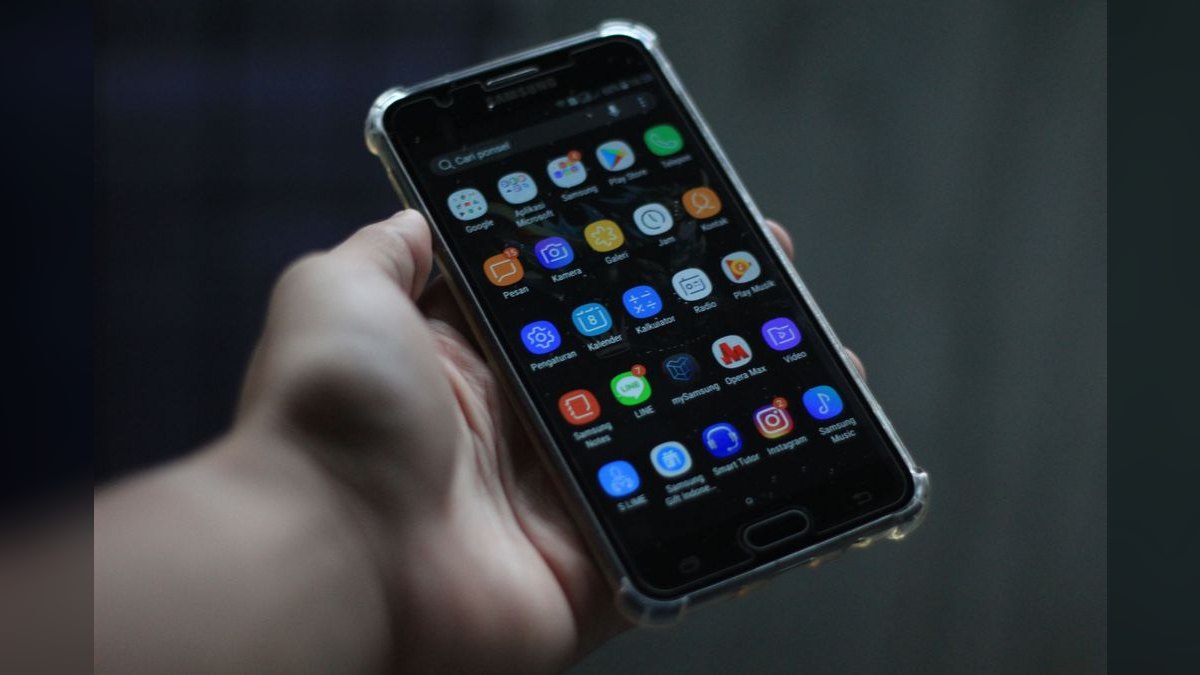
Step four: check band and device support. Confirm your specific phone model is supported and, if you care about 5G, that it supports the mid-band spectrum each host uses for its fast 5G layer. A device bought for one carrier's network may lack bands another host relies on. Both carriers publish compatibility checkers keyed to IMEI; use them before porting, not after.
Step five: price the whole household, not one line. US Mobile has historically offered multi-line discounts that scale with line count. Visible has historically priced per line with limited group discounting. The crossover point moves with family size, so a single-line comparison can invert entirely at three or four lines. Compute total monthly cost for your actual line count on both, including taxes and fees — some MVNOs quote taxes-included pricing and some do not, and that difference alone can be several dollars per line.
Step six: port one line first. Never move a whole family at once. Move the least critical line, live on it for a full billing cycle including a busy weekday evening, and only then move the rest. Keep your old account active until the port completes — porting out cancels the old line automatically, and canceling first destroys the number you are trying to keep. Have your account number and transfer PIN from the old carrier ready; a missing PIN is the number one cause of failed ports.

Costs, timelines, and the ranges to expect
Prepaid MVNO pricing moves frequently, so treat any number here as a shape rather than a quote, and verify on each carrier's own plans page before you buy. The useful thing is the *structure* of the pricing, which has been stable for years even as individual dollar figures shift.
Entry tier. Both carriers anchor near the low-to-mid twenties per month for a single line. On Visible that buys unlimited data with deprioritized traffic. On US Mobile that range typically buys either a capped bucket of data or an entry unlimited tier, depending on current promotions. These two products are not equivalent even at identical prices: a capped plan with priority data behaves better under congestion until you exhaust the bucket, while an unlimited deprioritized plan never runs out but never gets to cut the line. Light users in congested cities are often happier on a small priority bucket; heavy users in quiet areas are happier on cheap unlimited.
Premium tier. Both carriers sell a step-up plan in roughly the forty-to-sixty dollar range per line that includes a meaningful allotment of premium, non-deprioritized data plus better hotspot terms and some international inclusions. This is where US Mobile's top plan tends to differentiate on premium-data volume and international calling breadth, and where Visible's step-up plan tends to differentiate on hotspot generosity. If your usage sits above roughly 30-50GB monthly on cellular, the premium tier is where you should be shopping on either carrier — below that, you are buying insurance you will not claim.
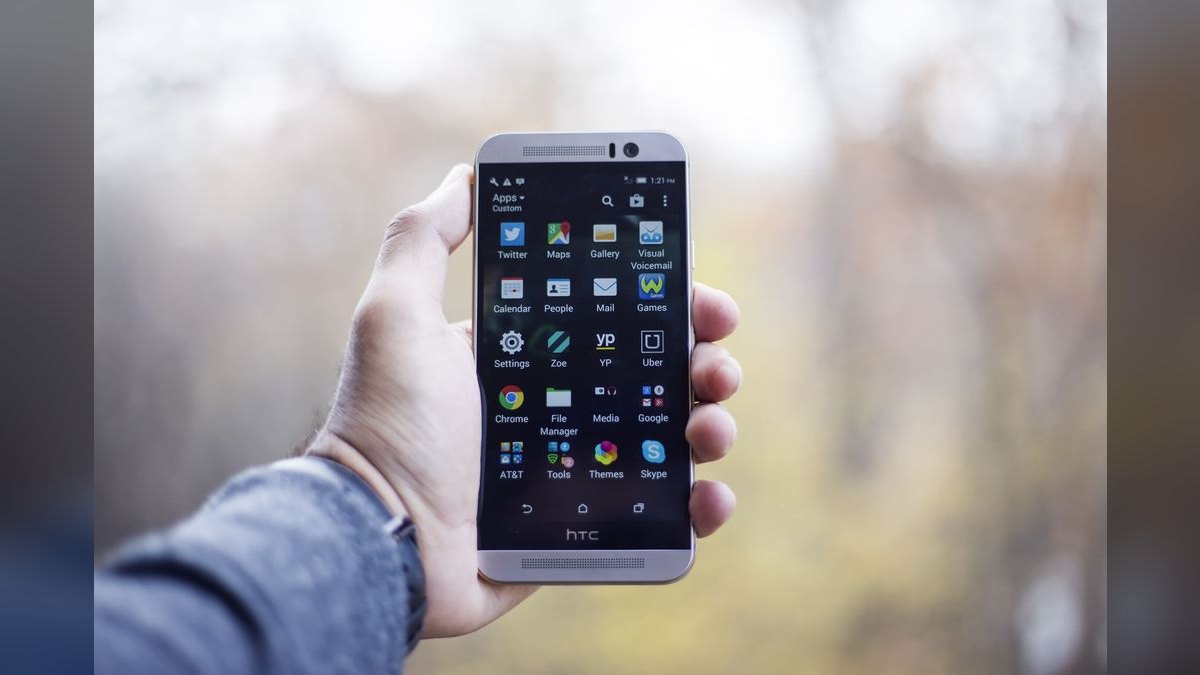
Multi-line. This is where the two diverge most sharply and where you can be off by hundreds of dollars a year if you compare single-line prices. Multi-line discounting that scales with line count changes the effective per-line cost substantially at three, four, and five lines. Run the actual arithmetic for your household size rather than assuming the cheaper single line stays cheaper.
Taxes and fees. Some prepaid brands quote all-in pricing; others add state and federal surcharges on top. Depending on your state, wireless surcharges can add a meaningful percentage. Always compare the number that will actually hit your card, not the marketing number.
Timelines. eSIM activation is typically minutes, not days — you scan a QR code or activate in-app and the profile downloads over Wi-Fi. Physical SIM shipping adds a few business days. Number porting most often completes within a few hours for wireless-to-wireless, though it can take up to a business day or longer if account details mismatch. Landline-to-wireless ports take longer. Budget a full business day and do not port on a day when you cannot miss calls.
Trial windows. Both brands have used short risk-free trial or money-back windows to let you test service before porting. Use them. A trial line on eSIM alongside your existing line is the single highest-value hour you can spend on this decision, because it converts a spec-sheet argument into a measured one.

Device cost. Neither brand is built around heavily subsidized handsets the way postpaid carriers are. The model assumes BYOD — you bring an unlocked phone. If you need a financed device, prepaid MVNOs are generally the wrong aisle; postpaid promotions will beat them. Factor the phone separately from the service when you compare against a Verizon or T-Mobile postpaid offer, or the comparison is dishonest.
Total cost of ownership over two years. Take the monthly all-in figure, multiply by 24, add any SIM or activation cost, and subtract nothing for perks you will not use. International calling to eighty-plus countries is worth real money if you call family abroad weekly and worth exactly zero if you do not. Do the same arithmetic on both carriers and the gap is usually smaller than the marketing implies — often a few hundred dollars over two years, which is meaningful but not so large that it should override a network that actually works at your house.
Where people get this comparison wrong
Mistake one: treating "unlimited" as a quality claim. It is a quantity claim. Unlimited means you will not be cut off or charged overage; it says nothing about speed under load. The specification that predicts your experience is the priority class and the premium-data allotment, not the word unlimited. Two plans can both say unlimited and deliver wildly different results on the same tower at the same moment.

Mistake two: judging on national speed averages. Published national reports on 5G availability and average download speed are genuinely useful for understanding macro trends, and they consistently show meaningful differences between the three major networks. They are nearly useless for predicting your address. National averages are dominated by dense metros and by device mix. Use them to build a shortlist, then test locally.
Mistake three: skipping the peak-hour test. People test a new SIM on a Saturday afternoon in an empty suburb, see 300Mbps, and conclude deprioritization is a myth. Then they take it downtown on a Wednesday at 5:45pm. Test when and where the network is stressed, or you have not tested anything. Stadiums, airports, transit hubs, and downtown cores at rush hour are the honest benchmarks.
Mistake four: buying premium data you will never use. The reverse error is just as common. If you use 8GB a month and are on Wi-Fi at home and work, a large premium-data allotment is money burned. Buy the tier that covers your 90th-percentile month, not your imagined worst case.

Mistake five: assuming the MVNO gets the same treatment as postpaid. Even when an MVNO rides the same network, wholesale traffic is generally lower priority than the host's own premium postpaid customers unless the plan explicitly buys premium class. This is normal, disclosed, and the mechanism by which the price is lower. It is only a problem when you did not know about it.
Mistake six: canceling the old line before the port completes. Porting requires the old account to be active so the number can be released. Cancel first and the number is gone. Always port out; never cancel then port.
Mistake seven: ignoring the support model. Visible is deliberately digital-first — chat and self-service, no walk-in stores. US Mobile is also digital but has generally offered broader support hours and channels. If you are the family's tech support and a parent needs a human on the phone at 8pm, that operational difference is worth more than a few dollars of monthly savings. Conversely, if you never contact support, it is worth nothing.

Mistake eight: forgetting that the network you chose is changeable on one carrier and not the other. People buy Visible, hit congestion, and conclude "MVNOs are bad." The accurate conclusion is "Verizon is congested here." On US Mobile that is a settings change; on Visible it is a reason to leave. Knowing which failure mode you are buying into is the entire point of the comparison.
Mistake nine: not checking whether the phone is carrier-locked. A device still financed with or locked to another carrier will not activate. Unlock it first — carriers must unlock on request once eligibility conditions are met — and confirm the IMEI passes the compatibility checker before you initiate anything.
Decision framework: when to choose which
Reduce it to four questions, answered in order. The first question that produces a decisive answer ends the process.
Is Verizon demonstrably strong at your primary locations? If Verizon is weak at home or at work, Visible is eliminated — it has no alternative to offer you. Go to US Mobile and select the host that tests best. This single question resolves a large share of cases and it is the reason the "which is better" framing is misleading: better is a function of your geography, not of the brands.

Do you need the option to change networks later? People who move, travel domestically for work, or live somewhere with active network construction benefit disproportionately from being able to switch hosts without changing carriers. If that describes you, the optionality is worth paying for even if you never exercise it — it is insurance against a move or a new tower configuration wrecking your service.
Are you optimizing for the lowest possible monthly bill on a single line? If yes, and Verizon works where you live, and you can tolerate slow spots at peak hours, Visible's base unlimited is difficult to beat and the simplicity is a genuine feature. No plan matrix, no network selection, no decisions.
How many lines, and how much premium data? At three or more lines, run the multi-line arithmetic explicitly; scaling discounts can flip the winner. Above roughly 50GB of monthly cellular use, or if you tether a laptop daily, shop premium tiers on both and compare premium-data allotment and hotspot terms head to head rather than headline price.
Related questions
Does Visible use the exact same network as Verizon postpaid?
Visible is owned by Verizon and runs on Verizon's network, so the coverage footprint matches. The difference is traffic priority: Visible's cheaper plan is deprioritized behind premium postpaid traffic during congestion, while its step-up plan buys a premium-data allotment.
Can US Mobile really let me change networks without a new number?
Yes — network selection is the core of US Mobile's product. Because it holds agreements with multiple hosts, a line can be moved between them from the account portal while keeping the same number and plan. Confirm current terms and any switch limits before relying on it.
Will my phone work on both carriers?
Most unlocked modern iPhones, Galaxies, and Pixels work on both, and both support eSIM. Run your IMEI through each carrier's compatibility checker first, and confirm the device is unlocked and fully paid off with your previous carrier.
Is a cheap deprioritized plan actually usable?
Often yes. Deprioritization only bites when a specific sector is congested. If you are on Wi-Fi at home and work and avoid dense peak-hour usage, you may never notice. If you tether daily downtown at 5pm, you will notice constantly.
Which is better for a family of four?
Run the arithmetic rather than assuming. Multi-line discounts that scale with line count can make the higher single-line price cheaper in total at four lines. Compare all-in monthly totals including taxes for your exact line count.
FAQ
Which is better overall in 2027, US Mobile or Visible?
Neither is universally better — the answer is determined by your geography and your line count. US Mobile is better if you want to choose or change host networks, if Verizon is weak where you live, or if you have several lines and can use scaling discounts. Visible is better if Verizon is strong where you live and you want the simplest, cheapest single unlimited line with no configuration decisions to make.
What exactly does deprioritized data mean in practice?
It means that when a cell sector reaches capacity, the network's scheduler serves higher-priority traffic before yours. On an uncongested tower you may see full speeds; on a congested one your speeds can drop sharply until load clears. It is a congestion-time behavior, not a permanent throttle, which is why the same plan feels fast in a quiet suburb and slow at an airport gate.
How do I test both before committing?
Use eSIM. Provision a trial line on each carrier alongside your existing service, then run real tests at home, at work, and on your commute — indoors, and specifically during weekday evening peak hours. Both brands have offered short trial or money-back windows for exactly this purpose. An hour of real testing beats any amount of spec-sheet comparison.
Will I keep my phone number if I switch?
Yes, number portability is a legal right in the US and both carriers support porting in. You need your current account number and transfer PIN. Critically, keep the old line active until the port completes — porting out cancels the old service automatically, whereas canceling first releases the number and you may lose it permanently.
Is the hotspot allowance meaningfully different between them?
Yes, and it is often the deciding factor for anyone who tethers a laptop. The two carriers structure hotspot differently — one tends toward a defined high-speed bucket, the other toward larger volume at a capped speed. Neither approach is universally better: a fixed speed cap is fine for email and documents but frustrating for large downloads or video calls, while a bucket runs out. Check the current terms on each plan page against your measured monthly tethering usage.
Do these prepaid carriers do credit checks or contracts?
No. Both operate on a prepaid, month-to-month model with no long-term contract and no credit check, which is a large part of their appeal. The trade-off is that neither is built around subsidized handset promotions — the model assumes you bring your own unlocked device. If you need a phone financed, postpaid carrier promotions will generally beat what either of these offers.
Sources
- US Mobile official plans
- Visible official plans
- Opensignal USA mobile network experience reports
- Ookla Speedtest US market reports
- FCC National Broadband Map
- FCC guide to keeping your phone number when you switch
- FCC guide to unlocking your mobile phone
- PCMag mobile carrier reviews
- CNET best cell phone plans
Related on PULSE
- US Mobile vs Mint Mobile: which is better in 2027?
- Is US Mobile worth it in 2027?
- Xfinity Mobile vs Visible: which is better in 2027?
- Mint Mobile vs Visible: which is better in 2027?
- Google Fi vs Visible: which is better in 2027?
- Verizon vs Visible: which is better in 2027?
Recently Added — Related
This page will be disappearing soon. Save it to your device for $1 — or read it free while it is here.
@Kory-White- · if Venmo asks, the last 4 of my number are 2012
This page is gone.
This one is off the shelf now. $1 keeps it on your phone for good — the whole page, pictures and diagrams included.
 telcoBest Cellular and Wireless Carrier in San Jose in 2027
 telcoMint Mobile vs Cricket Wireless: which is better in 2027?
 telcoIs a prepaid carrier as good as Verizon, AT&T, or T-Mobile in 2027?
 telcoHow do I choose between fiber, cable, and 5G home internet in 2027?
 telcoIs Visible worth it in 2027?
 telcoBest Cellular and Wireless Carrier in Wichita in 2027
 telcoBest Cellular and Wireless Carrier in San Diego in 2027
 telcoCan I use one carrier for phone and another for home internet in 2027?
 telcoWhat is the catch with cheap MVNO carriers in 2027?
 telcoWhat is the best way to approach Telco in 2027?