

Cell phone vs landline: which is better in 2027?
 Curated byKory White · Fractional CRO · Maryland
Quality
Certified
Neither wins outright in 2027: cell phones are better for nearly everyone, but copper landlines still beat them for guaranteed 911 location, power-outage survivability, and rural dead zones. Most households should keep a cell phone as primary and, if service is spotty or medically critical, add a VoIP or fixed-wireless line as backup rather than copper.
The kitchen-drawer decision most households actually face
The real scenario is rarely abstract. A family in a semi-rural county gets a letter from their carrier saying copper service in their exchange is being retired and they'll be migrated to a fiber or fixed-wireless replacement. The bill is currently about $35–$60 a month for a plain line they use maybe four times a week — the pediatrician, the propane company, a relative who refuses to text. Meanwhile they already pay $120–$180 a month for four cell lines. The question "cell phone vs landline: which is better" is really three separate questions wearing one coat: which is better for voice quality, which is better for reliability when things go wrong, and which is better per dollar.
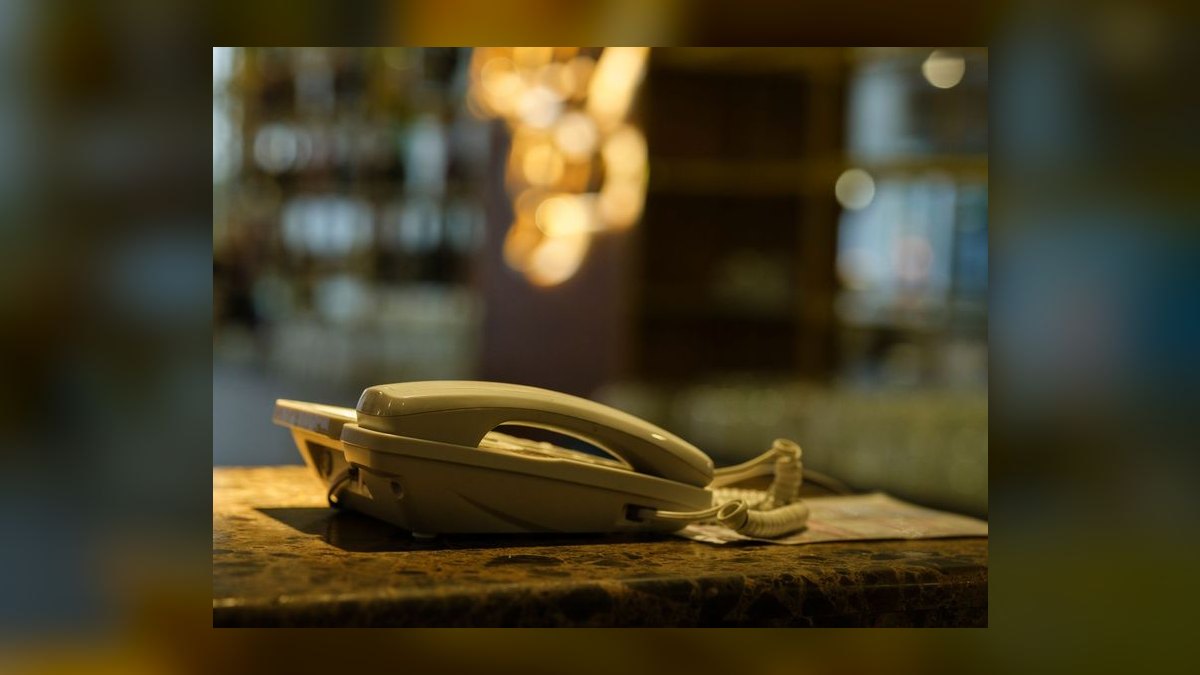
Break it apart and the answer stops being mushy. On cost per usable minute, the cell phone wins by a wide margin, because the landline is a second full-price subscription for a service the cell already provides. On reliability during a regional power failure, traditional copper wins, because it draws its own 48-volt power from the central office and keeps working when the house is dark — but only if the handset is a corded analog phone, not a cordless base station that dies with the outlet. On emergency dispatch accuracy, copper wins again, because the address is fixed in the 911 database rather than estimated from a handset.
Now layer in the household's specifics. An elderly parent with a medical alert pendant, a home security panel with an old dialer, a home office that runs a fax for a title company, a teenager who has never once picked up a wired phone. Each of those changes the math. The security panel and the medical alert are the two that most often force a landline decision, and both have modern cellular-radio alternatives that are usually cheaper than keeping copper alive just to feed them. The fax is a different animal — analog fax over VoIP is genuinely unreliable, and that alone keeps some small businesses on a copper or T.38-capable line.
The scenario also has a deadline attached. Copper retirement is not hypothetical; U.S. carriers have been filing to discontinue legacy copper services for years, and the regulatory framework for those discontinuances lives with the FCC. If your exchange is on the list, "keep the landline" may not be an option you get to choose indefinitely. That reframes the question from "which is better" to "which replacement do I want, and do I want to pick it or have it picked for me."
How the two technologies actually deliver a call
A copper landline is a circuit. When you lift the handset, a physical pair of wires runs from your house to a central office, and the network reserves a dedicated 64 kbps channel end to end for the duration. Nothing is shared, nothing is queued, and the audio path is deterministic. That determinism is why old landlines sound the way they do — narrowband, 300–3400 Hz, but never jittery. The tradeoff is that the same determinism caps quality: a copper call cannot sound better than that narrow band no matter how good your handset is.
A cell call in 2027 is packets. Voice over LTE and Voice over New Radio encode your speech with a wideband or super-wideband codec, chop it into packets, and schedule those packets over a shared radio channel with quality-of-service priority. Because the codec can carry roughly 50 Hz to 7 kHz or wider, a good VoLTE call on both ends genuinely sounds better than any copper call — you hear the difference on consonants like S and F, which narrowband smears. The cost of packets is variance: if the radio link degrades, you get artifacts, dropouts, or a lost call, failure modes copper simply doesn't have.
The power story explains most of the reliability gap. Copper is line-powered from the central office, which itself sits behind large battery plants and generators. Cellular depends on a chain: your handset battery, the cell site's power, the site's backup battery, and the backhaul link to the core network. Cell sites commonly carry a few hours of battery; generators exist at some sites, not all. In a multi-day regional outage, the cell network degrades progressively as site batteries drain, while copper keeps humming — which is exactly the pattern reported after major hurricanes.
The 911 path differs too. A copper call arrives at the public safety answering point with an address pulled from a database keyed to the physical line. A wireless call arrives with a callback number and a location estimate, historically derived from tower sector and timing, and now increasingly from device-based hybrid location that fuses GPS, Wi-Fi, and barometric pressure for vertical position. The FCC's wireless E911 location rules have pushed accuracy substantially, including a z-axis requirement aimed at identifying the floor of a multi-story building. In practice, an outdoor wireless 911 call in 2027 usually lands within tens of meters; an indoor call in a dense building is the harder case, and that's precisely where a fixed line's known address still has an edge.
There is a third path worth naming because most "landlines" sold today are it: VoIP delivered over your broadband, or fixed wireless delivered over the same cellular network your phone uses. Both give you a desk phone and a stable number, but neither inherits copper's power independence — when the internet or the power goes, so does the line, unless you have battery backup on the modem and ONT. Calling these "landlines" is marketing shorthand; technically they behave far more like your cell phone with a wire hanging off it.
What the numbers look like when you price it out
Start with the recurring cost. A basic copper or VoIP home phone line typically runs somewhere in the $20–$60 per month range once taxes and regulatory fees land, and those fees are a bigger share of a cheap line than people expect — a $20 line can bill $28. A single postpaid cell line with unlimited talk and text generally sits in the $35–$70 range depending on data and family-plan discounts, and prepaid or MVNO plans routinely come in at $15–$30. On a pure per-line basis those are comparable; the point is that the landline is almost always additive, so the honest comparison is $0 (cell you already have) versus $240–$720 a year for the extra line.
Then price the alternatives to keeping copper alive for a specific device. A cellular alarm communicator module is usually a one-time equipment cost in the low hundreds plus a modest monthly monitoring premium, and it replaces the copper line your panel was using to dial out. Medical alert systems ship cellular base units as the default now, with monthly monitoring commonly in the $25–$50 band. If the only reason you're paying for a landline is to feed one of those devices, converting is usually cash-flow positive within a year and improves reliability, because a cut phone line no longer silences the panel.
Reliability numbers are where people over-index on anecdotes. The useful framing is annual expected downtime. Copper's failure modes are rare but slow: a cut drop wire or a water-logged cross-box can mean days out of service, and technician availability for legacy copper has gotten thinner as carriers wind it down. Cellular's failure modes are frequent but short: a congested sector during an event, a dropped handoff on the highway, a dead battery. Over a year, most households experience more short cell failures and fewer long landline failures. Which pattern is worse depends entirely on whether your worst-case scenario is "annoying" or "someone can't breathe."
Power math is worth doing concretely. A modern smartphone in standby with a decent signal will hold charge for a day or more; on a weak signal it burns far faster because the radio ramps transmit power hunting for a tower. A $30 power bank in the 10,000 mAh class gives roughly two full phone recharges, and a car charger effectively makes your vehicle a generator for phones. Against that, the copper landline's advantage is real but narrower than folklore suggests: it wins outright in the first hours of an outage and in situations where nobody thought to charge anything, and it wins decisively if the cell site backup runs dry.
Call quality has measurable structure. Narrowband copper delivers audio limited to about 3.4 kHz; wideband cellular codecs roughly double the usable band, and super-wideband roughly doubles it again. In blind listening, the wideband advantage is obvious to most people on the first sentence. But it only applies when both ends and both carriers support it — call a copper landline from a VoLTE phone and the whole call collapses to narrowband, because the weakest link sets the codec. That's a small, real argument that landlines slightly degrade the network's average call quality.
Finally, count the intangibles that show up as dollars anyway. Landline numbers attract a disproportionate share of robocalls, partly because the numbering ranges are old and heavily scraped, and because the STIR/SHAKEN caller-ID authentication framework the FCC required is implemented most completely on IP networks. Cell numbers get spam too, but modern handsets ship with carrier and OS-level screening that silences suspected spam automatically. If your elderly parent is being scammed by phone, the landline is often the attack surface, and that risk has a real dollar value.
Where each one actually wins, and what else you could buy instead
Cell phones win on almost every dimension a typical household cares about: mobility, cost efficiency, text messaging, wideband audio, spam filtering, and the simple fact that the device is with the person rather than with the building. If you're deciding fresh in 2027 with no legacy equipment, a cell phone plus decent home broadband covers everything a landline used to cover, and covers most of it better.
Landlines win in a small set of situations, but they win hard there. Rural properties with no reliable indoor cell signal are the biggest category — if your house sits in a coverage hole, the fixed line is not a nostalgia purchase, it's the only thing that works. Households that need power-outage-proof voice, particularly with a medically fragile resident, are the second. Buildings where indoor 911 location is genuinely ambiguous — high-rise apartments, sprawling facilities — are the third. Analog fax and some legacy elevator or fire-alarm phone circuits are the fourth, and those are regulatory rather than preference-driven.
The alternatives deserve equal billing, because the real 2027 decision is rarely binary. Wi-Fi calling turns your home broadband into cell coverage and solves most rural dead-zone problems for free if you already have internet — this is the single most underused fix, and it's a toggle in the phone's settings. A femtocell or carrier signal booster does the same job when Wi-Fi calling isn't supported. Satellite direct-to-device messaging, now shipping on mainstream handsets, gives you emergency SOS from places with no terrestrial coverage at all, which historically was the landline's most defensible edge in remote areas.
VoIP home phone service occupies the middle: cheap, keeps your existing number, gives you a familiar handset for someone who won't adapt to a mobile, but inherits your internet's uptime and needs a registered address for 911 that you must keep current. Fixed wireless voice — a cellular modem with an analog phone jack — is the usual carrier-offered replacement when copper retires, and it behaves like a cell phone that can't leave the house, including the battery dependency.
There's an adjacent decision that follows the same logic: small businesses asking whether to keep a copper trunk. The answer usually mirrors the household one — move voice to a cloud PBX over broadband, keep a cellular failover path, and retain analog only for the specific circuits that legally require it, like elevator phones and some fire panel lines. The pattern is identical: replace the general-purpose line with packets, keep a narrow analog exception where a code or a device demands it.
The mistakes that cost people money or safety
The most common expensive mistake is paying for a landline that isn't actually a landline. If your "home phone" plugs into a cable modem or a fiber ONT, it is VoIP, and it will not survive a power outage past the battery in that box — typically a handful of hours, less if the battery is old and nobody has tested it. People keep paying a premium for perceived outage protection they don't have. Check what your phone jack actually connects to before you build an emergency plan around it.
The second mistake is keeping a cordless phone as your outage handset. Cordless base stations need wall power. If you want copper's power independence, you need at least one corded analog phone in the house, which costs very little and is worth owning. Keep it in a known drawer, and test it once a year by actually plugging it in and calling someone.
The third is a stale 911 address on a VoIP or fixed wireless line. Because those services are portable in a way copper never was, the address dispatchers see is whatever you last registered. Move the base unit to a new apartment without updating the record and you have created a genuinely dangerous failure. Update it the same day you move, and verify it in the provider's portal rather than assuming.
The fourth is disabling Wi-Fi calling because it once caused a glitch, then concluding cell service is unusable in the house. Wi-Fi calling is what makes cell viable in basements, metal-sided buildings, and rural homes with broadband but no bars. If calls hand off awkwardly between Wi-Fi and cellular at the doorway, that's an annoyance worth tolerating for the coverage.
The fifth is cutting the landline the same week you migrate a medical alert or alarm panel. Overlap them. Keep both live for a billing cycle, run a real test with the monitoring center — most will do a supervised test on request — and only then cancel. The cost of one extra month is trivial against a silent alarm.
The sixth is assuming number portability is automatic. You can usually port a landline number to a cell or VoIP carrier, but you must initiate the port while the old account is still active. Cancel first and the number can be released, and getting it back ranges from difficult to impossible. Port first, cancel never — the port itself closes the old service.
The last is treating this as permanent. Coverage changes, carriers retire copper, satellite direct-to-device coverage expands, and the household's needs change when someone ages or a kid moves out. Revisit the decision when any of those shift rather than carrying a legacy line for a decade out of inertia.
Related questions
Will landlines still exist in 2030?
Copper will be substantially gone in most U.S. metros as carriers complete retirement filings, but "landline service" persists as VoIP and fixed wireless with analog jacks. You'll still be able to buy a home phone number; it just won't ride copper.
Does a cell phone work in a power outage?
Yes, until batteries run out — yours and the cell site's. Sites typically hold a few hours on battery, longer with generators. Keep a charged power bank and a car charger, and expect degraded service in multi-day regional outages.
Is 911 more accurate from a landline?

For a fixed copper line, yes, because dispatchers get a validated street address. Wireless location has improved dramatically with device-based hybrid positioning and vertical-axis requirements, but indoor high-rise calls remain the hardest case.
Can I keep my old landline number?
Usually yes. Initiate a port to your cell or VoIP carrier while the landline account is still active; the port completion cancels the old service. Never cancel first — the number may be released and lost.
Do landlines get fewer robocalls?
No, generally more. Legacy numbering ranges are heavily scraped and caller-ID authentication is implemented most fully on IP networks, while smartphones ship with automatic spam screening that landline handsets lack.
FAQ
Which is better for call quality, a cell phone or a landline?
A cell phone, when both ends support wideband codecs. Copper is capped near 3.4 kHz of audio bandwidth; VoLTE and VoNR carry roughly double that or more, which noticeably improves clarity on consonants. The catch is that quality drops to the weakest link — calling a copper landline forces the whole call to narrowband. Landlines still win on consistency: no jitter, no dropped handoffs, no dead zones.
Should I keep a landline for an elderly parent?

Only after checking indoor cell coverage and Wi-Fi calling. If coverage is fine, a simple large-button mobile plus a cellular medical alert is usually safer, because it goes where the person goes and can't be defeated by a cut wire. If coverage is genuinely poor or outages are long and frequent, keep a corded line as backup.
Is a VoIP home phone the same as a landline?
Functionally similar, technically not. VoIP rides your broadband, so it dies with your internet or power unless the modem and ONT have working batteries. It also uses a registered 911 address you must keep current. It's cheaper and more feature-rich than copper, but it does not inherit copper's outage independence.
What's the cheapest way to have a reliable backup line?
Usually a low-cost prepaid cell line on a different carrier than your primary, kept in a drawer with a charger. It costs $15–$30 a month or less, gives geographic diversity against a single carrier's outage, and travels with you — advantages a second fixed line cannot offer.
Do I need a landline for my home security system or fax?
For security, no — cellular communicator modules are the standard now and are more tamper-resistant than a cuttable phone line. For fax, often yes: analog fax over VoIP is unreliable without T.38 support, so a copper line or a proper internet fax service is the practical answer.
If my carrier is retiring copper, what should I choose?
Compare the offered fiber or fixed wireless voice replacement against simply dropping the line and relying on cell plus Wi-Fi calling. If you have broadband and decent coverage, dropping it is usually right. If not, take the replacement but add battery backup and verify the registered 911 address immediately.
Sources
- https://www.fcc.gov/general/9-1-1-and-e9-1-1-services
- https://www.fcc.gov/consumers/guides/voice-over-internet-protocol-voip
- https://www.fcc.gov/call-authentication
- https://www.fcc.gov/general/copper-retirement
- https://www.ready.gov/power-outages
- https://www.ncta.com/
- https://www.3gpp.org/technologies/volte
- https://www.nena.org/
- https://www.consumerreports.org/electronics-computers/cell-phones/
- https://www.ftc.gov/news-events/topics/do-not-call-registry
Related on PULSE
- Wi-Fi calling vs cellular: when each one actually wins
- How to build a household communications plan for multi-day outages
- Copper retirement: what happens to your home phone number
- VoIP vs fixed wireless voice for small offices
- Cellular alarm communicators vs traditional phone-line dialers
- Choosing a backup carrier for redundancy without doubling your bill
This page will be disappearing soon. Save it to your device for $1 — or read it free while it is here.
@Kory-White- · if Venmo asks, the last 4 of my number are 2012
This page is gone.
This one is off the shelf now. $1 keeps it on your phone for good — the whole page, pictures and diagrams included.
 telcoHow much mobile data does a family of four actually need in 2027?
 telcoAT&T vs T-Mobile: which is better in 2027?
 telcoHow long does it take to port a phone number in 2027?
 telcoHow does international roaming work and how do I avoid huge bills in 2027?
 telcoUS Mobile vs Mint Mobile: which is better in 2027?
 telcoBest Cellular and Wireless Carrier in San Jose in 2027
 telcoHow do I choose between fiber, cable, and 5G home internet in 2027?
 telcoIs a prepaid carrier as good as Verizon, AT&T, or T-Mobile in 2027?
 telcoBest Cellular and Wireless Carrier in San Diego in 2027
 telcoMint Mobile vs Cricket Wireless: which is better in 2027?