


How do I choose the right cell phone carrier for my needs in 2027?
Quality
Certified
To choose the right cell phone carrier for your needs in 2027, start by mapping your actual monthly usage—data consumption, travel patterns, and device compatibility—then compare coverage maps from all three national networks plus regional carriers at the specific addresses you frequent. Match your usage profile to a plan tier (prepaid, MVNO, or postpaid), verify the carrier supports your phone's exact model, and calculate the total cost including fees, taxes, and device financing before committing.
The outcome you should expect
When you choose the right carrier, the tangible result is a phone that reliably connects in the places you actually go—your home, your office, your commute, and your regular travel destinations—rather than just on a marketing map. You should expect a monthly bill that stays within a predictable range, with no surprise overage charges or mysterious fees appearing after the first billing cycle. The right carrier also means you are not overpaying for features you never use, like international roaming you never activate or hotspot data that remains untouched.
A well-matched carrier plan typically saves you between $15 and $50 per month compared to defaulting to a major postpaid flagship plan. For a family of four, that difference compounds to $720 to $2,400 annually. Beyond cost, the right carrier delivers consistent download speeds during peak evening hours, reliable text delivery, and customer support that resolves issues without requiring multiple transfers or lengthy hold times.

You should also expect your carrier choice to align with your device lifecycle. If you upgrade your phone every two years, your carrier's trade-in and financing terms matter significantly. If you keep devices for four years or longer, you may prefer a carrier that allows you to bring any unlocked phone without restrictions on features like Wi-Fi calling or visual voicemail. The outcome is a seamless experience where your carrier is invisible—you simply use your phone, and it works.
What drives that outcome
The outcome of your carrier choice is driven by four interconnected factors: network architecture, spectrum holdings, pricing strategy, and device compatibility. Understanding these drivers helps you move beyond brand loyalty and make a decision based on verifiable data.
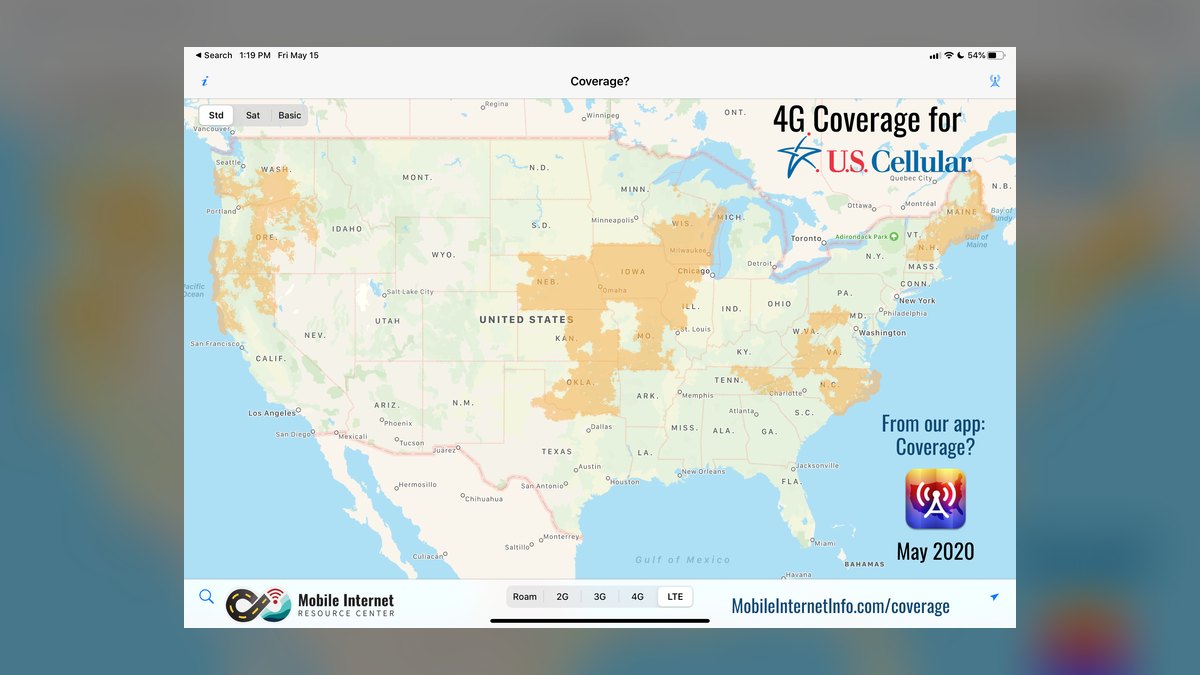
Network architecture determines raw coverage and capacity. The three national carriers—AT&T, T-Mobile, and Verizon—each operate their own physical networks with distinct strengths. T-Mobile has invested heavily in mid-band spectrum for urban and suburban speed, while Verizon historically leads in rural coverage density. AT&T balances both with strong business-oriented features. Regional carriers like UScellular and C Spire fill gaps in specific states, and their roaming agreements with national carriers extend their reach.

Spectrum holdings matter because low-band spectrum (600-700 MHz) travels farther and penetrates buildings better, while mid-band (2.5-3.7 GHz) offers faster speeds over shorter distances. A carrier's spectrum portfolio in your specific county determines whether you get 50 Mbps or 300 Mbps in your living room. You can check each carrier's coverage map, but these maps are optimistic—third-party tools like OpenSignal or CellMapper provide real-world speed tests from actual users in your area.
Pricing strategy drives the plan structure. Postpaid plans from major carriers include perks like streaming subscriptions, device financing, and international features, but they carry higher monthly costs and additional taxes and fees. Prepaid plans from the same carriers use the identical network with lower priority during congestion, but they cost 20-40 percent less. MVNOs (Mobile Virtual Network Operators) like Mint Mobile, Visible, and Cricket lease network access and offer even lower prices, though they may cap speeds or deprioritize data during peak times.
Device compatibility is the final driver. A phone must support the carrier's specific LTE and 5G bands, VoLTE implementation, and Wi-Fi calling configuration. Most modern unlocked phones from Apple and Samsung work across all three networks, but budget Android devices may lack critical bands. You can verify compatibility by entering your phone's IMEI number on the carrier's website—a process that takes under two minutes but prevents months of frustration.
Benchmarks and realistic ranges

Realistic benchmarks help you evaluate carrier options without falling for marketing claims. For data usage, the average American smartphone user consumes approximately 15-20 GB per month in 2027, but that number skews heavily by age and activity. Heavy streamers who watch video on their phones daily may exceed 50 GB, while light users who primarily text and browse might stay under 5 GB. Your carrier plan should match your 90th percentile usage, not your average, to avoid overage fees or throttling.
Speed benchmarks vary dramatically by location and time. In dense urban areas, you should expect 100-300 Mbps download speeds on mid-band 5G during off-peak hours, dropping to 20-60 Mbps during evening congestion. In suburban and rural areas, speeds of 10-50 Mbps are realistic, and anything above 5 Mbps is sufficient for video streaming and video calls. You can test real-world speeds in your area using Ookla's Speedtest app, which aggregates millions of crowdsourced results.
Pricing benchmarks for 2027 show a clear spectrum. Major postpaid carriers charge $65-85 per month for a single line with unlimited data, plus $5-10 in taxes and fees. Prepaid plans from the same carriers run $40-60 per month with the same network access but lower priority. MVNOs offer unlimited data for $25-40 per month, with some budget options providing 5-10 GB for $15-20. Family plans with four lines reduce per-line costs to $30-45 on postpaid and $15-25 on MVNOs.
Coverage benchmarks are harder to quantify but equally important. The three national carriers each claim 99% population coverage, but population coverage masks geographic gaps. If you live in a metro area, all three carriers will likely work well. If you live in a rural county or travel frequently to remote areas, you should check coverage at your specific home address, workplace, and regular travel routes. A carrier that covers 90% of your daily locations is a better choice than one that covers 99% of the country but fails at your home.

Device financing benchmarks also matter. Postpaid carriers offer 24-month financing with 0% APR, effectively spreading a $1,000 phone across $41.67 per month. Prepaid and MVNO plans typically require you to buy the phone upfront or use third-party financing with interest. If you upgrade frequently, postpaid financing makes sense. If you keep phones for three years or more, buying unlocked and using a prepaid plan saves hundreds of dollars annually.
Risks, edge cases, and failure modes
Choosing a carrier involves several failure modes that can turn a seemingly good decision into a frustrating experience. The most common failure is relying solely on coverage maps, which are generated from predictive models rather than actual testing. A carrier may show strong coverage at your address but deliver weak signals inside your home due to building materials, window placement, or nearby interference. Always check third-party speed test data and ask neighbors or coworkers about their real-world experience.
Deprioritization is another frequent failure, particularly with prepaid and MVNO plans. During network congestion, carriers prioritize postpaid traffic, meaning your prepaid plan may drop from 100 Mbps to 5 Mbps during peak hours. If you rely on your phone for work video calls or streaming during evening hours, this can make an otherwise good plan unusable. The solution is to test your plan during peak hours in the first 30 days—most carriers offer a trial period or money-back guarantee.

Device compatibility issues cause significant frustration. A phone that works perfectly on one carrier may lack the necessary band support for another. For example, some international unlocked phones lack the specific 5G bands used by US carriers, resulting in 4G-only speeds or no service at all. Always verify your phone's IMEI on the carrier's website before porting your number. If you plan to buy a new phone, confirm that the specific model number matches the carrier's supported devices list.
International travel presents another edge case. Postpaid plans from major carriers include free international roaming in Canada and Mexico, with daily passes for other countries. Prepaid and MVNO plans often lack international roaming entirely, requiring you to purchase eSIM data plans from third-party providers like Airalo or Holafly. If you travel internationally more than twice per year, factor roaming costs into your total carrier comparison.
Family plan mismatches occur when a single carrier choice must satisfy multiple users with different needs. A family with one heavy streamer, one light user, and two children requires a plan that balances shared data pools, parental controls, and individual usage caps. Some carriers offer granular family management tools, while others provide minimal control. Test the family management interface before committing—the ability to set data limits and block certain content may outweigh a slightly higher monthly cost.
The final failure mode is switching costs. Porting your number, updating autopay, and changing your phone's carrier settings takes time and can introduce billing errors. Most carriers require you to maintain service for a minimum period—often 30-60 days—to qualify for promotional pricing. If you switch carriers and discover a coverage problem, you may face early termination fees or lose promotional credits. Mitigate this by using the carrier's trial period, which typically lasts 7-30 days, and by keeping your old SIM card until you are confident in the new service.
A practical rollout plan

Implementing your carrier choice requires a systematic approach to avoid mistakes and maximize savings. The following plan takes approximately two weeks from start to finish and can be completed with minimal disruption to your daily phone usage.
Begin with a usage audit. Review your last three months of carrier bills to identify your average and peak data consumption. Most carrier apps show detailed breakdowns by day and by app. Also run speed tests at your home, office, and other frequent locations using the Speedtest app or similar tools. Record the results for each location, noting the time of day and the carrier you are currently using.
Next, map your coverage needs. List every location you visit weekly, including your home, workplace, gym, grocery store, and any regular commute routes. For each location, note whether you need voice calls, data, or both. If you travel for work or vacation, add those destinations as well. This map becomes your checklist for evaluating carriers.

With your usage audit and coverage map complete, research plan options. Visit the websites of the three major carriers plus two or three MVNOs that operate on their networks. Compare plans based on your data needs, international requirements, and family size. Create a spreadsheet with columns for monthly cost, taxes and fees, data priority, hotspot allowance, and included perks. You should have at least five viable options by the end of this step.
Verify device compatibility before testing. Enter your phone's IMEI number on each carrier's website to confirm it will work with their network. Pay attention to whether the phone supports 5G on that carrier's specific bands, and whether features like Wi-Fi calling and visual voicemail are supported. If your phone is incompatible with a carrier, eliminate that carrier from consideration unless you are willing to buy a new device.
Select your top two carriers and activate trial periods. Both T-Mobile and Verizon offer network trial apps that let you test their coverage without switching. AT&T and some MVNOs offer 30-day money-back guarantees. Use your coverage map to test each carrier at every location on your list, paying attention to signal strength, data speeds, and call quality. Keep a notebook or notes app to record results for each location.
Once you have selected your carrier, port your number and activate your plan. Keep your old SIM card in a safe place until your new service is confirmed working. After activation, monitor your first bill carefully to ensure that promotional credits, autopay discounts, and device trade-in values are applied correctly. If you notice discrepancies, contact customer support within the first 30 days to resolve them.

Finally, review your plan after 60-90 days. Usage patterns change, and your initial plan may not match your actual behavior. Most carriers allow you to change plans without penalty, and downgrading to a lower-tier plan can save money if you are consistently under your data allowance. Conversely, if you frequently hit your data cap, upgrading may be worth the additional cost to avoid throttling.
Related questions
How do I know if my current phone is compatible with a new carrier?
Check your phone's IMEI number on the carrier's website or use the "Bring Your Own Device" tool. This verifies network band support, VoLTE compatibility, and 5G access. Most modern unlocked phones work on all three major networks, but budget or international models may lack critical bands.
What is the difference between prepaid and postpaid plans in 2027?
Prepaid plans require upfront payment and offer no credit check, while postpaid plans bill monthly and often require a credit check. Prepaid plans cost 20-40 percent less but may have lower data priority during congestion. Postpaid plans include device financing, international roaming, and premium perks like streaming subscriptions.
How much data do I actually need per month?
The average user consumes 15-20 GB monthly, but heavy streamers may exceed 50 GB. Review your past three months of usage in your carrier app. Choose a plan that covers your 90th percentile usage to avoid overage fees or throttling. If you use under 5 GB, a budget prepaid plan is likely sufficient.
Do MVNOs really save money without sacrificing quality?

MVNOs like Mint Mobile, Visible, and Cricket operate on the same networks as major carriers and can save you 30-50 percent monthly. The trade-off is lower data priority during peak congestion and fewer perks like international roaming or device financing. For most users, the savings outweigh these limitations.
What should I do if I have poor coverage with my new carrier?
Use the carrier's trial period or money-back guarantee within the first 30 days. If the trial window has passed, contact customer support to troubleshoot—they may provide a signal booster or Wi-Fi calling solution. If coverage remains inadequate, switch carriers and port your number back to your previous carrier.
FAQ
What is the best carrier for rural areas in 2027?
Verizon and AT&T historically lead in rural coverage, but T-Mobile has improved significantly with its 600 MHz spectrum. Check third-party coverage maps and test the network at your specific address. Regional carriers like UScellular may offer better coverage in their service areas. Never rely on marketing coverage maps alone—always verify with real-world tests.
How do carrier taxes and fees affect the total cost?
Postpaid plans from major carriers add 10-20 percent in taxes and regulatory fees, while prepaid plans typically include taxes in the advertised price. For a $70 postpaid plan, expect to pay $77-84 total. MVNOs often advertise all-inclusive pricing. Always calculate the total monthly cost, not just the base plan price, when comparing carriers.
Can I keep my phone number when switching carriers?
Yes, by law you can port your number to any carrier. The process takes 1-24 hours and requires your account number and PIN from your current carrier. Do not cancel your current service before initiating the port, as this can cause number loss. Your new carrier will guide you through the process.
What is the best way to test a carrier before switching?
Use the carrier's free trial app or network trial program. T-Mobile offers a 90-day trial, and Verizon offers a 30-day trial. AT&T and many MVNOs offer 30-day money-back guarantees on service. Test coverage at your home, office, and regular travel routes during both peak and off-peak hours.
How often should I review my carrier plan?
Review your plan every 6-12 months or whenever your usage patterns change significantly. Carriers frequently update their plans, and new MVNOs enter the market with competitive pricing. If you switch jobs, move to a new home, or start traveling more, re-evaluate your carrier immediately. A 15-minute review could save you $20-40 monthly.
Do I need a 5G plan, or is 4G LTE sufficient?
Most carriers now include 5G access in all plans, so there is rarely a cost difference. 5G offers faster speeds and lower latency, but 4G LTE remains adequate for streaming, video calls, and browsing. If you live in an area with poor 5G coverage, you will automatically fall back to 4G. Focus on coverage and price rather than 5G marketing claims.
Sources
https://www.fcc.gov/consumers/guides/cell-phone-service-quality https://www.verizon.com/support/coverage-map/ https://www.t-mobile.com/coverage/coverage-map https://www.att.com/maps/coverage.html https://www.ookla.com/network-intelligence https://www.consumerreports.org/cell-phone-service-plans/ https://www.pcmag.com/picks/the-best-cell-phone-plans https://www.cnet.com/tech/mobile/best-cell-phone-plans/ https://www.uscellular.com/coverage https://www.whistleout.com/CellPhones/Guides/How-to-Choose-Cell-Phone-Plan
Related on PULSE
- How to compare unlimited data plans across carriers
- The complete guide to switching carriers without losing your number
- Understanding 5G coverage maps and what they really mean
- Prepaid vs. postpaid: calculating the true cost of your phone plan
- How to maximize trade-in value when upgrading your phone
- Family plan strategies: balancing data, cost, and parental controls
This page will be disappearing soon. Save it to your device for $1 — or read it free while it is here.
@Kory-White- · if Venmo asks, the last 4 of my number are 2012
This page is gone.
This one is off the shelf now. $1 keeps it on your phone for good — the whole page, pictures and diagrams included.
 telcoBest Cellular and Wireless Carrier in Fresno in 2027
 telcoBest Cheap Cell Phone Plans in 2027
 telcoBest Cellular and Wireless Carrier in Charleston in 2027
 telcoIs 5G home internet good enough to replace cable in 2027?
 telcoBest Cellular and Wireless Carrier in Greensboro in 2027
 telcoBest Cellular and Wireless Carrier in North Dakota in 2027
 telcoBest Pay-As-You-Go Cell Phone Plans in 2027
 telcoBest Cellular and Wireless Carrier in Fort Wayne in 2027
 telcoBest Cellular and Wireless Carrier in Dayton in 2027
 telcoBest Cellular and Wireless Carrier in South Dakota in 2027