


What does SpaceX buying 800 MHz spectrum mean for Verizon, AT&T and T-Mobile in 2027?
Quality
Certified
SpaceX's agreement to acquire Grain Management's nationwide 800 MHz portfolio gives Starlink up to 14 MHz of paired low-band spectrum, turning it from a satellite partner into a potential facilities-based mobile carrier. Verizon, AT&T and T-Mobile all sold off on the October 9, 2026 news — AT&T fell 6.6%, Verizon 7.23%, T-Mobile 6.79% — because low-band reaches indoors and most phones already support it.
What it is and why it matters
The transaction itself is straightforward on paper: SpaceX agreed on October 9, 2026 to acquire 100% of Grain Management's nationwide 800 MHz portfolio, which comprises up to 14 MHz of paired spectrum in the 817–824 MHz and 862–869 MHz bands. SpaceX framed the deal as one that would "pave the way for Starlink to become a major mobile carrier in the US." That single sentence is the whole story. Everything else — the carrier stock moves, the regulatory questions, the 2027 planning problem — flows from the fact that a satellite operator just bought terrestrial low-band airwaves with the stated intent of becoming a mobile network operator rather than a wholesale partner to one.
Why 800 MHz specifically matters more than the raw megahertz count suggests comes down to physics. Low-band spectrum in the 800 MHz range propagates well over distance, bends around terrain and buildings, and — critically — penetrates walls and roofs. That is the opposite of the millimeter-wave and mid-band capacity layers that carry most mobile data today. A satellite beam can reach a handset outdoors in a field, but it struggles to reach a handset in a basement, a stairwell, a parking garage or the interior of a warehouse. Terrestrial 800 MHz fills exactly that gap. It is the same reason the incumbent carriers built their coverage reputations on 700 MHz, 800 MHz and 850 MHz holdings in the first place: low-band is the layer that determines whether a customer sees bars indoors.
The second reason it matters is hardware. Because 800 MHz is an established cellular band, most existing phones already support it. That means Starlink would not need to convince customers to buy new handsets to use the service — a massive adoption friction that has constrained other satellite-to-phone efforts. The combination of indoor penetration and existing device support is what converts a satellite story into a competitive threat to terrestrial carriers.
The third reason is scale of ambition. In the same week, the FCC approved SpaceX's application to deploy and operate 15,000 next-generation Starlink satellites for its direct-to-device Starlink Mobile service. Fifteen thousand satellites is not a niche experiment. It is infrastructure sized for a national — eventually international — consumer service. Put the spectrum and the constellation together and you have the two halves of a mobile network: a radio access layer in the sky and a licensed terrestrial layer on the ground.
For Verizon, AT&T and T-Mobile, the strategic implication is that the wholesale-partner model they have been negotiating around — where satellite operators supplement terrestrial coverage and carriers keep the customer relationship — is no longer the only plausible end state. SpaceX is now positioned to compete for the customer relationship directly. That is a different business, a different margin structure, and a different set of questions for anyone doing 2027 planning.
The market reaction tells you how seriously investors took it. AT&T shares fell 6.6% to about $23. Verizon fell 7.23% to about $43. T-Mobile fell 6.79% to about $159.70. Those are not the moves you see when the market believes a new entrant will be a benign supplier. They are the moves you see when the market reprices the risk that a new competitor takes share in the highest-value segment of the market.
It is worth being precise about what has and has not been announced. There is no announced launch date for a commercial Starlink Mobile service. There is no announced price, no plan name, and no subscriber count. Anyone presenting those as facts is guessing. The deal is an agreement to acquire; it is subject to regulatory review and closing. The FCC's approval of the 15,000-satellite deployment is a separate action that happened the same week. What exists today is intent, spectrum, a constellation authorization, and a market that has already started pricing the outcome.
For a RevOps or telecom strategy team, the practical takeaway from this section is that the 2027 planning environment now contains a variable that did not exist before: a fourth national-ish competitor with low-band spectrum, indoor reach, no handset switching cost, and a stated ambition to be a carrier. Whether or not it succeeds, that variable changes how you model churn, how you price retention offers, and how you think about the value of your own low-band coverage claims.
The step-by-step process
Understanding how a deal like this actually turns into a competitive threat in 2027 requires walking through the sequence, because the timeline is not instantaneous. Each step has its own gate, and each gate is a place where the outcome could change.
Step one is the agreement itself, announced October 9, 2026. This is a contract, not a completed transfer. The portfolio comes from Grain Management, which had assembled nationwide 800 MHz holdings. Up to 14 MHz of paired spectrum — 817–824 MHz for uplink and 862–869 MHz for downlink — is the asset being acquired. Paired spectrum matters because mobile networks need both directions; unpaired holdings are far less useful for a two-way consumer service.
Step two is regulatory review. Spectrum transfers of this type require approval, and the review will examine competitive effects, public interest considerations, and whether the acquirer is qualified to hold the licenses. This is the first real gate. Historically, spectrum transfers between commercial parties are approved with conditions or approved outright, but a transfer that explicitly positions a new national competitor against three incumbents invites scrutiny and comment. The timeline here is not something to assume; it depends on the review.
Step three is the branch point. If the deal does not close, SpaceX remains what it has largely been — a satellite operator that partners with terrestrial carriers rather than competing with them. If it closes, SpaceX holds a nationwide low-band position, and the strategic picture changes permanently.
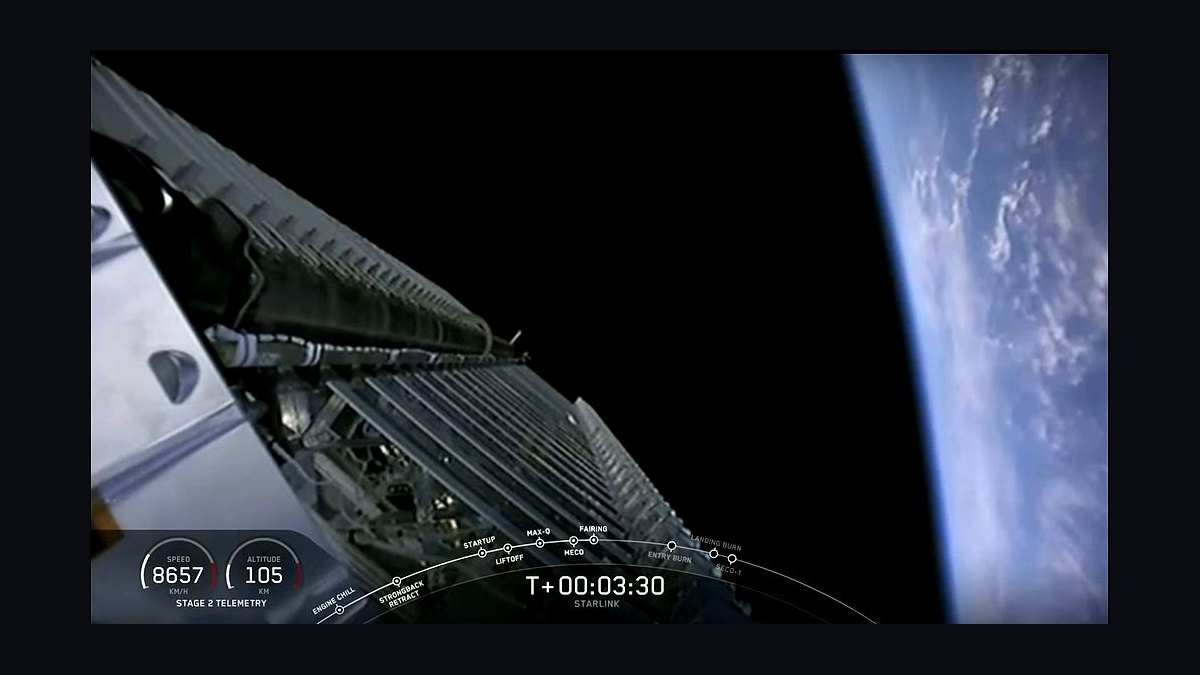
Step four is constellation deployment. The FCC approved SpaceX's application to deploy and operate 15,000 next-generation Starlink satellites for direct-to-device service. Deployment of that scale takes time — manufacturing, launch cadence, orbital insertion, and service activation all have to happen. The authorization is the permission; the deployment is the capability.
Step five is integration. This is the technically interesting part and the part that determines whether the threat is real. Terrestrial 800 MHz and satellite direct-to-device are complementary layers. The satellite reaches areas with no terrestrial coverage; the 800 MHz reaches indoors where satellite signals cannot. A handset that can use both, with the network steering between them, delivers something neither layer delivers alone: coverage that works in the city, in the building, and in the middle of nowhere. That is a genuinely differentiated product.
Step six is commercial launch. This is where the announced facts run out. No launch date, price, plan name or subscriber target has been announced. A commercial service requires billing, customer care, device certification, retail or digital distribution, and all the operational machinery of a carrier. SpaceX has demonstrated it can build and operate large satellite networks; running a consumer mobile business is a different competency.
Step seven is the competitive response. Once a service exists, the incumbents respond with pricing, retention offers, coverage claims, and possibly wholesale or roaming arrangements. The incumbents may also try to compete on their own satellite partnerships, which several have already pursued.
Step eight is the planning reset. By 2027, the question for Verizon, AT&T and T-Mobile is not whether Starlink Mobile has launched everywhere — it is whether the credible threat of it has already changed customer behavior, investor expectations, and the terms of any wholesale deals on the table.
The reason to lay this out as a sequence rather than a single event is that it tells you what to monitor. Watch the regulatory docket. Watch launch cadence. Watch for any commercial announcements. Watch the incumbents' wholesale and satellite partnership moves. Each of those is an observable signal that moves the probability of the end state.
Costs, timelines, and typical ranges
.jpg)
This is where discipline matters most, because the honest answer to "what will this cost and when" is that the publicly announced facts do not include a price, a launch date, a plan structure or a subscriber target for Starlink Mobile. Anyone quoting those numbers is inventing them. What can be discussed with rigor is the shape of the economics and the ranges that comparable situations suggest.
Start with the spectrum. Up to 14 MHz of paired nationwide 800 MHz is a meaningful but not enormous holding. For context, the major carriers hold low-band positions in the tens of megahertz in many markets, and mid-band holdings in the hundreds of megahertz. Fourteen megahertz of low-band is not enough to be a capacity leader. It is enough to be a coverage leader in the specific sense that matters: it can carry voice and basic data indoors and in rural areas where higher bands do not reach. That is a coverage play, not a capacity play, and coverage is what drives customer perception of network quality.
The strategic value of that coverage layer is disproportionate to its bandwidth. Customers churn over dead zones and dropped calls far more than they churn over peak download speeds. A carrier that can credibly say "we work in your basement and on the highway" wins consideration even if its peak speeds are lower. That is the value SpaceX is buying with 800 MHz.
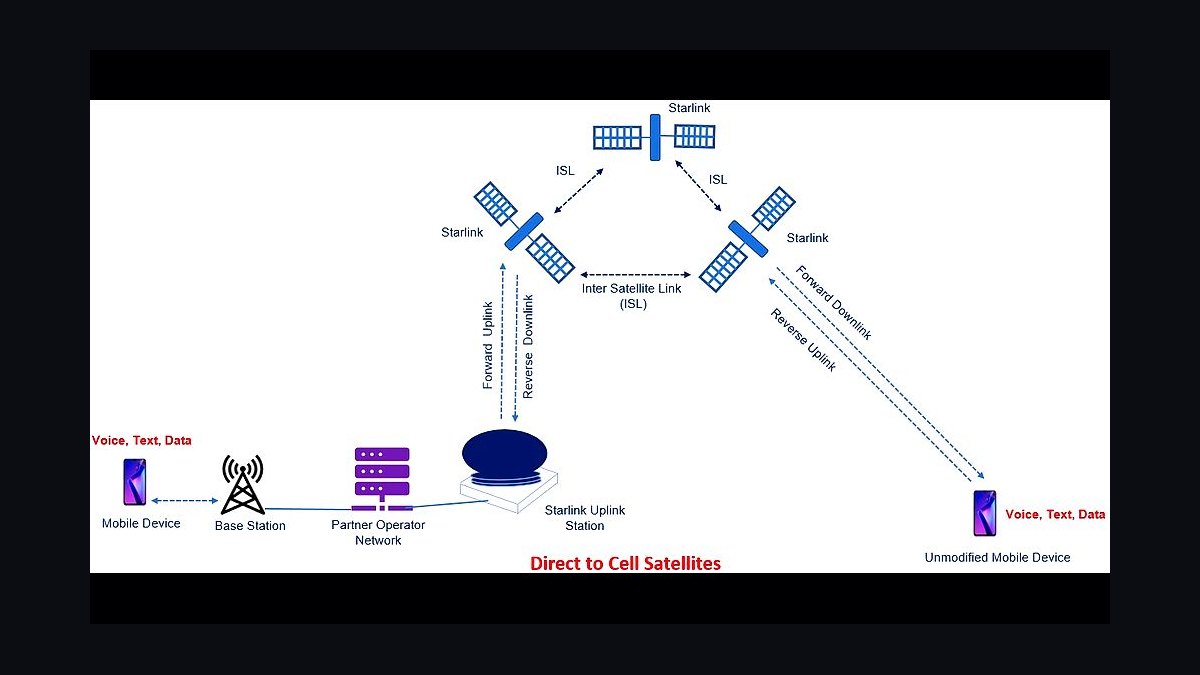
On cost, the relevant categories are: the acquisition price for the spectrum (not disclosed), the capital cost of deploying and operating 15,000 satellites (very large, multi-year, and SpaceX's launch cost advantage is the reason it can contemplate it), the cost of terrestrial network integration, and the ongoing cost of running a consumer mobile business. The last category is the one satellite companies historically underestimate. Customer acquisition cost, billing, care, fraud, device certification and regulatory compliance are terrestrial-carrier competencies, not rocket competencies.
On timeline, the realistic ranges are long. Spectrum transfer review typically takes months, not weeks, and can take longer with contested proceedings. Deployment of a 15,000-satellite constellation is a multi-year program even at aggressive launch cadence. Commercial service at scale in 2027 is possible but not assured, and full national parity with terrestrial coverage is further out. The prudent planning assumption is that 2027 is the year the threat becomes concrete in strategy discussions, not necessarily the year it becomes concrete in subscriber numbers.
On pricing, the comparable logic is that a new entrant with a coverage-differentiation story and no legacy cost structure has room to price aggressively, but also that satellite capacity is expensive per gigabyte relative to terrestrial. The likely structure — and this is inference, not announcement — is a service positioned around coverage and reliability rather than unlimited high-speed data, possibly bundled or tiered. Do not build a model on a specific number.
On subscriber outcomes, the range that matters for incumbent planning is not "how many subscribers does Starlink Mobile win" but "how many incumbent subscribers does the existence of the option affect." Even a modest direct subscriber base can move churn and pricing if it changes the outside option customers perceive. That is the number to model: the elasticity of incumbent churn to a credible fourth option, not the entrant's absolute share.
A useful sanity-check framework: for each of Verizon, AT&T and T-Mobile, ask three questions. First, what share of your subscriber base lives or works in areas where your indoor coverage is weakest? Second, what share of your churn is attributed to coverage complaints? Third, what would you have to spend on retention if a competitor credibly solved indoor coverage for those customers? The answers give you the exposure, and the exposure is the cost of this deal to the incumbents regardless of what SpaceX charges.
Where teams get it wrong
The most common error is treating this as a satellite story. It is not. Satellite-only service has real limits — outdoor line-of-sight, capacity constraints, latency considerations — and if the analysis stops there, the conclusion is that the threat is niche. The 800 MHz acquisition is precisely what changes that conclusion, because low-band terrestrial spectrum penetrates walls and roofs and most existing phones already support the band. Teams that file this under "satellite curiosity" will miss the indoor-coverage angle that makes it competitive.
The second error is assuming customers need new hardware. They do not, for the 800 MHz layer. That removes the single biggest adoption friction a new entrant normally faces. Any churn model that assumes a hardware upgrade cycle as a buffer is wrong.
The third error is assuming the incumbents are unaffected because they have more spectrum and more subscribers. The market did not agree: AT&T fell 6.6% to about $23, Verizon fell 7.23% to about $43, and T-Mobile fell 6.79% to about $159.70 on the news. Incumbency is an advantage, not immunity. The market repriced because the new entrant attacks the specific dimension — indoor and rural coverage — that incumbents use to justify premium pricing.
The fourth error is inventing specifics. There is no announced launch date, price, plan name or subscriber count for Starlink Mobile. Teams that put placeholder numbers into a board deck and forget to label them as assumptions create false precision that later drives bad decisions. Label every unannounced figure as an assumption, and tie it to an observable trigger.
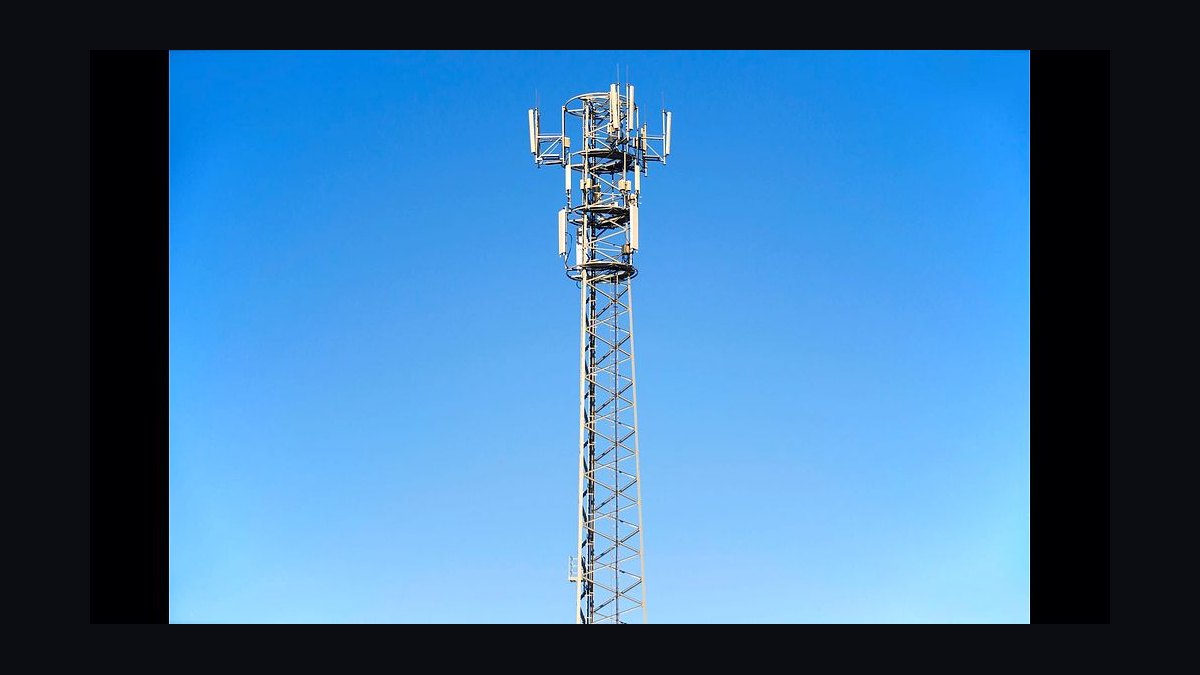
The fifth error is ignoring the wholesale angle. Before this deal, the natural relationship between satellite operators and carriers was partnership: satellite fills gaps, carrier keeps the customer. That model is still available, but it is no longer the only model. Incumbents that assume they will remain the customer-facing brand in any satellite arrangement may find the terms have changed.
The sixth error is treating the FCC's 15,000-satellite approval and the spectrum acquisition as the same event. They are separate actions that happened the same week and reinforce each other, but they have different timelines and different risk profiles. Conflating them makes it harder to track which gate has actually been passed.
The seventh error is planning only for the success case or only for the failure case. The decision-relevant scenario is the middle one: the deal closes, deployment proceeds, a commercial service launches with meaningful but not dominant reach, and the incumbents face a permanent change in the competitive set. That is the scenario that should drive 2027 planning, with upside and downside branches documented.
The eighth error is underweighting the coverage-claim marketing problem. If a competitor can say "we work indoors and in rural areas" and back it with low-band physics, incumbent marketing that leans on coverage superiority becomes harder to sustain. That is a brand and messaging exposure, not just a network exposure, and it belongs in the planning conversation.
Decision framework: when to choose what
For an incumbent carrier or a RevOps team supporting one, the useful output of this analysis is not a prediction. It is a set of conditional decisions tied to observable triggers. The framework below maps the major strategic choices to the conditions under which each makes sense.
The first branch is the delay case. If the deal is still in review or deployment is behind, the correct posture is to maintain the current plan while preserving optionality — including the option to partner with SpaceX on wholesale terms rather than compete head-on. The cost of preserving that optionality is low; the cost of foreclosing it prematurely is high.

The second branch is limited reach. If a service launches with meaningful coverage but limited capacity or geographic scope, the right response is defensive and targeted. Identify the subscriber segments with the highest coverage-driven churn — rural, indoor-heavy, mobile-first — and invest in retention and in your own indoor coverage story. Do not reprice the whole base for a threat that affects a segment.
The third branch is broad reach. If the service launches with broad coverage and competitive pricing, the response has to be structural: reprice the coverage premium, pursue wholesale or roaming arrangements that keep the customer relationship, and accelerate your own satellite or low-band strategy. This is the expensive branch, and it is the one the market is already partially pricing.
Across all branches, the recurring actions are the same: track the regulatory docket, track launch cadence, track any commercial announcement, and track the incumbents' own satellite partnership moves. Each of those is a trigger that should cause a documented reassessment rather than an ad hoc reaction.
For a RevOps practitioner specifically, the framework translates into three operational asks. First, build a coverage-exposure model that quantifies how much of the base is vulnerable to an indoor-coverage competitor. Second, build a churn-elasticity assumption with explicit triggers, so that the model updates when news breaks rather than when the quarter closes. Third, build a scenario deck with the three branches above so that leadership can make a decision in days rather than weeks when a trigger fires.
The discipline that makes this work is refusing to treat any unannounced figure as a fact. Price, launch date, plan name and subscriber count for Starlink Mobile have not been announced. The framework is designed to function without them, using triggers instead of forecasts. That is the difference between a plan that survives contact with 2027 and one that has to be rebuilt when the first real number arrives.
Related questions
What did SpaceX actually agree to buy?
On October 9, 2026, SpaceX agreed to acquire 100% of Grain Management's nationwide 800 MHz portfolio — up to 14 MHz of paired spectrum at 817–824 MHz and 862–869 MHz — saying the deal would "pave the way for Starlink to become a major mobile carrier in the US."
Why did all three carriers' stocks fall?
Investors repriced competitive risk. AT&T fell 6.6% to about $23, Verizon fell 7.23% to about $43, and T-Mobile fell 6.79% to about $159.70 on October 9, 2026, because low-band 800 MHz reaches indoors and most phones already support it.
Do customers need new phones for this?
No. Low-band 800 MHz penetrates walls and roofs and is supported by most existing handsets, so the service would not require a hardware upgrade cycle — removing the biggest adoption friction a new entrant normally faces.
Has Starlink Mobile announced pricing or a launch date?
No. No launch date, price, plan name or subscriber count has been announced. Any specific figure circulating is an assumption, not a disclosed fact, and should be labeled as such in planning models.
What did the FCC approve the same week?
The FCC approved SpaceX's application to deploy and operate 15,000 next-generation Starlink satellites for its direct-to-device Starlink Mobile service — a separate action from the spectrum acquisition that reinforces the same strategic direction.
FAQ
Does this mean SpaceX becomes a full mobile carrier?
It means SpaceX has stated that intent and acquired the spectrum to pursue it. Whether it operates as a full facilities-based carrier, a hybrid, or a wholesale partner is not yet determined. The spectrum and the 15,000-satellite authorization give it the option; commercial execution is unproven.
Why is 800 MHz more threatening than higher-band spectrum?
Because low-band propagates farther, bends around obstacles, and penetrates walls and roofs. It is the layer that determines indoor and rural coverage — the dimension customers actually churn over — rather than peak capacity, which is where higher bands matter.
How should incumbents model the churn impact?
Model the elasticity of churn to a credible fourth option rather than the entrant's absolute subscriber share. Even a modest direct base can move incumbent pricing and retention spend if it changes the outside option customers perceive.
What are the key triggers to monitor?
The regulatory docket for the acquisition, Starlink launch cadence, any commercial announcement of pricing or launch, and the incumbents' own satellite partnership moves. Each should trigger a documented reassessment.
Is 2027 the year this becomes real?
2027 is plausibly the year the threat becomes concrete in strategy and pricing discussions. Full national parity is further out, and no launch date has been announced, so planning should be trigger-based rather than date-based.
What is the biggest analytical mistake here?
Treating it as a satellite story. The 800 MHz acquisition is what makes it a terrestrial coverage story, and the indoor penetration plus existing-handset support is what makes it competitive rather than niche.
Sources
- https://www.reuters.com/
- https://www.fcc.gov/
- https://www.sec.gov/
- https://www.spacex.com/
- https://www.starlink.com/
- https://www.verizon.com/about/investors
- https://investors.att.com/
- https://investor.t-mobile.com/
Related on PULSE
- How low-band spectrum shapes indoor coverage claims
- What satellite direct-to-device means for carrier churn models
- Building a trigger-based competitive response framework
- Spectrum acquisition timelines and regulatory review basics
- Wholesale versus facilities-based satellite partnerships
- Coverage-driven churn: measuring the segment that matters
This page will be disappearing soon. Save it to your device for $1 — or read it free while it is here.
@Kory-White- · if Venmo asks, the last 4 of my number are 2012
This page is gone.
This one is off the shelf now. $1 keeps it on your phone for good — the whole page, pictures and diagrams included.
 telcoBest Cellular and Wireless Carrier in Washington in 2027
 telcoDo I need a separate plan line for a smartwatch in 2027?
 telcoHow should wireless retailers and authorized dealers prepare for Starlink Mobile in 2027?
 telcoBest Cellular and Wireless Carrier in Greensboro in 2027
 telcoAre phone trade-in deals actually worth it in 2027?
 telcoBest Cellular and Wireless Carrier in Fort Wayne in 2027
 telcoBest Satellite Internet Providers in 2027
 telcoBest Cellular and Wireless Carrier in Denver in 2027
 telcoBest Cellular and Wireless Carrier in Birmingham in 2027
 telcoBest Cellular and Wireless Carrier in Hartford in 2027