
Should I Hire a Fractional CRO If I Am Losing Deals to a Cheaper Competitor?
 Curated byKory White · Fractional CRO · Maryland
 PULSEKNOWLEDGE LIBRARY
Quality
Certified

Yes, hiring a fractional CRO is likely a high-ROI move if you are losing more than 20% of your pipeline to price objections, as the real problem is usually weak positioning or sales process rather than price itself. They can diagnose issues, implement competitive battle cards, and restructure pricing faster than a full-time hire, typically within a 6–12 month engagement.
The Real Reason You Are Losing to a Cheaper Competitor
Price is almost never the sole reason a deal is lost. Buyers say "too expensive" because it is a safe, quick exit. The real reasons are usually one of the following: your value proposition is unclear, your sales rep failed to build enough perceived value, your competitor has a more compelling story about ROI, or your product lacks a feature that the buyer considers table stakes. A fractional CRO can run a win/loss analysis that separates stated reasons from actual reasons. They will interview buyers, review call recordings in tools like Gong or Chorus, and identify patterns your team cannot see because they are too close to the deals.
When you lose deals to a cheaper competitor, the immediate instinct is to lower your own price. But this often triggers a downward spiral where margins erode, sales reps become conditioned to discount, and your brand gets repositioned as a commodity. A fractional CRO can help you quantify the true cost of competing on price alone—not just in lost revenue per deal, but in long-term brand equity and customer lifetime value. They will typically start by analyzing your discounting patterns: how often do reps offer a lower price without being asked? Are discounts given early in the sales cycle or only at the end? Do your best customers pay full price or are they also getting concessions? This audit often reveals that the problem is not that your product is too expensive, but that your sales team lacks the confidence or tools to defend the value.

A fractional CRO can also help you build a "value defense" playbook—a set of structured responses to price objections that go beyond simply matching the competitor. For example, they might help you create a total cost of ownership comparison, a risk mitigation argument, or a ROI calculator that shows how your solution saves money over time. These tools shift the conversation from price to value, and they are reusable across the entire sales team. Finally, a fractional CRO can help you decide when to walk away from a deal. Not every prospect is a good fit, and chasing price-sensitive buyers can drain resources and morale. They can help you define your "ideal customer profile" more narrowly, so you spend time on deals where your value proposition is strongest.
What a Fractional CRO Will Actually Do in This Scenario
A fractional CRO will not just tell you to "differentiate your product." They will build a competitive battle card that maps every competitor objection to a specific response. They will redesign your discovery process so that reps uncover the buyer's true pain before presenting price. They will restructure your pricing - possibly introducing tiered packaging, annual discounts, or value-based pricing that makes the cheap competitor look like a risky choice. They will coach your reps on how to handle the "you're more expensive" objection without immediately discounting. And they will hold your team accountable to a new qualification framework that filters out deals you cannot win.

The most common mistake companies make is hiring a fractional CRO and giving them no authority. They need access to your CRM (Salesforce or HubSpot), permission to sit in on calls, a seat at the leadership table, and the ability to change compensation plans if necessary. Without these, they become an expensive advisor who writes reports no one reads. Set a 90-day sprint with three milestones: (1) complete win/loss analysis and competitive positioning, (2) implement new qualification and objection-handling playbooks, (3) see a measurable improvement in win rate on competitive deals. If they cannot show progress by day 90, the engagement is not working.
When interviewing fractional CROs, ask for a specific example of how they helped a company win against a cheaper competitor. Listen for concrete tactics: "We introduced a risk-reversal clause," "We changed the sales deck to emphasize total cost of ownership," or "We created a competitive comparison matrix that exposed hidden costs in the competitor's solution." Vague answers mean they have not done it. A fractional CRO with direct experience in your industry or a similar one—B2B SaaS, professional services, or high-ticket sales—will be far more effective than a generalist.

Should You Hire a Fractional CRO or a Full-Time VP of Sales?
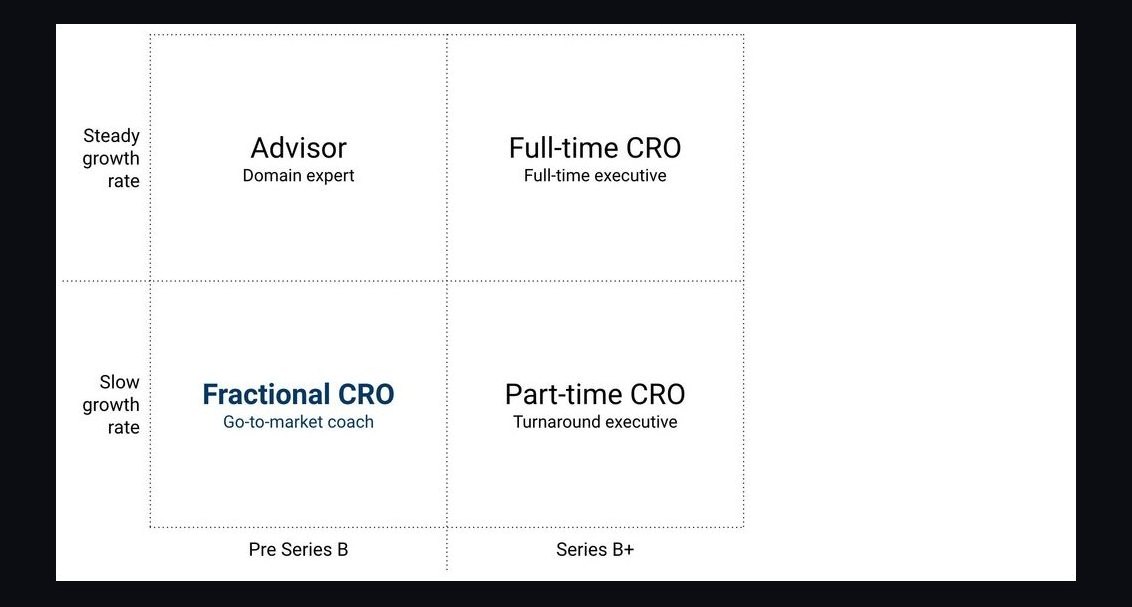
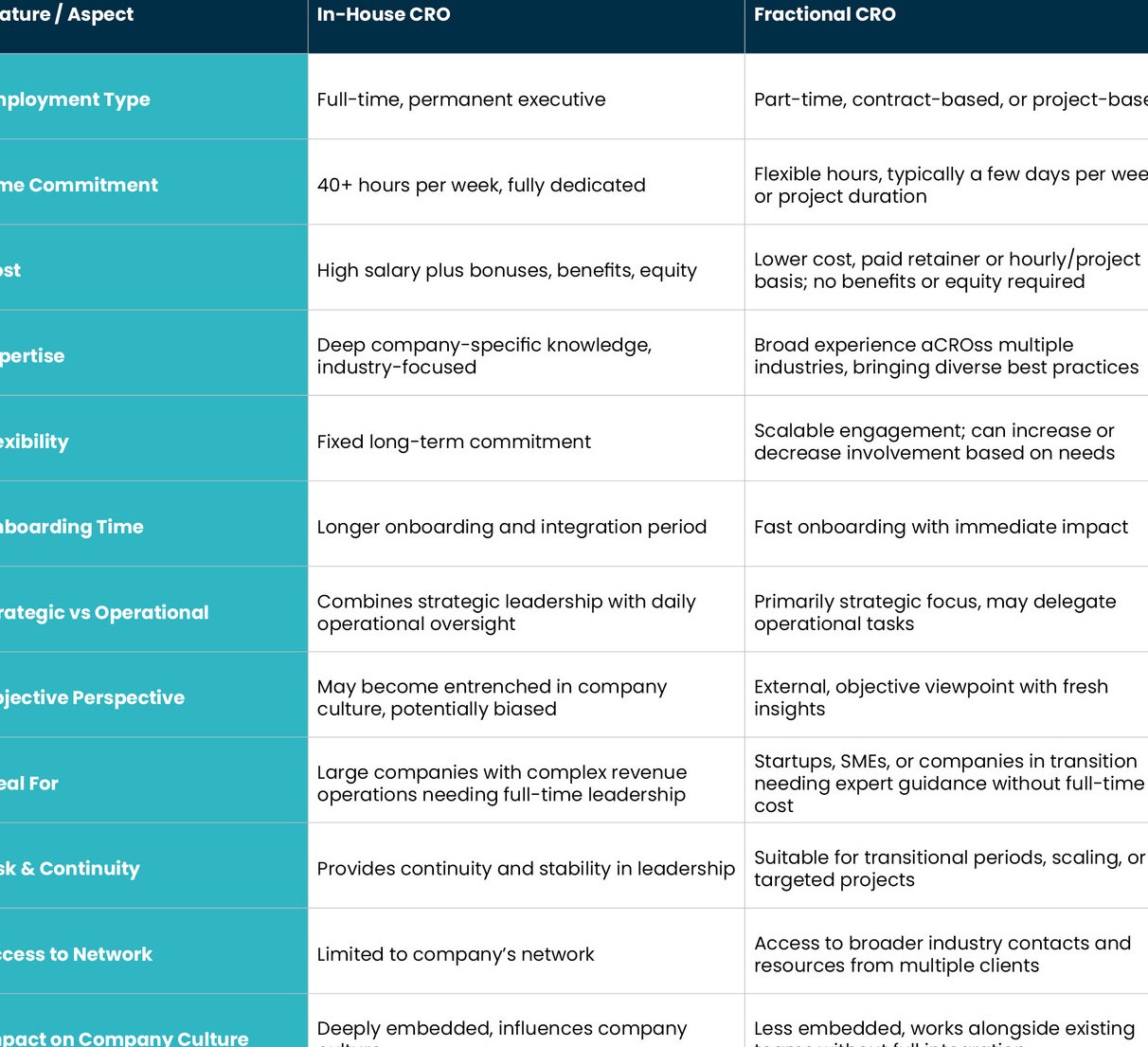
This is the most common fork in the road. A full-time VP of Sales is a long-term investment in building a sales culture, hiring a team, and scaling processes over years. A fractional CRO is a short-term intervention for a specific problem. If your revenue is under $10M ARR and you are losing 20–40% of your pipeline to price, a fractional CRO is the faster, cheaper, lower-risk option. If you are above $10M ARR and need a full-time leader to manage a team of 10+ reps, you probably need a full-time VP. But even then, a fractional CRO can come in first for 90 days to diagnose the problem and write the job description for your full-time hire.
Fractional CROs in 2027 typically charge a retainer for a strategic advisory role (5–10 days of work) and a retainer for a player-coach who is deeply embedded in your sales team (10–15 days). Most engagements run 6–12 months. Some fractional CROs will accept a small equity component (0.5–2%) in exchange for a lower cash fee, but this is uncommon for short-term engagements. You should expect to sign a month-to-month agreement with a 30-day notice clause, so you can exit if it is not working. The cost is a fraction of a full-time CRO salary, which can exceed a retainer plus equity and bonus, making fractional engagements a lower-risk investment for a defined period.

A full-time VP of Sales is better suited for companies that need to build a sales organization from scratch, hire and train a team of reps, and establish long-term processes and culture. They are a better fit when the problem is not just a specific price-war scenario but a systemic lack of sales leadership. However, if your company culture is resistant to change—if the founder or CEO insists on being involved in every deal, or if the sales team is accustomed to heavy discounting—then a fractional CRO may struggle to implement the changes needed. In that case, you might need a more senior, full-time leader who can drive cultural transformation over a longer period.
How a Fractional CRO Restructures Your Pricing Model
Pricing is not just a number on a page—it is a strategic lever that signals value, segments the market, and drives profitability. A fractional CRO can help you move away from a single, flat price that invites comparison shopping and toward a tiered or value-based model that makes price less of a deciding factor. One common approach is to introduce packaging that bundles features or services in a way that makes your solution feel more comprehensive than a cheaper competitor's. For example, you might include onboarding, training, or ongoing support in your base price, while the competitor charges extra for those items. This shifts the comparison from "who is cheaper" to "who gives more value for the price."

Another tactic is to offer a "good-better-best" tiered pricing structure, where the middle tier is positioned as the most popular and the top tier is reserved for customers who need advanced capabilities. This gives the buyer a sense of control and choice, and it often leads to higher average deal sizes because customers self-select into the tier that feels right for them. A fractional CRO can also help you implement pricing experiments—testing small changes like annual vs. monthly billing, per-user vs. flat-rate pricing, or volume discounts. They bring experience from other companies that have run similar tests, so you can avoid common pitfalls and get reliable results faster.
A fractional CRO will also help you build a "value defense" playbook that goes beyond simple price matching. This might include a total cost of ownership comparison that reveals hidden costs in the competitor's solution, a risk mitigation argument that highlights the dangers of switching to an unproven vendor, or a ROI calculator that shows how your solution saves money over time. These tools shift the conversation from price to value, and they are reusable across the entire sales team. They also help your reps feel more confident in defending your pricing, reducing the tendency to offer early discounts that erode margins.

When a Fractional CRO Will Not Help
If your product is genuinely inferior at a higher price, no sales leader can fix that. If your market is commoditized and buyers truly do not care about differentiation, you need a product or pricing change, not a sales intervention. If your team is small (1–2 reps) and you are doing most of the selling yourself, you may just need sales coaching, not a fractional CRO. And if you are not willing to change your pricing, your sales process, or your compensation structure, do not hire anyone - the problem will persist regardless.
A fractional CRO cannot fix a product that is genuinely inferior at the same price point. If your competitor's product is better and cheaper, no amount of sales-process optimization will close that gap. Be honest with yourself: is the problem sales execution or product-market fit? If your win/loss data shows that price is the *only* reason you lose deals (not positioning, not trust, not timing), then the solution may be a pricing overhaul rather than a sales leadership hire. A fractional CRO can still help with that, but you might need a pricing consultant or a product manager instead.

Similarly, if your company culture is resistant to change—if the founder or CEO insists on being involved in every deal, or if the sales team is accustomed to heavy discounting—then a fractional CRO may struggle to implement the changes needed. In that case, you might need a more senior, full-time leader who can drive cultural transformation over a longer period. Finally, if your market is commoditized and buyers truly do not care about differentiation, you need a product or pricing change, not a sales intervention. A fractional CRO is a tool for execution, not a magic bullet for fundamental product-market fit issues.
How to Find and Evaluate a Fractional CRO
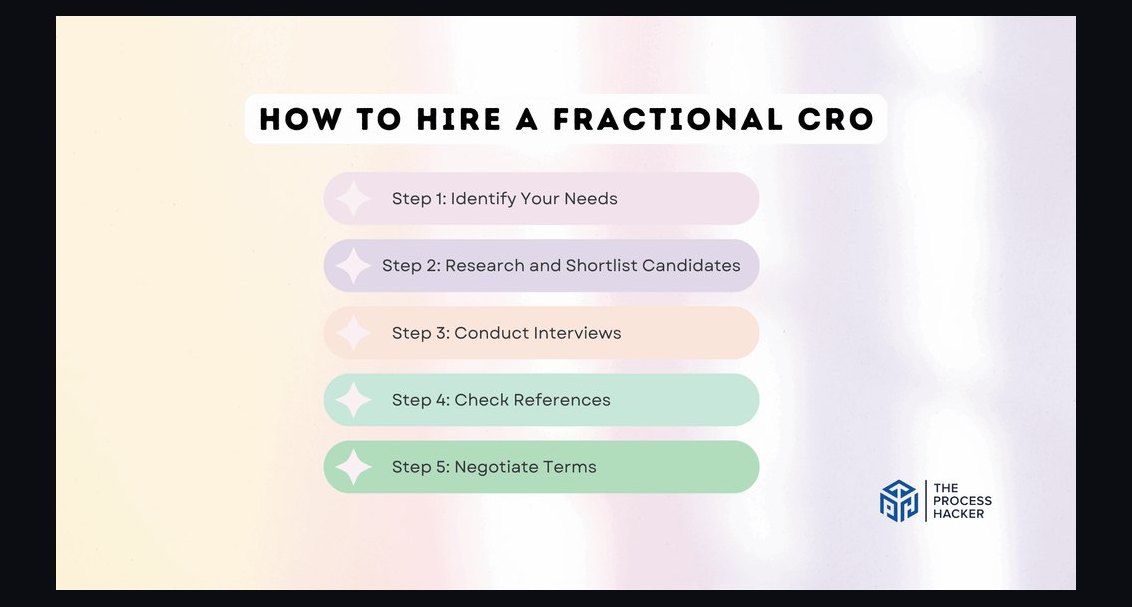
Start with your network: ask other founders in Pavilion or RevOps Co-op for referrals. Look for someone who has worked in your industry or a similar one - B2B SaaS, professional services, or high-ticket sales. They should have direct experience as a VP of Sales or CRO at a company that faced price competition. They should be able to show you a sample win/loss analysis or a competitive battle card they built. And they should be willing to talk to your top rep and your biggest customer as part of the evaluation. Do not hire anyone who refuses to speak with your team before signing.

When evaluating candidates, ask for a specific example of how they helped a company win against a cheaper competitor. Listen for concrete tactics: "We introduced a risk-reversal clause," "We changed the sales deck to emphasize total cost of ownership," or "We created a competitive comparison matrix that exposed hidden costs in the competitor's solution." Vague answers mean they have not done it. Also, ask about their experience with your CRM and sales tech stack—they should be able to dive into your data immediately without a learning curve.
Finally, check their references. Ask past clients how quickly the fractional CRO was able to diagnose the problem, whether they implemented changes that stuck after the engagement ended, and what the measurable impact was on win rates or deal sizes. A good fractional CRO should have a track record of improving win rates by 10–20% within 90 days in price-war scenarios. If they cannot provide references that speak to this specific problem, keep looking.

Related questions
How quickly can a fractional CRO improve win rates against cheaper competitors?
Results often appear within 60–90 days, as they can immediately audit your sales process, refine your value messaging, and coach your team on handling price objections. Their external perspective lets them implement changes faster than an internal hire.
What is the typical cost of a fractional CRO compared to a full-time CRO?
A fractional CRO’s fee is a fraction of a full-time CRO’s total compensation, which can exceed a retainer plus equity and bonus. Fractional engagements are usually billed monthly or hourly, making them lower-risk for a defined 6–12 month period.
Can a fractional CRO work with my existing sales team without causing disruption?
Yes, they are experienced at integrating into existing teams quickly. They act as a strategic partner and coach, not a replacement, and focus on improving processes and skills rather than overhauling the team structure.
Is a fractional CRO only for startups, or can established companies use one?
Both startups and established companies use fractional CROs. Startups often lack the budget for a full-time executive, while larger firms may need specialized expertise for a specific challenge like a price-war scenario without permanent headcount.
How do I know if my pricing is the real problem versus a sales execution issue?
A fractional CRO will analyze your win/loss data and buyer conversations to distinguish between a genuine pricing problem and a failure to communicate value. Often, the issue is that your sales team is not effectively differentiating your offering.
FAQ
What is a fractional CRO? A fractional CRO is a part-time Chief Revenue Officer who works with your company on a contract basis, typically 5–15 days per month. They bring executive-level sales and revenue strategy experience without the cost of a full-time hire.
How quickly can a fractional CRO help me stop losing deals to cheaper competitors? Results often appear within 60–90 days, as they can immediately audit your sales process, refine your value messaging, and coach your team on handling price objections. Their external perspective lets them implement changes faster than an internal hire who needs time to build relationships.
Is a fractional CRO only for startups, or can established companies use one? Both startups and established companies use fractional CROs. Startups often lack the budget for a full-time executive, while larger firms may need specialized expertise for a specific challenge, like a price-war scenario, without a permanent headcount addition.
How do I know if my pricing is the real problem versus a sales execution issue? A fractional CRO will analyze your win/loss data and buyer conversations to distinguish between a genuine pricing problem and a failure to communicate value. Often, the issue is that your sales team is not effectively differentiating your offering, making price the only factor the buyer can compare.
What is the typical cost of a fractional CRO compared to a full-time CRO? A fractional CRO’s fee is a fraction of a full-time CRO’s total compensation, which can exceed a retainer plus equity and bonus. Fractional engagements are usually billed monthly or hourly, making them a lower-risk investment for a defined period, such as 6–12 months.
Can a fractional CRO work with my existing sales team without causing disruption? Yes, they are experienced at integrating into existing teams quickly. They act as a strategic partner and coach, not a replacement, and focus on improving processes and skills rather than overhauling the team structure.
Sources
- Harvard Business Review – Sales strategy articles
- First Round Review – Startup sales tactics
- SaaStr – SaaS sales and fundraising insights
- Pavilion – Community for revenue leaders
- RevOps Co-op – Revenue operations community
- LinkedIn – Revenue leadership groups and discussions
- Gong – Revenue intelligence platform resources
- Chorus.ai – Conversation intelligence insights
Related on PULSE
- [Does a PE-backed martech company need a fractional CRO in 2027?](/knowledge/tl13255)
- [Should I hire a fractional CRO in Bethany Beach in 2027?](/knowledge/tl20031)
- [Does a bootstrapped edtech company need a fractional Chief Revenue Officer in 2027?](/knowledge/tl16296)
- [Does a founder-led government contracting company need a fractional Chief Revenue Officer in 2027?](/knowledge/tl16576)
- [Should I hire a fractional Chief Revenue Officer in Clinton in 2027?](/knowledge/tl20305)
- [Does a manufacturing company need a fractional CRO or a full-time CRO in 2027?](/knowledge/tl10475)
This page will be disappearing soon. Save it to your device for $1 — or read it free while it is here.
@Kory-White- · if Venmo asks, the last 4 of my number are 2012
 pulse-toolsHow do I find a fractional CRO in Christiana in 2027?
 pulse-toolsHow do I find a fractional CRO in Oakton in 2027?
 pulse-toolsHow do I find a fractional CRO in Minneapolis in 2027?
 pulse-toolsHow do I find a fractional CRO in Bridgeville in 2027?
 pulse-toolsWhere do I find a fractional head of revenue in Nashville in 2027?
 pulse-toolsWhat KPIs should a fractional CRO own at a clean energy company in 2027?
 pulse-toolsWho is the best fractional CRO in Temple Hills in 2027?
 pulse-toolsIs there a fractional CRO available near me in the Gulf Coast in 2027?
 pulse-toolsWhat does a fractional CRO cost in Odenton in 2027?
 pulse-toolsShould I Hire a Fractional CRO If I Need to Build a Partner Channel in 2027?