


How Much Does It Cost to Buy a Home in a Small Town in 2027?
Quality
Certified
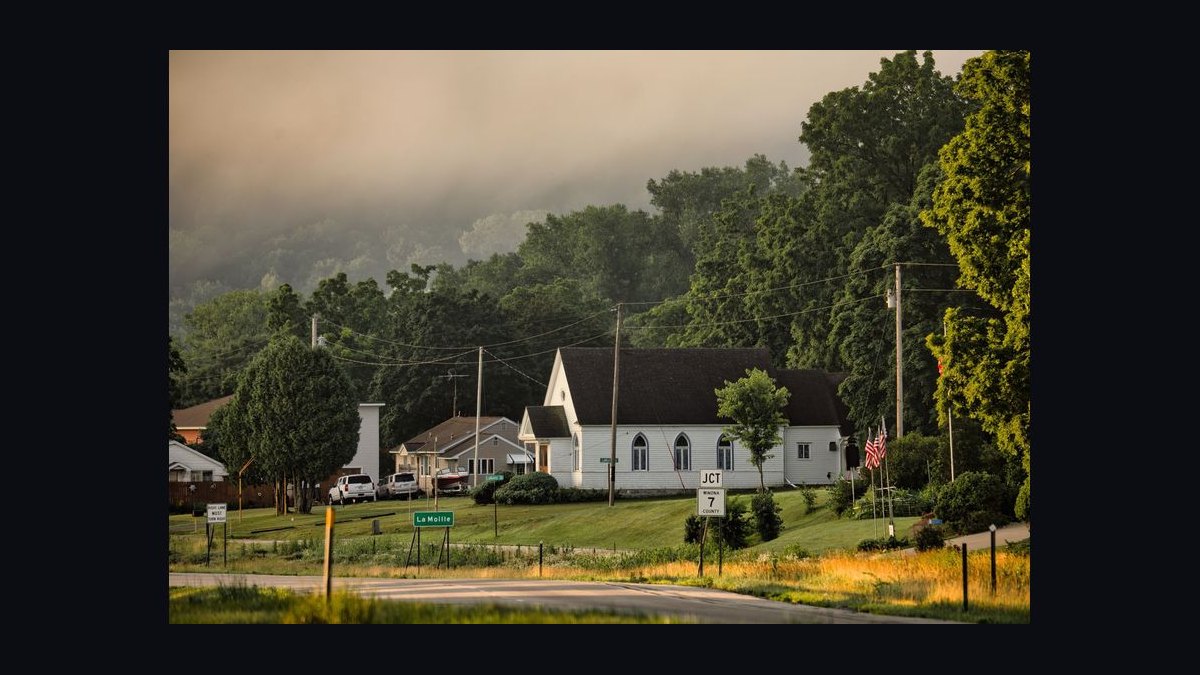
Buying a home in a small town in 2027 typically costs $150,000 to $290,000 for the purchase price, plus $5,500 to $12,000 in closing costs and a down payment of $0 to $37,000 depending on loan type. Budget another $1,400 to $1,700 monthly for principal, interest, taxes, insurance, and maintenance reserves.
Buying outright versus buying with a mortgage in a small-town market
The first real fork in a small-town purchase is not which house — it is whether you finance at all. Small-town price points make cash purchases far more reachable than they are in metro markets, and that changes the entire math of the decision.
The cash path. In a town where the median sale sits near $185,000, a buyer with liquid savings, home-sale proceeds from a higher-cost market, or an inheritance can close without a lender. The cost is straightforward: purchase price, title work, a survey if the lender-free deal still warrants one, transfer taxes, and recording fees. Closing costs on a cash deal typically land between 1% and 2% of the price — roughly $1,850 to $3,700 on that $185,000 house — because you skip origination fees, lender-required appraisal, points, mortgage insurance, and prepaid interest. Cash buyers also compete better on distressed or as-is properties, which are a meaningful share of small-town inventory. Rural listings frequently carry deferred maintenance that trips up financed appraisals: a roof at end of life, knob-and-tube wiring, a failing septic field, peeling paint on a pre-1978 house. A conventional or FHA appraiser flags those; a cash buyer simply prices them in.
The financed path. Financing costs more in absolute dollars but preserves capital. On that same $185,000 house with 10% down, you borrow $166,500. Closing costs on a financed purchase run 2% to 5% of the price — call it $3,700 to $9,250 — covering origination, appraisal, credit report, title insurance (both lender's and owner's), escrow setup, and prepaid taxes and insurance. Add mortgage insurance if you are under 20% down: conventional PMI on a mid-600s to low-700s credit score commonly runs 0.4% to 1.1% of the loan annually, so $55 to $150 a month on that balance until you hit 20% equity. FHA charges an upfront premium of 1.75% financed into the loan plus an annual premium, and on most FHA loans that annual premium never drops off unless you refinance out.
Where the trade-off actually bites. The cash buyer wins on total outlay and closing speed. The financed buyer wins on liquidity — which matters more in a small town than people expect, because your emergency fund is doing double duty. Rural properties come with systems that metro renters never think about: a well pump, a septic tank, a propane tank, a private lane that needs grading, a driveway culvert. A $9,000 septic replacement is survivable if you have $25,000 in reserves. It is a crisis if you emptied the account to buy outright.
There is a third path worth naming: seller financing. It shows up more in small towns than in metros, usually on inherited property, on homes that will not appraise, or where the seller wants the interest income. Terms are negotiated directly — commonly 10% to 20% down, a rate a point or two above prevailing market, and a balloon at five to seven years. It solves an appraisal or condition problem, but it puts you on the clock to refinance before the balloon, and there is no consumer-protection backstop if the paperwork is sloppy. Use a real estate attorney, always record the deed, and never do it on a handshake.
How to decide between paying cash and financing
The decision is not about which is cheaper in interest. It is about which failure mode you can absorb. Run the decision in this order:
Step one: size your true reserve floor. For a small-town home, plan on holding six months of housing costs plus a dedicated systems fund. If the house is on well and septic, that fund starts at $15,000, not $5,000 — a septic system replacement commonly runs $7,000 to $25,000 depending on soil, and a well pump plus pressure tank runs $1,500 to $4,000. Whatever cash you have, subtract that floor before you consider it available for a down payment.
Step two: check what the property will actually finance as. Pull the listing's condition disclosures and photos. Manufactured homes on leased land, homes with active roof leaks, properties with more than a few acres, or houses without a functioning heat source will not clear a standard conventional or FHA appraisal. If the house is uninsurable or unappraisable, the financing question answers itself.

Step three: compare against your alternative use of the capital. Small-town buyers frequently arrive with $200,000 from selling a metro house. Deploying all of it into a $185,000 purchase makes the housing free but concentrates net worth in an illiquid asset in a thin market. Small-town homes take longer to sell — 45 to 120 days is normal, versus a couple of weeks in a hot metro — so the exit is slow when you need it.
Step four: stress-test the monthly number, not the price. A buyer approved for a $250,000 loan is not obligated to spend it. Take your target monthly payment, subtract taxes, insurance, and a $250 monthly maintenance reserve, and back into the price from there. In small towns the tax line varies enormously — an effective rate of 0.5% in a low-tax county versus 2.2% in a high-tax one is a $210 monthly swing on the same $185,000 house. That single variable moves affordability more than a half-point rate change.
Concrete numbers behind a small-town purchase in 2027
Here is what the money actually looks like. Treat every figure as a planning range, not a quote — local conditions dominate.
Purchase price. Small-town price bands split roughly three ways. In economically stagnant rural counties in the Midwest, Deep South, Appalachia, and parts of the Plains, habitable three-bedroom homes commonly list between $90,000 and $170,000. In stable small towns with a hospital, a school district people want, or a manufacturing anchor employer, the band runs $170,000 to $280,000. In amenity small towns — mountain access, lakefront, a college, a designated scenic corridor, or a two-hour drive from a major metro — expect $300,000 to $600,000 and up. That last category has stopped behaving like a small-town market at all; remote work pushed metro money into it and prices reset accordingly. The "small town is cheap" assumption fails hardest there.

Down payment by loan type. USDA Guaranteed loans require 0% down and are available in most areas outside metro boundaries, subject to household income limits that vary by county and household size. They carry an upfront guarantee fee and a smaller annual fee, both of which are well under FHA's mortgage insurance in most scenarios. FHA requires 3.5% down at a 580-plus score — $6,475 on a $185,000 house. Conventional loans start at 3% down for qualified first-time buyers and 5% otherwise; 20% down ($37,000) eliminates PMI. VA loans, if you are eligible, are 0% down with a funding fee that varies by service category and prior use, and no monthly mortgage insurance at all.
Closing costs, itemized. On a $185,000 financed purchase, expect something close to: lender origination $0 to $1,850, appraisal $500 to $800 (higher and slower in rural areas where appraisers are scarce — this is a real scheduling risk that can blow a 30-day close), credit report and verification fees $75 to $200, title search and lender's title insurance $700 to $1,400, owner's title policy $500 to $1,200, settlement or attorney fee $400 to $1,200, recording and transfer taxes $150 to $2,000 depending on state, survey $400 to $900 if required, prepaid homeowners insurance $1,200 to $2,600 for the first year, and prepaid property tax escrow of two to six months. Total: roughly $5,500 to $12,000. Sellers in slower small-town markets frequently agree to pay 2% to 3% in concessions — ask.
Inspections you should not skip. General home inspection $350 to $600. Septic inspection and pump $400 to $900. Well water potability and flow test $200 to $500. Radon $150 to $300, and radon matters in a lot of rural geology. Wood-destroying insect report $75 to $150. Sewer scope if on municipal $200 to $400. Chimney inspection $150 to $400 if there is a woodstove or fireplace, which there often is. Spend the $1,500. On a house with a 40-year-old furnace and an unknown septic field, that is the cheapest money in the transaction.
Monthly carrying costs. Principal and interest on $166,500 at a 6.5% 30-year fixed is roughly $1,052. Property tax at a 1.1% effective rate on $185,000 is $170 monthly. Homeowners insurance in small-town markets runs $110 to $260 monthly depending on state, roof age, wildfire or wind exposure, and distance to a fire station — that last factor is genuinely expensive in rural areas, where an ISO protection class of 9 or 10 can add 20% to 40% to the premium versus a class 4 town with a staffed department. PMI at 0.6% adds $83. Total before maintenance: roughly $1,415 to $1,565.
The costs people forget. Heating oil or propane in a rural northern house can run $1,800 to $3,500 a season, versus a natural gas bill a third that size — and small towns frequently have no gas main. Well and septic mean no water bill but a $300 to $500 annual maintenance rhythm. Trash pickup is often a private subscription at $25 to $45 monthly, not a municipal service. Internet is the sleeper cost: if fiber has not reached the address, satellite or fixed wireless runs $80 to $150 monthly for service that may not support two people on video calls. Check the address, not the town, before you write an offer — service maps lie at the parcel level.
Renovation reality. A large share of small-town inventory is pre-1980 housing stock. Budget realistically: roof replacement $9,000 to $22,000, full electrical rewire $8,000 to $20,000, HVAC system replacement $6,000 to $14,000, foundation repair $5,000 to $30,000, window replacement $500 to $900 per opening. If the house needs three of those, financing them into an FHA 203(k) or Fannie Mae HomeStyle renovation loan at purchase is almost always cheaper than a credit card or a personal loan later.
Sequencing the purchase and the first two years
Order of operations matters more in a thin market than in a metro, because there are fewer transactions, fewer service providers, and less margin for a blown timeline.
Months one through two: build the file before you shop. Pull all three credit reports and dispute errors — a 20-point move across a scoring tier can change your rate meaningfully. Get a genuine pre-approval with documents underwritten, not a pre-qualification letter generated from self-reported numbers. Interview local lenders alongside national ones: in small towns, a community bank or credit union frequently holds loans in portfolio, which means they can approve properties a secondary-market lender cannot — the unusual acreage, the manufactured home, the mixed-use storefront with an apartment above.
Month two: verify the location facts before falling for a house. Pull the parcel on the county GIS. Check the FEMA flood map for the address, not the neighborhood — flood insurance can add $600 to $3,000 a year and is the single most common budget surprise in rural purchases. Confirm the school district assignment with the district, not the listing. Check broadband availability at the specific address. Find out whether the road is county-maintained or a private easement, and if private, who plows it and what the shared cost is. Ask the assessor what happens to the assessment at sale — some jurisdictions reassess at the transaction price, which can jump your tax bill immediately after closing.
Month three: offer, inspect, negotiate. Small-town markets are often slower, which gives you leverage a metro buyer never has. Contingencies for inspection, financing, and appraisal are normal here — do not waive them. When inspection findings come back, request a credit rather than repairs where you can; sellers do cheap work under time pressure, and a credit lets you hire the contractor.
Closing and the first ninety days. Wire fraud is the real threat at closing — call the title company at a number you looked up independently to verify wire instructions, every time. After you take possession, do the cheap protective work first: change locks, locate and label the main water shutoff and electrical panel, have the septic pumped if the seller could not document the last service, and get the HVAC serviced so you have a baseline record.
Year one. Reshop homeowners insurance at renewal — the policy your lender rushed you into at closing is rarely the best price, and small-town premiums vary widely between carriers because rural risk models differ. If your county reassesses at sale and your bill jumps, learn the appeal window and the evidence standard; a successful appeal on an over-assessed rural property is one of the highest-return hours you will spend. Track every repair with photos and receipts, both for insurance claims and for the eventual capital-improvement basis when you sell.
Year two and the exit question. Small-town appreciation is slower and lumpier than metro appreciation. Do not buy assuming you will build $40,000 of equity in three years — in many rural counties, nominal appreciation runs low single digits and can flatten entirely if the anchor employer contracts. This is the strongest argument for a longer holding period. Transaction costs alone — roughly 6% to 9% to sell between commission, transfer taxes, and concessions — mean a three-year hold in a flat market loses money. Five to seven years is the honest floor.
Related questions
Is a USDA loan really zero down?
Yes for the Guaranteed program — no down payment is required. You still pay closing costs and an upfront guarantee fee plus a smaller annual fee, and you must meet county household income limits and buy in an eligible area, which covers most non-metro locations.
How much should I hold in reserve after closing?
Six months of full housing costs plus a systems fund. On well and septic, start the systems fund at $15,000. Metro buyers routinely under-reserve here because they have never paid for a septic field or a well pump.
Do small-town homes appraise low?
Frequently, because comparable sales are scarce and appraisers may have to reach for distant or dated comps. Build an appraisal contingency into your offer and be prepared to bring cash to the gap or renegotiate the price.
Is homeowners insurance more expensive in a small town?
Often yes, despite lower home values. Distance to a fire hydrant and to a staffed fire department drives the ISO protection class, and a class 9 or 10 rating raises premiums substantially versus a well-protected town.
Should I buy a fixer in a small town?
Only with a renovation loan and firm contractor quotes in hand. Rural contractor availability is thin and schedules run long, so a project that takes eight weeks in a metro can take five months, all while you carry two housing costs.
FAQ
How much cash do I actually need at the closing table?
On a $185,000 financed purchase, plan on the down payment plus $5,500 to $12,000 in closing costs, minus any seller concessions. With FHA at 3.5% down, that is roughly $12,000 to $18,500 total. With a USDA loan at zero down, it can be as low as $5,500 to $9,000, and USDA permits seller concessions up to 6%, which can cover nearly all of it.
What is the realistic monthly payment on a small-town home?
For a $185,000 purchase with 10% down at a 6.5% rate, the payment including principal, interest, taxes, insurance, and PMI generally lands between $1,400 and $1,600. Add $250 monthly as a maintenance reserve and the honest carrying cost is closer to $1,700. Heating fuel in a rural northern property can add another $150 to $290 averaged across the year.
Why do some small towns cost as much as suburbs?
Amenity value and proximity. A town with lake access, a ski hill, a university, or a commute-viable distance to a metro attracts outside capital and prices like a resort or exurb rather than a rural market. The cost advantage of small-town living concentrates in places without those draws.
Can I get a mortgage on a house that needs major work?
Not a standard one. Lenders require the property to be safe, sound, and sanitary at appraisal. Use an FHA 203(k) or Fannie Mae HomeStyle renovation loan, which finances the purchase and the repairs in one mortgage based on the after-repair value, or buy with cash and refinance once the work is complete.
How long does closing take in a rural market?
Thirty to forty-five days is typical, but appraiser scarcity is the common delay — in some rural counties there are only a handful of licensed appraisers covering a wide territory, and a two- to three-week appraisal wait is normal. Build that into your contract dates rather than agreeing to an aggressive timeline you cannot control.
Is it cheaper to rent first in a small town?
Often yes for the first six to twelve months, if you can find a rental at all — small-town rental inventory is thin. Renting lets you verify the commute, the broadband, the winter, and the neighborhood before you commit capital in a market where selling takes months rather than weeks.
Sources
- https://www.consumerfinance.gov/owning-a-home/
- https://www.rd.usda.gov/programs-services/single-family-housing-programs
- https://www.hud.gov/program_offices/housing/sfh/203k
- https://singlefamily.fanniemae.com/originating-underwriting/mortgage-products/homestyle-renovation-mortgage
- https://www.census.gov/construction/nrs/index.html
- https://www.fema.gov/flood-maps
- https://www.epa.gov/septic
- https://www.va.gov/housing-assistance/home-loans/
- https://www.usa.gov/mortgages
- https://www.energy.gov/energysaver/home-heating-systems
Related on PULSE
- What does it cost to run a small-town business in 2027?
- How much does it cost to build a house from scratch?
- What are the real costs of moving from a city to a rural area?
- How do property taxes differ between counties?
- Is buying a duplex a better first purchase than a single-family home?
This page will be disappearing soon. Save it to your device for $1 — or read it free while it is here.
@Kory-White- · if Venmo asks, the last 4 of my number are 2012
This page is gone.
This one is off the shelf now. $1 keeps it on your phone for good — the whole page, pictures and diagrams included.
 pulse-townsWhen is the best time to buy a home in a small town in 2027?
 pulse-recentTop 10 Retirement Towns in Georgia in 2027
 pulse-townsTop 10 Best Suburbs of Nashville in 2027
 pulse-recentTop 10 Retirement Towns in Indiana in 2027
 pulse-towns10 Best Mountain Towns to Retire in 2027 (Scenery, Clean Air, Outdoor Life)
 pulse-townsTop 10 Best Towns on Maryland's Eastern Shore in 2027
 pulse-recentTop 10 Retirement Towns in Wisconsin in 2026
 pulse-recentTop 10 Retirement Towns in California in 2027
 pulse-recentWhat Is the Average Cost of Living in a Suburb in 2027?
 pulse-townsTop 10 Best Suburbs of Austin in 2027