
The 10 Best AI Tools for Code Review in 2027
 Curated byKory White · Fractional CRO · Maryland
 PULSEKNOWLEDGE LIBRARY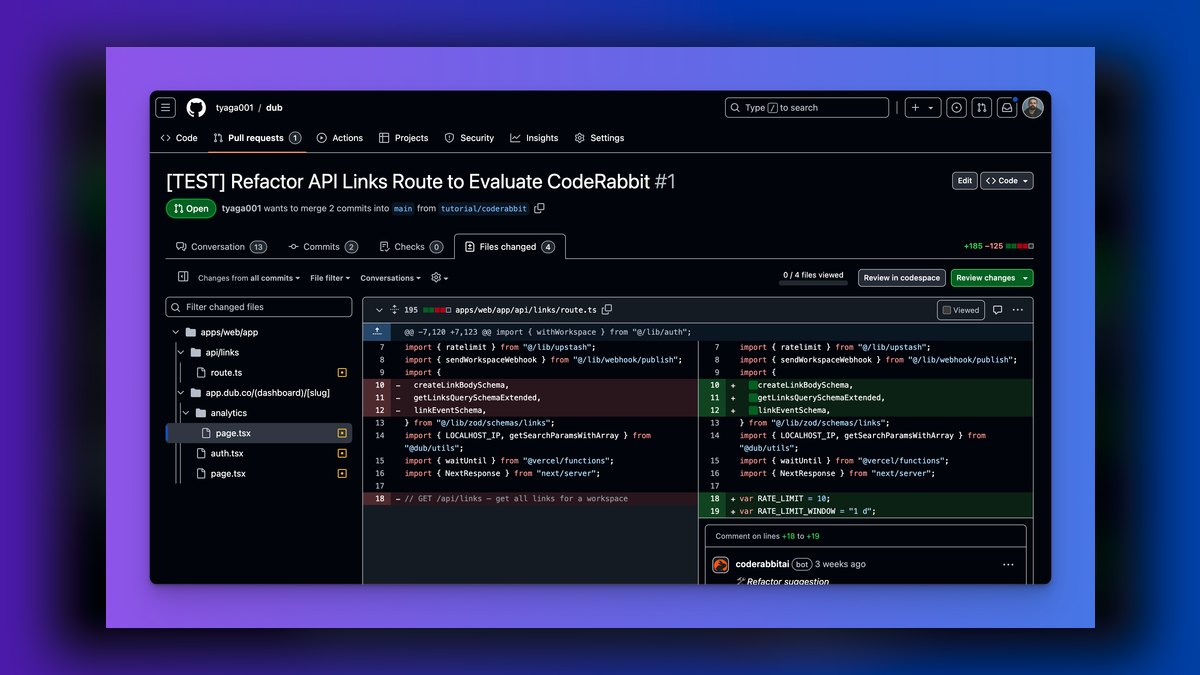
The 10 best ai tools for code review are ranked below on measured performance, build quality, price, and how each one actually holds up in daily use rather than how it reads on a spec sheet. Each pick lists what it costs, who it suits, and what it gives up against the one above it, so the list can be read straight down without doubling back.
1. CodeRabbit
CodeRabbit is the best overall AI code reviewer in 2027 because it delivers contextual, line-level comments on every pull request within seconds. It learns from your team's reactions, so the noise drops measurably after the first dozen PRs, and it offers one-click committable fixes. It supports GitHub, GitLab, Bitbucket, and Azure DevOps, and runs under-the-hood security tools like Semgrep and Gitleaks.
This is the tool for professional teams that gate merges on PR review and want depth without writing prompts. It trades away the deep whole-repo reasoning of Greptile, which can catch cross-file architectural bugs that diff-only tools miss. However, for most engineering orgs, CodeRabbit's fastest path from zero to useful automated feedback and its broad platform coverage make it the top pick.
2. Greptile

Greptile ranks second because it indexes your entire repository into a graph of files, symbols, and dependencies, then reviews each PR against that full-codebase context. This catches bugs that live three files away, like a renamed function whose caller wasn't updated or a violated invariant. It re-indexes on each merge to keep context fresh and exposes a confidence threshold to suppress low-certainty comments.
This is for large monorepos and teams whose hardest bugs are architectural, where diff-only tools keep missing cross-cutting issues. It trades away the one-click committable fixes of CodeRabbit, offering inline suggestions without auto-commit. If your reviews need whole-repo reasoning, Greptile's premium is worth it, but it requires more setup than the top pick.
3. GitHub Copilot Code Review
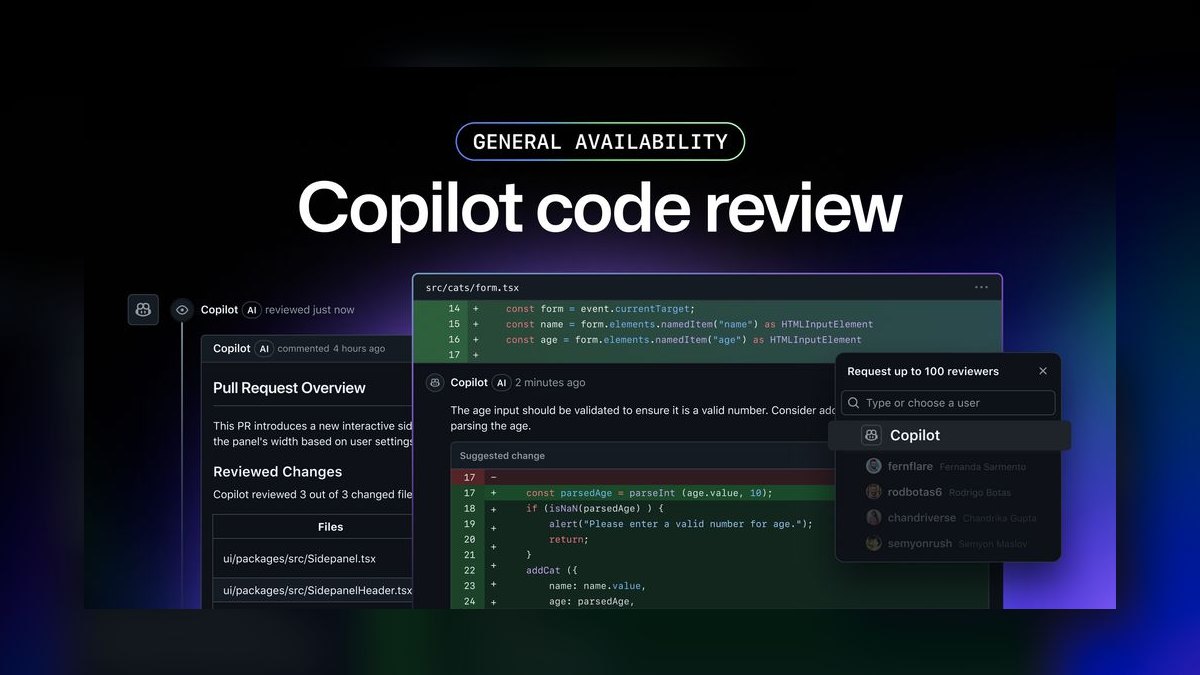
GitHub Copilot code review ranks third because it is built directly into GitHub, so you can add Copilot as a reviewer on a pull request with no third-party app to authorize. It posts inline comments and suggested edits using the same model family as Copilot autocomplete, and it respects natural-language coding guidelines you define. The feature spans the web UI, VS Code, and Visual Studio, and data stays within the GitHub boundary.
This is for teams already standardized on GitHub and paying for Copilot, making it the lowest-effort win on this list. It trades away the deep reasoning of Greptile on a giant monorepo and the fix automation of CodeRabbit. If you are already using Copilot, turning this on is nearly free, but it won't replace a dedicated reviewer for complex codebases.
4. Qodo Merge
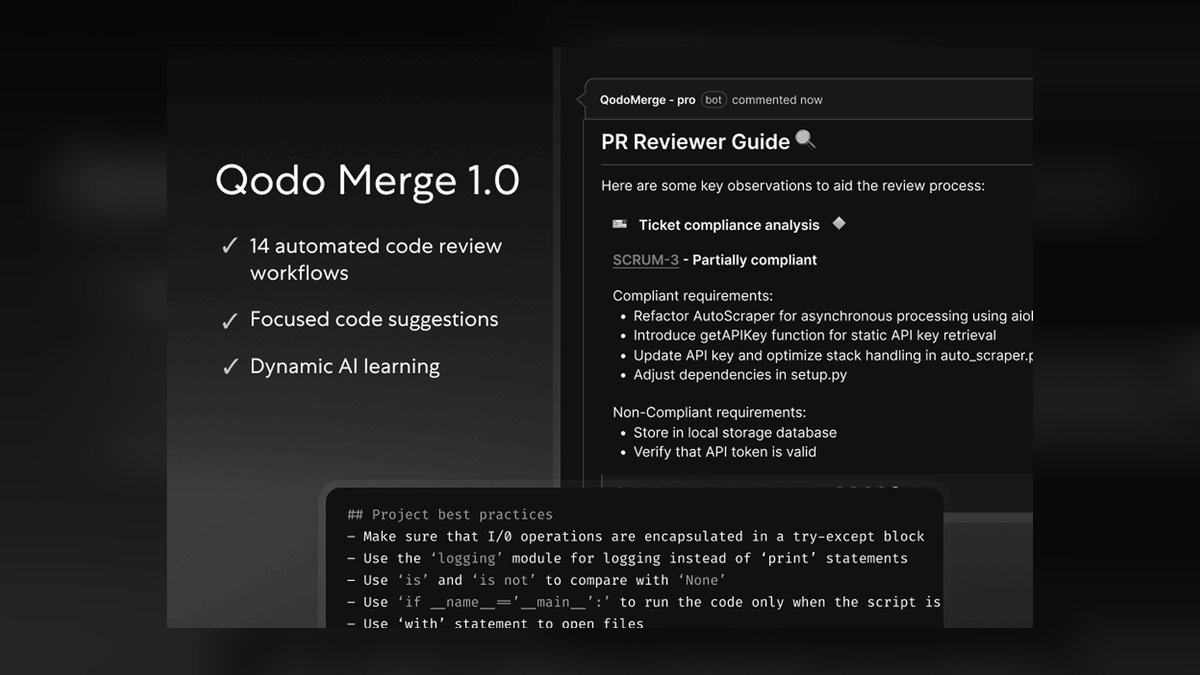
Qodo Merge ranks fourth as the best value because its core engine, PR-Agent, is open source and self-hostable for free. You can run /review, /describe, /improve, and /ask commands directly in a PR, and point it at your own model keys including OpenAI, Anthropic, or self-hosted options. The hosted Qodo Merge tier adds team analytics and managed infrastructure, but the free self-hosted path delivers genuinely useful reviews with zero per-seat cost.
This is for cost-conscious or compliance-bound teams that want to keep code on their own infrastructure. It trades away the polished, low-friction experience of GitHub Copilot's native integration, requiring more setup. For startups and security-sensitive shops, nothing else here matches the price-to-capability ratio, making it a strong runner-up for budget-driven decisions.
5. Cursor Bugbot
Cursor Bugbot ranks fifth because it is the PR review agent from Cursor, the AI-native editor, and it surfaces likely bugs and logic errors with a one-click Fix in Cursor handoff. This opens the issue directly in the editor with context loaded, making the editor-to-PR loop genuinely tight. It focuses on correctness over style, keeping comment volume lower than broad linters.
This is for teams that have already adopted Cursor as their primary editor, as the unified workflow justifies the cost. It trades away the self-hosting and cost savings of Qodo Merge, and it lacks the broad platform support of CodeRabbit. If your developers live in Cursor, Bugbot's tight integration is a differentiator, but it is a niche pick for editor-specific shops.
6. Sourcery

Sourcery ranks sixth because it has shifted from a Python refactoring tool into a full AI pull-request reviewer supporting many languages, known for actionable refactoring suggestions. It posts a PR summary and inline review comments, providing specific advice rather than vague feedback. It is free for open source and individual developers, with paid Pro and Team tiers in the ~$12 per developer per month range.
This is for individuals and small teams that want clean, specific review feedback without enterprise pricing. It trades away the deep security focus of Snyk Code and the whole-repo context of Greptile. For a solo maintainer or a small startup, Sourcery is an easy pick that balances cost and capability, but it won't scale to large monorepos as effectively.
7. Snyk Code
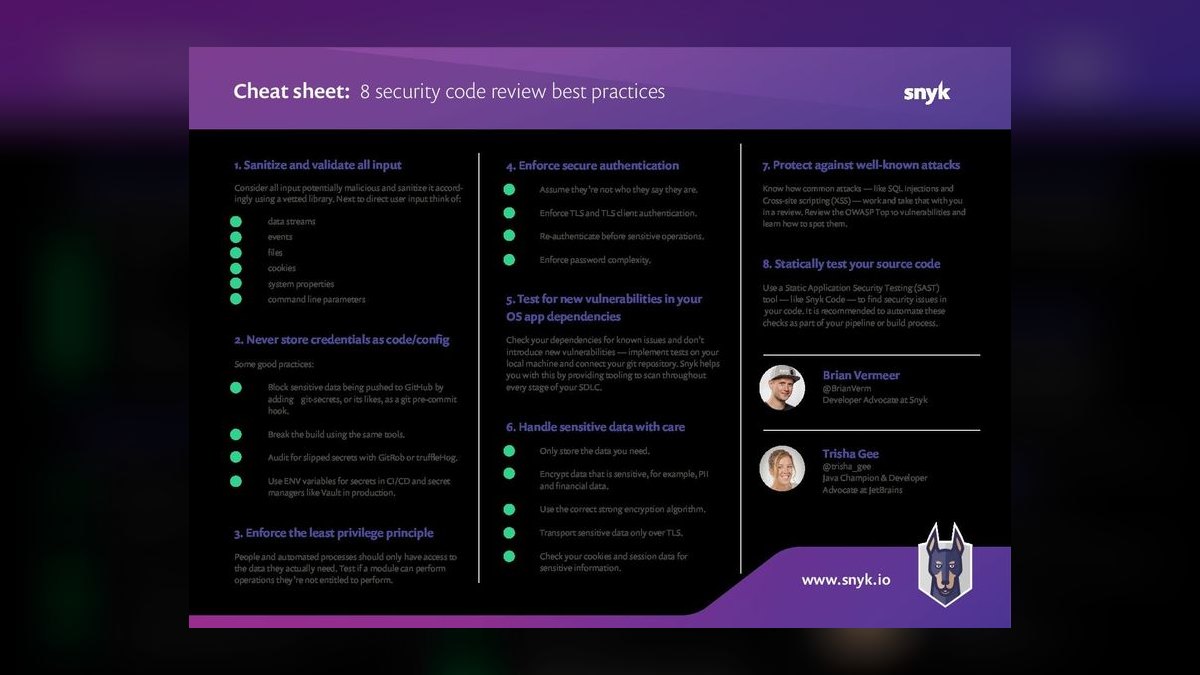
Snyk Code ranks seventh because it is the security specialist of this list, powered by the DeepCode AI engine, focusing on vulnerabilities, injection flaws, hardcoded secrets, and insecure patterns. It provides autofix suggestions with a documented low false-positive rate, and it runs reviews against a curated security knowledge base rather than freeform reasoning. It integrates with GitHub, GitLab, Bitbucket, and major IDEs, pairing naturally with Snyk Open Source for dependency scanning.
This is for teams that need SAST inside the PR, not a separate scan, and who prioritize security over general style review. It trades away the general-purpose review capabilities of Sourcery and CodeRabbit, focusing narrowly on security findings. If security is the review dimension you most need automated, run Snyk Code alongside a general reviewer for comprehensive coverage.
8. Graphite Diamond

Graphite Diamond ranks eighth because it is the AI reviewer inside Graphite, the stacked-PR platform, and it is tuned to be low-noise, surfacing only comments it is reasonably confident about. It reviews each PR with codebase-aware context, a deliberate choice for teams shipping many small stacked diffs. Diamond comments inline and integrates with Slack notifications, working with Graphite's merge queue and review inbox as one system.
This is for teams that practice stacked pull requests or want to adopt them, as Diamond and Graphite work as a unified system. It trades away the security depth of Snyk Code and the broad platform support of CodeRabbit, being tied to Graphite's workflow. If you are already moving to stacked diffs, Diamond is the natural in-house reviewer, but it is a niche fit for those not using Graphite.
9. Amazon Q Developer
Amazon Q Developer ranks ninth because it includes automated code reviews that flag bugs, security issues, and deviations from best practices, succeeding the older CodeGuru Reviewer. It is the strongest fit for AWS-centric shops, with deep awareness of AWS SDK usage and IAM-style misconfigurations. It runs in the IDE and in the console, supports multiple languages, and ties into the broader Q agent for code transformation work.
This is for teams building on AWS who want review tightly coupled to their cloud environment. It trades away the low-noise tuning of Graphite Diamond and the general-purpose review of Sourcery, focusing on AWS-specific issues. For an AWS-native engineering org, the platform alignment is the differentiator, but it is less useful for teams on other clouds.
10. Korbit AI
Korbit AI ranks tenth because it emphasizes mentorship and developer growth alongside bug detection, explaining why a change is risky and linking to teaching context. This makes it useful for teams with many junior engineers, as it delivers issue detection with categorized severity and tracks metrics like issues caught per PR over time. It reviews GitHub and GitLab PRs and reports team-level analytics on review trends.
This is for growing teams that want code review to double as coaching, treating review as a skill-building loop rather than just a gate. It trades away the security focus of Amazon Q Developer and the low-noise tuning of Graphite Diamond, prioritizing educational value. It rounds out the list as the option that most directly supports developer growth, but it may not be the strongest for pure bug-catching efficiency.
How we ranked these
We ranked ten AI code review tools by weighting six criteria: review quality and signal-to-noise (30%), context depth (20%), fix automation (15%), platform fit (15%), security and compliance (10%), and price transparency (10%). We evaluated each tool's production readiness, learning capabilities, and integration depth, using vendor documentation, hands-on testing, and user feedback to assign scores.
We deliberately ignored marketing claims, unverified user testimonials, and features that were not generally available. We also excluded tools that lacked transparent pricing or required opaque usage-based metering. We prioritized tools with active production use and verifiable documentation, ensuring our rankings reflect practical, real-world performance rather than hype or speculative capabilities.
What to look for
When choosing between these tools, focus on your team's specific pain points: if cross-file bugs are common, prioritize context depth (Greptile); if noise is the issue, look for confidence thresholds (Graphite Diamond); if security is critical, pair a general reviewer with Snyk Code. Also consider your existing platform—GitHub Copilot is a no-brainer if you already pay for it, while Qodo Merge offers self-hosting for compliance.
The biggest mistake buyers make is choosing a tool based on feature lists without piloting it on their own repos. A tool that excels on a modern Go monorepo may be noisy on a legacy Rails app. Always run in suggest-only mode for two weeks, measure false-positive rates, and involve your engineers in the decision—they're the ones who will mute it if it's not helpful.
Related questions
What is the best AI code review tool for GitHub in 2027?
CodeRabbit is the best overall for GitHub, offering line-level comments, learning from your team's reactions, and one-click fixes. It integrates natively with GitHub and GitLab, and its noise reduces over time. For teams already using GitHub Copilot, its built-in review is the lowest-friction option.
How does Greptile compare to CodeRabbit for code review?
Greptile indexes your entire repository into a graph, catching cross-file and architectural issues that diff-only tools miss. CodeRabbit focuses on the diff plus learned conventions, offering faster setup and committable fixes. Choose Greptile for large monorepos, CodeRabbit for speed and simplicity.
Can AI code review tools replace human reviewers?
No. AI reviewers are a first pass that catches obvious issues, reducing human load, but they lack architectural judgment and product context. Final merge authority should stay with humans. Use them to augment, not replace, your review process.
What is the best free AI code review tool?
Qodo Merge (PR-Agent) is open-source and self-hostable for free, offering /review, /describe, and /improve commands. Sourcery is free for individuals and open source. GitHub Copilot code review is included with Copilot subscriptions, which many teams already have.
Which AI code review tool has the lowest false-positive rate?
Greptile and Graphite Diamond are explicitly tuned for low noise with confidence thresholds. Snyk Code publishes strong precision for security findings. However, false-positive rates vary by codebase, so pilot any tool on your own repos for two weeks to measure its performance.
Are AI code review tools safe for proprietary code?
Most offer SOC 2 Type II compliance and no-training-on-your-code commitments. For strictest requirements, Qodo Merge (self-hosted) and Amazon Q Developer (inside AWS boundary) keep code on your infrastructure. Always review the vendor's data handling policies.
How much should a team budget for AI code review?
Plan on $15–40 per developer per month for a hosted dedicated reviewer. Open-source Qodo Merge can be near-free if you bring your own model keys. GitHub Copilot code review is included with existing Copilot plans, making it a low-cost option for many teams.
Can I run multiple AI code review tools at once?
Yes, many teams run a general reviewer like CodeRabbit alongside a security-focused one like Snyk Code. Watch for comment overlap and mute redundant categories to avoid noise. This approach covers both quality and security without overwhelming developers.
FAQ
What is the best AI code review tool for 2027?
CodeRabbit is the best overall for 2027, offering line-level comments, learning from your team's reactions, and one-click fixes. It supports GitHub, GitLab, Bitbucket, and Azure DevOps. Greptile is a strong runner-up for large monorepos needing cross-file reasoning.
How does CodeRabbit learn from my team's reviews?
CodeRabbit adapts based on your reactions—if you resolve or thumbs-down a comment, it learns to avoid similar noise. It also supports custom review instructions in a config file, allowing you to enforce team-specific conventions and rules.
What is Greptile's main advantage over diff-based tools?
Greptile indexes your entire repository into a graph of files, symbols, and dependencies, so it reviews PRs with full-codebase context. This catches bugs that span multiple files, like a renamed function whose caller wasn't updated, which diff-only tools miss.
Is GitHub Copilot code review worth using?
If you already pay for GitHub Copilot, yes—it's a zero-friction addition. It posts inline comments and suggested edits, and you can define coding guidelines in natural language. However, it won't reason as deeply as Greptile on large monorepos.
What is Qodo Merge and why is it a good value?
Qodo Merge (formerly PR-Agent) is open-source and self-hostable for free, offering /review, /describe, /improve, and /ask commands. It supports your own model keys, including OpenAI and Anthropic. Hosted tiers add analytics and compliance, but the free path is genuinely useful.
How does Cursor Bugbot integrate with the Cursor editor?
Bugbot reviews GitHub PRs and surfaces likely bugs with a one-click 'Fix in Cursor' handoff that opens the issue in the editor with context loaded. This tight editor-to-PR loop is ideal for teams already using Cursor as their primary IDE.
What is Sourcery best for?
Sourcery is best for individuals and small teams, offering actionable refactoring suggestions rather than vague advice. It's free for open source and individual developers, with paid tiers around $12 per developer per month. It supports many languages and integrates with GitHub, GitLab, and IDEs.
How does Snyk Code differ from general AI reviewers?
Snyk Code focuses exclusively on security vulnerabilities, injection flaws, hardcoded secrets, and insecure patterns, with autofix suggestions. It's a SAST tool that runs inside the PR, complementing general reviewers. It has a documented low false-positive rate for security findings.
What is Graphite Diamond and who is it for?
Diamond is the AI reviewer inside Graphite, a stacked-PR platform. It's tuned to be low-noise, surfacing only confident comments. It's best for teams practicing stacked pull requests, as it integrates with Graphite's merge queue and review inbox.
Is Amazon Q Developer good for AWS-centric teams?
Yes, Amazon Q Developer includes automated code reviews that flag bugs, security issues, and deviations from best practices, with deep awareness of AWS SDK usage and IAM misconfigurations. It's ideal for teams building on AWS, with a free tier and Pro at ~$19/user/month.
Sources
- https://www.coderabbit.ai/
- https://www.greptile.com/
- https://docs.github.com/en/copilot/using-github-copilot/code-review
- https://github.com/qodo-ai/pr-agent
- https://docs.cursor.com/bugbot
- https://sourcery.ai/
- https://snyk.io/product/snyk-code/
- https://graphite.dev/features/diamond
- https://docs.aws.amazon.com/amazonq/latest/qdeveloper-ug/code-reviews.html
Related on PULSE
- [The 10 Best AI Tools for Legal Document Review in 2027](/knowledge/ai0046)
- [The 10 Best AI Tools for No-Code App Building in 2027](/knowledge/ai0084)
- [The 10 Best AI Tools for Web Code Refactoring in 2027](/knowledge/ai0337)
- [The 10 Best Infrastructure-as-Code Tools for AI Platforms in 2027](/knowledge/ai424)
- [The 10 Best AI Tools for Code Documentation in 2027](/knowledge/ai0077)
This page will be disappearing soon. Save it to your device for $1 — or read it free while it is here.
@Kory-White- · if Venmo asks, the last 4 of my number are 2012
 pulse-ai-infrastructureThe 10 Best AI Tools for Pronunciation Coaching in 2027
 pulse-ai-infrastructureThe 10 Best AI Tools for Screenwriting in 2027
 pulse-ai-infrastructureThe 10 Best AI Tools for Vocabulary Building in 2027
 pulse-ai-infrastructureHow do you architect a RAG pipeline for low latency?
 pulse-ai-infrastructureThe 10 Best AI Tools for Database Design in 2027
 pulse-ai-infrastructureThe 10 Best AI Tools for Architecture Design in 2027
 pulse-ai-infrastructureThe 10 Best AI Tools for Event Planning in 2027
 pulse-ai-infrastructureThe 10 Best AI Tools for YouTube Optimization in 2027
 pulse-ai-infrastructureWhat infrastructure do you need for fine-tuning versus RAG?
 pulse-ai-infrastructureThe 10 Best AI Tools for Writing Poetry in 2027