
The 10 Best AI Tools for DevOps Automation in 2027
 Curated byKory White · Fractional CRO · Maryland
 PULSEKNOWLEDGE LIBRARY
The 10 best ai tools for devops automation are ranked below on measured performance, build quality, price, and how each one actually holds up in daily use rather than how it reads on a spec sheet. Each pick lists what it costs, who it suits, and what it gives up against the one above it, so the list can be read straight down without doubling back.
1. GitHub Copilot
GitHub Copilot ranks first because it spans the entire GitHub-native DevOps loop, not just code completion. Beyond IDE suggestions in VS Code, JetBrains, and Neovim, it authors and debugs GitHub Actions workflows, explains failing jobs, and drafts pull-request descriptions. Copilot Autofix ties into CodeQL scanning to propose one-click fixes for detected vulnerabilities. Pricing runs from roughly $10 a month for individuals up to $39 per user monthly for Enterprise, which adds fine-tuned models on private repositories.
It's the best pick for teams whose source of truth is already GitHub, since Copilot in the CLI translates plain English into shell, git, and gh commands for daily pipeline work. The trade-off is gravity: Copilot thins out once CI/CD lives in Jenkins or GitLab rather than GitHub Actions. Compared to Amazon Q Developer below, it wins on ecosystem breadth but loses ground the moment a team is AWS-native instead of GitHub-native.
2. Amazon Q Developer
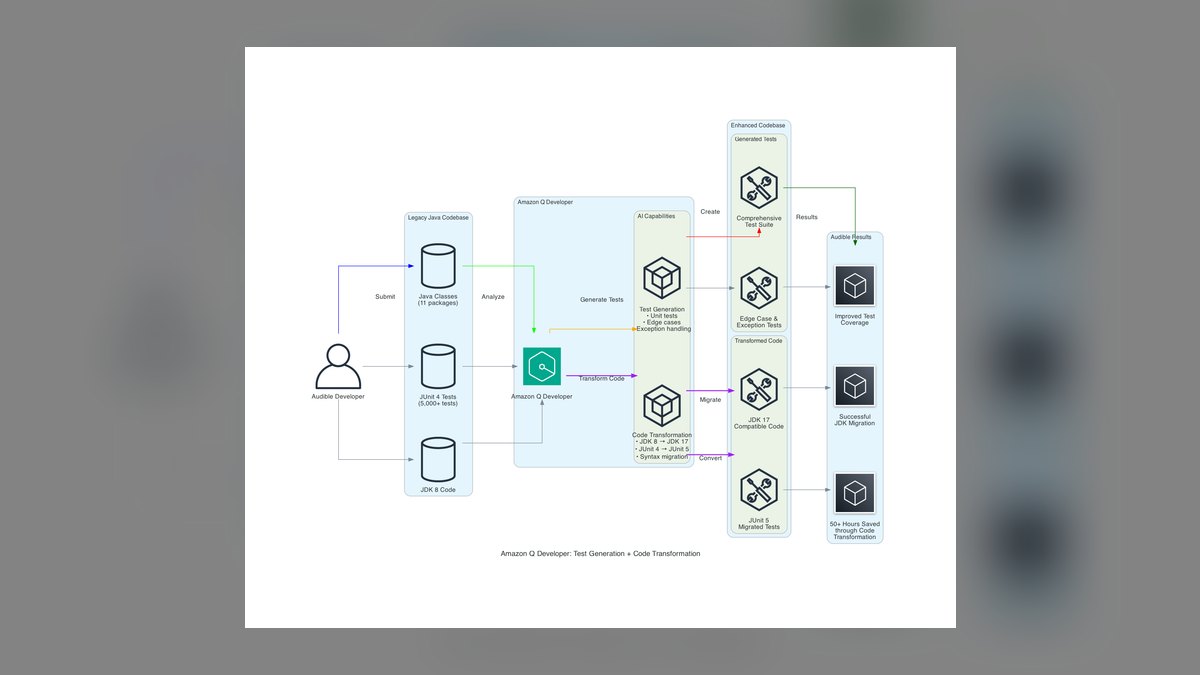
Amazon Q Developer ranks second as the sharpest AI assistant for teams living inside AWS, rebuilt from CodeWhisperer with deep fluency in Lambda, ECS, CloudFormation, and CDK. Its standout DevOps capability is automated code transformation, upgrading Java and .NET applications across versions and turning multi-week migration slogs into supervised review sessions. It also reads CloudWatch logs and console context to help diagnose operational issues without leaving the AWS environment.
It's the best pick for AWS-native infrastructure work, offering a genuinely generous free tier for individual developers plus a Pro tier around $19 per user monthly. Outside AWS, its advantage narrows considerably against more general assistants. Compared to GitHub Copilot above, Q Developer trades broad ecosystem reach for unmatched depth on AWS services, making it the second choice only for teams not centered on GitHub Actions.
3. GitLab Duo
GitLab Duo ranks third as the obvious choice for teams already consolidated on GitLab's single-application DevSecOps platform. Its operator-relevant features go beyond code suggestions: Root Cause Analysis reads failed CI/CD job logs and explains why a pipeline broke, while Vulnerability Explanation and Resolution describes a security finding and drafts the fix as a merge request. Duo Pro runs about $19 per user monthly, with Duo Enterprise around $39.
Duo Chat sits across the whole workflow — issues, merge requests, pipelines — so a developer can ask why an MR is failing and get an answer grounded in the actual project. It's best for teams that intentionally avoid stitching together five separate tools, keeping SCM, CI/CD, security scanning, and AI under one permission model. Compared to Amazon Q Developer above, Duo trades cloud-specific depth for single-platform consolidation.
4. Harness AIDA
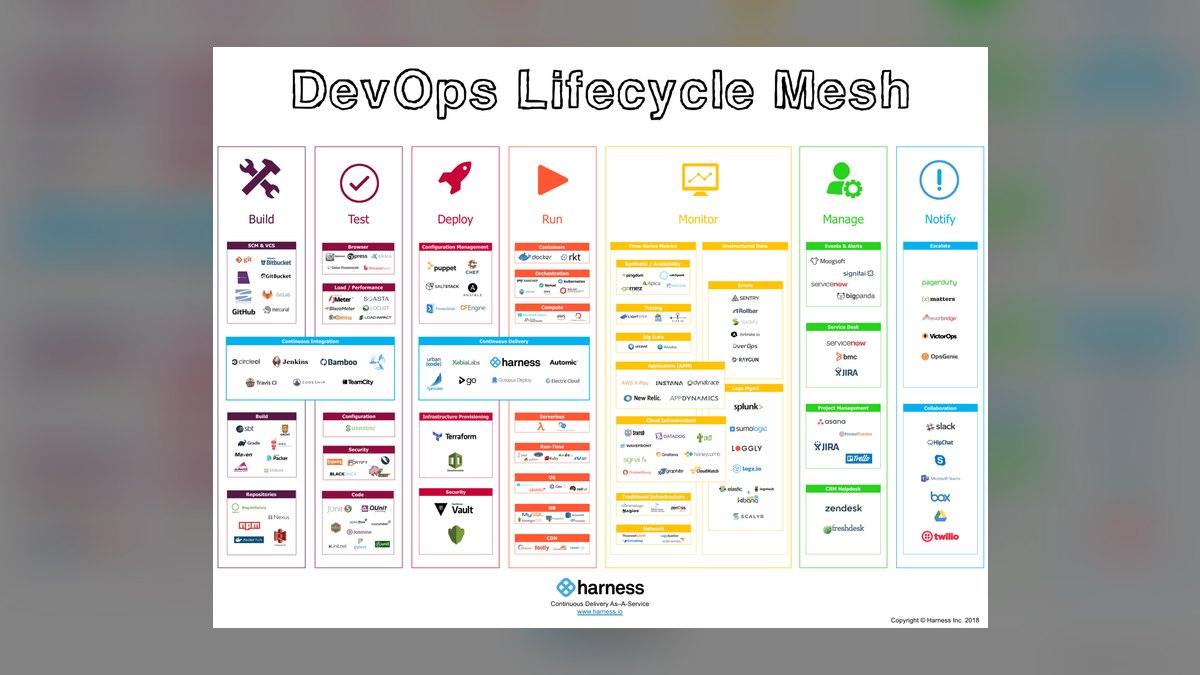
Harness AIDA ranks fourth because it pairs AI directly with progressive delivery rather than just code generation. Its most valuable trick is failure analysis on deployments: when a pipeline or canary fails, AIDA parses logs and surfaces the probable cause instead of dumping raw output, and it generates pipeline YAML and policy-as-code from natural-language prompts. Continuous Verification compares deployment metrics against baselines and auto-rolls back on regression.
It's best for organizations ready to standardize software delivery on Harness rather than bolt AI onto an existing Jenkins setup, trading the lighter footprint of a code assistant for a full platform commitment. Pricing runs per-developer and per-service with custom enterprise terms, plus a free tier for small teams. Compared to GitLab Duo above, AIDA focuses squarely on delivery and rollback rather than source control or security scanning.
5. Datadog Bits AI
Datadog Bits AI ranks fifth as the assistant layer riding on top of the platform's existing metrics, logs, and traces rather than a standalone tool. The longer-standing Watchdog engine does automated anomaly detection and root-cause correlation across telemetry without engineers writing alert rules for every failure mode. Bits AI's clearest DevOps win is incident response acceleration: it summarizes an active incident, surfaces related deploys and error spikes, and drafts a status update.
It's best for teams where Datadog is already the observability spine, since the AI layer is a low-friction add rather than a new vendor to onboard. Pricing is usage- and module-based across infrastructure, APM, and log management, which gets expensive at scale but reflects genuine breadth of coverage. Compared to Harness AIDA above, Bits AI focuses on operating and diagnosing running systems rather than authoring or verifying deployments.
6. Dynatrace Davis AI
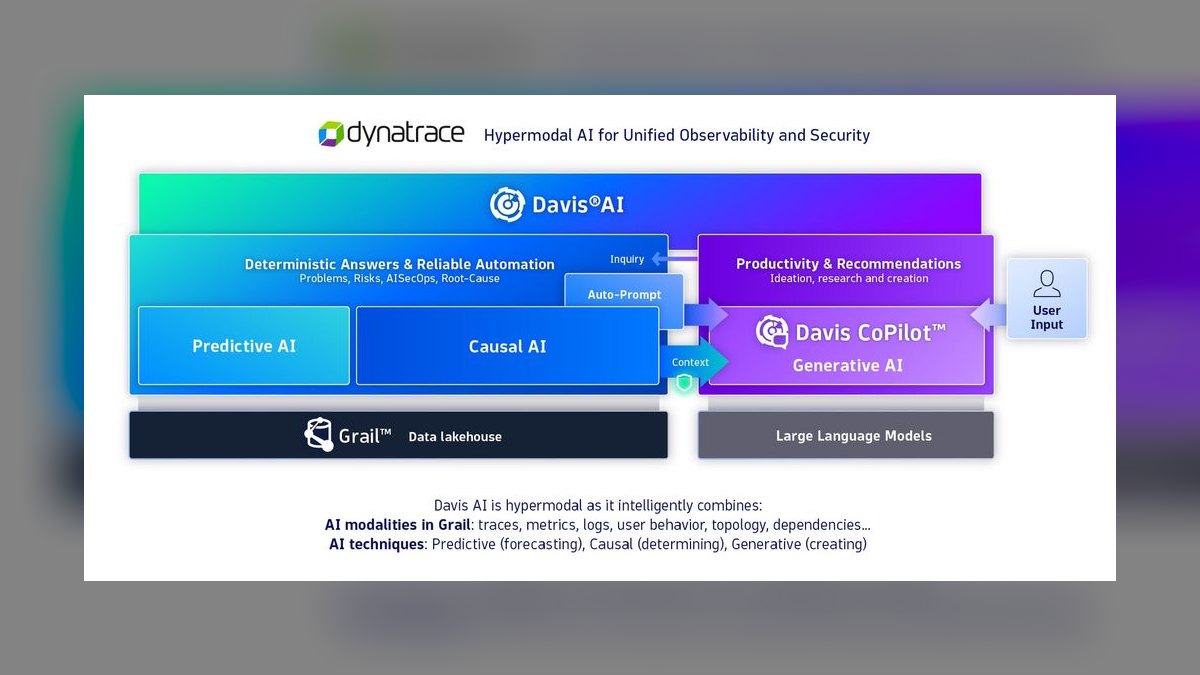
Dynatrace Davis AI ranks sixth on the strength of causal rather than purely statistical analysis. Davis maps dependencies across the stack through Smartscape topology and pinpoints the precise root cause of a problem with a confidence score, instead of handing engineers a list of correlated symptoms to sift through manually. In 2027, Davis CoPilot adds a generative layer that answers questions in natural language and writes queries in the DQL language.
It's best for large, complex environments where a slow root-cause hunt costs real revenue, since enterprise pricing puts it out of reach for smaller teams. The combination of deterministic causal analysis plus generative explanation is the most defensible AIOps story on this list for teams that distrust probabilistic guesswork. Compared to Datadog Bits AI above, Davis leans harder on precision and confidence scoring rather than breadth of telemetry coverage.
7. PagerDuty AIOps
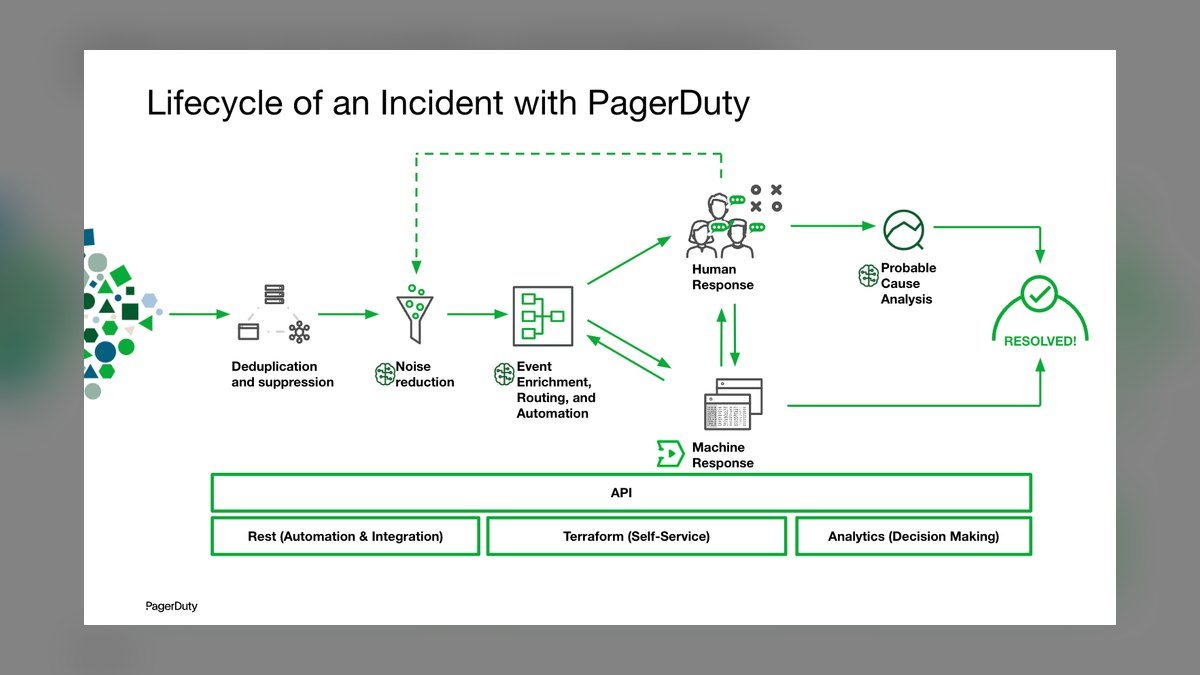
PagerDuty AIOps ranks seventh as the add-on built specifically to kill alert fatigue rather than find new issues. Event Intelligence correlates a flood of alerts into a single incident, suppresses transient noise, and routes the consolidated signal to the right responder — the difference between two hundred pages and one actionable incident. Automation actions can also trigger diagnostic or remediation runbooks automatically when a known pattern fires.
It's best when monitoring already finds the issues but the swarm of resulting alerts is the actual problem, not when you need root-cause detection in the first place. AIOps is a paid tier above PagerDuty's base incident-management plans, priced per user with custom enterprise terms. Compared to Dynatrace above, PagerDuty trades deep causal diagnosis for pure noise reduction and incident routing at the point of response.
8. Pulumi Copilot
Pulumi Copilot ranks eighth because it grounds its answers in real deployed infrastructure rather than generic documentation. It answers questions about your actual Pulumi Cloud state — which resources are in this stack, and what changed — generates infrastructure-as-code from prompts, and helps debug failed pulumi up operations. Because Pulumi lets teams write IaC in TypeScript, Python, Go, or C# instead of a DSL, Copilot's suggestions land in languages engineers already know.
It's best for engineers managing sprawling multi-cloud estates who reject DSL-style IaC tools in favor of general-purpose languages with AI layered on top. Pulumi offers a free Individual tier plus team and enterprise plans billed on resource and member counts. Compared to PagerDuty AIOps above, Copilot operates earlier in the lifecycle — shaping and explaining infrastructure before deployment rather than responding to incidents after something breaks.
9. Windsurf
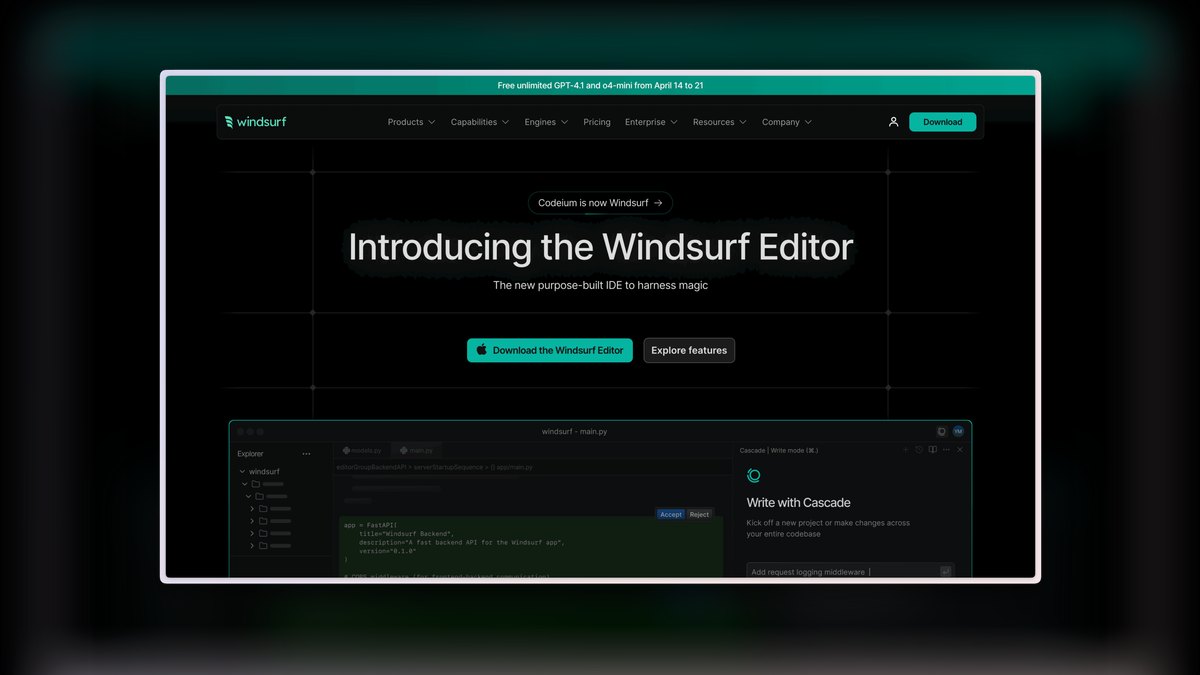
Windsurf, formerly known as Codeium, ranks ninth yet earns Best Value on the strength of a genuinely generous free tier where most rivals offer only trials. Its Cascade agent goes beyond completion into multi-file, agentic edits, understanding a whole repository and executing coordinated changes across it. Paid Pro plans land around $15 per user monthly, undercutting the $19 cluster of competitors, with an enterprise option offering self-hosted deployment.
It's best for regulated or budget-conscious teams that need one capable assistant across scripting, IaC, and pipeline config without a mandatory per-seat invoice for every engineer. It won't replace a full delivery platform like Harness or an AIOps engine like PagerDuty, and doesn't try to. Compared to Pulumi Copilot above, Windsurf trades infrastructure-state grounding for raw price-to-capability across a much broader everyday coding and automation workload.
10. BigPanda
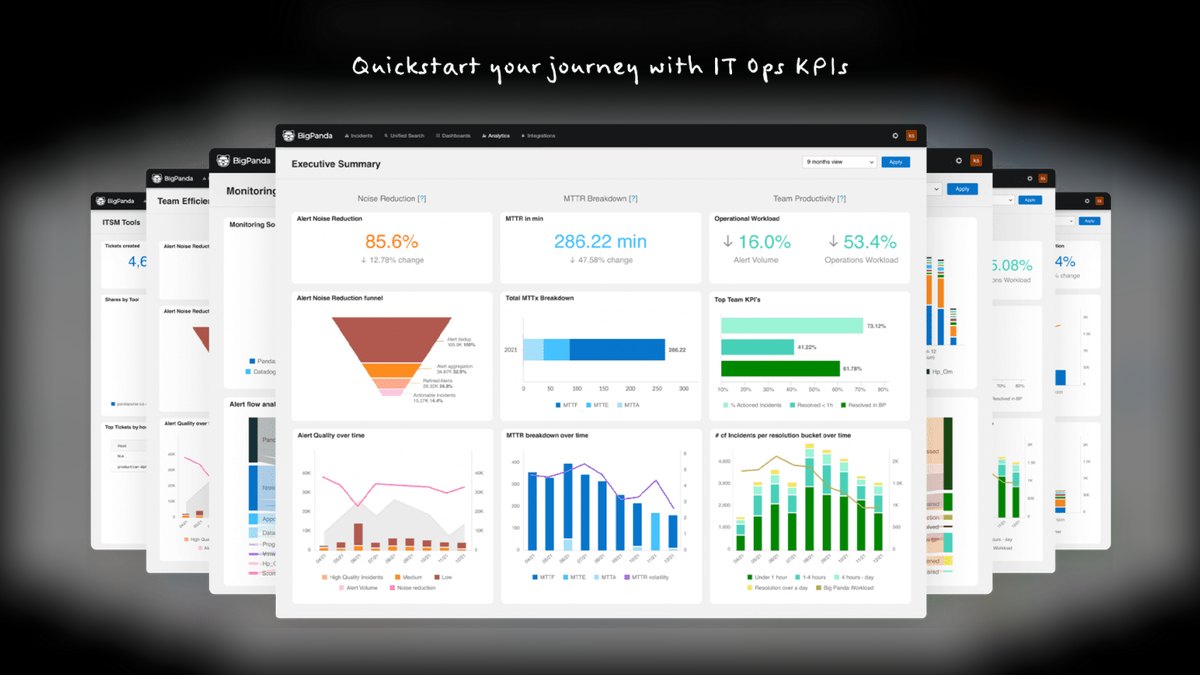
BigPanda ranks tenth as a focused AIOps platform built specifically around alert correlation rather than broader observability or code assistance. Its engine ingests events from across a heterogeneous monitoring stack — Datadog, Splunk, Prometheus, and others — and clusters thousands of raw alerts into a handful of correlated incidents, with machine learning inferring the likely root-cause candidate. Automated enrichment attaches topology and change context so responders aren't starting cold.
It's best for larger NOC and SRE operations running too many monitoring tools rather than small teams on a single vendor stack, and it's priced accordingly at enterprise tiers. Where a single-vendor shop leans on Datadog's or Dynatrace's built-in AI, BigPanda earns its place precisely when tool sprawl demands one correlation brain over all of them. Compared to Windsurf above, it solves an operations problem, not a coding one.
How we ranked these
Five factors drove the ranking: automation depth (does the tool only suggest code, or act across the pipeline by generating workflows, opening pull requests, and remediating incidents), ecosystem fit with existing CI/CD and cloud stacks, AIOps signal quality (alert noise reduction and root-cause accuracy), governance controls like self-hosting and auditability for regulated teams, and price-to-value measured against realistic time saved per seat.
We excluded vaporware and pre-release announcements, ranking only generally available products with real customer deployments as of early 2027. Raw benchmark scores from vendor marketing were ignored in favor of documented capabilities, since synthetic coding benchmarks rarely predict how a tool performs inside a messy, multi-repo DevOps pipeline under real incident pressure and organizational constraints. We also skipped seat-count-based enterprise negotiation pricing, since discounted list prices vary too widely by contract to compare across vendors.
What to look for
What actually matters is matching the tool to where automation already lives: a GitHub-native team gets far more from Copilot's PR and Actions integration than from a generic assistant bolted onto a foreign pipeline. For AIOps tools, the real differentiator is whether the vendor already ingests your existing monitoring data, since correlation engines are only as good as the alert volume and topology context they receive from tools you already run.
The most common mistake is buying a per-seat coding assistant and an AIOps platform as if they solve the same problem, then being surprised when alert fatigue persists after rolling out Copilot, or code velocity stalls after buying Dynatrace. Teams also over-license enterprise tiers for governance features — fine-tuned models, deep security remediation — that a five-person startup will never touch, when the mid tier covers actual daily usage.
Related questions
Is GitHub Copilot worth it for a team that isn't on GitHub Actions?
Less so. Copilot's code completion and chat work anywhere, but its standout DevOps features — Actions workflow authoring, Autofix tied to CodeQL scanning, and PR-grounded chat — assume a GitHub-centric pipeline. Teams on Jenkins or CircleCI still get a strong coding assistant, just without the pipeline-level automation that makes Copilot the top overall pick in 2027.
How is Amazon Q Developer different from CodeWhisperer?
Q Developer is the rebuilt successor to CodeWhisperer, adding an agentic mode that can plan a feature, write the code, and open the pull request rather than just suggesting completions. Its headline DevOps capability is automated code transformation for upgrading Java and .NET application versions, turning multi-week migration projects into supervised review sessions inside the AWS console.
What's the real difference between GitLab Duo and GitHub Copilot?
Both write code, but Duo is built around consolidation — SCM, CI/CD, security scanning, and AI under one permission model — while Copilot is deeper inside GitHub Actions specifically. Duo's Root Cause Analysis reads failed pipeline logs and explains the break, and its Vulnerability Resolution drafts a merge request for a security finding, mirroring Copilot Autofix but native to GitLab's own scanner.
When should I pick an AIOps tool over a coding assistant?
When your bottleneck is operations, not code. If builds ship fine but on-call engineers drown in duplicate alerts, tools like PagerDuty AIOps or BigPanda that correlate and suppress noise solve the actual problem. Coding assistants like Copilot or Windsurf won't touch alert fatigue; they accelerate writing and reviewing code, which is a different bottleneck entirely.
Is Windsurf a serious alternative to GitHub Copilot?
Yes, for teams prioritizing budget and data control. Windsurf's Cascade agent handles multi-file, agentic edits comparably to Copilot's chat features, its Pro tier undercuts Copilot Business at roughly $15 per user, and it offers self-hosted deployment Copilot doesn't. It lacks Copilot's native GitHub Actions authoring and Autofix security integration, so GitHub-heavy teams still lean toward Copilot for pipeline-specific work.
Why does Dynatrace call Davis AI 'causal' instead of just AI-powered?
Because it maps real dependencies across your stack through Smartscape topology and identifies a specific root cause with a confidence score, rather than surfacing a list of statistically correlated symptoms like many anomaly-detection tools. Davis CoPilot then adds a generative layer for natural-language questions and DQL query generation on top of that deterministic engine, which appeals to teams wary of probabilistic guesswork.
Does Harness AIDA replace Jenkins?
Not directly — Harness is a full CI/CD and delivery platform you'd migrate to, not a plugin for Jenkins. AIDA's failure analysis, natural-language pipeline generation, and Continuous Verification with automated rollback are built into Harness's own pipelines, so adopting AIDA means standardizing delivery on Harness rather than layering AI onto an existing Jenkins setup.
FAQ
Can AI tools fully automate a DevOps pipeline end to end?
Not safely in 2027. Tools like GitHub Copilot and Harness AIDA automate large chunks — authoring workflows, analyzing failures, triggering rollback — but production changes still need a human approval gate. Treat AI as an accelerant layered on a supervised pipeline, not as an unattended operator, especially for anything touching production infrastructure or customer-facing deploys.
Which tool is best if my team isn't on GitHub?
For AWS-native infrastructure, Amazon Q Developer. For a single consolidated DevSecOps platform, GitLab Duo. For multi-cloud infrastructure as code in real languages, Pulumi Copilot. If budget or self-hosting is the deciding constraint, Windsurf works across any stack and still ships a strong free tier for individual developers.
Do these AI tools train on my private code?
Policies vary by vendor and tier. Business and enterprise plans for GitHub Copilot, Amazon Q Developer, and GitLab Duo generally exclude customer code from training and carry contractual guarantees. Windsurf offers self-hosted deployment for teams that can't send code to any third-party cloud at all. Always confirm current terms directly, since data-processing policies change.
What's the difference between AIOps tools and AI coding assistants?
Coding assistants — Copilot, Q Developer, Windsurf, Pulumi Copilot — help you write and change automation code, IaC, and pipeline config. AIOps tools — Datadog, Dynatrace, PagerDuty, BigPanda — help you run and operate systems already in production by correlating alerts and surfacing root cause. Most mature DevOps teams end up running one of each, not a substitute for the other.
Is the enterprise tier worth roughly double the price of the mid tier?
For Copilot Enterprise and Duo Enterprise, the jump buys org-specific fine-tuned models, deeper security remediation, and stronger governance controls needed for regulated industries. Large or compliance-bound organizations get real value from that; a small team mostly wanting fast completions and chat is usually fully served by the mid Business or Pro tier at roughly half the cost.
Can I combine several of these tools without wasting budget?
Yes, and most mature teams do — typically one coding assistant, one observability AI, and sometimes an alert-correlation layer on top. The risk is overlap: paying for BigPanda while also leaning heavily on Datadog's own Watchdog correlation only makes sense once your monitoring stack is genuinely fragmented across enough vendors to justify a dedicated correlation brain.
How much does GitHub Copilot cost compared to its main rivals?
Copilot runs about $10 a month for individuals, $19 per user for Business, and $39 per user for Enterprise. That lands right in the same band as GitLab Duo Pro and Enterprise and Amazon Q Developer Pro, while Windsurf undercuts the cluster around $15 per user and offers a notably more generous free individual tier.
What should I actually measure during a pilot before committing to one tool?
Cycle time on real pull requests handled by one actual squad over roughly two weeks, not a vendor demo. For AIOps tools, measure the drop in raw alert volume reaching an on-call engineer and how often the suggested root cause is correct. Vendor-reported gains are consistently inflated compared to what a live pilot on your own codebase shows.
Which tool is the best value for a small team on a tight budget?
Windsurf. Its free tier is genuinely usable for individual developers rather than a time-limited trial, its Cascade agent handles multi-file agentic edits across scripting, IaC, and pipeline config, and Pro pricing around $15 per user undercuts the $19 cluster everyone else charges. It won't replace a full delivery platform, but as a daily assistant it's the sharpest price-to-capability ratio here.
Sources
- https://github.com/features/copilot
- https://aws.amazon.com/q/developer/
- https://about.gitlab.com/gitlab-duo/
- https://www.harness.io/
- https://www.datadoghq.com/product/platform/bits-ai/
- https://www.dynatrace.com/platform/artificial-intelligence/
- https://www.pagerduty.com/platform/aiops/
- https://www.pulumi.com/product/copilot/
- https://windsurf.com/
- https://www.bigpanda.io/
Related on PULSE
- [More ai tools for devops automation rankings and buying guides](/knowledge)
- [PULSE Tools and calculators](/tools)
- [Everything on PULSE RevOps](/)
Read it free — or make it yours for $1.
@Kory-White- · if Venmo asks, the last 4 of my number are 2012
 pulse-ai-infrastructureThe 10 Best AI Tools for Pronunciation Coaching in 2027
 pulse-ai-infrastructureThe 10 Best AI Tools for Stock Photos in 2027
 pulse-ai-infrastructureThe 10 Best AI Tools for Wedding Planning in 2027
 pulse-ai-infrastructureThe 10 Best AI Tools for Summarizing Books in 2027
 pulse-ai-infrastructureThe 10 Best AI Tools for Writing Movie Scripts in 2027
 pulse-ai-infrastructureHow do you architect a RAG pipeline for low latency?
 pulse-ai-infrastructureThe 10 Best AI Tools for Calendar Management in 2027
 pulse-ai-infrastructureThe 10 Best AI Tools for Web Illustration in 2027
 pulse-ai-infrastructureThe 10 Best AI Tools for SEO in 2027
 pulse-ai-infrastructureHow do you route requests across multiple LLM providers?