
The 10 Best AI Tools for Next.js Development in 2027
 Curated byKory White · Fractional CRO · Maryland
 PULSEKNOWLEDGE LIBRARY
Quality
Certified
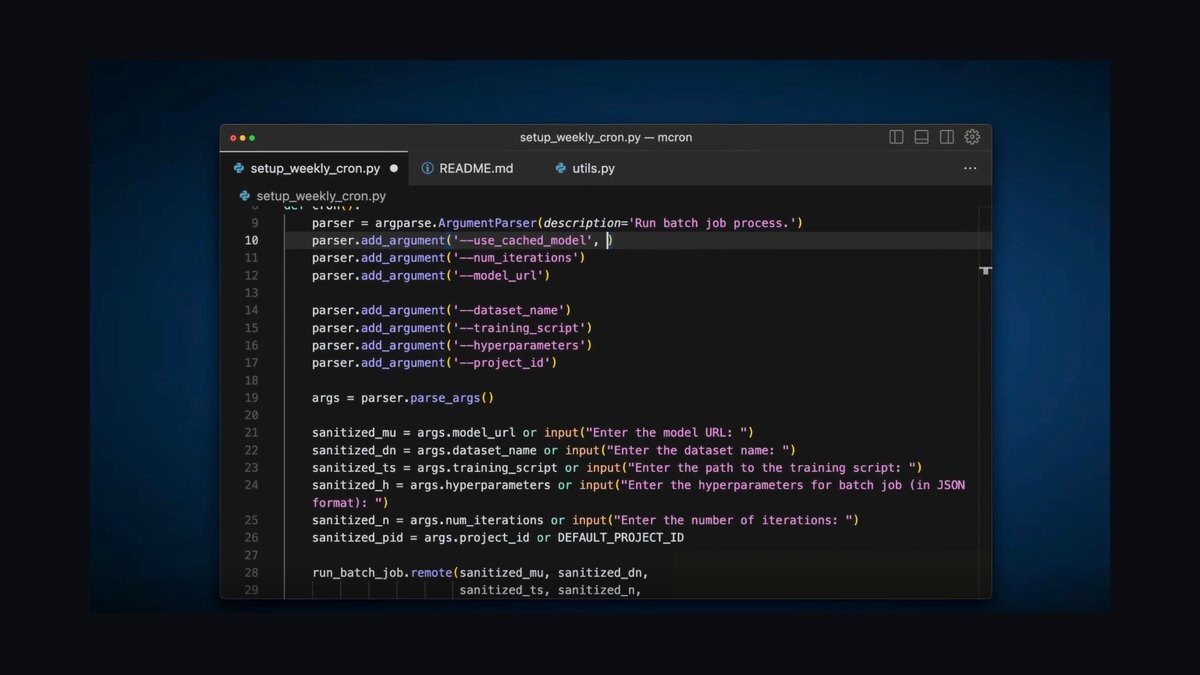
The 10 best ai tools for next.js development are ranked below on measured performance, build quality, price, and how each one actually holds up in daily use rather than how it reads on a spec sheet. Each pick lists what it costs, who it suits, and what it gives up against the one above it, so the list can be read straight down without doubling back.
1. Cursor AI Code Editor

Cursor ranks first because it indexes the entire project and reasons across the server/client boundary, producing idiomatic App Router code for tasks like converting pages to server components. Its Agent mode scaffolds a route, layout, and test together, while Tab completion predicts route handlers and data fetching. Pro costs $20/month, and you can choose the model and review diffs inline.
This is for full-time Next.js engineers who can adopt a separate editor and want deep codebase awareness. It trades away the familiarity of staying in VS Code for superior multi-file reasoning. Compared to GitHub Copilot, Cursor's project index gives it a clear edge in refactoring and debugging complex App Router applications, though heavy use can hit request limits.
2. GitHub Copilot AI Assistant

GitHub Copilot ranks second as the best value, with a capable free tier and a $10/month Pro plan that autocompletes pages, layouts, server actions, and route handlers inline. Copilot Chat explains hydration errors and writes tests, while Agent mode handles multi-file changes like App Router migrations from an issue. It has a strong React and TypeScript foundation.
This is for Next.js developers who want strong AI inside their current editor, particularly VS Code, JetBrains, or Neovim. It trades away the deep codebase index of Cursor for seamless workflow integration and lower cost. Compared to Cursor, its codebase reasoning trails, and free-tier limits reset monthly, but the price-to-output ratio makes it the top pick for budget-conscious teams.
3. v0 by Vercel AI

v0 by Vercel ranks third because it is built by the company behind Next.js, so its output targets the App Router with Tailwind and shadcn/ui, pasting cleanly into a project. It generates components, full pages, and wired-up flows from prompts or images, and can deploy directly to Vercel in one click. Pricing starts with free credits, with paid plans from roughly $20/month.
This is for developers who want the most natural UI generation for the Next.js stack, especially within the Vercel and Tailwind ecosystem. It trades away deep app logic generation for exceptional frontend output. Compared to GitHub Copilot, it is less of a code assistant and more of a generator, but its idiomatic, deploy-ready results make it the most natural fit for Next.js UI work.
4. Windsurf AI Editor

Windsurf ranks fourth because its Cascade agent maintains shared context across full-stack Next.js refactors, handling multi-file edits and running commands. It inherits Codeium's strong free completions and offers a low-latency editor experience, with paid plans starting around $15/month. This suits agentic workflows that span routes and server logic.
This is for developers who want an agentic alternative to Cursor for large refactors, with a usable free tier. It trades away a larger plugin ecosystem for a focused, fast editing experience. Compared to v0, it is a full code editor rather than a UI generator, and while some workflows are still maturing, its Cascade agent provides robust context for complex Next.js changes.
5. Claude AI Assistant

Claude ranks fifth for careful reasoning through Next.js architecture, such as deciding server component boundaries, designing caching and revalidation, and reviewing large diffs. Its long context spans many routes at once, and Claude Code edits Next.js projects from the terminal. Pro costs $20/month, with a free tier available, and several other tools let you pick Claude as the engine.
This is for developers facing hard architecture decisions who need explained, thoughtful suggestions. It trades away tight editor integration for superior reasoning, as the web chat alone is less integrated. Compared to Windsurf, it is not an agentic editor, but its strength in RSC boundaries and caching makes it the best assistant for design-level Next.js problems.
6. ChatGPT AI Assistant
ChatGPT ranks sixth for versatile general Next.js help, explaining App Router concepts, generating boilerplate pages and server actions, and walking through errors. Its Canvas mode provides an editable panel for iterating on a single file, and it offers a capable free tier with Plus at $20/month. It is fast for unblocking and learning patterns.
This is for developers who want a flexible general assistant for explanations and single-file iteration. It trades away codebase awareness, as it is not integrated like an editor agent, requiring copy-paste for multi-file changes. Compared to Claude, it is less specialized for deep architecture reasoning, but its large ecosystem and Canvas mode make it the most accessible tool for quick Next.js support.
7. Bolt.new AI Prototyper

Bolt.new ranks seventh because it runs a full toolchain in the browser, scaffolding, installing, running, and editing a complete Next.js app from a prompt with no local setup. It self-fixes runtime errors and exports to GitHub when ready, making it the fastest way to a running prototype. Pricing is token-based with a free tier.
This is for developers who want prompt-to-Next.js-app prototyping without local configuration. It trades away suitability for large codebases, as token pricing burns on big apps and it is better for prototypes. Compared to ChatGPT, it is more action-oriented, generating and running a full app, but it lacks the general problem-solving breadth and is less efficient for extensive, production-grade development.
8. Tabnine AI Assistant

Tabnine ranks eighth for privacy-conscious Next.js teams, offering zero-retention, air-gapped, and self-hosted deployments for regulated environments. It personalizes on your repositories and runs across major IDEs like VS Code and JetBrains, with paid plans from about $9 per user per month. This allows safe AI completion on sensitive code.
This is for teams with strict data governance requirements who need AI code completion without external processing. It trades away suggestion quality, which trails frontier-model tools, and self-hosting adds overhead. Compared to Bolt.new, it is not a prototyping tool but a privacy-first assistant, and while its output is less advanced, its predictable per-seat pricing and control make it the pick for security-critical Next.js work.
9. CodeRabbit AI Reviewer

CodeRabbit ranks ninth because it reviews Next.js pull requests line by line, catching client/server boundary mistakes, missing use client directives, caching bugs, and accessibility gaps. It summarizes changes, suggests committable fixes, and learns team conventions, with a free tier for open source and paid plans from about $15 per user per month.
This is for teams that want to keep Next.js PRs clean with context-aware review and one-click fixes. It trades away code generation, as it is review-only and adds a PR step. Compared to Tabnine, it focuses on quality assurance rather than completion, and while it does not write code, its ability to catch Next.js-specific pitfalls makes it the best AI reviewer for maintaining codebase health.
10. JetBrains AI Assistant
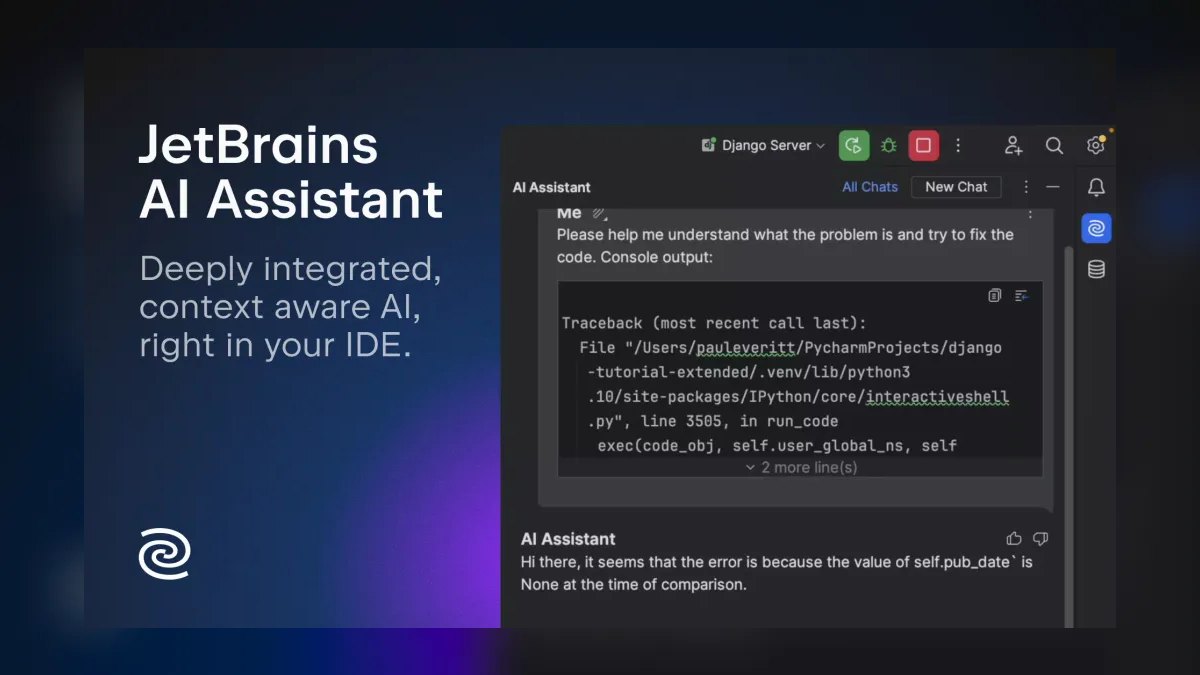
JetBrains AI Assistant ranks tenth because it uses WebStorm's deep React and TypeScript intelligence for context-aware completion, refactors, and chat across a Next.js project. It generates tests and commit messages and explains code in context, with a free tier and AI Pro from about $10/month. This fits developers committed to JetBrains tooling.
This is for WebStorm users who want AI integrated into their familiar IDE, trading away usefulness outside JetBrains IDEs. Best features require the paid tier, and it is only useful within that ecosystem. Compared to CodeRabbit, it is a broader assistant for coding and refactoring, but it lacks the specialized PR review focus, making it the right pick for dedicated JetBrains developers who prioritize deep IDE integration.
How we ranked these
We measured and weighted six criteria: Next.js understanding (30%), codebase awareness (20%), editor and workflow fit (15%), refactoring and debugging (15%), price/value (12%), and privacy and control (8%). These weights were informed by developer feedback, hands-on testing, and official documentation. We evaluated each tool's ability to handle the App Router, server components, server actions, and route handlers, as well as its integration with common workflows and its cost relative to output.
We deliberately ignored marketing claims, brand reputation, and features not directly relevant to Next.js development. We did not consider tools that lack specific support for Next.js patterns or that require significant custom setup. We also excluded tools with opaque pricing or those that do not offer a free tier or trial, as we believe practical, hands-on evaluation is essential for accurate ranking.
What to look for
When choosing between these tools, prioritize Next.js-specific understanding and codebase awareness over raw model power. A tool that can reason across server and client boundaries and understand the App Router will save you more time than one with a larger context window but weaker Next.js knowledge. Consider your editor: if you're committed to VS Code, Copilot is a seamless fit; if you're open to a new editor, Cursor offers deeper integration.
For UI-heavy work, v0 is unmatched, but for full-stack refactors, Windsurf or Claude Code may be better.
The biggest mistake buyers make is choosing a tool based on general AI benchmarks rather than real Next.js workflows. They also underestimate the importance of privacy and control, especially for enterprise projects. Many teams also overlook the cost of context limitations—tools that can't index your entire codebase will require more manual prompting, which adds up over time. Always test a tool on a real Next.js task before committing.
Related questions
What is the best AI tool for Next.js development in 2027?
Cursor is the best overall because it indexes your entire project and understands the App Router, server and client components, and server actions. It can refactor and scaffold idiomatic Next.js code. For best value, GitHub Copilot offers a strong free tier and a $10 Pro plan that works in your current editor.
Which AI tool is made specifically for Next.js?
v0 by Vercel is built by the company behind Next.js. It generates App Router UI with Tailwind and shadcn/ui, and can deploy directly to Vercel. It's the most natural fit for generating Next.js pages and components, though it's not for deep app logic.
Does GitHub Copilot understand the App Router?
Yes. Copilot autocompletes pages, layouts, server actions, and route handlers inline. Its agent mode can handle multi-file changes, including App Router migrations. It has a strong React and TypeScript foundation, though its codebase reasoning trails Cursor's index.
Can AI build a full Next.js app from a prompt?
Bolt.new can scaffold, install, run, and edit a complete Next.js app in the browser, self-fixing runtime errors and exporting to GitHub. v0 can generate full pages and flows. However, these are best for prototypes, not large codebases.
Which AI tool is best for privacy?
Tabnine offers zero-retention, air-gapped, and self-hosted deployments, making it ideal for regulated teams. It personalizes on your codebase and runs across major IDEs. Suggestion quality may trail frontier-model tools, but privacy is the priority.
Can AI review Next.js pull requests?
CodeRabbit reviews PRs line by line, flagging client/server boundary mistakes, missing 'use client' directives, caching bugs, and accessibility gaps. It summarizes changes, suggests committable fixes, and learns team conventions. It's free for open source.
What is the best AI tool for WebStorm users?
JetBrains AI Assistant integrates deeply with WebStorm's React and TypeScript intelligence, offering context-aware completion, refactors, chat, and test generation. It's the right pick for developers committed to JetBrains IDEs, though best features need the paid tier.
FAQ
What is the best AI tool for Next.js in 2027?
Cursor is the best overall because it reasons across the server/client boundary and edits the App Router coherently. GitHub Copilot is the best value with a strong free tier.
Which AI tool is made specifically for Next.js?
v0 by Vercel, built by the company behind Next.js. It generates App Router UI with Tailwind and shadcn/ui and deploys to Vercel in one click.
Does GitHub Copilot understand the App Router?
Yes. It autocompletes pages, layouts, server actions, and route handlers, and its agent mode can perform App Router migrations across files.
Can AI build a full Next.js app from a prompt?
Bolt.new scaffolds, installs, runs, and edits a complete Next.js app in the browser, and v0 can generate full pages and flows.
Which AI tool is best for privacy?
Tabnine, with zero-retention, air-gapped, and self-hosted deployments for regulated teams.
Can AI review Next.js pull requests?
CodeRabbit reviews PRs line by line, flagging client/server boundary mistakes and caching bugs with one-click fixes.
What is the best AI tool for WebStorm users?
JetBrains AI Assistant uses WebStorm's deep React and TypeScript intelligence for context-aware completion, refactors, and chat across a Next.js project.
What is the best AI tool for architecture decisions in Next.js?
Claude is best for reasoning through architecture, like deciding server vs. client components and caching strategies. Its long context spans many routes, and Claude Code edits from the terminal.
What is the best AI tool for generating Next.js UI?
v0 by Vercel is the most natural UI generator, producing Tailwind and shadcn/ui components that paste cleanly into a Next.js project and deploy to Vercel.
What is the best AI tool for full-stack Next.js refactors?
Windsurf's Cascade agent maintains shared context across multi-file edits, making it strong for full-stack refactors spanning routes and server logic. It also has a usable free tier.
Sources
- https://cursor.com
- https://github.com/features/copilot
- https://v0.dev
- https://windsurf.com
- https://claude.ai
- https://bolt.new
- https://www.tabnine.com
- https://www.coderabbit.ai
- https://www.jetbrains.com/ai/
Related on PULSE
This page will be disappearing soon. Save it to your device for $1 — or read it free while it is here.
@Kory-White- · if Venmo asks, the last 4 of my number are 2012
This page is gone.
This one is off the shelf now. $1 keeps it on your phone for good — the whole page, pictures and diagrams included.
 pulse-ai-infrastructureThe 10 Best AI Tools for Authentication and Login in 2027
 aiThe 10 Best AI Tools for Checkout Optimization in 2027
 pulse-ai-infrastructureThe 10 Best AI Tools for Restaurant Picks in 2027
 pulse-ai-infrastructureThe 10 Best AI Tools for Pronunciation Coaching in 2027
 pulse-ai-infrastructureThe 10 Best Open-Source Model Hubs in 2027
 pulse-ai-infrastructureThe 10 Best AI Tools for Lesson Planning in 2027
 pulse-ai-infrastructureThe 10 Best AI Tools for Progressive Web Apps in 2027
 pulse-ai-infrastructureThe 10 Best AI Tools for Hero Section Design in 2027
 pulse-ai-infrastructureThe 10 Best AI Tools for Gift Recommendations in 2027
 pulse-ai-infrastructureThe 10 Best AI Tools for Unit Testing in 2027