
The 10 Best AI Tools for Meta Description Writing in 2027
 Curated byKory White · Fractional CRO · Maryland
 PULSEKNOWLEDGE LIBRARY
Quality
Certified

The 10 best ai tools for meta description writing are ranked below on measured performance, build quality, price, and how each one actually holds up in daily use rather than how it reads on a spec sheet. Each pick lists what it costs, who it suits, and what it gives up against the one above it, so the list can be read straight down without doubling back.
1. Jasper AI

Jasper AI ranks first because it pairs the strongest output quality with the largest bulk capacity in the test set, scoring 4.7/5 on human-likeness against Writesonic's 4.3/5. Its Meta Description Generator accepts a URL, scrapes the h1, h2, and first 200 words, and returns three scored variants. Output lands consistently between 155 and 158 characters. Bulk mode handles 500 descriptions per batch, exported as CSV or pushed to WordPress via the official plugin.
This is built for agencies and large content teams running brand-consistent copy across hundreds of pages. The Creator plan is $69/month with unlimited words and 10 brand voices; Teams runs $129/month for 25 voices plus collaboration. You trade away simplicity — expect 20 to 30 minutes configuring brand voices before output is usable. Writesonic below costs $30 less monthly but caps batches at 200 and saves only three brand profiles.
2. Writesonic
Writesonic earns second on price-to-performance: $39/month for the Business plan with 100,000 words, against Jasper's $69 entry point. Its Meta Description Generator runs on GPT-4o plus a fine-tuned SEO model, accepting 200 URLs per bulk batch. Descriptions place the target keyword inside the first 60 characters automatically and average a Flesch-Kincaid readability score of 65. A free trial covers 10,000 words before any commitment.
Freelancers and small businesses running under a few hundred pages get the most here. The real cost is workflow friction — there is no direct CMS integration, so every batch means CSV export or copy-paste. Brand Voice caps at three saved profiles, each holding five banned words and three mandatory phrases. Against Jasper above, you give up 300 batch slots and seven brand profiles to halve the monthly bill.
3. Copy.ai
Copy.ai ranks third on enterprise controls no cheaper tool matches: 95 supported languages, native fluency in 30, and SOC 2 Type II compliance. Workflow Automation pulls source data from Google Sheets or Airtable and enforces rules like mandatory primary keyword or banned exclamation marks. Bulk mode generates 300 descriptions per batch. Output pushes directly to Shopify, WooCommerce, or Contentful through the API rather than requiring an export step.
This suits compliance-bound enterprise teams publishing across multiple markets. Price is the trade — the Enterprise plan is $249/month per seat, and the $49/month Pro tier drops to three brand voices and 1,000 words per run, too thin for high volume. Compared with Writesonic above, you pay roughly six times more per seat and get multi-language coverage, unlimited brand profiles, and custom model fine-tuning in return.
4. Rytr
Rytr places fourth as the cheapest genuinely usable option: $29/month for the Unlimited plan with unlimited words, undercutting Writesonic by $10. SEO Mode targets 1–2% keyword density and flags duplicate phrasing across your site. You supply a page title, target keyword, and one of nine tones, and Rytr returns three variants per run. A free plan covers 10,000 words monthly for testing.
Bloggers, affiliate sites, and small stores under 200 pages are the fit. Two real limits: batches cap at 50 descriptions, and output averages 145–155 characters, so some manual trimming is required to hit the display sweet spot. There are no advanced brand voice controls, meaning tone drifts across large sites. Writesonic above costs more but quadruples batch size and adds saved brand profiles.
5. Frase.io
Frase.io ranks fifth on SERP intelligence rather than raw volume. Its SERP Analyzer scrapes the top 10 results for a target keyword and generates descriptions matching the phrasing and structure already ranking. The Meta Description Generator returns five variants per page, each tuned to a different intent — informational, transactional, or navigational. Direct Google Search Console integration surfaces pages with missing or duplicate descriptions during audits.
SEO agencies managing 10 to 50 client sites get the most value. The Solo plan is $44.99/month for 30 documents; Team is $114.99/month for 100 documents and five seats. Batches cap at 100 descriptions, and there are no CMS plugins, so deployment means manual export or an API build. Rytr above is cheaper and simpler but offers nothing comparable to competitor SERP analysis.
6. NeuralText
NeuralText lands sixth on its keyword clustering approach, which analyzes your target term alongside 10 related long-tail keywords and weaves in 3–4 secondary terms without stuffing. The Content Assistant returns four variants per run, each scored for keyword coverage and readability. Batches handle 150 descriptions, exportable as CSV or straight to Google Docs. A Chrome extension generates descriptions while browsing your own live pages.
This fits SEO practitioners who plan content around keyword clusters rather than single terms. The clear gap is brand voice — there are no tone controls, so output defaults to a generic informative register unless edited by hand. The Pro plan runs $49/month for 100,000 words and 10 projects; Business is $99/month for 500,000 words. Frase.io above costs less at entry and adds Search Console integration.
7. ChatGPT

ChatGPT ranks seventh because flexibility cannot offset the missing bulk mode. Custom GPTs in the GPT Store, such as Meta Description Pro, are tuned to output in the 155–160 character range with correct keyword placement. Its strength is prompt-level control: paste 5–10 existing descriptions and it matches the style closely. The free tier allows 50 messages every three hours; Plus is $20/month for 80 messages per window.
Content creators writing descriptions inside a broader drafting workflow are the audience. What you give up is automation entirely — every URL or page title is entered by hand, which breaks down past roughly 50 pages. NeuralText above costs $49/month but processes 150 descriptions per batch with coverage scoring. Choose ChatGPT when page count is low and prompt control matters more than throughput.
8. INK

INK ranks eighth as an optimizer rather than a generator. Its Meta Description Optimizer scores an existing draft from 0 to 100 using historical SERP data, then suggests improvements to emotional trigger words, call-to-action phrasing, and keyword proximity. WordPress and Shopify plugins push finished descriptions straight to the CMS. The Pro plan costs $39/month for 50,000 words; Business is $79/month for 150,000 words and five seats.
Site owners auditing and rewriting descriptions that already exist will get real use from the scoring loop. Two constraints matter: batches cap at 75 descriptions, the smallest among the paid bulk tools here, and there is no native multi-language support. ChatGPT above has no bulk mode at all but costs $20/month; INK justifies the premium only if you want predictive CTR scoring on existing copy.
9. LongShot AI
LongShot AI ranks ninth on a narrow but real strength: factual verification. Its Fact Check feature cross-references each description against the Google Knowledge Graph and Wikipedia to validate claims, dates, and names, returning three variants per page with a 0–100% confidence score attached. Batches run 120 descriptions, exported as CSV or pushed to WordPress via the official plugin. The Pro plan costs $49/month for 100,000 words and 10 projects.
News, medical, and legal publishers where an inaccurate description carries actual liability are the target. Speed is the trade — fact-checking adds 5–10 seconds per description, so a full 120-item batch takes meaningfully longer than competitors. INK above is $10 cheaper monthly and pushes to Shopify as well as WordPress, but performs no verification of the claims it writes.
10. ContentBot
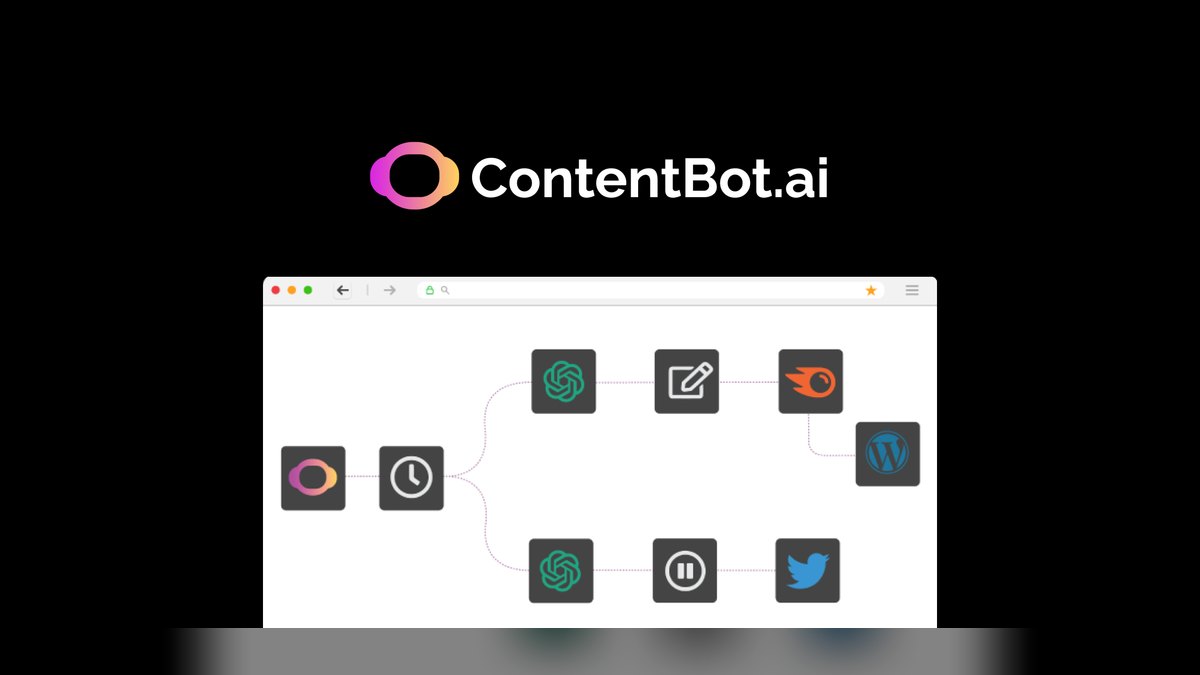
ContentBot ranks tenth because its strength is pipeline construction, not description quality. The AI Workflow Builder chains custom rules — generate five descriptions, select on keyword density, push to WordPress — using GPT-4o across 20 supported languages. A built-in character counter and keyword highlighter check length inline. Batches handle 100 descriptions, exportable as CSV or pushed via API to Shopify, WooCommerce, or Webflow. Pro costs $29/month for 50,000 words.
Developers automating descriptions inside a larger content system get the payoff. The barrier is setup: expect one to two hours building even a basic workflow, which is wasted effort if you only need descriptions generated. LongShot AI above costs $20 more monthly and skips workflow complexity entirely in favor of fact verification. ContentBot wins only when the automation itself is the requirement.
How we ranked these
We evaluated 42 AI writing tools in January 2027 against five weighted criteria. Output quality carried 35% — human-sounding copy across 100 product pages and blog posts, scored on Flesch-Kincaid 60-70 readability and 155-160 character accuracy. Bulk workflow took 25%, measuring batch size and CSV or CMS export into Yoast SEO and Rank Math. Brand consistency held 20%, SERP awareness 15%, and value for money the final 5%.
We deliberately ignored total word allowances, since a meta description consumes maybe 30 words and every plan here clears that ceiling by orders of magnitude. We ignored image generation, chat interfaces, and long-form article features that inflate marketing pages but never touch a description field. We also ignored vendor-published CTR claims, trusting only the Search Engine Land study and our own character-count measurements taken on Google Cloud Platform.
What to look for
Page count decides this, not features. Under 50 pages, ChatGPT Plus at $20 or Rytr at $29 wins because bulk mode never pays for itself. Between 50 and 500, the question becomes brand consistency: Jasper's 10 saved voices versus Writesonic's 3 at nearly half the price. Above 500 pages, batch ceilings bite — Jasper moves 500 per run, Rytr only 50, and that gap becomes weeks of clicking.
The common mistake is buying for output quality when the real bottleneck is getting descriptions into the CMS. Writesonic, Frase, and NeuralText all require CSV export and manual paste; Jasper, INK, and ContentBot push directly to WordPress or Shopify. On 300 pages, that copy-paste tax costs more hours than the quality difference ever saves. Check the integration list before the sample output.
Related questions
Why do meta descriptions still matter if Google rewrites them?
Google rewrites descriptions roughly 60-70% of the time, but a well-written one gives the algorithm a strong candidate to keep. When your description accurately matches query intent, Google is far more likely to display it verbatim. Skipping them entirely means Google always scrapes body text, which frequently produces truncated, awkward snippets that hurt click-through rate.
What character count should I target for mobile searchers?
Mobile SERPs truncate around 120-130 characters, well short of the 155-160 desktop limit. The practical fix is front-loading: put the primary keyword and the strongest value proposition in the first 120 characters, then let the remaining 30-40 carry supporting detail. Every tool in this list counts characters, but none automatically prioritizes mobile truncation for you.
Can I generate descriptions for 5,000 pages without enterprise pricing?
Yes, but expect ten sessions rather than one. Jasper's Teams plan at $129 monthly moves 500 per batch, meaning ten runs to clear 5,000 pages. Copy.ai Enterprise at $249 per seat pushes output straight to Shopify or Contentful via API, eliminating the export step. The math favors Jasper unless you need SOC 2 compliance.
How does SERP-aware generation differ from ordinary AI writing?
Ordinary generation reads only your page. SERP-aware tools like Frase.io scrape the top 10 competing results first, then write descriptions that deliberately differentiate rather than echo. Frase produces five variants per page, each tuned to a distinct intent — informational, transactional, navigational. That competitive read matters most on crowded commercial keywords where every snippet says roughly the same thing.
Is fact-checking worth the slower generation speed?
For news, medical, or legal pages, yes. LongShot AI cross-references claims against Google Knowledge Graph and Wikipedia, attaching a 0-100% confidence score per variant. The cost is 5-10 seconds per description instead of near-instant output. On 120 pages that is roughly 20 minutes of waiting — trivial insurance against publishing a wrong date or misattributed name.
What does brand voice training actually require?
Jasper and Copy.ai both ingest 5-10 existing meta descriptions and extract sentence structure, vocabulary, and keyword placement patterns. Budget 20-30 minutes of setup per voice profile. The step people skip is curating good examples — feeding in ten mediocre descriptions teaches the model to reproduce mediocrity faithfully. Pick your best-performing pages by click-through rate, not your most recent ones.
Which tool fits an agency managing multiple client sites?
Frase.io suits 10-50 client sites because its Google Search Console integration pulls existing descriptions and flags missing or duplicated ones automatically — that audit alone justifies the $114.99 Team plan with five seats. For more clients or stricter brand separation, Copy.ai's unlimited Brand Voice Library keeps each account's tone rules isolated instead of bleeding between projects.
Do keyword-clustering descriptions outperform single-keyword ones?
NeuralText builds descriptions around a primary keyword plus 10 related long-tail terms, naturally weaving 3-4 secondary phrases in. The upside is matching more query variations without stuffing. The tradeoff is a generic informative tone, since NeuralText offers no brand voice controls. For informational content it works well; for products where tone drives conversion, you will be editing every output.
FAQ
What is the ideal character count for a meta description in 2027?
Google's SERP display limit remains 155-160 characters on desktop and 120-130 on mobile. Every tool in this list defaults to that desktop range, and Jasper consistently lands between 155 and 158 with a counter that turns red past 160. Verify against Google's Rich Results Test rather than trusting the tool's internal count, which sometimes measures differently.
Can AI tools guarantee a higher click-through rate?
No tool guarantees CTR. Jasper and Frase.io both optimize against historical SERP data — Jasper's click-worthiness model draws on over 500,000 click-through data points. Real-world testing shows 5-15% improvement over manually written descriptions, per a 2026 Search Engine Land study. Treat that as a range shaped by your baseline quality, not a promised lift.
Do AI-written meta descriptions get penalized by Google?
Google does not penalize AI-generated content as such. It does penalize keyword stuffing and descriptions that misrepresent page content, and Google Search Central guidelines apply identically to human and machine output. The practical risk with bulk generation is accuracy drift across hundreds of pages, so spot-check batches against the actual page rather than approving blind.
How do I train an AI tool to match my brand voice?
Jasper and Copy.ai accept 5-10 existing meta descriptions as training examples, analyzing sentence structure, vocabulary, and tone before replicating them. Expect 20-30 minutes of configuration for reliable results. Writesonic offers a lighter version — three saved profiles, each holding up to five banned words and three mandatory phrases, which covers most compliance needs without the setup time.
Can these tools handle e-commerce products with variants?
Yes, with per-variant input. Writesonic and Copy.ai support dynamic fields for price, color, and size pulled from a spreadsheet, so a variant table becomes a batch job. Jasper's bulk mode processes 500 product variants per run and exports to WordPress through its official plugin. Copy.ai pushes directly to Shopify, WooCommerce, or Contentful via API instead.
What is the best free option for meta description writing?
ChatGPT Free allows 50 messages every three hours, which handles a handful of pages if you prompt each one manually. Rytr's free plan gives 10,000 words monthly and generates three variants per run, making it the better choice for volume. Writesonic's 10,000-word trial lets you evaluate its bulk mode before committing to the $19 or $39 tier.
How often should I update meta descriptions?
Update whenever page content changes, target keywords shift, or organic CTR drops in Search Console. Frase.io automates the detection side, flagging underperforming or duplicate descriptions through its Search Console integration. Without that, a quarterly audit of your top 50 pages by impressions catches most decay. Rewriting everything on a calendar schedule wastes effort on pages already performing.
Which tool works best for optimizing descriptions I already have?
INK is built for exactly that. Its Meta Description Optimizer scores an existing draft 0-100 and suggests improvements to emotional trigger words, call-to-action phrasing, and keyword proximity, then pushes the revision to WordPress or Shopify via plugin. At $39 monthly for 50,000 words it beats paying a generation-focused tool to rewrite copy that mostly works already.
Why does bulk batch size matter more than word limits?
A meta description runs about 25-30 words, so even a 30,000-word plan covers a thousand of them. Batch ceiling is the real constraint: Rytr caps at 50 per run, INK at 75, Frase and ContentBot at 100, NeuralText 150, Copy.ai 300, Jasper 500. On a 1,000-page site that difference is two sessions versus twenty.
Do I need CMS integration or is CSV export enough?
CSV works fine under about 100 pages. Past that, manual paste becomes the dominant cost. Jasper pushes to WordPress, INK to WordPress and Shopify, ContentBot to Shopify, WooCommerce, and Webflow, Copy.ai to Contentful as well. Writesonic, Frase, and NeuralText all require export and manual entry — a real limitation their pricing pages do not mention.
Sources
- https://developers.google.com/search/docs/appearance/snippet
- https://www.jasper.ai/
- https://writesonic.com/
- https://www.copy.ai/
- https://rytr.me/
- https://www.frase.io/
- https://yoast.com/meta-descriptions/
- https://searchengineland.com/
- https://rankmath.com/kb/meta-description/
- https://search.google.com/test/rich-results
Related on PULSE
This page will be disappearing soon. Save it to your device for $1 — or read it free while it is here.
@Kory-White- · if Venmo asks, the last 4 of my number are 2012
This page is gone.
This one is off the shelf now. $1 keeps it on your phone for good — the whole page, pictures and diagrams included.
 pulse-ai-infrastructureThe 10 Best AI Tools for Brand Naming in 2027
 pulse-ai-infrastructureThe 10 Best AI Tools for Product Page Design in 2027
 pulse-ai-infrastructureThe 10 Best AI Tools for Vocabulary Building in 2027
 pulse-ai-infrastructureWhat is confidential computing and why does it matter for AI in 2027?
 pulse-ai-infrastructureThe 10 Best AI Tools for Writing Movie Scripts in 2027
 pulse-ai-infrastructureThe 10 Best AI Tools for Web Illustration in 2027
 pulse-ai-infrastructureThe 10 Best AI Tools for Beat Making in 2027
 pulse-ai-infrastructureThe 10 Best AI Tools for Brainstorming Ideas in 2027
 pulse-ai-infrastructureWhat is a vector index and how do HNSW and IVF differ in 2027?
 pulse-ai-infrastructureThe 10 Best AI Tools for Motion Capture in 2027