
The 10 Best Data Labeling Platforms for AI in 2027
 Curated byKory White · Fractional CRO · Maryland
 PULSEKNOWLEDGE LIBRARY
Quality
Certified

The 10 best data labeling platforms for ai are ranked below on measured performance, build quality, price, and how each one actually holds up in daily use rather than how it reads on a spec sheet. Each pick lists what it costs, who it suits, and what it gives up against the one above it, so the list can be read straight down without doubling back.
1. Labelbox

Labelbox ranks first because it is the strongest general-purpose choice for teams wanting annotation and model evaluation in one loop. Its Model Foundry runs existing models across unlabeled assets to produce pre-labels, and SAM-style auto-segmentation enables one-click masking. Model Diagnostics compares ground truth against predictions to reveal failing classes. Pricing starts around $5,000/year for a small-team Starter tier, scaling to custom enterprise agreements with on-premise deployment.
Labelbox is for teams with in-house annotators who want to close the label-train-diagnose loop on their own data. It trades away a managed workforce, so you must staff your own labeling operation. Compared to Scale AI below, Labelbox gives you more control over the process but requires more internal effort. It is ideal for computer vision and multimodal work where you need to iterate on failure cases rapidly.
2. Scale AI

Scale AI ranks second because it solves the outsourced high-volume annotation problem with a managed workforce and redundancy-based quality. Its Data Engine offers pre-built configurations across 2D boxes, 3D cuboids on LiDAR, sensor-fusion scenes, video tracking, and RLHF data. Multiple annotators touch each asset and disagreements route to review, ensuring quality at scale. Pricing is custom enterprise, commonly starting in the tens of thousands annually plus per-annotation costs.
Scale AI is for teams with no annotation staff and large, bursty volumes that require no deep domain knowledge. It trades away direct control over the labeling process and is not suited for data that cannot leave your environment. Compared to Labelbox above, Scale AI provides a workforce but at a higher cost per unit, especially for complex 3D tasks. Choose Scale when you need to scale quickly without hiring.
3. Supervisely

Supervisely ranks third because it is the control-first option for on-premise deployment without per-seat fees. It deploys via Docker on your own infrastructure and prices by capability, making it ideal for regulated industries where data cannot leave the network. Its strongest suit is 3D point cloud and multi-sensor work, with the ability to run models inside the labeling interface for active learning.
Supervisely is for teams with 40 part-time annotators who cannot justify per-seat pricing, or for defense and medical data with strict residency requirements. It trades away a polished hosted experience for infrastructure control and requires engineering capacity to self-host. Compared to Scale AI above, Supervisely offers no managed workforce, so you must bring your own labelers. It is the shortlist when the constraint is data sovereignty.
4. CVAT

CVAT ranks fourth because it is the default free choice for computer vision, originally from Intel, with strong video interpolation and SAM-assisted segmentation. It supports polygons, keypoints, semantic segmentation, and 3D annotation, making it a versatile open-source tool. A hosted cvat.ai tier exists alongside free self-hosting, with a paid enterprise edition offering SSO and compliance features. Enterprise editions are in the five-figure range, but self-hosting is free indefinitely.
CVAT is for small teams and startups with engineering capacity who need a robust CV tool without license costs. It trades away built-in model evaluation and managed infrastructure, requiring you to handle deployment and maintenance. Compared to Supervisely above, CVAT is less focused on 3D point clouds but is more accessible for standard 2D image and video work. Choose CVAT when you need a reliable, free starting point for computer vision labeling.
5. Label Studio

Label Studio ranks fifth because it is the flexible open-source generalist for image, audio, text, and time-series data. Its custom interfaces are defined in a simple markup config, and an ML backend hook enables pre-labeling. It is free to self-host, with paid enterprise editions in the five-figure range that add SSO, RBAC, and audit logging. This makes it a low-cost option for teams with diverse data types and moderate labeling needs.
Label Studio is for teams that need a single tool for multi-modal labeling without committing to a specialized platform. It trades away advanced features like 3D point cloud support and deep model evaluation, focusing instead on breadth and customizability. Compared to CVAT above, Label Studio handles text and audio better but is less polished for video interpolation. Choose Label Studio when your data spans multiple modalities and you have developer resources to configure it.
6. Dataloop

Dataloop ranks sixth because it bundles labeling with data versioning and pipeline orchestration, including conditional routing rules. This allows specific assets to be sent to specialist annotators based on criteria, streamlining complex workflows. It has a published Starter tier in the low single-digit thousands per year with storage and seat caps. This makes it a cost-effective option for teams that need automation beyond the basic editor.
Dataloop is for teams with mature MLOps stacks that want labeling integrated into a broader data pipeline. It trades away the simplicity of a standalone tool for orchestration power, which may be overkill for small projects. Compared to Label Studio above, Dataloop offers better versioning and routing but is less flexible for custom data types. Choose Dataloop when you need conditional workflows and versioned datasets for reproducible training runs.
7. Encord

Encord ranks seventh because it specializes in medical imaging with DICOM viewing and 3D segmentation. Its team tier sits in the low thousands annually, with HIPAA-capable enterprise plans priced separately. This makes it a targeted choice for healthcare teams that need proper windowing and volume segmentation tools. The platform supports the specific needs of radiology and pathology data that generic tools cannot handle.
Encord is for medical imaging teams that require DICOM compliance and specialized 3D segmentation capabilities. It trades away general-purpose flexibility for domain-specific depth, so it is not ideal for non-medical computer vision. Compared to Dataloop above, Encord offers superior medical imaging tools but lacks pipeline orchestration features. Choose Encord when your primary data type is medical imaging and you need HIPAA-compliant annotation.
8. V7
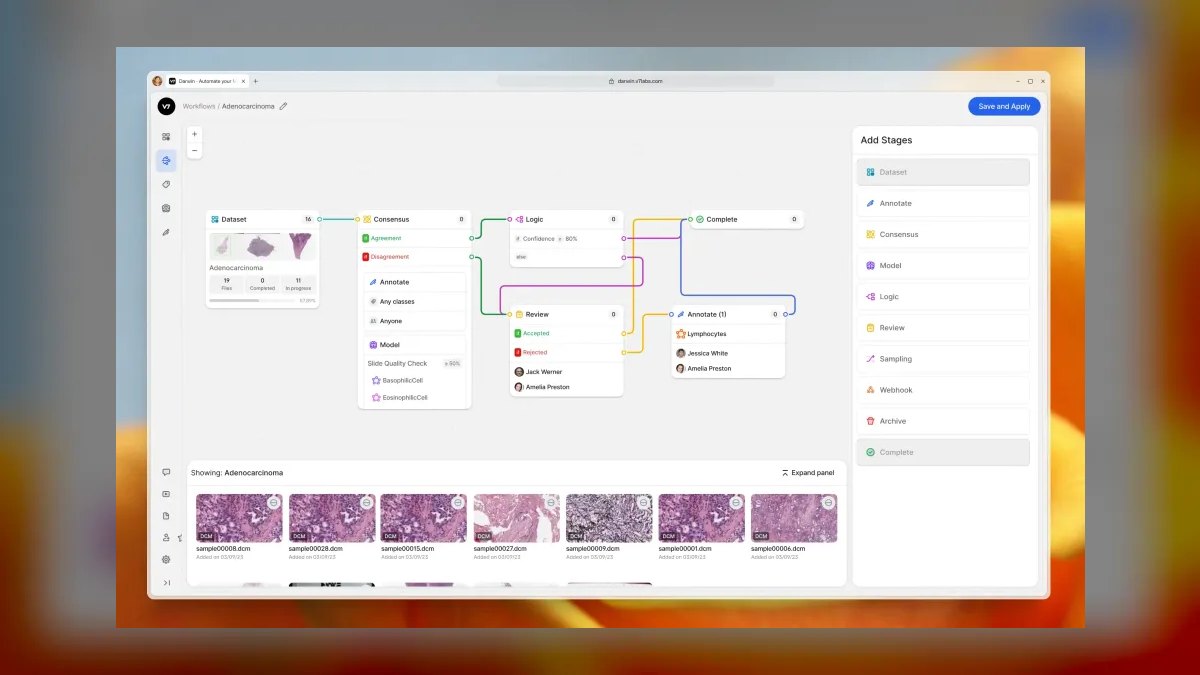
V7 ranks eighth because it leans hardest into foundation-model-assisted auto-annotation plus a workflow builder. Its published Starter tier is in the low single-digit thousands per year, making it accessible for small teams. The platform uses AI to pre-label common classes, reducing manual effort on familiar objects. This positions it as a modern tool for teams wanting to maximize automation in their labeling process.
V7 is for teams that want to leverage foundation models for pre-labeling and have a workflow that benefits from a visual builder. It trades away the depth of 3D point cloud support and managed services, focusing instead on 2D and video annotation. Compared to Encord above, V7 is more general-purpose but lacks medical imaging specialization. Choose V7 when you want aggressive AI-assisted labeling and a user-friendly workflow interface.
9. Kili Technology
Kili Technology ranks ninth because it focuses on document and text work, including OCR, key-value extraction, and NER, with consensus scoring. Its team plan starts lower than many competitors, making it a budget-friendly option for NLP-heavy projects. The platform provides tools for measuring inter-annotator agreement, which is critical for text quality. This makes it a strong choice for teams working on document AI.
Kili is for teams specializing in document processing and text annotation, where OCR and NER are the primary tasks. It trades away computer vision features like video interpolation and 3D support, focusing instead on text and document workflows. Compared to V7 above, Kili offers better consensus scoring but less AI-assisted auto-annotation for images. Choose Kili when your data is primarily documents and you need robust quality measurement.
10. Prodigy by Explosion
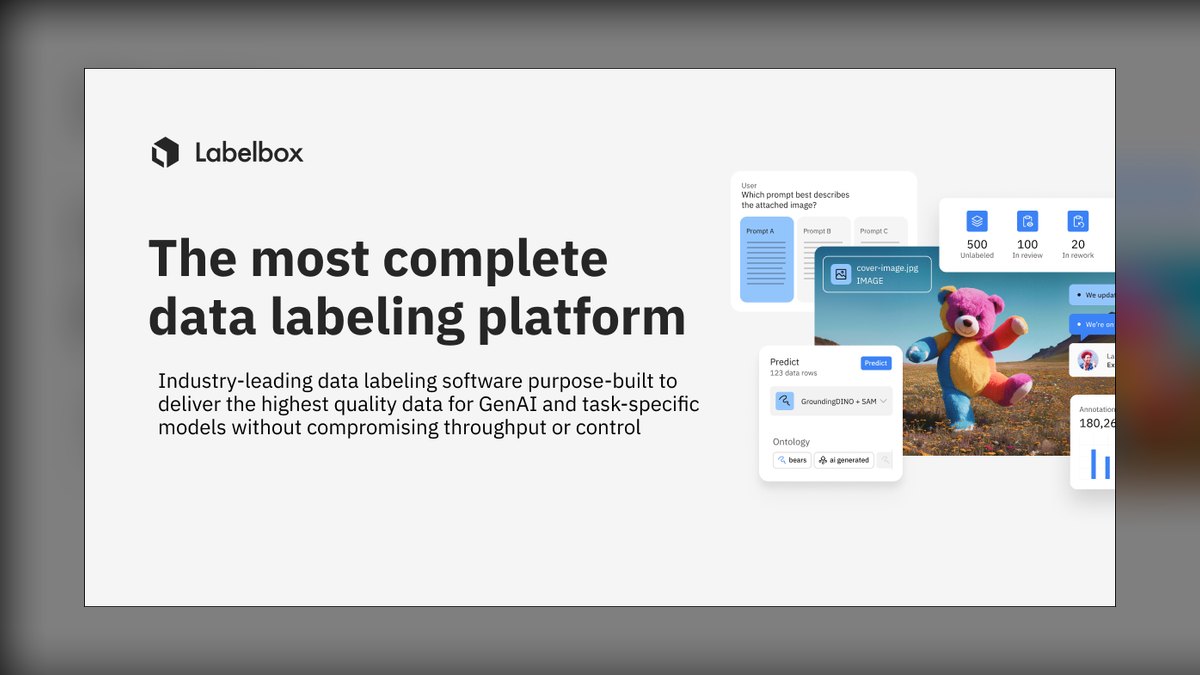
Prodigy by Explosion ranks tenth because it is a scriptable, self-hosted, one-time-purchase tool built around active learning for NLP. A per-developer license costs under $1,000 with no recurring fee, making it the cheapest long-term option for developers. It integrates tightly with spaCy and allows you to build custom labeling loops with Python. This makes it a developer tool rather than a platform, but highly effective for NLP workflows.
Prodigy is for NLP developers who are comfortable scripting and want an active-learning loop without per-seat costs. It trades away a GUI-heavy platform experience and managed infrastructure for flexibility and control. Compared to Kili above, Prodigy offers no consensus scoring or team management features, but it is far cheaper for a small team. Choose Prodigy when you have developer resources and a text-heavy labeling workload.
How we ranked these
We evaluated platforms on annotation editor depth, automation capabilities, deployment flexibility, pricing transparency, and post-labeling features like model evaluation. Weightings favored operational fit: workforce model, data residency, data type, and downstream integration. We prioritized platforms with published entry tiers and real-world pilot evidence over marketing claims, and we weighted the cost of labor against license fees because labor dominates total cost.
We deliberately ignored feature parity claims that every credible tool now meets, such as basic bounding boxes and polygons. We also ignored vendor-provided case studies and benchmark numbers, because they are consistently cherry-picked. We did not rank on brand recognition or ecosystem hype. Instead, we focused on the constraints that actually drive buying decisions: who labels, where data lives, what data type, and what happens after labels exist.
What to look for
What actually matters is the operating model, not the editor. Decide who does the labeling: if you have no in-house annotators, you need a managed workforce like Scale AI; if you have your own team, you need a tool like Labelbox or Supervisely. Data residency is the next hard constraint—regulated industries require on-premise or VPC deployment, which eliminates most hosted-only options. Then match data type: 3D point cloud, DICOM, and document AI each have specialists.
Finally, consider what happens after labeling: if you want a diagnose-and-relabel loop, choose a platform with built-in model evaluation.
The most common mistake is buying before piloting. Teams start with a feature comparison spreadsheet, but features overlap heavily and constraints do not. The pilot week—labeling 200-500 representative assets on two or three shortlisted platforms with the same annotators and ontology—is non-negotiable. It reveals time per asset, inter-annotator agreement, ontology ambiguities, and export friction. Skipping it leads to a signed contract and an unusable dataset.
Also, avoid over-trusting automation on rare classes; pre-labeling can be net negative on edge cases.
Related questions
Is open-source enough, or do we need a commercial platform?
Open-source CVAT or Label Studio is genuinely sufficient for many computer vision and multi-modal projects. The commercial upgrade buys SSO, audit logging, RBAC, support SLAs, and managed infrastructure. If you have engineering capacity to self-host and no strict compliance mandate, start open-source.
How many labeled examples do we actually need?
It depends heavily on task difficulty and whether you fine-tune from a pretrained backbone. Fine-tuning often produces usable results from a few hundred to a few thousand examples per class. Start small, measure the learning curve, and let it tell you where returns flatten.
Should we outsource labeling or build an in-house team?
Outsource when volume is large, bursty, and the task requires no deep domain knowledge. Build in-house when labeling requires subject-matter expertise, the ontology changes frequently, or the data cannot leave your environment. Many mature teams do both—in-house for gold standards, outsourced for bulk.
Can synthetic or generated data replace human labeling?
It supplements, rarely replaces. Synthetic augmentation and simulated scenes help with rare events and class balance, but models trained purely on synthetic data usually degrade on real-world distribution shift. Use it to fill gaps, and validate against a human-labeled real-world test set.
How do we measure labeling quality objectively?
Two signals: inter-annotator agreement on overlapping assets, and accuracy against a gold standard set labeled by an expert. Track both per annotator and per class over time. A class with persistently low agreement is an ontology problem, not an annotator problem.
What is the best way to run a pilot test for a labeling platform?
Take 200-500 assets that genuinely represent your distribution, including the ugly ones. Label them on two or three shortlisted platforms with the same annotators and the same ontology. Measure median time per asset, inter-annotator agreement, ontology ambiguities surfaced, and export friction. This week is the highest-leverage step in the whole process.
FAQ
Which data labeling platform is best overall for AI in 2027?
There is no single winner across all cases, but Labelbox is the strongest general-purpose choice for teams that want annotation and model evaluation in one loop, especially in computer vision and multimodal work. Scale AI leads when you need an outsourced workforce at volume, and Supervisely leads when on-premise deployment and unlimited collaborators matter more than a hosted experience.
How much should we budget for a data labeling platform?
Published entry tiers run from free (self-hosted CVAT, Label Studio, Supervisely community) through low single-digit thousands per year for small-team plans, into the five figures for enterprise editions, and into custom enterprise pricing for managed services like Scale AI. Budget the license as the smaller line item—annotation labor typically dominates total cost by a wide margin.
Can we try these platforms before committing to an annual contract?
Yes. Most vendors offer free tiers, trials, or structured pilot programs, and CVAT, Label Studio, and Supervisely's community edition are free to self-host indefinitely. Run the same representative 200-500 asset batch through your two or three finalists with the same annotators, and compare time per asset, agreement, and export friction.
Do these platforms support 3D point cloud and LiDAR data?
Some do, and it is a real differentiator. Scale AI and Supervisely both handle 3D point cloud and multi-sensor work, and CVAT supports 3D annotation as well. Many otherwise capable platforms are 2D-first, so verify 3D support explicitly rather than assuming it—the tooling quality gap between vendors is much wider in 3D than in 2D.
How does model-assisted labeling actually reduce costs?
On common object classes with a decent pre-labeling model, correction-based workflows commonly cut per-asset time by roughly half to three-quarters versus drawing from scratch. Video interpolation between keyframes produces the biggest single jump. But on rare classes, occlusion-heavy scenes, or novel ontologies, pre-labeling can be net negative—annotators spend longer fixing bad suggestions than drawing clean.
What are the hidden costs in data labeling projects?
Storage and egress charges on large video or point cloud datasets. Professional services for ontology design, which several vendors quote separately. Annotator training time—two to five days before a new labeler hits target quality. And re-labeling: ontology changes mid-project are common and expensive, so invest in ontology design before scaling.
How should we structure QA for labeling quality?
Sample-based QA is the right approach: audit a fixed percentage of each annotator's output, track inter-annotator agreement with a statistic like Cohen's kappa, and escalate to full consensus only for classes where agreement is measurably poor. Full triple-consensus on an entire dataset is almost never the right call—it multiplies cost by the number of passes plus review overhead.
What is the best way to handle ontology changes during a project?
Version the ontology document and treat it as a living artifact. When classes split or definitions change, use platform versioning and rollback to reproduce any past training set exactly. Keep a standing 'ambiguous' queue where annotators can park anything the spec does not cover, reviewed weekly by the ontology owner, rather than forcing guesses that quietly poison the dataset.
How do we decide between a managed service and a labeling tool?
If you have no annotation staff and no intention of hiring, you need a managed workforce like Scale AI. If you have in-house labelers, subject-matter experts, or a BPO you already contract with, you need a tool and should not pay service margins. Buying the wrong category—a managed service when you needed a tool, or vice versa—is the most expensive mistake in this market.
What are the key features to look for in a labeling platform for regulated industries?
Real on-premise or VPC deployment where the annotation runtime executes inside your network boundary. Ask specifically whether the runtime runs inside your network, not just whether the vendor is SOC 2 certified. Supervisely, self-hosted CVAT, self-hosted Label Studio, Prodigy, and enterprise tiers of Labelbox and Encord offer this. Also ensure audit logging, RBAC, and SSO.
Sources
- https://labelbox.com/product/
- https://scale.com/data-engine
- https://supervisely.com/
- https://www.cvat.ai/
- https://labelstud.io/
- https://dataloop.ai/
- https://encord.com/
- https://www.v7labs.com/
- https://kili-technology.com/
- https://prodi.gy/
Related on PULSE
This page will be disappearing soon. Save it to your device for $1 — or read it free while it is here.
@Kory-White- · if Venmo asks, the last 4 of my number are 2012
This page is gone.
This one is off the shelf now. $1 keeps it on your phone for good — the whole page, pictures and diagrams included.
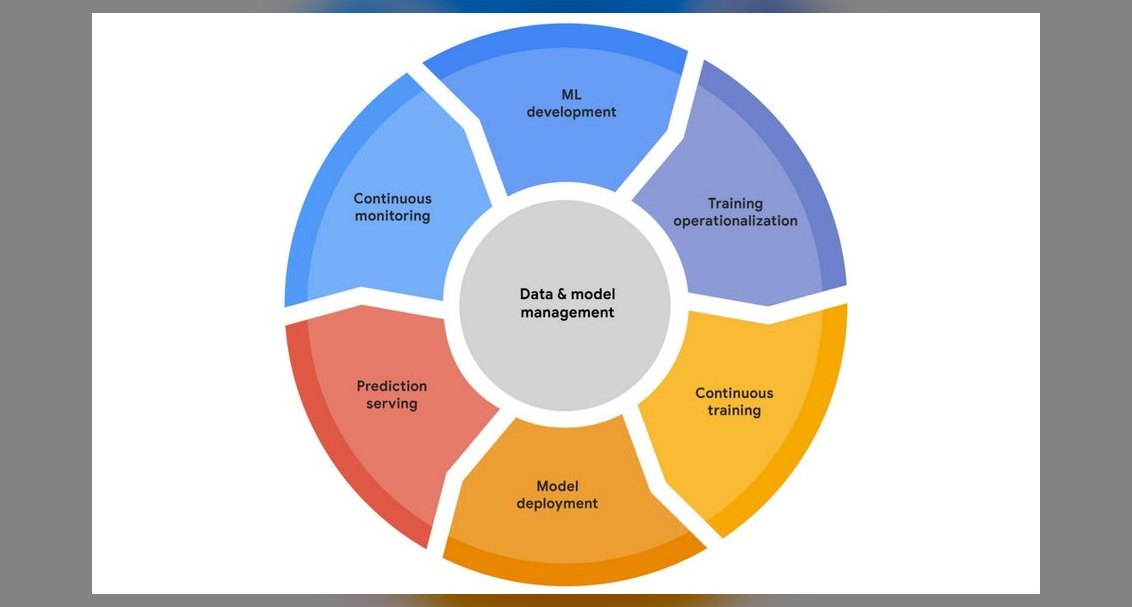 pulse-ai-infrastructureThe 10 Best MLOps Platforms in 2027
 pulse-ai-infrastructureThe 10 Best AI Tools for Beat Making in 2027
 pulse-ai-infrastructureThe 10 Best AI Tools for Headless CMS Development in 2027
 pulse-ai-infrastructureThe 10 Best AI Tools for Image Upscaling in 2027
 pulse-ai-infrastructureThe 10 Best AI Tools for Motion Capture in 2027
 pulse-ai-infrastructureThe 10 Best AI Tools for Creating Resumes in 2027
 pulse-ai-infrastructureThe 10 Best AI Tools for Album Art in 2027
 pulse-ai-infrastructureThe 10 Best AI Tools for End-to-End Testing in 2027
 pulse-ai-infrastructureThe 10 Best AI Tools for Concept Art in 2027
 pulse-ai-infrastructureThe 10 Best AI Tools for SEO in 2027