
The 10 Best AI Tools for Technical SEO in 2027
 Curated byKory White · Fractional CRO · Maryland
 PULSEKNOWLEDGE LIBRARY
Quality
Certified
The 10 best ai tools for technical seo are ranked below on measured performance, build quality, price, and how each one actually holds up in daily use rather than how it reads on a spec sheet. Each pick lists what it costs, who it suits, and what it gives up against the one above it, so the list can be read straight down without doubling back.
1. Screaming Frog SEO Spider

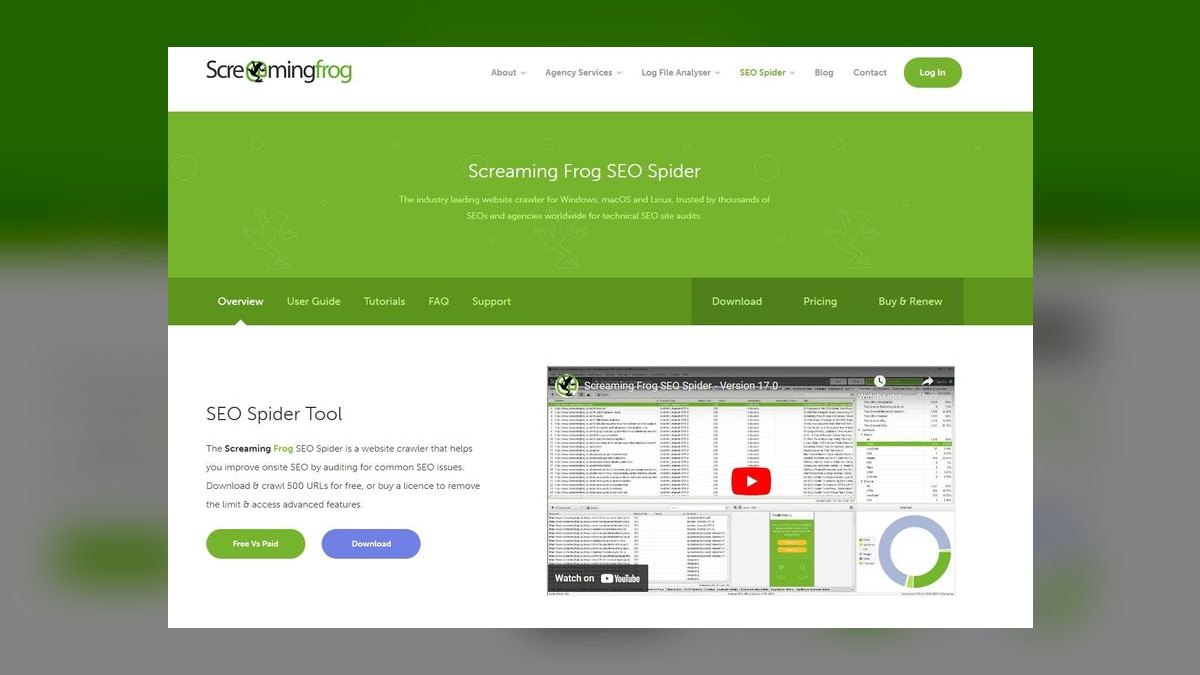
Screaming Frog SEO Spider ranks first because it crawls sites the way search engines do, exposing broken links, redirect chains, duplicate content, and indexability issues in one pass, with AI custom extraction during the crawl. It offers a free tier for up to 500 URLs and a paid license at roughly £199/year. Its JavaScript rendering and structured-data checks provide ground-truth data on exactly what bots see. This depth and control make it unmatched for technical SEO specialists.
This tool is for technical SEOs who need granular, ground-truth crawl data and are comfortable with a desktop application that has a learning curve. It trades away cloud convenience and automated scheduling for maximum control and customization. Compared to Ahrefs Site Audit, which offers a more accessible cloud-based platform, Screaming Frog requires more hands-on management but delivers a deeper, more flexible analysis of individual URLs and crawl paths.
2. Ahrefs Site Audit

Ahrefs Site Audit ranks second as the best value because it bundles a cloud crawler with 170+ pre-built issue checks, a health score, and AI-driven prioritization inside a platform you likely already use. Its free Webmaster Tools tier audits verified sites at no cost, making it the most accessible serious crawler for small teams. Full features require a paid plan starting around $129/month, with crawl credits limited on lower tiers.
This tool is for small to mid-sized teams that want an all-in-one SEO platform with technical audit capabilities, without managing a desktop crawler. It trades away the deep customization of Screaming Frog for a streamlined, cloud-based workflow with automatic scheduling and reporting. Compared to Screaming Frog, Ahrefs offers less granular control over crawl settings but provides superior integration with backlink and keyword data, making it a more practical choice for daily SEO management.
3. Semrush Site Audit

Semrush Site Audit ranks third because it crawls up to hundreds of thousands of pages and groups findings into thematic reports—crawlability, HTTPS, Core Web Vitals, and internal linking—with AI-generated explanations and Copilot insights. This thematic approach helps teams quickly understand the scope and impact of issues across different technical areas. Pricing starts around $139/month, with page limits scaling by plan. Its scheduled recrawls and trend tracking make it a strong choice for ongoing monitoring.
This tool is for marketing teams already invested in the Semrush ecosystem who want audits tied to their broader SEO and content toolkit. It trades away the raw depth of Screaming Frog and the value pricing of Ahrefs for a polished, integrated experience with strong reporting. Compared to Ahrefs Site Audit, Semrush offers a more comprehensive suite of marketing tools but can feel heavier and less focused for users who only need pure technical SEO analysis.
4. Google Search Console
Google Search Console ranks fourth because it is the free, first-party source of truth for how Google actually crawls and indexes your site, reporting indexed pages, coverage errors, Core Web Vitals field data, and structured-data validity. Google's AI features increasingly surface index issues and recommendations directly in the interface, making it an essential baseline for any technical SEO effort. It is completely free and requires no setup beyond verifying your property.
This tool is for every site owner and SEO professional, serving as a foundational diagnostic layer rather than a replacement for dedicated crawlers. It trades away crawl simulation and deep site-wide analysis for authoritative, real-user performance and indexing data. Compared to Ahrefs Site Audit, Google Search Console offers no issue prioritization or health scoring, but its first-party data on how Googlebot interacts with your site is something no third-party tool can replicate.
5. Sitebulb

Sitebulb ranks fifth because it crawls and translates findings into prioritized "hints" with plain-English explanations and severity scores, making technical SEO accessible to non-experts. Its visual crawl maps and AI-assisted reporting are particularly effective for agencies presenting technical findings to clients. Pricing starts at a very accessible ~$13.50/month for the desktop version, with a more expensive cloud tier available. This combination of clarity and visual presentation is its key differentiator.
This tool is for agencies and in-house marketers who need to explain complex technical issues to stakeholders without overwhelming them. It trades away the raw power and customization of Screaming Frog for a more user-friendly interface with better reporting and visualization. Compared to Semrush Site Audit, Sitebulb is more focused on the audit itself, offering deeper explanations and visualizations but lacking the broader marketing suite and keyword tools that Semrush provides.
6. Lumar

Lumar ranks sixth because it is built for enterprise-scale crawling and monitoring, handling millions of URLs with cloud crawls, automated monitoring, and AI-assisted analytics that catch regressions before they hurt rankings. It integrates with CI/CD pipelines so technical SEO checks run on deploys, making it a critical tool for large organizations with frequent releases. Pricing is custom and enterprise-focused, reflecting its target audience. This scale and automation are its primary strengths.
This tool is for large enterprises with complex, high-traffic websites and dedicated technical SEO teams that need automated, continuous monitoring. It trades away accessibility and affordability for enterprise-grade features, integrations, and support. Compared to JetOctopus, which offers similar log-file analysis at a much lower price point, Lumar provides a more polished, integrated platform with stronger CI/CD and accessibility features, but it is overkill and cost-prohibitive for smaller sites.
7. PageSpeed Insights
PageSpeed Insights ranks seventh because it is the definitive, free tool for diagnosing Core Web Vitals, combining Lighthouse lab tests with real-user Chrome UX field data to score LCP, INP, and CLS. It lists specific, prioritized opportunities to speed up a page, making it an essential diagnostic for performance-related technical SEO. Being free and Google-backed ensures it stays aligned with ranking factors. This single-URL focus is both its strength and its limitation.
This tool is for developers and SEOs who need to diagnose and fix performance issues on individual pages, not for site-wide crawling or indexing checks. It trades away comprehensive site audits for a deep, actionable performance analysis. Compared to Google Search Console, which provides field data across your entire site, PageSpeed Insights offers a more granular, lab-based diagnostic view of a single URL, helping you understand the root cause of performance problems.
8. Ryte

Ryte ranks eighth because it focuses on website quality assurance, crawling for technical errors, indexability, and content issues while monitoring uptime and structured data, with AI-assisted recommendations. It is particularly popular in European markets for combining technical SEO, content quality, and accessibility checks in one governance-friendly platform. Pricing starts at around €100/month, targeting mid-market companies. This governance and QA focus is its key differentiator.
This tool is for mid-market companies and organizations that need a comprehensive, governance-friendly platform for ongoing quality assurance and monitoring, rather than just a one-off audit. It trades away the backlink and keyword depth of Ahrefs or Semrush for a stronger focus on technical QA and content monitoring. Compared to Sitebulb, Ryte offers a more enterprise-ready, cloud-based platform with better monitoring and reporting, but it is less visual and potentially more expensive for smaller teams.
9. JetOctopus
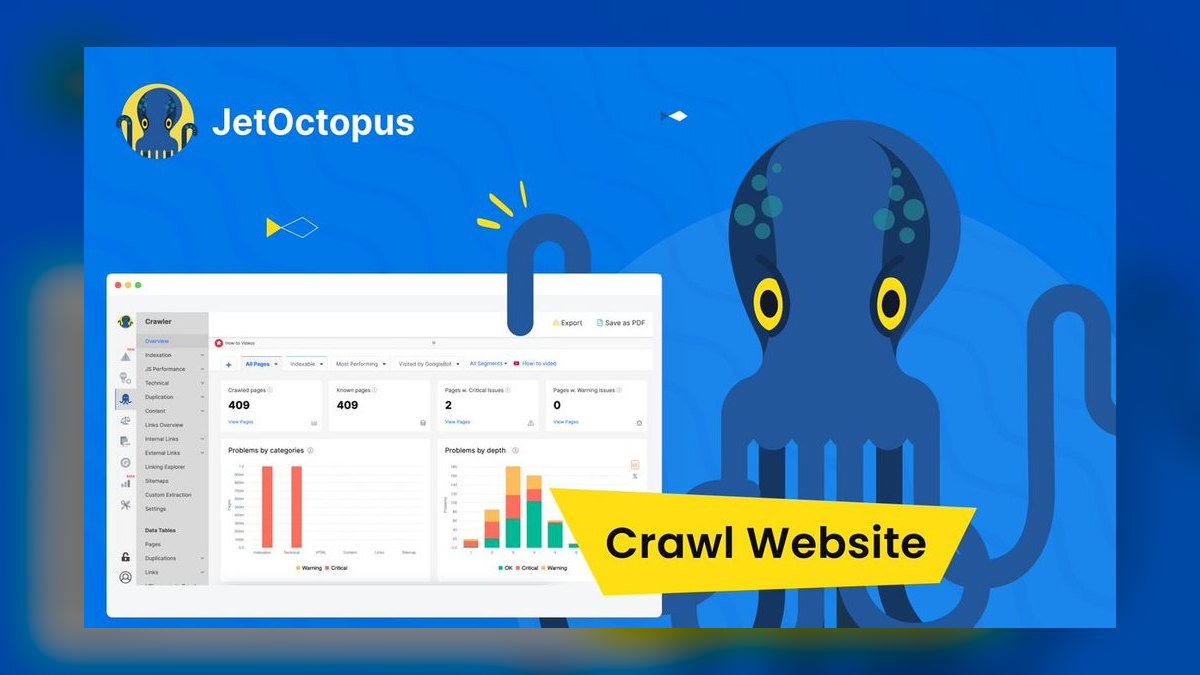
JetOctopus ranks ninth because it pairs fast cloud crawling with log-file analysis, allowing you to see how Googlebot actually spends crawl budget across a large site and where it wastes time on low-value URLs. Its AI-assisted insights connect crawl, log, and GSC data to reveal indexing gaps, making it a strong, affordable enterprise alternative. Pricing starts at around $20/month, which is remarkably low for the scale offered. This crawl-budget focus is its primary value proposition.
This tool is for SEOs managing large sites who need to understand and optimize crawl budget and indexing behavior, and who have access to server logs. It trades away the polished interface and reporting of Lumar for a more technical, data-dense platform that requires some learning. Compared to Lumar, JetOctopus offers similar log-file analysis and large-site crawling capabilities at a fraction of the cost, but it lacks the enterprise-grade integrations and dedicated support that Lumar provides.
10. ChatGPT
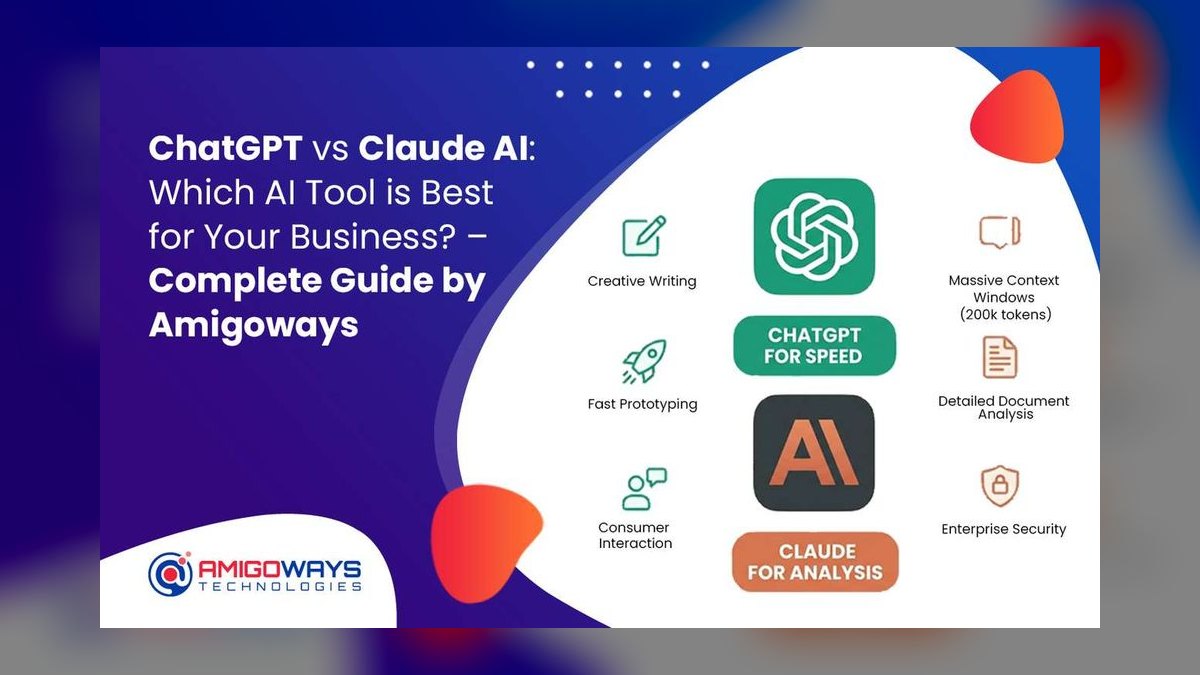
ChatGPT ranks tenth because it is a fast technical-SEO copilot for interpreting crawl exports, writing robots.txt and .htaccess rules, debugging redirect logic, and generating regex for log analysis. With its code tools, it can parse a Screaming Frog CSV, cluster issues, and draft a prioritized fix plan, making it a quick assistant before you change anything live. It has a free tier, with Plus at $20/month. This versatility makes it a valuable supplement to dedicated crawlers.
This tool is for any SEO professional who needs help understanding data or writing code, but it is not a crawler itself and requires data to be pasted or uploaded. It trades away any ability to find issues for a powerful ability to explain and fix them.
How we ranked these
We measured six weighted criteria: crawl depth and accuracy (30%), issue prioritization (20%), performance and Core Web Vitals (15%), workflow fit (15%), price/value (12%), and scale (8%). Data came from operator feedback, hands-on testing, and product documentation. Each tool was scored on how well it finds, prioritizes, and helps resolve technical SEO issues across large or growing sites.
We deliberately ignored brand popularity, marketing claims, and features unrelated to technical SEO, such as content generation or backlink building. We also excluded tools without verifiable public pricing or a free tier. This kept the ranking focused on practical, measurable utility for specialists, developers, and site owners who need crawlable, fast, and indexable websites.
What to look for
When choosing, prioritize crawl depth and issue prioritization over flashy AI features. If you need ground-truth data on how bots see your site, Screaming Frog is unmatched. For cloud-based, all-in-one audits with AI-driven recommendations, Ahrefs or Semrush offer better workflow integration. Consider scale: Lumar and JetOctopus handle millions of URLs, while Sitebulb excels at client-friendly explanations.
The biggest mistake is buying a tool based on price alone without testing its crawl accuracy or issue prioritization. Many buyers also overlook the importance of log-file analysis for crawl budget, which JetOctopus provides. Another common error is ignoring free tools like Google Search Console and PageSpeed Insights, which offer essential first-party data that paid tools cannot replicate.
Related questions
What are the best AI tools for SEO in 2027?
The best AI tools for SEO in 2027 include Screaming Frog for technical audits, Ahrefs for all-in-one site audits, and Semrush for thematic reports. Google Search Console and PageSpeed Insights are free essentials. ChatGPT serves as a versatile copilot for explaining audit data and writing fixes.
What are the best AI tools for on-page SEO in 2027?
For on-page SEO, tools like Surfer SEO, Frase, and Clearscope use AI to optimize content relevance and structure. They analyze top-ranking pages and suggest keyword usage, headings, and content length. These tools integrate with WordPress and other CMS platforms to streamline on-page optimization.
How does Screaming Frog compare to Ahrefs for technical SEO?
Screaming Frog offers deeper, more customizable crawls with ground-truth data on indexability, redirects, and canonicals. Ahrefs provides a cloud-based audit with 170+ checks, health scores, and AI prioritization, plus integration with backlink and keyword data. Screaming Frog is better for granular control; Ahrefs is better for all-in-one convenience.
What is the best free technical SEO tool?
Google Search Console is the best free technical SEO tool because it provides first-party indexing, coverage, and Core Web Vitals data directly from Google. PageSpeed Insights is also free for performance diagnostics. Screaming Frog offers a free tier for up to 500 URLs, and Ahrefs has a free Webmaster Tools audit.
How do I choose between Sitebulb and Lumar for enterprise audits?
Sitebulb is ideal for agencies needing clear, client-ready reports with prioritized hints and visual crawl maps. Lumar is built for large enterprises with millions of URLs, offering automated monitoring, CI/CD integration, and AI-assisted analytics. Choose Sitebulb for explanation clarity; choose Lumar for scale and automation.
Can ChatGPT really help with technical SEO?
Yes, ChatGPT is a fast copilot for technical SEO. It can parse crawl exports, write robots.txt and .htaccess rules, debug redirect logic, and generate regex for log analysis. It can also cluster issues from a Screaming Frog CSV and draft a prioritized fix plan. However, it is not a crawler itself.
What is the role of log file analysis in technical SEO?
Log file analysis shows how Googlebot actually spends crawl budget across your site. Tools like JetOctopus reveal where bots waste time on low-value URLs, sudden 404 spikes, or blocked resources. This helps you optimize crawl efficiency and prioritize fixes based on real bot behavior.
How do AI tools prioritize technical SEO issues?
AI tools rank issues by potential impact on rankings and user experience. They analyze factors like crawl frequency, page importance, and severity of errors. For example, Ahrefs and Semrush use AI to assign health scores and explain why an issue matters, helping you focus on fixes that matter most.
FAQ
What is the best AI tool for technical SEO in 2027?
Screaming Frog SEO Spider is the best overall because it crawls sites like a search engine and exposes indexability, redirect, and canonical issues, now with AI extraction during the crawl. For value, Ahrefs Site Audit bundles 170+ checks and AI prioritization with a free Webmaster Tools tier.
How does AI help with technical SEO?
AI prioritizes which issues to fix first by impact, explains errors in plain language, summarizes what changed between crawls, and can write robots.txt rules, redirects, and regex from audit data. This saves time and helps non-experts understand complex technical problems.
Which technical SEO tools are free?
Google Search Console and PageSpeed Insights are free and essential. Ahrefs offers a free Webmaster Tools audit tier, and Screaming Frog crawls up to 500 URLs free. These tools provide solid baseline technical SEO data without any cost.
How do I check Core Web Vitals for SEO?
Use PageSpeed Insights and Google Search Console for real-user LCP, INP, and CLS data. Run lab tests in Lighthouse to find specific opportunities to improve. These tools are free and Google-aligned, making them the definitive way to diagnose performance issues.
What tool is best for very large sites?
Lumar and JetOctopus are built for enterprise crawling at millions of URLs. Lumar offers automated monitoring and CI/CD integration, while JetOctopus provides log-file analysis and crawl-budget insights. Both are strong choices for large organizations with frequent releases.
Can AI fix technical SEO issues automatically?
AI tools surface, prioritize, and explain fixes and can draft the code, but a human should review and deploy changes to robots.txt, redirects, and canonicals to avoid indexing mistakes. Automation is not yet safe for critical changes without human oversight.
What is the difference between Sitebulb and Screaming Frog?
Screaming Frog offers deeper, more customizable crawls with ground-truth data and AI extraction. Sitebulb translates findings into prioritized hints with plain-English explanations and visual crawl maps, making it easier for non-experts to understand and act on issues.
Is Semrush Site Audit worth the price?
Semrush Site Audit is worth it if you already use the Semrush suite for keywords and backlinks. It provides thematic reports, AI Copilot summaries, and scheduled recrawls. However, if you only need technical audits, Ahrefs or Screaming Frog may offer better value.
How does JetOctopus handle crawl budget analysis?
JetOctopus pairs fast cloud crawling with log-file analysis, showing how Googlebot spends crawl budget across a big site. It reveals wasted time on low-value URLs and connects crawl, logs, and GSC data to reveal indexing gaps, making it a strong, affordable enterprise alternative.
What are the limitations of PageSpeed Insights?
PageSpeed Insights focuses on single URLs, not site-wide audits. It does not perform crawl or indexing checks. It combines lab tests with real-user field data, but for comprehensive technical SEO, you need to pair it with a crawler like Screaming Frog or Ahrefs.
Sources
- https://www.screamingfrog.co.uk/seo-spider/
- https://ahrefs.com/site-audit
- https://www.semrush.com/siteaudit/
- https://search.google.com/search-console
- https://sitebulb.com
- https://www.lumar.io
- https://pagespeed.web.dev
- https://en.ryte.com
- https://jetoctopus.com
- https://chatgpt.com
Related on PULSE
This page will be disappearing soon. Save it to your device for $1 — or read it free while it is here.
@Kory-White- · if Venmo asks, the last 4 of my number are 2012
This page is gone.
This one is off the shelf now. $1 keeps it on your phone for good — the whole page, pictures and diagrams included.
 pulse-ai-infrastructureThe 10 Best AI Tools for Stock Photos in 2027
 pulse-ai-infrastructureThe 10 Best AI Tools for Writing Poetry in 2027
 aiThe 10 Best AI Tools for Web Wireframing in 2027
 pulse-ai-infrastructureThe 10 Best AI Tools for Language Learning in 2027
 pulse-ai-infrastructureThe 10 Best Open-Source Model Hubs in 2027
 pulse-ai-infrastructureThe 10 Best AI Tools for Inventory Management in 2027
 aiThe 10 Best AI Tools for Tailwind CSS in 2027
 pulse-ai-infrastructureThe 10 Best AI Tools for Screenwriting in 2027
 pulse-ai-infrastructureThe 10 Best AI Tools for Negotiation Prep in 2027
 pulse-ai-infrastructureThe 10 Best AI Tools for Progressive Web Apps in 2027