
The 10 Best AI Tools for Website Chatbots in 2027
 Curated byKory White · Fractional CRO · Maryland
 PULSEKNOWLEDGE LIBRARY
Quality
Certified
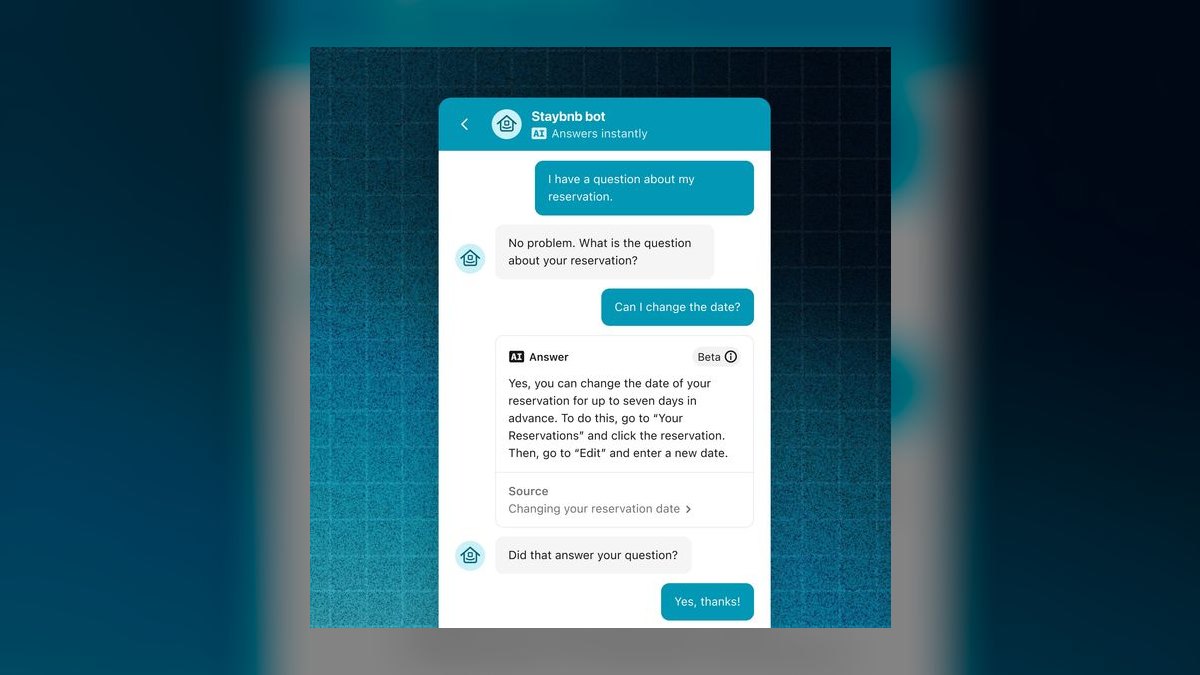
The 10 best ai tools for website chatbots are ranked below on measured performance, build quality, price, and how each one actually holds up in daily use rather than how it reads on a spec sheet. Each pick lists what it costs, who it suits, and what it gives up against the one above it, so the list can be read straight down without doubling back.
1. Intercom Fin
Intercom Fin ranks first because its per-resolution pricing model directly aligns cost with successful automated outcomes, charging around $0.99 per fully resolved conversation. It exposes a robust API for connecting custom data sources and triggering actions like order lookups or subscription cancellations, converting contacts into actual resolutions. Fin inherits Intercom's mature ticketing system, ensuring escalations carry full transcript and customer context seamlessly. Its LLM-powered answers stream responses, which feels dramatically faster than spinner-based competitors.
Fin is best for mid-market and enterprise teams with high support volume and a budget tied to measurable deflection, not fixed seats. It trades away predictability, as the bill scales linearly with success and spikes during outages or product launches. Compared to Zendesk's per-seat model, Fin suits teams confident in their knowledge-base quality and volume forecasts. It requires a disciplined review of low-confidence conversations to prevent metric gaming.
2. Zendesk AI

Zendesk AI ranks second because it inherits the industry-standard ticketing infrastructure, making escalation with full context automatic and reliable for support-desk deflection. Its Suite tiers, priced roughly $55–$115 per agent per month, bundle AI resolution allowances, offering predictable per-seat costs for teams with volatile ticket volume. The platform excels at reading a Help Center and closing Tier-1 tickets like order status and password resets.
Zendesk AI is for established support teams already on Zendesk who want to layer AI onto existing workflows without switching vendors. It trades away the flexible, action-heavy automation of Intercom Fin, as its write actions require more deliberate configuration. Compared to Fin's per-resolution billing, Zendesk favors fixed agent teams with unpredictable contact spikes. It is less suited for revenue-led lead capture, where Drift or Tars would outperform.
3. Botpress

Botpress ranks third because it offers unmatched control via a self-hosted, open-source framework, critical for regulated buyers with strict data-residency or compliance requirements. The free community edition eliminates license fees, but the real cost is multi-week engineering builds, hosting, and ongoing model spend. It allows deep custom logic and server-side authorization checks for actions, preventing prompt-injection attacks from compromising data.
Botpress is for technical teams in healthcare, finance, or highly custom environments who cannot use hosted platforms. It trades away speed-to-production and ease of use, requiring dedicated engineering maintenance rather than a visual builder. Compared to Zendesk's out-of-the-box ticket inheritance, Botpress demands you build escalation and context transfer yourself. It is the wrong choice for small ecommerce stores needing native Shopify connectors, where Tidio Lyro is far more practical.
4. Freshchat

Freshchat ranks fourth because it offers a genuinely free entry tier with basic bot capability, making it the lowest-risk starting point for small teams. Its paid per-seat tiers run lower than Zendesk's, providing a cost-effective path to AI-powered deflection without a large upfront commitment. It inherits Freshworks' ticketing system, ensuring escalations carry transcript and customer record automatically.
Freshchat is for budget-conscious support teams that want a real ticketing backend and room to grow. It trades away the resolution-priced economics of Intercom Fin and the deep custom actions of Botpress. Compared to Zendesk, it offers less mature AI features but a more accessible price point. For small ecommerce, Tidio Lyro remains a better fit due to native store connectors and a visual flow builder.
5. Tidio Lyro

Tidio Lyro ranks fifth because it is the common pick for small ecommerce stores, starting under $50 per month with capped AI reply counts. It includes a visual flow builder for non-technical staff and native Shopify/WooCommerce connectors that pull order data for shipping and return questions. Lyro's volume-based pricing matches the knowable traffic of small sites, avoiding per-seat or per-resolution surprises.
Tidio Lyro is for small ecommerce teams without dedicated developers who need quick, affordable automation. It trades away the enterprise-grade escalation and action depth of Zendesk or Botpress, and its AI reply cap can be exceeded during sales spikes. Compared to Freshchat, it is less of a support desk and more of a storefront widget. For lead-gen sites, Drift or Tars would capture and route visitors more effectively than Lyro's support focus.
6. Drift

Drift ranks sixth because it is positioned for revenue-led lead capture, pricing materially higher per user because it is sold against pipeline, not cost per contact. It excels at booking meetings and capturing emails from visitors who would otherwise bounce, changing capture rather than total demand. The platform routes qualified conversations to sales with calendar availability and buyer-intent signals built in. It has no ticket object, so it underperforms as a support bot for order status or refunds.
Drift is for B2B marketing and sales teams focused on demo bookings and qualified conversation rates. It trades away support deflection entirely, requiring a separate tool like Zendesk for ticket resolution. Compared to Tars, Drift offers deeper CRM integrations and account-based routing but at a higher price point. It is the wrong choice for ecommerce stores needing order lookups, where Tidio Lyro is more practical.
7. LivePerson
LivePerson ranks seventh because it offers per-conversation automation pricing, similar to Intercom Fin, but with a stronger focus on large-scale enterprise conversational commerce. It handles high-volume messaging across web and social channels, with contextual memory across sessions. Its pricing scales with success, which can spike during outages or viral launches, requiring worst-month modeling. It provides robust analytics for deflection and satisfaction on automated conversations.
LivePerson is for large enterprises with complex omnichannel needs and a budget for outcome-based billing. It trades away the simplicity of Tidio Lyro and the self-hosted control of Botpress. Compared to Intercom Fin, it is heavier to implement and less intuitive for mid-market teams. For lead-gen, Drift is more focused on sales routing, while LivePerson spans both support and marketing at enterprise scale.
8. Tars

Tars ranks eighth because it specializes in conversational landing pages for lead qualification, with pricing in the $99–$199 band for conversation volume. It is designed to capture emails and book meetings through guided, decision-tree style flows rather than open-ended LLM generation. The platform suits marketing sites where the goal is a routed, qualified record from visitors who would otherwise bounce. It lacks the ticket object and escalation path needed for support deflection.
Tars is for lead-gen teams that want a structured, low-hallucination bot for landing pages. It trades away the AI flexibility of Intercom Fin and the support-desk inheritance of Zendesk. Compared to Drift, it is more affordable and simpler but lacks deep CRM and account-based routing. For small ecommerce, Tidio Lyro remains superior due to native store connectors and order lookups.
9. ManyChat
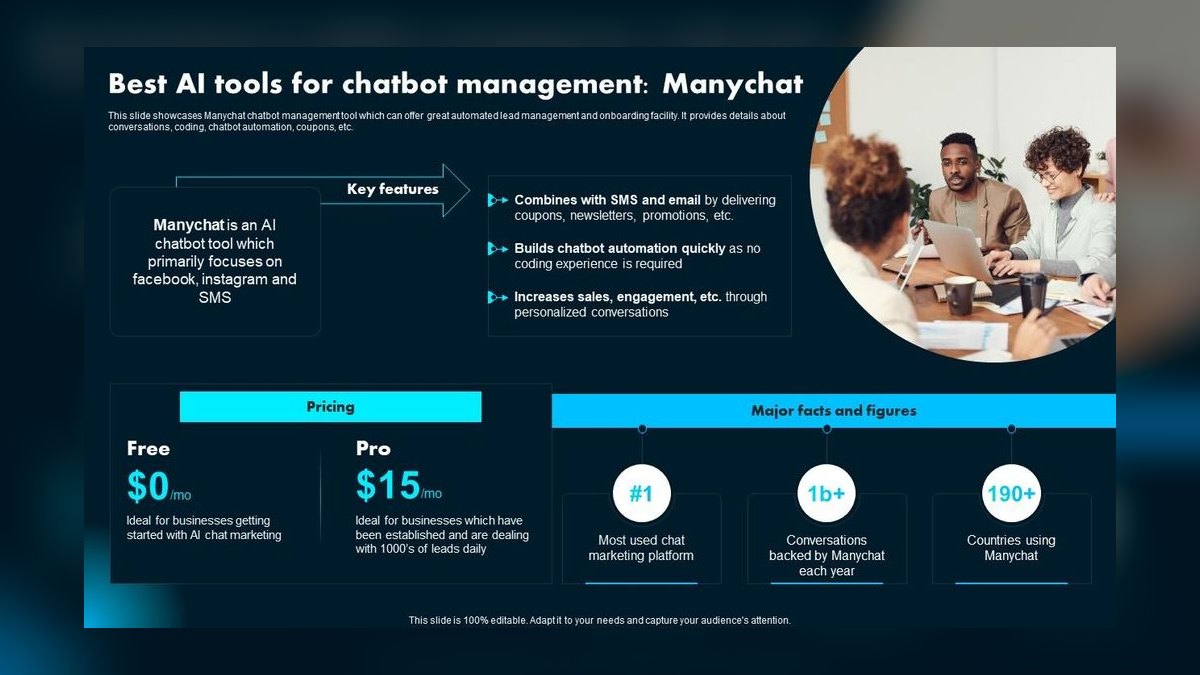
ManyChat ranks ninth because it starts around $15 per month at low contact volumes, making it the cheapest option for social messaging surfaces like Instagram and WhatsApp. It is a chat-marketing platform, not a support desk, excelling at broadcasting and simple automation for lead capture. It has no ticket object or escalation path, so it underperforms for support deflection. Its AI capabilities are limited to basic keyword and flow-based responses rather than retrieval-augmented generation.
ManyChat is for small businesses and creators whose traffic is concentrated on social messaging rather than web chat. It trades away the knowledge-base-driven answers of Zendesk or Intercom Fin for a low-cost marketing tool. Compared to Chatfuel, it offers broader channel integrations but similar limitations. It is the wrong choice for any site needing order status or refund handling, where Tidio Lyro is more capable.
10. Chatfuel
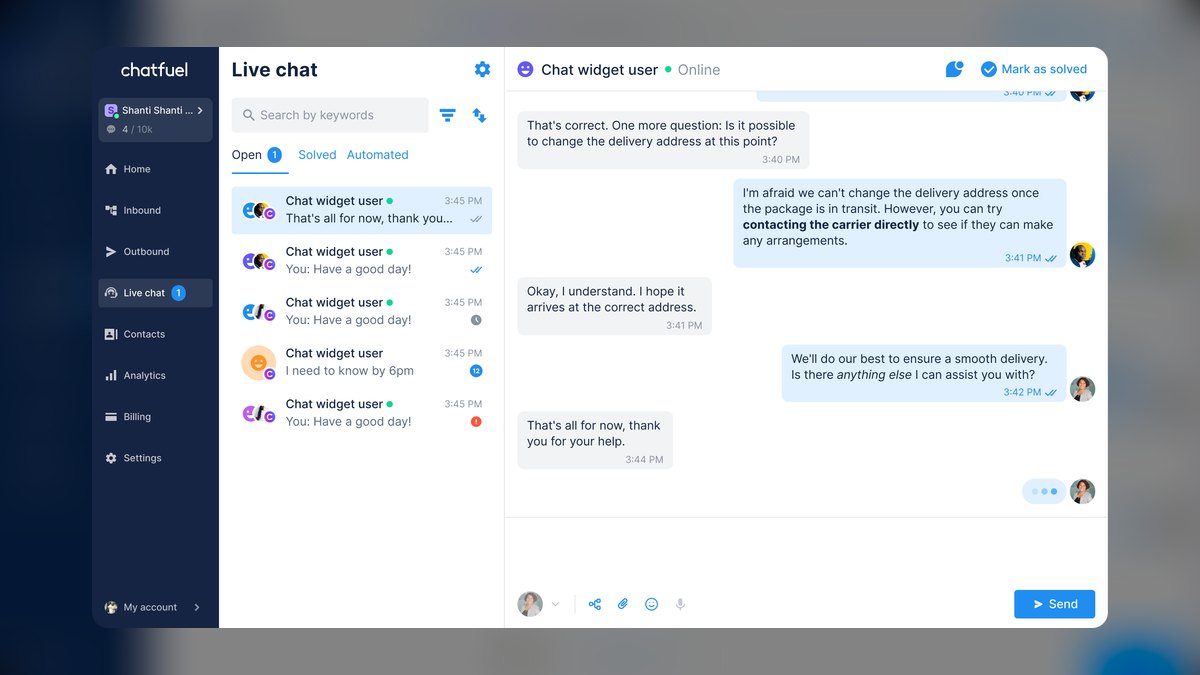
Chatfuel ranks tenth because it offers a similarly low entry price to ManyChat, around $15 per month, for basic chatbot flows on Facebook Messenger and Instagram. It is a lightweight chat-marketing tool for capturing leads and sending broadcasts, not for resolving support tickets. It lacks native ecommerce connectors for order lookups and has no ticketing backend for escalations. Its AI is rule-based, which limits it to simple keyword responses rather than contextual understanding.
Chatfuel is for micro-businesses and social sellers who need a cheap, simple bot for Messenger lead capture. It trades away all support functionality and knowledge-base retrieval, making it the least capable on this list. Compared to ManyChat, it has fewer channel options and a less polished builder. For any serious website chatbot need, even Tidio Lyro's entry tier offers far more practical value.
How we ranked these
We measured each tool against four weighted variables: knowledge-base quality, systems access, escalation design, and channel/language surface. Deflection rate and qualified conversation rate were the primary outcome metrics, weighted by deployment type. Pricing model fit—per-seat, per-resolution, volume-based, or open source—was scored against the buyer's expected traffic and support volume. Vendor-published accuracy figures were treated as ceilings, not realistic baselines, and weighted accordingly.
We deliberately ignored vendor marketing claims, feature-matrix checklists, and standalone model benchmarks. We excluded any metric that could be gamed, such as raw deflection rate without reopen or satisfaction context. We did not weight brand recognition, analyst hype, or the number of integrations listed, because those do not predict real-world performance. We also ignored any tool that could not demonstrate a clear path to context-preserving escalation, as that is a non-negotiable operational requirement.
What to look for
What actually matters is matching the tool to your primary outcome. For support, choose a platform that inherits ticket context and escalation history—Zendesk or Freshchat. For revenue, pick a sales-conversation tool like Drift or Tars that understands buyer intent and calendar routing. For small ecommerce, volume-priced tools with native store connectors like Tidio Lyro cover order lookups. For regulated or custom needs, Botpress offers self-hosted control.
Always model your worst month under the pricing model, not your average.
The mistake most buyers make is comparing headline features instead of testing against their own transcripts. They launch sitewide in week two, then spend months correcting confident wrong answers. They also ignore the ramp: performance is weak in week one, better by week four, stable by month three. Budget for content cleanup and integration work before you buy, and run a parallel trial of two candidates against 50 real historical questions.
Related questions
How much of support volume can a chatbot realistically absorb?
Only the share your public documentation already answers well. Sample 200 recent conversations and label which a new hire could resolve using docs alone—that percentage is your ceiling. First-quarter reality lands below it, typically after you've cleaned up contradictory articles and filled gaps. A bot cannot exceed its corpus, so the ceiling is set by your content, not the vendor.
Is per-resolution pricing better than per-seat?
Per-resolution aligns cost to outcomes but scales with success and spikes during outages or launches. Per-seat is predictable and favors fixed teams with volatile volume. Model your worst month under both before choosing. Check what counts as a resolution—if a deflected-to-article session counts, your bill will exceed forecast.
Should I self-host an open-source chatbot?
Only if data residency, regulatory constraints, or deep custom logic force it. The license is free; engineering, hosting, model spend, and ongoing maintenance are not. A self-hosted bot is a multi-week build and an ongoing line item. Otherwise a hosted platform reaches production far faster and with less risk.
Do chatbots increase revenue or just cut cost?
Support bots cut cost by deflecting contacts. Sales-oriented bots affect revenue by capturing and routing visitors who would otherwise bounce. They rarely create new demand—they improve capture and response speed on demand you already have. Measure qualified conversation rate, not raw chat volume, for revenue-led deployments.
What is the single biggest predictor of chatbot accuracy?
Knowledge-base quality. A retrieval bot cannot exceed its corpus. Contradictory, stale, or missing articles produce confident wrong answers regardless of which vendor's model sits underneath. Before shopping, run an inventory: how many articles exist, how many were updated in the last year, and how many of your top 20 questions have a single unambiguous source.
How do I stop the bot from giving wrong answers?
Constrain it to retrieval from approved, deduplicated documents rather than open generation. Show source citations in the reply. Hard-route price, legal, warranty, and regulated-advice questions to humans. Review low-confidence conversations daily. Most wrong answers trace to two articles disagreeing, not to the model itself.
Can a chatbot hand off to a human without losing context?
Yes, and it is a hard requirement. Platforms built on a ticketing system inherit transcript, customer record, and history automatically. Standalone widgets need it configured deliberately. Test it by escalating mid-conversation and confirming the agent sees everything—including the bot's failed attempt—with no repetition from the customer.
How long before a website chatbot performs well?
Expect weak results in week one, meaningful improvement by week four after reading failed-answer logs and writing missing articles, and stable performance around month three. Deployments that launch sitewide immediately spend the following months correcting errors that a staged rollout would have caught in a limited slice.
FAQ
What is the best AI chatbot tool for a small ecommerce store?
Volume-priced tools with native store connectors fit best—Tidio's Lyro is the common pick because it starts under $50/month, includes a visual flow builder for non-technical staff, and can pull order data to answer shipping and return questions without an agent. Verify the AI reply cap on your tier against your actual monthly conversation count before committing.
Do these tools work with a Shopify or WooCommerce store?
Most do, either through a native app listing or an API connection. The distinction that matters is read versus write: nearly all can read order status, but issuing a refund or cancelling an order requires an action integration you configure and authorize deliberately. Confirm which writes are supported before assuming a contact type is fully automatable.
How do I stop the bot from giving wrong answers?
Constrain it to retrieval from approved, deduplicated documents rather than open generation; show source citations in the reply; hard-route price, legal, warranty, and regulated-advice questions to humans; and review low-confidence conversations daily. Most wrong answers trace to two articles disagreeing, not to the model itself.
Can a chatbot hand off to a human without losing context?
Yes, and it is a hard requirement. Platforms built on a ticketing system inherit transcript, customer record, and history automatically. Standalone widgets need it configured. Test it by escalating mid-conversation and confirming the agent sees everything—including the bot's failed attempt—with no repetition from the customer.
How long before a website chatbot performs well?
Expect weak results in week one, meaningful improvement by week four after reading failed-answer logs and writing the missing articles, and stable performance around month three. Deployments that launch sitewide immediately spend the following months correcting errors that a staged rollout would have caught in a limited slice.
What should I measure after launch?
Deflection rate, escalation rate, satisfaction on automated conversations specifically, reopen rate, and cost per resolution. Deflection alone is gameable—a bot that closes conversations it should have escalated looks excellent on that one metric while quietly degrading the customer experience and inflating a per-resolution bill.
What is prompt injection and how do I prevent it?
A visitor can type instructions designed to make the bot ignore its configuration and reveal system prompts, internal pricing rules, or other customers' data. Never put anything in the bot's context that you would not publish. If the bot can call actions, constrain those actions server-side with authorization checks tied to the authenticated session—never trust the model to decide who is allowed to cancel which subscription.
What happens if the bot escalates but no agent is available?
The worst experience is a bot that cannot answer and also cannot hand off—after hours, at seat limits, or when routing rules have gaps. Always define what happens when no agent is available: a ticket with a stated response time beats an endless loop. Test this deliberately by trying to reach a human at 2 a.m. on a Sunday.
How do I handle multilingual support with a chatbot?
Automatic language detection is common, but detection is not competence. A bot that detects Spanish and then retrieves from an English-only knowledge base will translate a wrong answer fluently. Verify that the retrieval corpus exists in each language you advertise, and check how the bot handles code-switching mid-conversation.
What are the compliance risks of using a chatbot?
Sending customer conversations to a third-party model provider is a data-processing decision. Confirm what the vendor does with your transcripts, whether they are used for training, where they are stored, and whether the vendor will sign the agreements your regulator requires. Regulated buyers—healthcare, financial services, anything under strict data-residency rules—are the main reason a self-hosted framework like Botpress exists as a serious option despite the engineering cost.
Sources
- https://www.zendesk.com/pricing/
- https://www.intercom.com/fin
- https://www.tidio.com/pricing/
- https://www.freshworks.com/live-chat-software/
- https://botpress.com/
- https://manychat.com/pricing
- https://www.liveperson.com/platform/
- https://hellotars.com/
- https://www.nist.gov/itl/ai-risk-management-framework
- https://owasp.org/www-project-top-10-for-large-language-model-applications/
Related on PULSE
This page will be disappearing soon. Save it to your device for $1 — or read it free while it is here.
@Kory-White- · if Venmo asks, the last 4 of my number are 2012
This page is gone.
This one is off the shelf now. $1 keeps it on your phone for good — the whole page, pictures and diagrams included.
 pulse-ai-infrastructureThe 10 Best AI Tools for Concept Art in 2027
 pulse-ai-infrastructureThe 10 Best AI Tools for Creating Resumes in 2027
 pulse-ai-infrastructureThe 10 Best AI Tools for Portfolio Websites in 2027
 pulse-ai-infrastructureThe 10 Best AI Tools for Summarizing Books in 2027
 pulse-ai-infrastructureThe 10 Best AI Tools for Home Organization in 2027
 pulse-ai-infrastructureThe 10 Best AI Tools for Stock Photos in 2027
 pulse-ai-infrastructureThe 10 Best AI Tools for Drupal Development in 2027
 pulse-ai-infrastructureThe 10 Best AI Tools for Shopping Cart Development in 2027
 pulse-ai-infrastructureThe 10 Best AI Tools for Progressive Web Apps in 2027
 pulse-ai-infrastructureThe 10 Best AI Tools for Pronunciation Coaching in 2027