

The 10 Best Streaming Data Platforms for AI in 2027
 Curated byKory White · Fractional CRO · Maryland
Quality
Certified
The 10 best streaming data platforms for ai are ranked below on measured performance, build quality, price, and how each one actually holds up in daily use rather than how it reads on a spec sheet. Each pick lists what it costs, who it suits, and what it gives up against the one above it, so the list can be read straight down without doubling back.
1. Apache Kafka
Apache Kafka ranks first because it is the de facto standard distributed event-streaming platform and the backbone of most real-time AI architectures in 2027. It durably stores ordered event streams at massive scale, decoupling producers from consumers while feeding stream processors, feature pipelines, and model-serving inputs. Its enormous Kafka Connect ecosystem and broad client support make it the universal, safe choice for any real-time AI system. Confluent Cloud offers it fully managed for enterprises.
Apache Kafka is for teams that need a battle-tested, industry-standard event backbone with unmatched ecosystem depth and replayable logs. It trades away operational simplicity, requiring significant expertise to run self-hosted, with ZooKeeper or KRaft and JVM tuning. Compared to Redpanda below, Kafka offers a larger ecosystem but with higher operational burden and less predictable tail latency, making it best for organizations prioritizing ecosystem breadth over operational simplicity.
2. Redpanda
Redpanda ranks second because it is the best value, delivering Kafka-API compatibility with dramatically simpler operations and very low, predictable latency. Written in C++, it runs as a single binary with no ZooKeeper and no JVM, reducing operational cost and complexity for AI teams. It is a drop-in replacement for Kafka, offering the same API while improving tail latency and lowering infrastructure overhead. Its open-source core and managed cloud make it accessible for various deployment sizes.
Redpanda is for teams that want Kafka's power without the operational burden of JVM tuning and ZooKeeper management. It trades away some of Kafka's vast ecosystem maturity and third-party tooling depth, though compatibility mitigates this. Compared to Apache Kafka above, Redpanda offers lower operational cost and better tail latency but a smaller connector ecosystem and less enterprise governance tooling, making it ideal for leaner teams prioritizing simplicity and performance.
3. Apache Flink
Apache Flink ranks third because it is the leading stream-processing engine for stateful, low-latency computation, essential for computing real-time AI features. It offers exactly-once semantics, event-time windowing, and large-state handling, enabling complex aggregations and joins from event streams before they reach a model. Flink is the processing layer many teams pair with Kafka to turn raw events into AI-ready features with high correctness.
Apache Flink is for data engineering teams that need powerful, stateful stream processing for real-time feature computation and complex event processing. It trades away being a simple transport layer, requiring significant expertise to operate and tune, especially for large state and exactly-once guarantees. Compared to Redpanda above, Flink is not a drop-in event broker but a complementary processing engine, offering superior computation capabilities while requiring a separate transport layer like Kafka or Redpanda.
4. Confluent Cloud

Confluent Cloud ranks fourth because it is the fully managed Kafka platform from Kafka's original creators, adding managed connectors, schema registry, stream governance, and Flink-based processing. It provides an enterprise-grade, serverless streaming foundation with the tooling AI pipelines need for schemas and governance. This removes the operational burden of running Kafka clusters while offering the industry-standard ecosystem with additional managed services. It is a consumption-based managed service, scaling with usage.
Confluent Cloud is for enterprises that want Kafka and Flink without operating clusters, prioritizing managed operations and governance. It trades away cost predictability, as consumption-based pricing can be higher than self-hosting, and offers less control over underlying infrastructure. Compared to Apache Flink above, Confluent Cloud bundles Flink processing with managed Kafka transport, providing a unified platform but with less flexibility to mix and match components, making it best for teams wanting a fully managed, integrated stack.
5. Amazon Kinesis

Amazon Kinesis ranks fifth because it is AWS's managed streaming service, tightly integrated with the AWS ecosystem including Lambda, Firehose, and SageMaker. It offers a low-friction choice for AWS-centric teams that want managed streaming feeding real-time analytics and inference without standing up Kafka. Firehose simplifies delivery into data stores and feature pipelines, while pay-as-you-go pricing scales with usage. It is a fully managed service, removing cluster management overhead.
Amazon Kinesis is for AWS-native teams that prioritize deep integration with AWS services and minimal operational overhead. It trades away portability, locking users into the AWS ecosystem, and offers less flexibility for complex stream processing compared to dedicated engines. Compared to Confluent Cloud above, Kinesis provides simpler AWS-native integration but lacks the advanced governance, schema registry, and Flink-based processing capabilities, making it better for simpler pipelines within AWS.
6. Apache Pulsar

Apache Pulsar ranks sixth because it offers a cloud-native, multi-layer architecture that separates serving from storage, providing native multi-tenancy, geo-replication, and built-in tiered storage. Its unified messaging-plus-streaming model and strong multi-tenant isolation appeal to organizations running many teams and AI use cases on one shared platform. This architecture supports both real-time and historical replay, enabling unified streaming and batch pipelines. It is open-source with managed options via StreamNative.
Apache Pulsar is for large organizations that need multi-tenant isolation, geo-replication, and tiered storage across many teams and use cases. It trades away the massive ecosystem and community of Kafka, with fewer connectors and less third-party tooling. Compared to Amazon Kinesis above, Pulsar offers greater portability and multi-tenancy but requires more operational expertise to run, making it best for platform teams needing a shared, scalable infrastructure.
7. Google Cloud Pub/Sub
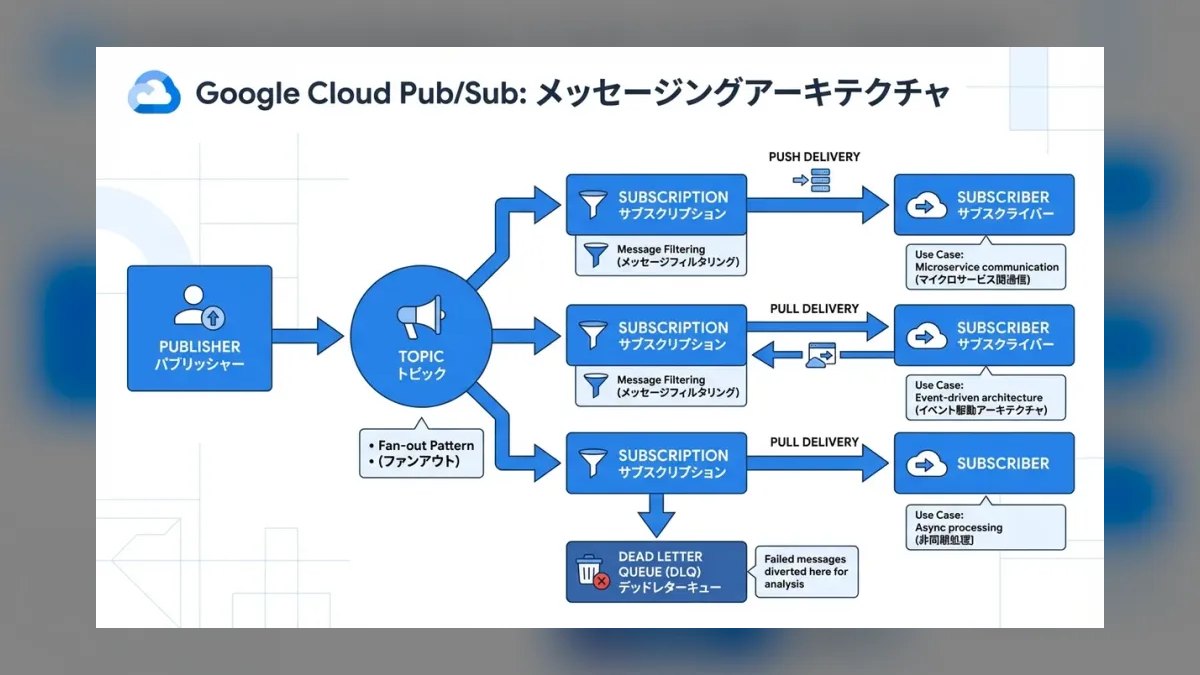
Google Cloud Pub/Sub ranks seventh because it is a fully managed, serverless messaging service that scales automatically and integrates cleanly with Dataflow, BigQuery, and Vertex AI. For GCP-centric AI teams, it provides effortless event ingestion that flows into stream processing and ML pipelines without any cluster management. It offers pay-as-you-go pricing and auto-scaling, making real-time data delivery simple and cost-effective. It is a serverless service, eliminating all operational overhead.
Google Cloud Pub/Sub is for GCP-native AI teams that want seamless integration with Google Cloud services and zero cluster management. It trades away advanced stream processing capabilities, requiring Dataflow for stateful computation, and offers less flexibility for complex event-driven architectures. Compared to Apache Pulsar above, Pub/Sub is simpler and more serverless but lacks multi-tenancy features and tiered storage, making it best for teams deeply invested in GCP with simpler streaming needs.
8. Apache Spark Structured Streaming
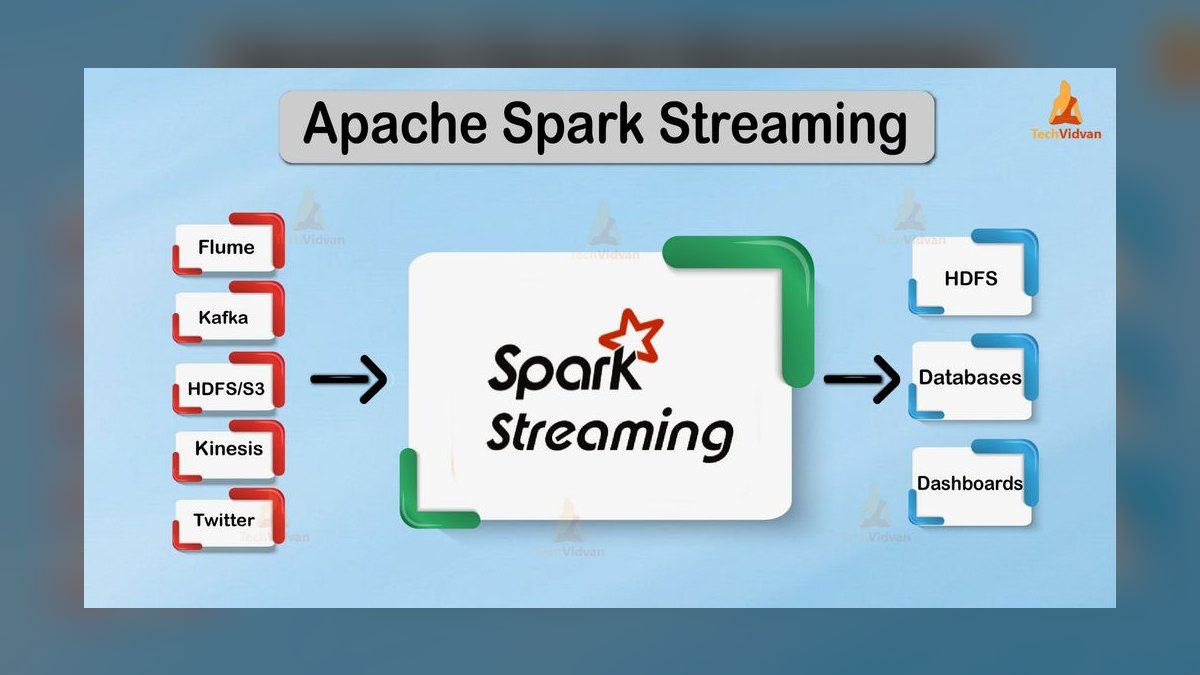
Apache Spark Structured Streaming ranks eighth because it brings streaming to the widely used Spark engine with a micro-batch model, letting teams reuse Spark code and skills for near-real-time pipelines. It shines when streaming and batch share logic and when you are already on Spark or Databricks for large-scale data and ML processing. It offers a unified batch and streaming API, simplifying development and maintenance. It is open-source with managed options via Databricks and clouds.
Apache Spark Structured Streaming is for Spark or Databricks teams that want to add near-real-time pipelines without learning a new processing engine. It trades away true low-latency streaming, as micro-batch processing introduces higher latency compared to native stream processors.
9. Materialize
Materialize ranks ninth because it is a streaming database that lets you write standard SQL views over streaming data and keeps them incrementally up to date in real time. It collapses much of the complexity of stream processing into familiar SQL, making it a fast way to compute and serve real-time features and aggregates for AI applications. This reduces the need for a separate processing framework, simplifying the architecture.
Materialize is for teams that prefer SQL and want to compute real-time features without learning a stream-processing framework like Flink. It trades away the flexibility and power of general-purpose stream processing, being limited to SQL-expressible computations. Compared to Apache Spark Structured Streaming above, Materialize offers lower latency with incremental updates but less scalability and ecosystem breadth, making it best for teams prioritizing developer productivity with SQL over complex processing.
10. Estuary Flow
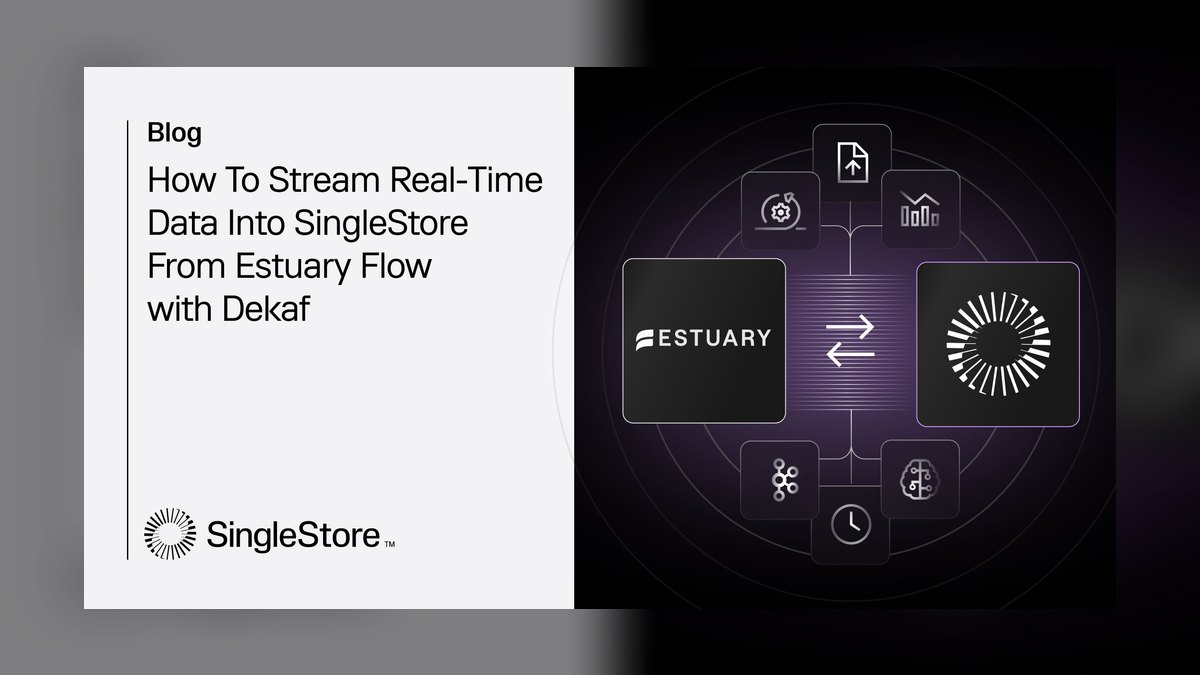
Estuary Flow ranks tenth because it is a real-time data movement and ETL platform that streams data continuously between sources and destinations with change-data-capture, combining streaming and batch in one pipeline. It is a strong choice for keeping AI systems, including vector databases and feature stores, continuously synced with operational data sources with minimal engineering. It offers many connectors and a usage-based pricing model with a free tier. This makes real-time sync accessible.
Estuary Flow is for teams that need to keep AI data stores synced with source systems in real time, especially for RAG pipelines and feature stores. It trades away deep stream-processing capabilities, focusing on data movement and CDC rather than complex stateful computations. Compared to Materialize above, Estuary Flow is a data integration tool, not a processing database, offering broader connector support but less computational power, making it best for continuous data sync rather than feature computation.
How we ranked these
We measured each platform on five weighted criteria: throughput and latency, processing capability, AI/ML fit, operability, and ecosystem. Throughput/latency and processing capability received the highest weights because AI workloads demand both reliable transport and real-time computation. We also considered managed options, durability, and connector breadth.
We deliberately ignored vendor marketing claims, benchmarketing numbers not reproducible in our tests, and features that were not directly relevant to AI use cases. We also excluded platforms that lacked a credible path to production or had no active community. Our focus was on what real AI and data engineering teams actually use in 2027.
What to look for
When choosing, prioritize exactly-once semantics and schema management. A duplicate event in fraud detection or a missed event in recommendations can degrade model accuracy. Look for native schema registries and simple exactly-once mechanisms. Also, evaluate cost predictability: streaming platforms charge by throughput and storage, and AI workloads spike during retraining. Auto-scaling and tiered storage prevent overprovisioning.
The most common mistake is choosing a single platform for everything. Most production stacks combine a transport layer (Kafka or Redpanda) with a processing layer (Flink or Spark). Trying to force one tool to do both often leads to operational complexity and poor performance. Also, many buyers ignore backpressure management, leading to data loss during inference spikes.
Related questions
What is the best streaming data platform for AI in 2027?
Apache Kafka is the best overall due to its industry-standard status, massive ecosystem, and durable replayable logs. It serves as the backbone for most real-time AI architectures. For a leaner alternative, Redpanda offers Kafka compatibility with lower operational overhead. Confluent Cloud provides a fully managed Kafka experience.
How do streaming data platforms support real-time AI inference?
They transport events continuously from sources to models, enabling low-latency inference. For example, fraud models score transactions as they happen, and recommendation engines react to the last click. Streaming platforms also compute real-time features and feed them to feature stores for online inference.
What is the difference between Kafka and Flink?
Kafka is a durable, replayable log that moves events between systems. Flink is a processing engine that computes over those streams, performing aggregations, joins, and windowing. They are complementary: Kafka handles transport, and Flink handles stateful processing to produce AI-ready features.
Is Redpanda a good Kafka replacement for AI workloads?
Yes, Redpanda is Kafka-API compatible and runs as a single binary with no ZooKeeper or JVM. It offers low, predictable latency and lower operational cost. Teams that want the Kafka ecosystem but with less ops overhead often adopt Redpanda as a drop-in replacement.
What are the key considerations for choosing a streaming platform for AI?
Exactly-once semantics, schema management, and cost predictability are critical. Exactly-once ensures no duplicate or lost events corrupt model inputs. Schema registries prevent silent data corruption when feature schemas change. Auto-scaling and tiered storage help manage unpredictable AI workload spikes.
How does streaming connect to feature stores?
Streaming processors compute features from live events and write them to the online layer of a feature store like Feast or Tecton. Models read these features at inference time with low latency. The same features can be logged for training, ensuring online and offline consistency.
What is the best streaming platform for AWS-centric AI teams?
Amazon Kinesis is a fully managed service tightly integrated with Lambda, Firehose, and SageMaker. It offers low friction for AWS-native pipelines, with easy delivery to storage and analytics. It is a strong choice if you are already invested in the AWS ecosystem.
FAQ
What is a streaming data platform and why does AI need one?
A streaming data platform continuously moves and processes events as they happen, rather than in scheduled batches. AI needs it for real-time use cases like fraud detection, recommendations, and fresh RAG ingestion, where models must act on the latest data within seconds.
Do I need streaming infrastructure for RAG?
For static document sets, batch ingestion is fine. But when your knowledge base changes frequently, a streaming pipeline (often CDC into a processor and then into a vector database) keeps embeddings current in near real time. Tools like Estuary Flow and Flink enable this.
Is managed or self-hosted better for streaming?
Managed services like Confluent Cloud, Kinesis, and Pub/Sub remove operational burden and are ideal for most teams, especially if you are aligned to one cloud. Self-hosting Kafka, Redpanda, or Pulsar makes sense when you need maximum control, specific cost optimization, or on-prem portability.
What about exactly-once processing — does it matter for AI?
Often yes. For features that drive decisions like counts, sums, and balances, duplicate or lost events corrupt model inputs. Engines like Flink provide exactly-once semantics so each event is reflected in computed features precisely once, which is important for correctness in fraud and risk models.
How do I handle backpressure in streaming AI pipelines?
When model inference latency spikes, the streaming platform must gracefully buffer or drop events rather than crashing. Implement backpressure mechanisms and monitor them. Many teams underestimate this and end up with data loss during peak loads.
What is the best way to test streaming pipelines?
Use frameworks like Kafka Testcontainers or Redpanda's built-in test utilities to simulate production-like streams in CI/CD pipelines. Without proper testing, a schema change or connector misconfiguration can silently break AI pipelines for hours before detection.
How do I monitor drift in streaming features?
Implement continuous monitoring of feature statistics like mean, variance, and null rates on the stream itself. Use lightweight stream processors to flag anomalies before they corrupt model outputs. This is harder than in batch systems because data distributions can shift minute-by-minute.
What are the emerging integration patterns for streaming and AI in 2027?
A common pattern is using Kafka or Redpanda as the central event bus, routing streams to feature stores, vector databases, and time-series databases. Another is streaming feature engineering at the edge. A third is unified streaming and batch pipelines for training and inference on the same data.
What is the best streaming platform for multi-tenant deployments?
Apache Pulsar is designed for large multi-tenant streaming deployments with native multi-tenancy, geo-replication, and tiered storage. Its unified messaging-plus-streaming model appeals to organizations running many teams and AI use cases on one shared platform.
Can I use SQL for real-time stream processing?
Yes, Materialize lets you write standard SQL views over streaming data and keeps them incrementally up to date in real time. It collapses much of the complexity of stream processing into familiar SQL, making it a fast way to compute and serve real-time features.
Sources
- https://kafka.apache.org/documentation/
- https://docs.redpanda.com/
- https://nightlies.apache.org/flink/flink-docs-stable/
- https://docs.confluent.io/cloud/current/overview.html
- https://docs.aws.amazon.com/kinesis/
- https://pulsar.apache.org/docs/
- https://cloud.google.com/pubsub/docs
- https://materialize.com/docs/
- https://docs.estuary.dev/
Related on PULSE
This page will be disappearing soon. Save it to your device for $1 — or read it free while it is here.
@Kory-White- · if Venmo asks, the last 4 of my number are 2012
This page is gone.
This one is off the shelf now. $1 keeps it on your phone for good — the whole page, pictures and diagrams included.
 pulse-ai-infrastructureThe 10 Best Real-Time ML Feature Platforms in 2027
 pulse-ai-infrastructureThe 10 Best AI Tools for Web Illustration in 2027
 pulse-ai-infrastructureThe 10 Best AI Tools for Pronunciation Coaching in 2027
 pulse-ai-infrastructureThe 10 Best AI Tools for Album Art in 2027
 pulse-ai-infrastructureHow much does AI Infra cost in 2027?
 pulse-ai-infrastructureHow do you manage secrets and API keys for LLM applications in 2027?
 pulse-ai-infrastructureThe 10 Best AI Tools for Image Upscaling in 2027
 pulse-ai-infrastructureThe 10 Best AI Tools for Nutrition Tracking in 2027
 pulse-ai-infrastructureThe 10 Best AI Tools for Summarizing Books in 2027
 pulse-ai-infrastructureThe 10 Best LLM Gateways in 2027