
The 10 Best AI Inference Accelerators in 2027
 Curated byKory White · Fractional CRO · Maryland
 PULSEKNOWLEDGE LIBRARY
Quality
Certified
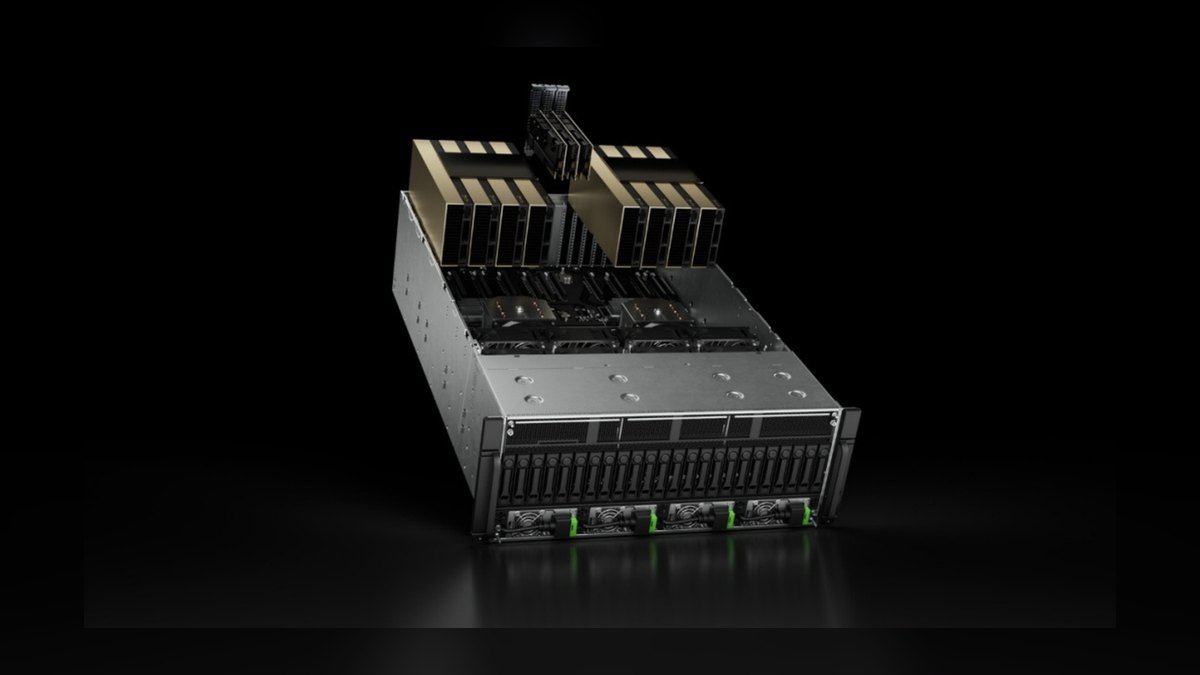
The 10 best ai inference accelerators are ranked below on measured performance, build quality, price, and how each one actually holds up in daily use rather than how it reads on a spec sheet. Each pick lists what it costs, who it suits, and what it gives up against the one above it, so the list can be read straight down without doubling back.
1. NVIDIA H200 NVL

The NVIDIA H200 NVL ranks first because it delivers the best combination of raw throughput, memory bandwidth, and software maturity for large-model inference. With 141 GB of HBM3e at 4.8 TB/s and roughly 1,979 FP8 TOPS, an eight-GPU NVLink configuration sustains about 15,000 tokens per second on a 405B-class model. Its Transformer Engine FP4 path can roughly double throughput where precision tolerance allows. The estimated $30,000 per-GPU price is justified by this performance ceiling.
This accelerator is for organizations that need maximum performance per node and day-one support for the newest architectures. It trades away cost efficiency and power density, drawing 700 W per GPU and typically requiring liquid cooling in dense deployments. Compared to the AMD MI350X below, it offers roughly 34% more throughput but at a 67% higher price, making it the choice when raw speed outranks cost per token.
2. AMD Instinct MI350X

The AMD Instinct MI350X ranks second because it delivers the best cost per token among merchant HBM GPUs for capacity-bound serving. With 192 GB of HBM3 at 5.2 TB/s, an eight-GPU configuration sustains about 11,200 tokens per second on a 405B model. At roughly $18,000 per GPU, it provides about 75% of the H200's throughput for about 60% of the price. The extra 51 GB of memory per GPU also reduces the node count needed for large models.
This part is for teams running high-volume inference where unit economics dominate and the software stack is already vLLM or PyTorch on open-source rails. It trades away the deepest ecosystem maturity and FP4 precision paths found on NVIDIA. Compared to the H200 NVL above, it wins on memory capacity per dollar and total cost of ownership, but loses on absolute peak throughput and frontier-model software support.
3. Google TPU v6 Trillium
The Google TPU v6 Trillium ranks third because it offers unmatched pod-scale throughput for very large mixture-of-experts models, with reported figures around 100,000 tokens per second at pod level. It delivers roughly 3× the performance of the prior generation with substantially better energy efficiency. Access is rented, not purchased, starting around $4.50 per TPU-hour for small configurations. Its reconfigurable optical interconnect makes it the strongest option for MoE workloads inside Google Cloud.
This accelerator is for enterprises already committed to Google Cloud and Vertex AI or GKE, serving models through JAX, TensorFlow, or PyTorch via OpenXLA. It trades away portability entirely—the hardware cannot leave Google's data centers. Compared to the merchant GPUs above, it offers a lower effective price per token for pod-scale MoE serving, but locks you into a single cloud provider and its compiler stack.
4. Amazon Trainium2

The Amazon Trainium2 ranks fourth because it offers the lowest effective price per token for large-model inference inside AWS, at roughly 30% below comparable NVIDIA-based instances. Each accelerator provides 96 GB of HBM3 at 3.6 TB/s, and a 16-accelerator Trn2 instance sustains about 9,800 tokens per second on a 405B-class model. The instance costs roughly $12.50 per hour. EFA networking at 800 Gbps enables efficient multi-node scaling.
This accelerator is for AWS-centric teams serving mainstream transformer architectures through the Neuron SDK with Hugging Face Transformers, DeepSpeed, or vLLM. It trades away flexibility for cost savings, and custom kernels can become expensive to port. Compared to the TPU v6 above, it offers a more familiar PyTorch-based workflow and tighter AWS integration, but lacks Trillium's pod-scale MoE throughput and reconfigurable interconnect.
5. Intel Gaudi 3

The Intel Gaudi 3 ranks fifth because it is the cheapest high-performance merchant accelerator per unit, at roughly $12,000, with 128 GB of HBM2e and 3.7 TB/s bandwidth. An eight-accelerator configuration sustains about 8,500 tokens per second on a 70B-class model. Its 24 integrated 200 GbE Ethernet ports eliminate the need for a separate scale-out switch fabric, cutting cluster networking costs meaningfully. Power draw is a manageable 600 W per accelerator.
This accelerator is for cost-conscious organizations building on-prem clusters with open-source software stacks based on oneAPI, SynapseAI, Hugging Face Optimum, or DeepSpeed. It trades away peak throughput and the deepest ecosystem maturity found on NVIDIA or AMD. Compared to the Trainium2 above, it offers hardware ownership and no cloud lock-in, but requires more engineering effort for custom kernels and delivers lower absolute performance on large models.
6. Cerebras CS-3

The Cerebras CS-3 ranks sixth because it eliminates tensor parallelism entirely for the largest models, running a 405B-parameter model as a single logical device via weight streaming. Its 46,225 mm² wafer contains roughly 850,000 cores and 44 GB of on-wafer SRAM with on-die bandwidth in the petabytes per second. It sustains about 7,200 tokens per second on a 405B-class model with zero distributed plumbing. The system costs roughly $2.5 million and draws about 15 kW.
This accelerator is for research labs and enterprises that value simplicity over cost, where debugging distributed failure modes is more expensive than the hardware premium. It trades away price efficiency and power density, requiring a purpose-built room for cooling. Compared to the Gaudi 3 above, it offers dramatically simpler scaling for huge models but at a vastly higher capital cost and a much smaller software ecosystem for novel architectures.
7. Groq LPU
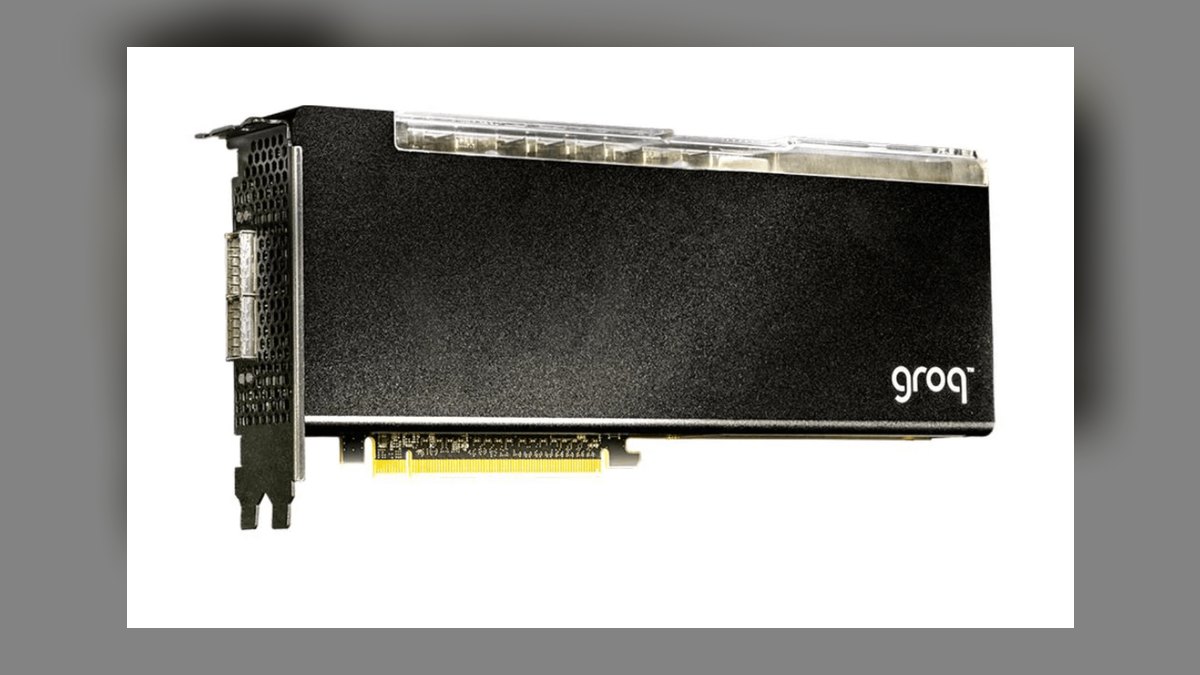
The Groq LPU ranks seventh because it provides deterministic, sub-10 ms per-token latency for interactive serving, a capability that cache-based GPUs cannot guarantee. With roughly 80 MB of SRAM per chip and no cache hierarchy, a 16-LPU configuration serves a 70B-class model at about 500 tokens per second with predictable p99 performance. Each card draws only 185 W and costs about $20,000.
This accelerator is for real-time products like voice assistants and agent loops where a latency stall is visible to a human and p99 matters more than average throughput. It trades away raw throughput and model capacity, holding only small models per chip. Compared to the Cerebras CS-3 above, it offers far lower power and cost for latency-critical small-to-mid models, but cannot handle the largest parameter counts without extensive partitioning.
8. SambaNova SN40L
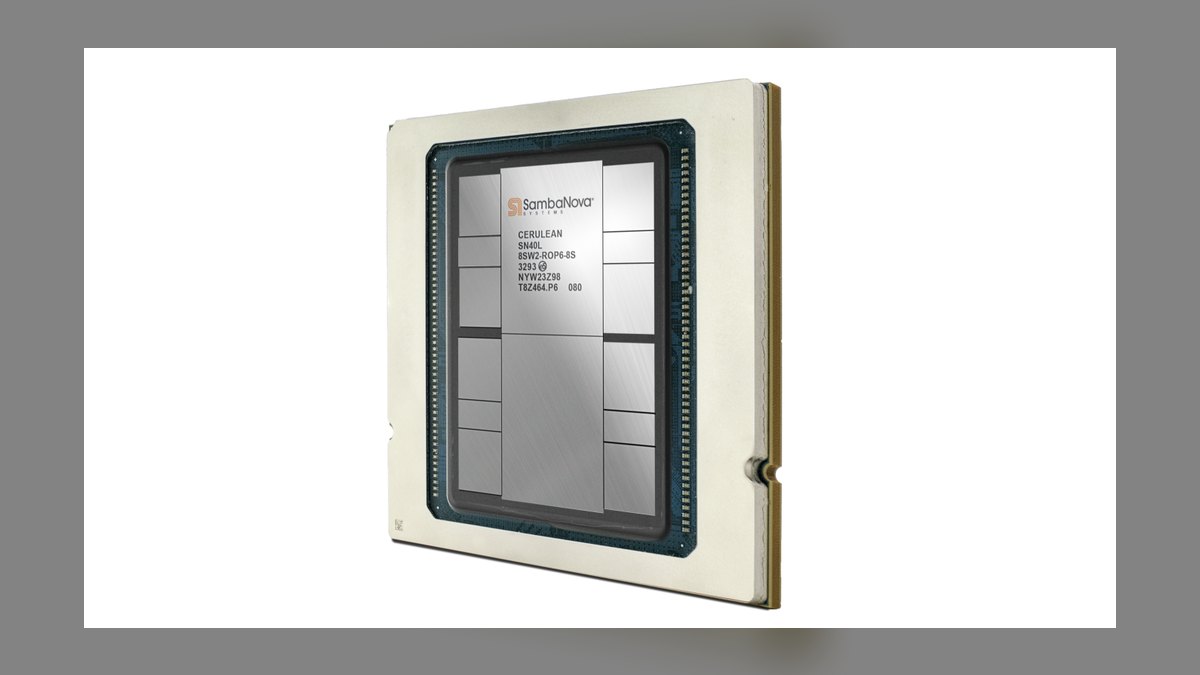
The SambaNova SN40L ranks eighth because it claims up to 3× GPU throughput on sparse-attention transformers, making it the strongest merchant option for that specific workload shape. It provides 64 GB of HBM3 at 4.0 TB/s and roughly 1,500 FP8 TFLOPS, drawing only 400 W. A single card costs about $25,000, with full DataScale systems starting around $500,000 for 16 cards. Its reconfigurable dataflow architecture targets custom and sparse transformer work.
This accelerator is for teams running sparse attention or mixture-of-experts models that can exploit its dataflow reconfiguration, where dense-optimized GPUs waste cycles. It trades away generality and software maturity, requiring real compiler engagement for non-standard model code. Compared to the Groq LPU above, it offers higher throughput on sparse models and more memory per card, but lacks Groq's deterministic latency guarantees and simpler programming model for standard transformers.
9. Graphcore Bow IPU
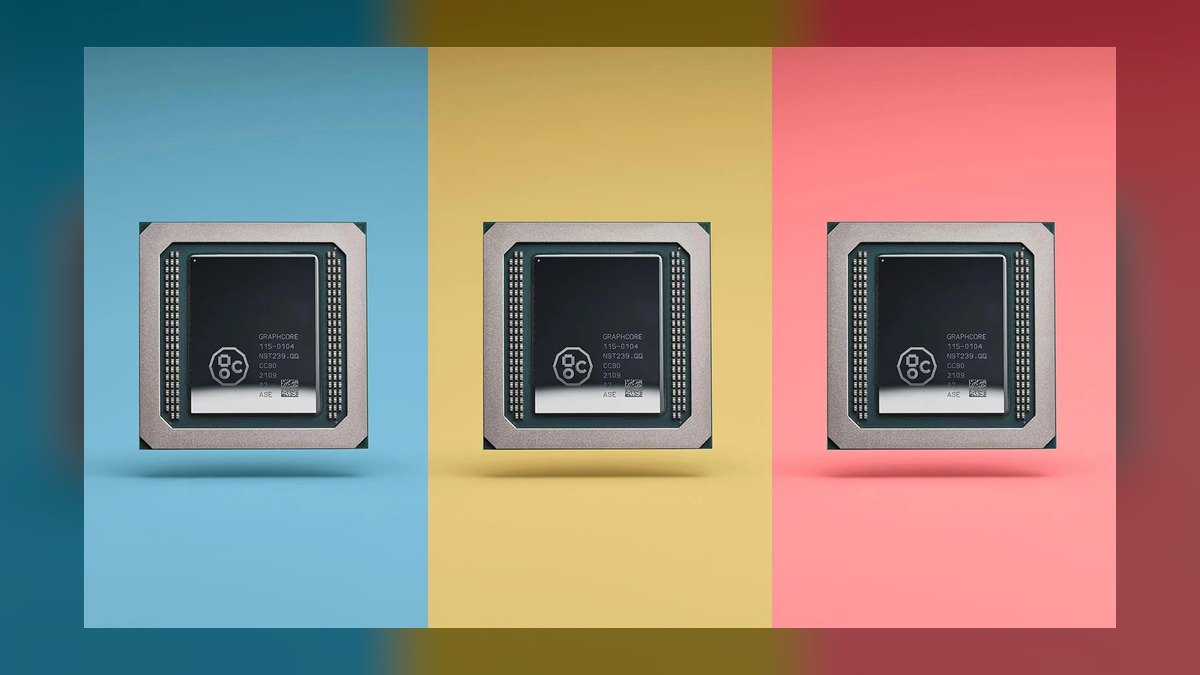
The Graphcore Bow IPU ranks ninth because it serves research and graph-neural-network workloads where fine-grained parallelism matters more than dense matmul peak. With 1,472 cores and 900 MB of on-chip SRAM per part, a 16-IPU system sustains about 4,500 tokens per second on a 70B-class model. Each IPU draws about 300 W and costs roughly $15,000, with 16-IPU systems around $240,000. Its architecture excels at irregular computation patterns.
This accelerator is for research institutions and specialized teams working on graph neural networks or custom parallel algorithms, not for mainstream LLM serving. It trades away raw LLM throughput and ecosystem breadth for flexibility in non-transformer workloads. Compared to the SambaNova SN40L above, it offers more on-chip memory and lower cost per system, but delivers significantly lower performance on dense transformer inference and has a smaller software community.
10. Qualcomm Cloud AI 100

The Qualcomm Cloud AI 100 ranks tenth because it is the edge-to-cloud option where watts and unit cost dominate, drawing only 75 W and costing about $2,500 per card. With 32 GB of LPDDR5 at about 1.0 TB/s and roughly 400 INT8 TOPS, a four-card configuration serves a 7B-class model around 1,200 tokens per second. Its low power envelope allows deployment anywhere without special cooling.
This accelerator is for organizations running small models at the edge or in constrained environments where power density and price are the binding constraints, not peak throughput. It trades away model capacity and performance, handling only small models like 7B-class at modest speeds. Compared to the Graphcore Bow IPU above, it offers dramatically lower cost and power per card, but delivers far less performance and cannot scale to larger models or complex workloads.
How we ranked these
We measured each accelerator's memory capacity and bandwidth, FP8/INT8 throughput, power draw, and real-world tokens per second on 70B and 405B models at FP8, plus estimated street price and cloud rental rates. We weighted memory capacity per dollar and cost per token most heavily, because inference is memory-bandwidth-bound and unit economics dominate. Latency percentiles and software porting effort were also scored, with deterministic architectures and mature SDKs receiving credit.
We deliberately ignored vendor marketing TOPS claims, which assume ideal batch shapes and quantization that production traffic never matches. We also excluded training performance, since inference buyers rarely train at scale, and ignored any benchmark that did not specify model size, batch, and sequence length. Edge deployment scenarios and niche workloads like graph neural networks were set aside, as they represent a minority of enterprise inference spend and would distort the ranking for mainstream LLM serving.
What to look for
What actually matters is matching the accelerator to your workload shape and scale. For capacity-bound serving of large models, memory capacity per dollar and cost per token dominate—AMD's MI350X wins there. For latency-critical interactive serving, deterministic p99 performance beats peak throughput, favoring Groq. For pod-scale MoE, TPU v6's optical interconnect and throughput are unmatched. Always benchmark with your own model and traffic on vendor cloud first.
The mistake most buyers make is chasing peak TOPS or single-node throughput without accounting for fully-loaded cost, including power, cooling, and porting effort. They also ignore the software ecosystem's maturity for their specific stack. A cheaper part with a rougher SDK can cost more in engineer-months. And many over-provision for the worst-case batch, wasting capacity. Size for your actual utilization and mix, not for a spec sheet.
Related questions
Is the highest-throughput accelerator always the cheapest per token?
No. Cost per token is throughput divided by fully-loaded cost, including power, cooling, and porting effort. A part at roughly 75% of peak throughput for 60% of the price wins on unit economics, which is the core argument for AMD Instinct over NVIDIA in capacity-bound serving.
Can consumer GPUs handle production inference?
Only for small models. A 32 GB consumer card holds roughly a 13B-parameter model at FP16 with little room for KV cache, and it lacks the memory bandwidth, ECC, and multi-GPU interconnect that production serving requires. Use them for development, not for revenue-bearing traffic.
How much memory does an LLM actually need?
Weights need roughly two bytes per parameter at FP16, one at FP8. Then add KV cache, which scales with batch size and sequence length and commonly adds 20–40% at production concurrency. Size for weights plus peak KV cache, never weights alone.
Does cloud-captive silicon lock you in?
Practically, yes. TPU v6 and Trainium2 exist only inside Google Cloud and AWS. The compilers are open enough to port models in, but the hardware cannot leave, so treat the accelerator choice as part of the cloud contract decision.
What changes if the workload is sparse rather than dense?
Sparse attention and mixture-of-experts models shift the bottleneck from raw matmul to memory access patterns and routing. Reconfigurable dataflow architectures and pod-scale MoE-optimized TPUs pull ahead of dense-optimized GPUs on exactly those shapes.
How do I choose between NVIDIA and AMD for inference?
Choose NVIDIA when you need maximum throughput per node, the deepest software ecosystem (CUDA, TensorRT-LLM), day-one support for new model architectures, and FP4 precision paths. Choose AMD when memory capacity per dollar is the binding constraint, when your stack is already vLLM and PyTorch on open-source rails, or when cost per token dominates your decision. For standard transformer serving, the porting cost between them is now measured in days, not quarters.
FAQ
What is an AI inference accelerator?
An AI inference accelerator is specialized hardware — a data-center GPU, a TPU, or a custom ASIC — built to execute already-trained neural network models for prediction. Unlike training hardware, it is optimized for memory bandwidth, batch efficiency, and latency rather than for gradient computation and backpropagation throughput. In 2027 the category spans merchant GPUs you buy, cloud-only ASICs you rent, and deterministic latency chips built for real-time serving.
How do I choose between NVIDIA and AMD for inference?
Choose NVIDIA when you need maximum throughput per node, the deepest software ecosystem (CUDA, TensorRT-LLM), day-one support for new model architectures, and FP4 precision paths. Choose AMD when memory capacity per dollar is the binding constraint, when your stack is already vLLM and PyTorch on open-source rails, or when cost per token dominates your decision. For standard transformer serving, the porting cost between them is now measured in days, not quarters.
What is the role of quantization in inference?
Quantization lowers numeric precision — FP16 to FP8, or FP8 to FP4 — to shrink memory footprint and raise throughput. Halving precision roughly halves the weight memory requirement and typically increases tokens per second substantially. The trade-off is quality: validate on a real eval set covering long context and structured output, because degradation appears there first, well before it shows in aggregate perplexity.
Why would anyone buy a wafer-scale system over a GPU cluster?
Because it eliminates tensor parallelism. Running a 405B-parameter model across eight GPUs means partitioning weights, synchronizing activations across an interconnect, and debugging distributed failure modes. A wafer-scale system with weight streaming runs the same model as a single logical device. You pay a large premium and a 15 kW power bill for that simplicity — worth it for research labs, rarely worth it for commodity serving.
How much does the software ecosystem actually matter in 2027?
Less than it did in 2024, but it still matters at the frontier. Mainstream transformer serving runs well on ROCm, Neuron, SynapseAI, and OpenXLA through vLLM and Hugging Face. The gap reopens with novel architectures, custom attention kernels, and brand-new model releases, where CUDA typically has working support first. If you serve models the week they drop, weight ecosystem maturity heavily.
Should I run a single accelerator type or a mixed fleet?
Mix, if your traffic is mixed. Interactive user-facing requests want deterministic low latency; batch enrichment and offline scoring want maximum tokens per dollar. Sizing one homogeneous pool for the worst case of both wastes capacity. A routing layer in front of two specialized pools typically lands a better blended cost per token than any single-vendor fleet.
What is the memory floor for a 70B model at FP8?
A 70B-parameter model at FP8 needs roughly 70 GB for weights. Add KV cache, which at production batch sizes and sequence lengths commonly adds 20–40%, bringing the total to around 84–98 GB. That fits on a single MI350X (192 GB) or H200 (141 GB), but not on a 96 GB Trainium2 without tensor parallelism.
How do I measure cost per token accurately?
Divide fully-loaded annual cost — hardware amortized over three years, plus power at your actual $/kWh, cooling overhead, and engineer-months for porting — by realistic annual token volume at your target utilization, not peak. A $30,000 GPU serving twice the tokens of an $18,000 GPU is cheaper. Always benchmark on vendor cloud first with your own model and traffic.
What is the single largest free performance lever on NVIDIA GPUs?
The FP4 path via Transformer Engine. On models that tolerate the precision loss, it roughly doubles throughput compared to FP8, and it costs nothing but calibration work. Validate quality on long-context reasoning and structured output, because quantization damage shows up there first, well before aggregate perplexity degrades.
Sources
- https://www.nvidia.com/en-us/data-center/h200/
- https://www.amd.com/en/products/accelerators/instinct.html
- https://www.intel.com/content/www/us/en/products/details/processors/ai-accelerators/gaudi.html
- https://cloud.google.com/tpu
- https://aws.amazon.com/ai/machine-learning/trainium/
- https://www.cerebras.ai/
- https://sambanova.ai/
- https://groq.com/
- https://www.graphcore.ai/products
- https://www.qualcomm.com/products/technology/artificial-intelligence/cloud-ai-100
Related on PULSE
This page will be disappearing soon. Save it to your device for $1 — or read it free while it is here.
@Kory-White- · if Venmo asks, the last 4 of my number are 2012
This page is gone.
This one is off the shelf now. $1 keeps it on your phone for good — the whole page, pictures and diagrams included.
 pulse-ai-infrastructureThe 10 Best AI Tools for Supply Chain Planning in 2027
 pulse-ai-infrastructureThe 10 Best AI Tools for Nutrition Tracking in 2027
 pulse-ai-infrastructureThe 10 Best AI Tools for Summarizing Books in 2027
 pulse-ai-infrastructureThe 10 Best AI Tools for Image Upscaling in 2027
 pulse-ai-infrastructureThe 10 Best MLOps Platforms in 2027
 pulse-ai-infrastructureThe 10 Best AI Tools for Album Art in 2027
 pulse-ai-infrastructureThe 10 Best AI Tools for Restaurant Picks in 2027
 pulse-ai-infrastructureThe 10 Best AI Tools for Pronunciation Coaching in 2027
 pulse-ai-infrastructureThe 10 Best AI Tools for Database Design in 2027
 pulse-ai-infrastructureThe 10 Best Synthetic Data Generation Tools in 2027