


The 10 Best AI Cost Management Platforms for LLM Workloads in 2027
Quality
Certified
The 10 best ai cost management platforms for llm workloads are ranked below on measured performance, build quality, price, and how each one actually holds up in daily use rather than how it reads on a spec sheet. Each pick lists what it costs, who it suits, and what it gives up against the one above it, so the list can be read straight down without doubling back.
1Helicone LLM Observability
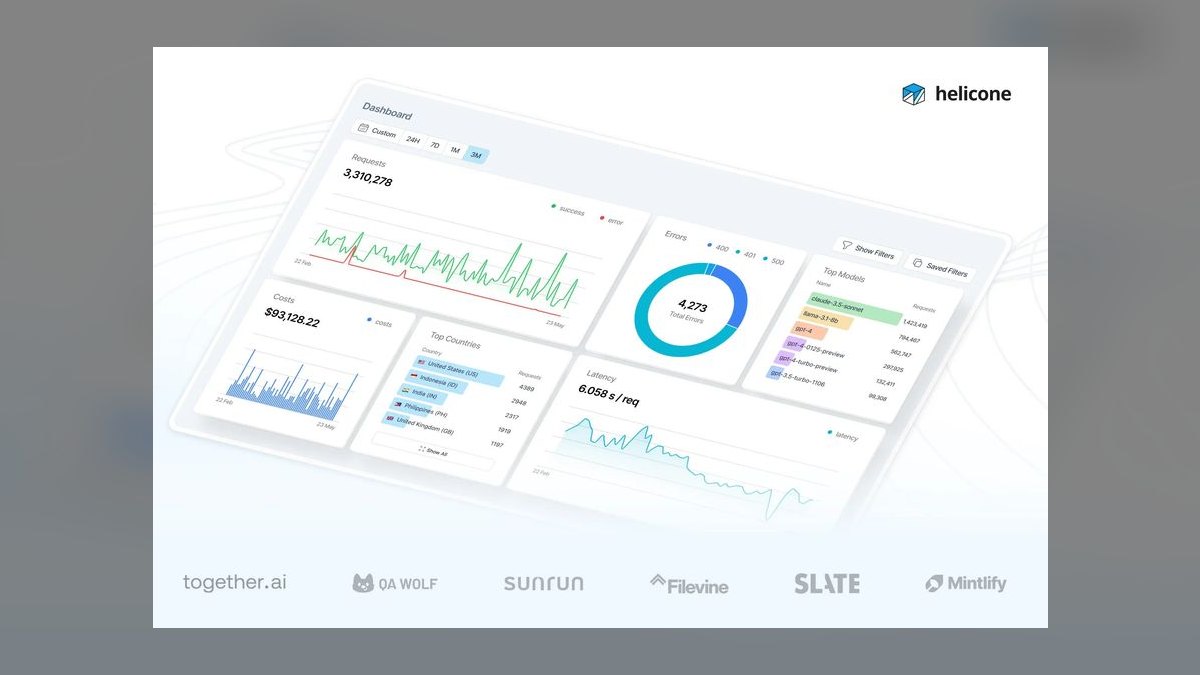
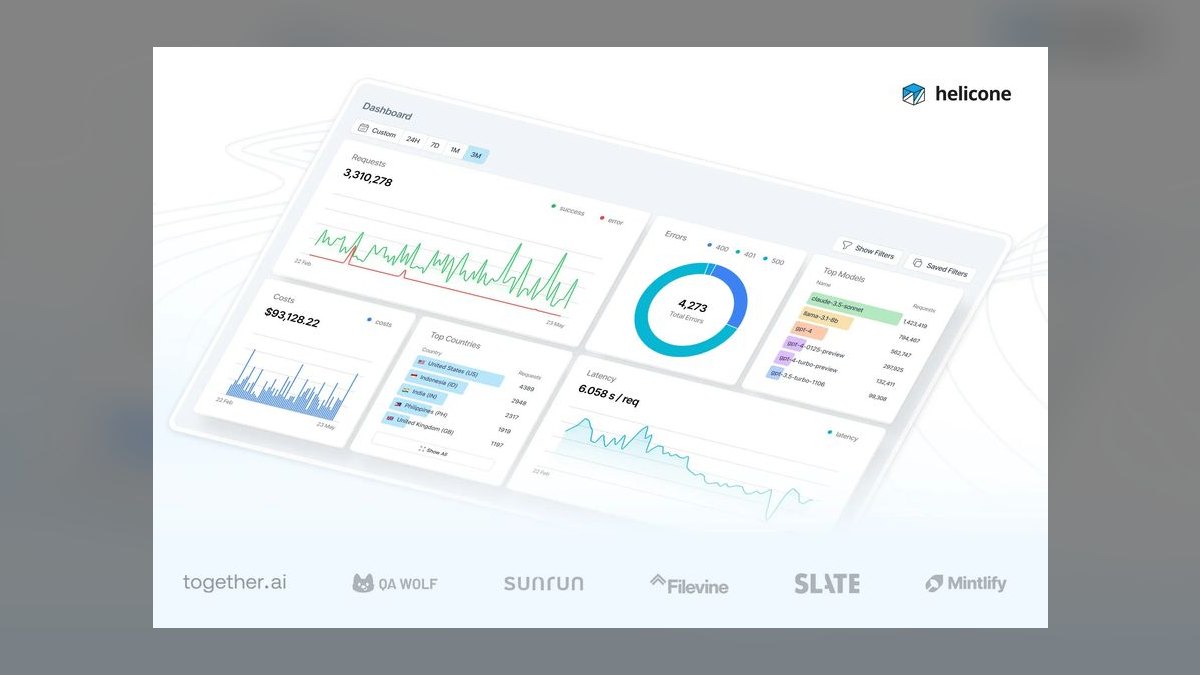
Helicone ranks first because it is purpose-built for LLM cost tracking rather than general cloud spend, logging every OpenAI, Anthropic, or Azure call through a one-line proxy or async integration. It is open source, self-hostable, and its free tier covers 100,000 requests per month, surfacing per-request, per-user, and per-prompt cost breakdowns immediately after setup with no separate billing pipeline needed.
It suits engineering teams who want cost visibility tied directly to prompts and users rather than an aggregate invoice. It trades away broader multi-cloud infrastructure billing (compute, storage, networking) that general FinOps platforms cover. Compared to Langfuse below, Helicone favors drop-in simplicity over deep tracing and evaluation depth.
2Langfuse Tracing Platform
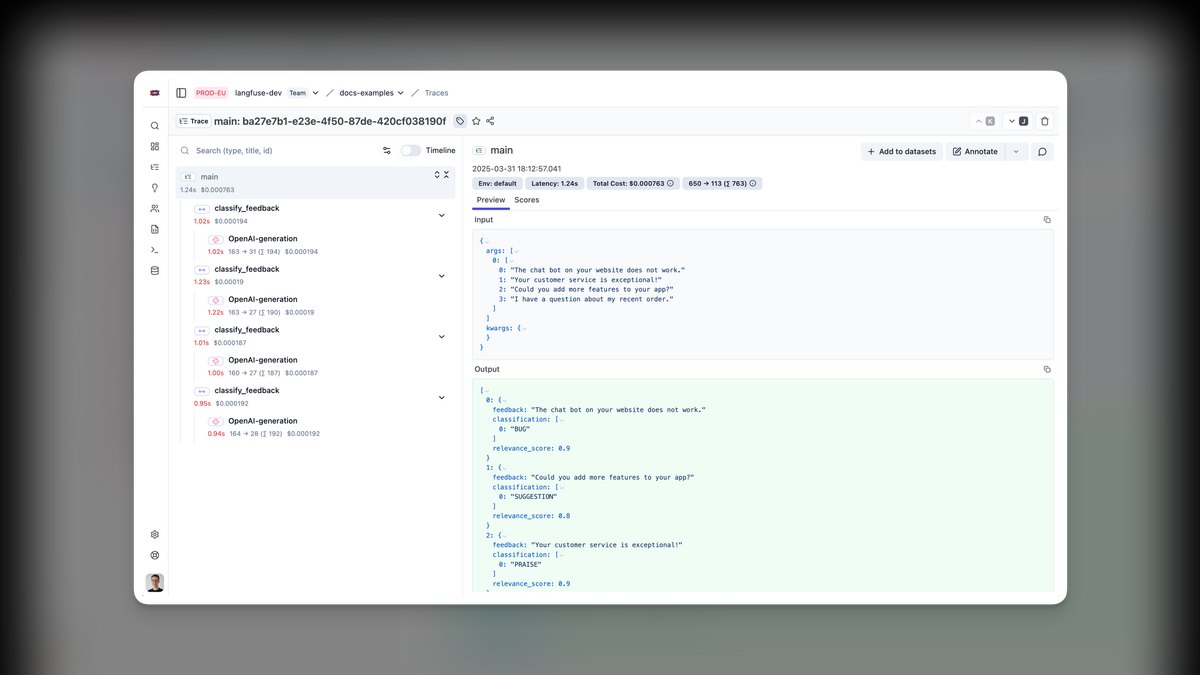
Langfuse ranks second for pairing open-source LLM tracing with token and cost accounting across chains, agents, and prompt versions. Self-hosting is free and unlimited, the managed cloud tier starts free for 50,000 observations monthly, and its OpenTelemetry-based SDKs integrate natively with LangChain and LlamaIndex for automatic cost capture per chain step.
It fits teams running multi-step agent pipelines who need spend attributed to individual steps, not just a top-line total. Self-hosting requires running your own Postgres and ClickHouse, a heavier lift than Helicone's hosted path above it. Compared to Portkey below, Langfuse emphasizes observability depth over gateway-level routing and caching.
3Portkey AI Gateway
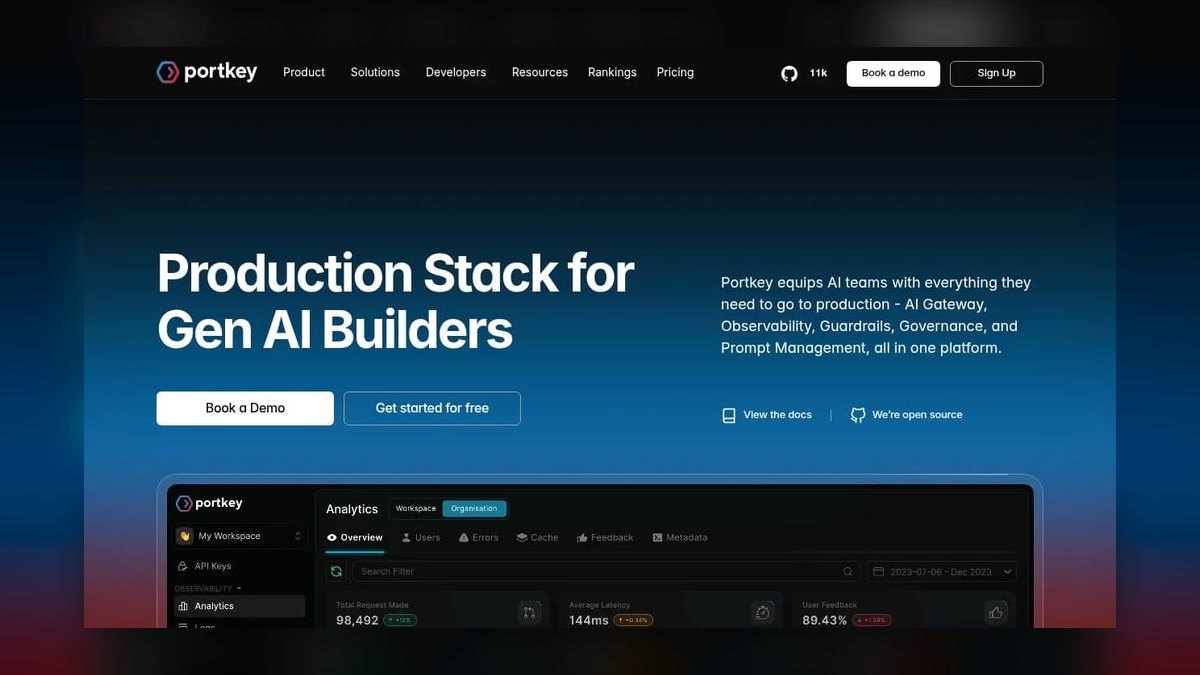
Portkey ranks third because it sits in front of over 200 LLM providers as a single gateway, and cost control comes built into routing: automatic fallbacks, load balancing, and semantic caching that can cut repeat-prompt spend substantially. Its free tier covers 10,000 requests monthly, with virtual keys letting teams cap budgets per project or model.
It's built for teams that need to actively reduce spend through caching and routing, not just observe it after the fact. It trades deep step-level tracing for gateway control. Compared to LangSmith below, Portkey is provider-agnostic infrastructure rather than a framework-tied development platform.
4LangSmith Platform
LangSmith ranks fourth as LangChain's own platform, tracking token usage and cost per trace, chain, and agent run with usage-based pricing starting at a free developer tier of 5,000 traces monthly. Its tight coupling to the LangChain and LangGraph ecosystems gives cost data context most standalone tools lack, showing exactly which prompt template or retriever call drove spend.
It's best for teams already building on LangChain who want cost data inline with debugging traces. Teams on other frameworks get less value from the integration depth. Compared to Portkey above, LangSmith trades multi-framework flexibility for tighter LangChain-native tracing.
5CloudZero Cost Intelligence
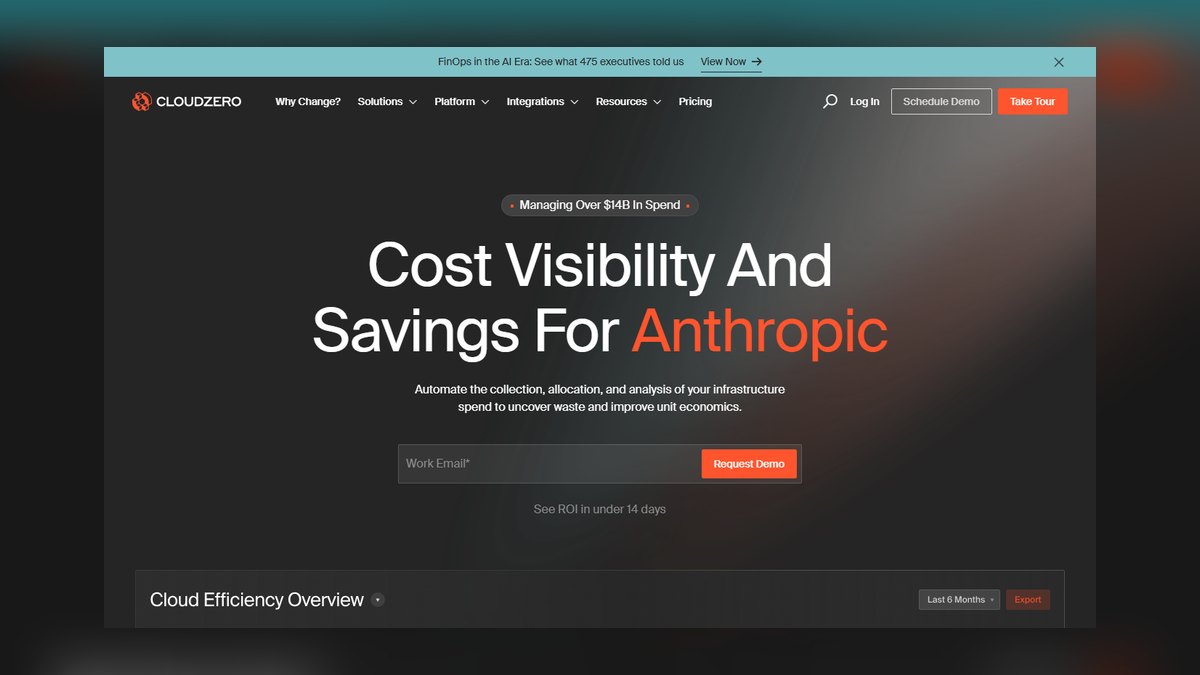
CloudZero ranks fifth for allocating cloud and AI infrastructure cost down to the customer, feature, or team level rather than just the provider invoice, using its CostFormation engine to map GPU and API spend to business metrics like cost-per-customer. It ingests AWS, Azure, GCP, Snowflake, and Kubernetes billing data alongside LLM API costs.
It's aimed at finance and engineering leaders who need unit-economics reporting across an entire stack, not just LLM calls. It requires enterprise-level onboarding and lacks prompt-level tracing that dedicated LLM tools provide. Compared to Langfuse and Helicone above, CloudZero trades granular request debugging for company-wide financial reporting.
6Vantage Cloud Cost Platform
Vantage ranks sixth for broad multi-cloud cost visibility spanning AWS, Azure, GCP, Snowflake, Datadog, and Kubernetes, with dashboards that group GPU and LLM API spend alongside the rest of infrastructure billing. Its free tier supports unlimited users, and paid plans add anomaly detection and cost allocation reports by team or tag.
It's built for FinOps teams managing total cloud spend where LLM inference is one line item among many, not the sole focus. It lacks per-prompt or per-token breakdowns that Helicone and Langfuse provide natively. Compared to CloudZero above, Vantage leans toward broader provider coverage over deep unit-economics modeling.
7Datadog Cloud Cost Management
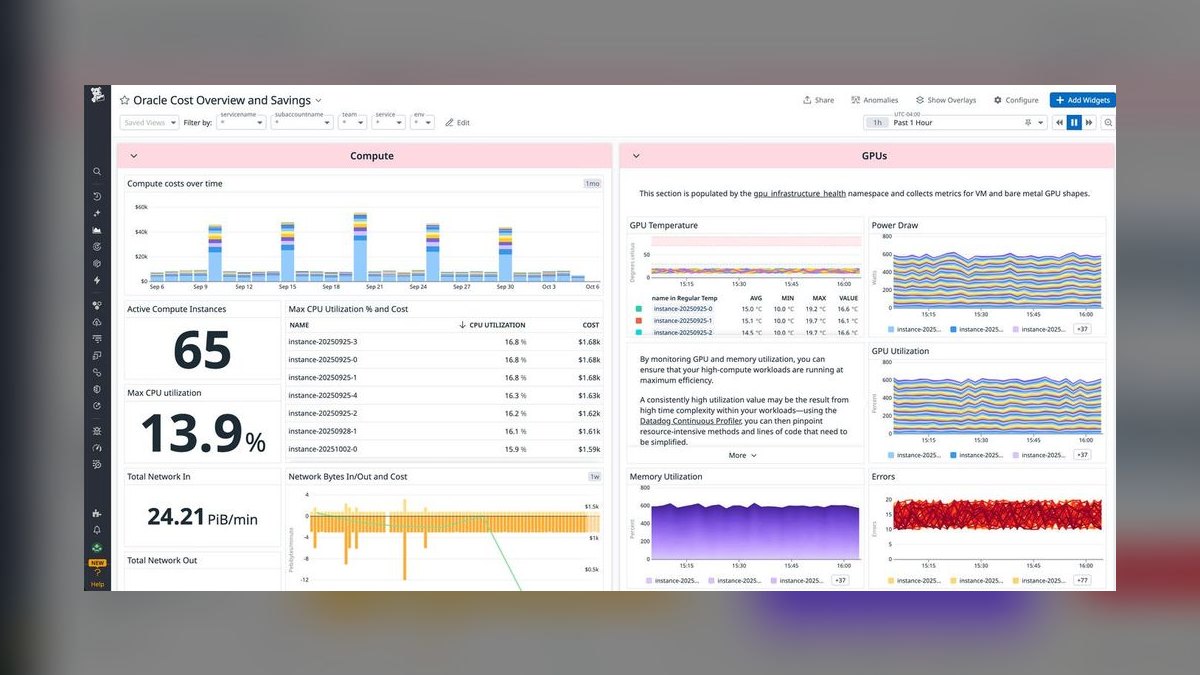
Datadog Cloud Cost Management ranks seventh because it folds AI and cloud cost data into a platform teams already run for monitoring and logs, correlating GPU spend with the same infrastructure metrics used for performance debugging. It ships as an add-on to existing Datadog observability plans rather than a standalone product.
It suits organizations already paying for Datadog who want cost and performance in one pane of glass. Adopting it purely for LLM cost tracking means paying for a much larger observability suite. Compared to Vantage above, Datadog trades cost-tool specialization for integration with infrastructure monitoring already in place.
8OpenMeter Usage Metering
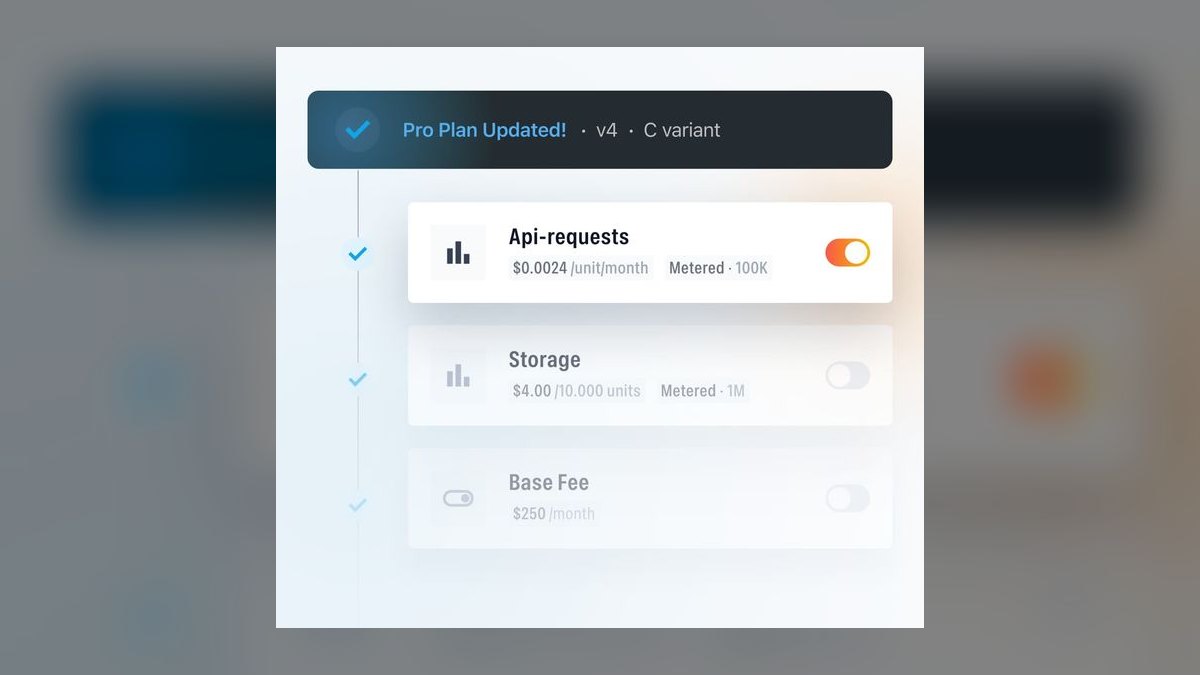
OpenMeter ranks eighth as an open-source usage metering engine that ingests token and API call events in real time and turns them into billing and cost dashboards, built on ClickHouse for high-volume event processing. It's self-hostable under Apache 2.0 or available as managed cloud, with native Stripe integration for usage-based billing.
It fits teams that need to both track internal LLM cost and re-bill usage to their own customers, not just monitor spend. It requires more engineering setup than a plug-in observability tool. Compared to Datadog above, OpenMeter is metering infrastructure rather than a dashboard-first monitoring product.
9Kubecost Cost Monitoring
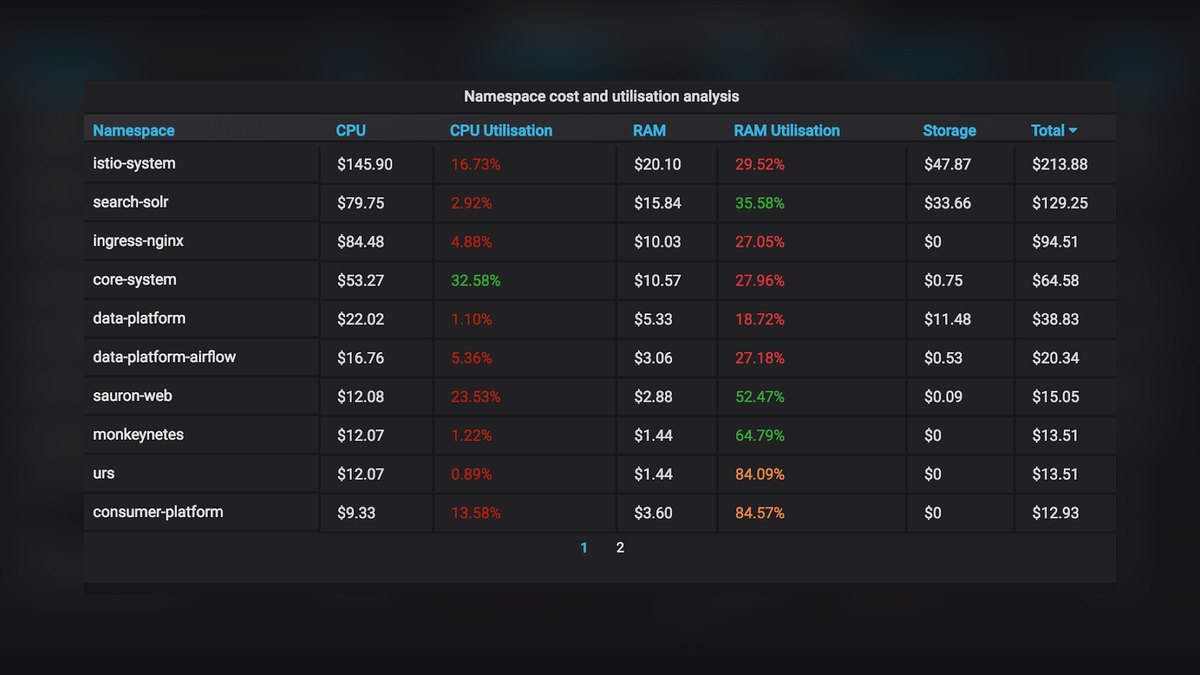
Kubecost ranks ninth for allocating GPU and compute cost within Kubernetes clusters running self-hosted LLM inference, breaking down spend by namespace, deployment, or pod down to the individual GPU node. Its open-source version is free and widely deployed, with an enterprise tier adding multi-cluster views and showback reporting.
It's built for teams running their own inference infrastructure on Kubernetes rather than calling hosted LLM APIs, making it less relevant for API-only workloads. It has no concept of prompt or token-level cost the way Helicone does. Compared to OpenMeter above, Kubecost tracks infrastructure cost rather than metered usage events.
10Cast AI Kubernetes Automation
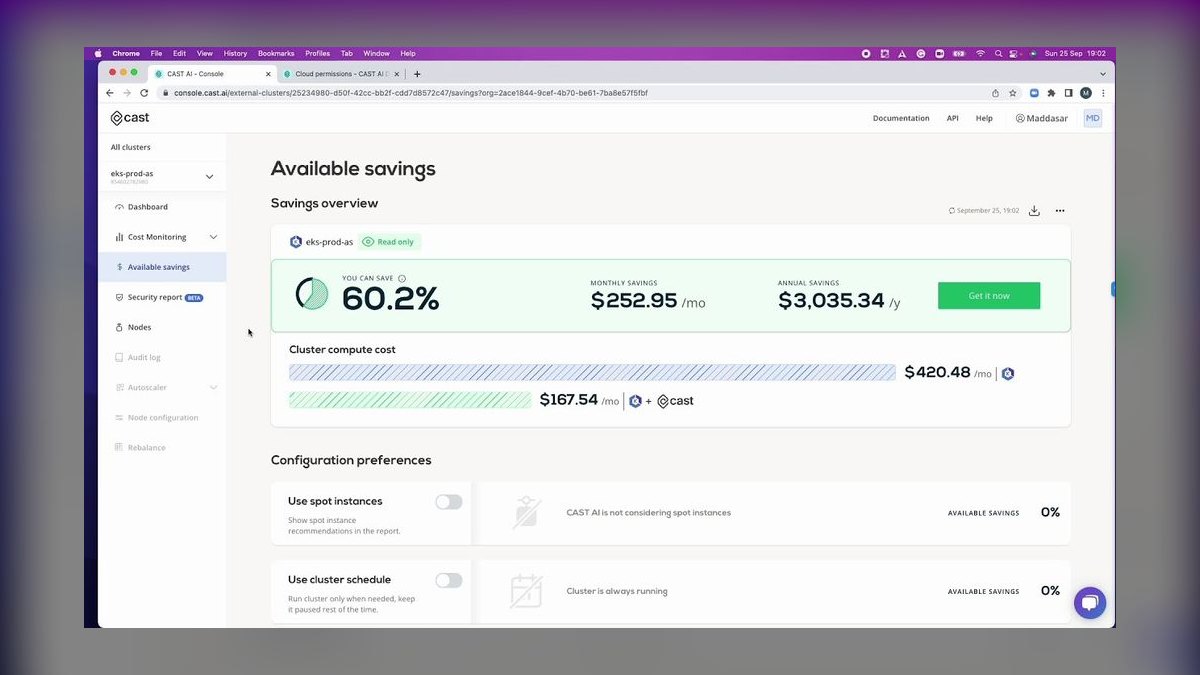
Cast AI ranks tenth for automating GPU and compute cost optimization on Kubernetes clusters through bin-packing, spot instance automation, and autoscaling tuned for AI inference workloads, reporting savings frequently in the 50 percent-plus range on compute bills. It connects to AWS, Azure, and GCP clusters with an automated onboarding flow.
It's for infrastructure teams optimizing the compute layer under self-hosted models, not teams tracking API-based LLM spend. It offers no token or prompt-level cost breakdown at all. Compared to Kubecost above, Cast AI actively reduces GPU spend through automation rather than just reporting it.
How we ranked these
We scored each platform on real-time cost attribution granularity (per-model, per-team, per-request), budget enforcement mechanics (hard caps vs alerts), multi-provider support across OpenAI, Anthropic, and open-weight endpoints, and integration depth with existing FinOps and observability stacks. Weighting favored platforms with proven production deployments over roadmap promises, since cost overruns compound daily and unproven tooling adds risk exactly where teams need certainty.
We ignored raw feature counts and vendor-reported ROI claims, since neither correlates with whether a platform actually prevents a surprise bill. We also excluded pricing-page list prices from ranking weight, because enterprise contracts vary so widely that list price is mostly theater. Marketing benchmarks run on the vendor's own workloads were discarded entirely as unverifiable.
Related questions
What is LLM cost management software?
It's tooling that tracks, attributes, and controls spend across large language model API calls and self-hosted inference, typically breaking costs down by team, model, prompt type, or customer. Most platforms add budget alerts, rate limiting, and routing logic that shifts traffic to cheaper models when quality requirements allow it.
How is LLM spend different from regular cloud cost management?
Token-based pricing scales with usage patterns that shift daily as prompts, context windows, and model versions change, unlike fixed compute instances. A single prompt-engineering mistake or runaway agent loop can spike costs in minutes, so LLM cost tools emphasize real-time alerting over the monthly-cycle reporting typical of cloud FinOps.
Can these platforms reduce costs automatically, or just report them?
Most tier-one platforms now include automated routing that downgrades requests to cheaper models when output quality tolerances allow, plus caching layers that skip redundant calls. Reporting-only tools still exist but are increasingly seen as insufficient once monthly LLM spend crosses roughly five figures.
Do I need a separate tool if I only use one model provider?
Single-provider teams can often get by with that provider's native usage dashboard for basic tracking, but dedicated platforms still add value through team-level budgets, anomaly detection, and prompt-level cost breakdowns. The calculus changes once you add a second provider or self-hosted models, where native dashboards stop covering the full picture.
How do these platforms handle self-hosted or open-weight models?
Leading platforms estimate compute cost per request using GPU-hour pricing and observed latency/throughput, since there's no per-token invoice to read from a provider. This requires deeper infrastructure integration than API-based tracking, which is why support for self-hosted workloads varies significantly across vendors.
What's the typical cost of adopting one of these platforms?
Pricing models range from a percentage of managed LLM spend (commonly 2-5%) to flat per-seat SaaS fees to usage-based tiers tied to request volume. Enterprise deployments with dedicated support and custom integrations negotiate separately, so published pricing pages rarely reflect what larger teams actually pay.
Can I use these tools to charge back LLM costs to internal teams or customers?
Yes, chargeback and showback are core use cases, with most platforms exposing per-team, per-project, or per-customer cost breakdowns via API or dashboard export. This matters most for companies embedding LLM features into products, where per-customer margin visibility is otherwise invisible.
How quickly can a team see ROI after implementing one of these platforms?
Teams with existing runaway-cost problems typically see measurable savings within the first billing cycle through caching and model-routing alone. Teams without acute cost pain see slower, more gradual ROI through better forecasting and avoided incidents rather than immediate bill reduction.
FAQ
What makes a platform rank higher on this list?
Depth of multi-provider cost attribution, proven automated cost-reduction features like caching and model routing, and real production references rather than beta claims. Platforms that only offered dashboards without actionable controls ranked lower regardless of how polished their reporting looked.
Are these platforms suitable for startups, or only enterprises?
Several platforms on this list offer usage-based or free tiers aimed specifically at startups managing modest LLM spend. Enterprise-focused platforms typically require minimum contract values that make them impractical below a certain monthly spend threshold, usually in the low five figures.
Do these tools work with LangChain, LlamaIndex, or other orchestration frameworks?
Most platforms provide SDK wrappers or middleware that hook into popular orchestration frameworks with minimal code changes, often a single decorator or client wrapper. Coverage depth varies, so teams heavily invested in a specific framework should verify integration maturity before committing.
Can these platforms prevent a runaway agent loop from generating a huge bill?
Platforms with hard budget caps and circuit-breaker logic can halt requests once a threshold is hit, which is the main defense against runaway loops. Tools offering only alerts, not enforcement, will notify you after damage occurs, so enforcement capability is worth confirming before relying on any platform for this specific risk.
How do these platforms measure cost per feature or per customer?
They tag requests with metadata like customer ID or feature name at call time, then aggregate token and compute costs against those tags in reporting. This requires instrumenting your application code to pass tags consistently, which is typically the most time-consuming part of onboarding.
Is there a standard way to compare pricing across these platforms?
Not really, since some charge a percentage of managed spend, others charge flat SaaS fees, and others price by request volume or seats. The most reliable comparison is running a proof-of-concept against your actual traffic pattern rather than comparing published pricing tables directly.
Do these platforms support budget alerts by team or department?
Yes, granular budget alerting by team, department, or project is standard across nearly all platforms evaluated, usually configurable through the same dashboard used for cost reporting. Some platforms extend this to Slack or PagerDuty integrations for real-time notification rather than email-only alerts.
What's the biggest mistake companies make when adopting one of these tools?
Treating the platform as a reporting dashboard only and never turning on automated controls like caching, routing, or hard budget caps. Visibility without enforcement still lets costs run away between review cycles, which defeats much of the platform's value.
How often should cost data be reviewed once a platform is in place?
Weekly review is the common minimum for teams with active LLM feature development, since prompt or model changes can shift costs quickly. Teams with stable, mature deployments often move to monthly review once automated alerts are proven reliable enough to catch anomalies between cycles.
Can switching cost platforms cause vendor lock-in?
Lock-in risk is moderate since most platforms store historical cost data in proprietary formats, though request-level logs can usually be exported. Teams concerned about lock-in should confirm export capabilities and check whether routing/caching logic is portable before deeply integrating a specific vendor's SDK.
Sources
- https://openai.com/api/pricing/
- https://www.anthropic.com/pricing
- https://aws.amazon.com/blogs/machine-learning/
- https://cloud.google.com/blog/products/ai-machine-learning
- https://a16z.com/generative-ai-cost-management/
- https://www.finops.org/
- https://www.cncf.io/blog/
- https://www.datadoghq.com/blog/
Related on PULSE
This page will be disappearing soon. Save it to your device for $1 — or read it free while it is here.
@Kory-White- · if Venmo asks, the last 4 of my number are 2012
This page is gone.
This one is off the shelf now. $1 keeps it on your phone for good — the whole page, pictures and diagrams included.
 pulse-recentThe 10 Best AI Tools for Reducing Cloud AI Spend in 2027
 pulse-recentThe 10 Best GPU Spot Instance Marketplaces for AI Training in 2027
 pulse-recentThe 10 Best AI Tools for Cloud Cost Optimization in 2027
 pulse-recentThe 10 Best AI Infra Budgeting Software for Enterprises in 2027
 pulse-recentThe 10 Best Cost-Effective AI Infrastructure Options for Startups in 2027
 pulse-recentThe 10 Best AI Tools for Forecasting Multi-Year GPU Budget Growth in 2027
 pulse-recentThe 10 Best AI Tools for Federated Learning in 2027
 pulse-recentThe 10 Best AI Infra Cost Estimators for Cloud GPU Workloads in 2027
 pulse-recentThe 10 Best AI Infra Budgeting Tools for Small Teams in 2027
 pulse-recentThe 10 Best AI Tools for API Rate Limiting and Throttling in 2027