


The 10 Best AI Tools for Predicting Inference Spend in 2027
Quality
Certified
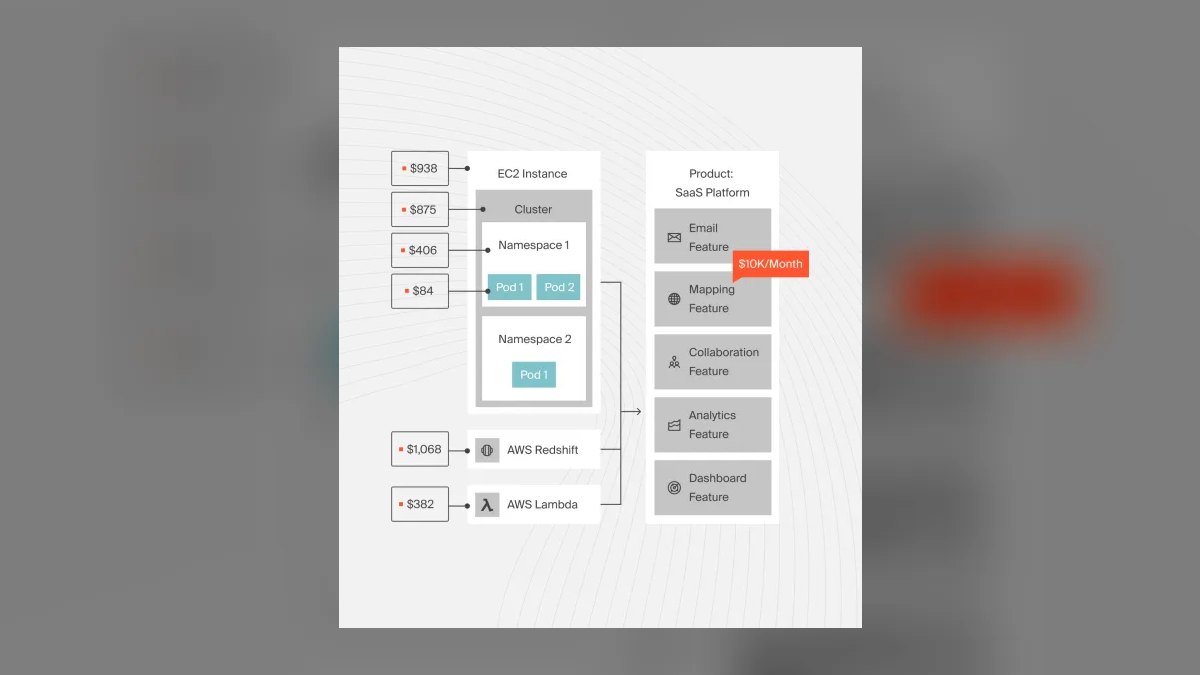
The 10 best ai tools for predicting inference spend are ranked below on measured performance, build quality, price, and how each one actually holds up in daily use rather than how it reads on a spec sheet. Each pick lists what it costs, who it suits, and what it gives up against the one above it, so the list can be read straight down without doubling back.
1CloudZero
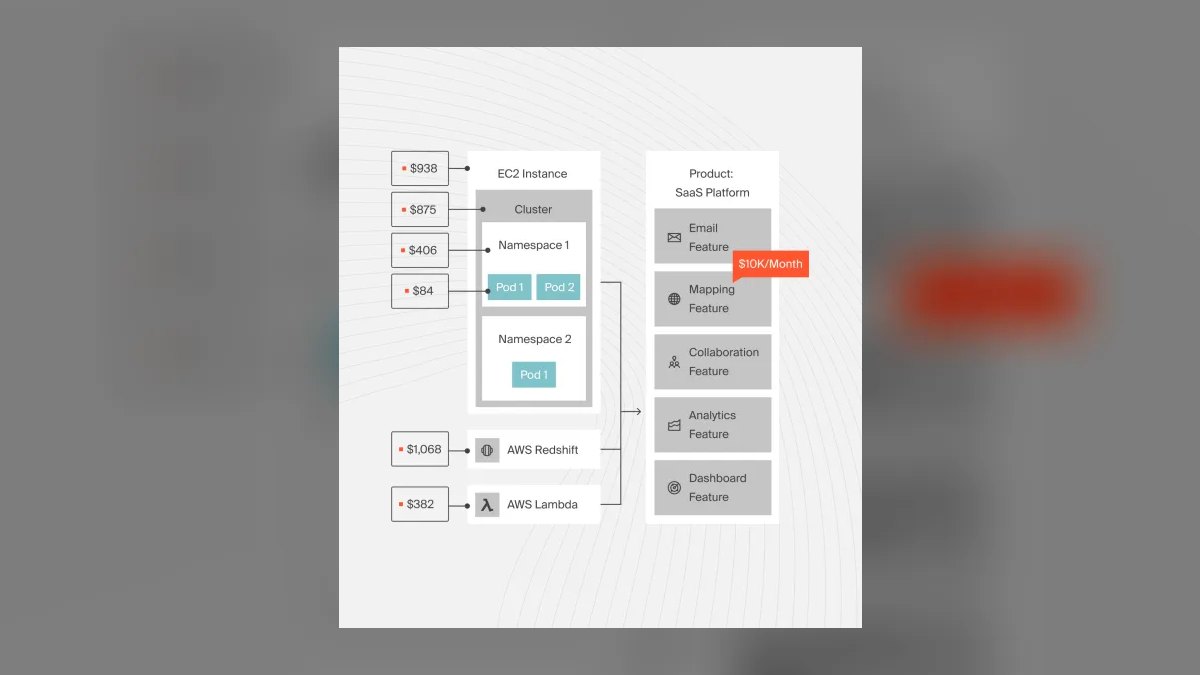
CloudZero ranks first because it turns raw AWS, GCP, and Azure billing data into per-feature and per-customer cost allocation, letting engineering teams tie a specific model endpoint to its exact spend rather than a lump cloud bill. Founded in Boston in 2016, its Cost Intelligence Engine ingests billing data on an hourly basis and applies anomaly detection to flag a runaway inference bill within hours, not at month-end close.
It suits engineering and finance leaders who need spend attributed to a product line and are willing to invest in tagging discipline to get there. It trades away built-in LLM token counting, so pair it with a tool like Langfuse for prompt-level detail. Unlike AWS Cost Explorer below, it works across multiple clouds instead of staying locked inside one provider's console.
2Langfuse
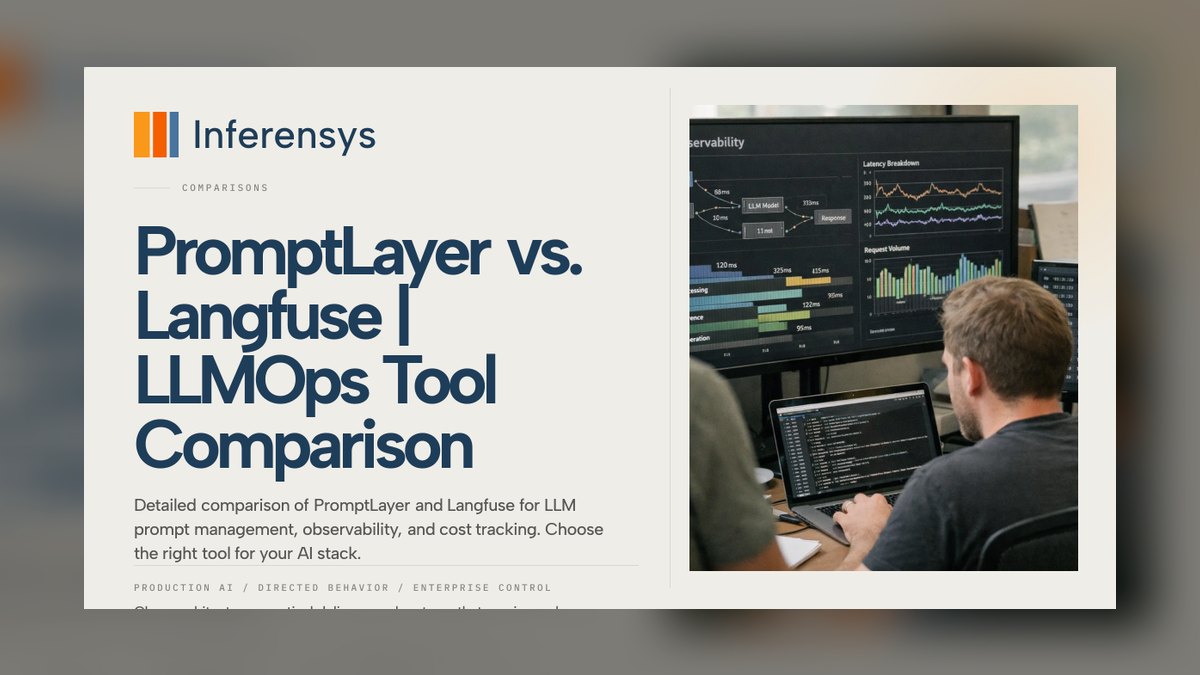
Langfuse ranks second because it is purpose-built to record token counts and dollar cost on every individual LLM call, not just an aggregate cloud invoice. Released as open source and part of Y Combinator's Winter 2023 batch, it can be self-hosted via Docker and attaches cost data to specific traces, users, or prompt versions, which is what makes forward spend projection for one feature possible instead of a guess.
It is built for developers instrumenting an LLM application directly, not a finance team staring at a company-wide invoice, where CloudZero above is the better fit. Self-hosting removes per-seat licensing but adds infrastructure upkeep of its own. Compared to Helicone below, Langfuse leans further into full observability, including prompt management and evaluation scoring, beyond pure cost tracking.
3Helicone
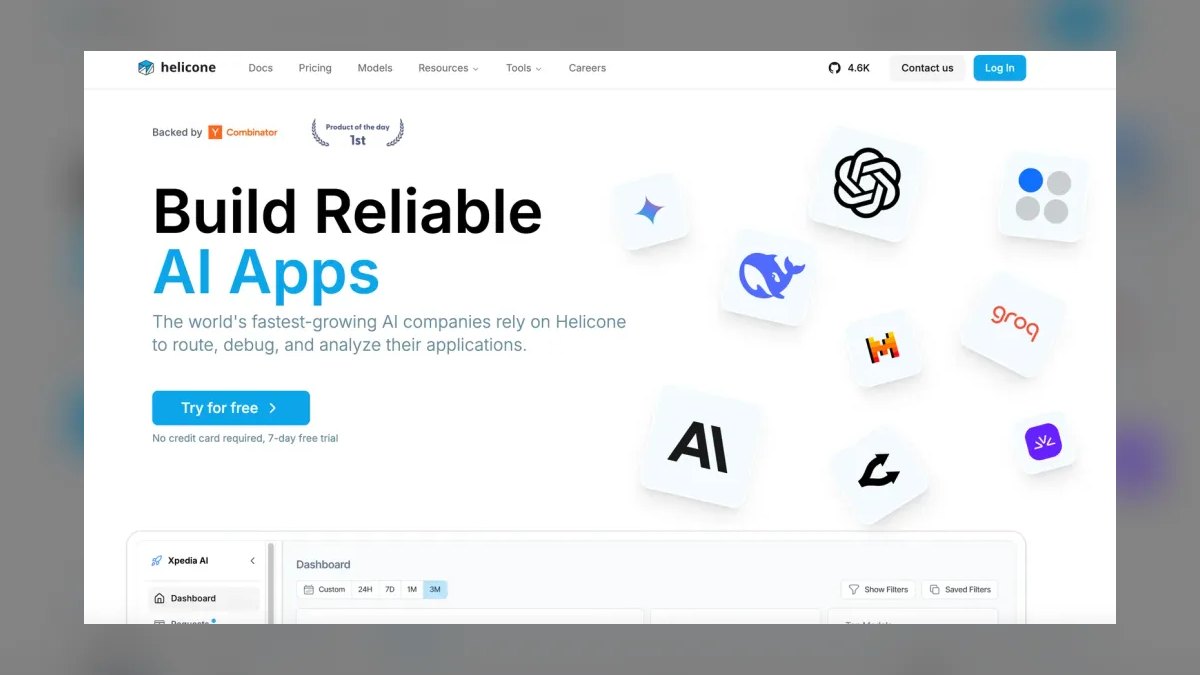
Helicone ranks third for its one-line proxy integration that logs the cost of every OpenAI, Anthropic, or other provider call without requiring a rewritten SDK integration. Backed by Y Combinator's Winter 2023 batch, it is open source and self-hostable, and its built-in response caching directly lowers the inference spend it measures, an unusual pairing of tracking and reduction in the same product.
It's the right fit for teams that want cost visibility live within days, added as a proxy layer rather than a rearchitected tracing setup. It trades away the deeper prompt-versioning and evaluation tooling that Langfuse above offers, focusing narrowly on cost and caching. Compared to Kubecost below, Helicone tracks API-metered spend on hosted models, not the infrastructure cost of GPUs running self-hosted inference.
4Kubecost
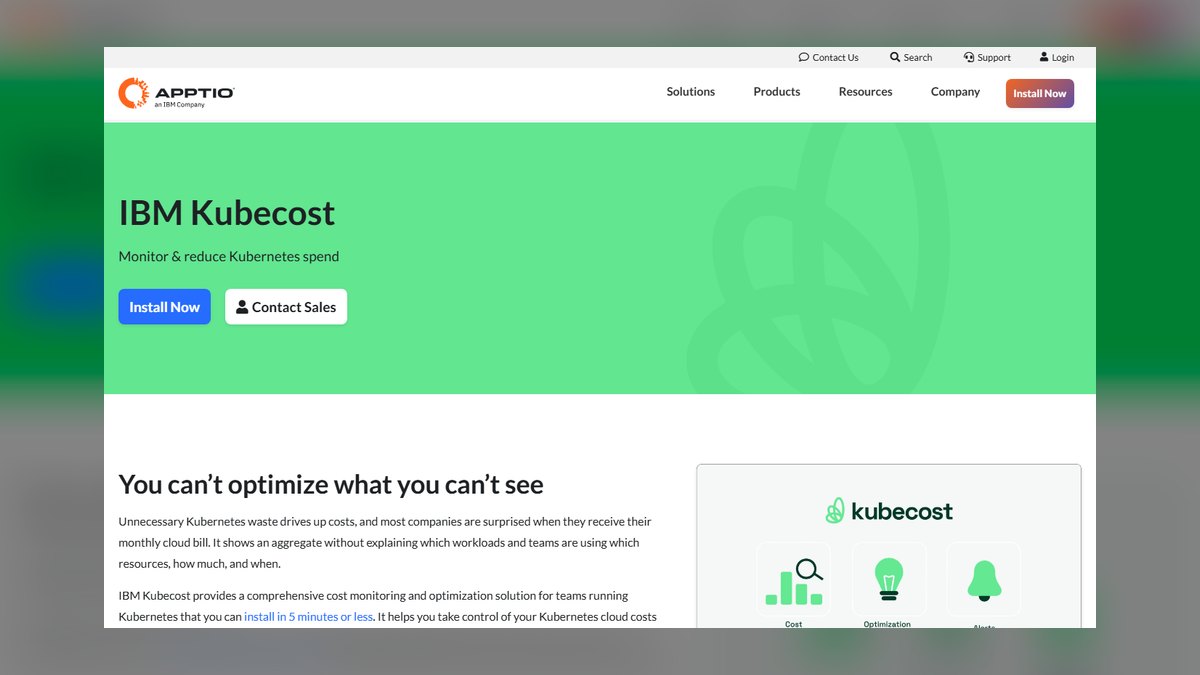
Kubecost ranks fourth because it allocates the cost of GPU nodes inside a Kubernetes cluster down to the namespace or pod running an inference service, visibility that API-billing trackers cannot provide. Founded in 2019 by former Google engineers and acquired by IBM in June 2024, its open-source core reads cloud billing APIs alongside in-cluster resource metrics to project monthly spend by workload.
It serves platform teams self-hosting models on Kubernetes rather than calling a hosted API, where GPU utilization, not token counts, drives the bill. It has no awareness of prompt-level or per-request cost, since it measures infrastructure rather than API calls. Compared to CAST AI below, Kubecost focuses on visibility and reporting rather than automated autoscaling to cut the spend it measures.
5AWS Cost Explorer
AWS Cost Explorer ranks fifth for its native forecast feature, which projects up to twelve months of future spend from historical billing trends with no third-party integration required. For teams running inference on Bedrock or SageMaker endpoints, filtering the forecast by service isolates AI spend directly inside the AWS console, and it has shipped as a built-in AWS billing tool since 2016.
It's the simplest starting point for a team fully committed to AWS and not yet running multi-cloud, but its forecast is a trend extrapolation rather than a workload-aware prediction. Compared to CloudZero above, it lacks per-feature cost allocation and anomaly alerting across other clouds. It costs nothing to view in-console, making it a reasonable first stop before adopting a dedicated FinOps platform.
6LangSmith
LangSmith ranks sixth because it attaches token usage and dollar cost to every run inside a LangChain or LangGraph application, surfaced in per-chain dashboards. Built by LangChain Inc. and launched in 2023, it ties cost directly to the trace of a specific agent step, useful for projecting spend as usage of one workflow scales, and its own pricing is billed per trace ingested.
It's the natural choice for teams already building on the LangChain or LangGraph frameworks, since instrumentation is close to automatic; teams on other stacks get less value from it. It trades away the infrastructure-level GPU visibility that Kubecost above provides. Compared to Langfuse, LangSmith stays tightly coupled to the LangChain ecosystem, while Langfuse remains framework-agnostic and self-hostable.
7CAST AI
CAST AI ranks seventh because it goes beyond reporting GPU spend to actively rightsizing and autoscaling the Kubernetes nodes running inference workloads, cutting the number it would otherwise just forecast. Founded in 2019 with engineering based in Vilnius, Lithuania, it connects to AWS, GCP, and Azure clusters and continuously rebalances workloads onto cheaper instance types or spot capacity without manual intervention.
It fits teams that have already containerized their inference serving layer and want automated cost reduction, not just a dashboard, at the cost of trusting an automated system to move production workloads. Compared to Kubecost above, which is primarily visibility-focused, CAST AI takes the further step of executing changes. It's less useful for teams calling hosted APIs like OpenAI rather than self-hosting models.
8Portkey
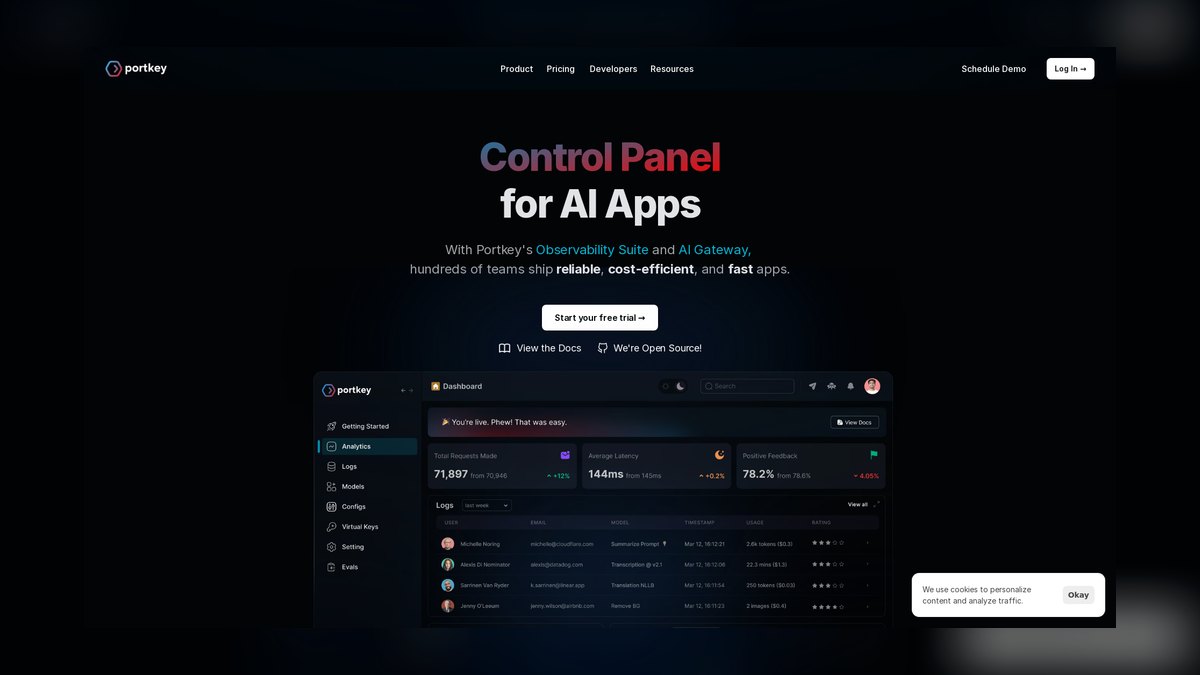
Portkey ranks eighth as an AI gateway that sits in front of multiple LLM providers, giving one place to set budget limits and alerts before spend for a given key or team is exceeded. It routes requests across OpenAI, Anthropic, and other providers, logging cost per request so a team can compare providers head-to-head on price before committing one to production inference.
It suits teams that call several LLM providers and want cost control enforced at the gateway layer rather than reviewed after the fact in a dashboard. It trades away the deep evaluation and prompt-versioning features that Langfuse offers. Compared to Helicone above, Portkey leans more heavily into request routing and provider fallback logic, with cost tracking as one part of that gateway function.
9Datadog Cloud Cost Management
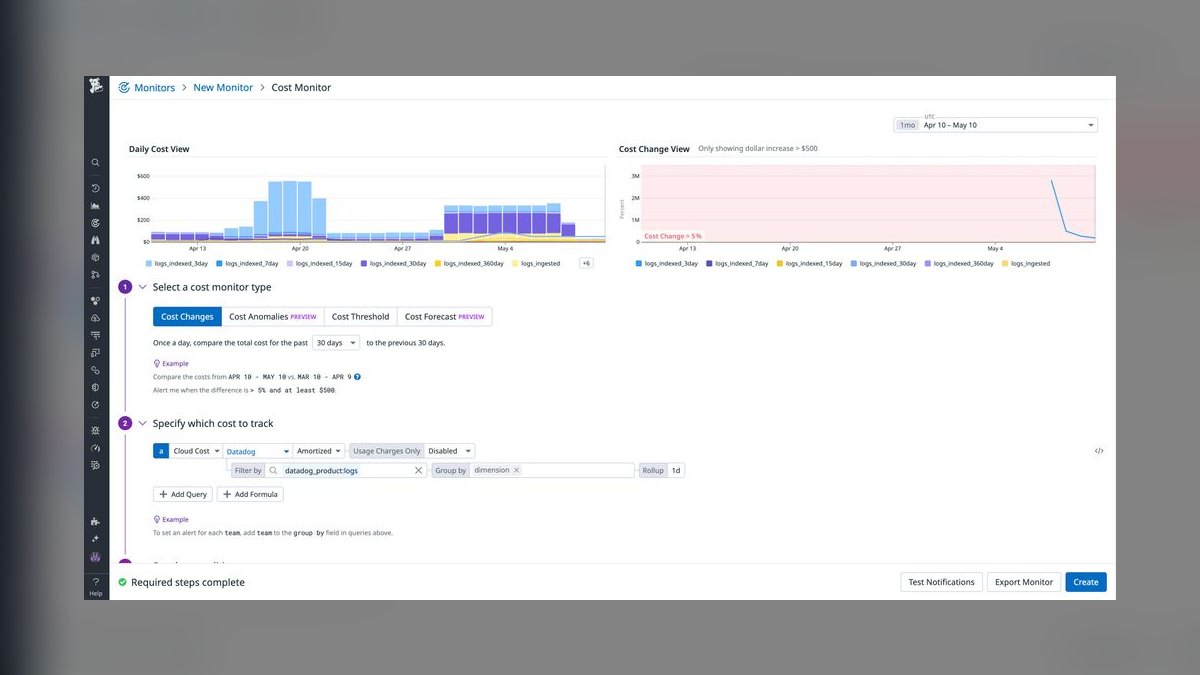
Datadog Cloud Cost Management ranks ninth because it places cloud billing data next to the APM traces and infrastructure metrics teams already monitor in Datadog, so a spike in inference latency and a spike in spend surface on the same screen. Datadog has traded on the Nasdaq as DDOG since its 2019 IPO, and the cost module ingests AWS, Azure, and GCP billing exports directly.
It's built for organizations already paying for Datadog's broader observability suite, where adding cost visibility is incremental rather than a new platform to adopt. It trades away the LLM-specific token-level detail that Langfuse or Helicone capture natively. Compared to CloudZero above, Datadog's cost tooling is one module inside a much larger product rather than a dedicated cost-allocation specialist.
10Vantage

Vantage ranks tenth for its straightforward cloud cost reporting and forecasting across AWS, Azure, GCP, and Kubernetes, built by a team led by former DigitalOcean engineer Ben Schaechter. It generates cost reports with saved filters and anomaly alerts, and its forecast view projects spend trends forward from recent billing history, covering the infrastructure that hosts inference workloads even without LLM-specific instrumentation.
It's a fit for smaller teams wanting readable cost reports without the tagging overhaul CloudZero demands, trading deep per-feature allocation for faster setup. It has no native awareness of token counts or prompts, so it forecasts the infrastructure bill rather than the inference-call bill directly. Compared to AWS Cost Explorer above, Vantage's advantage is aggregating multiple clouds in a single view.
How we ranked these
Each tool was scored on three inputs: token-level cost modeling accuracy against actual provider invoices, breadth of model coverage (GPT, Claude, Gemini, Llama, open-weight endpoints), and how early it flags spend drift — before a monthly bill, not after. Weight favored tools that ingest live usage logs rather than static rate cards, since inference pricing and per-token discounts shift monthly across providers, and teams caught by surprise bills care most about lead time, not dashboards.
Ignored: marketing claims of 'AI cost optimization' with no visible forecasting math, tools that only report spend after it posts to a card, and any vendor unwilling to show a sample variance report against real invoices. Seat count and UI polish were excluded — a forecasting tool's job is arithmetic under uncertainty, not dashboards. Enterprise-only pricing tiers with no published numbers were noted but not weighted, since undisclosed pricing correlates with sales-led lock-in, not accuracy.
What to look for
What matters is whether the tool models your actual traffic pattern — bursty batch jobs price differently than steady chat-agent load — and whether it accounts for provider-side changes like cached-token discounts, batch-API rates, and model deprecations that force a repricing overnight. A tool that only extrapolates last month's flat average will miss both spikes and the savings from routing tasks to cheaper models.
The most common buyer mistake: picking the tool with the prettiest chart instead of testing its forecast against one real invoice cycle first. A forecast that's off by 30% is worse than no forecast, because it gets budgeted against and then blamed on 'usage growth' instead of a bad model. Ask for a backtest on your own historical logs before signing, not a canned demo dataset.
Related questions
Why did inference spend forecasting become its own tool category instead of staying inside general cloud cost tools?
General cloud FinOps tools were built for compute-hours and storage, which price linearly and predictably. Inference spend moves with token counts, context length, caching hit rates, and per-model pricing that providers change monthly — variables generic cost tools never modeled. Once teams started running six-figure monthly LLM bills, the gap between 'cloud cost' and 'token cost' forecasting became too wide to patch with a dashboard filter.
How is predicting inference spend different from predicting a normal SaaS or infrastructure bill?
A SaaS bill is set by seat count you control directly. Inference spend is set by user behavior — prompt length, retry rates, which model a router picks — that shifts hour to hour and is often invisible until the invoice arrives. Forecasting it requires modeling usage patterns, not contract terms, which is why spreadsheet-based budgeting consistently underestimates real AI cost by wide margins.
Do these tools work across multiple model providers, or only one?
The strongest tools are provider-agnostic, ingesting usage logs from OpenAI, Anthropic, Google, and self-hosted open-weight deployments into one model. Single-provider tools exist but they miss the biggest lever most teams actually pull: shifting workloads between providers or models when pricing or rate limits shift. A forecasting tool that only watches one vendor can't warn you about the swap that would save the most money.
What data does a company need before it can even use one of these tools?
At minimum, raw request logs with token counts in and out, timestamps, and which model served each call — most API providers expose this through usage export endpoints. Without granular logs, a tool can only extrapolate from the total invoice, which produces a trend line, not a forecast. Teams still logging only aggregate monthly spend should fix that instrumentation gap before shopping for a forecasting tool.
Can these tools actually reduce spend, or do they just report it?
The better ones do both: forecasting surfaces where spend is heading, and the same usage model can recommend cheaper routing — smaller models for simple tasks, cached prompts for repeated context, batch APIs for non-urgent jobs. A pure reporting tool tells you the bill grew; a forecasting-plus-optimization tool tells you which specific call pattern to change before the next billing cycle closes.
How often should a forecast be updated once a tool is in place?
Daily at minimum for any team spending over roughly $10k a month on inference, since token pricing and traffic can both shift inside a week. Weekly forecasts are fine for smaller, steadier workloads. The failure mode to watch for is a tool that only recalculates monthly — by the time it flags drift, the overspend has already happened and the budget conversation is reactive instead of preventive.
Are open-source alternatives to these paid tools worth considering?
Open-source cost-tracking libraries can log token usage well, but few include the predictive layer — variance modeling, anomaly detection, provider price-change tracking — that separates a forecast from a spreadsheet. They're a reasonable starting point for a team that wants to build in-house and has engineering time to spare, but most teams underestimate how quickly provider pricing complexity outgrows a homegrown script.
FAQ
What exactly counts as 'inference spend' versus other AI costs?
Inference spend is the per-request cost of running a trained model to generate an answer — priced per token, per second of GPU time, or per API call. It excludes training costs, fine-tuning runs, and data storage, which are typically one-time or separately budgeted. For most companies using third-party model APIs, inference is the recurring line item that scales directly with product usage and user growth.
Why did AI inference costs become unpredictable enough to need dedicated forecasting tools?
Providers changed per-token pricing multiple times a year, introduced tiered rates for cached versus fresh tokens, and released cheaper model versions that shift which model a smart router picks mid-month. Add usage growth that scales with product adoption rather than a fixed contract, and a bill that looked flat in January can double by June with no code change — just a busier product and a repriced model.
Do these tools require access to sensitive prompt content to forecast spend?
No — accurate forecasting only needs metadata: token counts, model IDs, timestamps, and response latency, not the actual prompt or completion text. Reputable tools are explicit that they never ingest raw content, which matters for companies with confidentiality obligations around customer data passed through LLM calls. Ask any vendor to confirm this in writing before connecting production logs, since some default integrations over-collect.
How accurate can an inference spend forecast realistically be?
The best tools land within 5-10% of actual spend one billing cycle out, given stable usage patterns and no surprise provider price change. Accuracy degrades fast around product launches, viral spikes, or a provider deprecating a model mid-cycle, since those are step changes rather than trend continuations. Treat any vendor claiming sub-2% accuracy across all conditions with skepticism — ask for their variance range, not just a headline number.
What's the difference between a spend forecast and a spend alert?
An alert fires after a threshold is crossed — you're already over budget when you find out. A forecast projects forward from current usage trends so a team can act before the threshold is hit, like throttling a feature or switching a workload to a cheaper model. The most useful tools combine both: forecasts for planning, alerts as the last-resort backstop when the forecast itself was wrong.
Can small teams or solo developers use these tools, or are they built for enterprises only?
Several vendors offer free or low-cost tiers aimed at smaller usage volumes, since even a $500/month API bill can double unexpectedly. The core value — catching drift before the invoice — matters at any scale, though the ROI math is clearer once monthly spend crosses a few thousand dollars. Below that, a simple manual weekly log review may cover the same need without a paid tool.
How do these tools account for a company running its own open-weight models instead of paying per API call?
Self-hosted inference shifts the cost model from per-token pricing to GPU-hour amortization — the tool needs to ingest cluster utilization, not API invoices. The stronger platforms handle both, letting a team compare the true cost of a self-hosted Llama deployment against an equivalent API call from a hosted provider. Tools built only around API billing data will simply have no visibility into self-hosted spend at all.
What happens when a model provider changes pricing mid-forecast?
A well-built tool re-baselines automatically once it detects a new rate in the usage logs, rather than waiting for a scheduled monthly refresh. Providers usually announce pricing changes days to weeks ahead, so tools that also ingest provider changelogs can flag the impact before the new rate even takes effect. Tools that hardcode a pricing table at setup and never update it will silently drift out of accuracy.
Is there a standard benchmark for comparing accuracy across these tools?
Not yet an industry-wide one, though the FinOps Foundation has extended its cost-allocation framework to cover AI/ML workloads, giving vendors a shared vocabulary if not a certified test suite. Until a neutral benchmark exists, the only reliable comparison is a side-by-side backtest: run two tools against the same 90 days of your own logs and compare each one's error against the actual invoice.
Will these tools still be relevant if AI inference costs keep falling overall?
Falling per-token prices don't eliminate the forecasting need — usage typically grows faster than price drops, a pattern seen consistently as compute got cheaper across cloud history. Falling prices also increase the number of pricing tiers and model options to track, which makes manual forecasting harder, not easier. The tools' job shifts from 'stop the bleeding' to 'route to the cheapest model automatically,' but the category stays relevant.
Sources
- https://www.finops.org/
- https://aws.amazon.com/blogs/aws-cost-management/
- https://cloud.google.com/blog/topics/cost-management
- https://www.gartner.com/en/information-technology
- https://www.mckinsey.com/capabilities/mckinsey-digital/our-insights
- https://openai.com/api/pricing/
- https://www.cncf.io/
Related on PULSE
This page will be disappearing soon. Save it to your device for $1 — or read it free while it is here.
@Kory-White- · if Venmo asks, the last 4 of my number are 2012
This page is gone.
This one is off the shelf now. $1 keeps it on your phone for good — the whole page, pictures and diagrams included.
 pulse-recentWhat is continuous batching and how much more throughput does it give an LLM server in 2027?
 pulse-recentThe 10 Best AI Tools for GPU Cluster Orchestration in 2027
 pulse-recentThe 10 Best AI Tools for API Rate Limiting and Throttling in 2027
 pulse-recentHow much can committed-use or reserved GPU cloud contracts save versus on-demand pricing for AI training in 2027?
 pulse-recentThe 10 Best AI Infra Budgeting Tools for Small Teams in 2027
 pulse-recentThe 10 Best Idle GPU Detection Tools for AI Infrastructure in 2027
 pulse-recentThe 10 Best AI Infra Budget Templates for Enterprises in 2027
 pulse-recentThe 10 Best Cost-Effective AI Infrastructure Options for Startups in 2027
 pulse-recentThe 10 Best AI Tools for Reserved Capacity Planning in 2027
 pulse-recentThe 10 Best AI Tools for Hyperparameter Tuning in 2027