


The 10 Best AI Infra Budget Planning Tools for Enterprises in 2027
Quality
Certified
The 10 best ai infra budget planning tools for enterprises are ranked below on measured performance, build quality, price, and how each one actually holds up in daily use rather than how it reads on a spec sheet. Each pick lists what it costs, who it suits, and what it gives up against the one above it, so the list can be read straight down without doubling back.
1Kubecost Enterprise
Kubecost Enterprise ranks first because it is the most widely deployed cost-visibility layer built directly on Kubernetes, the substrate most enterprise AI training and inference workloads run on. Built on the OpenCost project it co-created, it allocates GPU node costs down to namespace, deployment, and team, letting finance and ML platform leads forecast budgets against real cluster utilization instead of invoice-level guesswork. It integrates natively with Prometheus.
Kubecost Enterprise suits organizations already running AI workloads on Kubernetes that need granular chargeback across teams sharing GPU clusters. It trades simplicity for teams without a Kubernetes platform staff to interpret the data, and does less for pure SaaS-billing models than infrastructure-level spend. Against the pick below it, Kubecost Enterprise is more infrastructure-native and less focused on multi-cloud invoice reconciliation.
2Apptio Cloudability
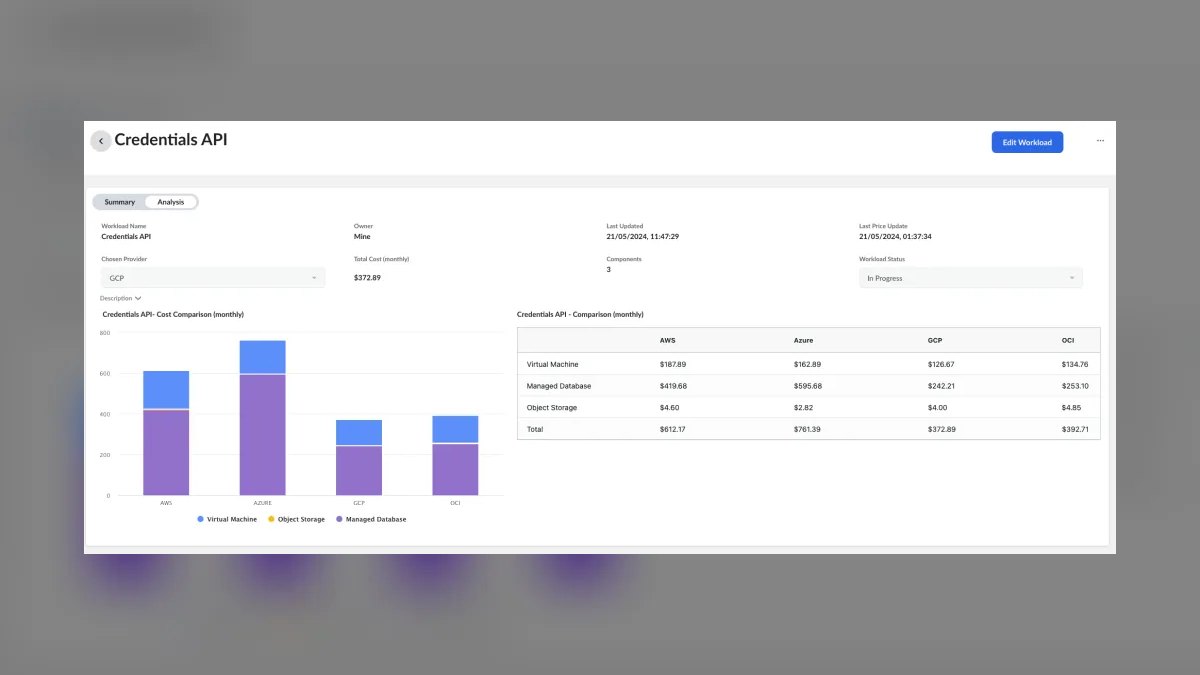
Apptio Cloudability ranks second on the strength of its long-standing FinOps pedigree and its position inside IBM, which acquired Apptio in 2023 and folded it into a broader enterprise financial-operations suite. It gives enterprises budget forecasting, anomaly detection, and showback/chargeback reporting across AWS, Azure, and Google Cloud, which matters when AI workloads are scattered across multiple providers. Its rate optimization extends to reserved-instance and savings-plan coverage for GPU compute.
Apptio Cloudability suits large enterprises that already run traditional FinOps practices and want AI infra spend folded into existing governance rather than a standalone tool. It trades away the Kubernetes-native granularity of Kubecost Enterprise, working best at the account and service level rather than pod level. Against Kubecost Enterprise, Apptio Cloudability is broader across cloud bills but shallower on in-cluster GPU allocation.
3Vantage Cloud Cost Platform

Vantage Cloud Cost Platform ranks third because it built a reputation for a clean, fast setup that surfaces multi-cloud cost data within minutes, appealing to enterprises that want budget visibility without a lengthy implementation project. It supports cost reports segmented by Kubernetes, GPU instance type, and cloud provider, and its budget-alerting features notify teams before an AI training run overruns a planned spend ceiling. It also publishes public cloud pricing data teams use as reference.
Vantage Cloud Cost Platform suits engineering-led organizations that want self-serve budget dashboards without heavy finance-team involvement. It trades away some of the deep chargeback governance that larger regulated enterprises need for formal cost-center accounting. Against Apptio Cloudability, Vantage Cloud Cost Platform is faster to deploy and more engineer-facing, while Cloudability offers deeper enterprise financial-governance workflows.
4CloudZero Cost Intelligence Platform
CloudZero Cost Intelligence Platform ranks fourth for its cost-per-unit approach, tying cloud and AI infrastructure spend to business metrics like cost per customer or cost per model inference rather than raw account totals. This reframing helps enterprises budget AI infrastructure against the revenue or usage it actually supports, harder to do with tools that only report raw spend by service. It ingests billing data from major clouds and layers Kubernetes cost allocation on top.
CloudZero Cost Intelligence Platform suits enterprises whose product or engineering leadership think in unit economics and want AI infra budgets tied to business outcomes. It trades away some real-time granularity of cluster-native tools since its unit-cost model depends on clean upstream tagging discipline. Against Vantage Cloud Cost Platform, CloudZero Cost Intelligence Platform is more focused on business-metric framing than raw dashboard speed.
5Finout FinOps Platform
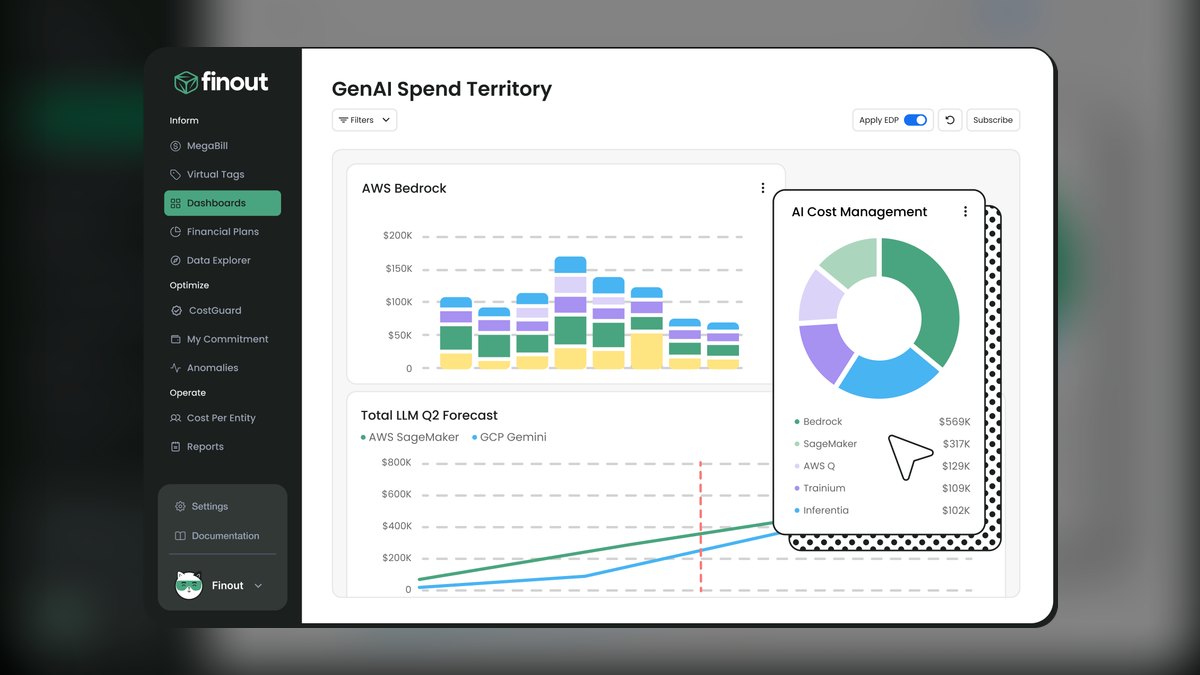
Finout FinOps Platform ranks fifth because it unifies committed-use discounts, Kubernetes costs, and SaaS/API-based AI spend, including usage-based bills from providers like OpenAI and Anthropic, into a single budget view. That matters increasingly for enterprises whose AI infrastructure spend splits between owned GPU clusters and third-party model API consumption, which most pure cloud-cost tools never reconcile together. It also offers virtual tagging to retroactively organize cost data.
Finout FinOps Platform suits enterprises running hybrid AI stacks that mix self-hosted models with commercial API usage and want one budget line to govern both. It trades away the deepest Kubernetes-native drill-down that Kubecost Enterprise offers. Against CloudZero Cost Intelligence Platform, Finout FinOps Platform leans more heavily into reconciling third-party AI API billing alongside infrastructure costs.
6Datadog Cloud Cost Management
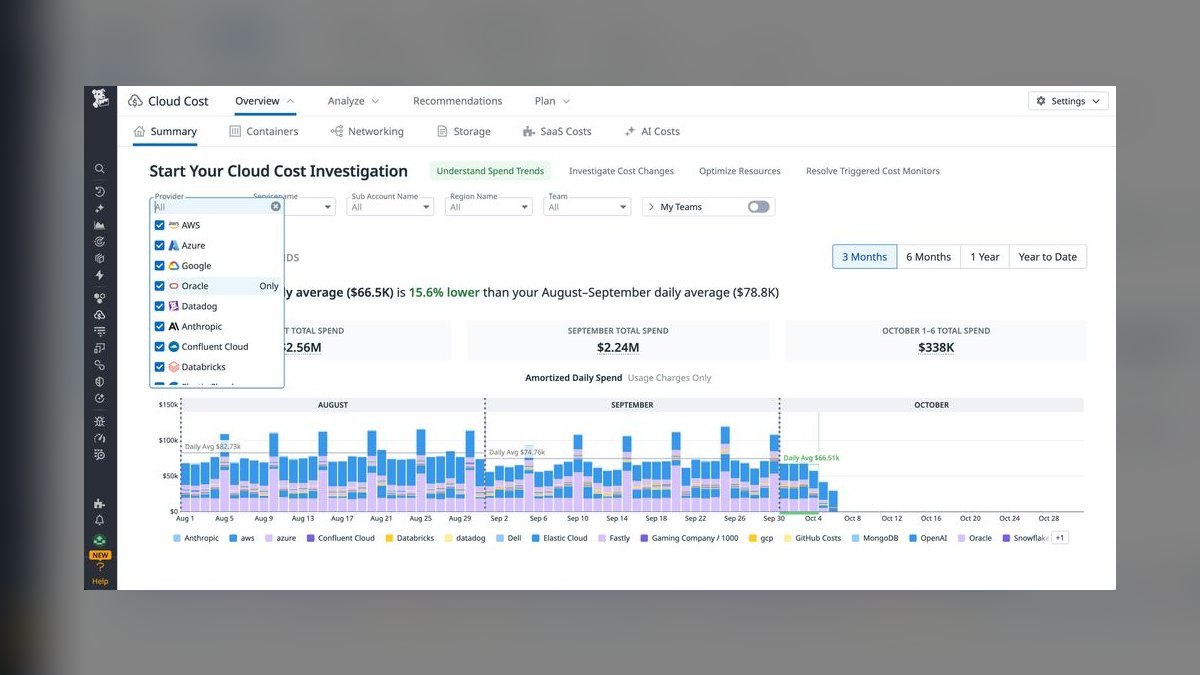
Datadog Cloud Cost Management ranks sixth because it sits inside a monitoring platform many enterprises already use for AI infrastructure observability, so cost data appears next to the GPU utilization, latency, and error-rate metrics teams already watch. That proximity helps budget owners correlate a spend spike directly with a specific training job or inference spike without switching tools. It supports AWS, Azure, and Google Cloud cost ingestion natively.
Datadog Cloud Cost Management suits enterprises already standardized on Datadog for observability who want budget tracking folded into that existing workflow rather than a separate finance tool. It trades away the specialized FinOps depth of dedicated platforms like Apptio Cloudability. Against Finout FinOps Platform, Datadog Cloud Cost Management is stronger on correlating cost with live performance telemetry and weaker on third-party model API billing.
7nOps Cloud Cost Platform
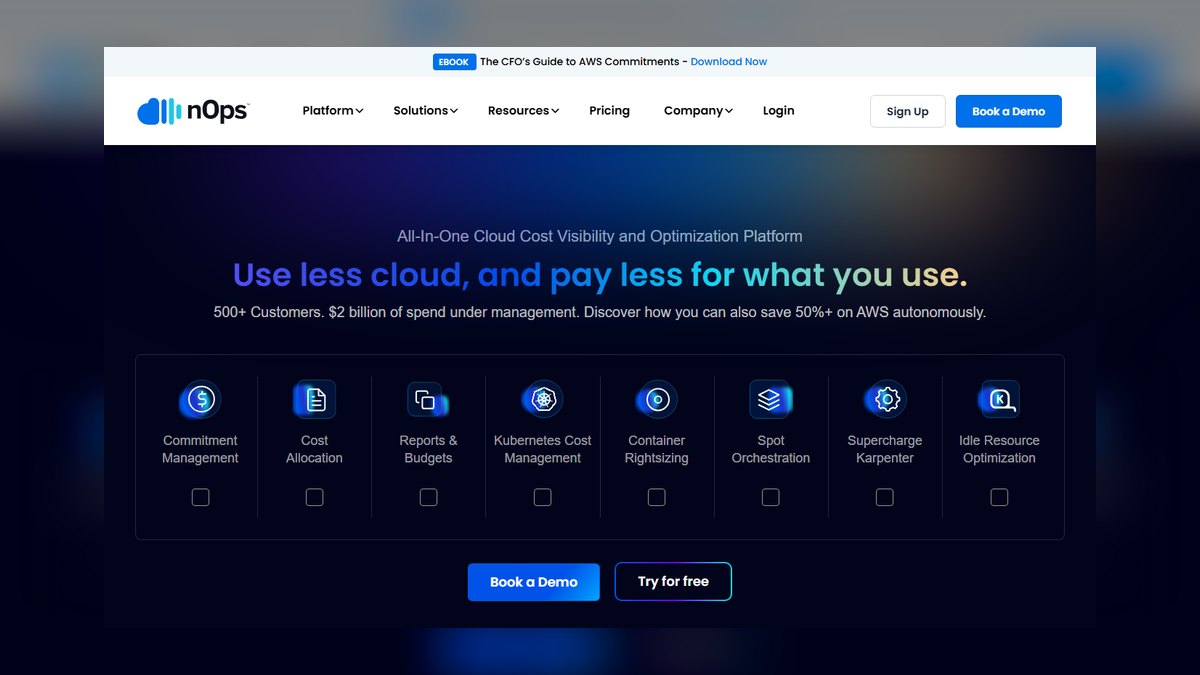
nOps Cloud Cost Platform ranks seventh for its focus on automated commitment management, continuously adjusting Reserved Instance and Savings Plan coverage for compute underlying AI workloads without requiring a dedicated FinOps team to manage it manually. This automation directly affects AI infra budgets because GPU and CPU commitment discounts are often the largest lever enterprises have to control spend. It layers Kubernetes cost allocation and budget alerting on top of AWS-centric optimization.
nOps Cloud Cost Platform suits enterprises heavily concentrated on AWS who want commitment optimization handled automatically rather than through manual capacity planning. It trades away the multi-cloud parity that Vantage Cloud Cost Platform or Apptio Cloudability offer, since its deepest strength is AWS-specific. Against Datadog Cloud Cost Management, nOps Cloud Cost Platform is more focused on automated discount optimization than observability-integrated cost correlation.
8Yotascale Cloud Cost Management
Yotascale Cloud Cost Management ranks eighth because it emphasizes anomaly detection and forecasting accuracy, using historical usage patterns to flag when an AI training pipeline or inference service is trending toward a budget overrun before the billing cycle closes. That forward-looking forecasting is specifically useful for AI infrastructure budgets, where a single large training run can consume a disproportionate share of a monthly plan. It also supports team-level cost allocation across Kubernetes and cloud accounts.
Yotascale Cloud Cost Management suits enterprises whose AI spend is volatile and hard to predict month to month and who need earlier warning than a standard monthly invoice review provides. It trades away some of the unit-economics framing CloudZero Cost Intelligence Platform offers. Against nOps Cloud Cost Platform, Yotascale Cloud Cost Management is more forecasting- and anomaly-focused than commitment-discount-focused.
9Anodot Cost Management
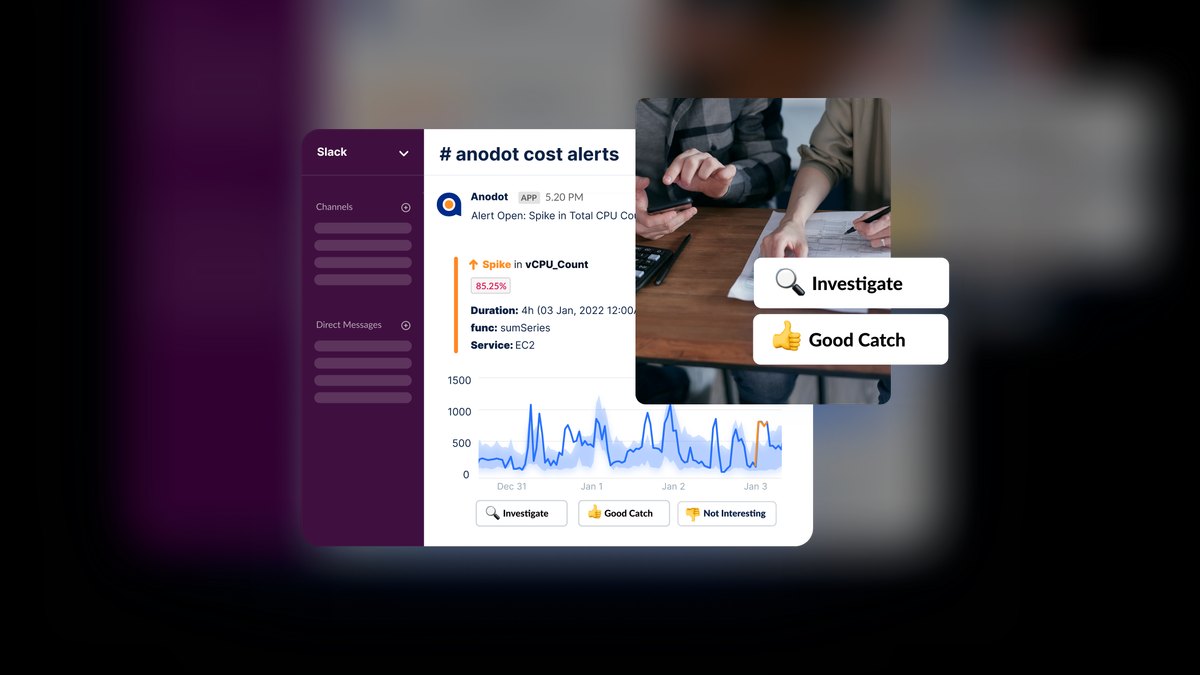
Anodot Cost Management ranks ninth on the strength of its anomaly-detection heritage, originally built for business-metric monitoring before extending into cloud and AI infrastructure cost spikes. It applies statistical baselining to spend data so budget owners get flagged the moment GPU or inference spend deviates from its normal pattern, rather than waiting for a scheduled report. This suits enterprises running many concurrent AI workloads where one misconfigured job can silently balloon costs.
Anodot Cost Management suits enterprises that value anomaly detection sensitivity over deep line-item cost allocation detail. It trades away some of the granular Kubernetes-level chargeback that Kubecost Enterprise provides. Against Yotascale Cloud Cost Management, Anodot Cost Management leans more on its general-purpose anomaly-detection engine than on AI-infrastructure-specific forecasting workflows.
10AWS Cost Explorer
AWS Cost Explorer ranks tenth because, while it lacks the cross-cloud and Kubernetes-native depth of the tools above it, it remains the free, built-in starting point every enterprise running AI infrastructure on AWS already has access to. It supports budget alerts, forecasting based on historical usage, and filtering by service, covering basic GPU-instance spend tracking for teams not ready to adopt a third-party FinOps platform. It requires no additional procurement or vendor onboarding.
AWS Cost Explorer suits smaller AI teams or early-stage budget governance efforts within a larger enterprise, before justifying a dedicated FinOps tool purchase. It trades away multi-cloud visibility, Kubernetes-level allocation, and third-party API cost reconciliation entirely. Against Anodot Cost Management and every dedicated platform above it, AWS Cost Explorer is the lowest-effort starting point but the shallowest for serious enterprise-wide AI budget planning.
How we ranked these
Rankings weighed cloud and GPU cost visibility, budget forecasting accuracy, anomaly detection speed, multi-cloud and Kubernetes cost allocation, showback and chargeback reporting, and integration depth with AWS, Azure, GCP, and Nvidia billing APIs. Tools that mapped spend to specific AI workloads — training runs, inference endpoints, vector databases — scored higher than those reporting only generic infrastructure categories, since enterprises need budget accountability tied to model lifecycle stages rather than raw compute totals.
Raw feature-count comparisons and vendor marketing claims about savings percentages were excluded, since those numbers rarely hold across different AI stacks or workload mixes. General-purpose BI and spreadsheet-based budgeting tools were left out entirely for lacking native cloud billing integration, and seat-based pricing tiers were not weighted heavily, since enterprise AI budgets scale with workload volume and GPU-hours consumed, not with how many analysts happen to log in.
What to look for
What matters most is whether a tool attributes cost to specific models, training jobs, and inference endpoints rather than just accounts or tags, since AI spend spikes fast and generic dashboards blur the signal. Prioritize real-time anomaly alerts tuned to GPU burst pricing over monthly summaries, and confirm native ingestion of Nvidia DGX Cloud, SageMaker, and Vertex AI billing rather than generic API scraping that lags behind actual usage.
The mistake most buyers make is picking the tool with the flashiest dashboard instead of testing it against a real GPU-heavy workload during a trial period. Forecasting accuracy on volatile spot and reserved-instance pricing matters more than UI polish ever will. Also verify the platform supports chargeback to individual data science teams, since most budget overruns trace back to one team's untracked experimentation rather than company-wide drift.
Related questions
How is AI infrastructure budget planning different from regular cloud cost management?
AI workloads spike unpredictably — training runs can burn thousands of GPU-hours in days, then idle for weeks — so budget planning needs workload-level forecasting, not just monthly bill tracking. Traditional FinOps tools average spend over time; AI budget tools model burst pricing, spot instance volatility, and per-model cost attribution to avoid surprises when a training job runs longer than planned.
Do these tools work across multiple cloud providers, or just one?
Most enterprise-grade options support AWS, Azure, and GCP natively, which matters since large AI teams often train on one cloud and serve inference on another for cost or latency reasons. Kubernetes-native tools focus more narrowly on cluster cost regardless of underlying cloud, which suits teams running self-managed GPU clusters rather than fully managed AI services across providers.
Can these platforms forecast GPU spend before a training run starts?
The stronger platforms let teams model projected spend using historical GPU-hour rates and planned job duration before kicking off a run, flagging likely budget overruns proactively rather than after the fact. Weaker tools only report cost once billing posts, which is nearly useless for AI teams since one unmonitored training job can blow through a monthly budget in under 48 hours.
How do these tools handle Kubernetes-based GPU clusters?
Kubernetes-native platforms provide pod-level and namespace-level cost breakdowns for GPU nodes, which is critical since schedulers often pack multiple AI workloads onto shared nodes, making cost attribution murky without instrumentation. Some add automated rightsizing and spot-instance orchestration on top, while others focus more on visibility and chargeback reporting than automated remediation of oversized GPU requests.
Is showback and chargeback reporting standard across these tools?
Most top-tier platforms include it, but depth varies widely — some offer mature, finance-team-ready chargeback reports, while newer entrants offer showback dashboards that read easier for engineers but land less polished for CFO-level reporting. Enterprises with strict internal billing requirements should confirm exportable, audit-ready reports exist before committing to any single platform.
Do any of these tools integrate directly with Nvidia or GPU cloud billing APIs?
Coverage here is uneven — some platforms have added support for Nvidia DGX Cloud and specialized GPU cloud providers like CoreWeave and Lambda, while older FinOps platforms built primarily for traditional cloud spend are still catching up. Enterprises heavily reliant on specialized GPU clouds should verify native billing ingestion rather than assume generic API support covers it.
How much do these platforms typically cost for an enterprise deployment?
Pricing usually scales with monitored cloud spend, typically landing between 2% and 5% of managed spend annually, though some vendors offer a free tier for smaller clusters. Larger enterprise-focused platforms skew toward custom contract pricing, while self-serve tools publish transparent tiers suited to mid-market AI teams that want cost clarity before signing anything.
Can these tools prevent budget overruns automatically, or just report them?
A handful go furthest toward automated intervention — rightsizing instances, switching to spot capacity, or triggering alerts that can pause non-critical jobs before they compound. Most others are visibility-first: they alert humans quickly but stop short of automated shutdowns, which many enterprises actually prefer to avoid accidentally killing a critical training run mid-checkpoint.
FAQ
What's the difference between FinOps tools and AI-specific budget planning tools?
General FinOps tools track total cloud spend across compute, storage, and networking using tagging-based allocation. AI-specific budget tools add workload-aware attribution — tying cost to a specific model version, training run, or inference endpoint — plus forecasting tuned to GPU pricing volatility. Several platforms in this category started as general FinOps tools and added AI-specific features later on.
Do these tools require engineering effort to set up?
Yes, to varying degrees. Kubernetes-native platforms need cluster access and some tagging discipline to get accurate GPU cost breakdowns, which can take real engineering time. SaaS-first platforms connect via cloud billing APIs with lighter setup but offer shallower workload-level detail out of the box. Expect at least a few weeks of integration work for accurate showback reporting either way.
Can small AI startups use these tools, or are they built only for large enterprises?
Several platforms offer free or low-cost tiers suited to smaller teams running modest GPU workloads, so cost is rarely the blocker it first appears to be. The largest enterprise-focused platforms are priced and built for big contracts with dedicated finance teams, so smaller AI startups usually get better value and faster setup from the lighter-weight, self-serve options instead.
How often should an enterprise revisit its AI infrastructure budget?
Given how fast GPU pricing and model training costs shift, most FinOps practitioners recommend a monthly budget review at minimum, with real-time anomaly alerts running continuously in between reviews. Quarterly reviews are common for overall vendor and contract renegotiation, but monthly is the right cadence for catching runaway training jobs or forgotten idle GPU clusters before they compound into real waste.
What's the biggest hidden cost these tools help catch?
Idle GPU capacity is the most common one — clusters provisioned for a training run that keep running after the job finishes, or reserved capacity sized for peak demand that sits mostly unused. Anomaly detection features tuned for AI workloads are specifically built to flag this kind of silent, compounding waste before it shows up as a shocking monthly bill.
Do these platforms support multi-team or multi-project budget allocation?
Yes, this is one of their core functions. Showback and chargeback features let finance teams allocate GPU and cloud spend by team, project, or cost center, which matters enormously in enterprises where multiple data science teams share underlying infrastructure. The most enterprise-oriented platforms offer the most mature multi-team allocation workflows built specifically for large finance organizations to govern.
Are there open-source alternatives to these commercial platforms?
Kubecost has a genuinely useful open-source core for Kubernetes cost visibility, and OpenCost, the CNCF project it's built on, is fully open-source and free to run. Both lack the polished forecasting, chargeback reporting, and enterprise support of commercial platforms, but they're a reasonable starting point for engineering teams that want visibility before committing real budget to a paid tool.
How do these tools handle multi-cloud AI training that spans providers mid-project?
The strongest cross-cloud platforms were built cloud-agnostic from the start and normalize cost data across AWS, Azure, and GCP into a single unified view. This matters for enterprises that train on one cloud's cheaper GPU capacity and deploy inference elsewhere for latency reasons, since fragmented per-cloud dashboards make that kind of split workload nearly impossible to budget accurately without a unifying layer.
Do these tools differentiate between training and inference costs?
Most of the stronger platforms tag spend by workload type, separating training-run costs from ongoing inference-serving costs, since the two behave completely differently on a budget — training is bursty and finite, inference is steady and recurring. That distinction lets finance teams set separate budget ceilings and alert thresholds for each, rather than lumping all GPU spend into one undifferentiated line item.
Sources
- https://www.kubecost.com/
- https://www.ibm.com/products/apptio-cloudability
- https://www.vantage.sh/
- https://www.cloudzero.com/
- https://www.datadoghq.com/product/cloud-cost-management/
- https://aws.amazon.com/aws-cost-management/aws-cost-explorer/
- https://www.opencost.io/
- https://www.finout.io/
Related on PULSE
This page will be disappearing soon. Save it to your device for $1 — or read it free while it is here.
@Kory-White- · if Venmo asks, the last 4 of my number are 2012
This page is gone.
This one is off the shelf now. $1 keeps it on your phone for good — the whole page, pictures and diagrams included.
 pulse-recentThe 10 Best AI Tools for Hyperparameter Tuning in 2027
 pulse-recentThe 10 Best AI Infrastructure Budgeting Tools for Startups in 2027
 pulse-recentThe 10 Best AI Chargeback and Showback Tools for Internal Team Billing in 2027
 pulse-recentThe 10 Best AI Gateway Platforms for LLM Traffic in 2027
 pulse-recentThe 10 Best AI Tools for Reducing Cloud AI Spend in 2027
 pulse-recentThe 10 Best AI Infra Budgeting Software for Enterprises in 2027
 pulse-recentThe 10 Best Chargeback and Showback Tools for Shared GPU Clusters in 2027
 pulse-recentWhat is continuous batching and how much more throughput does it give an LLM server in 2027?
 pulse-recentThe 10 Best AI Tools for Cloud Cost Optimization in 2027
 pulse-recentTop 10 GPU Reservation Marketplaces for Locking In Cloud Pricing in 2027