
How to cycle a saltwater aquarium without using live rock in 2027?
 Curated byKory White · Fractional CRO · Maryland
 PULSEKNOWLEDGE LIBRARY
Quality
Certified

Skip live rock entirely: fill the tank with dry rock and RO/DI saltwater, dose pure ammonium chloride to 2 ppm, add a refrigerated bottled nitrifying culture, hold 78–80°F with strong flow, and test daily. When 2 ppm of ammonia converts to zero ammonia and zero nitrite within 24 hours, the cycle is finished.
The scenario that forces the question
Picture a 40-gallon breeder sitting empty on a stand in a spare bedroom. The plan was forty pounds of Fiji live rock, but the local shop wants five dollars a pound for rock that has been sitting in a vat under a leaking skimmer for three weeks, and the online vendors ship "live" rock that arrives half-dead, off-gassing ammonia from every dying sponge on its surface. The buyer does the math — two hundred dollars for rock that will need its own curing period, might carry Aiptasia, vermetid snails, or a mantis shrimp, and will still take a month to stabilize — and decides the whole premise is backwards.
That is the honest starting point for most people who ask how to cycle a saltwater aquarium without live rock. It is rarely ideology. It is a budget line, a pest-risk calculation, and a scheduling problem all landing at once. Dry rock costs roughly two to three dollars per pound for quarried base rock and four to six for the manufactured, high-porosity synthetic varieties. It ships sterile, it stacks predictably because you can drill and epoxy it without worrying about killing anything, and it introduces exactly zero hitchhikers. What it does not do is bring bacteria. That absence is the entire problem the cycle has to solve.
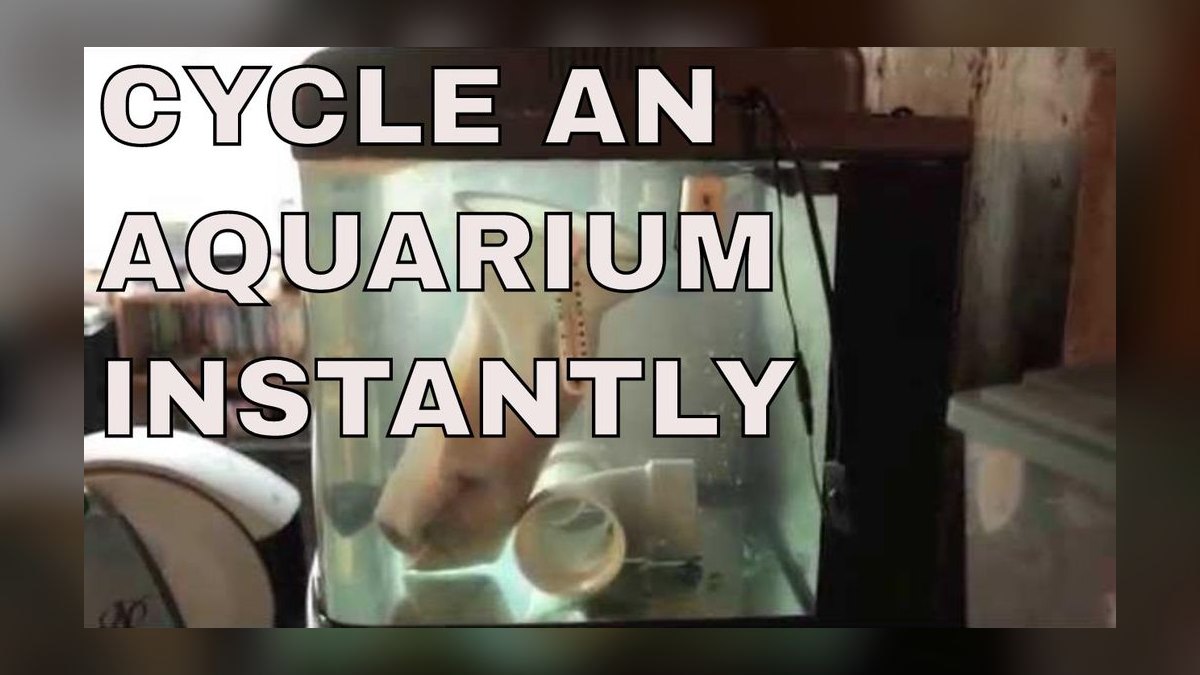
There is a second scenario that shows up just as often, and it has nothing to do with cost. Someone needs a quarantine or hospital tank standing by, and live rock is actively disqualifying there: porous carbonate binds copper unpredictably, so a copper-based treatment in a rock-filled QT will read one level today and a lethally different one tomorrow as the rock leaches back. Quarantine systems get cycled the same live-rock-free way as a matter of protocol, using PVC elbows for hiding places and a sponge or ceramic bio-media block as the entire bacterial surface. Reef keepers who run a display with rock still cycle every side system this way.
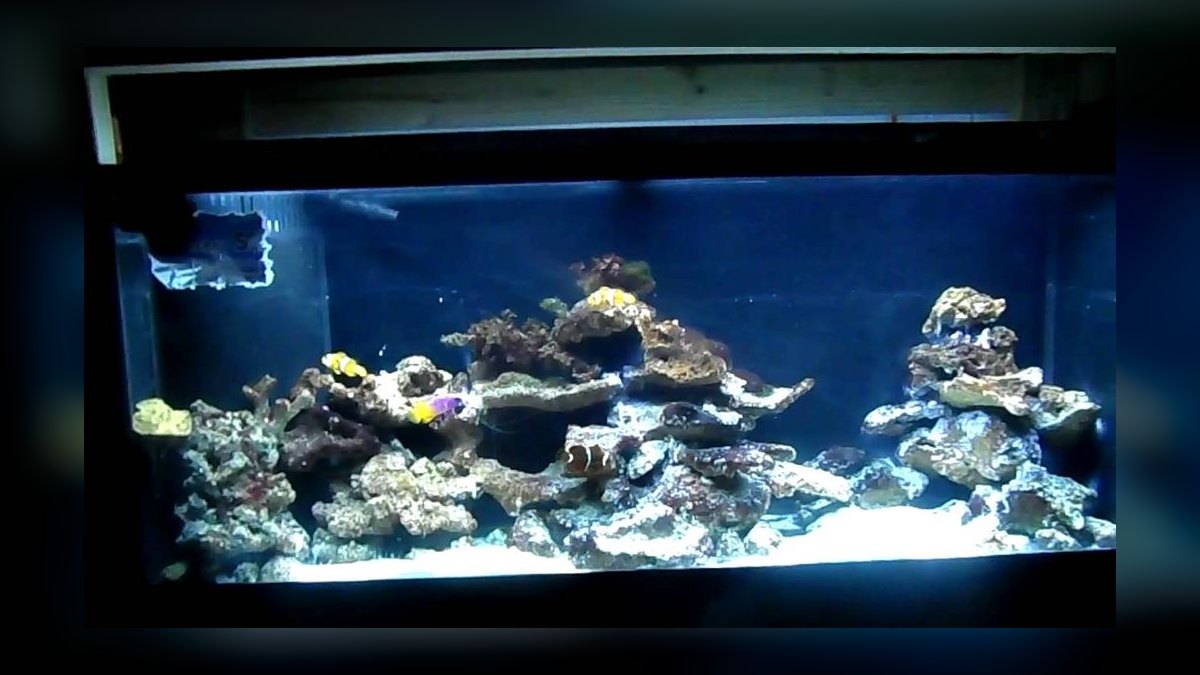
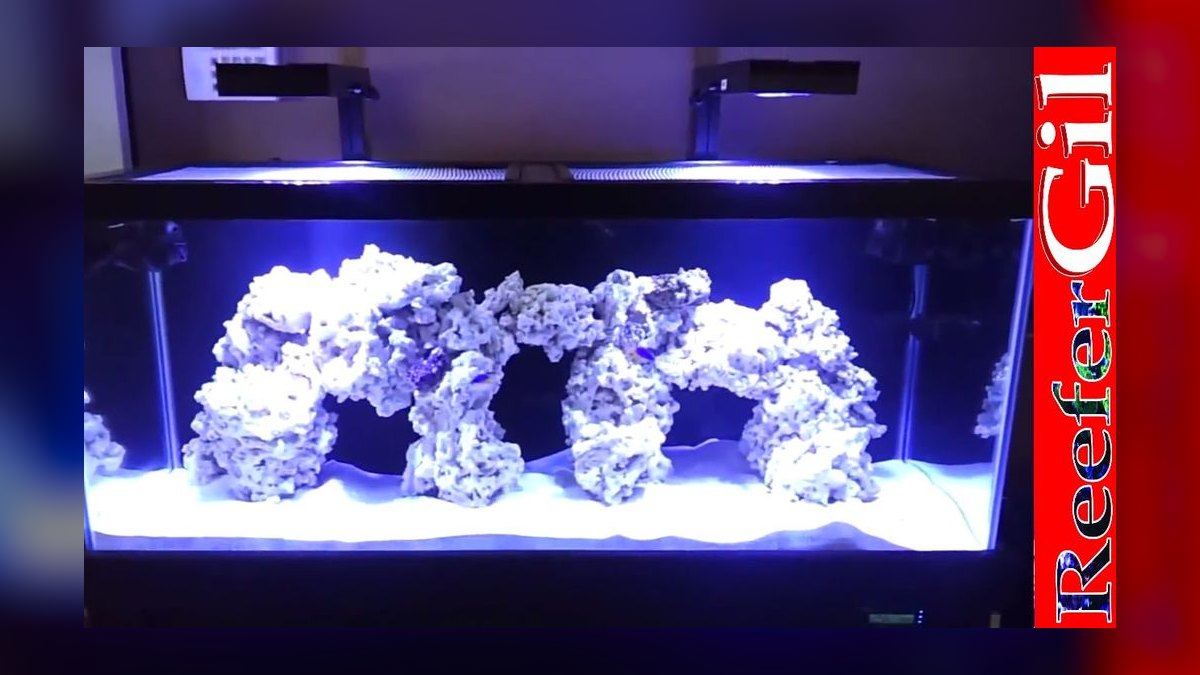
A third case: the aquascaper who wants a specific look. Live rock arrives in whatever shapes the ocean made. Dry rock can be cut, drilled, rodded with fiberglass, and glued into arches and overhangs that would collapse if you tried to build them from wet, heavy, unstable live pieces. People building open-water negative-space scapes almost always start dry, cycle chemically, and let coralline algae spread across the structure over the following year. The finished tank looks identical to a live rock build after twelve to eighteen months. The difference is entirely in how the first month goes.
How the mechanism actually works
Nitrification is two sequential bacterial oxidations, and understanding that they are sequential explains nearly every timing question. Ammonia-oxidizing organisms — classically *Nitrosomonas*, though in marine systems ammonia-oxidizing archaea often do a larger share of the work — convert ammonia and ammonium into nitrite. A second, slower-growing group, dominated in aquaria by *Nitrospira* rather than the *Nitrobacter* named on older product labels, converts nitrite into nitrate. Some *Nitrospira* strains perform both steps in a single cell, a metabolism called comammox, which is part of why modern bottled products behave more robustly than the ones sold two decades ago.
Live rock skips this whole construction phase because both populations already live in its pore network. Dry rock gives you the pore network with nobody home. So the live-rock-free cycle is really a colonization race: you supply the food, supply the seed organisms, supply oxygen and stable pH, and wait for cell division to fill the available surface. Nitrifiers are slow dividers — generation times measured in many hours to a day or more under aquarium conditions, versus twenty minutes for a heterotroph. You cannot rush biology that divides on that clock. You can only avoid slowing it down.
Ammonia is the food, and it is also the trigger. Population size in a mature tank is set by the ammonia supply, not by tank volume, which is why a tank cycled at 2 ppm supports a modest fish load and a tank cycled at 0.5 ppm supports almost nothing. Dose too low and you build a colony too small for your stocking plan; dose too high — above roughly 5 ppm — and free ammonia plus the accumulating nitrite start inhibiting the very organisms you are cultivating. The 2 ppm target most guides converge on is a compromise between building enough capacity and not poisoning the workforce.
pH matters more than beginners expect. Nitrifiers use carbonate alkalinity as their inorganic carbon source, and they consume alkalinity as they work — roughly seven grams of alkalinity as calcium carbonate per gram of ammonia-nitrogen oxidized. In a small volume with a heavy ammonia dose and no calcium reactor or dosing pump running yet, pH can slide from 8.3 down into the 7.5 range over a couple of weeks, at which point nitrification rate falls off a cliff. Keeping pH above 7.8 during the cycle is not aesthetic; it is throughput.
The dashed line most people miss is the proof test at the end. A single pass to zero tells you bacteria exist. Re-dosing the full 2 ppm and watching it disappear inside a day tells you the colony is large enough to handle a real bioload, which is a completely different claim. Skipping that step is the most common reason a "cycled" tank produces an ammonia reading three days after the first fish goes in.
Real numbers, ranges, and benchmarks
Ammonia dosing runs on a simple arithmetic. Most hobby ammonium chloride solutions are formulated so that a small, labelled volume per ten gallons produces roughly 1 ppm total ammonia-nitrogen — always follow the specific bottle, because concentrations differ between brands by a factor of several. Dose to 2 ppm, not 4, unless you are deliberately building capacity for a heavy predator system. Measure into the tank, mix, wait an hour, then test to confirm you actually landed where you intended rather than trusting the math.
Temperature drives everything. Nitrification rate roughly doubles for each 10°C rise across the working range, which in practice means a tank held at 70°F cycles at something close to half the speed of one held at 79°F. The practical target is 78–80°F during the cycle, dropped back to your normal display temperature afterward. Going above 84°F buys little and starts costing dissolved oxygen, which nitrifiers need in quantity — the ammonia-to-nitrate conversion consumes roughly 4.3 mg of oxygen per mg of ammonia-nitrogen. A cycling tank with a bare, unaerated surface can genuinely run short.
Flow targets in a tank without live rock deserve their own number. Aim for 10–20 times total volume turnover per hour: a 50-gallon system wants 500–1,000 GPH of combined return and powerhead flow. This is not about looking natural. Dry rock is porous but hydraulically dead — nothing pumps water through it — so ammonia only reaches interior surfaces by diffusion driven by the concentration gradient at the rock face. Dead spots behind a stacked wall stay uncolonized for weeks, then act as sinks later when the tank is loaded.
Timeline expectations, honestly stated: with a good refrigerated bottled culture, 78–80°F, adequate flow, and 2 ppm ammonia, most tanks show ammonia falling within three to five days and nitrite clearing between day ten and day twenty-one. A realistic planning window is two to four weeks. Products that advertise a seven-day or instant cycle occasionally deliver, usually when the bottle is fresh and the tank is small — but plan for three weeks and treat anything faster as a bonus. Without bottled bacteria at all, relying on ambient colonization from salt mix and air, six to eight weeks is normal.
Nitrate at the end is your receipt. Complete oxidation of 2 ppm ammonia-nitrogen yields on the order of 8–9 ppm nitrate, so a tank finishing a cycle typically reads somewhere in the 10–40 ppm range depending on how many times you re-dosed. Seeing nitrate climb while ammonia and nitrite fall is the single most reassuring pattern in the whole process — it means the second bacterial step is running, not just the first. A tank with zero ammonia, zero nitrite, and zero nitrate has not cycled; it has an inaccurate test kit or an anaerobic surprise.
Phosphate is the number people forget. Quarried dry rock, especially reclaimed old reef rock, can leach phosphate for months and feed a brutal algae bloom the moment lights come on. Test the soak water: if phosphate reads meaningfully above about 0.03–0.05 ppm after a few days in fresh saltwater, keep soaking and changing water, or run granular ferric oxide media once the tank is running. This is also why many people run the entire cycle with the lights off — no light, no algae, regardless of what the rock is leaching.
Trade-offs and what you give up
Live rock is not just bacteria, and pretending otherwise is where a lot of dry-rock builds go quietly wrong six months in. A good piece of ocean rock arrives carrying copepods, amphipods, tiny bristle worms, sponges, tunicates, and a genuinely uncountable microbial community — including anaerobic denitrifiers deep in the pores that convert nitrate to nitrogen gas, plus organisms that process detritus before it becomes dissolved organic carbon. Bottled products supply the two nitrification steps and essentially nothing else. Your tank is nitrifying on day twenty-one and still biologically thin on day two hundred.
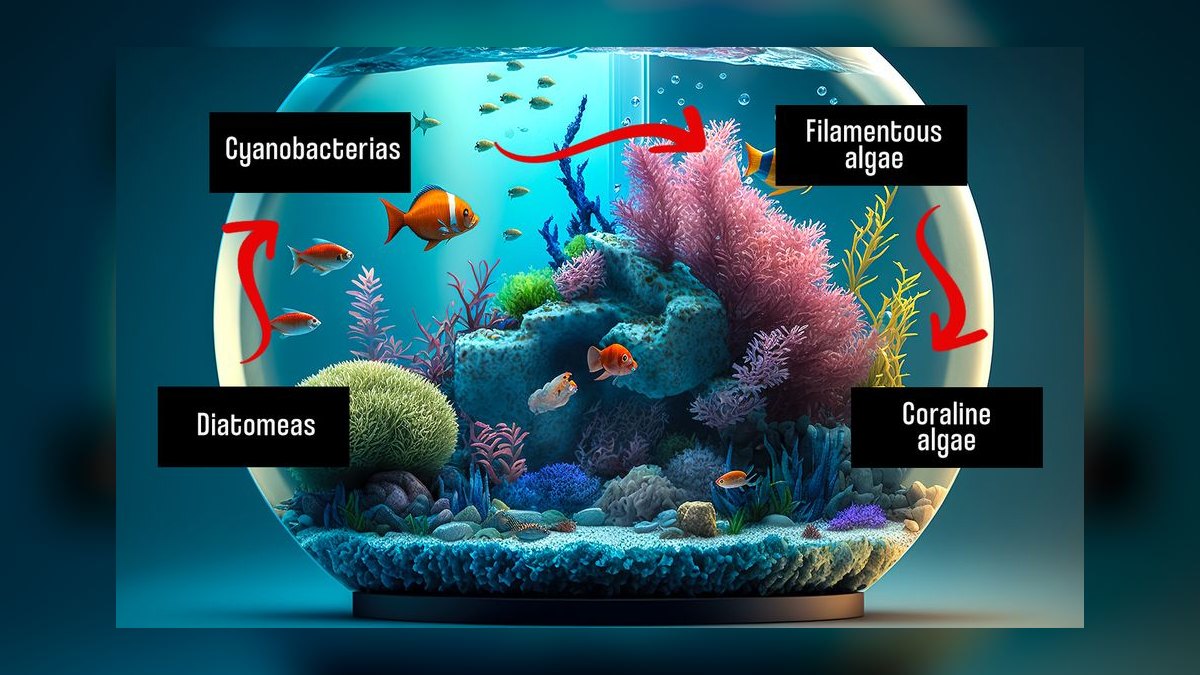
The practical consequence is a stretch, commonly the third through eighth month, that reef keepers call the ugly stage: diatoms, then dinoflagellates or cyanobacteria, then hair algae, each taking a turn because no established competitor is holding the substrate. Dry-rock tanks get hit harder and longer than live-rock tanks. The mitigations are known — feed sparingly, keep lights short at first, run a clean-up crew, add a bottle of copepods and a live phytoplankton culture, and above all resist the urge to fix a dinoflagellate outbreak by making the water even cleaner, which usually makes it worse.
The middle-ground options are worth naming, because "live rock or nothing" is a false binary. A single fist-sized piece of quality live rock from a trusted reef tank, added to an otherwise dry-rock system, seeds biodiversity without the cost or the pest exposure of a full order — though it also does not eliminate pest risk, just reduces the surface area of the gamble. Live sand does something similar with less risk and less payoff. A cup of sand from an established display, a used sponge filter, or a handful of mature ceramic bio-media from a friend's sump will all shorten the cycle meaningfully, often to under a week, because they carry real established colonies rather than shelf-stable spores.
Then there are the systems that sidestep rock as biological media altogether. Berlin-style setups lean on rock; bio-pellet, refugium, and remote-media systems put the nitrification load into ceramic blocks, sintered glass, or a macroalgae-filled sump chamber. Freshwater and pond keepers have run this way for decades, and marine fish-only systems increasingly do too — the rock in the display becomes purely structural and aesthetic, while the working biofilter lives in a chamber you can clean and service. If your goal was never a reef, this is an entirely legitimate architecture, and it makes the cycle question simpler: you cycle the media, not the scape.
The trade-off table in plain language: dry rock costs less, carries no pests, builds better scapes, and cycles predictably, but delivers a biologically sparse system that takes a year or more to mature and passes through a rougher algae phase. Live rock costs more, may import problems you will fight for years, but arrives biologically complete. Most experienced reefers now start dry and buy the biodiversity back deliberately, in controlled doses, from sources they trust.
Pitfalls that actually stall the cycle
Household ammonia is the classic mistake. Cleaning-aisle ammonia frequently contains surfactants, dyes, or perfumes, and the surfactants will foam a skimmer into the ceiling and coat surfaces where bacteria are trying to attach. The field test is to shake the bottle: sustained foam means additives, and the bottle goes back on the shelf. Use a dedicated aquarium ammonium chloride solution, or reagent-grade ammonium chloride if you have access to it. This is a cheap input; there is no reason to gamble on it.
Water changes during the nitrite phase are the second classic error, and they are motivated by exactly the right instinct applied at exactly the wrong time. Nitrite in a fishless cycle is not hurting anything — there is nothing alive to hurt — and it is the substrate the second bacterial population needs in order to multiply. Diluting it starves them and extends the cycle. Nitrite can climb into the tens of ppm and stay there for a week or more; that is normal, not a failure. Hold the line, keep testing, and change water only at the end.
Dead or mishandled bottled bacteria account for a lot of stalled cycles that get blamed on technique. These are live cultures. Products shipped and stored refrigerated are generally more reliable than shelf-stable ones that spent a summer on a hot pallet in a distribution warehouse. Check dates, buy from a shop with turnover, refrigerate after opening, and if a cycle shows no ammonia movement at all after seven days at correct temperature and pH, the most likely explanation is a dead bottle rather than anything you did.
Chlorine and chloramine kill nitrifiers on contact, which is why tap water disqualifies itself twice over — once for the disinfectant and once for the phosphate, silicate, and nitrate that municipal water carries into a tank that has no way to remove them. RO/DI is the standard for a reason. If circumstances force tap water, dechlorinate first and accept that you have imported an algae problem you will be managing for months. Note also that many ammonia test kits read a false positive in the presence of certain dechlorinators and ammonia-binding products, which sends people chasing a phantom.
Skimming and chemical filtration during the cycle deserve a nuance rather than a rule. A protein skimmer will not remove dissolved ammonia — that is not what skimmers do — so running one is harmless and helps oxygenation. Activated carbon and GFO are likewise fine. What you should not run is any ammonia-binding conditioner, because it converts ammonia to a form your test kit may or may not see and your bacteria may or may not eat, and now you are flying blind. Keep the chemistry simple until the cycle proves out.
The last pitfall is impatience wearing the disguise of confidence. A tank that processed one ammonia dose and shows zeros is not the same as a tank that clears a fresh 2 ppm dose in under twenty-four hours, and neither is the same as a tank ready for a full stocking list on day one. Add livestock in stages, a fish or two every two to three weeks, and let the colony grow into each new load. The bacterial population scales to the food supply on its own schedule — days, not minutes — and every crash story in this hobby is some version of loading faster than that curve allows.
Related questions
Can I cycle a tank with just dry rock and fish food?
Yes. A pinch of flake food left to decompose generates ammonia and works fine, but the amount is uncontrolled, it clouds the water with heterotrophic bacteria, and it adds phosphate that will feed algae later. Pure ammonium chloride does the same job with a number you can measure.
Does dry rock ever become live rock?
Completely, given time. Bacteria colonize the pore structure within weeks, coralline algae spreads across the surface over six to eighteen months, and pods and worms populate it once introduced. By year two a dry-rock scape is functionally indistinguishable from ocean rock.
Is a fishless cycle actually faster than cycling with fish?
Usually yes, because you can hold ammonia at 2 ppm continuously instead of whatever trickle a lightly-fed fish produces. It also builds a larger colony and does not subject an animal to weeks of ammonia and nitrite exposure.
Do I need sand for the cycle to work?
No. Bare-bottom tanks cycle normally — rock and filter media provide ample surface. Sand adds surface area and later hosts denitrification in its deeper layers, but it is a stocking and aesthetic decision, not a cycling requirement.
FAQ
How do I know the cycle is truly finished? Dose ammonia back to 2 ppm and test twenty-four hours later. Zero ammonia and zero nitrite in that window means the colony can process a real bioload. A single pass to zero without that confirmation test only proves bacteria are present, not that there are enough of them.
Why is my nitrite stuck high for two weeks? That is the normal shape of the curve, not a malfunction. Nitrite-oxidizers grow slower than ammonia-oxidizers, so nitrite accumulates before it clears. Confirm pH is above 7.8, temperature is 78–80°F, and oxygenation is good, then wait — and do not dilute the nitrite with water changes.
Can I add a cleanup crew before fish? Snails and hermits are still livestock and still die from ammonia. Wait for zeros. Once you have them, a small cleanup crew is actually the ideal first addition to a dry-rock tank, since diatoms typically bloom within days of the lights coming on.
Should I run lights during the cycle? Keep them off or very short. Nitrifying bacteria do not need light and are mildly photosensitive, while algae absolutely does need it. Running dark through the cycle delays the diatom and hair-algae phase until you actually have a cleanup crew in place to meet it.
What if I only have tap water available? Dechlorinate thoroughly and proceed — the cycle will complete. Understand that you have introduced phosphate, silicate, and possibly nitrate, which means a longer and uglier algae phase. Budget for an RO/DI unit before the tank is stocked; it pays for itself in avoided problems.
Do I need to cycle a quarantine tank the same way? Yes, and this is exactly where the live-rock-free method is mandatory rather than optional. Porous rock binds and releases copper unpredictably, wrecking medication dosing. Cycle a sponge or ceramic media block instead and use PVC fittings for cover.
Sources
- University of Florida IFAS: Ammonia in Aquatic Systems
- University of Florida IFAS: The Nitrogen Cycle and Biological Filtration
- NOAA National Ocean Service: What is the nitrogen cycle?
- USGS: Nitrogen and Water
- NCBI PMC: Complete nitrification by Nitrospira bacteria
- EPA: Aquatic Life Criteria for Ammonia
- Smithsonian Ocean: Coral Reefs
- NOAA Coral Reef Conservation Program
- Encyclopedia Britannica: Nitrogen Cycle
Related on PULSE
This page will be disappearing soon. Save it to your device for $1 — or read it free while it is here.
@Kory-White- · if Venmo asks, the last 4 of my number are 2012
This page is gone.
This one is off the shelf now. $1 keeps it on your phone for good — the whole page, pictures and diagrams included.
 pulse-aquariumsCan I use a sand substrate with an undergravel filter in a freshwater planted tank in 2026?
 pulse-aquariumsCan cherry shrimp and neon tetras thrive together in a 10-gallon tank in 2026?
 pulse-aquariumsWhat type of gravel is safe for goldfish that might eat it in 2026?
 pulse-aquariumsTop 10 Aquarium Glass Scrapers with Long Handles for Deep Tanks (2027)
 pulse-aquariumsWhat are the signs of a healthy aquarium water cycle in 2026?
 pulse-aquariumsHow do I safely treat tap water for a shrimp-only nano aquarium in 2026?
 pulse-aquariumsWhat size aquarium heater is safe for a 20-gallon tall tank in 2026?
 pulse-aquariumsTop 10 Planted Aquarium Substrates Compared 2027
 pulse-aquariumsWhat to do if my betta fish is lying on the bottom but still eating in 2026?
 pulse-aquariumsBest way to quarantine new plants to avoid snail infestation?