

How do you set up a shrimp-only aquarium in 2027?
 Curated byKory White · Fractional CRO · Maryland
Quality
Certified
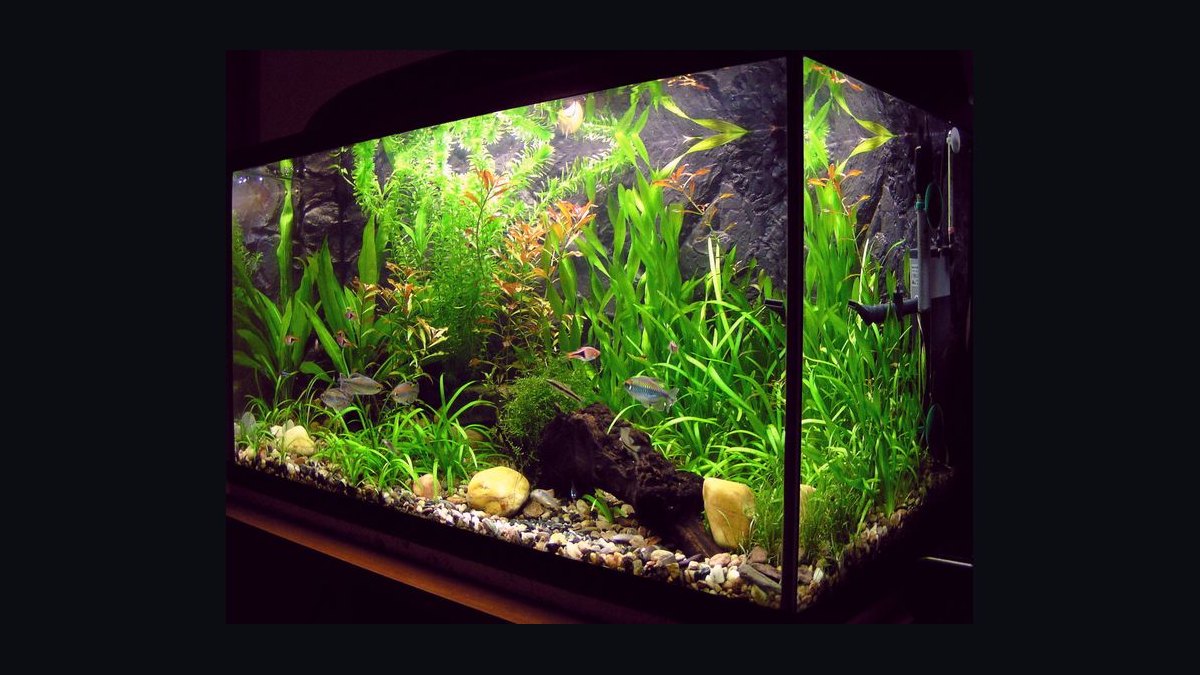
Set up a shrimp-only aquarium by cycling a 5–20 gallon tank with a sponge filter, an inert or buffering substrate, and heavy planting, then adding shrimp only after ammonia and nitrite read zero. Keep temperature at 68–78°F, match GH and TDS to your species, and add stock slowly.
What a shrimp-only tank actually is and why the "only" part matters
A shrimp-only aquarium is a freshwater tank stocked exclusively with dwarf shrimp — no fish, no crayfish, no assassin snails, nothing that hunts. That single constraint changes almost every design decision downstream, which is why "shrimp-only" is not just a stocking preference but a whole equipment and husbandry philosophy.
Start with the biology. Neocaridina and Caridina dwarf shrimp are grazers. They spend their waking hours scraping biofilm — the slick, microscopic film of bacteria, diatoms, and algae that colonizes every submerged surface — off leaves, wood, glass, and substrate. They have almost no bioload compared to fish: a colony of fifty adult cherry shrimp produces less waste than a single adult goldfish. They breed without a larval stage, meaning shrimplets hatch as fully formed miniature adults roughly 1–2 mm long, and they immediately begin grazing the same biofilm the adults eat.
Those two facts — near-zero bioload and free-swimming 1 mm babies — are why the "only" matters. Almost any fish small enough to live peacefully with adult shrimp is still large enough to eat shrimplets. Even a school of chili rasboras or ember tetras, which will never touch an adult cherry shrimp, will pick off newborns steadily enough that your colony flatlines around a stable adult count instead of growing. Hobbyists who keep shrimp in community tanks routinely report that their population "never seems to increase" despite constantly berried females; the population *is* increasing, the fry are just being eaten at the same rate they hatch. Remove predation entirely and the same colony doubles every few months until the tank hits carrying capacity.
The low bioload matters for the opposite reason: it means you cannot rely on the shrimp themselves to feed a filter. A tank with ten cherry shrimp produces so little ammonia that a filter cycled on shrimp waste alone stays fragile and slow to mature. This is precisely why shrimp tanks are cycled with an external ammonia source and then planted heavily — the plants and biofilm surface area, not the shrimp, are what carry the tank's stability.
There is a third reason the "only" designation is useful: it lets you optimize water chemistry for one narrow target instead of compromising. A community tank has to satisfy the pH tolerance of tetras, the temperature preference of corydoras, and the hardness needs of livebearers. A shrimp-only aquarium serves one species group. You can run Caridina at pH 5.8 and 4 GH without worrying that it will stress a fish, or hold Neocaridina at a rock-steady 7.2 and 7 GH indefinitely. That single-target chemistry is the biggest lever you have on colony survival, and it's a lever you only get when nothing else lives in the tank.
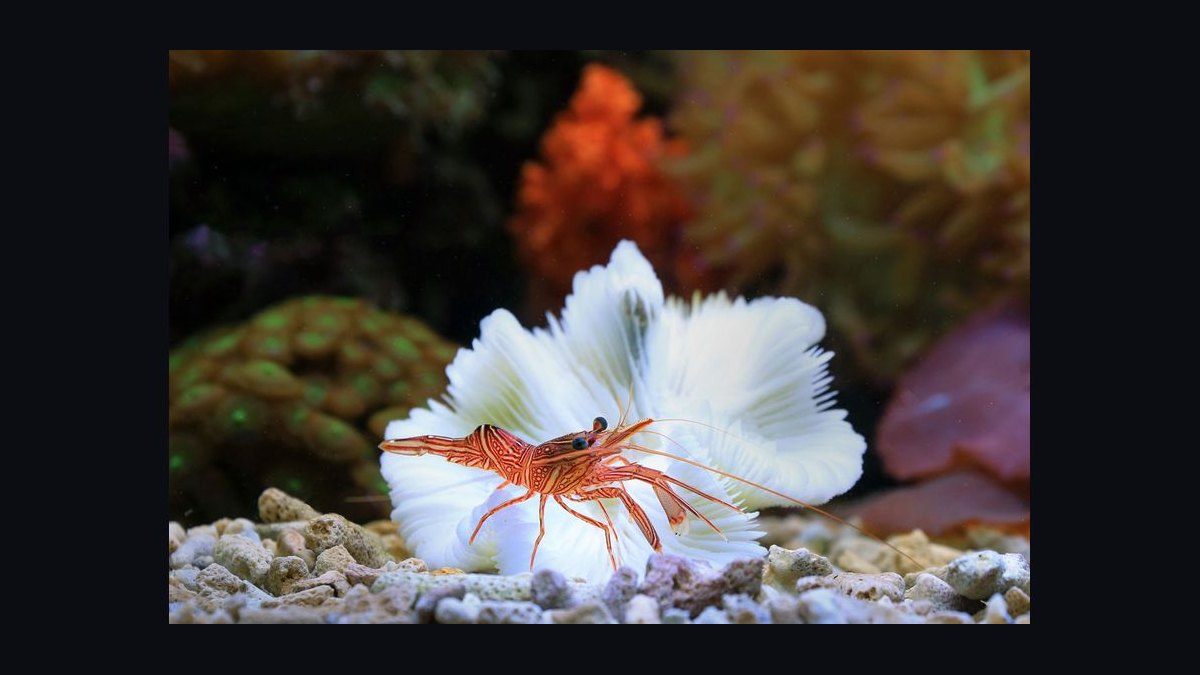
Adjacent to this, and worth understanding before you buy anything: the two main dwarf shrimp genera want opposite water. Neocaridina davidi — sold as cherry, fire red, blue dream, yellow goldenback, orange sakura, green jade, and dozens of other color morphs, all the same species — wants neutral to slightly alkaline water with meaningful mineral content. Caridina — crystal red, crystal black, Taiwan bee, king kong, panda — wants soft, acidic, low-carbonate water. You cannot optimize a tank for both. Pick one before you buy substrate, because the substrate choice is effectively irreversible without tearing the tank down.
Choosing the tank, filter, and substrate
Tank size and shape. Ignore the folk wisdom that shrimp need a big tank. What they need is *stability*, and stability correlates with volume but also with your discipline. Practical ranges:
- 5 gallons — viable, popular, and forgiving enough for Neocaridina if you're attentive. Supports roughly 10–20 adults comfortably, more as biofilm matures. Small volumes swing faster on temperature and TDS, so evaporation top-offs matter more.
- 10 gallons — the sweet spot for a first colony. Enough thermal mass to ride out a warm afternoon, small enough to remineralize water cheaply, and it fits a standard rimless footprint.
- 20 gallons long — the best serious-hobbyist choice. The extra footprint (30" × 12") gives enormous surface area for biofilm, which is the actual carrying-capacity constraint, not water volume.
Footprint beats height. Shrimp are benthic grazers; they use horizontal surface, not the water column. A 20-long will support a substantially larger colony than a 20-tall of identical volume. If you're choosing between a cube and a low-and-wide tank at the same price, take the wide one.
Filtration — sponge filters, essentially always. A sponge filter driven by an air pump is the standard for a shrimp-only aquarium for three converging reasons. First, no impeller means no way for a shrimplet to be minced. Second, the sponge itself becomes a biofilm buffet — shrimp graze it constantly, and you'll see them clustered on it. Third, air-driven sponges provide gentle circulation and strong gas exchange without creating flow that pins shrimp against glass.
If you want something less visually intrusive, a matten filter (a full sheet of foam spanning one end of the tank, air-lifted behind it) gives vastly more biological media and hides equipment behind the foam wall. It's the quiet favorite of serious breeders. A hang-on-back filter can work if you cover the intake with a coarse pre-filter sponge, but it's a compromise — the intake sponge needs cleaning, and any lapse means dead shrimplets. Canister filters are overkill for the bioload and again need intake guarding. Skip internal powerheads entirely.
Whatever you use, never fully clean the filter media. Squeeze a sponge in a bucket of tank water when flow noticeably drops — maybe every 4–8 weeks — and put it straight back. Rinsing under tap water kills the nitrifying colony and the biofilm in one move.
Substrate — the irreversible decision. This is where the Neocaridina/Caridina fork becomes physical.
For Neocaridina, use an inert substrate: black diamond blasting sand, pool filter sand, fine natural gravel, or an inert planted-tank gravel. Inert means it does not alter pH or hardness, so your water stays wherever your remineralizer or tap water puts it. Neocaridina like that stability at neutral-to-slightly-alkaline, and an inert substrate never "expires."
For Caridina, use an active buffering soil — an aquasoil that actively pulls carbonate hardness out of the water and drives pH down into the 5.5–6.5 range. This is not optional for crystal and bee shrimp; without it, KH from your source water pushes pH up and the shrimp decline. The catch: buffering soils exhaust. Depending on your source water's KH and your water-change volume, a soil's buffering capacity typically lasts somewhere in the 12–24 month range before pH starts drifting upward, at which point the tank needs a re-scape with fresh soil. Budget for that from day one.
Depth: 1–2 inches is plenty. Shrimp don't dig, and deeper beds in a low-flow tank invite anaerobic pockets. If you're carpeting, 2 inches in the planted zones and less elsewhere is fine.
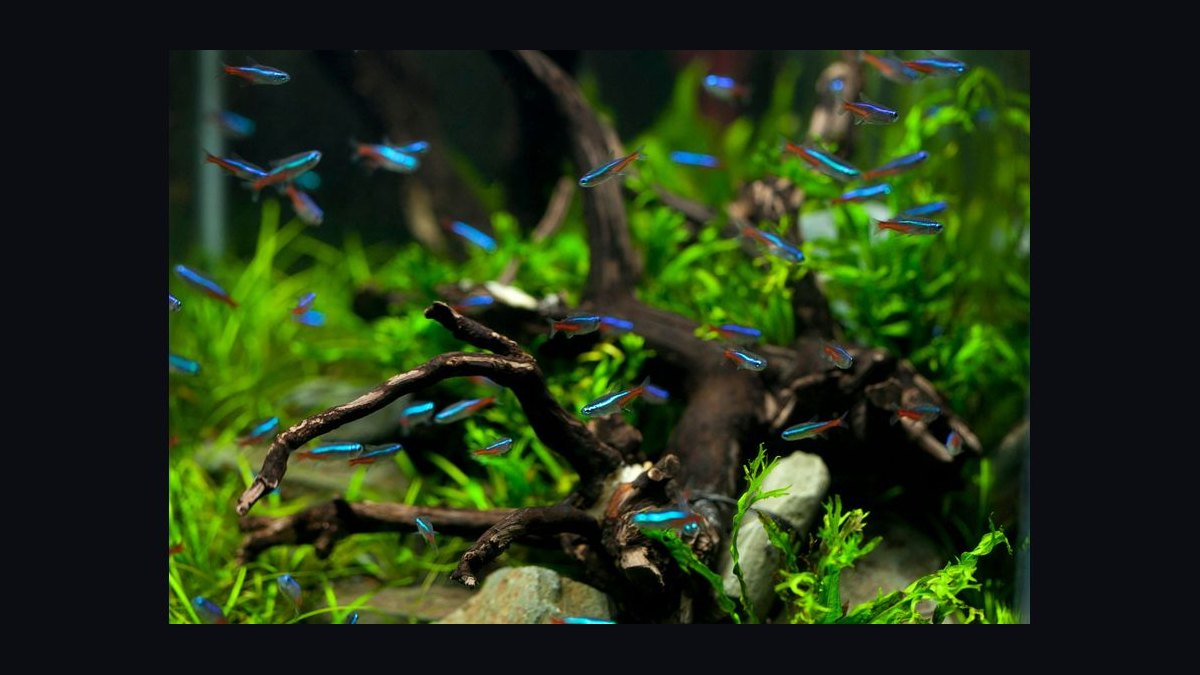
Hardscape. Driftwood earns its place in a shrimp aquarium more than in almost any other setup, because a piece of spider wood or Malaysian driftwood grows biofilm continuously and is a permanent grazing station. Boil or soak new wood until it sinks and stops leaching heavy tannin — tannins themselves are harmless and mildly beneficial (they gently acidify and have antibacterial properties), but a sudden dump of them in a small volume can swing pH. Cholla wood is a shrimp-keeper staple: it's hollow, riddled with holes shrimplets hide in, and decomposes slowly into more grazing surface. Stone is optional; if you use it, know that limestone, seiryu, and most "dragon stone" leach carbonate and will raise KH and pH — fine or even helpful for Neocaridina, disqualifying for Caridina.
Heater and lighting. Neocaridina do fine anywhere from 65–78°F and many keepers run them unheated in a stable indoor room; a small adjustable heater set to 72°F simply removes day-night swing. Caridina prefer the cooler end, 68–74°F. Warmer water speeds metabolism, growth, and breeding but shortens lifespan and lowers dissolved oxygen — around 78°F is a practical ceiling, and above 80°F shrimp become visibly stressed. Lighting only needs to support your plants; shrimp themselves are indifferent, though a modest photoperiod of 6–8 hours keeps algae in check while still feeding the biofilm.
The step-by-step setup process
Here is the sequence, start to finish. Do not skip ahead, and specifically do not add shrimp early — that is the single most common cause of a failed first colony.
Step 1 — Rinse and place the substrate. Inert sand needs heavy rinsing until the water runs clear; unrinsed sand clouds a tank for days. Active aquasoil should *not* be rinsed — it's fragile and breaks down into mud — just pour it in dry and slope it gently toward the back.
Step 2 — Add hardscape, then fill. Place wood and stone before filling. Fill slowly, pouring onto a plate or a plastic bag laid over the substrate so you don't blow a crater in it.
Step 3 — Install and start the filter and heater. Let the sponge run for a day before dosing anything. Dechlorinate the fill water with a conditioner that neutralizes both chlorine and chloramine.
Step 4 — Plant heavily. Plant now, not later — plants take weeks to root and start consuming nitrogen, and you want them established before shrimp arrive. Reliable, shrimp-friendly, low-demand species: java moss and other mosses (the single best shrimplet habitat and biofilm host), anubias varieties tied to wood, java fern, cryptocoryne for the substrate, bucephalandra on hardscape, and floating plants like salvinia, frogbit, or duckweed for nitrate export and shade. Mosses are close to mandatory in a shrimp aquarium: shrimplet survival in a heavily mossed tank is dramatically higher than in a bare one, because the moss both hides them and grows the food they need in their first weeks.
Quarantine or dip new plants. Nursery plants can carry pesticide residue or copper-based treatments, and copper is acutely lethal to invertebrates. A tissue-culture plant is the safest source; otherwise, rinse thoroughly and consider holding new plants in a separate container for a week or two.
Step 5 — Cycle the tank. Dose a pure ammonia source (or ammonium chloride made for fishless cycling) to about 2 ppm. Test every few days. Bottled nitrifying bacteria genuinely accelerates this. The cycle is complete when you can dose 2 ppm ammonia and have both ammonia and nitrite read zero within 24 hours. In a warm, planted, bacteria-seeded tank this commonly takes 3–6 weeks. Seeding with a squeezed sponge or a handful of substrate from an established, disease-free tank can cut it to 1–2 weeks.
Step 6 — Let it mature past the cycle. This is the step people skip. A tank can be cycled — zero ammonia, zero nitrite — and still be a bad shrimp home, because biofilm hasn't developed and there's nothing to graze. Give the tank an additional 4–8 weeks after the cycle completes before adding shrimp. You'll know it's ready when the glass and hardscape have a faint fuzz, when you see the first tiny copepods or seed shrimp scooting around, and when plants are visibly growing new leaves. Some keepers describe waiting "three months from fill to shrimp"; that total — cycle plus maturation — is a fair rule of thumb and matches the intent behind the "3–6 month" advice you'll see repeated in the hobby.
Step 7 — Dial in and verify parameters. Before ordering shrimp, log your parameters for a week and confirm they're steady. Then match your target to your species (see below).
Step 8 — Acclimate and add the first shrimp. Drip-acclimate over 1.5–3 hours at a slow drip. Net the shrimp into the tank; never pour bag water in. Start with 10–15 shrimp, not fifty — a small first group tests the tank cheaply, and dwarf shrimp breed fast enough that ten becomes a hundred in half a year.
Step 9 — Leave it alone. Do not feed for the first 3–5 days; a mature tank has enough biofilm. Do not do a water change for the first week. Watch behavior: healthy shrimp graze constantly and ignore you.
Water parameters, remineralization, and the TDS discipline
This section is where shrimp keeping diverges most sharply from general fishkeeping, and where most colonies are won or lost.
Target ranges by genus:
| Parameter | Neocaridina | Caridina (bee/crystal) |
|---|---|---|
| Temperature | 68–78°F | 68–74°F |
| pH | 6.8–7.6 | 5.8–6.8 |
| GH (general hardness) | 6–10 dGH | 4–6 dGH |
| KH (carbonate hardness) | 2–8 dKH | 0–2 dKH |
| TDS | ~150–250 ppm | ~100–150 ppm |
| Ammonia / nitrite | 0 / 0 | 0 / 0 |
| Nitrate | under ~20 ppm | under ~20 ppm |
Two clarifications that trip people up. GH is what matters for molting, not pH. General hardness measures calcium and magnesium — the minerals a shrimp pulls from the water to rebuild its exoskeleton after each molt. A tank with beautiful pH and inadequate GH produces failed molts and dead shrimp. KH is what matters for stability — carbonate hardness is the buffer that stops pH from swinging. That's why Caridina keepers deliberately run near-zero KH (so the aquasoil can hold pH down) while Neocaridina keepers want some KH present.
Source water. If your tap water is moderately hard, low in nitrate, and free of copper from old plumbing, you can keep Neocaridina on dechlorinated tap indefinitely — many people do. Run it past a GH/KH test and a TDS meter first. If your tap is very hard, very soft, chloraminated with high nitrate, or variable seasonally, switch to RO or RO/DI water remineralized from scratch. Caridina essentially require this; their target chemistry is below what most municipal water delivers.
Remineralizing means starting with zero-TDS water and adding a measured mineral salt. GH-only remineralizers add calcium and magnesium without carbonate — the correct product for Caridina, because it raises GH while leaving KH at zero. GH/KH remineralizers add both — the right choice for Neocaridina. Mix in a bucket, let it dissolve fully, verify TDS with a pen, then use it. Never dose remineralizer directly into the display tank; you'll create a mineral gradient the shrimp swim through.
The TDS pen is your most-used tool. A cheap handheld TDS meter costs very little and tells you in two seconds whether your water has drifted. TDS creeps upward between water changes as minerals concentrate through evaporation and as food and waste dissolve. Watch the *trend*, not the absolute number — a tank that sits at 190 ppm for months is healthier than one that oscillates between 150 and 260. Top off evaporation with pure RO or distilled water, never remineralized water, because evaporation removes water and leaves minerals behind; topping off with mineralized water ratchets TDS up permanently.
Testing cadence. During cycling, test ammonia and nitrite every 2–3 days. Once stocked and stable, a weekly TDS reading plus a monthly full panel (ammonia, nitrite, nitrate, GH, KH, pH) is sufficient. Liquid reagent test kits are considerably more accurate than paper strips for ammonia and nitrite; strips are acceptable for a rough GH/KH check but not for the parameters that kill.
Things that must never enter the tank: copper in any form (many fish medications, some plant fertilizers, algaecides, and snail treatments contain it), most snail-eradication products, and untested "shrimp safe" claims on unfamiliar bottles. Invertebrates lack the tolerance vertebrates have; a copper dose that cures ich in fish wipes out a shrimp colony. Read every label for copper sulfate or chelated copper before it goes near the aquarium.
Costs, timelines, and what to expect month by month
Prices vary by region and retailer, so treat these as planning ranges rather than quotes.
Equipment, one-time:
- Tank, 5–20 gallons: modest for a basic rimmed tank, meaningfully more for a low-iron rimless
- Sponge filter and air pump with check valve and tubing: inexpensive; among the cheapest components in the hobby
- Adjustable heater sized to the tank: inexpensive
- LED light adequate for low-light plants: low to mid range, and one of the few places worth spending
- Substrate: inert sand is very cheap; active aquasoil is several times more per bag
- Hardscape (wood, cholla, stone): low, and often free if you source and boil safe hardwood yourself
- Lid or mesh top: low — worth having, since shrimp occasionally climb airline tubing
Consumables and testing:
- Liquid master test kit: mid range, lasts hundreds of tests
- TDS pen: cheap
- Water conditioner, bottled bacteria, remineralizer: low individually, ongoing
- RO water: either buy jugs from a grocery or aquarium store, or amortize a countertop RO unit if you'll be doing this long-term
Livestock: entry-grade Neocaridina (standard cherry, wild-type-adjacent grades) are the cheapest dwarf shrimp available and are often sold in discounted groups of 10 or 20. Higher grades — deep-saturation fire reds, blue dreams, orange sakura — cost more per shrimp. Caridina crystal grades run substantially higher, and premium Taiwan bee lines (panda, king kong, wine red) are among the most expensive freshwater invertebrates in the hobby. Buy the cheapest grade that appeals to you for your first colony; you are going to make mistakes, and making them with expensive shrimp is a painful way to learn.
Timeline:
- Week 0: hardscape, fill, plant, start cycle
- Weeks 1–6: cycling. Ammonia spike, then nitrite spike, then both to zero. Plants root and begin growing.
- Weeks 6–12: maturation. Biofilm develops, microfauna appear, algae goes through its awkward phase and settles. No shrimp yet.
- Week 10–14: add the first 10–15 shrimp.
- Weeks 14–20: first berried females if conditions are right. Females carry eggs roughly 3–4 weeks before hatching.
- Months 5–8: visible population growth. This is the inflection point where a well-run colony stops being a few shrimp and becomes a colony.
- Months 8–18: carrying capacity. The population self-regulates against available biofilm and food. Neocaridina lifespan is roughly 1–2 years, so by now you're running on second-generation stock.
The important number in that list is the gap between "cycled" and "stocked." Every experienced shrimp keeper's advice converges on patience, and the failure mode is always the same: a tank that looked ready at week 4 and got shrimp at week 5.
Where people get it wrong
Adding shrimp to a new tank. Covered above, but it bears repeating because it dwarfs every other cause of failure. Cycled ≠ mature. A tank with zero ammonia and no biofilm starves shrimplets and offers no buffer against a small mistake.
Overfeeding. A mature shrimp aquarium feeds itself substantially. Supplemental food is a supplement. Feed 2–3 times per week, an amount the colony finishes in 2–3 hours, and remove anything left. Rotate a quality prepared shrimp food, a blanched vegetable (zucchini, spinach, or nettle, blanched 1–2 minutes so it sinks), and occasional protein. Uneaten food is the fastest route to an ammonia blip, a planaria bloom, or a bacterial outbreak in a low-bioload tank. When in doubt, feed less — a slightly hungry colony grazes more and is healthier than an overfed one.
Large or fast water changes. A 50% change is standard advice in fishkeeping and is bad advice for shrimp. Big changes shift TDS, GH, and temperature simultaneously, and shrimp respond to sudden osmotic change with stress molting — a molt triggered off-schedule, which is exactly when the "white ring of death" appears. Do 10–20% weekly, with pre-mixed, temperature-matched, TDS-matched water, poured slowly along the glass or dripped in. Small and boring beats large and correct.
Vacuuming the substrate. Don't, or at least don't do it the way you would in a fish tank. Deep gravel-vacuuming strips out the biofilm and mulm that the colony eats. Spot-siphon obvious detritus if it's genuinely excessive; otherwise leave the substrate alone and let the shrimp work it.
Removing molts. Leave shed exoskeletons in the tank for a day or two. Shrimp consume them to recover calcium. A tank with visible molts is a tank where shrimp are growing.
Copper exposure, usually accidental. New plants from a nursery. A fish medication used "just this once." A fertilizer that lists copper in trace amounts. A new brass fitting on the plumbing. This kills colonies quickly and without warning signs beforehand.
Mixing Neocaridina color morphs. Cherry, blue dream, yellow, and green jade are all *Neocaridina davidi*. They interbreed freely, and the offspring revert toward wild-type brown-and-clear within a few generations. If you want a colored colony, keep one color per tank and cull off-color offspring — "culling" in practice usually means moving them to a separate tank or trading them, not destroying them.
Chasing parameters. A keeper reads pH 7.6 when the chart said 7.4, doses a pH-down product, overshoots, doses back, and kills the colony with the swing rather than the number. Shrimp tolerate a wide band of *stable* parameters and poorly tolerate *movement* within the ideal band. If a parameter is inside a reasonable range, leave it there.
Unstable temperature. A heater failing high is more dangerous in a 5-gallon than in a 55-gallon. Check that the heater's thermostat actually holds by keeping an independent thermometer in the tank rather than trusting the dial.
Choosing your path: a decision framework
The single highest-leverage choice is species, and it cascades into substrate, water source, and budget. Work through it deliberately rather than buying the prettiest shrimp at the store.
Ask, in order:
- Is this your first shrimp aquarium? If yes, choose Neocaridina. Not as a consolation prize — a mature cherry shrimp colony is genuinely beautiful and vastly more forgiving. Learn the husbandry rhythm on shrimp that survive your mistakes.
- What does your tap water measure? Test GH, KH, pH, and TDS before deciding anything. Moderately hard tap in the Neocaridina range means you can skip RO entirely and cut both cost and complexity. Very hard or very soft tap means RO plus remineralizer regardless of species.
- Are you willing to run RO and mix water every week? Caridina realistically require it. If the honest answer is no, Caridina will fail and Neocaridina will thrive.
- Do you want a breeding colony or a display? A breeding colony means shrimp-only, no exceptions, heavy moss, and patience. A display where shrimp are one element among many means accepting that the population will hold flat.
- How much can you tolerate the substrate expiring? Active aquasoil for Caridina exhausts its buffering and eventually needs replacing. Inert substrate for Neocaridina lasts as long as the glass.
Adjacent setups worth knowing about. Once a first colony is established, the natural next steps are all variations on the same core: a dedicated grow-out or culling tank running off a squeezed sponge from the parent tank; a walstad-style low-tech shrimp aquarium with soil capped by sand and no water changes at all, which works because shrimp bioload is so low; or an outdoor summer tub where Neocaridina breed prolifically in a stock tank with hornwort and no equipment, then come back indoors before frost. Each one is easier than the first tank, because the hard part — building a mature biological system and learning to leave it alone — is behind you.
Related questions
Can I keep shrimp with any fish at all?
Technically yes with the smallest, least predatory species, but shrimplet survival drops sharply. Otocinclus catfish are the closest thing to a safe tankmate since they're pure algae grazers. If your goal is a growing colony rather than a display, keep the tank shrimp-only.
How many shrimp should I start with?
Ten to fifteen. Enough to guarantee both sexes and establish social grazing behavior, small enough that a mistake isn't catastrophic. Dwarf shrimp reproduce quickly; a starter group of a dozen commonly reaches fifty-plus within six to eight months in a stable tank.
Do shrimp need a heater?
Neocaridina often don't, if your room stays between 68 and 76°F year-round. A heater's real value is eliminating day-night swing rather than raising temperature. Caridina benefit from a heater holding a steady 70–72°F, since they prefer the cool end.
Why are my shrimp not breeding?
Most often the tank is too young, parameters are drifting, or the colony is too small to reliably include both sexes. Confirm GH is in range, TDS is stable week to week, and that the tank has been running at least three months. Then wait.
What is the white ring of death?
A distinct white gap around the shrimp's midsection, visible when the old shell separates but the shrimp can't complete the molt. It's typically caused by improper GH or a sudden TDS change. It's fatal once visible; the fix is preventing the next one through stable minerals.
FAQ
How long before I can add shrimp to a new tank?
Plan on roughly three months from filling the tank. That's typically 3–6 weeks to complete the nitrogen cycle plus another 4–8 weeks for biofilm and microfauna to establish. Seeding with media from an established tank shortens the cycling portion considerably but doesn't shorten the maturation you need for shrimplet food.
Can I use tap water for a shrimp-only aquarium?
For Neocaridina, often yes — test your tap for GH, KH, pH, TDS, and nitrate first, and always dechlorinate. If your readings fall in the 6–10 dGH and 150–250 TDS range with low nitrate, dechlorinated tap works indefinitely. Caridina need RO or RO/DI water remineralized with a GH-only product; municipal water is almost never soft enough.
What size tank do I need?
Five gallons is workable, ten is the practical sweet spot, and a 20-gallon long is the best long-term choice. Prioritize footprint over height — shrimp graze horizontal surfaces, so surface area determines carrying capacity more than water volume does.
What should I feed shrimp and how often?
Two to three times a week, only what the colony finishes in a couple of hours. Rotate a prepared shrimp food, a blanched vegetable like zucchini or spinach, and occasional protein. A mature planted tank supplies most of their calories through biofilm; supplemental food is exactly that.
Why do my shrimp keep dying after water changes?
Almost always a TDS, temperature, or hardness mismatch between the new water and the tank. Pre-mix and remineralize change water, match its temperature and TDS to the tank, keep changes to 10–20%, and add it slowly rather than pouring. Sudden osmotic shifts trigger stress molts, which are frequently fatal.
Can Neocaridina and Caridina live in the same tank?
They won't interbreed, so genetically it's safe, but their water requirements conflict directly — Neocaridina want harder, more alkaline water with some KH, while Caridina need soft, acidic, near-zero-KH conditions. A tank tuned for one keeps the other in chronic stress. Dedicate each tank to a single genus.
Sources
- The Shrimp Farm — dwarf shrimp care guides
- Aquarium Co-Op — freshwater shrimp resources
- Buce Plant — shrimp and aquatic plant care
- Seachem — water chemistry and conditioner documentation
- API Fish Care — freshwater test kit guidance
- Reddit r/shrimptank community
- Fishlore — freshwater invertebrate articles
- Practical Fishkeeping magazine
- Tropica — aquarium plant care database
Related on PULSE
- How do I safely treat tap water for a shrimp-only nano aquarium?
- How do you set up a low-tech planted shrimp tank?
- How do you set up a planted aquarium for beginners?
- How do you set up a betta fish tank?
- How do you set up an African cichlid aquarium?
- How to set up a hospital tank for fin rot without medicating the main display?
This page will be disappearing soon. Save it to your device for $1 — or read it free while it is here.
@Kory-White- · if Venmo asks, the last 4 of my number are 2012
This page is gone.
This one is off the shelf now. $1 keeps it on your phone for good — the whole page, pictures and diagrams included.
 pulse-aquariumsHow long does the Fluval Flex 32.5 gallon take to mature with live plants in 2027?
 pulse-aquariumsTop 10 Pleco Species for Freshwater Aquariums in 2027
 pulse-aquariumsTop 10 Aquarium Background Plants for Aquascaping in 2027
 pulse-aquariumsTop 10 CO2 Systems for Planted Aquariums in 2027
 pulse-aquariumsIs Aquariums worth it in 2027?
 pulse-aquariumsTop 10 Internal Aquarium Filters in 2027
 pulse-aquariumsHow do you set up a low-tech planted shrimp tank in 2027?
 pulse-aquariumsWhat size aquarium is best for beginners in 2027?
 pulse-aquariumsHow do you keep aquarium plants from melting after planting in 2027?
 pulse-aquariumsWhat is the best way to control cyanobacteria without using chemicals in 2027?