

How do you treat fin rot in aquarium fish in 2027?
 Curated byKory White · Fractional CRO · Maryland
Quality
Certified
Treat fin rot by moving the fish to a bare-bottom hospital tank, correcting water quality first — ammonia and nitrite at 0 ppm, nitrate under 20 ppm — then dosing a fish-specific antibacterial matched to severity. Mild cases often clear with clean water and aquarium salt alone; moderate to severe cases need a full 5–7 day antibiotic course.
The outcome you should expect
The single most useful thing to understand before you open a medication packet is what "cured" actually looks like, because most treatment failures are really misread timelines. Fin rot is a bacterial opportunist feeding on tissue that stress and water chemistry already compromised. When you remove the cause and apply the right agent, the infection stops advancing long before the fin looks normal again. Those are two separate milestones and confusing them drives people to switch drugs every three days, which is the fastest route to a genuinely stubborn case.
The first milestone — arrest — should arrive within 48 to 96 hours of correcting water quality and starting treatment. Arrest means the ragged margin stops receding. The white or gray fuzz along the edge fades, any red at the fin base pales, and the fish's behavior improves before its fins do: clamped fins relax, the fish comes out for food, and it stops sulking behind the heater. Behavior is your earliest and most honest indicator, because it tracks systemic stress rather than the cosmetic damage that was already done. If a fish is eating enthusiastically by day three, you are winning even if the fins still look chewed.
The second milestone — regrowth — takes far longer and follows a visible sequence. New fin tissue comes in as a clear, almost glassy membrane at the damaged edge, initially without pigment or visible rays. Over the following weeks the rays extend into that clear zone and color returns from the body outward. A betta with moderate damage typically shows visible clear regrowth in one to two weeks and reasonable fin shape in four to eight. A goldfish, being slower-metabolizing at typical room-ish temperatures, may take longer. A fish that lost fin tissue all the way back to the body — past the point where the rays branch — may never fully restore the original shape, and split or crooked regrowth is common. That is cosmetic, not medical.
Set your expectations by damage depth, not by species mythology. If the erosion stopped short of the fin base, expect near-complete recovery. If it reached the base and left a red or ulcerated margin against the body, expect scarring and a real risk of septicemia; that fish needs a systemic antibiotic, not a topical or herbal product. If body ulcers or red streaks through the fin rays are present, you are no longer treating fin rot in the everyday sense — you are treating a systemic bacterial infection that happens to have shown up first at the fins, and the prognosis drops sharply.
A realistic overall outcome for a hobbyist who catches it at the frayed-edge stage and fixes the tank: better than nine times out of ten the fish recovers fully. Caught at the red-base, split-ray stage with prompt antibiotics: still good, but expect permanent fin irregularity. Caught with body involvement: coin flip at best, and the honest advice is that a fish that is not eating, is lying on the substrate, and has open lesions may be past the point where an over-the-counter product helps. Knowing which bucket you are in before you start saves both money and false hope.
One more outcome to expect that people rarely anticipate: the rest of the tank. Fin rot almost never singles out one fish for no reason. If one fish in a community aquarium has eroding fins, either something in the environment is wrong for everyone or something in the social structure is targeting that individual. Treating the sick fish and returning it to an unchanged tank produces a recurrence roughly as often as not. The durable outcome is a fixed aquarium, and the treated fish is just the first visible symptom of getting there.
What drives that outcome
Almost everything that determines whether a fin rot case resolves in a week or drags on for two months traces back to a small number of upstream drivers. Understanding them is what lets you skip the medication-roulette phase entirely.
Nitrogen chemistry is the primary driver. Ammonia and nitrite are directly caustic to gill and fin tissue. Chronic low-level ammonia — the 0.25 ppm reading people shrug at — causes continuous epithelial irritation and suppresses immune function. This is why fin rot clusters in three predictable situations: newly set-up tanks that were never cycled, tanks where a filter was replaced or rinsed in tap water and the biological colony crashed, and tanks that quietly outgrew their filtration as the fish grew. Before you spend a dollar on medication, test with a liquid reagent kit rather than strips. Strips degrade with humidity exposure and routinely read low on ammonia, which is precisely the parameter you cannot afford a false negative on.
Organic load is the second driver. Nitrate itself is comparatively mild, but a high nitrate reading is a proxy for accumulated dissolved organics, decaying food, and a heavy bacterial load in the water column. That soup is where the opportunists live. A tank sitting at 60–80 ppm nitrate is telling you that water changes are too small or too infrequent for the bioload, and the same neglect that produced that number produced the mulm under the gravel where the bacteria concentrate.
Physical damage supplies the entry point. Bacteria that cause fin erosion are essentially always present in an aquarium; they are ubiquitous environmental organisms. They do not attack intact, healthy tissue with a functioning slime coat. They colonize damage. That damage comes from fin nipping by tankmates, sharp plastic plants, rough net handling, decor with unfinished edges, or the fish's own fins dragging on substrate. This is why the diagnostic question "is anything nipping this fish?" matters as much as any water test — if you medicate a fish whose fins are being bitten nightly by a barb, you will cure the infection and it will return within days.
Temperature and stability modulate everything. Fish are ectothermic; immune response speed scales with temperature within the species' tolerable band. A tropical fish held at the bottom of its range heals slowly. But raising temperature also accelerates bacterial growth and lowers dissolved oxygen, so pushing a tank to 84°F to "speed healing" can backfire badly during a bacterial infection. Stability matters more than the exact number — a heater that swings six degrees daily is more damaging than a stable temperature two degrees below ideal.
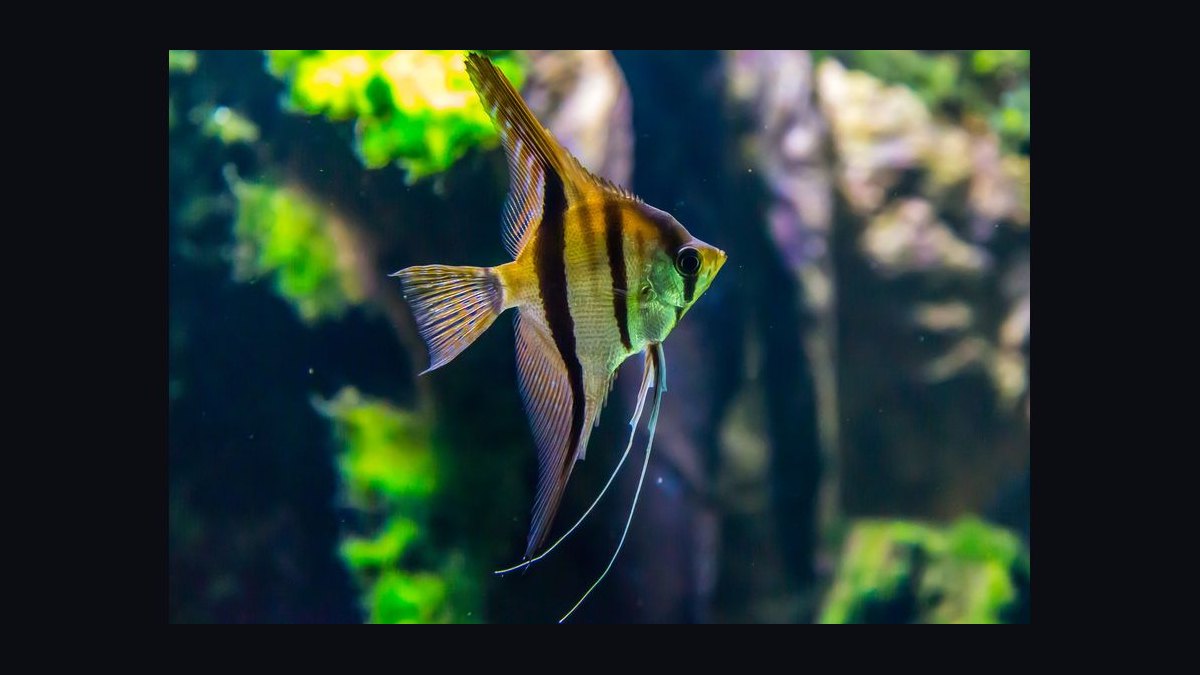
Social stress is the most underrated driver. A fish that spends every day being chased, or one housed in a tank too small for its activity level, or a schooling species kept alone, runs elevated stress hormones continuously. That suppresses immunity in fish the same way it does in mammals. Long-finned varieties — bettas, fancy guppies, angelfish, veiltail goldfish — are doubly exposed: their fins are both easier to damage and harder to keep clean of debris.
The practical implication of this driver map is that medication is the last lever, not the first. A large fraction of mild cases resolve on environmental correction alone, and every case resolves faster when the environment is corrected regardless of what you dose. Antibiotics fight the infection; clean water is what lets the fish's own immune system finish the job and keeps the infection from simply returning once the treatment course ends.
Benchmarks and realistic ranges
Concrete numbers make the difference between a treatment plan and a guess. These are the ranges worth committing to memory.
Water parameters during treatment. Ammonia 0 ppm and nitrite 0 ppm are non-negotiable — any detectable reading means you are actively injuring the fish while trying to heal it. Nitrate below 20 ppm is the target during recovery, versus the below-40 ppm that is acceptable for routine maintenance. pH matters less than stability for most community species; hold it wherever your tap water naturally settles rather than chasing a number with chemicals, because pH swings stress fish more than a mildly off-target stable pH does. Temperature: keep the fish in the middle of its species range and hold it there. For most tropical community fish that lands around 76–80°F; for goldfish and other coldwater species it is considerably lower, and warming a goldfish "to help" is a common and counterproductive error.
Water change volumes and cadence. In a hospital tank during active treatment, a daily change of roughly 25% before re-dosing keeps organics down; many medications specify a water change between doses, and the label instruction wins over general advice. In the main display during and after an outbreak, moving from a typical 25% weekly to 25–30% twice weekly for a few weeks pulls nitrate and dissolved organics down without shocking the biofilter. Match temperature and dechlorinate every drop.
Hospital tank sizing. A 5–10 gallon bare-bottom tank covers most single small fish; larger or multiple fish scale up from there. Bare bottom is deliberate — no gravel means no mulm reservoir and no substrate to bind medication. Use a sponge filter that has been running in the established tank for weeks so it carries a live bacterial colony; a brand-new filter in a hospital tank means you are treating a fish in an uncycled box, which is its own ammonia problem. Note that many antibacterials will damage that colony, so plan on testing the hospital tank daily and doing water changes rather than trusting the filter.
Salt concentration. Aquarium salt at roughly one tablespoon per five gallons is the commonly cited mild-treatment level, dissolved in a container of tank water before adding rather than dumped in as crystals. It supports slime coat production and reduces osmoregulatory load. Critical caveats: salt does not evaporate, so only replace it in proportion to water removed during changes, and scaleless fish — most loaches, many catfish — plus many live plants tolerate it poorly or not at all. Halve or skip it for those.
Treatment duration. Full courses run 5 to 7 days for most over-the-counter antibacterials, occasionally longer per label. The single most common self-inflicted failure is stopping early because the fish "looks better." Arrest of the infection precedes tissue healing by weeks; a truncated course leaves a surviving bacterial population and selects for the least susceptible organisms in it. Finish the labeled course. If there is no arrest after 4–5 days at correct dosing with confirmed-clean water, that is the moment to consider a different active ingredient — not day two.
Recovery timelines. Behavioral improvement in 1–3 days. Erosion halted in 2–4 days. First visible clear regrowth at the margin in roughly 1–2 weeks. Substantial fin shape restoration in 3–8 weeks depending on species, damage depth, temperature, and diet. Long-finned fish take the longest simply because there is more tissue to rebuild.
Quarantine periods for prevention. New arrivals held separately for 2–4 weeks catch most incubating problems before they enter the display. Four weeks is meaningfully better than two. This one habit prevents more disease than any medication cabinet.
Stocking sanity check. The old inch-per-gallon rule is crude and breaks down badly for large or messy fish, but as a directional check it still flags the worst overstocking. Better practice is to research adult size and social needs per species, and to judge by whether your nitrate climbs faster than your water change schedule can clear it. If nitrate is your bottleneck, you are overstocked for your maintenance routine regardless of what any rule says.
Risks, edge cases, and failure modes
Misdiagnosis is the biggest risk. Several conditions look like fin rot and respond to different treatment. Fin nipping produces clean tears and notches without discolored margins, and the "damage" changes shape overnight as new bites appear — no medication fixes a tankmate problem. Columnaris presents as pale, fuzzy, saddle-shaped lesions often near the mouth or dorsal, moves alarmingly fast, and worsens at higher temperatures — the opposite of the raise-the-heat instinct. True fungal infection shows as distinctly cottony white tufts rather than eroded margins. Fin damage from a sharp ornament heals on its own once you remove the ornament. Look at the margin under bright light with a magnifier before you assume bacteria.
Medication interactions and the carbon trap. Activated carbon in the filter strips most medications out of the water within hours, so a hobbyist can run a complete "course" that never delivered a therapeutic dose. Remove carbon and chemical media before dosing, then add fresh carbon after the course to strip residual medication. Conversely, do not stack multiple medications hoping for coverage — combining products with unknown interactions, or dosing a second product before removing the first with a water change, is a real path to killing the fish you are treating.
Oxygen depletion during treatment. Many antibacterials reduce dissolved oxygen, and warmer water holds less to begin with. A fish already stressed by infection that starts gasping at the surface mid-treatment is often suffering oxygen deprivation rather than a worsening infection. Increase surface agitation and aeration whenever you medicate, and watch for it specifically.
Biofilter collapse from in-tank dosing. Antibacterials do not distinguish your nitrifying colony from the pathogen. Dosing the main display can crash the cycle, producing an ammonia spike days later that is more damaging than the original infection. This is the strongest argument for a hospital tank: it protects the display's biology and lets you use a much smaller volume of medication. If you genuinely cannot quarantine, test the main tank daily throughout treatment and for a week after, and be ready with water changes.
Sensitive species. Scaleless fish absorb medications and salt far more readily than scaled fish and are commonly dosed at reduced strength. Labyrinth fish breathe atmospheric air at the surface, so oily or film-forming products deserve caution. Invertebrates — shrimp, snails — are frequently killed outright by copper-containing and some other treatments; check the label for invertebrate safety before dosing any tank that houses them. Plants vary; many tolerate standard antibacterials but not prolonged salt.
Human antibiotics and dosing improvisation. Using leftover human prescriptions is a bad idea on multiple fronts: wrong spectrum for the likely organisms, unknown and inappropriate dosing for water-column delivery, inactive ingredients that may be harmful, and a real contribution to antimicrobial resistance. Stick to products formulated and labeled for aquarium use, and dose by actual water volume — which is always less than the tank's nominal rating once substrate, decor, and the gap below the rim are subtracted. Overdosing by treating a "20 gallon" tank that actually holds 16 gallons of water is a routine error.
Recurrence as the diagnostic signal. If fin rot returns within a few weeks of a completed course, the infection was not the problem — the environment or the social structure was, and it is still there. Resist the urge to reach for a stronger drug. Re-audit stocking, filtration capacity, water change volume, aggression, and decor. Repeated courses of antibacterials on an uncorrected tank select for resistant organisms and progressively narrow what will work when you genuinely need it.
The honest limit of home treatment. A fish with open body ulcers, red streaking through the fin rays or body, pineconing scales, or one that has refused food for several days is beyond what a hobbyist reasonably resolves with over-the-counter products. Aquatic veterinarians exist and can perform culture and sensitivity testing where the value of the animal justifies it. Otherwise the humane path may be euthanasia rather than a prolonged escalating drug regimen, and it is worth deciding in advance where that line sits for you.
A practical rollout plan
Here is the sequence, in the order that actually works.
Day 0 — observe and test before you touch anything. Photograph the affected fins under good light so you have a baseline to compare against later; memory is unreliable about gradual change. Run a full liquid test: ammonia, nitrite, nitrate, pH, and note the temperature. Watch the tank for ten uninterrupted minutes and specifically look for chasing or nipping. Inspect decor for sharp edges. Write the numbers down. This whole step takes half an hour and determines everything downstream.
Day 0 — fix the environment first, regardless of severity. Perform a substantial water change — commonly 50% for a tank with detectable ammonia or nitrite — with temperature-matched, dechlorinated water. Vacuum the substrate thoroughly, especially under decor and in corners where mulm accumulates. Rinse mechanical filter media in removed tank water, never tap water. Increase surface agitation. If a tankmate is the aggressor, separate now. If it is a sharp ornament, remove it now. For mild cases — frayed translucent margins, fish still active and eating — this step alone is often the entire treatment, and it is reasonable to hold here for 48 hours and reassess before medicating.
Day 0–1 — set up quarantine if the case warrants it. Moderate or severe presentation, or a case that is still advancing after the environmental fix, goes to a hospital tank. Bare bottom, seeded sponge filter from the established system, heater at the species' mid-range, dim light, and a piece of PVC pipe or a plain ceramic cave so the fish has somewhere to feel hidden. Net the fish gently, or better, cup it — netting long-finned fish causes exactly the tissue damage you are trying to heal.
Day 1 — dose deliberately. Choose one product, match it to severity, and read the entire label before opening it. Calculate actual water volume, not nominal. Remove carbon and any chemical filtration. Add aquarium salt at the mild-case rate if the species tolerates it. Then leave the fish alone: dim light, minimal disturbance, small feedings of high-quality food only in the amount consumed within a couple of minutes, and siphon out anything uneaten.
Days 2–7 — run the course without improvising. Test the hospital tank daily. Perform the label-specified water change before each re-dose. Compare fins to your day-0 photo every second day rather than staring at them hourly, which makes it impossible to see change. Do not add a second medication. Do not stop because the fish looks better.
Days 7–10 — clear the medication and evaluate. Add fresh carbon to strip residual medication, do a water change, and give the fish 48 hours clean. Look for the clear glassy margin that signals regrowth. If erosion halted and regrowth has begun, you are done treating and into recovery. If erosion never halted despite confirmed-clean water and correct dosing, that is the point to switch to a different active ingredient — and to seriously re-examine the diagnosis.
Weeks 2–6 — return and rebuild. Only return the fish to the display once you have fixed whatever caused the outbreak; returning to an unchanged tank is the most common cause of relapse. Acclimate slowly to the display's temperature and chemistry. Support regrowth with varied, high-quality food — good pellets supplemented with frozen or live foods a few times a week — since building new tissue is metabolically expensive. Keep water changes elevated for a month. Expect the fin to look worse than it will end up for a while, and expect some permanent irregularity if the damage was deep.
The adjacent workflow worth building. Everything above is reactive. The proactive version costs less and works better: a small permanent quarantine tank that every new fish passes through for a month, a written water-test log so you see nitrate trending up before it becomes a problem, a filter maintenance habit that never rinses biological media in chlorinated water, and a stocking plan based on adult sizes rather than the sizes in the store bag. Hobbyists who run a quarantine tank consistently treat fin rot dramatically less often — not because they are better at medicating, but because they intercept the conditions that produce it.
Related questions
Can fin rot heal without any medication?
Frequently, yes. Mild cases with frayed margins and no redness often resolve on clean water alone — large water changes, substrate vacuuming, corrected filtration, and removal of whatever caused the damage. Aquarium salt at the mild rate helps if the species tolerates it. Reassess at 48 hours; if erosion is still advancing, medicate.
Is fin rot contagious to other fish in the tank?
The causative bacteria are already present in every aquarium, so it spreads less like a contagion and more like an environmental hazard. Tankmates in the same bad water are at similar risk. Quarantine the affected fish, disinfect shared nets between tanks, and treat the environment as the real vector.
How do I tell fin rot from fin nipping?
Nipping leaves clean, sharp tears with normally colored edges, and the damage pattern changes overnight as new bites occur. Fin rot leaves ragged, receding margins that are often white, gray, or reddened, and it progresses steadily inward. Watching the tank for ten minutes usually settles it.
Should I raise the temperature to speed up healing?
Only modestly, and only within the species range. Warmer water speeds fish metabolism but also speeds bacterial growth and lowers dissolved oxygen. With suspected columnaris, higher temperature actively worsens the infection. Stability within the correct range beats pushing the thermostat up.
Why did fin rot come back a month after I treated it?
Because the treatment cured the infection but not the cause. Recurrence points at unchanged water quality, ongoing aggression, overstocking, or a filter that cannot keep up. Re-audit the environment rather than escalating to a stronger drug — repeated courses on an uncorrected tank breed resistant organisms.
FAQ
How long does fin rot take to heal completely?
Two timelines matter. The infection should stop advancing within two to four days of correct treatment plus clean water. Actual fin regrowth is much slower — clear new tissue appears at the margin within one to two weeks, and meaningful shape restoration takes three to eight weeks depending on species, damage depth, temperature, and diet. Fish that lost tissue back to the fin base may keep permanent irregularity.
Do I have to use a separate hospital tank?
For moderate and severe cases, strongly yes. Dosing the main display risks crashing the biological filter, harms invertebrates and plants, requires far more medication, and exposes healthy fish unnecessarily. A bare-bottom hospital tank with a seeded sponge filter also lets you observe appetite and behavior closely. For mild cases treated with water changes and salt alone, in-tank management is often fine.
Is aquarium salt safe for every fish?
No. Salt at roughly one tablespoon per five gallons supports slime coat and reduces osmotic stress for most scaled freshwater fish, but scaleless species such as many loaches and catfish tolerate it poorly and typically need a reduced dose or none. Many live plants also suffer. Dissolve it in a cup of tank water first, and only replace salt in proportion to water actually removed during changes.
Why isn't the medication working?
Check five things before blaming the drug: activated carbon still in the filter stripping the dose, dosing calculated on nominal rather than actual water volume, ammonia or nitrite still present, an incomplete previous course, or a wrong diagnosis — columnaris and fin nipping both masquerade as fin rot. Give any correct course four to five days before concluding it failed.
Can I use human antibiotics on my fish?
Don't. The spectrum is often wrong for the organisms involved, dosing for water-column delivery is entirely different from oral human dosing, tablet binders and fillers can be harmful in an aquarium, and casual use contributes to antimicrobial resistance. Use products formulated and labeled for aquarium use, follow the label exactly, and complete the full course.
What are the signs a fish is too far gone to treat?
Open ulcers on the body, red streaking through fin rays or flanks indicating systemic infection, pineconed scales, refusal of food for several days, and lying on the substrate unable to hold position. At that stage over-the-counter treatment rarely succeeds. An aquatic veterinarian can perform culture and sensitivity testing; otherwise humane euthanasia is a legitimate and kinder decision.
Sources
- Aquarium Co-Op — fin rot treatment guide
- Seachem product information
- API Fish Care — aquarium medications
- Merck Veterinary Manual — bacterial diseases of fish
- University of Florida IFAS — fish health and water quality
- FDA — approved aquaculture drugs
- World Aquatic Veterinary Medical Association
- Reddit r/Aquariums health wiki
Related on PULSE
This page will be disappearing soon. Save it to your device for $1 — or read it free while it is here.
@Kory-White- · if Venmo asks, the last 4 of my number are 2012
This page is gone.
This one is off the shelf now. $1 keeps it on your phone for good — the whole page, pictures and diagrams included.
 pulse-aquariumsTop 10 Anemone Species for Clownfish Tanks in 2027
 pulse-aquariumsHow do you remove ammonia from an aquarium quickly in 2027?
 pulse-aquariumsHow much does CPI security monitoring cost for an aquarium facility in 2028?
 pulse-aquariumsTop 10 Reef-Safe Tangs for Saltwater Aquariums in 2027
 pulse-aquariumsHow do you set up a shrimp-only aquarium in 2027?
 pulse-aquariumsTop 10 Aquarium Background Plants for Aquascaping in 2027
 pulse-aquariumsTop 10 Aquariums strategies for 2027
 pulse-aquariumsTop 10 Auto Top-Off Systems for Saltwater Tanks in 2027
 pulse-aquariumsHow do you set up a low-tech planted shrimp tank in 2027?
 pulse-aquariumsTop 10 Pleco Species for Freshwater Aquariums in 2027