
How Do I Get Tenant Improvement Money on a Lease Renewal?
 Curated byKory White · Fractional CRO · Maryland
 PULSEKNOWLEDGE LIBRARY
You get tenant improvement money on a lease renewal by approaching the conversation as a business negotiation, not a loyalty request. The fundamental rule: never reveal your hand before you have a solid alternative. Landlords operate on a simple calculus — they pay TI only when it's cheaper than the alternative. If you walk into the renewal discussion saying "we'd love to stay," you've just handed them all the leverage. Instead, prepare a written proposal that includes a specific TI dollar amount tied to a market-justified per-square-foot figure, and back it up with a competing term sheet from another property. The typical range for renewal TI is $10–$40 per square foot, depending on your market, the condition of your space, and how much work is genuinely needed.
The logic is straightforward: a landlord facing a vacancy will spend 6–18 months of lost rent, 4–6% broker commissions on a new deal, and $50–$80/sq ft in new-tenant TI. For a 10,000 sq ft tenant at $30/sq ft rent, that's $150,000–$450,000 in downtime alone. Your request for $250,000 in renewal TI (at $25/sq ft) is less than half their total backfill cost. Frame your ask around that math, and you shift from supplicant to partner. The move: get a competing offer, submit a written renewal RFP with your TI number, and let the landlord's own financial models do the convincing.
Why Landlords Pay TI on Renewals at All
Vacancy is the most expensive line item on a landlord's profit-and-loss statement. When you vacate, the landlord doesn't just lose your rent — they inherit a cascade of costs that can easily exceed $1 million for a mid-sized space. Here's the breakdown of what a landlord pays when a tenant leaves:
- Downtime: 6–18 months of zero income while the space is marketed, shown, and prepped. At $30/sq ft/yr on 10,000 sq ft, that's $150,000–$450,000 in pure lost revenue.
- New broker commissions: Typically 4–6% of the total new lease value, split between the listing broker and the incoming tenant's rep. On a 5-year, $30/sq ft deal for 10,000 sq ft, that's $60,000–$90,000.
- Fresh TI for the next tenant: New tenants demand $50–$80/sq ft because they want a full reconfiguration — new walls, finishes, HVAC zones, and technology infrastructure. That's $500,000–$800,000.
- Free rent concessions: Standard new deals include 1 month free per year of term, which on a 5-year lease equals 5 months of forgone rent — another $125,000 at $30/sq ft.
- Marketing and legal costs: $10,000–$25,000 for floor plans, brochures, listing fees, and lease review.

Add it up: replacing a 10,000 sq ft tenant can cost a landlord $700,000–$1.2 million all-in. Against that backdrop, writing you a $250,000 renewal TI check to keep you in place is a bargain — they save $450,000–$950,000 compared to finding a replacement. Your leverage is the landlord's cost of losing you — quantify it, put it on the table, and let their own spreadsheet argue your case.
How to Set Up the Ask the Right Way
Start 9–12 months before expiration. Renewal leverage is a clock: the closer you get to your expiration date, the weaker you become, because the landlord knows relocating is operationally painful and you're running out of runway. A disciplined timeline gives you room to explore alternatives, negotiate without panic, and walk away if the numbers don't work.

- Hire a tenant-rep broker. They're paid by the landlord (commission baked into the deal), so the service is effectively free to you, and they pull comps you can't see — including recent renewal deals in your building and comparable properties. A good rep nets renewal concessions worth 5–15x their effort by knowing exactly what landlords have given in similar situations.
- Get a real competing proposal. Tour two or three alternative spaces and get written term sheets. You don't have to want to move — you need credible proof that you *can*. A verbal "we looked around" won't move a landlord; a signed term sheet from a competing building will.
- Submit a written renewal RFP to your landlord listing your target rent, TI allowance, free rent, and term. Anchoring with a number forces a counter rather than a brush-off. Use language like: "We're prepared to sign a 5-year renewal at $28/sq ft with a $25/sq ft TI allowance and 3 months free rent."
- Never say "we love it here." Say "we're evaluating our options for the next term and the economics have to work." Keep the conversation focused on business terms, not personal relationships. The landlord's asset manager doesn't care about your feelings — they care about their vacancy rate.
What TI Number to Actually Demand
Calibrate to your situation — not every renewal needs a full gut renovation, and asking for too much can kill the deal. Match your ask to the actual scope of work:
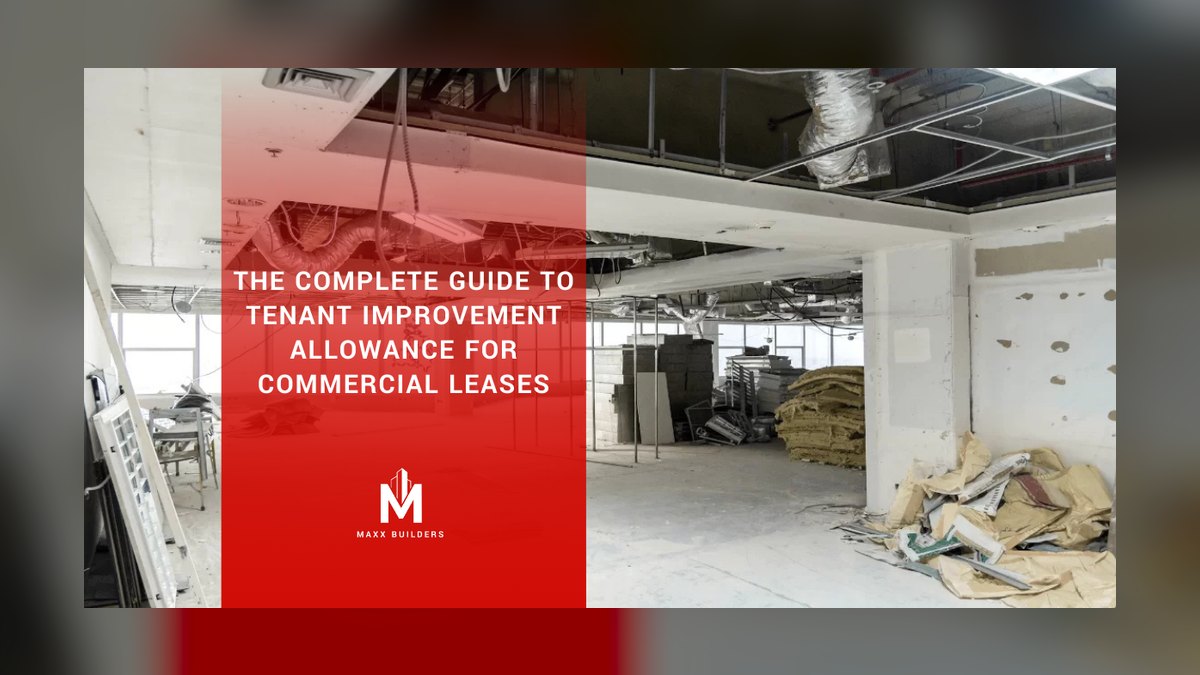
- Cosmetic refresh (paint, carpet, minor wall repairs): ask $10–$20/sq ft. This is the easy yes — it's cheaper than re-marketing and makes the space look maintained. Landlords approve these routinely because they improve the building's appearance for future tours.
- Moderate reconfiguration (some demising walls, updated lighting, new finishes): ask $20–$35/sq ft. This is the sweet spot for most office renewals. You're updating the space to modern standards without structural changes.
- Heavy buildout (new HVAC zones, full reconfiguration, kitchen/lab): ask $35–$60/sq ft and consider amortizing the overage into rent at 8–10% interest rather than taking it as a rent bump you can't see. For specialized spaces like labs or medical offices, the TI can go even higher — up to $100–$150/sq ft — but you'll need a longer term to justify it.
Pro move on amortization: if the landlord offers "we'll do the work and add it to your rent," demand to see the amortization rate. Landlords routinely bury 9–12% interest in amortized TI. Negotiate it down to 6–8%, or better, take the cash allowance and control the construction yourself. For example, a $250,000 TI at 10% amortized over 5 years adds $5,300/month to your rent — but at 6%, it's only $4,830/month. That's $28,200 in savings over the term.

TI Cash vs. Rent Abatement vs. Turnkey
Three ways landlords fund improvements — they are not equal, and your choice depends on your financial situation and the scope of work:
| Structure | What you get | Watch out for |
|---|---|---|
| Cash TI allowance | A check (or reimbursement) of $X/sq ft you control | Reimbursement-only means you front the cash; negotiate progress draws |
| Turnkey buildout | Landlord builds to an agreed spec | Spec creep — get a detailed scope or you'll fight over finishes |
| Free rent in lieu of TI | 2–4 months abated rent you redeploy | Only good if you don't actually need the buildout |

Always prefer a cash allowance you control for any real buildout — turnkey deals let the landlord cheap out on finishes and pocket the difference. With cash, you hire your own contractor, choose your materials, and manage the timeline. The landlord's turnkey vendor may use lower-grade carpet, cheaper paint, or outdated lighting fixtures to hit their profit margin. If the landlord insists on turnkey, demand a "specification schedule" attached to the lease — a detailed list of every material, brand, and finish — and include a clause that any deviation requires your written approval. Also, ask for the right to inspect the work at each milestone and reject substandard materials.
Protecting the Money in the Lease Language
Winning the number means nothing if the lease lets the landlord claw it back. The TI clause is where experienced tenant reps earn their fee — and where inexperienced tenants lose thousands. Demand these four protections:

- Draw schedule, not reimbursement-only. Reimbursement-only forces you to spend $250,000 of your own cash and wait for reimbursement, which can take 30–60 days per invoice. Negotiate progress draws tied to construction milestones — 30% at permit approval, 30% at rough-in, 30% at completion, 10% at punch list sign-off. This keeps your cash flow healthy and gives you leverage if the landlord drags their feet.
- Unused TI converts to rent credit. If you spend less than the allowance, the difference should abate rent — not vanish into the landlord's pocket. For example, if you have a $250,000 allowance but only spend $200,000, the remaining $50,000 should be applied as a rent credit over the next 6–12 months. This incentivizes you to be cost-efficient and prevents the landlord from profiting from your thrift.
- A hard outside date for the landlord to fund. Tie it to a rent-abatement penalty if they're late. Language like: "If Landlord fails to fund any approved draw within 15 business days of receipt of Tenant's invoice, Tenant's rent shall be abated at a rate of 1/30th of monthly rent per day until funding occurs." This prevents the landlord from using your TI as an interest-free float.
- Self-help rights: if the landlord doesn't pay a draw, you can offset it against rent. This is your nuclear option — it means you can withhold rent equal to the unpaid TI amount until the landlord pays. Most landlords will fund immediately rather than face a rent dispute.
These four clauses are where deals are won or lost. The CBRE and JLL occupier-services teams will tell you the same: the TI fight isn't the dollar figure, it's the funding mechanics. A $25/sq ft allowance with good funding terms is worth more than a $40/sq ft allowance with reimbursement-only terms.

Structuring Your TI Proposal: What to Ask For and How to Frame It
When you request tenant improvement money on a renewal, you need to present a clear, justified proposal that makes the landlord's decision easy. Landlords respond best to specific, reasonable requests backed by market data and a clear business case. Start by determining the actual cost of the improvements you need — get a contractor's estimate for the work, whether it's new carpet, paint, HVAC upgrades, or reconfiguring a floor plan. Don't guess; a professional estimate gives you credibility and a ceiling for your ask. Then, propose a TI allowance that covers 50–80% of that cost, with you covering the remainder. Typical renewal TI amounts range from $5–$25 per square foot in most U.S. markets, with higher amounts in Class A buildings in major metros like New York, San Francisco, or Chicago. Frame your request as a win-win: "I need $15/sq ft to modernize the space, which increases the property's value for you and keeps me here for another 5 years." Avoid asking for the full buildout cost you'd get on a new lease — that signals you're not serious and makes the landlord question your business judgment. Instead, tie the TI to specific improvements that directly benefit both parties, like energy-efficient lighting (lowering your operating costs and the building's utility bills) or upgraded common area finishes (boosting the building's appeal for future tours). Landlords are more likely to approve a TI allowance when it's paired with a longer lease term — typically 5–10 years — because they amortize the cost over that period. If your current lease has 2–3 years remaining, propose a renewal that extends to 5–7 years total, with the TI allowance spread across the new term. This structure gives the landlord a clear financial rationale: they're investing in your retention and the building's long-term value, not just writing a check.
Negotiating the TI Allowance: Timing, Leverage, and Concessions
The negotiation for renewal TI money is a delicate dance that requires patience, preparation, and a willingness to walk away. The best time to raise it is 6–9 months before your lease expires — early enough to explore options but late enough that the landlord knows you're serious and has started thinking about vacancy risk. Start with a written request that includes your desired TI amount, a brief description of the improvements, and a proposed timeline. If the landlord balks, pivot to leverage: show them a competing offer from another building. Even a verbal indication of interest from another landlord can shift the conversation — say "we've received a term sheet from another property that includes a $30/sq ft TI allowance." If you don't have a competing offer, emphasize your track record — on-time rent payments, low maintenance requests, and a clean space. Landlords value stable tenants and may offer $3–$10/sq ft just to avoid vacancy and brokerage fees (which can run 4–6% of total lease value). If the landlord flatly refuses, negotiate for concessions instead: free rent for 2–4 months (which effectively gives you cash to fund improvements), a reduced security deposit, or a lower base rent that frees up your budget. You can also ask for a "TI credit" against future rent — for example, the landlord agrees to reimburse you up to $10,000 in improvements over 12 months, deducted from your monthly rent. This is less common but works in softer markets where landlords are desperate to retain tenants. Another tactic: propose a "turnkey" improvement where the landlord handles the work directly, using their vendors. This reduces your risk of cost overruns and often results in faster completion, though you lose control over design choices. If you go this route, get a detailed scope of work in writing, with a guaranteed completion date and a penalty clause for delays (e.g., 1 month free rent for every month late).

Documenting the TI Agreement: Key Clauses to Protect Yourself
Once you've negotiated a TI allowance, get it in writing as part of the lease renewal addendum — verbal promises are worthless in commercial real estate. The agreement should specify: the exact dollar amount (e.g., $50,000), the per-square-foot rate (e.g., $10/sq ft), the timeline for using the funds (typically 6–12 months from lease execution), and the process for reimbursement. Most landlords pay TI allowances as a reimbursement after you submit invoices and lien waivers from contractors — so you'll need to front the cash initially. Negotiate for an "advance" payment of 50% upfront to cover materials and deposits, with the balance paid upon completion. Also include a clause that unused TI funds can be applied to future rent or rolled into a future renewal. This prevents you from losing money if the project comes in under budget. Watch out for "use it or lose it" language — some landlords require you to spend the full allowance within a set period or forfeit the remainder. Push for a 12-month window with a 6-month extension option. Finally, ensure the TI allowance is "non-recourse" — meaning if you default on the lease later, the landlord can't claw back the money. This is standard in most markets, but confirm it in writing. If the landlord insists on a "recapture" clause (common in short renewals under 3 years), negotiate a sliding scale: you repay 50% if you leave within year 1, 25% in year 2, and nothing after that. Document all this in the lease addendum, and have your attorney review it before signing. A poorly written TI clause can leave you paying for improvements out of pocket — or worse, owing the landlord money if you move out early. For more guidance, see How Do I Negotiate a Tenant Improvement Allowance for a Warehouse? and What Is a Tenant Improvement (TI) Allowance and How Do I Get the Landlord to Pay for It?.
Related questions
How do I know if my renewal TI request is reasonable?
Compare your ask to the landlord's vacancy cost. If your TI is less than 50% of their estimated backfill expense (including downtime, commissions, and new-tenant TI), it's reasonable. Use a tenant-rep broker to pull comps from similar renewals in your building and market.
What if my landlord says they never pay TI on renewals?
That's a negotiating tactic, not a policy. Every landlord pays TI when the alternative — vacancy — is more expensive. Counter by showing your competing term sheet and quantifying their backfill cost. If they still refuse, consider relocating or negotiating free rent instead.
Can I get TI money if my lease has a renewal option already?
Yes, but the option typically only locks in rent and term, not TI. You must negotiate the TI separately as part of the renewal discussion. Use your renewal option as leverage — it signals you're committed, but you still need an incentive to stay.
What's the best way to use TI money on a renewal?
Prioritize improvements that directly benefit your operations and the landlord's property value. Cosmetic updates (paint, carpet, lighting) have the fastest ROI. Avoid luxury finishes unless they're critical to your brand. Unused TI should be negotiated as a rent credit.
How do I negotiate TI if my company is struggling financially?
Focus on your track record as a reliable tenant. Landlords value stability over credit risk. Propose a smaller TI allowance tied to a longer lease term, and offer to cover part of the cost. Consider free rent instead of cash TI to preserve your cash flow.
FAQ
Can I really get TI money just for renewing? Yes, though renewal allowances are typically smaller than what you'd get signing a brand-new lease. Landlords value keeping a paying tenant in place because they avoid vacancy, marketing, and the cost of building out for someone new. Frame your ask around that avoided cost, not around your loyalty. A well-prepared tenant with a competing offer can often secure $10–$25/sq ft even on a straightforward renewal.
When should I bring up improvement money? Raise it early, before you signal that you intend to stay. Once a landlord knows you won't move, your leverage to negotiate concessions drops sharply. Open the renewal conversation by exploring your options, including relocation, so the allowance stays on the table. The ideal window is 9–12 months before expiration — late enough to have leverage, early enough to explore alternatives.
What's the difference between a TI allowance and free rent? A TI allowance is money earmarked for physical improvements to the space, often paid as reimbursement after work is completed. Free rent (or rent abatement) is months where you owe no base rent, which you can spend however you like. Landlords sometimes prefer offering one over the other, so it's worth asking which they'd rather give. If you don't need actual construction, free rent is often more valuable because it's unrestricted cash.
Should I ask for a cash allowance or have the landlord do the work? A cash or reimbursement allowance usually gives you more control over contractors, scope, and quality. Landlord-managed buildouts can be convenient but may come at marked-up costs or with finishes you didn't choose. If you take an allowance, get the payment terms and any unused-funds rules in writing. For cosmetic work under $10/sq ft, a turnkey approach can be simpler — just lock the scope in writing.
Does it matter if my lease is NNN? It can affect the math, since under a triple-net structure you're already covering taxes, insurance, and maintenance separately from base rent. That means a landlord's "cost" to keep you is mostly the vacancy risk, which is still real leverage. Keep TI negotiations distinct from how operating expenses are passed through — don't let the landlord conflate TI with NNN charges.
What if the landlord refuses to put TI in writing? Treat a verbal promise as no promise — if it isn't in the signed renewal or an attached work letter, assume it won't happen. Ask for the allowance amount, payment trigger, and deadline to use it spelled out in the document. If they won't commit on paper, that itself tells you how serious the offer is. Consider walking away or escalating to a senior asset manager who may be more willing to document the deal.
How do I handle a landlord who offers TI but with a high amortization rate? Negotiate the rate down to 6–8% from the typical 9–12%. Demand to see the amortization schedule in writing. If they won't budge, ask for a cash allowance instead — you can often secure a lower effective cost by financing the work yourself through a small business loan or equipment lease.
Can I get TI money for a short-term renewal (1–2 years)? It's harder but possible. Landlords are less willing to invest in a short-term commitment because they can't amortize the cost. Propose a smaller TI allowance (e.g., $5–$10/sq ft) tied to cosmetic work only. Alternatively, ask for free rent instead of TI — it gives you cash without the long-term obligation.
Sources
- CBRE Occupier Services: Lease Renewal Strategy and Tenant Improvement Benchmarks
- JLL Office Tenant Improvement Allowance Trends
- Cushman & Wakefield Tenant Advisory: Negotiating Renewals
- NAIOP Office Development and Tenant Improvement Cost Benchmarks
- BOMA International Lease Negotiation and Operating Cost Guidance
- IREM Income/Expense Analysis: Office and Retail Buildings
- The Tenant Advisor: How to Negotiate TI Allowances on Renewals
Related on PULSE
- [How Do I Use Anchor-Tenant Leverage to Get a Better Lease?](/knowledge/bo0231)
- [What Is a Tenant Improvement (TI) Allowance and How Do I Get the Landlord to Pay for It?](/knowledge/bo0002)
- [Should I accept an allowance that depreciates over lease years or get it all upfront?](/knowledge/bo0300)
- [How Do I Get Out of a Commercial Lease Early Without Paying a Fortune?](/knowledge/bo0010)
- [How Do I Get a Lease Termination Right Tied to Permits or Financing?](/knowledge/bo0229)
- [Gross Lease vs Triple Net (NNN): Which One Actually Saves Me Money?](/knowledge/bo0012)
Recently Added — Related
- [What Are the Good and Bad Clauses in a Commercial Lease?](/knowledge/bo0003)
This page will be disappearing soon. Save it to your device for $1 — or read it free while it is here.
@Kory-White- · if Venmo asks, the last 4 of my number are 2012
 pulse-recentWhat is the average cost of a landlord-funded tenant improvement allowance in 2027?
 pulse-recentHow do I insure landlord-installed HVAC and electrical systems separately from my own buildout equipment in 2027?
 pulse-recentHow much should I ask for in a landlord buildout allowance in 2027?
 pulse-recentHow do I calculate a realistic landlord-funded buildout budget for a retail space in 2027?
 pulse-recentHow do I sequence the concrete steps for a buildout so I don't run out of cash in 2027?
 pulse-recentHow Much Do Draw-Inspection and Disbursement Fees Cost on a Landlord-Funded Buildout in 2027?
 pulse-recentHow do I negotiate a landlord-funded buildout budget when the allowance is fixed in 2027?
 pulse-recentHow much cash reserve should I keep on hand while waiting for the landlord to reimburse my TI allowance draws in 2027?
 pulse-recentHow much should I budget in cash reserves in case my landlord pays out the TI allowance in installments instead of upfront in 2027?
 pulse-recentHow Do I Calculate My Real Cost When the Landlord Funds the Buildout in 2027?