


What is the average landlord construction allowance per square foot for a retail buildout in 2027?
Quality
Certified
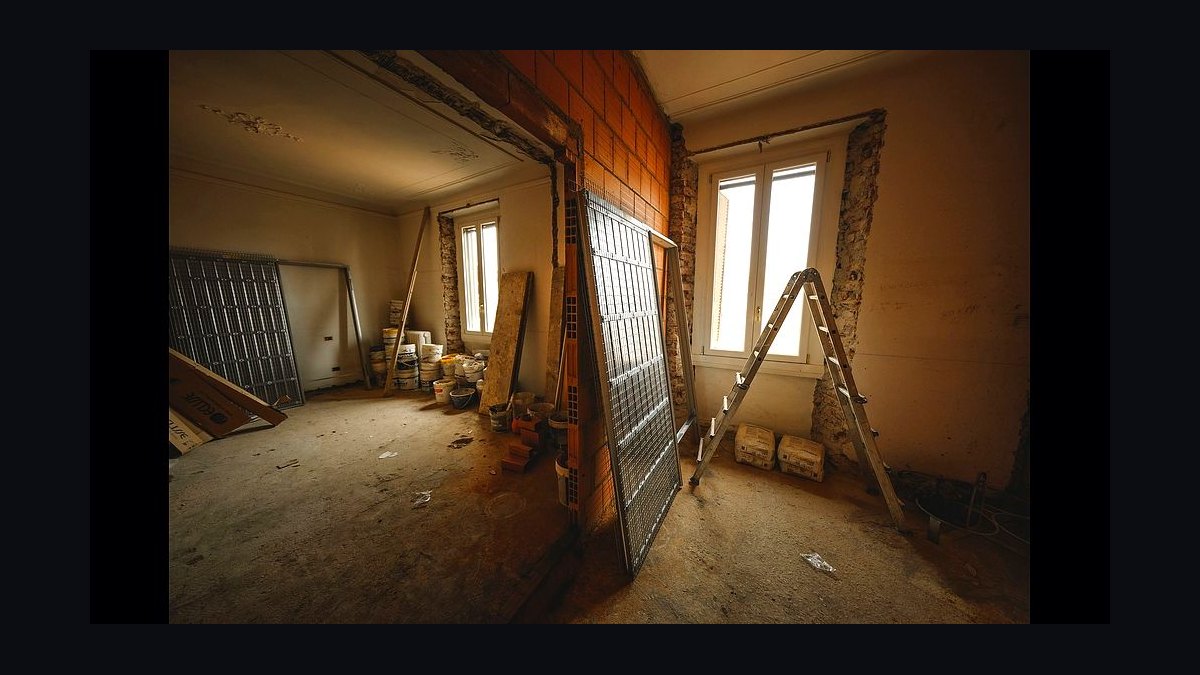
For a retail buildout in 2027, the average landlord construction allowance typically ranges from $15 to $50 per square foot, with most mid-market deals landing between $20 and $35 per square foot. This allowance represents the landlord's financial contribution toward tenant improvements (TI), often covering 20% to 50% of total buildout costs. Premium urban locations and creditworthy anchor tenants can command $60 per square foot or more, while secondary markets may offer only $10 to $15 per square foot. The final number depends heavily on lease length, space condition, and local market dynamics.
The numbers you should expect
The construction allowance a landlord offers for a retail buildout in 2027 is not a single figure — it is a negotiated range shaped by dozens of variables that shift from deal to deal. To anchor your expectations, consider the following benchmarks drawn from current leasing activity across major U.S. markets.
For a typical inline retail space in a strip center or community shopping plaza, landlords commonly offer between $15 and $30 per square foot. These spaces are usually delivered in "vanilla box" condition — meaning the landlord provides four walls, a roof, a concrete floor, and basic electrical and plumbing stubs — but little else. The tenant then uses the allowance to construct interior partitions, install flooring, add HVAC systems, build out restrooms, and complete finishes.
In regional malls and high-traffic lifestyle centers, the allowance often climbs to $30 to $50 per square foot. Landlords in these properties understand that a polished, brand-appropriate buildout drives foot traffic and benefits the entire center. They are also competing against other retail destinations for the same desirable tenants, which pushes allowances upward. A national apparel brand or a well-capitalized restaurant group can often secure $40 to $60 per square foot in these settings, particularly when committing to a 10-year or longer lease term.
For ground-floor retail in dense urban corridors — think SoHo in New York, Michigan Avenue in Chicago, or Fillmore Street in San Francisco — allowances can reach $75 to $100 per square foot, though these deals are the exception rather than the rule. The high construction costs in these markets, combined with the premium rents tenants pay, justify the larger landlord contribution. However, tenants should expect these generous allowances to come with strings attached: longer lease terms, higher base rents, and often a requirement to use the allowance within a specified timeframe.
On the opposite end of the spectrum, in secondary and tertiary markets, allowances may drop to $5 to $15 per square foot. Landlords in these areas face lower rental rates and thinner profit margins, limiting what they can reasonably contribute. In some cases, particularly for smaller spaces under 2,000 square feet, landlords may offer no allowance at all, expecting the tenant to absorb the full cost of the buildout.
The total cost of a retail buildout in 2027 also matters when evaluating whether an allowance is fair. For a basic retail fit-out, expect to pay $40 to $80 per square foot in most markets. For restaurants with commercial kitchens, costs run $100 to $200 per square foot. For medical or dental offices — which often occupy retail space — buildout costs can exceed $250 per square foot due to specialized plumbing, ventilation, and equipment requirements. When the allowance covers only $20 per square foot but the buildout costs $120 per square foot, the tenant must bridge a significant gap.
What drives those numbers
The construction allowance is not arbitrary — it emerges from a negotiation between two parties with different incentives. Understanding what drives the numbers helps you predict what a landlord might offer before you even sit down at the table.
Market conditions set the baseline. When retail vacancy rates are high — as they are in many suburban markets still recovering from the pandemic-era shift to e-commerce — landlords become more generous with allowances to attract tenants. A landlord with a 15% vacancy rate in a shopping center is far more likely to offer $40 per square foot than one with a 95% occupancy rate. Similarly, when construction costs rise, as they have steadily through the mid-2020s due to labor shortages and material price inflation, landlords must increase their dollar-per-square-foot contribution just to maintain the same level of buildout quality.
Property characteristics also matter enormously. A landlord delivering a space with existing HVAC, electrical panels, and plumbing rough-ins can offer a lower allowance because the tenant's construction scope is smaller. Conversely, a raw shell space — common in new developments or conversions — requires a larger allowance to make the space usable. Property class plays a role too: Class A properties in prime locations generate higher rents, giving landlords more room to offer generous allowances while still maintaining their yield.
Tenant profile is perhaps the most underappreciated driver. A national credit tenant with a strong balance sheet reduces the landlord's risk, justifying a larger allowance. A landlord might offer a 20-year lease to a Whole Foods or a CVS with a $60 per square foot allowance because the certainty of rent collection over two decades offsets the upfront cost. A local startup retail concept, by contrast, represents higher risk — the landlord may cap the allowance at $15 per square foot or require additional security deposits.

Lease structure ties everything together. The allowance is rarely a gift; it is typically amortized into the base rent over the lease term. A landlord offering $30 per square foot on a 10-year lease is effectively adding $3 per square foot per year to the rent. Tenants who understand this dynamic can negotiate either a lower allowance in exchange for lower rent or a higher allowance with a corresponding rent increase — whichever better suits their capital position.
Lease, TI allowance, and negotiation levers
The construction allowance is one component of a broader lease negotiation, and treating it in isolation is a common mistake. Savvy tenants and brokers evaluate the allowance in the context of the full lease economics: base rent, escalations, operating expenses, free rent periods, and excess rent provisions.
The concept of "excess rent" deserves particular attention. When a landlord offers an allowance that exceeds the actual cost of the buildout — which happens when a tenant completes a project under budget — the landlord may require the tenant to pay "excess rent" on the unused portion. This provision protects the landlord's yield by ensuring they still receive a return on the full allowance amount. Tenants should negotiate this provision carefully, ideally securing the right to apply unused allowance toward other lease obligations or equipment purchases.
Another critical lever is the "work letter," the exhibit to the lease that specifies the scope of work the allowance covers. A vague work letter is a recipe for disputes. The best work letters include: a detailed description of the base building systems, a list of tenant improvements the landlord will complete, a timeline for construction, and a clear process for change orders. Tenants should push for a work letter that allows them to manage the construction process themselves, rather than having the landlord act as general contractor — this often saves 10% to 20% on construction costs.
Timing also matters. Many landlords require that the allowance be used within a certain period — typically 6 to 12 months after lease execution. If the tenant fails to complete construction within that window, the unused allowance may be forfeited. This creates urgency but also risk: a tenant who signs a lease in January but cannot begin construction until June due to permitting delays may lose a significant portion of the allowance. Negotiating a longer use period, or a clause that extends the deadline for delays beyond the tenant's control, is a smart move.
The interplay between allowance and free rent is another lever worth understanding. A landlord might offer either $30 per square foot in construction allowance or six months of free rent on a 10-year lease. Depending on the tenant's situation, one may be far more valuable than the other. A well-capitalized tenant with strong construction management capabilities might prefer the free rent, using their own capital to build out the space and preserving the rent savings as a buffer. A tenant with limited upfront capital may prefer the allowance, even if it means paying rent from day one.

Finally, consider the "allowance vs. rent" trade-off explicitly. If a landlord offers $25 per square foot in allowance but the tenant could negotiate $20 per square foot with $5 per square foot lower annual rent — which is better? On a 10-year lease, the lower rent saves $50 per square foot over the term, far exceeding the $5 per square foot difference in allowance. Tenants who fixate on the allowance number alone often leave significant value on the table. The total lease value — not the allowance — should drive the negotiation.
Sequencing the buildout
Understanding how the construction allowance flows through the buildout process helps tenants manage their timelines and budgets effectively. The sequence below outlines a typical retail buildout from lease signing to store opening.
The first step after lease execution is finalizing the work letter and construction documents. This phase often takes 4 to 8 weeks and involves architects, engineers, and the landlord's review team. Tenants who bring pre-designed plans to the negotiation — rather than starting from scratch after lease signing — can compress this timeline significantly.
Permitting follows. Depending on the municipality, obtaining a building permit for a retail buildout takes anywhere from 2 to 12 weeks. Dense urban jurisdictions like New York or San Francisco are at the slower end; suburban jurisdictions are often faster. Tenants should factor this into their opening timeline and negotiate lease language that accounts for permitting delays.
The draw process — when the tenant receives the construction allowance — is a common point of confusion. Landlords typically disburse the allowance in installments tied to construction milestones: 10% to 20% at commencement, 30% to 40% at rough-in, and the final balance at substantial completion. Some landlords require tenants to front the full construction cost and then reimburse them upon completion, which can strain tenant cash flow. Others disburse monthly based on invoices from the general contractor.
Construction itself typically takes 8 to 20 weeks for a standard retail buildout, depending on scope. A simple cosmetic refresh might take 6 weeks; a restaurant with a full commercial kitchen might take 16 to 24 weeks. During this period, the tenant or their general contractor should submit draw requests at each milestone, documenting completed work with photographs and invoices. Landlords typically review and disburse within 10 to 15 business days of receiving a complete draw package.
The final phase — punch list and closeout — is where tenants often lose money. The allowance is typically tied to substantial completion, but if the punch list drags on, the final draw may be delayed. Tenants should push for a clear definition of substantial completion in the lease and ensure the landlord's approval process for the final draw is time-bound. Once the space is open and all draws are received, the tenant should reconcile the final construction costs against the allowance, understanding that any overage is their responsibility and any underage may be subject to the excess rent provisions discussed earlier.
Related questions

How does the landlord construction allowance differ between retail and office space?
Office buildout allowances typically range from $50 to $100 per square foot, significantly higher than retail, because office spaces require more extensive infrastructure such as raised floors, enhanced HVAC, and extensive interior demising. Retail allowances are lower because retail spaces are often delivered in more finished condition and require less specialized systems.
Can a tenant negotiate a higher construction allowance in exchange for a longer lease term?
Yes, this is a common and effective negotiation strategy. Landlords amortize the allowance over the lease term, so a longer term allows them to offer a higher allowance while maintaining their yield. Adding five years to a lease term might justify an additional $10 to $15 per square foot in allowance.
What happens to the unused portion of a construction allowance?
The treatment of unused funds depends on the lease's excess rent provisions. Some landlords require the tenant to pay rent on the unused amount; others allow the tenant to apply it toward equipment, signage, or other improvements. Negotiating this provision upfront is essential to avoid unexpected costs.
How do construction cost inflation and material prices affect the 2027 allowance?
Construction costs have risen 3% to 5% annually in recent years, driven by labor shortages and material price volatility. Landlords have responded by increasing nominal allowance amounts, but the purchasing power of those allowances has remained flat. Tenants should expect to contribute more out-of-pocket in 2027 than they would have in 2020 for the same buildout scope.
FAQ
What is the average landlord construction allowance per square foot for a retail buildout in 2027?
The average falls between $20 and $35 per square foot for most retail spaces, with $15 to $50 per square foot as the broader realistic range. Premium locations and creditworthy tenants can secure $40 to $60 per square foot, while secondary markets may offer only $10 to $15. The allowance typically covers 20% to 50% of total buildout costs.
Is the construction allowance the same as the total buildout cost?
No, they are entirely different figures. The allowance is the landlord's contribution toward tenant improvements, while the buildout cost is the total expense to construct the space. In 2027, a typical retail buildout costs $40 to $80 per square foot, meaning tenants often cover $20 to $50 per square foot out-of-pocket after applying the allowance.
How is the construction allowance paid out?
Allowances are typically disbursed in installments tied to construction milestones: 10% to 20% at commencement, 30% to 40% at rough-in, and the final balance at substantial completion. Some landlords require the tenant to fund the entire buildout and reimburse later, while others pay directly to the general contractor upon invoice approval.
Does the landlord construction allowance affect the rent?
Yes, the allowance is typically amortized into the base rent over the lease term. A $30 per square foot allowance on a 10-year lease adds approximately $3 per square foot per year to the rent. Tenants should evaluate the allowance alongside rent to understand the true lease economics.
What is a vanilla box delivery condition?
A vanilla box means the landlord provides the basic shell: four walls, a roof, a concrete floor, and minimal electrical and plumbing stubs. The tenant is responsible for all interior improvements — partitions, finishes, HVAC, restrooms, and storefront work. This delivery condition is common and typically results in a higher allowance than a fully finished space.
Can the construction allowance be used for equipment and fixtures?
Usually not, but this is negotiable. Most work letters restrict the allowance to hard construction costs — labor, materials, permits, and professional fees. Some landlords allow a portion of the allowance to cover lighting fixtures, signage, or even kitchen equipment, particularly for restaurant tenants. Tenants should request this flexibility during lease negotiation.
Sources
- https://www.cbre.com/insights/reports/retail-market
- https://www.jll.com/insights/research/retail
- https://www.costar.com/article/category/retail
- https://www.icsc.org/
- https://www.rcanalytics.com/retail-market-reports/
- https://www.cushmanwakefield.com/en/insights/retail
- https://www.naiop.org/research-and-publications/
- https://www.bisnow.com/national/news/retail
Related on PULSE
- How to estimate total retail buildout costs beyond the landlord allowance
- Negotiating the work letter: a tenant's guide to TI allowances
- Restaurant buildout special considerations for kitchen infrastructure
- Retail lease exit strategies when the buildout allowance is not yet amortized
- The landlord's perspective on construction allowances and tenant credit risk
- Comparing TI allowances across asset classes: retail, office, and industrial
This page will be disappearing soon. Save it to your device for $1 — or read it free while it is here.
@Kory-White- · if Venmo asks, the last 4 of my number are 2012
This page is gone.
This one is off the shelf now. $1 keeps it on your phone for good — the whole page, pictures and diagrams included.
 buildoutsHow Do I Use Anchor-Tenant Leverage to Get a Better Lease in 2027?
 buildoutsWhat Insurance Does My Lease Require and How Do I Not Overpay in 2027?
 pulse-recentHow do I sequence the concrete steps of a buildout to avoid out-of-pocket costs in 2027?
 buildoutsWhat Is a Relocation Clause and Why Is It Dangerous in 2027?
 buildoutsWhat Is Gross-Up in a Lease and How Does It Cost Me in 2027?
 buildoutsHow Do I Get the Landlord to Deliver the Space in Better Condition (Warm Shell vs Turnkey) in 2027?
 pulse-recentHow do I calculate a fair landlord fund contribution for my buildout in 2027?
 buildoutsHow Do I Negotiate a Tenant Improvement Allowance for a Warehouse in 2027?
 buildoutsHow Do I Phase Rent to Match My Ramp-Up Revenue in 2027?
 buildoutsHow Do I Negotiate Parking Ratios for My Business in 2027?