


Best Electric Sedans with the Longest Range in 2027
Quality
Certified
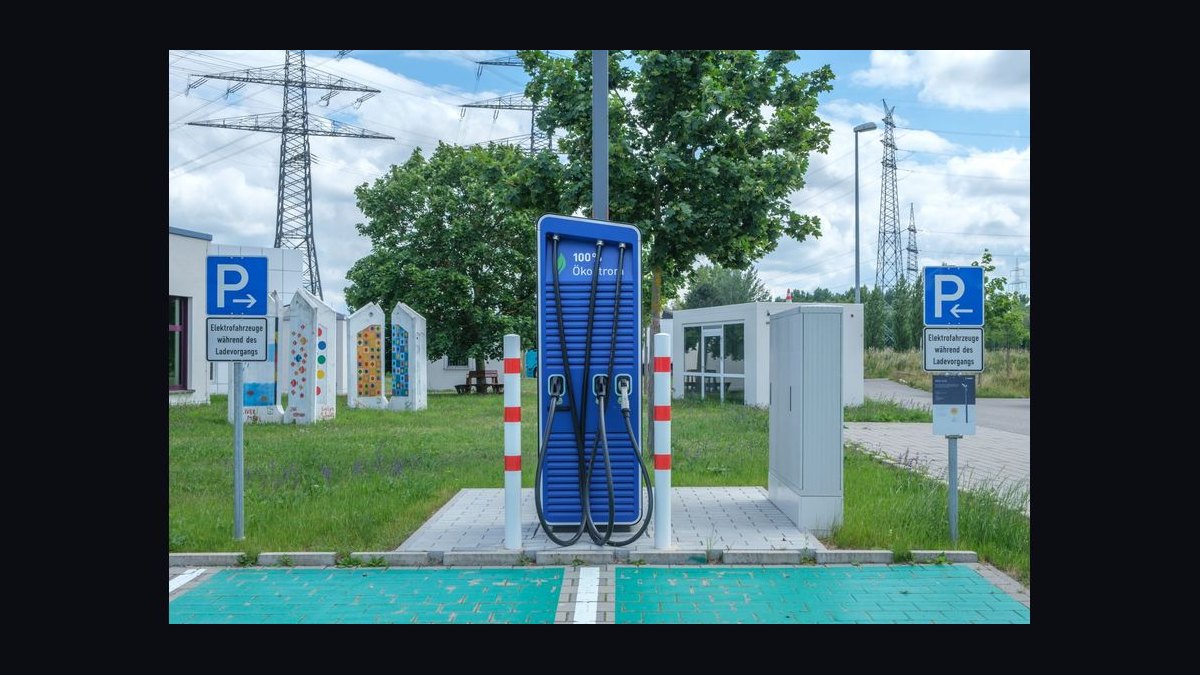
Expect the longest-range electric sedans in 2027 to land near 400–500 miles EPA, with mainstream models clustering at 300–400 miles. Range leadership comes from large 100+ kWh packs, sub-0.21 drag coefficients, heat pumps, and efficiency near 4 mi/kWh — not battery size alone. Real-world highway range typically runs 15–25% below sticker.
The outcome you should expect from a 2027 long-range sedan
If you are shopping the top of the electric sedan market in 2027, the honest expectation is a car that shows somewhere between 400 and 500 miles on its EPA label, and delivers roughly 320 to 420 of those miles in mixed real-world driving. That is the band the segment has been converging on. The Lucid Air Grand Touring has already been rated above 500 miles EPA in earlier model years, and the Mercedes-Benz EQS, Tesla Model S, and BMW i7 have all posted labels in the 350 to 400 mile neighborhood depending on wheel and trim choice. Nothing about the 2027 model year suggests a discontinuity — it suggests consolidation, where more models reach the numbers a handful of flagships reached first.
The important shift is that range stops being the headline differentiator and starts being a hygiene factor. Once a sedan clears roughly 350 miles, the marginal value of another 50 miles drops sharply for most drivers, because the binding constraint moves from "can I get there" to "how fast can I add 200 miles when I stop." A car with 400 miles of range and a 15-minute 10–80% charge is a better road-trip tool than a car with 500 miles of range and a 40-minute charge, even though the second car wins the spec sheet. Buyers who have lived with an EV for a year almost universally report that charge curve and route reliability matter more than the last increment of pack capacity.
Practically, that means the outcome you should expect is not "a car that never needs charging" but "a car that removes charging from your weekly thinking entirely and makes it a twice-a-year road-trip logistics question." For a driver covering 40 miles a day with home Level 2 charging, a 400-mile sedan is charged roughly once a week at home and never in public except on long trips. That is the actual lived outcome, and it is available across a much wider price band in 2027 than it was in 2022.

There is also a second-order outcome worth naming: resale and lease residuals. Long-range trims historically hold value better than short-range trims of the same model, because the used buyer three years out is buying into a degraded pack. A sedan that starts at 400 miles and degrades 10% over five years still shows 360 miles. A sedan that starts at 260 miles and degrades the same 10% shows 234, which lands under the psychological threshold many second-owners will accept. If you are optimizing total cost of ownership rather than sticker price, the long-range trim frequently pencils out better than the delta suggests, though this varies enough by market that it should be checked against local listings rather than assumed.
Finally, expect the efficiency story to get more attention than the capacity story. A sedan achieving 4.0 miles per kWh with a 100 kWh usable pack gets 400 miles. A sedan achieving 3.0 mi/kWh needs a 133 kWh pack to match it — a pack that is heavier, more expensive, slower to charge to the same state of charge in absolute time, and more carbon-intensive to manufacture. The efficient car wins on every axis except the one nobody measures. Watch the mi/kWh figure at least as closely as the kWh figure.
What actually drives range in an electric sedan
Range is an output of four inputs multiplied together: usable pack energy, aerodynamic drag, rolling resistance and mass, and parasitic loads including climate control. Understanding which lever a given car pulled tells you far more about how it will behave on your commute than the label number does.

Usable pack energy. Manufacturers quote gross and usable capacity differently, and the buffer between them exists to protect cell longevity. A 118 kWh gross pack may offer 112 kWh usable. Long-range sedans in this class generally sit between 95 and 120 kWh usable. Going much beyond that runs into diminishing returns: every additional kWh adds roughly 5 to 7 kg of pack mass, which itself consumes energy to accelerate and to haul up grades.
Aerodynamic drag. This is where sedans structurally beat SUVs and where the segment's leaders separate themselves. Drag force scales with the square of velocity, and drag power scales with the cube, so aero dominates above about 45 mph. The Mercedes EQS reached a drag coefficient of 0.20, among the lowest ever certified for a production car; the Lucid Air and Tesla Model S sit in the same low-0.2 territory. A sedan at Cd 0.21 with a modest frontal area will consume dramatically less energy at 75 mph than a crossover at Cd 0.29 with a larger frontal area, even with identical packs. This is precisely why the Longest range crown has stayed with sedans rather than migrating to the more popular SUV body styles.
Mass and rolling resistance. Every 100 kg costs a few percent of range in mixed driving, more in stop-and-go. Wheel and tire choice is the single most under-appreciated variable a buyer controls: moving from a 19-inch aero wheel with low-rolling-resistance rubber to a 21-inch performance wheel with summer tires routinely costs 8 to 15% of rated range on the same car. That is a bigger swing than most model-to-model differences within the segment.
Parasitic and climate loads. A resistive cabin heater can draw 5 to 7 kW in deep cold, which at highway speed is comparable to the propulsion load itself. A heat pump typically cuts that to 1.5 to 2.5 kW for the same cabin comfort. This is why heat pump availability is a range spec, not a comfort spec, and why winter range gaps between otherwise similar cars are so wide.

A useful mental model: pack size sets the ceiling, aerodynamics sets how fast you spend it at speed, and climate control sets how much you lose before you have moved at all. Buyers fixate on the first and ignore the third, which is why the winter complaint cycle repeats every January.
One adjacent note worth carrying over from the broader EV market: these same four levers govern electric crossovers, trucks, and vans, but the weighting changes. On a pickup, frontal area and payload dominate so completely that aero refinements yield less than they do on a sedan. On a city delivery van, parasitic and door-open climate losses dominate. The sedan is the body style where aero optimization pays the highest return, which is the structural reason the range leaderboard looks the way it does.
Benchmarks and realistic ranges
Treat the EPA label as a comparison instrument, not a promise. It is a repeatable test that lets you rank cars against each other; it is not a prediction of your Tuesday.
Rated versus real, by scenario. As a working rule for long-range Electric Sedans:

- Mixed suburban driving, 55–70°F, 19–20 inch wheels: roughly 95–105% of label. Regenerative braking in stop-and-go often lets efficient sedans beat their rating here.
- Steady 70 mph highway, mild weather: roughly 80–88% of label. A 400-mile car realistically covers 320–350.
- Steady 80 mph highway: roughly 68–78% of label. The cube law on drag power is unforgiving. A 400-mile car may show 275–310.
- 20°F winter, preconditioned, heat pump equipped: roughly 65–75% of label.
- 10°F winter, resistive heat, cold-soaked start: 50–60% of label is common and not a defect.
- Towing or a loaded roof rack: expect 40–55% of label. A roof box alone can cost 15–20% on a car this aerodynamically optimized, because you are wrecking the exact surface the engineers spent years refining.
Charging benchmarks matter as much as range. The practical figure is not peak kW, which is a marketing number held for seconds, but average kW across 10–80%. Cars in this class typically add 150 to 200 miles in 15 to 20 minutes on a well-functioning 350 kW DC fast charger when the pack is preconditioned. Architecture matters: 800-volt systems generally sustain higher average power and tolerate heat better than 400-volt systems, though a well-managed 400-volt pack with strong cooling can match a mediocre 800-volt implementation.
The 200-mile leg heuristic. For road-trip planning on any car in this segment, plan legs of roughly 200 miles between charges regardless of whether the car is rated at 350 or 500. You arrive with a comfortable buffer, you stop while the battery is in the fast part of its charge curve rather than the slow tail above 80%, and total trip time is usually lower than fewer, longer stops. Drivers who insist on running to 8% and charging to 95% consistently post worse door-to-door times than drivers who take shorter, more frequent stops.
Degradation benchmarks. Modern liquid-cooled packs with LFP or well-managed NMC chemistry commonly show 8–12% capacity loss over 100,000 miles, with the steepest portion occurring in the first 20,000 miles and then flattening. Habitual DC fast charging to 100% and frequent deep discharges accelerate this; daily charging to 80% on Level 2 slows it. Federal regulations in the United States require EV batteries to be warranted for at least 8 years or 100,000 miles, and many manufacturers set a capacity-retention threshold, commonly around 70%, below which the pack is replaced under warranty.

Efficiency benchmarks. Look for 3.5 mi/kWh or better as the marker of a genuinely efficient long-range sedan; 4.0+ is excellent. Below 3.0 mi/kWh, the car is buying its range with mass rather than engineering, and you will feel that on charge times and tire wear.
Cross-shopping context. It is worth noting that the same platform sold as a sedan and as a crossover typically shows a 10–20% range penalty in crossover form, almost entirely from aero and mass. If Range is your top priority and you are flexible on body style, the sedan is the structurally correct answer — this is not brand preference, it is physics.
Risks, edge cases, and failure modes
The trim-and-wheel trap. The headline range number in every advertisement belongs to exactly one configuration, usually the base wheel with the lowest-rolling-resistance tire and no performance package. Add the larger wheels, the all-wheel-drive motor, and the panoramic glass, and you may be looking at 12–18% less range than the number that sold you the car. Always confirm the EPA figure for the exact build you are ordering, not the model line.
Cold-weather cliff. The failure mode is not gradual. Below roughly 20°F, a car without a heat pump and without preconditioning can lose 40–50% of usable range, and DC fast charging speeds drop sharply because the battery management system limits current into a cold pack. The mitigation is straightforward and frequently ignored: precondition the pack while still plugged in at home, and use the navigation system's route-to-charger function so the car warms the pack before arrival. Drivers who skip this and then blame the car for a 45-minute charging session have usually diagnosed the wrong problem.

Charging infrastructure reliability, not availability. The realistic risk on a long trip is arriving at a station where two of four stalls are offline. The mitigation is planning to a station with a high stall count rather than the closest one, and keeping a secondary station within the remaining buffer. Access to the North American Charging Standard network has broadened considerably through adapters and native ports across brands, which materially reduces this risk compared to a few years ago, but it does not eliminate it.
Software-defined range regressions. Over-the-air updates occasionally change thermal management or charge limits in ways that alter real-world range. This cuts both directions — updates have improved efficiency as often as they have constrained it — but it means the car you buy is not a fixed artifact. Read release notes.
Battery health and the second owner. A pack at 88% of original capacity is functionally fine and will be priced as though it is compromised. If you are buying used in this segment, insist on a battery health report rather than inferring from the dash range estimate, which is a rolling average of recent driving and can read low simply because the previous driver did short cold trips.
The garage-less owner. Every range calculation above assumes home charging. Without it, a long-range sedan is still workable but the economics change: you are paying DC fast-charging rates rather than residential electricity, which can be two to three times the per-mile cost, and you are putting more fast-charge cycles on the pack. This is the single biggest factor that turns a good EV purchase into a frustrating one, and it has nothing to do with the car.
Insurance and repair. Structural pack integration means that certain collision damage totals a vehicle that would have been repairable in a combustion car. Premiums in this segment reflect that. Get a quote before you sign, not after.
Range anxiety as a measurement problem. A common edge case: the guess-o-meter shows a number based on recent efficiency, so a driver who just did a cold uphill run sees a pessimistic figure and panics. Switching the display to percentage rather than miles removes most of this. It is a user-interface fix for what feels like an engineering problem.
A practical plan for choosing and living with one

Treat this as a sequence rather than a single decision. The order matters, because the most common buying mistake is optimizing the spec sheet before establishing what the car actually has to do.
Step one — measure your real demand. Log two to three weeks of actual driving. Most people dramatically overestimate their daily mileage and dramatically underestimate their two or three annual long trips. You are sizing for the daily case and planning for the long case, not sizing for the long case.
Step two — settle home charging first. Get an electrician's quote for a 240-volt circuit before you shop cars. A 40-amp circuit delivering roughly 9.6 kW adds 30–40 miles per hour of charging, which covers essentially any daily pattern overnight. If home charging is impossible, evaluate workplace or reliable nearby charging before committing, because it changes the whole calculus.
Step three — shortlist on efficiency, then range. Rank candidates by mi/kWh first, then by rated range, then by charge curve. This ordering surfaces cars that will feel better to live with rather than cars that photograph well on a comparison chart.
Step four — test drive at highway speed, in the wheel size you will buy. A 25-minute loop at 70–75 mph tells you more than an hour in town. Watch the consumption readout, not the range estimate.
Step five — plan one real trip before purchase. Take your most common long route and plot it in a route planner using the specific model. If it needs one stop, the car works. If it needs three, look harder at charge curve or at a different model.

Step six — set daily charge limits and forget the car. Charge to 80% daily on Level 2, go to 100% only before a long trip and depart soon after. This single habit accounts for most of the difference between packs that age well and packs that do not.
Adjacent consideration — leasing versus buying. Battery and software improvement cycles in this segment remain fast enough that a three-year lease is a defensible hedge, particularly if incentive structures in your jurisdiction flow more cleanly through a lease than a purchase. Buyers planning to keep a car eight or more years generally do better purchasing, provided the pack warranty terms are strong.
Adjacent consideration — the second car. Households with two vehicles have an easier path: the long-range sedan absorbs the commuting and the trips, and the second vehicle covers the towing and hauling edge cases. Single-car households should weigh those edge cases much more heavily, and should be honest about how often they actually occur rather than how often they are imagined.
Related questions
How much range do I actually need day to day?
Most drivers cover under 40 miles daily. With home charging, a 250-mile sedan handles that indefinitely. Longer range primarily buys road-trip convenience and winter margin, not daily capability. Size for your commute, plan for your trips.
Does fast charging damage the battery?
Occasional DC fast charging is fine and thermally managed. Habitual fast charging to 100%, especially in heat, accelerates degradation measurably. Level 2 at home to 80% daily is the low-stress pattern that keeps packs healthy across 100,000 miles.
Why do sedans out-range SUVs on the same platform?
Aerodynamics and mass. A sedan's lower frontal area and drag coefficient cut highway energy use substantially, since drag power scales with the cube of speed. Same battery, same motors, 10–20% more range in sedan form.
Is 800-volt architecture worth paying for?

It generally supports higher sustained charging power and better thermal headroom, shortening 10–80% times. But a well-cooled 400-volt pack can match a poorly implemented 800-volt one. Compare actual charge curves rather than the voltage number.
How much range will I lose after five years?
Typically 8–12% on a well-managed pack, with most loss occurring early then flattening. A 400-mile car realistically shows 350–370 miles at year five. Manufacturer warranties commonly guarantee around 70% retention for 8 years or 100,000 miles.
FAQ
What is the longest-range electric sedan available?
The Lucid Air has held the top EPA range position in recent model years, with Grand Touring trims rated above 500 miles on the most efficient wheel configuration. Tesla's Model S, the Mercedes-Benz EQS, and the BMW i7 follow in the roughly 350–410 mile band depending on trim and wheels. Because model-year ratings shift with hardware and software revisions, confirm the current EPA figure for the exact build on the official listing rather than relying on a headline number from a prior year.
Why is my real-world range lower than the sticker?
The EPA cycle includes substantial low-speed driving where EVs are most efficient, and it is run in moderate temperatures. Your highway commute at 75 mph in 30°F weather with the heater running exercises none of those favorable conditions. A 15–25% shortfall on the highway in mild weather is normal, and 30–45% in deep cold without a heat pump is also normal. This is a measurement-methodology gap, not a fault.

Does a heat pump make a meaningful difference?
Yes, and it is one of the highest-value options in cold climates. Resistive cabin heating can draw 5–7 kW, comparable to the propulsion load at moderate speeds. A heat pump typically delivers equivalent comfort at 1.5–2.5 kW by moving heat rather than generating it, and many designs also scavenge waste heat from the motors and pack. The practical effect is often 10–20 percentage points of retained winter range.
Should I charge to 100% every night?
No. Daily charging to 80% on Level 2 substantially reduces calendar and cycle aging, and for most drivers 80% of a long-range sedan is still 300+ miles. Charge to 100% before a long trip and begin driving shortly after reaching full, since sitting at high state of charge is the stressful condition. LFP chemistry is an exception — those packs generally want a periodic full charge for cell balancing and state-of-charge accuracy.
Do bigger wheels really cost that much range?
Yes, more than most buyers expect. Moving from a 19-inch aero wheel with low-rolling-resistance tires to a 21-inch performance wheel with summer rubber commonly costs 8–15% of rated range on the same vehicle. The penalty comes from added unsprung mass, higher rolling resistance, and disturbed airflow around the wheel arches. If maximum range is the goal, the smaller aero wheel is the single most effective option choice available.
Is range still the right thing to optimize for?
Only up to a point. Past roughly 350 miles, charge curve, charging network access, and efficiency matter more to the actual ownership experience than additional rated miles. A car that reliably adds 200 miles in 18 minutes on a network with high stall counts beats a longer-range car that charges slowly. Rank candidates on the combination, not on the single largest number.
Sources
- https://www.fueleconomy.gov/feg/evsbs.shtml
- https://www.epa.gov/greenvehicles/electric-vehicle-myths
- https://afdc.energy.gov/vehicles/electric
- https://www.nrel.gov/transportation/
- https://www.energy.gov/energysaver/electric-vehicles
- https://www.consumerreports.org/cars/hybrids-evs/
- https://www.iea.org/reports/global-ev-outlook-2024
- https://www.sae.org/standards/content/j1634_202104/
- https://www.nhtsa.gov/laws-regulations/corporate-average-fuel-economy
Related on PULSE
- Fastest-charging EVs: what 10–80% times actually mean
- Heat pumps versus resistive heating in winter EV range
- How to plan a 1,000-mile EV road trip without wasting time
- EV battery degradation: what 100,000 miles really does to a pack
- Sedan versus SUV: the aerodynamic case for the lower body style
- Home Level 2 charging setup: circuits, costs, and common mistakes
This page will be disappearing soon. Save it to your device for $1 — or read it free while it is here.
@Kory-White- · if Venmo asks, the last 4 of my number are 2012
This page is gone.
This one is off the shelf now. $1 keeps it on your phone for good — the whole page, pictures and diagrams included.
 pulse-carsBest Cars for Long-Distance Commuting in 2027 (Ranked)
 pulse-carsBest Used Wagons Under $25,000 in 2027 (Ranked)
 pulse-carsTop 10 electric cars with the fastest charging speeds — Best Overall + Best Value in 2027
 pulse-carsBest Honda Pilot Generations (Ranked) in 2027
 pulse-carsBest Cars for Road Trips in 2027
 pulse-carsBest SUVs for Short Drivers in 2027 (Ranked)
 pulse-carsBest Cars for New Drivers in 2027 (Ranked)
 pulse-carsBest Honda Accord Hybrid Generations (Ranked) in 2027
 pulse-carsTop 10 Three-Row SUVs in 2027
 pulse-carsBest Cars for Teen Drivers in 2027 (Ranked)