


How long does it take to charge an electric sedan on a road trip in 2027?
Quality
Certified
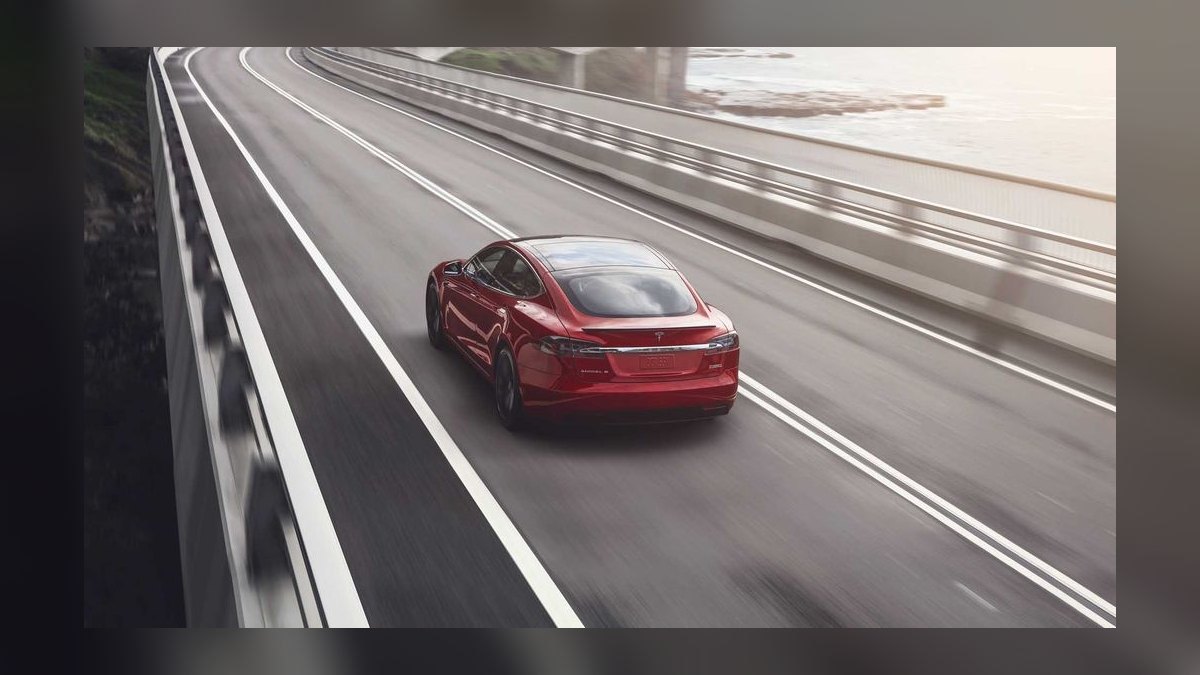
On a 2027 road trip, an electric sedan typically needs 15 to 30 minutes per DC fast-charging stop to go from roughly 10% to 80% state of charge, adding 150 to 250 miles of range. Stops are short because you rarely charge to full — you charge only enough to reach the next reliable plug.
The stop you actually plan around
Picture a 600-mile Friday drive in a mid-size electric sedan with an EPA-rated 320 miles of range and an 80 kW peak-to-average DC charging curve. The naive mental model — "I drive 320 miles, then I charge for an hour, then I drive another 320" — is wrong in almost every particular, and it is the reason people who have never taken an EV road trip overestimate the time cost by a factor of two or three.
The real trip looks like this. You leave home at 100% because you charged overnight on a Level 2 wallbox at 7 to 11 kW, which took six to nine hours while you slept and cost you zero waking minutes. At 75 mph on a hot or cold day, that 320-mile rating delivers closer to 240 to 260 real highway miles. You do not drive it to zero. You drive to somewhere between 10% and 20% state of charge, which is roughly 190 to 220 miles, and you pull into a fast charger.
That first stop is the long one and it still is not long: plugging in at 12% and unplugging at 75% on a 250 kW station is about 20 to 25 minutes for a car with a 75 to 82 kWh usable pack. You are not sitting in the car staring at a percentage. You are using the restroom, buying coffee, and answering email — the charge overlaps with things you would have done at a gas stop anyway, just stretched from eight minutes to twenty.

Then the pattern repeats, and it gets shorter. Stops two and three are typically 15 to 20 minutes each, because experienced drivers stop more often and charge less deeply each time. Arriving at 8% and leaving at 65% is faster per mile added than arriving at 30% and leaving at 90%, for reasons covered below. Across 600 miles you make two or three stops totaling 45 to 70 minutes of plugged-in time, of which perhaps 25 to 40 minutes is time you would not have spent in a gasoline car.
The variance around that number is the whole story. The same 600 miles in the same electric sedan can cost you 45 minutes or three hours depending on ambient temperature, whether you preconditioned the battery, whether the station you picked has 350 kW cabinets or 62.5 kW legacy units, whether another car is sharing your power cabinet, and whether you charged past 80% because you were nervous about the next gap. Every one of those factors is under your control or at least predictable in advance, which is why the practiced answer and the first-timer answer differ so much.
How the mechanism actually works
Charging time is not a rate. It is the area under a curve, and the curve falls as the battery fills. Understanding the shape of that curve is the difference between a 20-minute stop and a 55-minute one.
A lithium-ion cell accepts current fastest when it is relatively empty and warm. As lithium ions pack into the anode, the cell's internal resistance rises and the acceptable charging current must fall, or you plate metallic lithium onto the anode and permanently damage the cell. The battery management system enforces this with a taper: peak power is available in a narrow window, usually between about 10% and 35% state of charge, then declines steadily, and by 80% the car is often accepting less than a third of its peak.
Concretely, a modern 400-volt electric sedan might peak near 150 to 190 kW around 15% charge, hold 120 kW to about 40%, fall to 70 kW at 60%, drop to 45 kW at 75%, and crawl at 25 kW past 85%. An 800-volt architecture pushes the peak to 230 to 350 kW and holds it longer, but the shape is the same. The consequence is arithmetic: 10% to 80% might take 20 minutes, while 80% to 100% — one third as much energy — takes another 25 to 35 minutes on its own. Charging the last fifth of the pack can literally take longer than charging the middle 70%.
Temperature is the second lever and it is more powerful than most drivers expect. A pack at 20 to 35 °C accepts its full rated current. A cold-soaked pack at 0 °C may be limited to 30 to 50 kW regardless of what the station can deliver, and a truly cold pack near −10 °C may crawl at 20 kW for the first ten minutes while resistive heaters or a heat pump warm it. This is why preconditioning matters: when you set a fast charger as your navigation destination, the car spends the last 20 to 40 minutes of driving deliberately heating the pack so it arrives ready to take full power. Preconditioning can cut a winter stop from 45 minutes to 22. Navigating by phone instead of by the car's own routing skips preconditioning entirely and is the single most common self-inflicted delay on a cold-weather trip.

The third lever is the station itself. Advertised cabinet power is a ceiling, not a promise. Many stalls pair two connectors to one power cabinet and split output when both are in use, so a "350 kW" stall can deliver 150 kW because someone plugged in next to you. Legacy 50 kW and 62.5 kW units still exist along secondary corridors and will turn a 20-minute stop into 60 to 75 minutes for the same energy. The car also never exceeds its own onboard limit — parking a 130 kW-max sedan at a 350 kW cabinet gains you nothing beyond reliability.
The practical takeaway from the curve is a rule that experienced drivers follow almost unconsciously: charge in the fat part of the curve and leave. The moment the displayed power drops below roughly 50 kW, the marginal mile is costing you far more time than driving 40 more miles and plugging in again would.
Real numbers, ranges, and benchmarks
Here are the figures that let you estimate any specific stop rather than repeating a generic range.
Energy required. Highway consumption for an electric sedan at 70 to 75 mph in mild weather runs about 250 to 320 Wh per mile, or roughly 3.1 to 4.0 miles per kWh. Aerodynamic sedans sit at the efficient end; taller or heavier ones sit at the inefficient end. In winter with cabin heat, expect 320 to 420 Wh per mile. So adding 200 highway miles means moving 50 to 65 kWh in summer and 65 to 85 kWh in winter.
Time to move that energy. If your average delivered power across the stop is 100 kW — a realistic average for a 400-volt car doing 10% to 80% on a healthy 250 kW station — then 55 kWh takes about 33 minutes. If your average is 150 kW, which an 800-volt car on a 350 kW cabinet can achieve, the same 55 kWh takes 22 minutes. On a 62.5 kW legacy unit averaging 55 kW, it takes an hour. Average power, not peak power, is the number that determines your stop length, and average power is typically 55 to 70% of peak.

Miles added per minute. This is the most useful single benchmark. In the 10-to-50% window on a good station, a competitive 2027 electric sedan adds roughly 8 to 14 miles of range per minute plugged in. From 50 to 80%, that falls to 4 to 7 miles per minute. Above 80%, it drops to 1.5 to 3 miles per minute. A charging stop that adds 180 miles in 22 minutes is excellent; one that adds 180 miles in 45 minutes means something went wrong — cold pack, shared cabinet, degraded stall, or charging too high.
Whole-trip overhead. For a 500 to 700-mile day, budget 45 to 90 minutes of total charging across two to four stops in good conditions, and 90 to 150 minutes in deep winter or on a corridor with sparse and slow infrastructure. Against that, subtract the 15 to 25 minutes of fuel and restroom stops you would have taken anyway. The honest net penalty on a long day is usually 30 to 60 minutes, not the three hours the mental model predicts.
Charging levels, for calibration. Level 1 on a standard household outlet delivers 1.2 to 1.9 kW — three to five miles of range per hour, useless on a road trip and useful only as an overnight trickle. Level 2 at 7 to 11 kW delivers 25 to 40 miles per hour, which is the right tool for a hotel overnight: eight hours restores 200 to 320 miles while you sleep, at zero waking cost. DC fast charging at 50 to 350 kW is the only relevant option mid-drive.
Corridor density. Along interstates in 2027, fast chargers on major routes are commonly spaced well under 50 miles apart, which means range anxiety on a primary corridor is largely obsolete. Secondary highways and rural stretches are where gaps of 80 to 150 miles still appear, and those gaps are exactly the situations that justify charging past 80% despite the time penalty.

Battery age. A pack that has lost 10% of its capacity does not just hold less energy — it also tends to taper slightly earlier. An older electric sedan on the same route may need one extra stop rather than longer stops, which is generally the better outcome for total time.
Trade-offs and alternatives
Every road-trip charging decision is a trade between minutes, margin, and cost, and the right choice is situational.
Charge high versus stop again. Charging from 80% to 95% might take 20 minutes and add 45 miles. Driving 40 more miles and stopping again for 10 minutes in the fast part of the curve adds the same range for half the time. The pure time-optimal strategy is many short shallow stops. The pure convenience strategy is fewer, longer stops. Most people land in between — and correctly so, because each stop carries fixed overhead of three to six minutes for exiting the highway, parking, plugging in, authenticating, and getting back up to speed. That overhead is why stopping every 90 miles is not actually faster despite what the curve alone suggests. Two to three stops on a 600-mile day is usually the practical optimum.
Speed versus charging time. Dropping from 78 mph to 68 mph can cut consumption 12 to 18% because aerodynamic drag scales with the square of speed. On a 500-mile day that might save 15 minutes of charging while costing 35 minutes of extra driving. Slowing down is usually a net loss on time — but it is a genuine win when it turns a marginal gap into a comfortable one, or when the next charger is your only option for 100 miles.

Reliability versus proximity. The nearest charger is not always the right charger. A station five miles further with eight stalls, a recent uptime record, and 350 kW cabinets beats a closer two-stall 50 kW unit almost every time. A single broken or occupied stall at a two-stall site can cost you 30 minutes of waiting, which dwarfs the five minutes of detour. Check stall count and recent user reports before committing.
Battery health versus trip speed. Routine DC fast charging generates heat and, over many cycles, contributes modestly to degradation. Occasional road-trip fast charging is a normal, designed-for use case and not worth worrying about. Fast charging as your daily habit is a different matter — for daily driving, Level 2 at home or work is gentler and much cheaper. Similarly, sitting at 100% for long periods is harder on the pack than sitting at 60%, another reason not to top off to full at a highway stop.
Cost. DC fast charging typically runs two to four times the per-kWh price of home electricity, and some networks add idle fees after your session completes. Overnight Level 2 charging at a hotel is the cheapest energy you will buy on the trip and costs no driving time at all. On a multi-day trip, planning hotels with Level 2 chargers can eliminate an entire fast-charging stop per day.
Route planning tools versus intuition. The car's built-in planner knows its own charging curve, current pack temperature, and live station status, and it will precondition automatically. Third-party planners often offer better station data and let you tune assumptions like speed and arrival buffer. Using both — the third-party tool to choose the strategy, the car's navigation to actually execute it so preconditioning triggers — is the setup that produces the shortest stops.
Common pitfalls and how to avoid them

Charging to 100% out of habit. This is the biggest and most common time sink. The last 20% can take as long as the first 70%. Unless the next leg genuinely requires it, unplug at 70 to 80% and go. If your car lets you set a departure charge limit for the session, set it — it removes the temptation to sit there watching the number climb.
Skipping preconditioning. Navigating to a charger via your phone instead of via the car's own navigation means the pack arrives cold and the first ten to fifteen minutes are wasted at reduced power. In winter this alone can double a stop. Always set the charger as the destination in the vehicle.
Assuming advertised power. A 350 kW sign means the cabinet's ceiling, not your delivery rate. Your car's own maximum, the pack's temperature and state of charge, cabinet sharing with the adjacent stall, and grid or thermal derating all cut into it. Judge stations by observed delivered power and stall count, not by the number on the sign.
Arriving too full. Rolling in at 45% means you spend your entire stop in the taper region, getting 4 to 6 miles per minute instead of 10 to 14. Arriving between 10% and 20% puts you in the peak window. This feels counterintuitive — it means deliberately driving the battery lower than feels comfortable — but it is the single largest lever on stop duration after preconditioning.
Planning to zero margin. Arriving at 3% because the planner said you would make it leaves nothing for a closed station, a detour, a headwind, or a construction slowdown. Keep 10 to 15% arrival buffer, and always know where the backup charger is. The time cost of a modest buffer is a few minutes; the cost of a tow is your entire day.

Ignoring the weather. Cold cuts range 20 to 40% and slows charging simultaneously — a double hit. Headwinds, rain, and roof cargo each cost meaningful efficiency. Re-check the plan against actual conditions rather than trusting the rating on the window sticker.
Treating every stop as a full stop. If you are already stopping for lunch, plug in during lunch. Forty minutes of eating overlaps with a charge that would otherwise be a separate 25-minute event. Aligning charging with meals, restrooms, and driver swaps is how experienced drivers get their real time penalty close to zero.
Not having backup payment. App outages, dead card readers, and account issues happen. Carry a second network's app or an RFID card, and confirm you can start a session before settling in.
Idling on the connector. Many networks charge idle fees once your session ends and the stall is occupied. On a busy corridor, leaving a car plugged in past completion is both expensive and unneighborly. Set a charge-complete alert and move promptly.
Related questions
Does a bigger battery mean shorter charging stops?
Not directly. A bigger pack means fewer stops, not faster ones, since you still move energy at the same power. But large packs often pair with higher peak power and gentler tapers, so per-stop times are frequently similar while total stops drop.
How much slower is charging in winter?
Expect 20 to 50% longer sessions in freezing conditions, worse if you skip preconditioning. Range also falls 20 to 40%, so you need more energy and get it more slowly — the two effects compound into meaningfully longer travel days.
Is 800-volt architecture worth it for road trips?

It helps. An 800-volt sedan can sustain 200 to 300 kW where a 400-volt car peaks near 150 to 190 kW, trimming a typical 10-to-80% stop from roughly 28 minutes to 18. The benefit only materializes on 350 kW stations.
Should I charge overnight at the hotel instead?
Yes, whenever possible. Level 2 at 7 to 11 kW adds 25 to 40 miles per hour, so eight hours restores 200 to 320 miles at the cheapest rate available and costs zero waking minutes. It often eliminates a full DC stop the next day.
How far apart are fast chargers on interstates?
On major interstate corridors, stations are commonly under 50 miles apart, making gaps a non-issue. Secondary highways and rural routes still show 80 to 150-mile gaps, and those are the legs where charging above 80% is justified.
FAQ
How long is a typical fast-charging stop on a road trip?
Fifteen to thirty minutes for a 10-to-80% session on a healthy DC fast charger, adding roughly 150 to 250 miles. The low end applies to an 800-volt car with a preconditioned pack on a 350 kW stall; the high end applies to a 400-volt car in cold weather or on a shared or lower-power cabinet.
Why does the last 20% take so long?
The battery management system tapers charging current as the pack fills, to prevent lithium plating and heat damage. Peak power is available roughly between 10% and 35% state of charge and falls steadily after that. By 85% the car may accept less than a fifth of its peak, so the final stretch can take as long as the entire middle of the pack.

How many stops should I expect on a 600-mile day?
Two to three, totaling roughly 45 to 70 minutes plugged in under good conditions. In winter or on a corridor with sparse infrastructure, plan on three to four stops totaling 90 to 150 minutes. Subtract the 15 to 25 minutes you would have spent on fuel and restrooms anyway to get the true added cost.
What is preconditioning and does it really matter?
Preconditioning is the car heating its battery during the final 20 to 40 minutes of driving so it arrives at charging temperature. It triggers when you set a fast charger as the destination in the vehicle's own navigation. In cold weather it is the difference between a 22-minute stop and a 45-minute one — the single highest-leverage habit on a winter trip.
Does fast charging damage the battery?
Occasional road-trip fast charging is a designed-for use case and not a concern. Heat and high current do contribute to gradual degradation over many cycles, so using DC fast charging as your daily routine is harder on the pack than Level 2 at home. Also avoid leaving the car sitting at 100% for long periods.
Can I use a regular household outlet on a trip?
Only as an overnight trickle. Level 1 charging delivers 1.2 to 1.9 kW, or three to five miles of range per hour — about 40 miles over a full night. It is a useful backup at a rural hotel with no other option, but it cannot support daily long-distance driving.
Sources
- https://afdc.energy.gov/fuels/electricity-charging-speeds
- https://www.energy.gov/energysaver/electric-vehicle-charging-home-and-public
- https://www.epa.gov/greenvehicles/electric-vehicle-myths
- https://www.nrel.gov/transportation/electric-vehicle-charging.html
- https://www.consumerreports.org/cars/hybrids-evs/
- https://www.aaa.com/autorepair/articles/electric-vehicle-range-testing
- https://www.iea.org/reports/global-ev-outlook-2024
- https://www.nhtsa.gov/equipment/electric-vehicle-safety
- https://www.fhwa.dot.gov/environment/alternative_fuel_corridors/
Related on PULSE
- How much does it cost to charge an electric car at a public fast charger?
- What is the real highway range of an electric sedan in winter?
- Level 1 vs Level 2 vs DC fast charging: which do you actually need?
- How does battery preconditioning work and when does it trigger?
- Does DC fast charging degrade an EV battery over time?
- How do you plan an EV route across a rural corridor?
This page will be disappearing soon. Save it to your device for $1 — or read it free while it is here.
@Kory-White- · if Venmo asks, the last 4 of my number are 2012
This page is gone.
This one is off the shelf now. $1 keeps it on your phone for good — the whole page, pictures and diagrams included.
 pulse-recentTop 10 Supercars With Scheduled Maintenance Under $5,000 a Year in 2027
 pulse-recentTop 10 Muscle Cars 1978 — Best Overall + Best Value
 pulse-recentWhat's the resale value of a 3-year-old Toyota GR Corolla in 2027?
 pulse-recentTop 10 Electric Sedans With the Lowest Cost of Ownership in 2027
 pulse-recentTop 10 Muscle Cars 1975 — Best Overall + Best Value
 pulse-recentTop 10 Muscle Cars 1987 — Best Overall + Best Value
 pulse-recentTop 10 Most Affordable Supercars You Can Buy in 2027
 pulse-recentTop 10 Grand Tourers 1960 — Best Overall + Best Value
 pulse-recentTop 10 Hot Hatchbacks With the Lowest 5-Year Cost of Ownership in 2027
 pulse-recentWhat's the minimum down payment banks typically require to finance a new supercar in 2027?