


What are the key differences between hot hatchbacks and sport sedans in 2027?
Quality
Certified
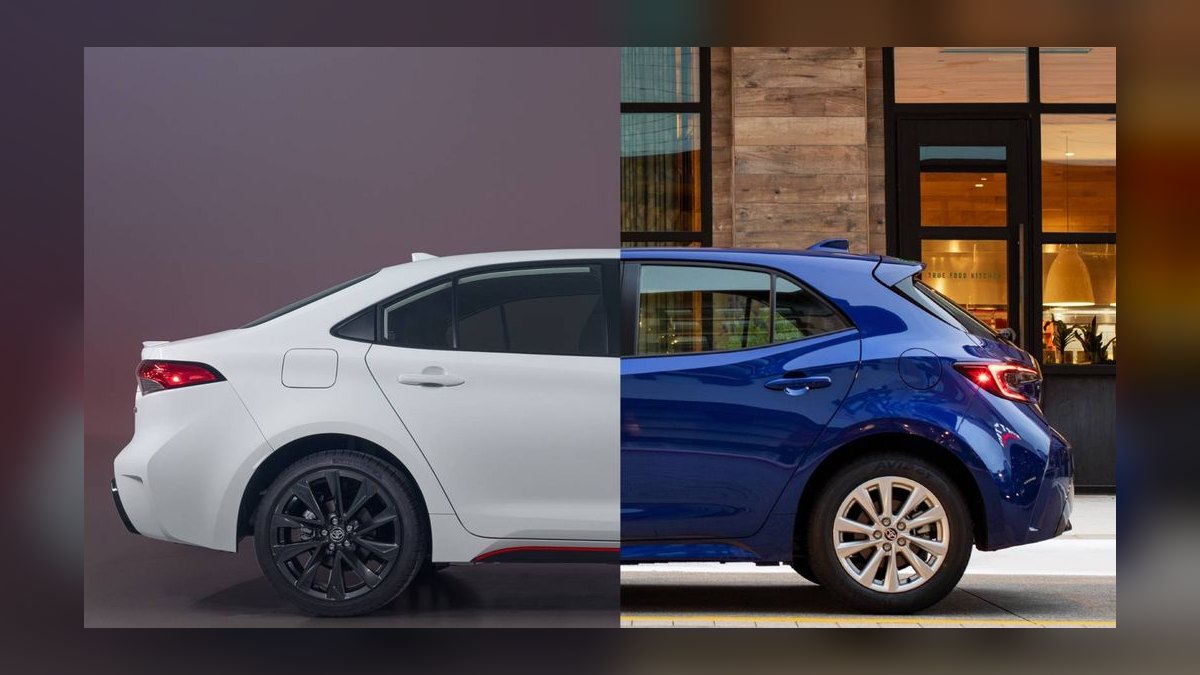
Hot hatchbacks and sport sedans differ mainly in packaging and priority: hatches are short, tall, front-drive-biased three- or five-doors tuned for agility and cargo flexibility, while sport sedans are longer, rear-drive-biased four-doors tuned for high-speed stability, refinement, and rear-seat comfort. In 2027 electrification narrows the performance gap but widens the price gap.
The showroom problem a buyer actually faces
Picture the situation concretely. A buyer has roughly $45,000 to $60,000, one parking space, a dog, an occasional 400-mile highway run, and a genuine appetite for driving. On one side of the lot sits a modern hot hatch — a five-door with a turbocharged four-cylinder or a compact electric drivetrain, a wheelbase around 103 to 107 inches, an overall length under 15 feet, and a hatch opening that swallows a bicycle with the rear seats folded. On the other side sits a sport sedan — four doors, a trunk, a wheelbase around 111 to 117 inches, an overall length closer to 16 feet, and a drivetrain that in most cases still sends torque rearward or splits it rear-biased through an adaptive all-wheel-drive system.
Both cars can post similar numbers. Both will hit 60 mph in the four-second range. Both will pull more than 0.95 g on a skidpad on summer tires. Both will run a lap of a small road course within a second or two of each other. The specification sheet, in other words, has stopped being the place where the decision gets made. What actually separates them in 2027 is a set of structural differences that no amount of tuning erases: where the mass sits, how long the car is between the axles, what the body does to torsional stiffness and cargo volume, how the drivetrain layout constrains suspension geometry, and how the manufacturer amortizes development cost across a platform.
The buyer's real question is not "which is faster." It is "which set of compromises do I want to live with for four years." A hot hatch gives up rear-seat legroom, high-speed composure, and interior isolation to gain maneuverability, cargo volume per foot of length, lower mass, and a lower entry price. A sport sedan gives up parking ease, cargo flexibility, and typically 200 to 400 pounds of curb weight to gain a longer wheelbase, a more rearward drive bias, better noise isolation, and a cabin that treats rear passengers as people rather than as an afterthought.
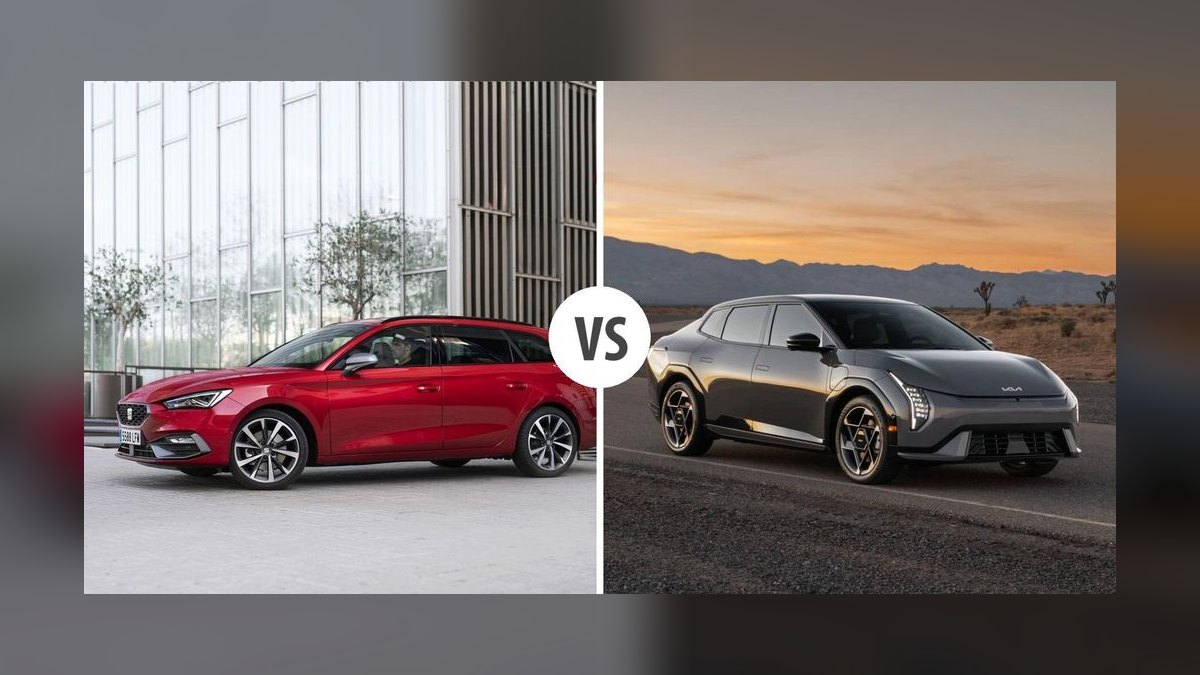
The 2027 wrinkle is that electrification has scrambled some of these traditional trade-offs while sharpening others. Battery packs live in the floor on dedicated EV platforms, which raises floor height and eats into the hatch's traditional packaging advantage. Meanwhile electric motors make rear-drive bias cheap to engineer in a body style that historically could not afford it. The result is a market where the labels still mean something, but the reasons behind them have shifted underneath.
How the packaging mechanism actually works
The differences between these two body styles trace back to a small number of physical decisions that then cascade through the entire vehicle.
Wheelbase and overhang. A hot hatch is short overall because the market wants a car that parks in a European city and fits a small garage. Shortening overall length while preserving crash structure means shortening the wheelbase, and a short wheelbase changes the car's response to steering input. For a given yaw rate, a shorter wheelbase requires less steering angle and produces a quicker turn-in. It also means pitch and yaw disturbances settle faster but occur more often — the car is livelier over a broken surface. A sport sedan, at 111 to 117 inches between the axles, filters those disturbances. Over a 100 mph sweeper on a crowned highway, the longer car simply moves less.
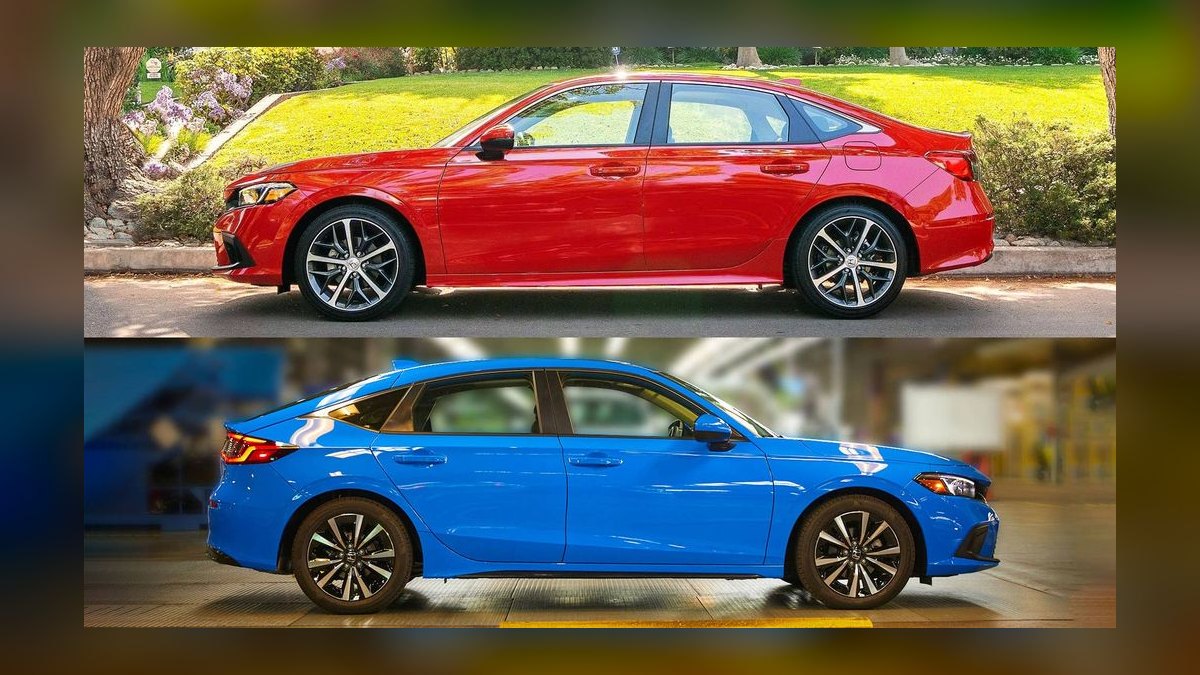
Center of gravity height. The hatch body is taller because the roofline has to clear a usable cargo opening. Typical hot hatch roof height sits around 56 to 58 inches; a sport sedan usually sits at 55 to 57 inches with a lower seating hip point. That two-inch delta, combined with a higher engine mounting in a transverse layout, translates to a center of gravity that can be an inch or more higher in the hatch. An inch of CG height on a car with a 60-inch track produces measurably more lateral load transfer, which is why hot hatches lean on stiffer anti-roll bars and firmer damping to control body motion. The sedan achieves the same roll control with softer settings, which is a large part of why it rides better.
Drivetrain orientation. The classic hot hatch uses a transverse engine driving the front wheels, sometimes with a clutch-pack or Haldex-style rear axle added. That layout puts 60 to 63 percent of static weight over the front axle. Front-drive under power creates torque steer, limits usable traction on corner exit, and forces engineers to spend effort on limited-slip differentials, negative scrub radius geometry, and equal-length driveshafts just to make the car track straight under full throttle. A longitudinal, rear-drive sport sedan starts near 50/50 to 52/48 and can put power down without corrupting steering feel. That is the single largest structural difference between the two categories, and it is why enthusiasts describe them so differently even when lap times converge.
Body rigidity and the hole in the back. A sedan has a structural bulkhead behind the rear seats and a closed trunk. A hatchback has a large aperture where that bulkhead would be. Compensating requires additional bracing around the D-pillars, a heavier tailgate structure, and often a strut tower brace or a rear shear panel. Manufacturers close most of this gap, but they close it with mass. That structural penalty is one reason a hot hatch is not automatically lighter than a similarly equipped sedan on the same platform.
Electrification changes the inputs, not the physics. On a dedicated EV architecture, the battery sits under the floor and drops the CG dramatically for both body styles — often to a level below any combustion car. This helps the hatch more than the sedan in relative terms, because the hatch was starting higher. But the pack also raises the floor, which forces the seating hip point upward, which eats headroom, which pushes the roof up again. Net effect: electric hot hatches are handling-competitive in ways their combustion predecessors never were, but they are heavier, often by 400 to 700 pounds, and they lose some of the load-through practicality that defined the category.
Real numbers, ranges, and how the two categories benchmark

Specific figures make the abstract differences legible. The ranges below reflect what the two segments broadly deliver as of the 2027 model year; individual models vary, and anyone shopping should verify against the specific trim.
Curb weight. Combustion hot hatches typically land between 3,100 and 3,500 pounds. Add an all-wheel-drive system and you are near the top of that band. Combustion sport sedans in the same performance bracket run 3,600 to 4,100 pounds, with the heavier end reflecting larger engines, longer bodies, and more sound deadening. Electric versions of both shift upward substantially: an electric hot hatch commonly sits between 3,800 and 4,400 pounds, and an electric sport sedan between 4,400 and 5,200 pounds. The relative ordering holds — hatches stay lighter than sedans of equivalent capability — but the absolute figures now overlap across categories in a way they never did before.
Power and acceleration. A mainstream hot hatch delivers roughly 250 to 320 horsepower from a turbocharged four-cylinder; the flagship all-wheel-drive versions push into the 380 to 420 range. Sport sedans span a wider band, from 250-horsepower entry turbo fours through 350 to 500 horsepower for six-cylinder or hybridized variants, and beyond that for the halo trims. Zero to 60 mph in the hot hatch class runs 5.5 to 6.3 seconds for front-drive versions and 3.8 to 4.7 for all-wheel-drive flagships. Sport sedans span 5.5 down to about 3.5 seconds depending on trim. Electric versions in both categories compress toward 3.0 to 4.5 seconds because instant torque and all-wheel drive make launches trivially repeatable.

Braking and cornering. Sixty-to-zero stopping distances for both categories land in the 100 to 115 foot range on summer tires, with the lighter hatch generally holding a modest advantage and the sedan's larger rotors compensating on repeated stops. Skidpad figures cluster from 0.92 to 1.02 g for both. Where they separate is brake fade over repeated hard use: the sedan carries more mass but typically also carries larger rotors and better cooling ducting, so on a track day the outcomes depend more on brake package than body style.
Cargo and space. This is the clearest, most quantifiable difference. A hot hatch offers roughly 19 to 24 cubic feet behind the rear seats and 50 to 60 cubic feet with them folded, plus a load height around 26 to 30 inches and an aperture wide enough for a washing machine. A sport sedan offers 12 to 15 cubic feet of trunk, a fixed aperture, and folding seats that create a pass-through rather than a flat load floor. If you carry bulky objects more than a few times a year, that difference is decisive and no amount of driving dynamics offsets it.
Rear seat. Sport sedan rear legroom typically runs 35 to 38 inches. Hot hatch rear legroom typically runs 32 to 35 inches, with less foot space under the front seats and a lower, more knees-up seating position. For adults on a long trip the sedan is meaningfully better; for children in car seats the hatch's taller door aperture is actually easier to load through.
Efficiency. Combustion hot hatches commonly return 24 to 30 mpg combined; sport sedans return 22 to 28 combined, with the six-cylinder variants at the lower end. Electric versions land around 3.0 to 3.6 miles per kWh for hatches and 2.6 to 3.3 for sedans, reflecting the frontal area and mass differences. Over 12,000 miles a year the fuel or energy cost difference between the two categories is real but modest — usually a few hundred dollars.
Price. The entry point matters more than the top end. Hot hatches generally start between $33,000 and $45,000 and top out near $55,000. Sport sedans generally start between $45,000 and $58,000 and climb well past $70,000 for the higher-output trims. Electric versions of both add roughly $6,000 to $12,000 over comparable combustion models before incentives. Insurance typically runs modestly higher on the sedan due to replacement cost, though hot hatches sometimes carry a surcharge from theft and claims history in certain markets.

Tires and running costs. Hot hatches commonly wear 225 to 245 section width tires on 18- or 19-inch wheels; sport sedans run 245 to 275 on 19- or 20-inch wheels, often staggered. A set of summer tires for the hatch runs meaningfully less than for the sedan, and the sedan's staggered fitment eliminates rotation, shortening service life. Over four years that difference compounds into a real ownership cost gap.
Trade-offs, alternatives, and how to choose between them
Framing this as a ranking produces bad decisions. Framing it as a set of trade-offs produces good ones.
Choose the hot hatch when the constraint is space per dollar and per foot. If you have one car, one parking spot, and occasional cargo duty, the hatch's aperture is not a nice-to-have — it is the reason the car works at all. The category exists precisely because it refuses to make you choose between a fun car and a useful one. The penalty is a firmer ride, more road noise, less rear-seat comfort for adults, and a cabin that generally uses less expensive materials because the price point demands it.
Choose the sport sedan when the constraint is time spent at speed with passengers. If a meaningful fraction of your driving is highway miles with adults in back, the longer wheelbase, better isolation, and larger rear seat change the experience more than any handling metric. The penalty is a larger footprint, a smaller cargo opening, higher purchase and running costs, and a car that feels slightly less eager in tight, low-speed environments.
Consider drive layout as a first-order filter, not a detail. If steering feel under power matters to you, rear-drive bias is the differentiator, and that has historically meant the sedan. In 2027 that is no longer strictly true — several electric hatch-shaped performance cars use rear or rear-biased motor layouts. But among combustion cars the correlation still holds tightly, and it remains the most reliable proxy for the character difference between the two categories.

Weigh the alternatives honestly. There are three that regularly steal buyers from both: the performance wagon, which offers sedan proportions with hatch-like cargo volume at a price premium and limited availability; the compact performance crossover, which offers the hatch's cargo utility with a higher CG and typically 200 to 400 extra pounds; and the two-door sports coupe, which discards practicality entirely for lower mass and better proportions. If cargo and rear seats both matter, the wagon is the honest answer and its scarcity is the only real objection.
Depreciation and resale differ structurally. Hot hatches with manual transmissions and enthusiast credibility have historically held value unusually well relative to their price class, because supply is limited and the buyer pool is passionate. Sport sedans depreciate on a more conventional luxury curve — steeper in the first three years, flattening later. If you buy new and sell at three years, the hatch typically costs less in depreciation dollars; if you buy used at three years, the sedan is the better value per dollar of capability.
Modification headroom is asymmetric. A front-drive hot hatch reaches a traction ceiling fairly quickly; beyond roughly 350 to 400 horsepower at the front axle, additional power produces wheelspin and torque steer rather than acceleration, and the fix is an all-wheel-drive conversion that is rarely practical. A rear-drive sport sedan absorbs power increases more gracefully because the load transfer under acceleration works in its favor. If long-term tuning is part of the plan, the sedan has more headroom.
Common pitfalls when comparing the two
Pitfall: shopping on zero-to-60 alone. Both categories now cluster in the same acceleration band, especially in electrified form, so the metric no longer discriminates. Two cars with identical 0-60 figures can feel completely different at 70 mph on a rough road. Test both at the speeds and on the surfaces you actually drive, not on a smooth showroom loop.

Pitfall: assuming the hatch is automatically lighter. The structural bracing needed around a large rear aperture, plus the all-wheel-drive systems now common on flagship hatches, erodes the weight advantage. Compare published curb weights for the specific trims, and note that manufacturers sometimes quote dry or European-cycle figures that are not directly comparable to US figures.
Pitfall: ignoring the tire and wheel package. A significant share of the measured handling difference between a hot hatch and a sport sedan on a given day comes from tire compound and section width, not from the chassis. If one test car wears a track-oriented tire and the other wears an all-season, the comparison is close to meaningless. Check the tire spec on any car you test and on any review you read.
Pitfall: comparing an EV hatch to a combustion sedan without accounting for mass. An electric hot hatch may match or beat a combustion sport sedan on every acceleration and skidpad number while weighing 500 pounds more. That mass shows up in brake fade, tire wear, and the way the car changes direction repeatedly — a slalom or a real back road reveals it where a single skidpad number does not.
Pitfall: overlooking the transmission. Manual availability has narrowed to a handful of models, and it is more common in the hatch segment than the sedan segment. If a third pedal is a requirement, that alone may make the decision, and waiting a model year to see whether it survives is a real risk.
Pitfall: buying the flagship trim reflexively. The mid-trim hot hatch is frequently the better driving car than the all-wheel-drive flagship: less nose weight, more adjustability, cheaper tires, and a lower insurance bill. The same holds in the sedan segment, where the six-cylinder mid-trim often rides better and steers more cleanly than the widened, stiffened top trim.
Pitfall: underestimating running costs on the sedan. Larger rotors, staggered tires, more expensive service intervals, and higher parts prices compound. Budget an additional $600 to $1,200 per year over the hatch for a car driven 12,000 miles annually with occasional spirited use, more if you track it.

Pitfall: treating the rear seat as theoretical. Buyers routinely tell themselves the back seat does not matter, then discover it does within a year. Sit in the rear of both cars, behind a front seat set to your own driving position, before deciding. Three inches of legroom is the difference between usable and unusable on a three-hour drive.
Pitfall: skipping the parking test. Overall length, turning circle, and outward visibility differ enough between the categories to matter daily. A sport sedan's turning circle often runs two to four feet wider than a hatch's. If you park on a city street or in a tight garage, that number affects your life more than any lap time.
How to sanity-check a decision. Drive both back to back on the same day, on the same roads, ideally within an hour of each other. Load your actual cargo — the stroller, the bike, the dog crate — into both. Sit in the back of both. Look up the specific tire fitment and price a replacement set. Price four years of insurance on both. Then decide. The specification sheet will not settle it, and the review consensus will not settle it, because the answer depends entirely on which compromises you personally absorb without noticing.
Related questions
Is a hot hatch faster than a sport sedan on a track?
Usually not over a full lap. The hatch's lower mass helps in slow corners, but the sedan's rear-drive traction, wider tires, and larger brakes win on exits and under repeated hard braking. On a tight autocross course the hatch often wins; on a long circuit the sedan typically does.
Do electric hot hatches still offer the cargo advantage?
Partly. The underfloor battery raises the load floor and seating position, reducing the volume gain over a sedan. The aperture advantage remains — you can still load bulky items easily — but the raw cubic-foot gap narrows compared with combustion versions of the same platform.
Which holds its value better after four years?

Enthusiast hot hatches, particularly manual-transmission versions, tend to retain a higher percentage of a lower starting price. Sport sedans lose more percentage but from a higher base. In absolute dollars lost, the hatch is usually cheaper to own over four years.
Is all-wheel drive worth it on a hot hatch?
It depends on climate and priorities. It transforms wet and winter traction and unlocks higher power, but it adds roughly 150 to 250 pounds over the front and rear, dulls turn-in slightly, and raises purchase price, insurance, and service cost. Many drivers prefer the lighter front-drive version.
What about performance wagons as a middle option?
A wagon genuinely combines sedan proportions and rear-drive layouts with hatch-like cargo volume. The obstacle is availability: few models are sold in North America, prices sit at or above sport sedan levels, and the used market is thin. If you can find one that fits, it resolves the trade-off directly.
FAQ
What is the single biggest structural difference between hot hatchbacks and sport sedans?
Drive layout and wheelbase. Hot hatches are built on transverse, front-drive-biased architectures with short wheelbases; sport sedans are predominantly longitudinal, rear-drive-biased, with wheelbases six to twelve inches longer. Everything else — steering feel under power, high-speed stability, cargo shape, ride quality — follows from those two decisions. Electrification softens the drivetrain distinction on some new models but has not erased it.
Has electrification made the two categories converge?

On performance numbers, largely yes — both cluster in the same acceleration and skidpad bands. On character and packaging, no. Electric hatches remain shorter and more maneuverable with a larger cargo aperture; electric sedans remain longer, quieter, and roomier in back. The largest new difference is mass: both gained hundreds of pounds, which changes how they feel over repeated direction changes and in repeated hard braking.
Which is cheaper to own over four years?
Typically the hot hatch, by a meaningful margin. Lower purchase price, narrower and cheaper tires that can be rotated, smaller brake components, generally lower insurance, and slightly better fuel or energy consumption all compound. The main exception is a high-demand enthusiast sedan bought used at three years old, where the initial depreciation has already been absorbed by the first owner.
Can a front-drive hot hatch handle serious power?
Only up to a point. Beyond roughly 350 to 400 horsepower at the front axle, traction and torque steer become the limiting factors regardless of differential and geometry work. Manufacturers add all-wheel drive above that threshold for exactly this reason. A rear-drive sport sedan absorbs power increases more gracefully because acceleration transfers load onto the driven axle.
Is the ride quality difference large enough to matter daily?
Often yes. The hot hatch's shorter wheelbase and higher center of gravity force stiffer springs, bars, and damping to control body motion, which shows up as more impact harshness over expansion joints and broken pavement. Adaptive dampers narrow the gap considerably on models that offer them. Test both on genuinely rough roads rather than smooth ones before deciding.
Should rear-seat space alone decide it?
If adults ride in back regularly, yes — it is the one difference no amount of chassis tuning changes. The sedan's three-inch legroom advantage and better foot space under the front seats are structural. If the rear seat is mostly for children or cargo overflow, the hatch's taller door aperture and folding flexibility can actually be the more useful arrangement.
Sources
- https://www.caranddriver.com/
- https://www.motortrend.com/
- https://www.roadandtrack.com/
- https://www.autoblog.com/
- https://www.fueleconomy.gov/
- https://www.nhtsa.gov/
- https://www.iihs.org/
- https://www.epa.gov/greenvehicles
- https://www.consumerreports.org/cars/
- https://www.edmunds.com/
Related on PULSE
- How performance wagons compare with sport sedans and crossovers
- Why front-wheel-drive traction limits cap tuning headroom
- What underfloor battery packs change about vehicle packaging
- How tire section width and compound distort handling comparisons
- Total cost of ownership modeling for performance cars over four years
- Why turning circle and outward visibility matter more than lap times for daily drivers
This page will be disappearing soon. Save it to your device for $1 — or read it free while it is here.
@Kory-White- · if Venmo asks, the last 4 of my number are 2012
This page is gone.
This one is off the shelf now. $1 keeps it on your phone for good — the whole page, pictures and diagrams included.
 pulse-recentTop 10 Most Affordable Supercars You Can Buy in 2027
 pulse-recentTop 10 Muscle Cars 1987 — Best Overall + Best Value
 pulse-recentTop 10 Most Affordable Supercars to Lease in 2027
 pulse-recentHow Much Does It Cost to Finance a Lamborghini Huracán Over 60 Months in 2027?
 pulse-recentTop 10 Most Affordable Used Sedans Under $10,000 in 1974 (Ranked)
 pulse-recentWhat's the total cost to lease a Honda Civic Type R for 36 months in 2027?
 pulse-recentTop 10 Muscle Cars 1964 — Best Overall + Best Value
 pulse-recentWhat's the minimum down payment banks typically require to finance a new supercar in 2027?
 pulse-recentTop 10 Grand Tourers 2002 — Best Overall + Best Value
 pulse-recentTop 10 Supercars With Scheduled Maintenance Under $5,000 a Year in 2027