


What does a McLaren 750S depreciate in its first three years in 2027?
Quality
Certified

A McLaren 750S typically loses roughly 20–30% of its original value in year one, then continues falling to about 40–50% below sticker by the end of year three. That puts a well-optioned car bought near $330,000–$360,000 at roughly $180,000–$215,000 after three years, depending on mileage, spec, and market timing.
The outcome you should expect
The McLaren 750S sits in a depreciation band that is painful but not unusual for a mid-engine supercar. If you buy new at a typical transaction price of $330,000–$360,000 (base MSRP is around $324,000 for the coupe, with the Spider starting higher and options routinely adding $30,000–$60,000), the realistic three-year picture looks like this:
- End of year one: roughly $255,000–$290,000, a drop of about 20–28% from what you paid. The steepest single hit happens the moment the car stops being "new" and becomes "used with one owner."
- End of year two: roughly $215,000–$250,000, another 12–18% off the year-one value. Depreciation is still meaningful but the curve is flattening.
- End of year three: roughly $180,000–$215,000, which is 40–50% below the original transaction price.
Translated into dollars, a three-year ownership window on a new 750S costs the first owner somewhere between $120,000 and $170,000 in pure value loss, before you count financing interest, insurance, or the opportunity cost of the capital. That is the number a buyer should actually budget, not the sticker price.
Two important qualifiers. First, this is a *normal market* estimate. The 2022–2024 period showed supercar values behaving abnormally — some models appreciated briefly because supply was constrained, then corrected hard. A 750S bought at the top of a supply crunch and sold into a correction can do worse than 50%. Second, the 750S is a volume-production McLaren, not a limited-edition halo car. It will not behave like a P1 or a Senna, which trade on scarcity rather than on the normal used-car curve.
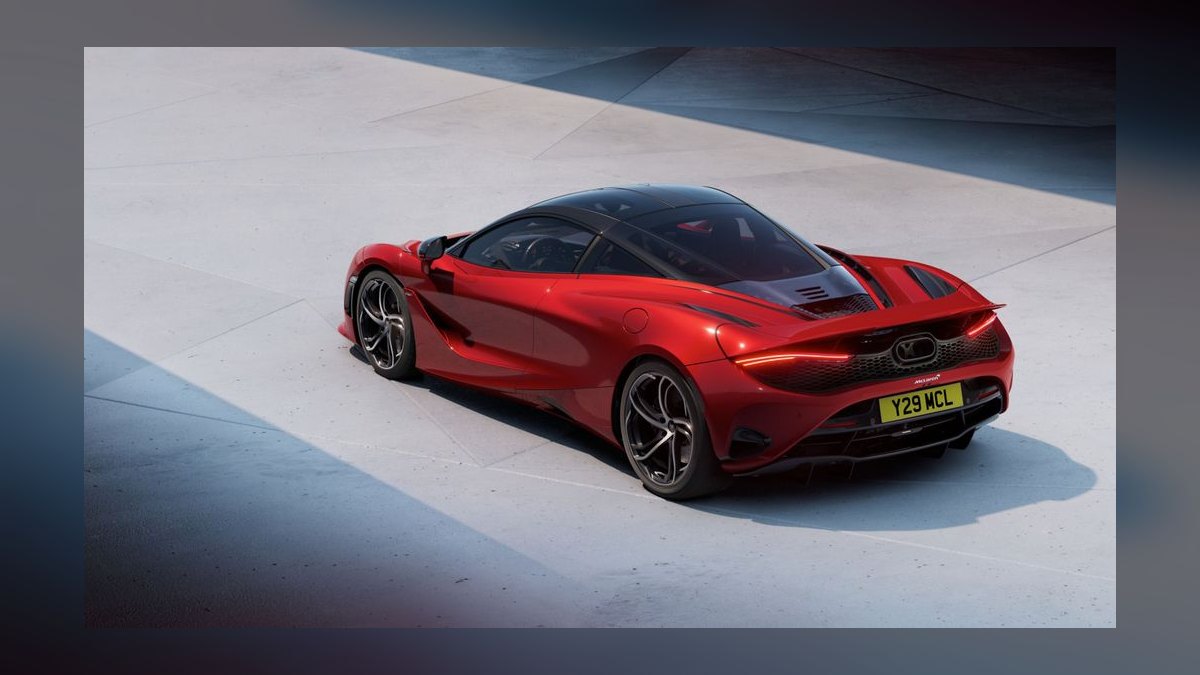
The practical takeaway: if you are buying a 750S new, assume you are consuming roughly $3,500–$4,700 per month in depreciation over a three-year hold. If that number is uncomfortable, the car is not the problem — the ownership structure is.
What drives that outcome
Depreciation on a 750S is not one force. It is five or six forces stacking, and understanding which ones you can control is the whole game.
Supply and production volume. McLaren builds the 750S as a series-production model, not a numbered limited run. Every additional car that leaves Woking adds to the used supply pool three years later. When a manufacturer keeps building, the used market never gets tight enough to support prices. This is the single biggest structural driver and it is entirely outside a buyer's control.
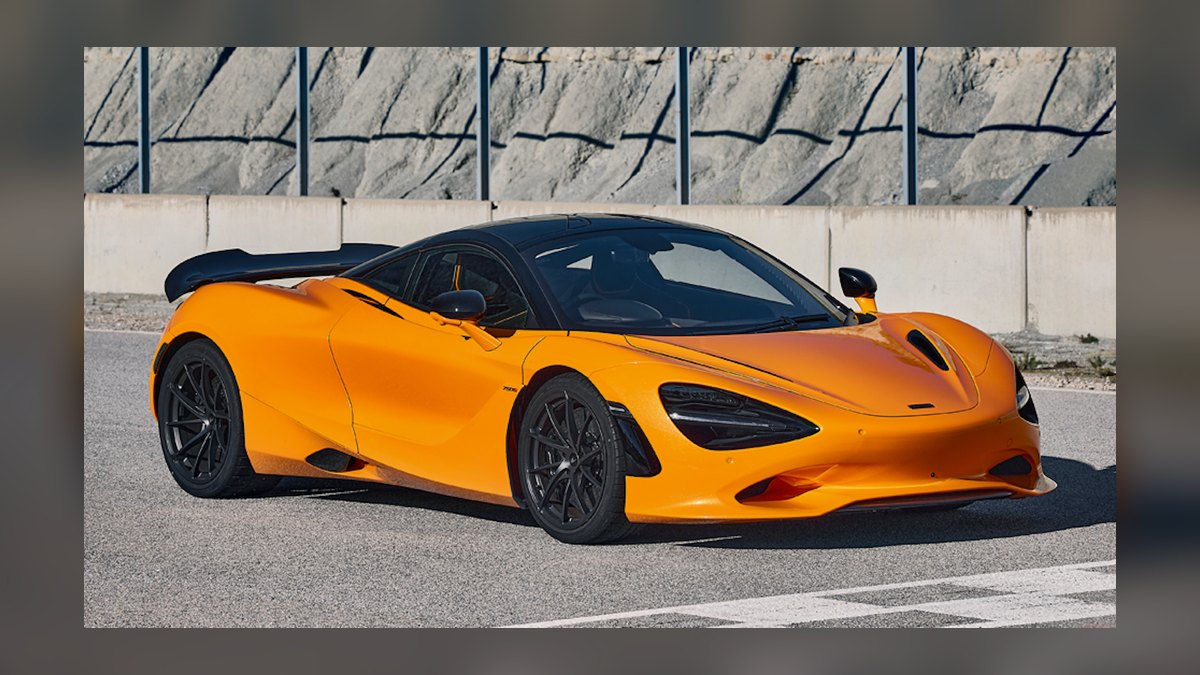
Options and spec recoverability. Here is where owners lose real money. A $12,000 carbon-fiber exterior package, a $6,000 bespoke paint, or a $9,000 interior trim upgrade might add $40,000 to your invoice but recover only 20–35 cents on the dollar at resale. Options depreciate faster than the car itself. A $340,000 car with $50,000 of options does not resell for $50,000 more than a $340,000 car with $10,000 of options — it resells for maybe $12,000–$18,000 more. The rule of thumb: the more option-heavy the build, the worse the percentage retention, even though the absolute resale price is higher.
Mileage. Supercar buyers punish mileage disproportionately. A 750S with 3,000 miles after three years will retain meaningfully more than an identical car with 18,000 miles. The spread can be $25,000–$40,000 on the same model year. Low-mileage examples are treated as collectible-adjacent; high-mileage examples are treated as cars to be driven and discounted.
Market timing at both ends. Buying at peak hype and selling into a soft market compounds the loss. The supercar market moves in cycles tied to interest rates, equity markets, and allocation availability. A buyer who purchased in early 2022 and sold in late 2023 experienced a very different curve than one who bought in 2019 and sold in 2021.
Condition, history, and paperwork. Accident history, paintwork, aftermarket modifications, missing service records, and non-franchise servicing all take bites. A clean, factory-spec, fully documented car with McLaren service history will outperform a modified or repaired car by 10–20% at resale.
Brand and model-cycle dynamics. McLaren's model cadence matters. When a successor or a facelift is announced, the outgoing model takes an immediate step down. McLaren has historically moved through model generations relatively quickly, and the 750S replaced the 720S — which itself is a preview of what happens to 750S values when the next car arrives.

The diagram is worth internalizing because it shows that the year-one drop is not the whole story. The year-one drop is the *visible* one — it is what shocks people. The year-two and year-three drops are quieter but they are what turn a $60,000 hit into a $150,000 hit.
Benchmarks and realistic ranges
Percentages are useful for planning but they hide enormous variance. Here is how the numbers actually break down across different ownership scenarios.
Scenario A — Low-mileage, well-spec'd, bought at MSRP, sold in a stable market. Purchase $345,000. Three-year mileage 4,500. Clean history, factory service. Resale $215,000–$230,000. Total depreciation: $115,000–$130,000 (33–38%). This is close to the best realistic case for a non-limited car.
Scenario B — Average use, average spec, bought at MSRP. Purchase $340,000. Three-year mileage 15,000. Resale $185,000–$200,000. Total depreciation: $140,000–$155,000 (41–46%). This is the center of the distribution and the number most buyers should plan around.
Scenario C — Option-heavy build, higher mileage, sold into a soft market. Purchase $375,000 (loaded). Three-year mileage 24,000. Resale $175,000–$190,000. Total depreciation: $185,000–$200,000 (49–53%). This is the realistic downside, and it is not a rare outcome.

Scenario D — Bought used at year one instead of new. Purchase $270,000 (year-one used). Three-year total hold from original purchase, sold at year three of the car's life: resale $200,000–$215,000. Depreciation over the *buyer's* two-year hold: $55,000–$70,000. This is the single most important comparison on the page. The first owner absorbs the steepest part of the curve; the second owner gets a much flatter ride.
A few benchmark anchors to sanity-check any specific car against:
- A 750S that has lost less than 30% over three years is outperforming, and usually means low miles plus a strong market.
- A 750S that has lost 40–50% is completely normal and should be the default assumption.
- A 750S that has lost more than 55% usually has a story — accident history, high miles, a bad spec, or a market correction.
One more benchmark: compare against the segment. The 750S's main rivals in the mid-engine supercar space have historically shown similar three-year curves, generally landing somewhere in the 35–50% range depending on the cycle. The 750S is not an outlier in either direction. It is not a value-retention champion and it is not a disaster. It is a normal series-production supercar with a normal series-production depreciation curve.
What makes the 750S feel worse than the percentage suggests is the absolute dollar figure. A 45% loss on a $340,000 car is $153,000. On a $90,000 sports car, a 45% loss is $40,000. The percentage is identical; the emotional and financial impact is not.
Risks, edge cases, and failure modes

Most depreciation discussions stop at the average. The expensive lessons live in the tails.
Risk 1 — Buying at the top of a hype cycle. When a new McLaren launches, early allocation carries a premium. Dealers mark up, flippers speculate, and the first 12–18 months can show artificially strong "values" that are really just scarcity pricing. Buyers who enter at that moment are buying at an inflated basis and will see a steeper-than-normal decline as supply normalizes. If you are paying over MSRP, add that premium to your depreciation math — it is usually 100% lost.
Risk 2 — Spec mismatch with the buyer pool. Supercar resale is driven by a narrow set of buyer preferences. Loud colors, unusual interior combinations, and heavy personalization narrow your buyer pool at resale. A car that is perfect for you may be unsellable to the next person without a $20,000 discount. Conservative, broadly appealing specs consistently outperform polarizing ones on retention.
Risk 3 — Mileage cliff. There is a psychological threshold in the supercar market, and it sits somewhere around 10,000–15,000 miles on a three-year-old car. Below it, the car is "low mileage." Above it, it is "driven." Crossing that line can cost $20,000–$35,000 in resale value on an otherwise identical car. If you plan to drive the car heavily, budget for it — and accept it, because a supercar you do not drive is a worse financial decision than one you do.

Risk 4 — Model-cycle obsolescence. When McLaren announces a successor, 750S values step down. This is not speculation; it is a consistent pattern across the segment. The step is usually 5–12% within a few months of a credible successor announcement. If you are within a year of a likely replacement, the depreciation math changes.
Risk 5 — Deferred maintenance and cosmetic neglect. Supercar running costs are high, and owners under financial pressure sometimes defer them. A car with worn tires, a tired interior, stone chips, and an overdue service is a car that gets discounted twice — once for the condition and once for the buyer's assumption that there is more wrong than is visible. Keeping the car in genuinely excellent condition is one of the few depreciation levers an owner actually controls.
Risk 6 — Financing structure amplifying the loss. If the car is financed with a small down payment over a long term, negative equity is a real possibility in the first 24 months. A car that has dropped 25% in year one while the loan has amortized only 10% leaves the owner underwater. This does not change the depreciation, but it changes the owner's ability to exit, which is often the more urgent problem.
Risk 7 — Insurance and total-loss valuation. If the car is totaled, the insurer pays market value, not what you owe or what you paid. On a rapidly depreciating car, that gap can be six figures. Agreed-value coverage is worth pricing out for exactly this reason.
The common thread across all seven: depreciation is a *range*, and where you land inside that range is determined mostly by decisions made before and at purchase, not after.
A practical rollout plan

If you are trying to minimize the three-year depreciation hit on a 750S — or at least to know exactly what you are signing up for — work through this in order.
Step 1 — Set your basis correctly. Write down the all-in number: purchase price plus any dealer markup plus taxes and fees that you will not recover. That is your true starting point. Depreciation should be calculated against this number, not against MSRP. Buyers who mentally anchor on MSRP consistently underestimate their loss by $15,000–$30,000.
Step 2 — Choose spec for resale, not for yourself. If retention matters, prioritize standard, broadly appealing colors, minimal bespoke personalization, and options that are universally valued (front lift, quality seats, desirable wheels) over options that are purely cosmetic. Every dollar spent on a polarizing option should be assumed 70–80% lost.
Step 3 — Decide your mileage budget up front. Estimate how many miles you will actually drive over three years, then check that number against the 10,000–15,000-mile threshold. If you will exceed it, add $20,000–$35,000 to your expected depreciation before you buy. If that changes the decision, better to know now.
Step 4 — Consider buying at year one instead of new. The math is stark: the first owner typically absorbs 20–28% in year one alone. A buyer who enters at that point gets the same car, often still under warranty, with the steepest part of the curve already behind them. This single decision can cut the buyer's own depreciation exposure roughly in half.

Step 5 — Plan the exit before you need it. Three-year-old supercars sell best in spring, in strong equity markets, and before a successor announcement. If you have flexibility on timing, use it. If you do not, price the car realistically from day one rather than chasing a number that the market has already moved past.
Step 6 — Keep documentation immaculate. Full service history, original window sticker, both keys, and any factory documentation. This is nearly free to maintain and is worth real money at resale — often $5,000–$15,000 on a car in this price band.
The plan is not about avoiding depreciation — on a series-production supercar, you cannot. It is about moving yourself from the bad end of the range to the good end. The difference between the best and worst realistic outcomes on this page is roughly $85,000 over three years on the same model. That gap is almost entirely determined by basis, spec, mileage, and timing, and every one of those is a decision a buyer makes deliberately or by default.
Related questions
Does a McLaren 750S hold its value better than a 720S?
Broadly similar, since both are series-production McLarens with comparable volume. The 750S may retain slightly better in its first two years simply because it is newer, but the long-run curve converges. Neither behaves like a limited-edition car.
Is it cheaper to lease a 750S than to buy one?

Leasing can cap your exposure if the residual is set favorably, but supercar lease residuals are usually conservative and the money factor is high. Leasing shifts risk to the lessor at a cost — sometimes worth it, often not.
What mileage is too high for a 750S at resale?
There is no hard rule, but crossing roughly 10,000–15,000 miles on a three-year-old car moves it out of the "low mileage" bracket and typically costs $20,000–$35,000 versus a comparable low-mile example.
Do options add resale value on a 750S?
They add some absolute value but recover poorly — often 20–35 cents on the dollar. A heavily optioned car resells for more money but retains a lower percentage of its original price than a lightly optioned one.
When is the worst time to sell a 750S?
Immediately after a successor is announced, in a soft equity market, or in late autumn/winter when convertible and sports-car demand dips. Timing alone can swing the outcome by 5–12%.
FAQ
How much does a McLaren 750S depreciate in the first year? Typically 20–28% of the all-in purchase price. On a $340,000 car that is roughly $68,000–$95,000 in twelve months. The drop is steepest in the first few months and then moderates, but year one is consistently the single worst year of the curve.
What is the total three-year depreciation on a 750S?

Plan on 40–50% of your all-in basis, which is roughly $140,000–$170,000 on a typical new purchase. Favorable spec, low mileage, and good timing can push it toward 33–38%; a loaded car sold into a soft market can exceed 50%.
Does buying used avoid the worst depreciation? Yes, substantially. The first owner absorbs the steepest part of the curve. A buyer entering at year one typically faces a much flatter two-year decline — often $55,000–$70,000 instead of $140,000-plus — for the same car still under warranty.
Do miles really matter that much on a 750S? They matter more than on almost any other vehicle class. Crossing roughly 10,000–15,000 miles at the three-year mark can cost $20,000–$35,000 versus a low-mileage equivalent. Supercar buyers treat mileage as a proxy for both wear and collectibility.
Will the 750S ever appreciate? Not in normal circumstances. It is a series-production model, not a limited run, so supply keeps pressure on values. Appreciation would require an unusual supply shock or a sudden surge in demand — possible in the short term, not a reasonable planning assumption.
How should I budget for 750S depreciation? Divide your expected three-year loss by 36. On a typical new purchase that is roughly $3,900–$4,700 per month in pure value consumption, before insurance, financing, fuel, and maintenance. If that monthly figure is not comfortable, the ownership structure needs rethinking.
Sources
- McLaren Automotive official 750S model page: https://www.mclaren.com/
- Edmunds new-car depreciation explainer: https://www.edmunds.com/car-buying/how-much-does-your-car-depreciate-.html
- Kelley Blue Book vehicle valuation and depreciation tools: https://www.kbb.com/
- Car and Driver McLaren 750S reviews and pricing: https://www.caranddriver.com/mclaren
- Motor Trend McLaren coverage and market analysis: https://www.motortrend.com/
- Hagerty classic and exotic car valuation insights: https://www.hagerty.com/
- Bring a Trailer completed auction results for market comparables: https://bringatrailer.com/
- Insurance Institute for Highway Safety vehicle information: https://www.iihs.org/
- National Automobile Dealers Association used-vehicle data: https://www.nada.org/
Related on PULSE
- How supercar depreciation curves compare across brands
- What mileage thresholds actually do to exotic-car resale
- Leasing versus buying a mid-engine supercar: the real math
- How model-cycle announcements move used exotic prices
- Options and spec: which upgrades survive resale
- Total cost of ownership for a modern supercar
This page will be disappearing soon. Save it to your device for $1 — or read it free while it is here.
@Kory-White- · if Venmo asks, the last 4 of my number are 2012
This page is gone.
This one is off the shelf now. $1 keeps it on your phone for good — the whole page, pictures and diagrams included.
 pulse-carsTop 10 Mid-Size SUVs 2024 — Best Overall + Best Value
 pulse-carsBest Used 3-Row SUVs Under $15,000 in 2027 (Ranked)
 pulse-recentTop 10 Hybrid Supercars in 2027
 pulse-carsBest Used Off-Road SUVs Under $10,000 in 2027 (Ranked)
 pulse-carsBest Chrysler Pacifica Model Years (Ranked) in 2027
 pulse-recentHow much does full-coverage insurance cost for a 25-year-old driver on a Ferrari 488 in 2027?
 pulse-carsBest Used Luxury Cars Under $25,000 in 2027 (Ranked)
 pulse-carsBest SUVs for Dog Owners in 2027 (Ranked)
 pulse-carsBest Used Sports Cars Under $10,000 in 2027 (Ranked)
 pulse-recentTop 10 Muscle Cars 1975 — Best Overall + Best Value