
How do you coach reps to use video in their outreach?
 Curated byKory White · Fractional CRO · Maryland
 PULSEKNOWLEDGE LIBRARY
Coach video as a skill, not a mandate. Diagnose whether the rep's blocker is skill, will, knowledge, or workflow, then fix that one cause. Standardize a single recording tool, hand them one 45-second script for one use case, require three sends this week, and review two together — coaching the first five seconds.
The two paths managers actually choose between
Every sales leader who decides "we should be using video in outreach" ends up at one of two forks, and most of them pick wrong because they never name the fork out loud. Path one is the mandate-and-measure approach: add a video step to the sequence, set a weekly quota, put the number on a dashboard, and let accountability do the teaching. Path two is the coach-and-compound approach: pick a small cohort, build the skill through drills and one-on-one review, prove it with reply data, and let the winners recruit the rest of the floor.
The mandate path is fast. You can announce it Monday and have activity numbers by Friday. It works when the team already has the underlying skill — reps who present well on calls, who write personalized emails without prompting, who just need permission and a tool. It also works when the video use case is genuinely mechanical: a post-demo recap where the rep restates three agreed points and confirms next steps has almost no craft ceiling. You can mandate that. Nobody freezes recording a recap of a meeting they just ran.
The mandate path fails badly when the skill isn't there. What you get is compliance video: a rep reading a script off the second monitor, eyes tracking left to right, ninety seconds of company boilerplate, sent to a cold contact who has never heard of you. That video doesn't just underperform a plain email — it actively teaches the rep that video doesn't work. Now you've spent your one shot at buy-in and you've created a durable belief you'll have to argue against for the next two quarters. Mandating a skill you haven't built is the most common way teams end up permanently soured on video outreach.

The coaching path is slower and it costs manager time, which is the scarcest resource on any frontline team. Figure roughly thirty minutes of prep and review per rep per week for the first month — pulling their videos, watching two, writing down one specific fix. For a team of eight that's four hours a week you don't currently have. The payoff is that the skill compounds and transfers. A rep who learns to open with a specific, personalized five seconds on camera is also better at the first line of a cold email, better at the opening of a cold call, and better at the first ninety seconds of a discovery meeting. You're not teaching video. You're teaching the buyer-first open, using video as the medium that makes the failure visible.
There is a third position worth naming because a lot of RevOps and enablement teams quietly land there: fix the system first and coach nothing yet. If recording takes ten minutes because the extension isn't installed, there's no template, the video doesn't embed into the sequence, and the rep has to manually paste a link and a thumbnail into an email — then the rep avoiding video is behaving rationally. No amount of coaching outperforms removing four clicks. This is why the diagnosis step matters more than the coaching philosophy. You cannot coach your way out of a workflow problem, and you cannot tool your way out of a will problem.

The honest recommendation for most teams is a hybrid weighted toward coaching: fix the workflow to near-zero friction in week one, coach a small cohort in weeks two through four, then mandate a modest standing step once you have internal proof and internal examples. Mandate last, not first. The mandate is the ratchet that holds the gain — it isn't the thing that creates it.
How to decide which path fits your team
The decision is not about philosophy, it's about four observable inputs: current skill level on the floor, manager capacity, the deal motion, and whether you already have proof. Run the diagnosis before you run the plan.
Start with the individual rep, because "the team isn't using video" is almost never one problem. It's four problems wearing the same coat. Skill gap looks like a rep who tried once, hated the result, and can't articulate what was wrong — they don't know how to script, don't know where to look, don't know the first five seconds carry the whole thing. That's the most coachable case and it responds fast to drills. Will gap looks like a rep who says video is gimmicky, or who is genuinely self-conscious on camera. That's an evidence-and-confidence problem, and technique coaching bounces straight off it. Knowledge gap looks like a rep who sends video at the wrong moment — a ninety-second monologue to a cold, unaware contact, which is roughly as misapplied as sending plain text to a warm re-engagement where a face would have carried it. System gap looks like a rep who agrees with everything, commits to three, and sends zero, because the tool isn't in their browser and the sequence has no video step.

Layer the motion on top. High-ACV, named-account, multi-threaded enterprise motions get more out of video than high-velocity transactional SMB, because in enterprise the differentiation is worth the two minutes of production time per touch and the buying committee tends to forward things internally — a good recap video gets watched by the economic buyer who wasn't on the call. In a 200-dial-a-day SMB motion, video usually belongs at the post-conversation and re-engagement moments rather than the cold top of funnel, purely on time economics. Customer success and account management teams are the underrated case: renewal check-ins, QBR previews, and feature-adoption nudges all perform well on video precisely because the relationship is already warm and the watch-through rates are much higher than anything cold.
Manager capacity is the constraint that quietly decides this for most teams. If a frontline manager carries ten reps, sits in forecast calls three hours a week, and is also carrying a quota, the four-hour coaching investment is not available and pretending otherwise produces a program that dies in week three. In that case, narrow ruthlessly: mandate exactly one mechanical use case — the post-demo recap — build no other skill, and revisit in a quarter. A narrow thing that survives beats a broad thing that collapses.
The last input is proof. If nobody on your team has ever gotten a reply from a video, you have no internal evidence, and external benchmarks will not move a skeptical rep. Manufacture proof deliberately: pick your two most confident reps, coach them hard for three weeks, and get one real reply thread you can screenshot. Internal proof from a peer is worth more than any vendor case study, and it's the only thing that reliably closes a will gap.

The numbers that actually govern the decision
Video coaching gets argued in vibes, so anchor it in arithmetic you can defend in a pipeline review. None of these are industry benchmarks — they're the internal ratios you should measure and manage, and the ranges are the targets to hold reps to.
Time per video. A rep who has the tool installed, a script pattern, and a named account already researched should be at two to four minutes end-to-end: thirty seconds of research glance, forty-five seconds of recording, one retake, paste and send. A rep without those three things is at eight to twelve minutes, which is why they don't do it. That gap — call it eight minutes per video — is the entire adoption problem expressed as a number. Three videos a week at four minutes is twelve minutes of a rep's week. Three videos a week at twelve minutes is thirty-six minutes plus the psychological tax of dreading it. Get the per-video time under five minutes or expect adoption to stall regardless of how good the coaching is.

Video length. First touch: thirty to sixty seconds, hard ceiling ninety. Post-demo recap: sixty to ninety seconds because the relationship is warmer and the content is denser. Re-engagement after a stalled deal: thirty seconds, no more — you are asking for attention you haven't earned recently. The most common coachable defect is length, and the fix is blunt: tell the rep to cut it in half and re-record. They will resist, the second version will be better, and they'll internalize it after about three cycles.
Volume ramp. Weeks one through four: three personalized videos per week per rep, one use case only. Weeks five through eight: five per week, two use cases. Weeks nine through twelve: video becomes a standing step in named-account sequences and volume follows the sequence rather than a quota. Do not start at ten a week. High volume before skill produces bad video at scale, which is worse than no video, because it burns the accounts.
Manager time. Thirty minutes per rep per week for the first month, dropping to fifteen in month two and roughly ten minutes for a spot check in month three. Front-load it. A manager who gives sixty minutes in week one and nothing in week four will get worse results than one who gives twenty minutes every week for four weeks. Consistency is doing most of the work here.

Watch-through as the craft signal. Every major recording tool reports whether the viewer watched past the opening and how far they got. Track the percentage who watch past the first five to ten seconds and the percentage who finish. You are not chasing an industry number — you're chasing your own trend line. If the past-the-hook number is climbing week over week, the coaching is landing. If it's flat while volume climbs, the rep is producing more of the same weak open and you're reinforcing a bad habit.
Reply-rate comparison, done honestly. The only ROI argument that survives scrutiny is a same-sequence, same-segment comparison: video step versus text step, same persona, same list quality, same week. Anything else confounds. Run it for at least four weeks and enough sends to be more than noise — if a rep has sent eleven videos, you have an anecdote, not a result. Be disciplined about this, because the fastest way to lose the floor's trust is to declare victory off a sample of twelve.

Cost. Per-seat video tooling is a modest line item relative to the sequencer and the CRM it plugs into, and it's rarely the real cost. The real cost is manager hours in month one and rep hours forever. Price the program that way when you take it to the leadership meeting, because a RevOps lead who presents only the software cost will get approval and then get blamed when the manager time doesn't materialize.
The break-even question. If a rep spends four minutes per video and sends five a week, that's twenty minutes weekly, roughly fifteen hours a year. For that to pay, the video steps need to produce enough incremental meetings to beat whatever those fifteen hours would have produced in calls or emails. That's a real bar and it's why targeting matters more than craft: five videos to five well-chosen named accounts clears it easily, and thirty videos sprayed at a cold list almost never does.
Implementation: the 90-day sequence and the scripts that go in it
Sequencing matters more than content here. Do these in order; skipping the workflow step is the single most common cause of a failed program.
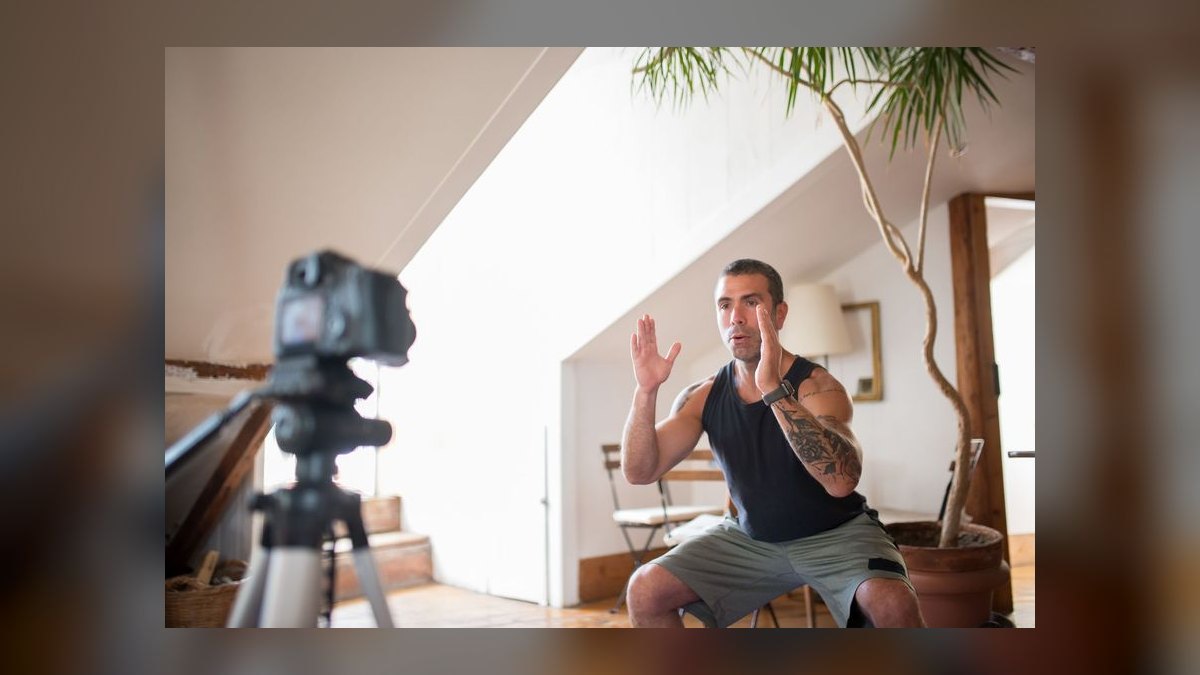
Week zero — remove friction before you ask for anything. Install and standardize on one recording tool for the whole team. Fragmentation kills adoption because it kills the shared vocabulary — you cannot coach "the thumbnail" if half the floor is using a tool that handles thumbnails differently. Verify the extension is actually in every rep's browser, not just licensed. Add a video step to the sequence in your engagement platform so sending doesn't require leaving the workflow. Build two saved templates: first-touch and post-demo recap. This is RevOps work, not manager work, and it should be done before the first coaching conversation.
Week one — the diagnostic 1:1. Run it as a conversation, not a briefing. Open with the reason, not the rule: buyers are getting dozens of near-identical emails a day and text-only differentiation is thinning, so I want video to be one of your edges by end of month. Then get the real blocker with a question that gives them an easy out — walk me through the last time you thought about sending one and what stopped you; was it not knowing what to say, the tool being a pain, or just not believing it'd land? If the answer is "I feel awkward on camera," do not argue with the feeling. Normalize it: everyone's first ten are awkward, mine were terrible, the goal isn't polished, it's human. Then narrow to one use case and hand them the pattern.
The 45-second first-touch pattern, verbatim enough to paste into your notes: first five seconds, say their name and one specific thing about their company so it's obviously not a blast. Next twenty seconds, one reason you reached out tied to their world, not your product's feature list. Last ten seconds, a soft and specific ask — not "let me know if you'd like to chat" but "worth fifteen minutes Thursday to compare notes on how you're handling X?" Hold up a notepad with their name for the thumbnail. Close the 1:1 with a commitment and a date: three videos this week, first-touch only, send them to me as you go, we'll watch two on Thursday and tune the hook. Get a verbal yes and put the review on the calendar. Coaching without a scheduled follow-up is advice, and reps correctly read an unfollowed-up ask as one that didn't matter.

Weeks two through four — drills over lectures. The highest-leverage drill is the five-second hook: have the rep record only the opening five seconds, ten times, for ten different accounts. No middle, no ask. You're isolating the part that decides whether anything else gets watched, and you're removing the psychological weight of "recording a whole video." Review them rapid-fire and name the strongest pattern out loud so the rep can hear what worked. Second drill is the watch-back: in the 1:1, play one of their real videos and pause at the hook, then ask whether they'd keep watching if they were the buyer. Self-critique transfers better than manager critique and it's faster. Third is the side-by-side: play a strong rep's video immediately after theirs and let the difference in energy and specificity teach itself without you narrating it. Fourth is live role-play where you react as the buyer, honestly — this is two minutes long and you never told me why I should care — then have them re-record on the spot.
Score consistently so progress is visible: one to five on personalized hook, under ninety seconds, one clear ask, confident thumbnail, and not-reading-a-script delivery. Track the score for four weeks. A rising number is often the thing that closes a will gap, because reps who believe they're bad at something need to see themselves getting less bad.

Weeks five through eight — widen the use cases. Add the post-demo recap, which is the easiest win on the board and the one skeptics convert on. It's low-risk, the relationship is warm, and it does real work: it gets forwarded to the committee members who missed the call. Then re-engagement — a thirty-second "saw this, thought of your Q3 thing" to a stalled opportunity. Around here, also coach the negative case explicitly. Video is a poor fit for a genuinely cold, unaware contact at a company you've never touched; it's a poor fit for anything that needs to be forwarded to procurement; and it's a poor fit when the rep hasn't done the research, because unpersonalized video is more obviously lazy than unpersonalized text. Teaching reps when not to use it protects the tactic.
Weeks nine through twelve — institutionalize. Make video a standing step in named-account sequences rather than a quota. Run the honest reply-rate comparison and share the result whichever way it lands, including if it's flat. Have the rep with the best result present their own video at a team meeting — peer proof recruits the next cohort far more effectively than a manager repeating the same case. Then bake it into onboarding: new SDRs and AEs should record their first video in week two of ramp, before they've had time to build the fear.
Where the program breaks. Mandating before the skill exists, and getting compliance video. Coaching the deal instead of the behavior — reviewing one video, saying "looks good, send it," and transferring nothing repeatable. No follow-through, which teaches the rep the ask was theater. Same coaching for everybody, which helps neither the camera-shy rep nor the workflow-blocked one. And chasing production value: pushing reps toward lit, scripted, edited video destroys the exact quality that makes it work. A slightly fumbled sentence from an obviously real person outperforms a polished monologue, and always will, because the fumble is the proof a human made it.
Related questions
Should CS and account management teams use video too?
Yes, and they often see better results than new-business outreach because the relationship is already warm. Renewal check-ins, QBR previews, and adoption nudges get high watch-through. Same coaching applies — short, specific, one ask.
Does AI-generated or avatar video work for outreach?
Synthetic video undercuts the one advantage real video has: obvious humanity. Use AI for drafting the script or cleaning audio, not for replacing the face. A buyer who suspects the video was generated discounts everything in it.
How do you coach video for a fully remote or distributed team?
Identically, but make the review async. Have reps drop videos into a shared channel, leave timestamped comments, and keep one live 1:1 review weekly. Distributed teams often adopt faster because they're already comfortable on camera.
What if the whole team refuses?
Blanket refusal usually means a system problem or a credibility problem, not eight simultaneous will gaps. Check whether the tool actually works in your stack, and whether a previous mandate failed and left scar tissue. Fix the cause, then start with two volunteers.
How does this connect to broader outreach personalization?
The five-second hook is the same muscle as the first line of a cold email and the opening of a cold call. Coaching it on video makes failure visible, so the skill transfers back to text and phone channels faster than coaching text alone.
FAQ
How many videos should a rep send per week when starting out?
Three personalized videos a week for the first thirty days, one use case only. The early goal is comfort and repetition, not volume. Scale to five a week in month two and let a standing sequence step carry volume in month three, once the hook is solid and the rep has seen a real reply.
What if a rep is genuinely too self-conscious to be on camera?
Treat it as a confidence gap, not a defect. Normalize it, then start with low-stakes recaps to people they've already spoken with rather than cold accounts. Run the five-second hook drill so they only film a few seconds at a time. Watch-through data showing real humans watching closes this faster than encouragement does.
Which video tool should the team standardize on?
Whichever one installs in two clicks, reports watch-through, and embeds cleanly into your existing sequencer. The specific vendor matters much less than picking exactly one — fragmentation prevents shared coaching vocabulary and kills adoption. Let RevOps own the choice and the integration, not individual reps.
How long should an outreach video be?
Thirty to sixty seconds for a first touch, ninety absolute maximum. Sixty to ninety for a post-demo recap. Thirty for re-engagement. Length is the most common coachable defect — when in doubt, tell the rep to cut it in half and re-record.
How do I prove video is working without cherry-picking?
Compare video steps against text steps inside the same sequence, same persona, same time window, over at least four weeks and enough sends that a couple of lucky replies can't swing it. Report the result honestly even when it's flat. A leader who oversells a small sample loses the floor's trust permanently.
When do I stop coaching video for a particular rep?
After you've fixed the workflow, given the script, run the drills, and scheduled real reviews for a fair window with no engagement. Confirm there's no hidden system blocker, then move it to a direct expectations conversation. Coaching builds skill; it does not manufacture buy-in that was never there.
Sources
- Harvard Business Review — sales coaching research
- Gong Labs — data-driven sales research
- Vidyard — sales video best practices
- Loom — async video for sales teams
- BombBomb — video messaging research
- RAIN Group — sales coaching frameworks
- Winning by Design — revenue enablement playbooks
- Salesforce — sales coaching resources
- HubSpot — sales prospecting and video selling
Related on PULSE
- [How do you coach a rep over video without losing connection?](/knowledge/cg0184)
- [How do you coach reps to use AI for outreach without sounding robotic?](/knowledge/cg0050)
- [How do you coach reps to build a multichannel outreach sequence?](/knowledge/cg0048)
- [How do you coach reps to book more meetings from cold outreach?](/knowledge/cg0027)
- [How do you coach reps to personalize outreach at scale?](/knowledge/cg0025)
- [Top 10 questions to optimize a rep's email outreach templates](/knowledge/cg0901)
This page will be disappearing soon. Save it to your device for $1 — or read it free while it is here.
@Kory-White- · if Venmo asks, the last 4 of my number are 2012
 sales-coachingHow do you coach salespeople to handle rejection?
 sales-coachingHow do you keep coaching consistent when you're swamped?
 sales-coachingHow do you deliver tough feedback to a sensitive sales rep?
 sales-coachingHow do you coach a sales rep who's consistently missing quota?
 sales-coachingHow do you coach reps to compete in a competitive deal?
 sales-coachingHow do you motivate a sales team without relying on money?
 sales-coachingHow do you coach a rep who comes to 1:1s unprepared?
 sales-coachingHow do you coach reps to sell at higher price points?
 sales-coachingHow do you coach a rep to navigate a buying committee?
 sales-coachingHow do you coach reps to use AI for outreach without sounding robotic?