


Top 10 Camcorders — Best Overall + Best Value in 2027
Quality
Certified
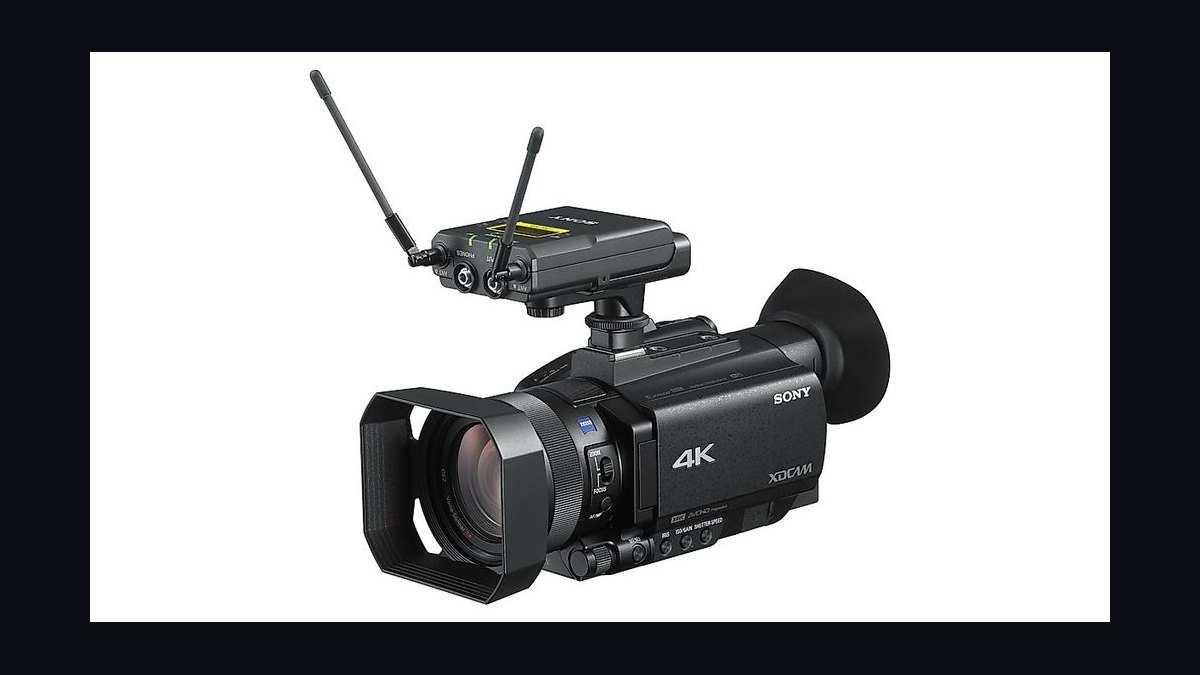
The 10 best camcorders are ranked below on measured performance, build quality, price, and how each one actually holds up in daily use rather than how it reads on a spec sheet. Each pick lists what it costs, who it suits, and what it gives up against the one above it, so the list can be read straight down without doubling back.
1Sony PXW-Z90V 4K Camcorder
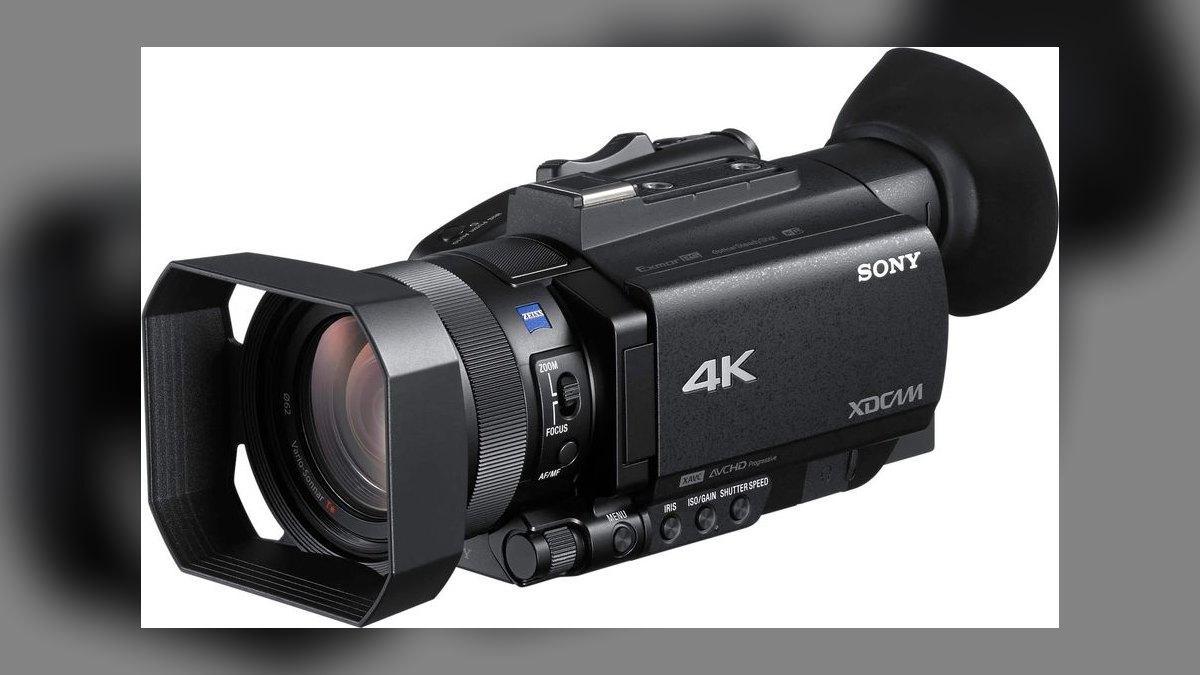
The Sony PXW-Z90V ranks first because it delivers the most complete working-shooter package under $5,000 at $2,199. Its 1.0-inch stacked Exmor RS CMOS records 4K 30p in XAVC-S at 100 Mbps, and 273 phase-detect points drive the fastest autofocus in any camcorder at this price. Dual XLR inputs with phantom power sit on the included handle, and built-in ND filters run Clear, 1/4, 1/16, and 1/64.
Event videographers, journalists, and church livestream operators are the buyers here, because native SRT and RTMP streaming over Wi-Fi replaces a separate encoder box. The 12x optical zoom covers wide ceremony through tight altar without a lens swap, and the body weighs 2.4 pounds with handle. The trade is framerate: 4K caps at 30p, so the Panasonic HC-X20 below is the pick if you need 4K/60 slow motion.
2Canon XA75 Professional Camcorder
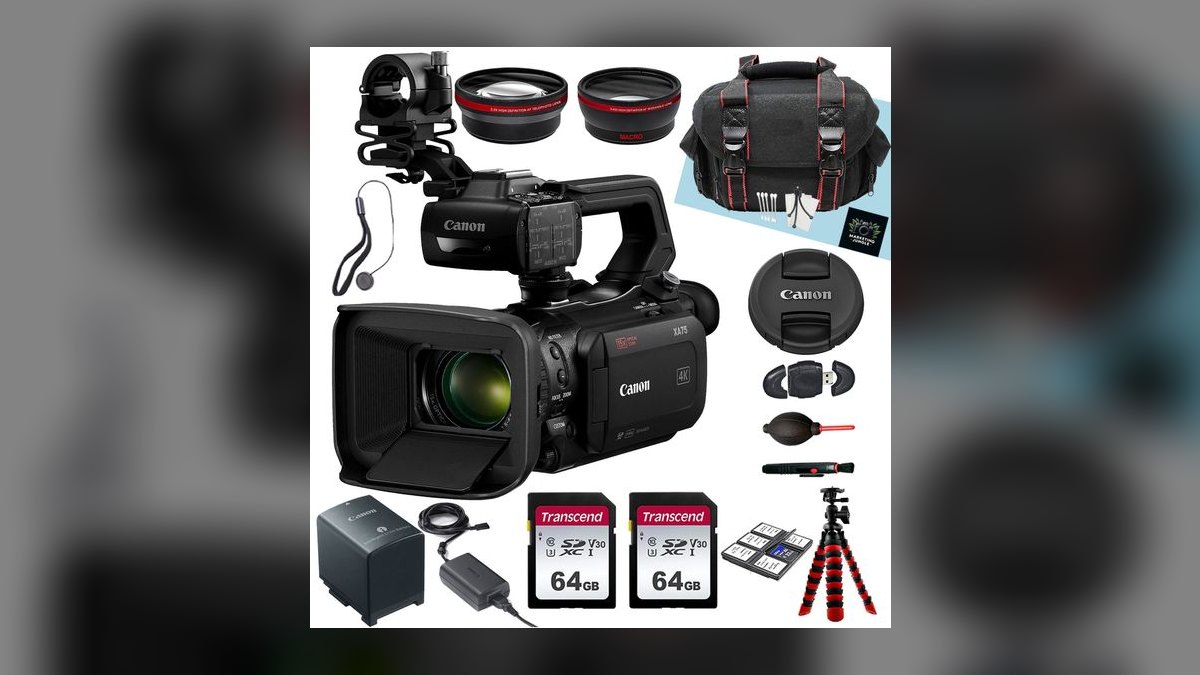
The Canon XA75 ranks second on optical reach and color science at $2,399. Its 15x zoom covers 25.5-382.5mm equivalent, the longest reach of any 1-inch-sensor camcorder here, which matters when press-conference rope lines put you 40 feet back. The 1.0-inch CMOS records UHD 4K 30p in H.265 up to 150 Mbps, and dual SD slots support relay and simultaneous recording for instant backup.
News ENG crews and corporate video shops are the target, particularly houses already shooting Canon. Canon Log 3 gamma gives grading headroom for matching EOS cinema bodies on multicam shoots, and three ND positions plus 5-axis stabilization keep it field-ready. Autofocus runs a half-step behind the Sony PXW-Z90V in run-and-gun work, and it costs $200 more, so pick it for the zoom and the color, not the tracking.
3Panasonic HC-X20 4K Camcorder
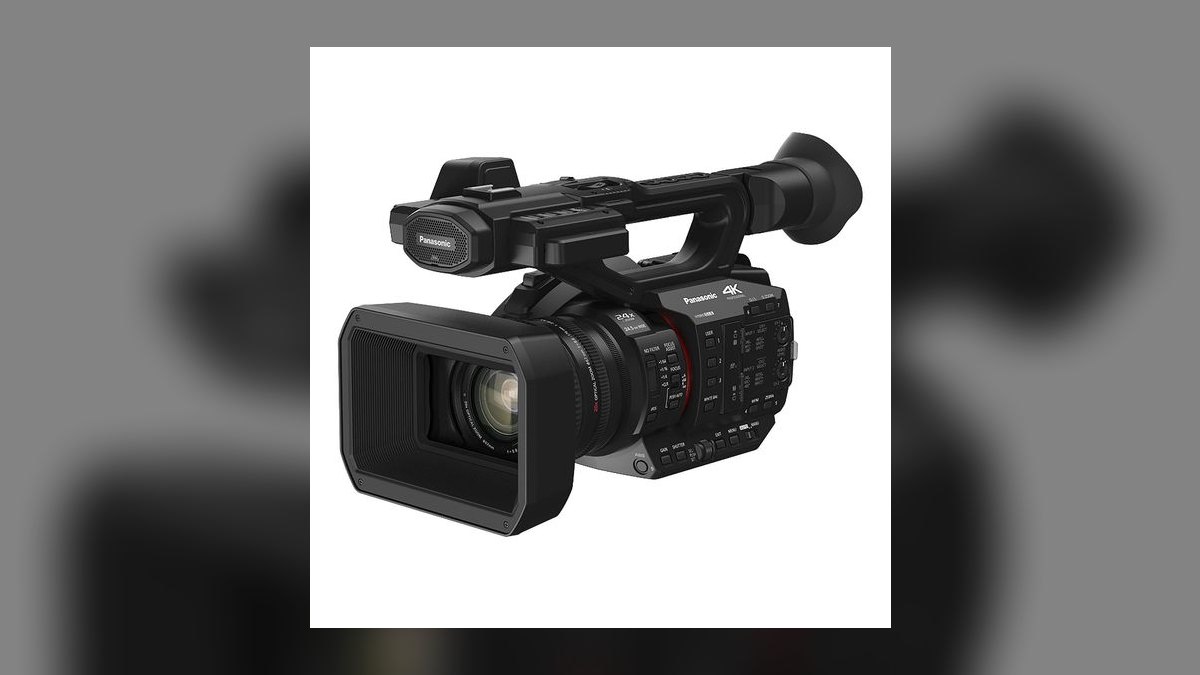
The Panasonic HC-X20 ranks third because it is the only camcorder on this list recording 4K 60p, at 200 Mbps, in a body under two pounds. The 1.0-inch MOS sensor pairs with a 24x optical zoom held usable by 5-axis hybrid stabilization. Codec options include HEVC/H.265 and ALL-Intra MOV, and V-Log L is available for grading. Dual XLR sit on the handle, with dual SD slots behind them.
Documentary shooters and indie filmmakers who need slow motion or extreme reach should buy this over the Sony PXW-Z90V, which stops at 4K 30p and 12x. NDI|HX support over Wi-Fi drops it straight into live-production switchers with no encoder. At $2,799 it is the most expensive of the top three, and Panasonic's menu system carries a real learning curve.
4Canon XA60 Professional Camcorder
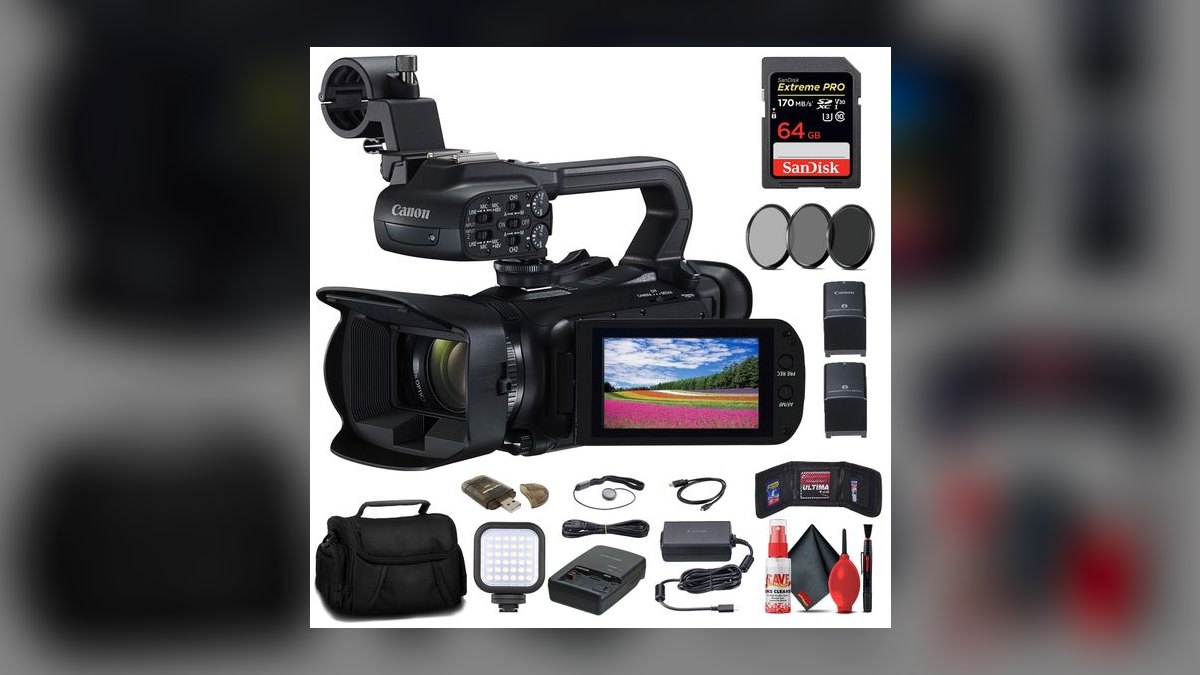
The Canon XA60 ranks fourth as the cheapest current body with dual XLR and phantom power, at $2,099. It shares the XA75's chassis and pro audio package but drops to a 1/2.3-inch sensor, funding a 20x optical zoom reaching 601mm equivalent. It records UHD 4K 30p in MP4, carries dual SD slots, three ND positions, 5-axis stabilization, and an infrared mode for very-low-light pickup shots. It weighs 2.2 pounds.
Wedding videographers and educators are the buyers, since 601mm gets ceremony close-ups from the back row without moving. The trade against the 1-inch Canon XA75 above is noise: above ISO 3200 the smaller imager is visibly grainier, so dim receptions expose it. In well-lit ceremonies and corporate rooms the footage stays broadcast-acceptable, and the vari-angle touch LCD and OLED viewfinder are unchanged.
5JVC GY-HC500SPC CONNECTED CAM Camcorder

The JVC GY-HC500SPC ranks fifth because its $4,999 price only pays off for one job: streaming. The 1.0-inch CMOS and 20x integrated zoom deliver 4K UHD 60p in H.265 at 150 Mbps, but the differentiator is the CONNECTED CAM stack — native SRT, RTMP, RTMPS, and Zixi straight to cloud or stadium switcher, with optional bonded cellular. IFB talkback runs over IP, and dual SDI plus HDMI outputs feed a truck.
Sports broadcast crews and high-school athletics streamers are the buyers. Dual XLR, dual SD plus dual SDXC slots, and built-in 5GHz Wi-Fi with an optional 4G/5G dongle round it out. At 3.7 pounds with handle it is heavier than the Sony and Canon picks and built for shoulder rigs. Non-streaming shooters should take the Canon XA60 and pocket $2,900.
6Sony FDR-AX43A 4K Camcorder
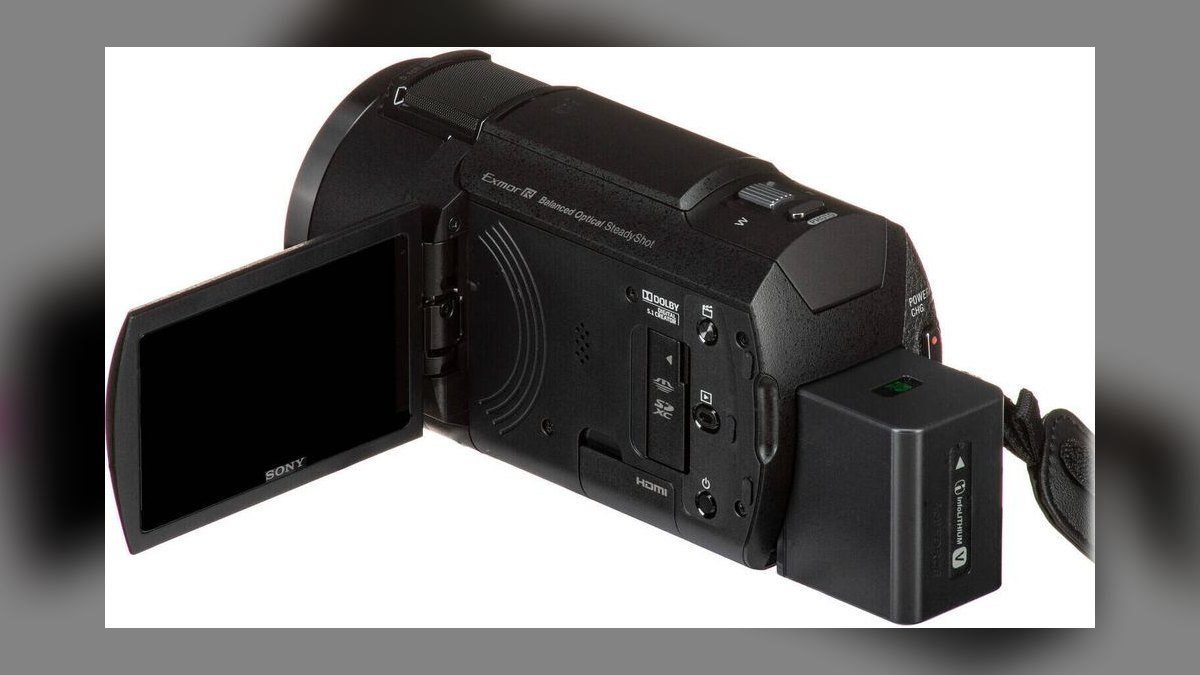
The Sony FDR-AX43A ranks sixth and takes Best Value at $899 because nothing else here delivers genuine 4K with this stabilization. Balanced Optical SteadyShot physically floats the whole lens block, beating every rival at the price. It records 3840x2160 30p in XAVC-S at 100 Mbps from a 1/2.5-inch back-illuminated Exmor R sensor, with 20x optical zoom and an unusually wide 26.8mm short end for cramped rooms.
Wedding starters, recital parents, and family shooters are the audience. What it trades away is the pro audio spine: a 3.5mm input and cold shoe replace XLR, there is no viewfinder, and a single SD slot means no relay backup. Battery runs 105 minutes of continuous 4K, so carry spares. Stepping to the Canon XA60 above costs $1,200 more and buys phantom power.
7Panasonic HC-VX1 4K Camcorder
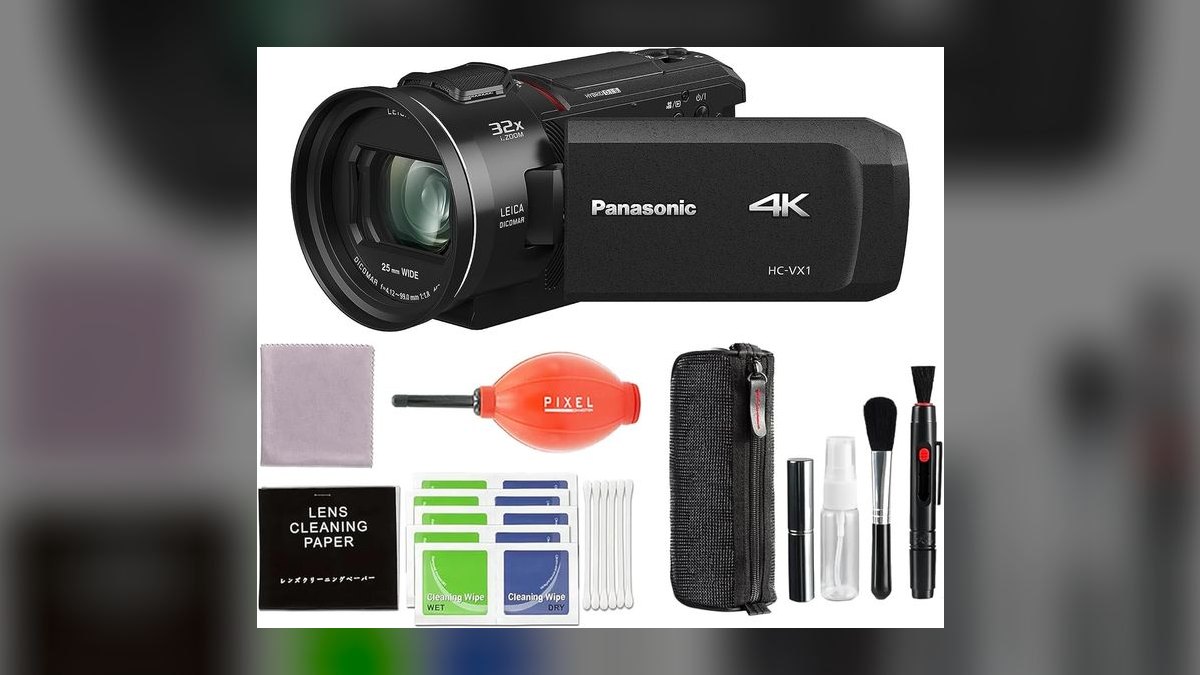
The Panasonic HC-VX1 ranks seventh at $799 for packing features its price class normally skips. A 1/2.5-inch BSI MOS sensor records 4K 30p at 72 Mbps in MP4 behind a 24x Leica Dicomar zoom covering 25-600mm equivalent. HDR Movie mode and HLG support put it into a modern HDR pipeline, and it includes a 0.24-inch electronic viewfinder. It weighs 1.2 pounds with 5-axis Hybrid O.I.S.+ handling walk-and-talks.
Travel shooters and YouTubers wanting long reach under $800 are the fit. Audio is 3.5mm mic and headphone jacks only, with no XLR path. Against the Sony FDR-AX43A directly above, this wins on viewfinder, HDR, zoom reach, and weight, and costs $100 less; the Sony wins clearly on stabilization, since Balanced Optical SteadyShot outclasses the Panasonic hybrid system.
8Canon VIXIA HF G70 Camcorder
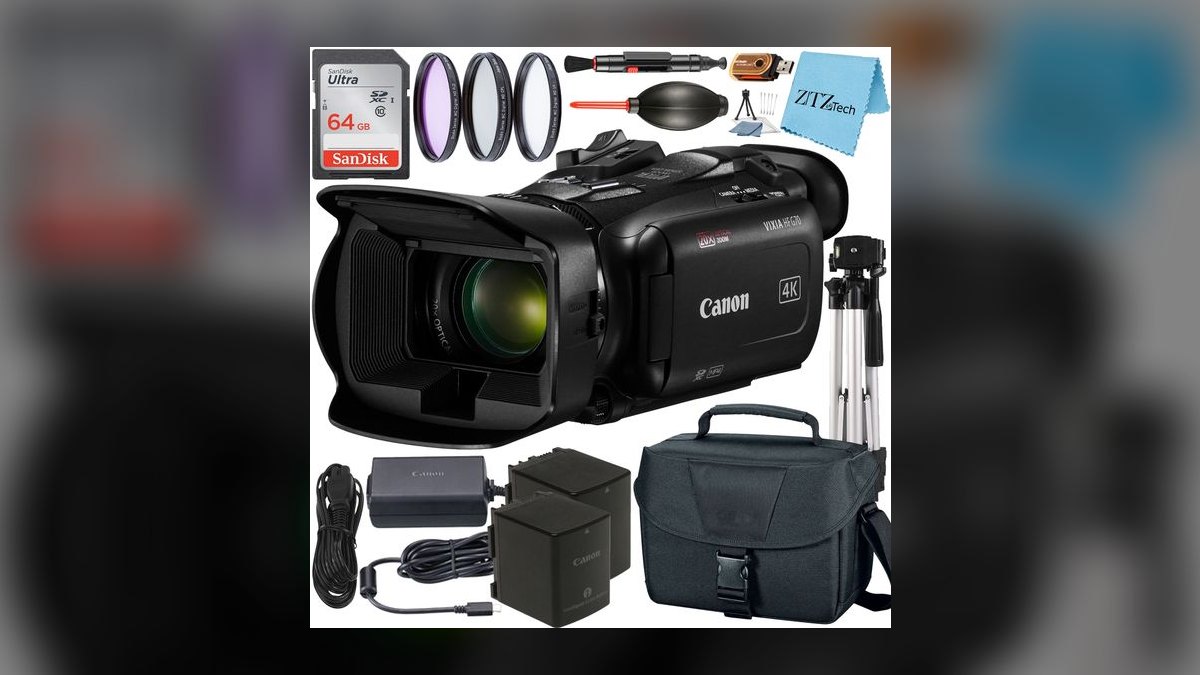
The Canon VIXIA HF G70 ranks eighth as the best body between $1,000 and $1,500, at $1,399. It carries three built-in ND positions, which almost nothing else at this price offers, plus an OLED viewfinder and vari-angle LCD borrowed from the pro Canons. The 1/2.3-inch CMOS Pro records UHD 4K 30p in H.265 at 150 Mbps through the same 20x, 29.3-601mm lens fitted to the XA60. It weighs 1.5 pounds.
Educators, corporate event shooters, and house-of-worship operators sit in this bracket. The G-series line is drawn at audio: no XLR, only a 3.5mm input and cold shoe, so pro audio expansion means an external recorder. Against the Canon XA60 it saves $700 and a pound; against the Panasonic HC-VX1 it costs $600 more and buys ND filters, better optics, and infrared mode.
9Panasonic HC-V770 Camcorder
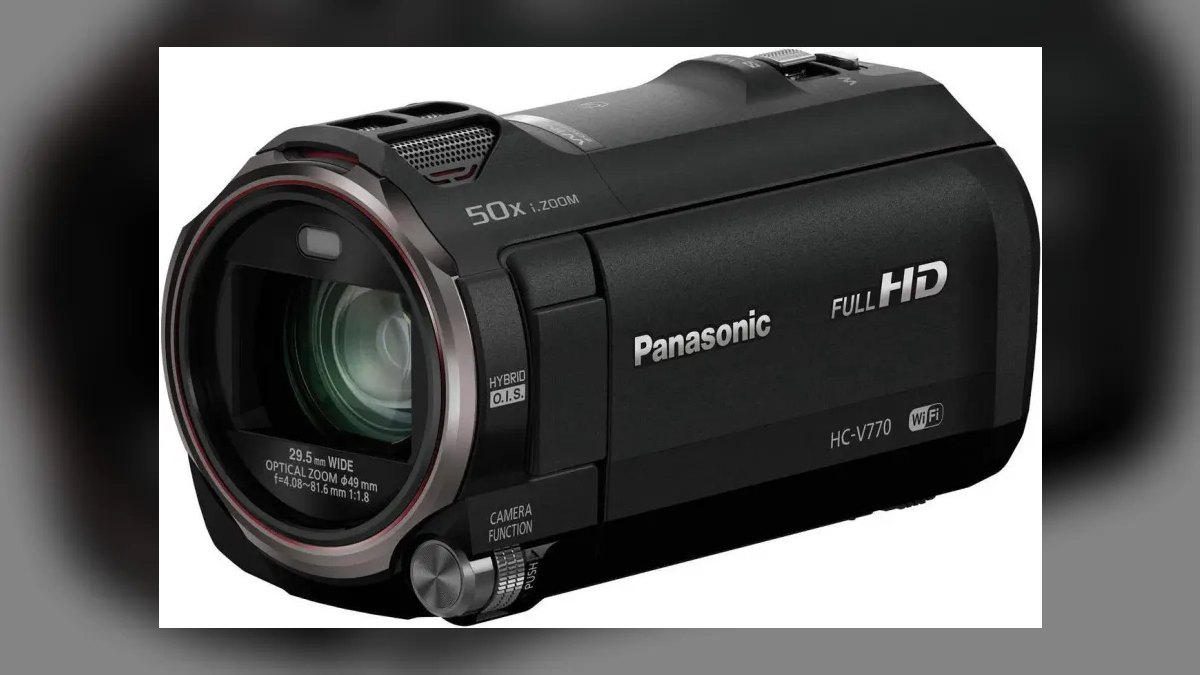
The Panasonic HC-V770 ranks ninth because $499 buys more hardware than anything cheaper, provided you accept HD. It records Full HD 1080/60p through a 20x optical zoom with 5-axis Hybrid O.I.S.+, and includes an EVF, HDR Movie mode, a 3.5mm mic input, and built-in RTMP livestreaming to YouTube and Facebook over Wi-Fi. Its dual-camera Wi-Fi mode composites a second smartphone angle as live picture-in-picture into the master file.
Sports parents, recital families, and beginner livestreamers are the buyers, and at 0.8 pounds it is the lightest body here. The hard trade is resolution: 1080p only, with no 4K future-proofing, in a market where clients and YouTube default to 4K. Spending $400 more on the Sony FDR-AX43A buys real 4K and better stabilization but loses the viewfinder and the streaming.
10Sony HXR-NX100 NXCAM Camcorder
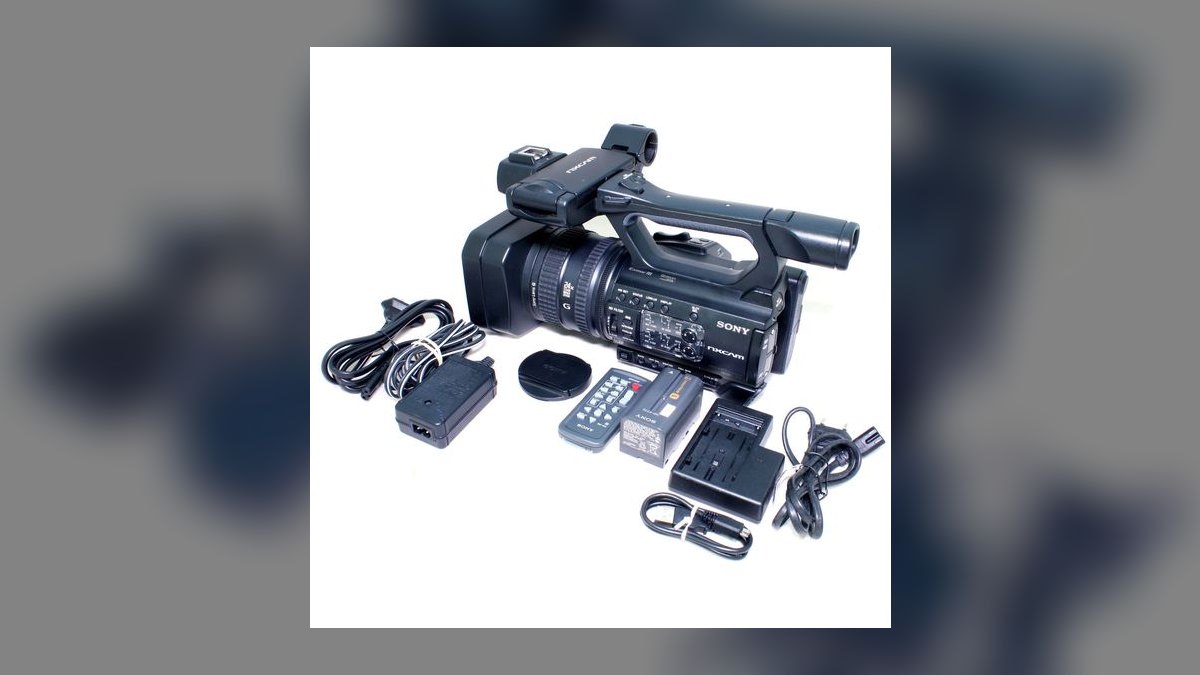
The Sony HXR-NX100 ranks tenth because $2,499 buys reliability rather than resolution. Its 1.0-inch Exmor R CMOS records Full HD 1080/60p only, with 12x optical zoom plus a clean 24x Clear Image Zoom. What keeps it stocked is the fan-cooled body that runs all day in 95°F sports environments without thermal cuts, multi-hour runtime on an optional NP-F970, and an eight-year field reliability record. It weighs 3.5 pounds.
Schools, government media shops, and corporate AV departments buy this, valuing uptime over spec sheets. Dual XLR, dual SD slots with relay and simultaneous recording, three ND positions, and an OLED viewfinder cover professional workflow in AVCHD and XAVC-S HD. The disqualifier for most buyers is the missing 4K — the Sony PXW-Z90V costs $300 less and shoots UHD, so choose this only when institutional durability outranks resolution.
How we ranked these
We weighted what working shooters actually use on paid jobs: image pipeline and codec bitrate at 25%, true optical zoom and stabilization at 20%, audio inputs at 20%, operator features like ND filters, viewfinders and dual card slots at 15%, native SRT/RTMP/NDI streaming at 10%, and price-to-performance at 10%. Picks were cross-checked against B&H buyer guides, NewsShooter field tests, Pro Video Coalition, DPReview lab data, and late-2026 community threads.
We deliberately ignored peak resolution bragging, digital-zoom multipliers, and megapixel counts on still capture. Digital zoom is pixel cropping, not reach. We also skipped brand-new product lines with under two years of field reviews, because camcorders are bought for five-year reliability, not launch-week hype. Bundled accessory kits and retailer promo pricing were excluded too — they inflate perceived value without changing what the camera does on a shoot.
What to look for
Two things decide this purchase: audio and zoom. Dual XLR with phantom power is the hard line between $899 and $2,099 — it buys real shotgun mics, wireless lavs, and direct mixer feeds. If you shoot anything paid, you need it. Then check optical reach: 12x minimum for events, 20x+ if you shoot ceremonies from the back row or press conferences from a rope line 40 feet out.
The common mistake is buying sensor size and ignoring bitrate and card slots. Anything recording 4K under 50 Mbps looks like mush no matter how big the imager is. Worse, single-slot consumer bodies can't relay — one corrupt card and the wedding is gone. Buyers also skip built-in ND filters, then discover at noon they can't hold a 1/50 shutter without screwing a $200 filter onto the front.
Related questions
Why buy a camcorder instead of a mirrorless camera in 2027?
Mirrorless shoots prettier 4K but overheats in about 30 minutes, drains batteries fast, and has no real reach past 70-200mm without a five-figure lens. Camcorders win on all-day battery, integrated 12-24x zoom, dual XLR audio, no thermal limits, dual-card relay, and ergonomics like a servo zoom rocker and ND filters at your thumb. For weddings, news, sports, and church work, nothing mirrorless matches that.
What makes the Sony PXW-Z90V the best overall pick?
It combines a 1.0-inch stacked Exmor RS CMOS shooting 4K 30p XAVC-S at 100 Mbps with 273-point phase-detect autofocus that holds under stage lights. Dual XLR inputs on the handle, a 12x optical zoom, built-in ND filters, an OLED viewfinder, and native SRT plus RTMP streaming make it a one-camera kit. At $2,199 and 2.4 lb, it has five years of freelancer field proof.
Which camcorder here is the best value?
The Sony FDR-AX43A at $899. It delivers genuine 4K 30p XAVC-S at 100 Mbps from a 1/2.5-inch BSI Exmor R sensor, a 20x optical zoom, and Balanced Optical SteadyShot — Sony's mechanical system that floats the whole lens block and beats everything near this price. A 26.8mm wide end handles cramped reception rooms. No XLR and no viewfinder are the trade-offs.
Which camcorder shoots 4K at 60p?
Only the Panasonic HC-X20 at $2,799 hits 4K/60p on this list, recording at 200 Mbps in a sub-two-pound body. It pairs that with a 1.0-inch MOS sensor, a 24x optical zoom held steady by 5-axis hybrid stabilization, V-Log L for grading, and native NDI|HX over Wi-Fi. The JVC GY-HC500SPC also does 4K UHD 60p, but costs $4,999.
What's the cheapest camcorder with real dual XLR audio?
The Canon XA60 at $2,099 is the entry price for dual XLR with phantom power in a current 2027 body. It uses a 1/2.3-inch sensor rather than 1-inch, so it gets noisy above ISO 3200, but its 20x zoom reaching 601mm equivalent makes it a wedding workhorse. Below that price you're working around with a 3.5mm jack and an external recorder.
Which of these stream natively without an encoder box?
The Sony PXW-Z90V, JVC GY-HC500SPC, Panasonic HC-X20, and Panasonic HC-V770 all push native RTMP to YouTube or Facebook over Wi-Fi. The Z90 and the JVC add SRT, which survives jittery internet far better than RTMP. The JVC also handles RTMPS and Zixi. Both Canons on this list need an external encoder, which typically runs $500 to $1,500.
Is a 24x zoom actually usable handheld?
Yes, but only with strong stabilization behind it. The Panasonic HC-X20 and HC-VX1 both pair their 24x reach with 5-axis hybrid stabilization, and the Sony AX43A's Balanced Optical SteadyShot physically floats the lens block through its 20x range. Ignore any digital-zoom figure stacked on top — that's pixel cropping. Long handheld reach still benefits from a monopod on ceremony or sideline work.
Do any camcorders here still shoot HD only?
Two. The Sony HXR-NX100 at $2,499 records 1080/60p from a 1.0-inch sensor and stays on lists for its fan-cooled body, multi-hour NP-F970 runtime, and eight-year reliability record in institutional use. The Panasonic HC-V770 at $499 is 1080/60p with an EVF and built-in RTMP livestreaming. Both are chosen for reliability or price, not future-proofing.
FAQ
Are camcorders dead in 2027?
No, but the market shrank sharply. Consumer vacation camcorders lost to phones and aren't coming back. What survives is prosumer event work, broadcast journalism, sports, and church livestreaming — jobs that need long optical zoom, dual XLR inputs, all-day battery, dual card slots, and built-in ND filters. Phones and mirrorless bodies still can't deliver that combination in one hand-held package.
Do I actually need 4K for a new camcorder?
Yes for a new purchase. YouTube distribution is 4K by default, broadcast delivery specs call for it, and clients ask. The exceptions on this list are the Sony HXR-NX100 and Panasonic HC-V770, both HD-only, and both picked for specific reasons — bulletproof institutional reliability in the Sony's case, and a sub-$500 price with an EVF in the Panasonic's.
Is the Sony FDR-AX43A real 4K or upscaled?
Real 4K: 3840x2160 at 30p in XAVC-S at 100 Mbps, downsampled from a 16-megapixel imager. The sensor is small at 1/2.5-inch, so low light won't look as clean as a 1-inch body, and noise climbs in dim receptions. But the resolution itself is genuine UHD capture, not an upscale from 1080p like some budget marketing implies.
Should I buy a camcorder or a Sony FX30 style mirrorless?
It depends on the job, not the price. For weddings, news, church, and sports, take the camcorder — you need the zoom, the XLR audio, and the battery runtime. For narrative film, social content, and beauty work, take the mirrorless for sensor size and lens choice. The PXW-Z90V and the FX30 are sister tools in a kit, not competitors.
Why do built-in ND filters matter so much?
Step outside at noon and there's too much light to hold a cinematic 1/50 or 1/60 shutter without stopping the lens down past its sweet spot. Built-in ND wheels on the Canon XA75, Sony Z90, and JVC cut that light with a thumb flick. Consumer bodies mostly skip them, forcing you to screw a $200 variable ND onto the front mid-shoot.
What is SRT and why does it beat RTMP?
SRT, or Secure Reliable Transport, is the emerging broadcast streaming standard. It handles packet loss and jitter far better than RTMP, so a flaky venue connection degrades instead of dropping the stream. The Z90, JVC GY-HC500SPC, and Panasonic HC-X20 all support it natively. If you stream weekly, that built-in support saves buying a $500 to $1,500 encoder box.
Which camcorder is best for streaming high school sports?
The JVC GY-HC500SPC at $4,999. Its CONNECTED CAM ecosystem does SRT, RTMP, RTMPS, and Zixi straight to a cloud or stadium switcher, with optional bonded cellular. It adds IFB talkback over IP, dual SDI plus HDMI outputs, dual XLR, and four card slots, over a 1-inch sensor with 20x zoom at 4K UHD 60p. It's overkill for anyone not streaming.
What's the best camcorder between $1,000 and $1,500?
The Canon VIXIA HF G70 at $1,399. It uses the same 20x lens as the pro XA60, records UHD 4K 30p in H.265 at 150 Mbps, and includes three built-in ND positions, a vari-angle LCD, an OLED viewfinder, and infrared mode — features usually reserved for pricier bodies. The trade-off is no XLR, so pro audio needs a 3.5mm mic or external recorder.
How do I avoid losing footage to a bad memory card?
Buy a body with dual slots and use relay or simultaneous recording. The Canon XA75, XA60, Panasonic HC-X20, JVC GY-HC500SPC, and Sony HXR-NX100 all support it, writing identical files to two cards at once. Single-slot consumer bodies like the AX43A can't, and one corrupt card ends the job. For paid events, simultaneous recording is not optional.
What specs get overhyped in camcorder marketing?
Digital zoom leads the list — it's cropping pixels, so ignore any number stacked on top of the optical figure. Next is unqualified 4K-capable language: check the bitrate, because anything under 50 Mbps in 4K falls apart on motion. Also treat brand-new lines cautiously until two years of field reviews exist at NewsShooter and Pro Video Coalition.
Sources
- https://www.bhphotovideo.com/explora/video/buying-guide/camcorder-buying-guide
- https://www.dpreview.com/
- https://www.newsshooter.com/
- https://www.provideocoalition.com/
- https://www.tomsguide.com/best-picks/best-camcorders
- https://pro.sony/ue_US/products/handheld-camcorders/pxw-z90v
- https://www.usa.canon.com/shop/p/xa75
- https://na.panasonic.com/us/audio-video-solutions/professional-video-systems
- https://pro.jvc.com/prof/main.jsp
- https://www.reddit.com/r/videography/
Related on PULSE
This page will be disappearing soon. Save it to your device for $1 — or read it free while it is here.
@Kory-White- · if Venmo asks, the last 4 of my number are 2012
This page is gone.
This one is off the shelf now. $1 keeps it on your phone for good — the whole page, pictures and diagrams included.
 pulse-reviewsTop 10 Multimeters — Best Overall + Best Value in 2027
 pulse-reviewsTop 10 LG TVs — Best Overall + Best Value in 2027
 pulse-reviewsTop 10 Drone Cases — Best Overall + Best Value in 2027
 pulse-reviewsTop 10 Radar Detectors — Best Overall + Best Value in 2027
 pulse-reviewsHow do I reduce echo in a home office for sales calls in 2027?
 pulse-reviewsTop 10 Noise-Cancelling Headphones — Best Overall + Best Value in 2027
 pulse-reviewsTop 10 Blue Light Glasses for Sales Reps in 2027
 pulse-reviewsTop 10 Backpack Leaf Blowers — Best Overall + Best Value in 2027
 pulse-reviewsTop 10 YouTube Lighting Kits — Best Overall + Best Value in 2027
 pulse-reviewsTop 10 Standing Desks $500-$1500 in 2027