


Top 10 Smart Scales — Best Overall + Best Value in 2027
Quality
Certified
The 10 best smart scales are ranked below on measured performance, build quality, price, and how each one actually holds up in daily use rather than how it reads on a spec sheet. Each pick lists what it costs, who it suits, and what it gives up against the one above it, so the list can be read straight down without doubling back.
1Withings Body Scan
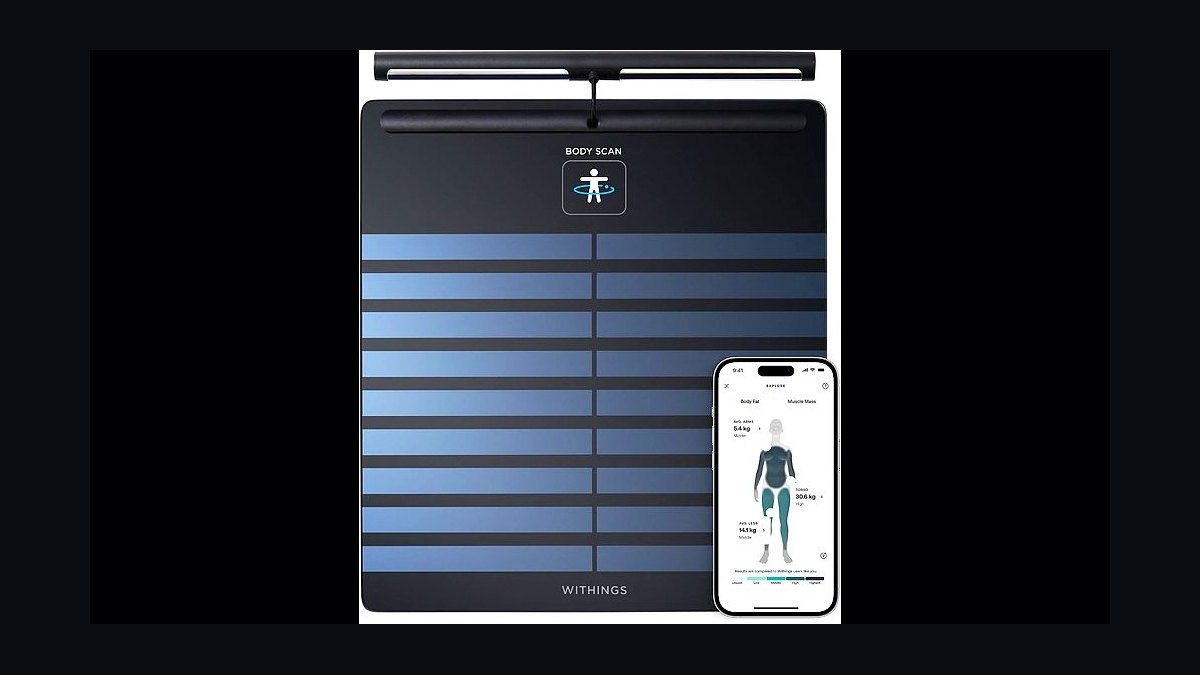
The Withings Body Scan ranks first because it is the only consumer scale with a retractable 4-electrode handle that measures segmental body composition — arms, legs, and trunk separately — the way a clinical InBody unit does. At $399 it adds a 6-lead ECG, vascular age via pulse wave velocity, and an FDA-cleared peripheral neuropathy score. DC Rainmaker's DEXA validation puts it at ±2-3 percentage points, the tightest of any scale here.
This is for people who want clinical-grade numbers at home rather than a bathroom scale that guesses. It trades away money and independence: the full Heart Health and nerve reports sit behind a Health+ subscription at $9.95/month, so the real first-year cost is closer to $520. The Eufy P3 below delivers more raw metric count for $79, but none of them are segmental and its BIA error is roughly double.
2Eufy Smart Scale P3
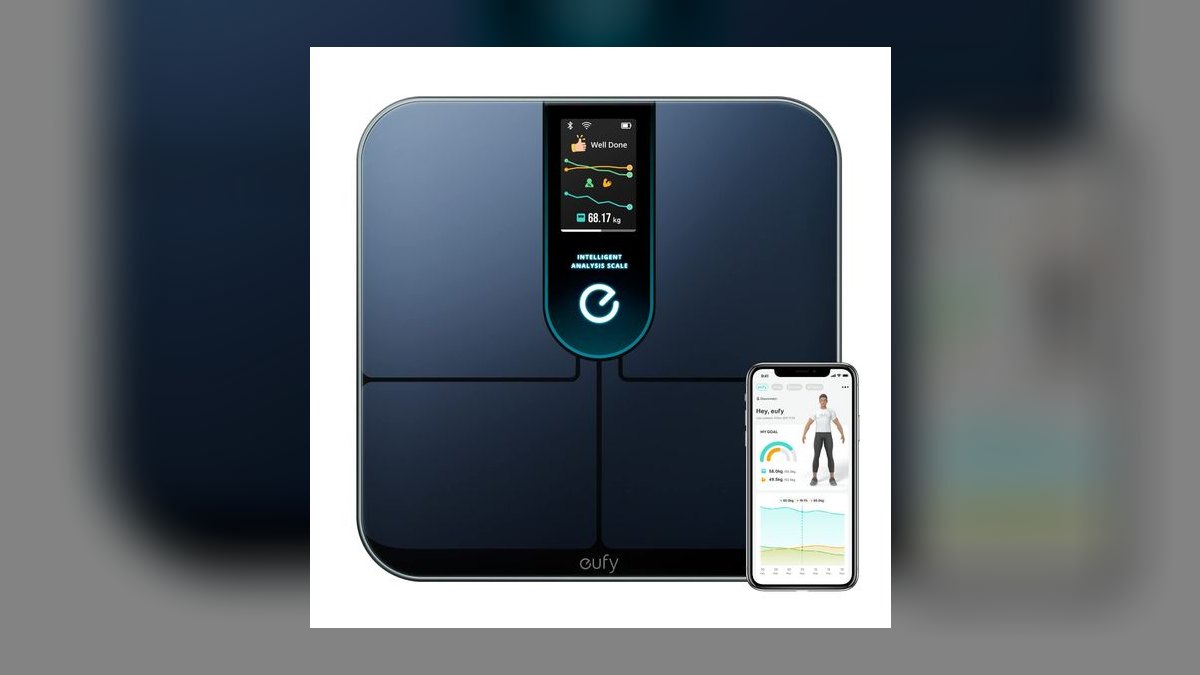
The Eufy Smart Scale P3 ranks second because it delivers premium hardware at $79 — 16 body metrics including visceral fat, BMR, protein, and skeletal muscle, on a 3.5-inch color display that shows trend arrows and your previous weight beside today's. It runs dual-band Bluetooth and WiFi, auto-recognizes up to 16 users, and holds a 396 lb max on tempered glass with ITO-coated electrodes for reliable contact on dry feet.
Buy this if Apple Health is your hub and you want the best sub-$100 experience, including pregnancy mode and a 3D body model in the EufyLife app. The trade is app polish — EufyLife can lag on the first sync after a long absence. Against the Withings Body Scan above, you lose segmental BIA, ECG, and nerve scoring, but save $320 and skip the subscription entirely.
3Withings Body+
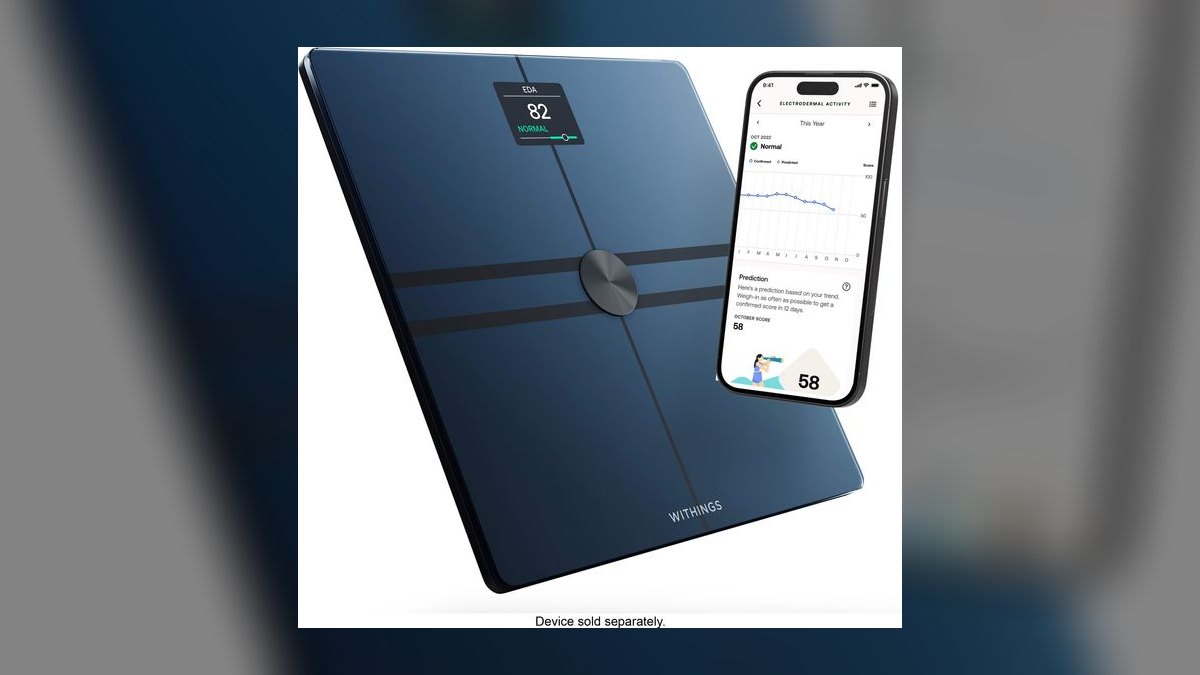
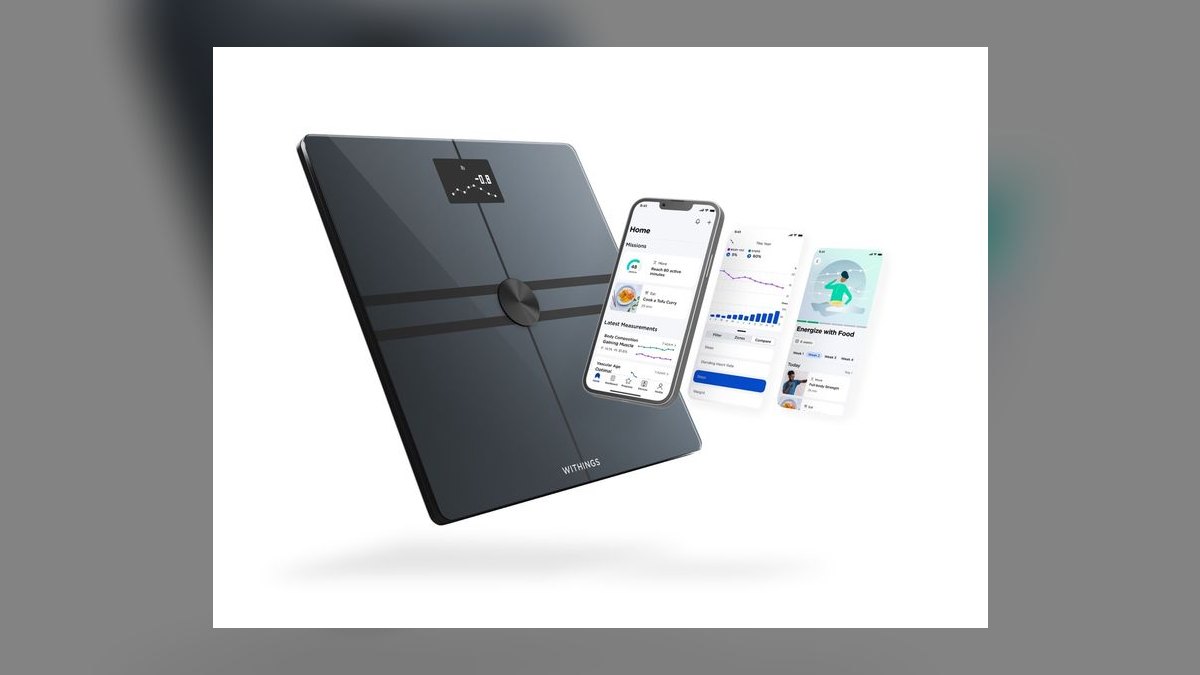
The Withings Body+ ranks third on reliability and software: $99 buys body fat, water percentage, muscle mass, and bone mass with no subscription for core metrics, feeding Health Mate trend graphs that go back years. WiFi sync pushes to Apple Health, Google Fit, Fitbit, MyFitnessPal, and Garmin Connect. It auto-recognizes 8 users, tops out at 396 lb, and runs roughly 18 months on AAA batteries behind tempered glass.
This suits families that want a scale nobody has to think about, with pregnancy, baby, and athlete modes covering the whole household. What it gives up is advanced hardware — no ECG, no vascular age, no segmental readings. Compared with the Eufy P3 above, you pay $20 more for fewer metrics and a plainer display, and get a materially better app and longer track record in return.
4Garmin Index S2
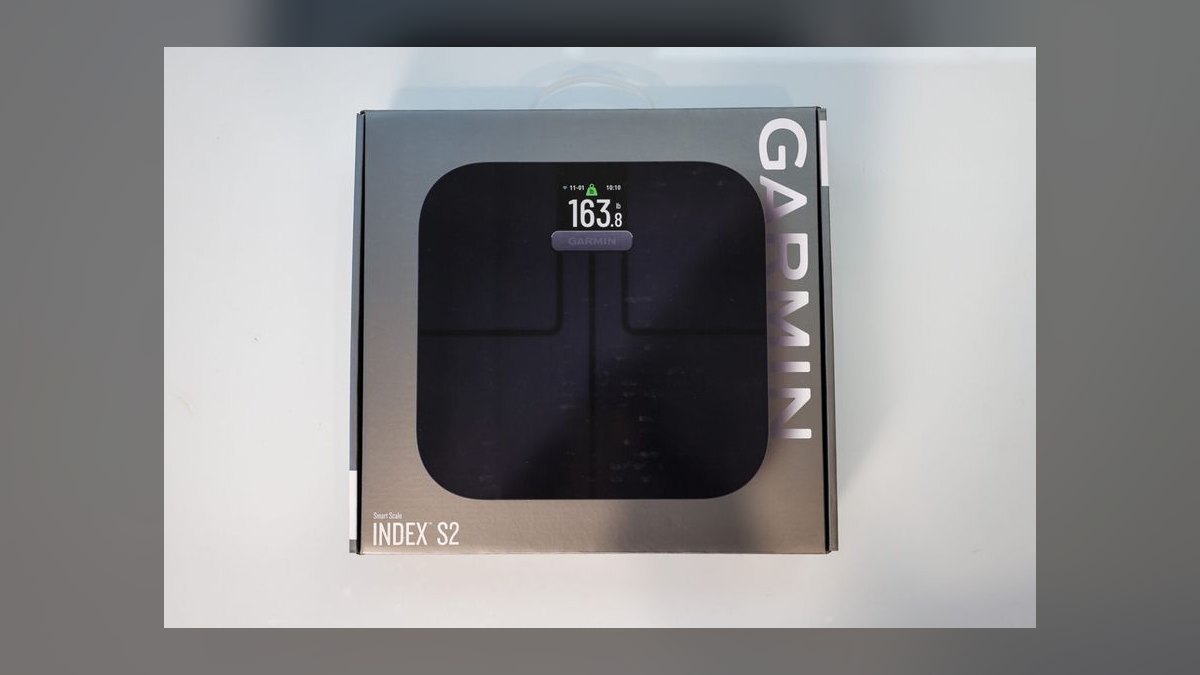
The Garmin Index S2 ranks fourth because it is the only scale that syncs natively into Garmin Connect with no third-party bridge, at $149. It reports weight, BMI, body fat, body water, bone mass, muscle mass, and skeletal muscle, and displays weight trend graphs on the scale itself so no phone is needed. WiFi setup is painless on the S2, it auto-detects up to 16 users by weight signature, and it handles 400 lb.
This is for Garmin watch owners who want training load, sleep, and body composition in one pane of glass, with athlete mode correcting BIA for lean, high-muscle profiles. It deliberately skips pregnancy and baby modes — Garmin treats it as a performance device. Versus the Withings Body+ above, you pay $50 more and lose family features to gain native Connect integration.
5QardioBase X
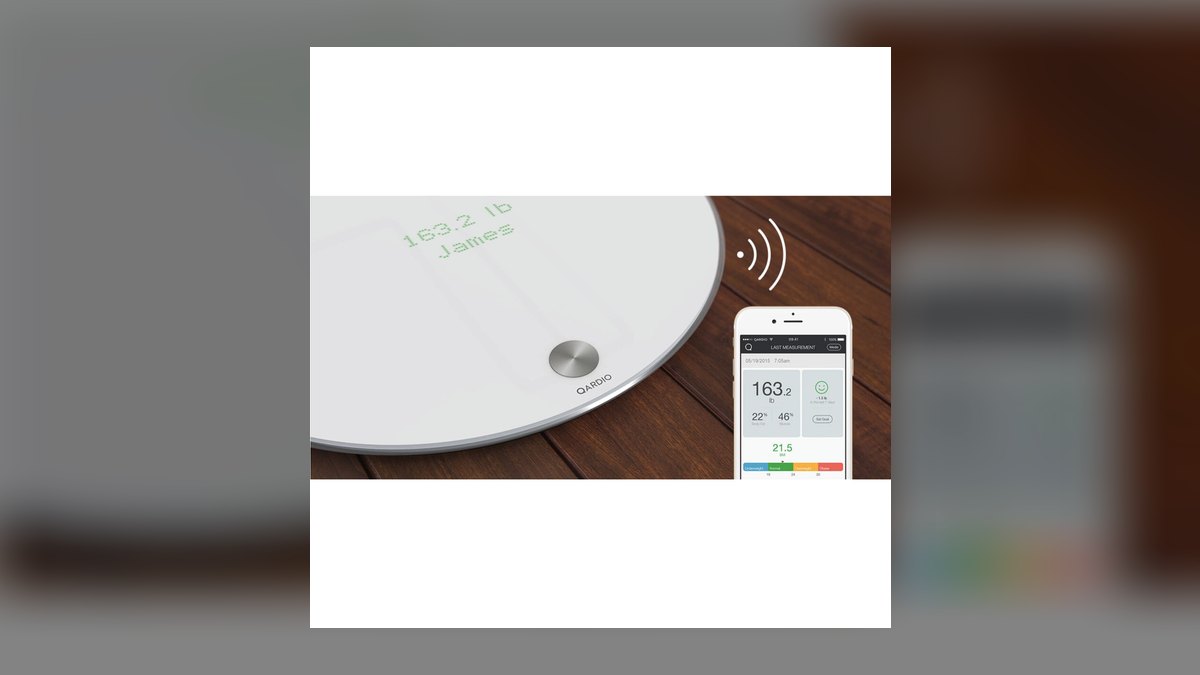
The QardioBase X ranks fifth on the strength of the best pregnancy implementation tested: week-by-week weight tracking mapped to ACOG-recommended gain ranges, plus smile or frown haptic feedback that lets you skip seeing the number entirely. At $149 it reads body fat, muscle mass, bone mass, body water, visceral fat, and BMI over Bluetooth and WiFi. The rechargeable battery lasts 12 months per charge under a curved tempered-glass top.
This is for pregnant and postpartum users, and for anyone in eating-disorder recovery who needs the optional no-number mode. It holds 8 users and 400 lb, with baby and athlete modes included. The weak point is software cadence — Qardio's app releases were spotty through 2026. The Garmin Index S2 above costs the same and syncs more dependably, but has no pregnancy support at all.
6Renpho Elis 1 Smart Body Scale
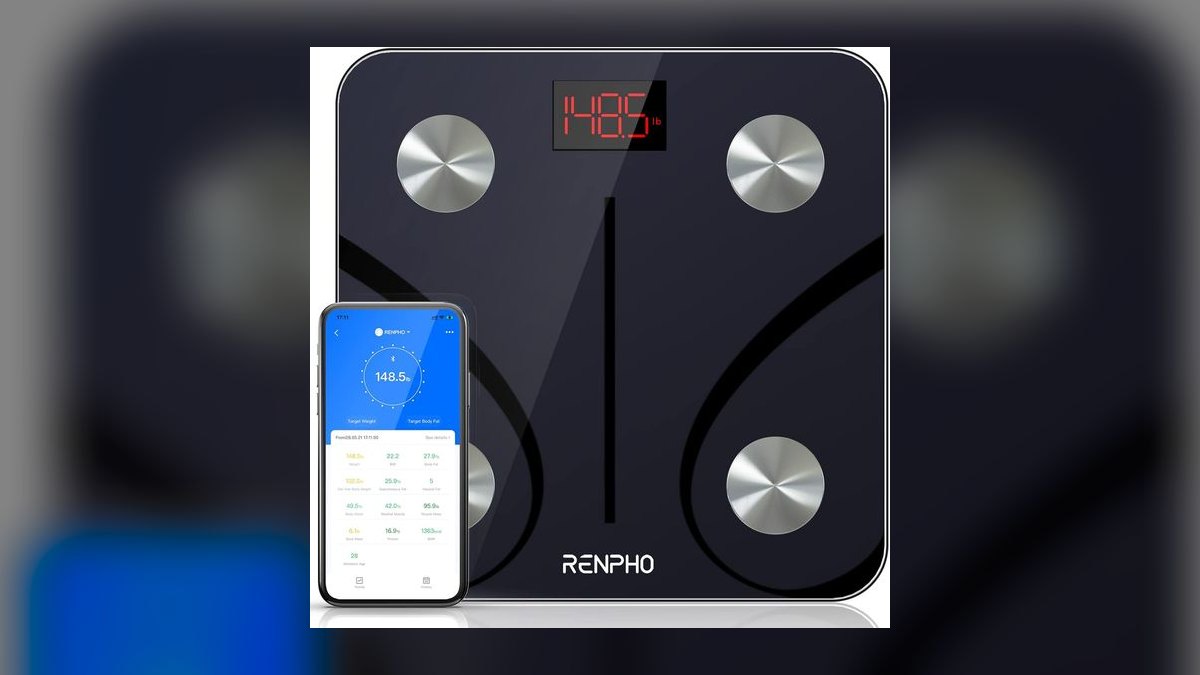
The Renpho Elis 1 ranks sixth as the value pick because $29 buys 13 body metrics — weight, BMI, body fat, muscle mass, bone mass, body water, visceral fat, BMR, protein, skeletal muscle, subcutaneous fat, metabolic age, and ideal weight. It has held Wirecutter's budget slot across three guide revisions. Unlimited user profiles beat every scale here, which cap at 8 to 20, and it handles 396 lb on tempered glass.
This is for anyone who wants roughly 90% of the smart-scale experience for a tenth of the price, including baby, athlete, and pregnancy modes. The trade is Bluetooth-only sync: you must open the Renpho app near the scale for every weigh-in, which costs you readings on rushed mornings. The WiFi scales above capture the trend automatically; that convenience is most of what the extra $30 to $70 buys.
7Wyze Scale X
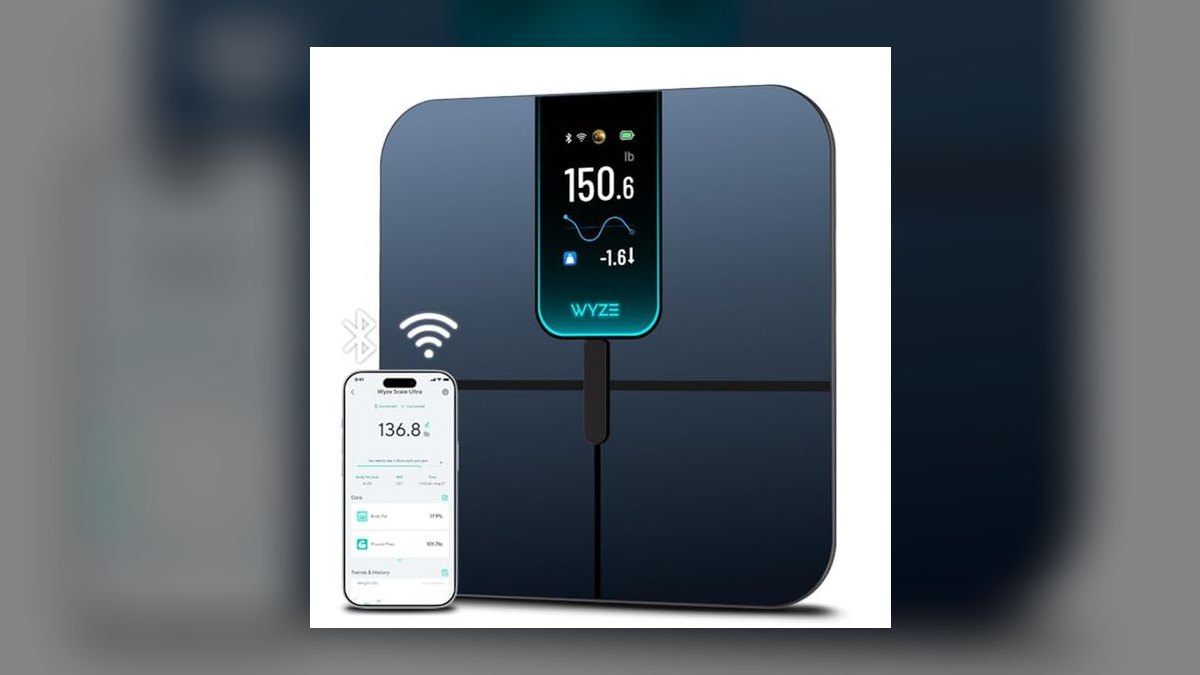
The Wyze Scale X ranks seventh because at $35 it includes heart-rate measurement through the foot electrodes, which almost nothing at this price offers. It reports weight, body fat, muscle mass, bone mass, body water, visceral fat, BMI, BMR, metabolic age, lean body mass, and protein over Bluetooth to Apple Health, Google Fit, and Fitbit. Build quality is solid tempered glass, with 8-user auto-detect and a 400 lb capacity.
This makes sense mainly if you already run Wyze cameras or bulbs, since it uses the same app and account with nothing extra to configure. The trade is dependence on Wyze's cloud — outages during 2026 delayed syncs, and the local cache only partly covers it. The Renpho Elis 1 above costs $6 less with more metrics and unlimited users, but no heart rate.
8Fitbit Aria Air
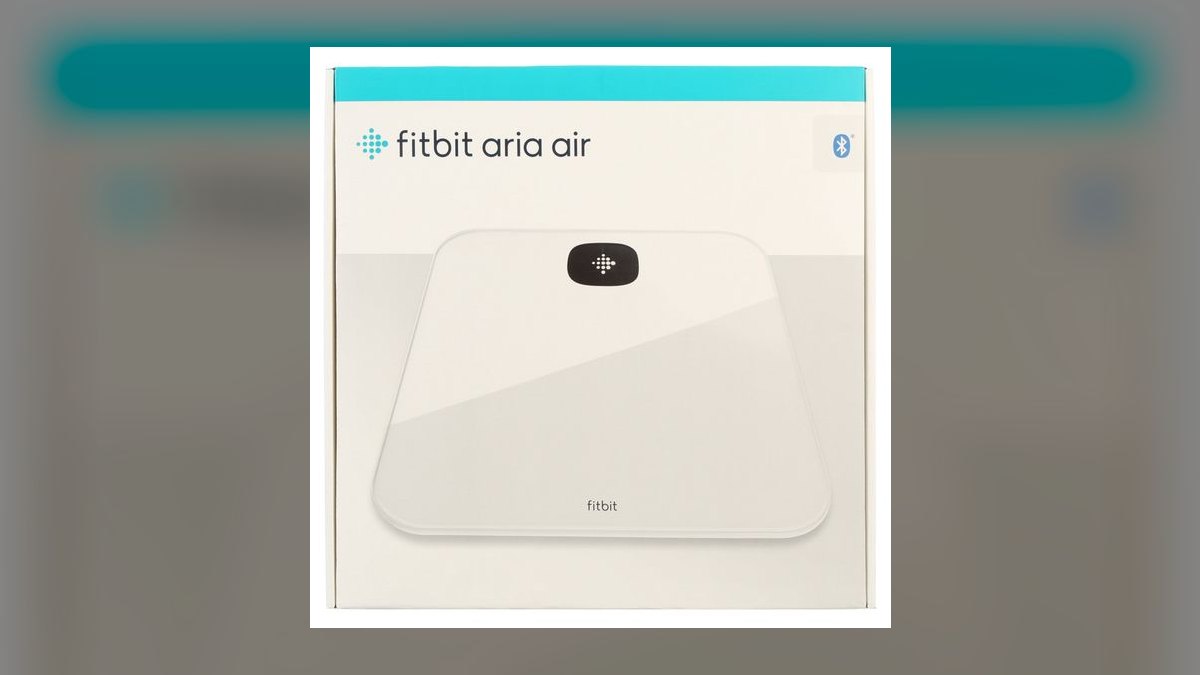
The Fitbit Aria Air ranks eighth because it measures weight and BMI only — no body fat, no muscle mass, no BIA of any kind — but it syncs flawlessly into the Fitbit app at $49, rolling weight directly into daily activity, sleep, and food logs. Bluetooth handles the phone connection, with Apple Health and Google Fit bridged through Fitbit. It supports 8 users after setup, 400 lb max, tempered glass, 3 AAA batteries.
This is for Fitbit tracker owners who want zero friction, and for pacemaker users, since it passes no current through the body — the safest pick on this list on that count. What it trades away is every composition metric. Compared with the Wyze Scale X above, you pay $14 more for far fewer numbers and get only ecosystem cleanliness in exchange.
9Greater Goods WiFi Smart Body Scale
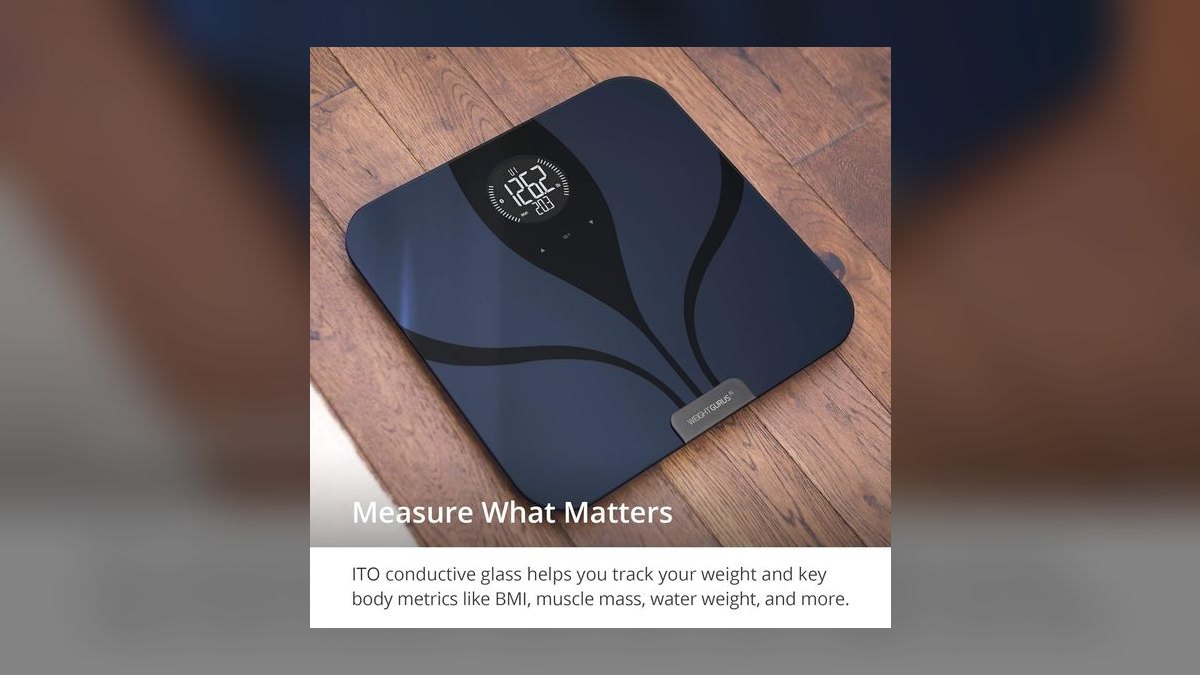
The Greater Goods WiFi Smart Body Scale ranks ninth as the only sub-$60 scale with true WiFi sync — no Bluetooth handshake each morning. For $59 it reads weight, BMI, body fat, body water, muscle mass, and bone mass, with the Weight Gurus app forwarding to Apple Health, Google Fit, Fitbit, MyFitnessPal, and Samsung Health. It recognizes 8 users, handles 400 lb, and includes pregnancy and baby modes on tempered glass.
This fits buyers who want automatic trend capture on a budget and value a U.S.-based B-Corp that donates 7% of each sale to the Love146 anti-trafficking nonprofit, with support that answers the phone. The trade is the app, which looks dated next to Renpho and Health Mate. Against the Fitbit Aria Air above, you gain full BIA and WiFi for $10 more.
10iHealth Nexus Pro
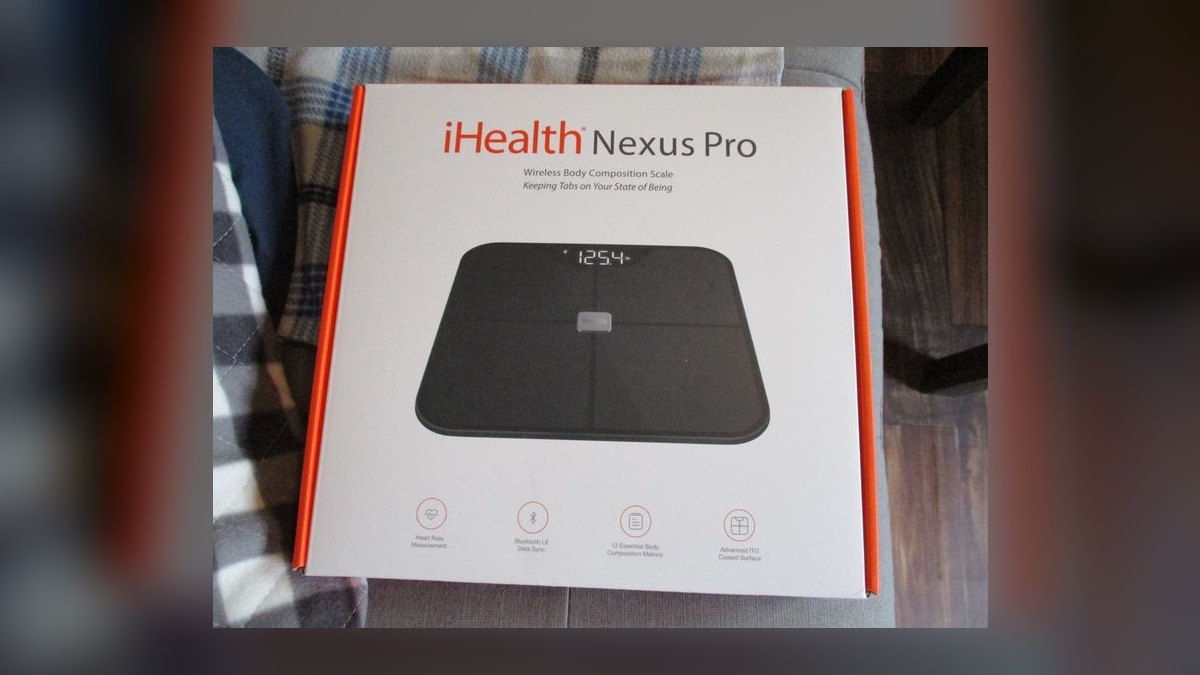
The iHealth Nexus Pro ranks tenth on paperwork rather than hardware: at $99 it is FSA and HSA eligible through iHealth's medical-device classification, which effectively discounts it for U.S. buyers with pre-tax dollars to spend. It reports weight, body fat, muscle mass, bone mass, body water, visceral fat, BMR, protein, and metabolic age, plus heart rate via foot electrodes. It supports 20 users, the most here, over WiFi and Bluetooth at 400 lb.
This is for large households and anyone with an FSA balance to burn before year-end, with pregnancy, athlete, and baby modes covering most situations. The trade is that the MyVitals app is serviceable rather than pleasant. Against the Greater Goods scale above, you pay $40 more for heart rate, dual-band sync, and 12 more user slots on medical-grade hardware QA.
How we ranked these
We scored every scale on BIA accuracy against DEXA at 30%, because a body-fat readout that misses by 6 points is decoration, not data. Multi-user auto-detect took 20%, app and ecosystem sync another 20% across Apple Health, Google Fit, Fitbit and Garmin Connect. Build quality and max weight capacity carried 15%, and special modes — pregnancy, athlete, baby, pet, pacemaker-safe weight-only — closed the last 15%.
We ignored raw metric counts. A scale advertising 16 numbers is not twice as useful as one with eight; you will look at weight, body fat, muscle mass and visceral fat and never scroll further. We discounted metabolic age and body-type assessment entirely, since both are marketing arithmetic derived from BMR and BMI. We also skipped app-store star ratings, which track shipping complaints more than measurement quality.
Related questions
How accurate is bioelectrical impedance compared to a DEXA scan?
Consumer BIA typically lands within 4 to 8 percentage points of DEXA for body fat. The Withings Body Scan tightens that to roughly 2 to 3 points because its retractable handle adds arm electrodes for a full-body current path. Neither replaces a DEXA. Treat the scale as a trend instrument and calibrate against a quarterly clinical scan if the absolute number matters.
Why do two people of similar weight confuse a smart scale?
Most scales identify users by weight signature alone. When two household members sit within three to five pounds of each other, the scale guesses, and readings land in the wrong profile. Withings Body+, Eufy P3 and Garmin Index S2 handle the overlap best. If assignments still drift, weigh in manually from the app until the profiles separate again.
Does WiFi actually beat Bluetooth for daily weigh-ins?
Yes, for adherence rather than accuracy. A WiFi scale pushes the reading the moment you step off, so no weigh-in gets lost because you left your phone in another room. Bluetooth requires opening the app nearby. Over a month, that difference shows up as gaps in your trend line, which is exactly what makes rolling averages useful.
Can smart scales show recomposition instead of just weight loss?
Directionally, yes. A multi-week decline in body-fat percentage paired with flat or rising muscle mass on a quality BIA scale is real evidence you are trading fat for muscle. Single weigh-ins prove nothing — hydration alone swings impedance readings. Give it four to six weeks of daily data before drawing any conclusion about composition.
Is tempered glass genuinely better than a plastic scale platform?
It is, and not for looks. A rigid glass platform transfers load cleanly to the sensors, while plastic flexes under weight and drifts out of calibration over months. Every pick on this list uses tempered glass for that reason. The tradeoff is that glass shatters if you exceed the rated capacity, so respect the max weight number.
What should pacemaker users buy instead of a BIA scale?
A scale with no impedance measurement at all — the Fitbit Aria Air at $49 reports weight and BMI only, which sidesteps the issue entirely. Some BIA scales offer a weight-only mode that disables the current, but confirm it actually disables rather than hides the reading. Either way, clear the choice with your cardiologist before you buy.
Do I need the Withings Health+ subscription?
Only for the Body Scan's advanced reports. Core metrics — weight, body fat, muscle, water, trends — stay free on both the Body+ and Body Scan. Health+ at $9.95 monthly unlocks the full Heart Health and nerve-scan analysis. Over a year that subscription costs more than the entire Body+ scale, which is worth weighing before you commit.
Which scale makes sense for pregnancy tracking?
QardioBase X has the strongest implementation: week-by-week tracking mapped to ACOG gain ranges, plus haptic smile/frown feedback so you can opt out of seeing the number if your provider prefers that. Withings Body+, Renpho Elis 1 and Eufy P3 all include pregnancy modes that pause BIA and switch to weight-only tracking as a precaution.
FAQ
Which smart scale is the best overall in 2027?
The Withings Body Scan at $399. It is the only consumer scale with a retractable four-electrode handle, which enables true segmental body composition for arms, legs and trunk separately. It adds a 6-lead ECG, vascular age via pulse wave velocity, and an FDA-cleared peripheral neuropathy score. Its BIA accuracy versus DEXA leads every consumer scale tested.
What is the best value smart scale?
The Renpho Elis 1 at $29, a title it has held across three Wirecutter guide revisions. It delivers 13 metrics including body fat, muscle mass, visceral fat and BMR, supports unlimited user profiles, and forwards to Apple Health, Google Fit, Fitbit and MyFitnessPal. The only real compromise is Bluetooth-only sync, meaning your phone must be nearby.
Is the Body Scan worth four times the Body+ price?
Only if you specifically want segmental composition, ECG, vascular age or nerve scoring. For weight loss or general recomposition tracking, the Body+ at $99 delivers roughly 90% of the practical experience at a quarter of the cost. Factor in Health+ at $9.95 monthly to unlock the Body Scan's headline reports, and the gap widens further.
How often should I step on the scale?
Daily, at the same time and under the same conditions — after using the bathroom, before eating or showering. Then read the 7-day rolling average your app calculates, not the individual day. Swings of two to four pounds between mornings are ordinary water-weight movement and mean nothing on their own. Consistency of conditions matters more than frequency.
Which scale works best with a Garmin watch?
The Garmin Index S2 at $149. It syncs natively to Garmin Connect over WiFi with no third-party bridge, then forwards onward to Apple Health, Strava and MyFitnessPal. It handles up to 16 users, holds 400 pounds, and shows trend graphs on the scale's own color display. It skips pregnancy and baby modes entirely.
Can these scales handle a whole family?
Most can. Withings Body+ and Body Scan auto-detect eight users, Eufy P3 and Garmin Index S2 reach 16, iHealth Nexus Pro supports 20, and Renpho Elis 1 allows unlimited profiles. Baby mode — where you hold the infant and the scale subtracts your weight — appears on Eufy P3, Body+, QardioBase X, Renpho, Wyze and Greater Goods.
Is any smart scale FSA or HSA eligible?
The iHealth Nexus Pro at $99 is, thanks to iHealth's medical-device classification. For US buyers with pretax dollars sitting in an account, that effectively discounts the scale by your marginal rate. It also measures heart rate through the foot electrodes, supports 20 users, and syncs over both WiFi and Bluetooth to Apple Health and Fitbit.
What does a smart scale under $40 give up?
Mostly WiFi and display quality. The Renpho Elis 1 at $29 and Wyze Scale X at $35 both use Bluetooth, so a weigh-in only records when your phone is nearby with the app running. Their BIA accuracy also sits at the wider end of the 4-to-8-point range. Metric counts stay competitive; sync convenience is the real cost.
Do I need body-fat readings at all?
Not necessarily. If your goal is simple weight tracking rolled into an existing Fitbit routine, the Aria Air at $49 reports weight and BMI only and syncs flawlessly. Body-fat readings earn their keep when you are lifting and eating for recomposition, where scale weight alone can stay flat while your actual body composition shifts substantially.
Why does hydration change my body-fat reading?
BIA works by measuring how easily a small current crosses your body, and water conducts far better than fat. Arrive dehydrated after a workout and the scale reads higher body fat; weigh in after a large glass of water and it reads lower. That is exactly why fixed daily conditions and rolling averages beat any single measurement.
Sources
- https://www.nytimes.com/wirecutter/reviews/best-smart-scale/
- https://www.rtings.com/scale/reviews/best/smart
- https://www.dcrainmaker.com/2021/04/withings-body-cardio-scale-in-depth-review.html
- https://www.cnet.com/health/personal-care/best-smart-scale/
- https://www.tomsguide.com/best-picks/best-smart-scales
- https://www.withings.com/us/en/body-scan
- https://www.garmin.com/en-US/p/697386
- https://www.ncbi.nlm.nih.gov/pmc/articles/PMC7761424/
- https://www.acog.org/womens-health/faqs/nutrition-during-pregnancy
- https://renpho.com/products/elis-1-smart-body-scale
Related on PULSE
This page will be disappearing soon. Save it to your device for $1 — or read it free while it is here.
@Kory-White- · if Venmo asks, the last 4 of my number are 2012
This page is gone.
This one is off the shelf now. $1 keeps it on your phone for good — the whole page, pictures and diagrams included.
 pulse-reviewsTop 10 Car Phone Mounts for Field Sales Reps in 2027
 pulse-reviewsTop 10 4K TVs — Best Overall + Best Value in 2027
 pulse-reviewsTop 10 Spot Welders — Best Overall + Best Value in 2027
 pulse-reviewsTop 10 Shop Vacuums — Best Overall + Best Value in 2027
 pulse-reviewsTop 10 Sports Earbuds — Best Overall + Best Value in 2027
 pulse-reviewsTop 10 Outlet Testers — Best Overall + Best Value in 2027
 pulse-reviewsTop 10 85-Inch TVs — Best Overall + Best Value in 2027
 pulse-reviewsTop 10 Laptop Stands for Remote AEs in 2027
 pulse-reviewsTop 10 Foldable Phones — Best Overall + Best Value in 2027
 pulse-reviewsTop 10 Wireless Earbuds for Quick Sales Calls in 2027