


Top 10 Power Banks — Best Overall + Best Value in 2027
Quality
Certified
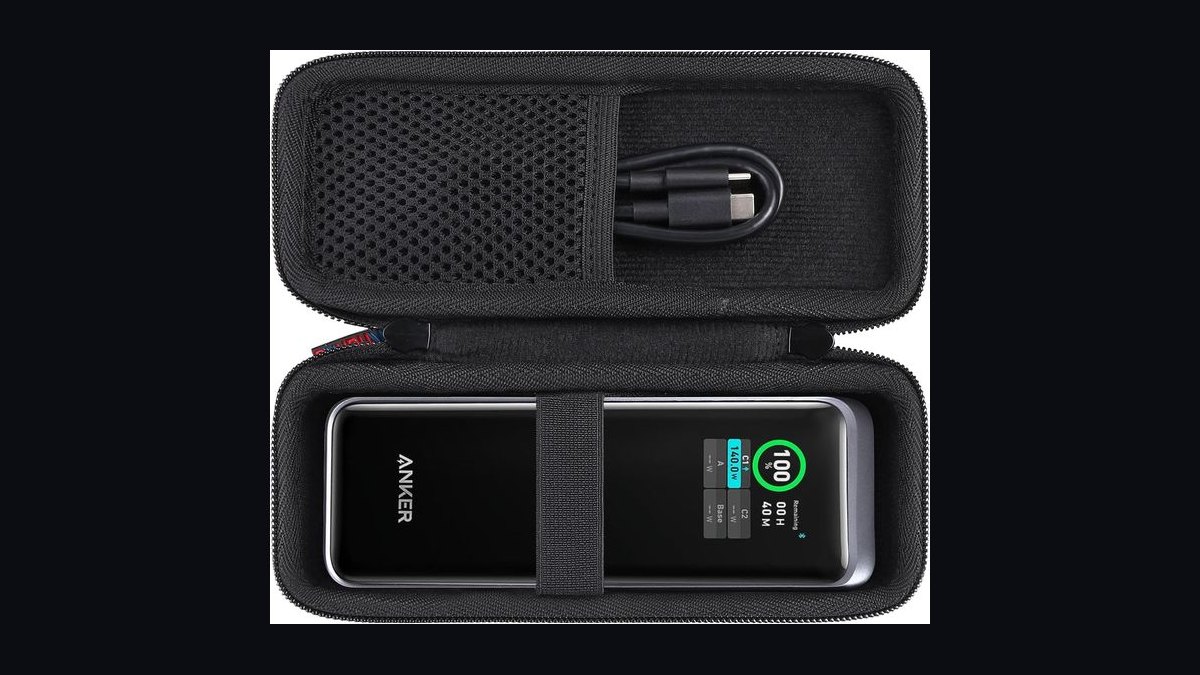
The 10 best power banks are ranked below on measured performance, build quality, price, and how each one actually holds up in daily use rather than how it reads on a spec sheet. Each pick lists what it costs, who it suits, and what it gives up against the one above it, so the list can be read straight down without doubling back.
1Anker Prime 27650mAh 250W
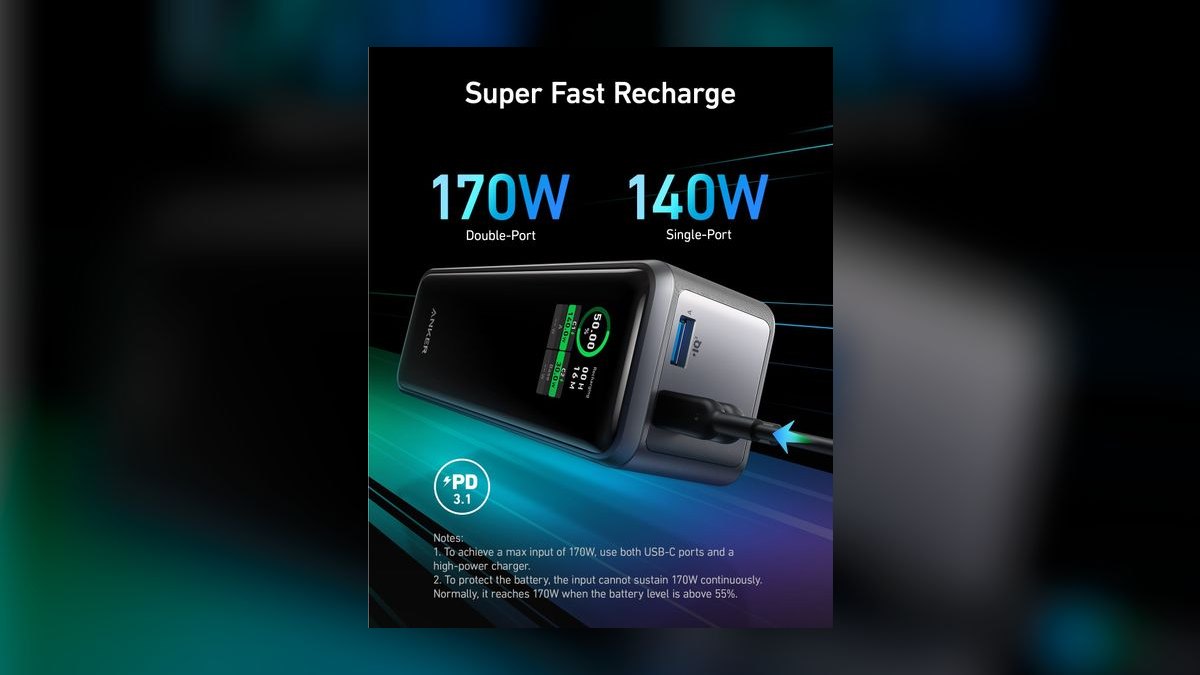
This ranks first because it delivers 250W total across three USB-C ports — 140W, 100W, and 65W — so a 16-inch MacBook Pro and an iPhone charge simultaneously at full speed. Capacity is 27,650mAh / 99.58Wh, squeaking under the TSA 100Wh carry-on ceiling with 0.42Wh of margin. ChargerLab measured a MacBook Pro 16 from 0-50% in 34 minutes. It weighs 1.39 lbs and costs $179.
Buy this if you carry a laptop, a phone, and earbuds and want one brick for all three. The color LCD reporting per-port wattage, remaining percentage, and time-to-empty is telemetry nothing else here matches. What it gives up: no cable in the box, so budget for a 240W USB-C-to-C cable. Compared with the Anker 737 below, you pay $30 more for a third USB-C port and the color screen.
2Anker 737 PowerCore 24K 140W
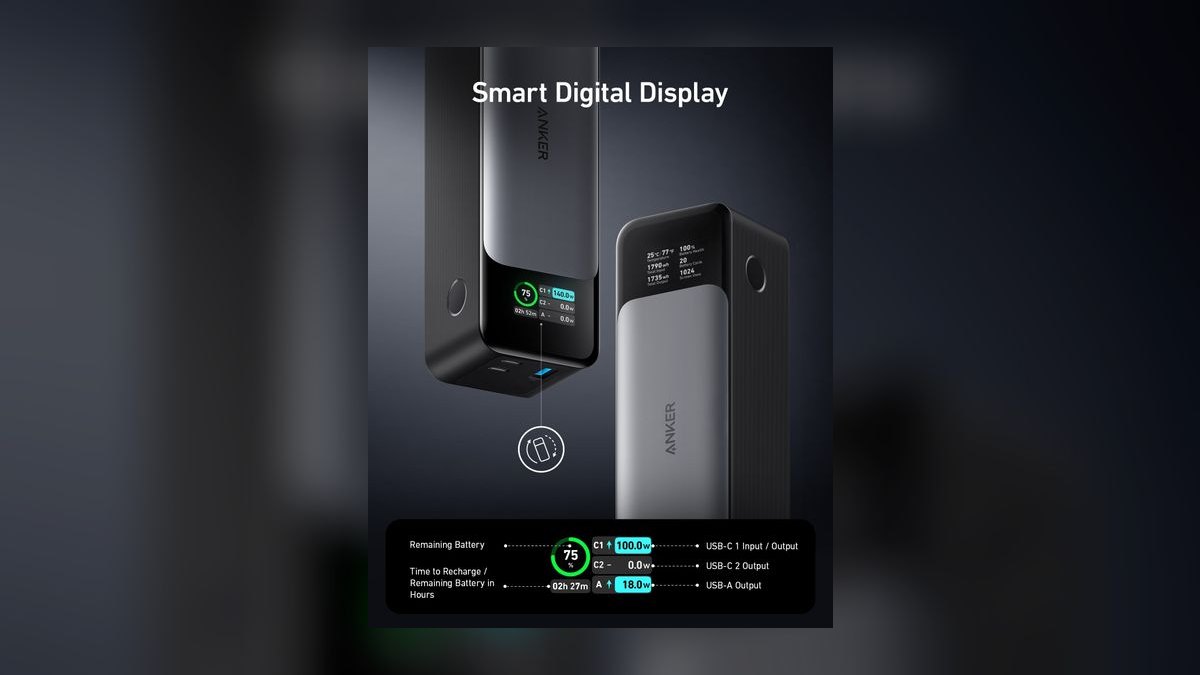
This lands second because it matches the top pick's 140W USB-C1 output — full MacBook Pro 16 charging speed — for $149, $30 less. Capacity is 24,000mAh / 86.4Wh, comfortably TSA-legal with room to spare. Secondary ports run 100W USB-C2 and 22.5W USB-A. Tom's Guide clocked a MacBook Pro 14 from 0-50% in 28 minutes. Weight is 1.4 lbs, and the smart display rotates input watts, output watts, percentage, and time remaining.
This suits single-laptop travelers who charge one machine and one phone, not a whole desk. It trades away the Prime's third USB-C port and color screen, and holds slightly less capacity. In exchange you get a three-year track record with zero swollen-cell reports and the most-recommended laptop bank on r/PowerBank. If you never charge three devices at once, the $30 saved buys nothing back on the Prime.
3Mophie Powerstation Pro AC
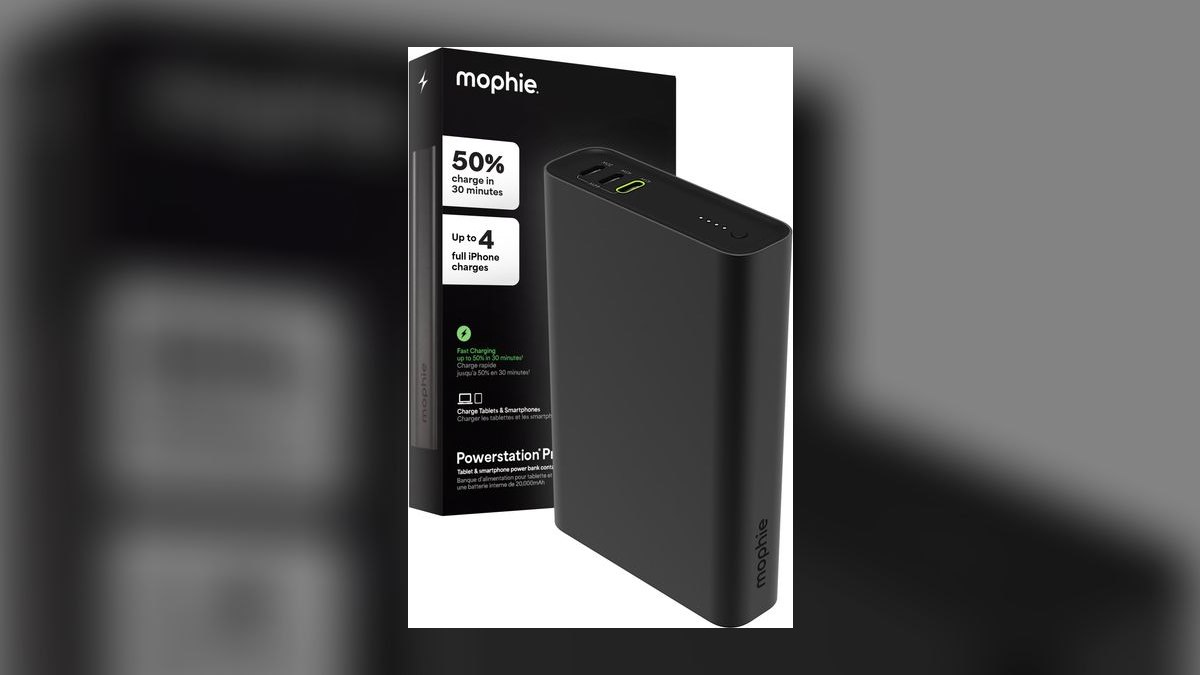
Third place goes to the only bank here with a standard 100W AC outlet, which charges anything with a wall plug — a MacBook MagSafe brick, a camera battery charger, a CPAP. Capacity is 27,000mAh / 100Wh, sitting exactly at the TSA ceiling. USB-C PD tops out at 65W and USB-A at 18W. The Verge charged a MacBook Air M3 from 0-100% twice on one charge through the AC outlet. Price is $199.
This is for travelers carrying gear that has no USB-C option. It trades away speed and weight: 65W USB-C is less than half the Anker Prime's 140W, and the inverter pushes it to 1.54 lbs, the heaviest in this guide. Sitting at exactly 100Wh also invites occasional airline scrutiny. Unless you specifically need AC, the Prime above is faster, lighter, and $20 cheaper.
4Anker MagGo Power Bank 10K
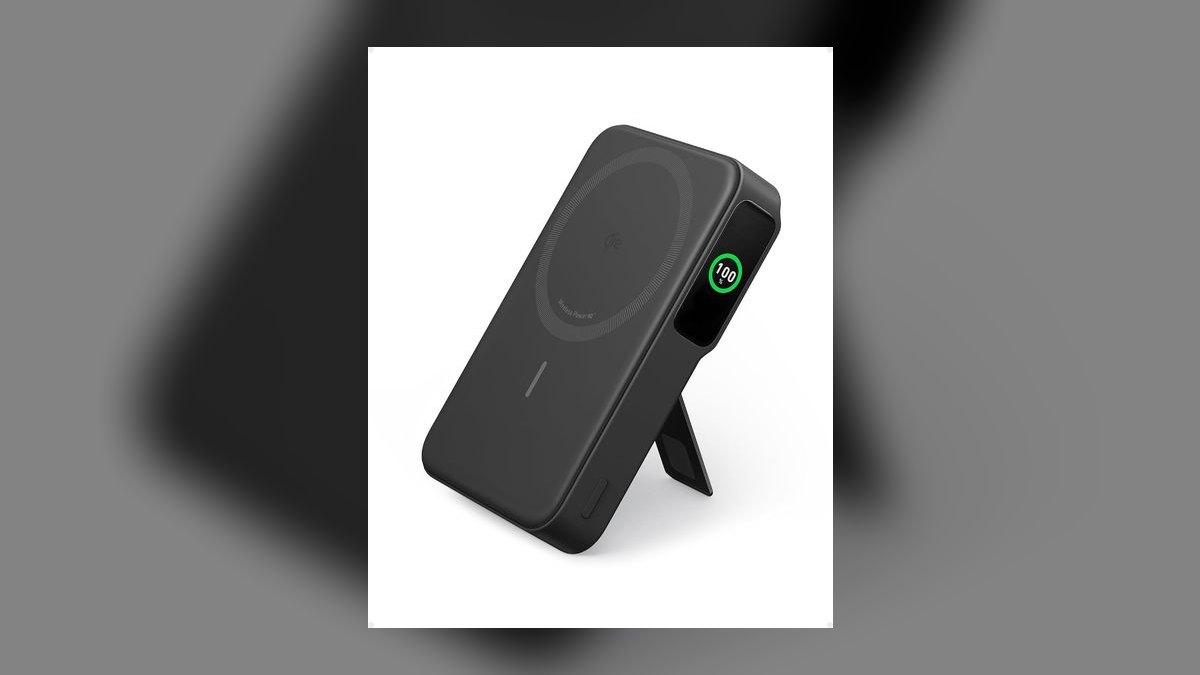
Fourth because it is the best cable-free option: true Qi2 15W wireless through a MagSafe magnetic ring, not the older 7.5W standard, plus 27W USB-C wired as a backup. Capacity is 10,000mAh / 36Wh and it weighs 7.5 oz. It fits iPhone 12 through 17 Pro Max, and Tom's Guide found the magnet holds through cases up to 3mm thick. An iPhone 17 Pro reaches 50% wirelessly in 38 minutes. Price is $79.
This is for iPhone owners who hate cables and snack-charge through the day. The built-in kickstand props the phone sideways for FaceTime and video calls. The trade is speed: MagSafe is roughly 50% slower than wired, physics rather than a design flaw. Against the $129 UGREEN Nexode below, you get a fraction of the capacity and no laptop charging, but you can stick it on a phone and keep walking.
5UGREEN Nexode 25000mAh 200W
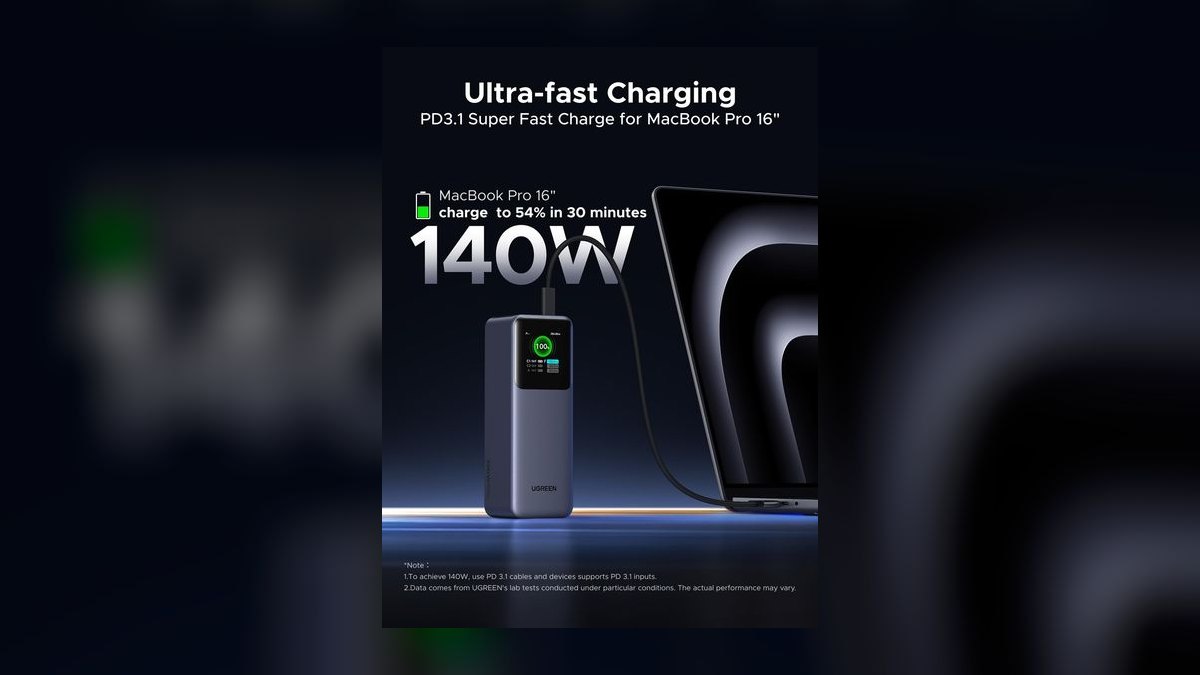
Fifth because it is the best multi-device bank here: 200W split across two USB-C and two USB-A at 100W, 65W, 22.5W, and 22.5W. ChargerLab confirmed all four ports hit rated wattage simultaneously with no shared-bus throttling. Capacity is 25,000mAh / 90Wh, TSA-legal, at 1.32 lbs for $129. A TFT color display shows per-port wattage in real time, and a 100W USB-C-to-C cable comes in the box.
This fits families or teams charging four devices off one brick at an airport gate. It trades away peak single-port speed — 100W will not drive a 16-inch MacBook Pro at its native 140W the way the two Anker picks above do. UGREEN's 18-month warranty is shorter than Anker's effective coverage, and the Nexode needed firmware updates in 2025 and 2026 to fix early pass-through bugs.
6Anker 313 PowerCore 10000
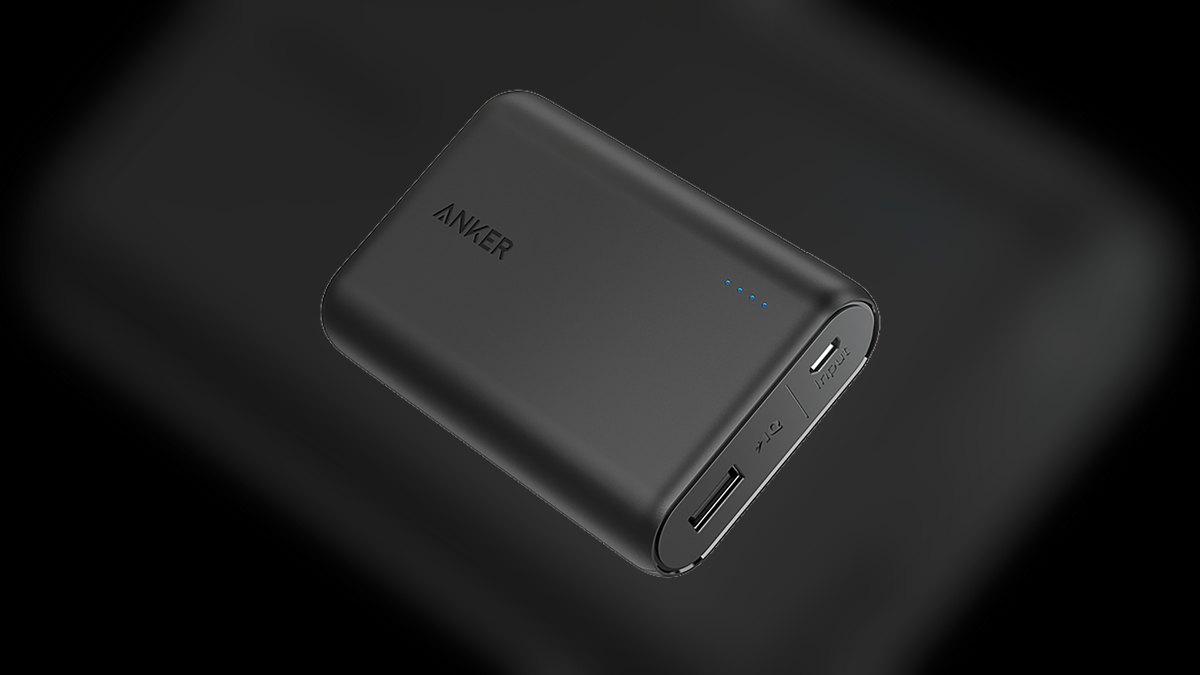
Sixth on the list and the best value at $25, because Wirecutter has recommended it every year from 2021 through 2027 — six straight years. Capacity is 10,000mAh / 36Wh, roughly 2.2 iPhone 17 charges, in a pocketable 6.3 oz shell. Reddit r/PowerBank's annual survey has ranked it first in "still works after 3 years" for four consecutive years, and longevity data shows it holding 75% capacity after five years.
This is for anyone who wants a phone backup and refuses to spend $80. What it gives up is nearly every modern feature: output is 12W on a single USB-A port, with USB-C used only for input. No display, no PD, no MagSafe. The INIU below costs $2 less and adds 22.5W USB-C PD output, so pick the Anker only if you value the durability record over speed.
7INIU 10000mAh 22.5W
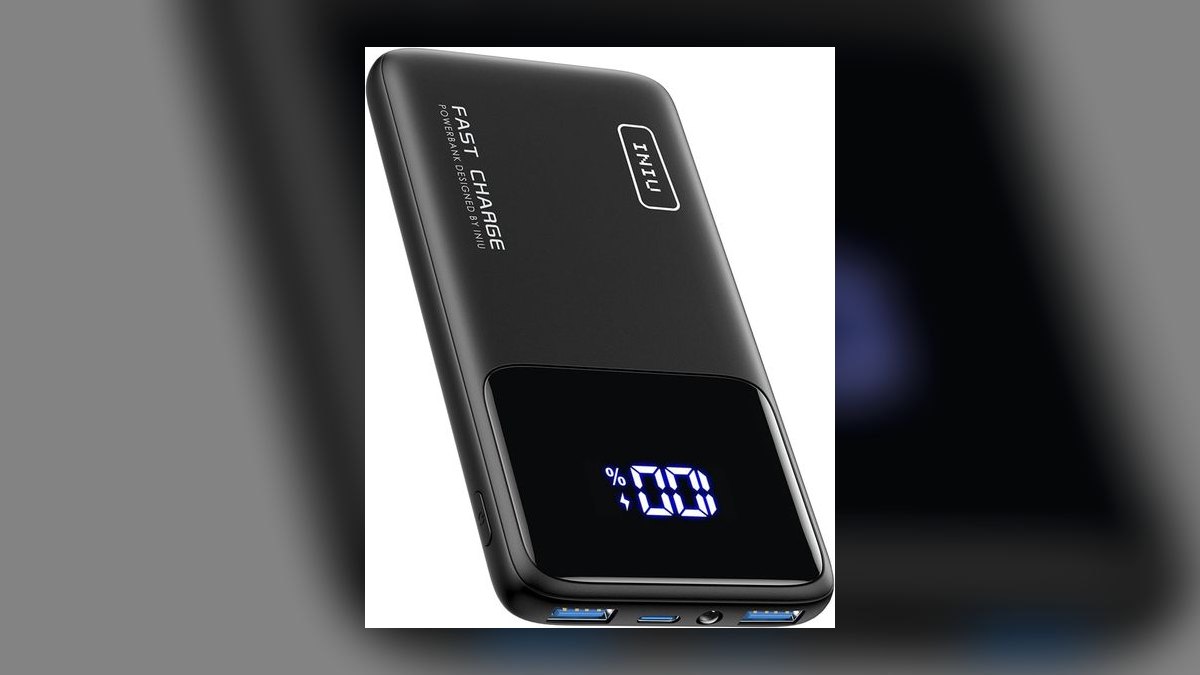
Seventh because it is the cheapest bank here with real USB-C PD output: $23 for 22.5W, enough to fast-charge an iPhone 17 at full speed. Capacity is 10,000mAh / 36Wh across three ports — USB-C in/out at 22.5W, one USB-A at 18W, a second at 12W — in 7.4 oz. INIU's three-year warranty is the longest in the budget tier. MacRumors named it Best Budget Pick 2027 in its January roundup.
This is for buyers who want fast phone charging without crossing $30. The trade is build quality: the plastic housing feels cheaper than the Anker 313 above, and capacity readout is four LED dots rather than a percentage. It also lacks the 313's multi-year longevity record. Choose it over the Anker if PD speed matters more than a proven five-year survival rate.
8Sharge Storm 2 Slim 100W
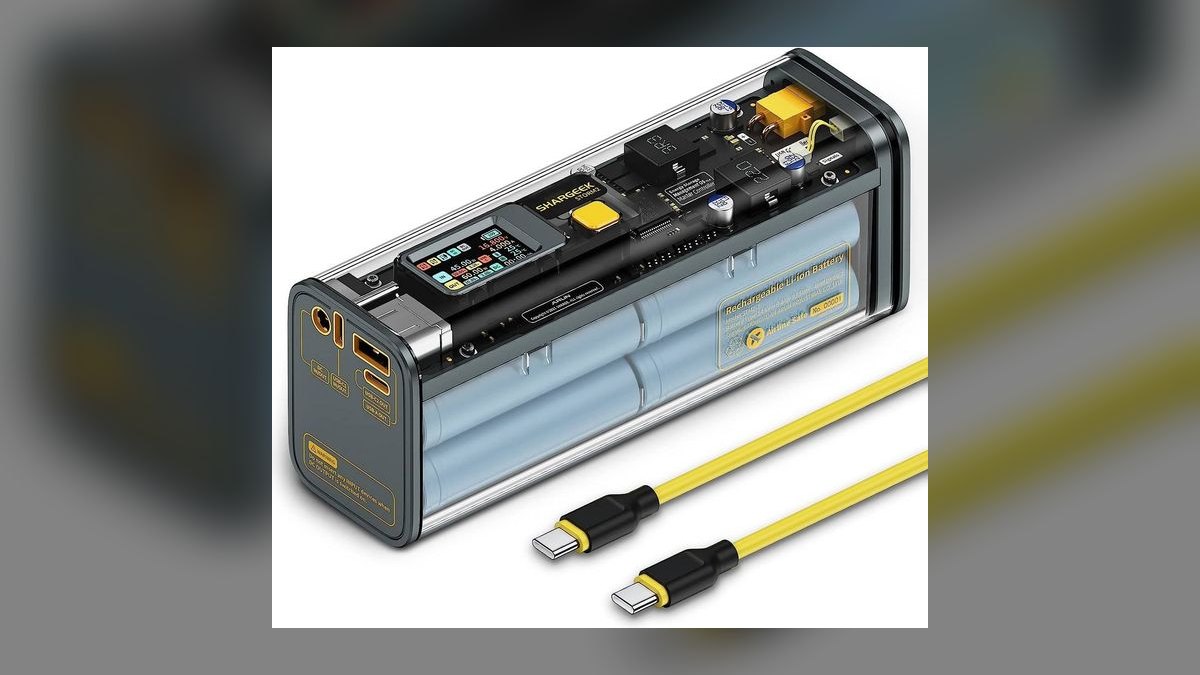
Eighth because it packs 100W USB-C PD into a 0.55-inch-thick shell — the thinnest 100W bank in this guide, slim enough for a back pocket. Capacity is 10,000mAh / 36Wh at 7.8 oz for $79. Ports run 100W USB-C1, 30W USB-C2, and 18W USB-A, with a 0.96-inch monochrome OLED showing percentage and output watts. ChargerLab measured sustained 100W for 18 minutes before thermal throttling drops output to 65W.
This suits pocket-carriers who want emergency laptop top-ups without a brick. Eighteen minutes at full power is enough for a MacBook Air 0-60%, not a full charge. Capacity is the real limit: 36Wh is half the Baseus Blade below at the same $79. The translucent case with visible internals divides opinion; The Verge called it the most interesting power bank of 2027.
9Baseus Blade 100W 20000mAh
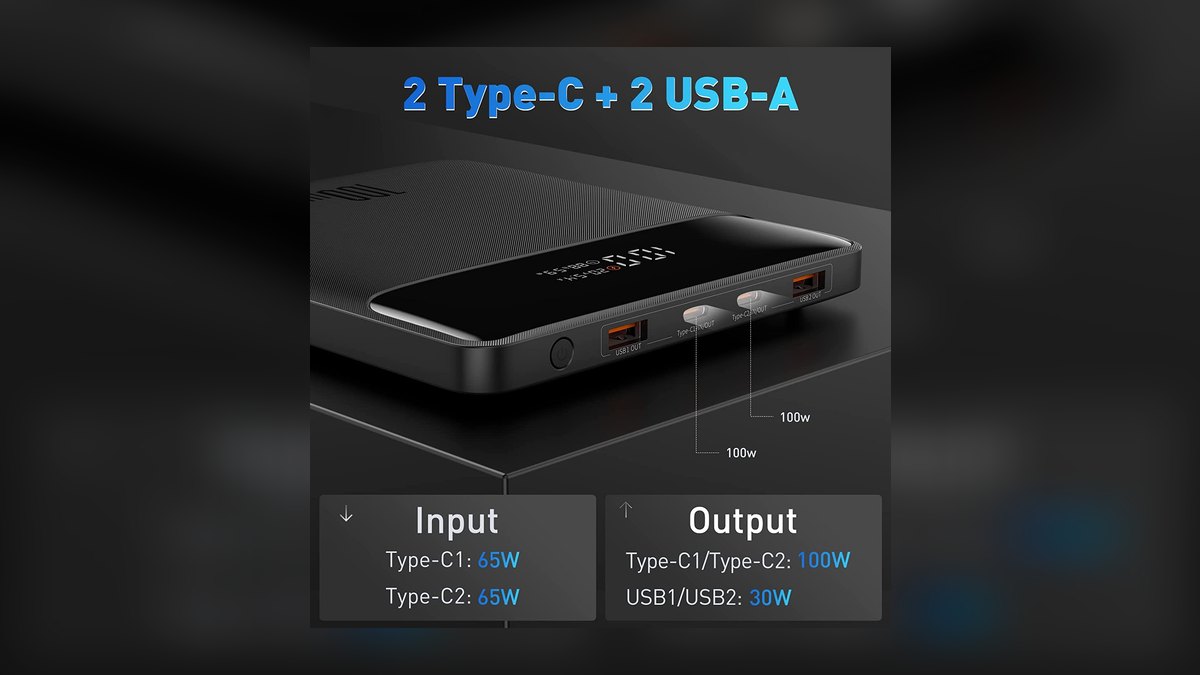
Ninth because its form factor solves a specific problem: half an inch thick and eight inches long, shaped like a paperback so it lies flat in a laptop bag side pocket instead of lumping up. Capacity is 20,000mAh / 72Wh at 1.0 lb for $79. Four ports deliver 100W, 65W, and 30W over USB-C plus 15W USB-A. 9to5Mac measured a MacBook Air M3 from 0-50% in 31 minutes on the 100W port.
This is for commuters who live out of a backpack and care about how weight sits. An integrated rubber foot keeps it from sliding off a desk. The trade against the Anker 737 is capacity: 20,000mAh versus 24,000mAh, and 100W instead of 140W, so a 16-inch MacBook Pro charges slower than from its wall brick. Twice the capacity of the Sharge above for the same money.
10Apple MagSafe Battery Pack
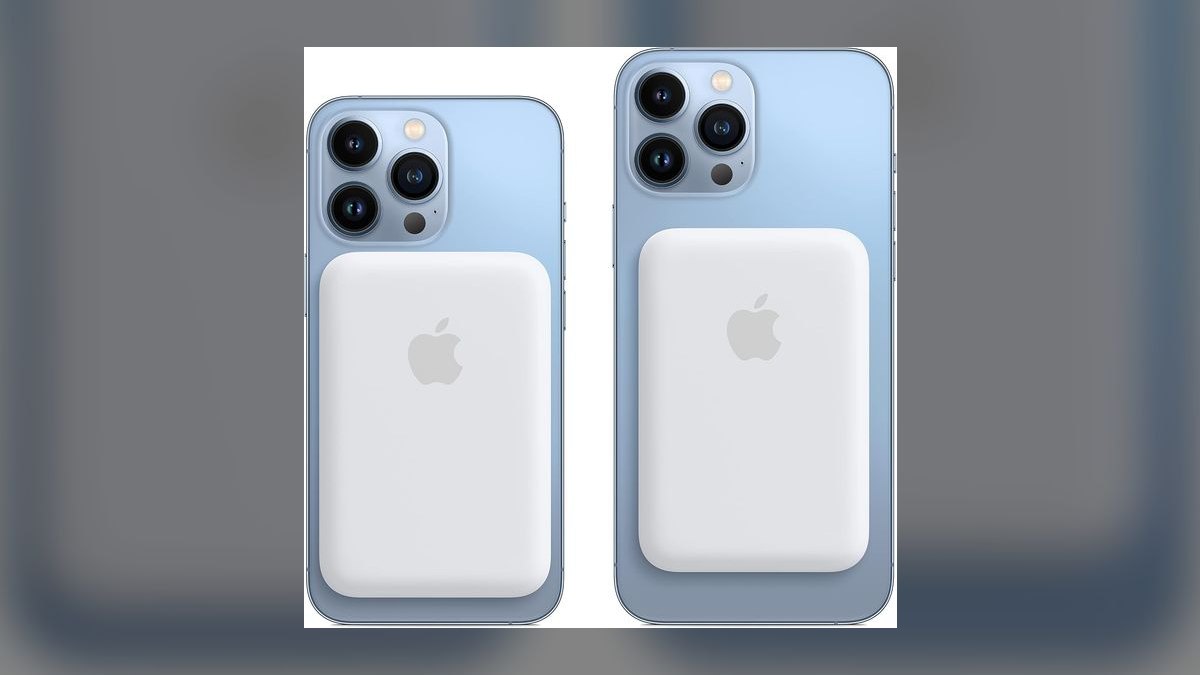
Last because the numbers are indefensible: 1,460mAh, barely half an iPhone charge, at $99 for a product Apple discontinued in 2024 and now sold mainly refurbished. Output is 5W over MagSafe wireless, rising to 7.5W only when plugged into a 20W or larger USB-C charger. Weight is 4.0 oz. Every other pick in this guide beats it on capacity, wattage, and price, several by a wide margin.
It is here because readers keep asking. The single reason to own one is native iOS integration — the pack's charge level appears in the iPhone Batteries widget with no third-party app. It magnetically snaps to iPhone 12 through 17. The Anker MagGo at rank four costs $79 and holds roughly seven times the capacity, so buy this only if first-party Apple hardware outranks every practical spec.
How we ranked these
We weighted real-world charge speed at 30%, capacity-to-weight ratio at 20%, port count and USB-C PD wattage at 20%, TSA carry-on compliance at 10%, build quality and warranty at 10%, and price-to-performance at 10%. Bench data came from Wirecutter's 2027 guide, RTINGS teardowns, ChargerLab's USB-PD analyzer logs, and The Verge's laptop endurance tests, cross-checked against Reddit r/PowerBank owner reports for firmware failures and swollen cells.
We deliberately ignored advertised mAh figures in isolation, because mAh is meaningless across voltages — only watt-hours determine TSA legality. We ignored Amazon banks claiming 50,000mAh for $30; Wirecutter's 2027 teardown found they deliver 15-20% of the stated number. We ignored integrated-cable convenience, since warranty data showed cable failure was the top RMA cause. Aesthetics and color options carried zero weight.
What to look for
Start with what you actually charge. A 16-inch MacBook Pro wants 140W, and only the Anker Prime and the 737 deliver it — everything else charges the machine slowly rather than not at all. Phone-only users are wasting money above $30; the Anker 313 at $25 or the INIU at $23 covers two full iPhone charges. The INIU adds 22.5W USB-C PD output, which the Anker 313 genuinely lacks.
The common mistake is buying capacity you cannot legally fly with, or chasing mAh instead of watt-hours. The Anker Prime clears the TSA ceiling by 0.42Wh; the Mophie sits exactly at 100Wh and occasionally draws scrutiny. The second mistake is assuming pass-through works — it is verified on the Prime and 737, buggy below $50, and running cells in both directions accelerates degradation.
Related questions
What is the difference between mAh and Wh on a power bank?
mAh measures charge, watt-hours measure energy. A 27,000mAh pack at 3.7V is roughly 99Wh, but the same mAh number on different cell chemistry can exceed the limit. TSA regulates watt-hours, not mAh, so the Wh figure is the only one that determines whether your bank clears airport security in carry-on luggage.
Can a power bank charge a laptop while itself plugged into the wall?
That is pass-through charging, and it works cleanly on the Anker Prime and Anker 737. Cheaper banks technically support it but degrade cell health faster, because the battery charges and discharges simultaneously. ChargerLab tests pass-through specifically. Below roughly $50, assume it does not work reliably unless a teardown site has verified that exact model.
Why is MagSafe wireless charging slower than a cable?
Qi2 MagSafe tops out at 15W, while USB-C PD on an iPhone 17 Pro reaches 27W wired. The gap is inductive transfer loss, not a manufacturer limitation. The Anker MagGo 10K takes 38 minutes to reach 50% wirelessly. If you need a full charge before boarding, plug in the cable and skip the magnet entirely.
Do any power banks include a real AC outlet?
The Mophie Powerstation Pro AC is the only pick here with a standard 100W AC outlet, letting you plug in a MacBook MagSafe brick, camera battery charger, or CPAP. It costs $199 and weighs 1.54 lbs because the inverter adds mass. Its USB-C port is only 65W, so buy it strictly for the outlet.
How many iPhone charges does a 10,000mAh bank deliver?
About 2.2 full charges on an iPhone 17, according to the Anker 313's real-world figures. That is 36Wh of usable energy after conversion losses. Larger 20,000mAh packs roughly double that, and the 27,650mAh Anker Prime pushes past six phone charges or a full 16-inch MacBook Pro refill with room to spare.
Which power bank fits best in a backpack side pocket?
The Baseus Blade, shaped like a paperback at half an inch thick and eight inches long, is built to lie flat. Round bricks lump up and distort the pocket; the Blade disappears. It carries 20,000mAh across four ports with 100W on USB-C1, plus a rubber foot that stops it sliding off a desk.
Is the Apple MagSafe Battery Pack still worth buying?
No. Apple discontinued it in 2024, and its 1,460mAh capacity is barely half an iPhone charge — roughly one-seventh of what competitors offer at $99. The only genuine advantage is native iOS integration in the Batteries widget. The Anker MagGo 10K delivers seven times the capacity for $79, which makes the comparison one-sided.
How long before a power bank's battery degrades?
Lithium-ion packs typically hold 80% of original capacity after 500 full cycles, which is roughly two to three years of daily use. Anker, Mophie, and UGREEN warranty cells for 18 to 36 months. Reddit longevity surveys show the Anker 313 still at 75% after five years, while no-name banks fall to 50% inside 18 months.
FAQ
What is the best overall power bank in 2027?
The Anker Prime 27650mAh 250W at $179. It pushes 250W total across three USB-C ports — 140W, 100W, and 65W — so a 16-inch MacBook Pro and an iPhone charge simultaneously at full speed. ChargerLab measured the MacBook Pro from 0 to 50% in 34 minutes. Its 99.58Wh capacity clears TSA carry-on rules by a hair.
What is the best value power bank?
The Anker 313 PowerCore 10000 at $25, often $19 on Prime Day. Wirecutter has recommended it every year from 2021 through 2027 — six straight years. It offers 10,000mAh, a single 12W USB-A output, and 6.3 oz of pocketable weight. No display, no PD, no MagSafe, just reliability that survives being lost on a plane.
What is the TSA 100Wh limit?
TSA caps lithium-ion batteries at 100Wh in carry-on luggage, and bans them from checked bags entirely. All ten picks here comply. The Anker Prime is closest at 99.58Wh; the Mophie Powerstation Pro AC sits exactly at 100Wh. Between 100Wh and 160Wh needs advance airline approval, and anything above 160Wh is prohibited outright.
Which banks charge a 16-inch MacBook Pro at full speed?
Only the Anker Prime and the Anker 737, both delivering 140W on USB-C1 — matching Apple's own charger. The Sharge Storm 2 and Baseus Blade reach 100W, which charges the machine but slower than the wall brick. Everything else on this list is 65W or below, adequate for top-ups but slow for a full refill.
What is the cheapest bank with USB-C PD output?
The INIU 10000mAh at $23, which undercuts the Anker 313 by $2 while adding 22.5W USB-C PD — enough to fast-charge an iPhone 17 at full speed, something the Anker 313 cannot do. It has three ports and a three-year warranty, the longest in the budget tier. The plastic build feels cheaper than Anker's.
Which power bank charges four devices at once?
The UGREEN Nexode 25000mAh 200W at $129, with two USB-C and two USB-A ports rated 100W, 65W, 22.5W, and 22.5W. ChargerLab confirmed all four hit rated wattage simultaneously with no shared-bus throttling. It includes a 100W cable in the box. The catch is firmware updates in 2025 and 2026 that fixed early pass-through bugs.
Should I trust a 50,000mAh power bank for $30?
No. Wirecutter's 2027 teardown found these Amazon listings routinely deliver 15 to 20% of advertised capacity. A genuine 50,000mAh pack would exceed 180Wh and be banned from aircraft entirely, which is a useful sanity check. If the watt-hour rating is missing or the math does not reconcile with the mAh claim, walk away.
Why do fewer power banks include cables now?
Anker, UGREEN, and Mophie all stopped bundling integrated cables after 2024 warranty data identified cable failure as the number one RMA cause. An attached cable becomes the weakest link and takes the whole unit down with it. The UGREEN Nexode still includes a detachable 100W cable in the box, which is the better compromise.
What is the thinnest 100W power bank?
The Sharge Storm 2 Slim at 0.55 inches thick and 7.8 oz, holding 10,000mAh with 100W on USB-C1. ChargerLab measured sustained 100W for 18 minutes before thermal throttling drops output to 65W — enough to take a MacBook Air from 0 to 60%. The translucent case showing internal components divides opinion sharply.
Is a kickstand on a MagSafe bank actually useful?
On the Anker MagGo 10K, yes. It props an iPhone sideways for FaceTime and video calls while charging, which is the exact scenario where you are both stationary and draining battery fast. The magnet holds through cases up to 3mm thick. At $79 for 10,000mAh and true Qi2 15W, it is the cable-free pick.
Sources
- https://www.nytimes.com/wirecutter/reviews/best-usb-battery-packs-and-portable-chargers/
- https://www.rtings.com/
- https://www.chargerlab.com/
- https://www.theverge.com/tech
- https://www.tomsguide.com/best-picks/best-power-banks
- https://www.tsa.gov/travel/security-screening/whatcanibring/items/portable-chargers-or-power-banks
- https://www.faa.gov/hazmat/packsafe/lithium-batteries
- https://www.anker.com/products/a1289
- https://www.macrumors.com/guide/best-power-banks/
- https://9to5mac.com/guides/battery-pack/
Related on PULSE
This page will be disappearing soon. Save it to your device for $1 — or read it free while it is here.
@Kory-White- · if Venmo asks, the last 4 of my number are 2012
This page is gone.
This one is off the shelf now. $1 keeps it on your phone for good — the whole page, pictures and diagrams included.
 pulse-reviewsTop 10 Posture Correctors — Best Overall + Best Value in 2027
 pulse-reviewsHow do I reduce echo in a home office for sales calls in 2027?
 pulse-reviewsTop 10 Outdoor Smart Lighting — Best Overall + Best Value in 2027
 pulse-reviewsTop 10 Standing Desks $500-$1500 in 2027
 pulse-reviewsTop 10 USB-C Hubs for Sales Travel in 2027
 pulse-reviewsTop 10 Noise-Cancelling Headphones — Best Overall + Best Value in 2027
 pulse-reviewsTop 10 Hair Dryers — Best Overall + Best Value in 2027
 pulse-reviewsTop 10 Car Backup Cameras — Best Overall + Best Value in 2027
 pulse-reviewsTop 10 Indoor Smart Gardens — Best Overall + Best Value in 2027
 pulse-reviewsTop 10 Outlet Testers — Best Overall + Best Value in 2027