


Top 10 Electric Pressure Cookers — Best Overall + Best Value in 2027
Quality
Certified
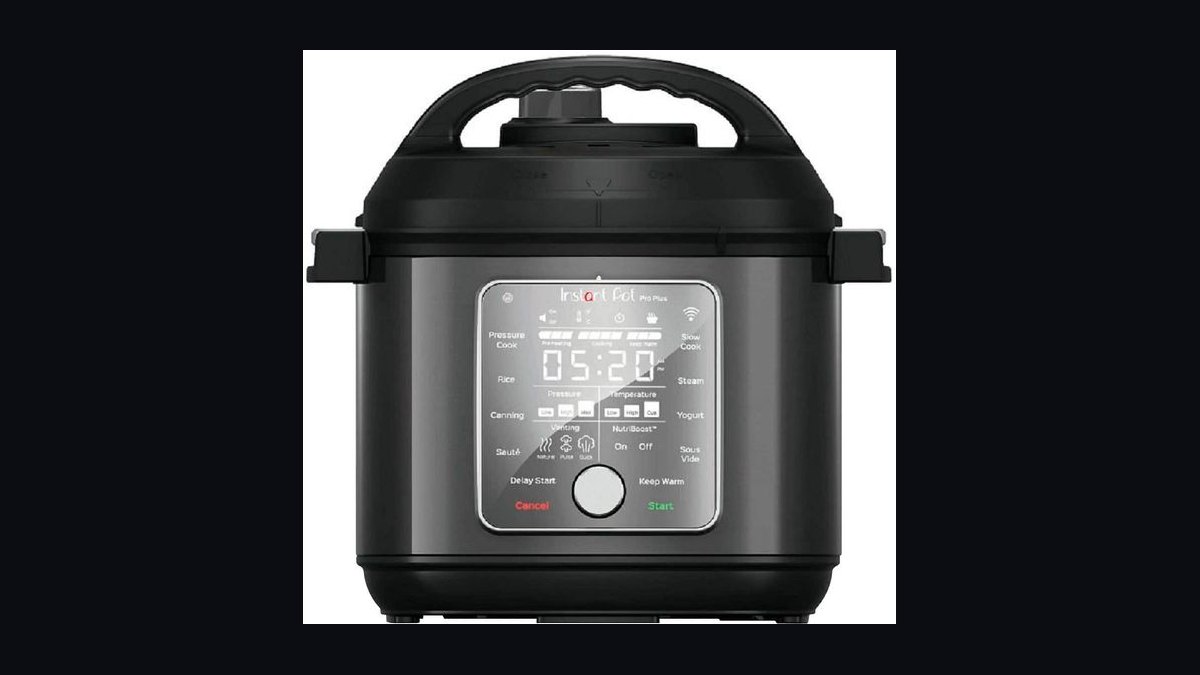
The 10 best electric pressure cookers are ranked below on measured performance, build quality, price, and how each one actually holds up in daily use rather than how it reads on a spec sheet. Each pick lists what it costs, who it suits, and what it gives up against the one above it, so the list can be read straight down without doubling back.
1Instant Pot Pro Plus 6Qt WiFi
This tops the list because it pairs the best hardware in the category with the fewest daily annoyances at $169. The 6-quart capacity feeds 4-6 people, working pressure hits 12.0 PSI with a 15 PSI peak, and 28 smart programs cover pressure cook, slow cook, sauté, steam, yogurt, rice, and sous vide. The stainless steel inner pot is dishwasher-safe and will not flake like nonstick rivals.
It suits a cook who runs the machine three or more times a week and wants it to last a decade. The trade is money: you pay $70 over the base Duo largely for the whisper-quiet release, measured near 51 dB against 70+ dB on standard units, plus app scheduling and temperature monitoring. App onboarding requests more permissions than it should. Against the 8-quart Duo Plus below, you give up batch capacity for a better pot.
2Instant Pot Duo Plus 8Qt
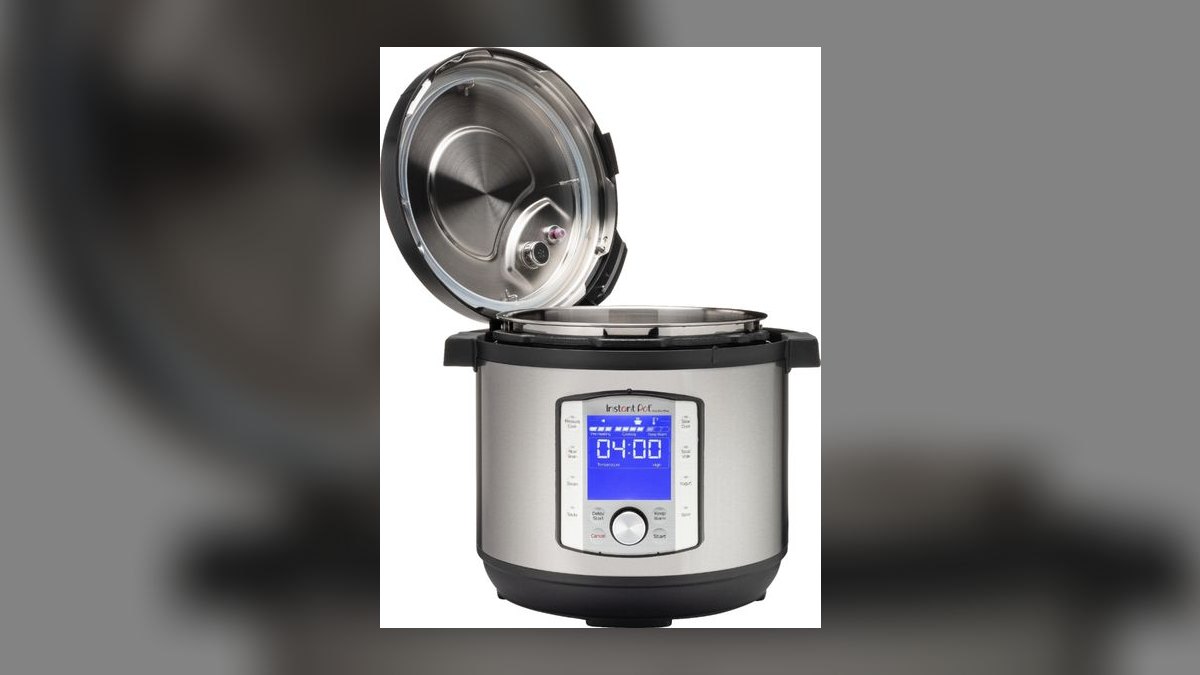
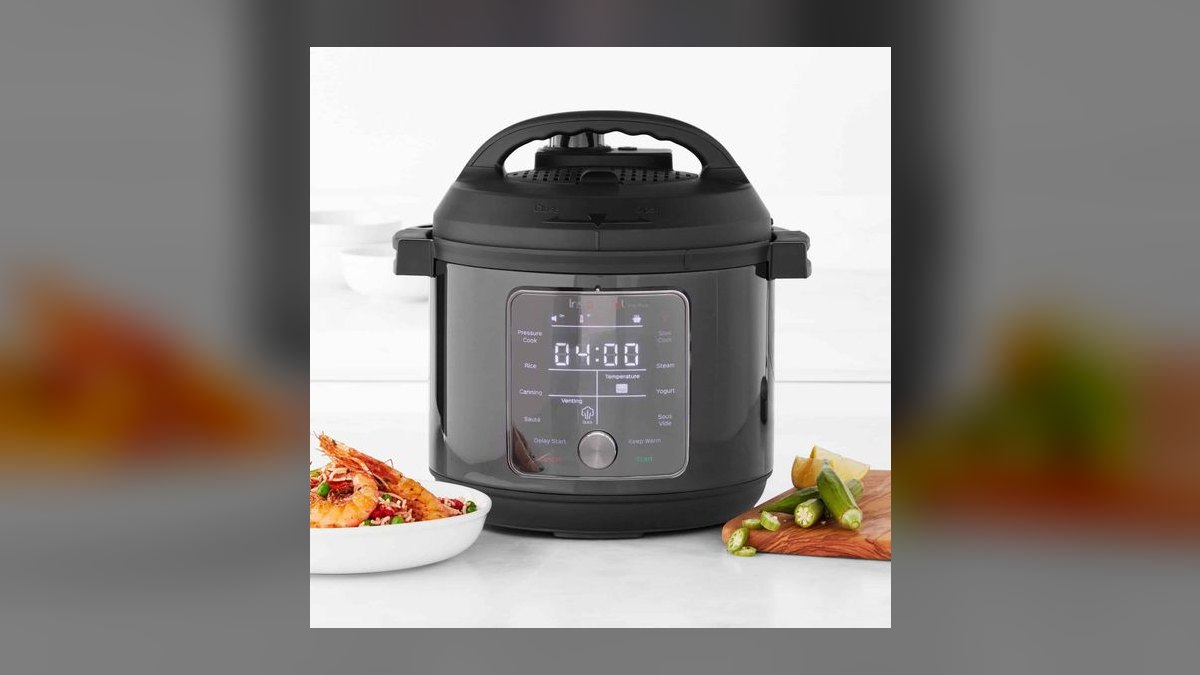
Second place goes to the best big-batch cooker here, at $149. The 8-quart pot handles whole chickens, two pork shoulders, or a doubled chili recipe without crowding the fill line. Nine functions cover pressure cooking at 10.2-11.6 PSI, slow cook, sauté, steam, yogurt, rice, and a dedicated sterilize program that America's Test Kitchen singled out. The blue LCD reads more clearly than the original Duo's.
Buy this if you cook for five or more, meal-prep in bulk, or run a stockpot operation weekly. The concession is the nonstick inner pot, which cleans easily but wears out in three to five years of daily use, where the Pro Plus above keeps stainless. Dual pressure covers delicate fish on low and tough cuts on high. It saves $50 over the Pro Plus and skips the app entirely.
3Breville Fast Slow Pro
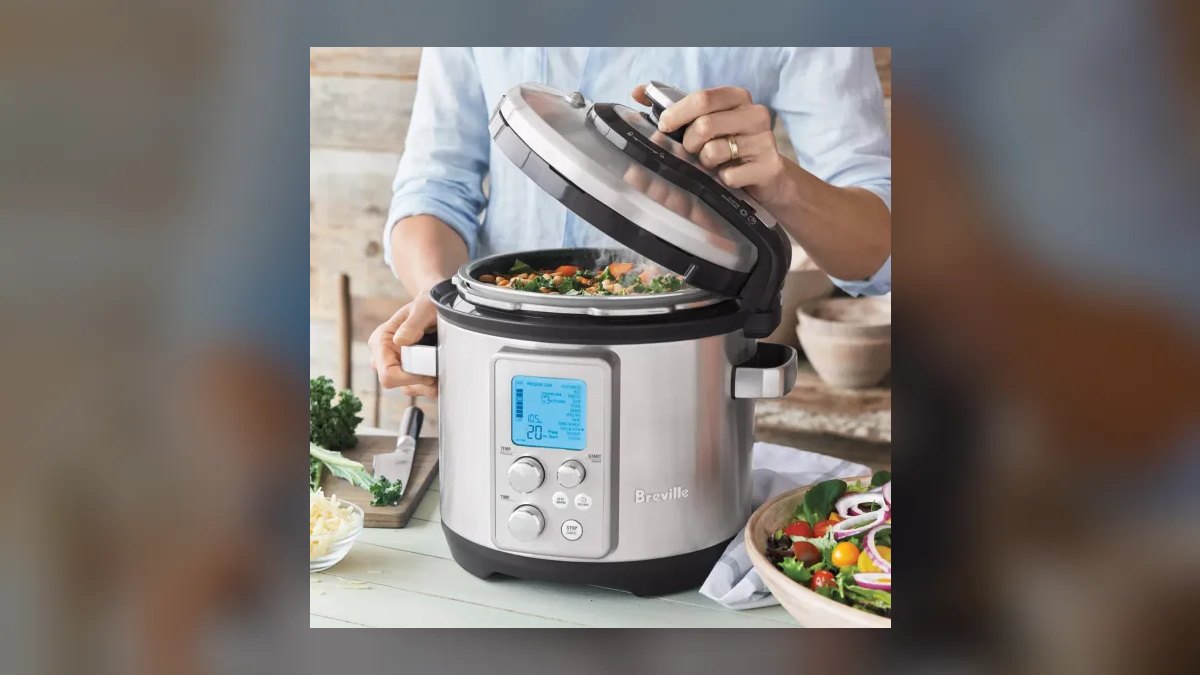
Third because build quality and release automation are unmatched, though $249 makes it the priciest entry. It is the only unit here with automatic steam release in three modes: auto-quick, auto-pulse, and auto-natural. The 6-quart bowl reaches 12 PSI across 11 pressure presets and 9 slow-cook presets, and Serious Eats found its slow cook beats a dedicated Crock-Pot head to head. The hard-anodized aluminum bowl heats more evenly than thin competitors.
This fits the cook who slow-cooks as often as pressure-cooks and wants brushed stainless that earns its counter space. What you give up is value: $80 more than the Pro Plus above for no app and an aluminum nonstick bowl instead of stainless. The three-way safety system pairs lid lock, pressure sensor, and thermal cutoff. Skip it if pressure cooking is 90 percent of your use.
4Cuisinart CPC-600 6Qt
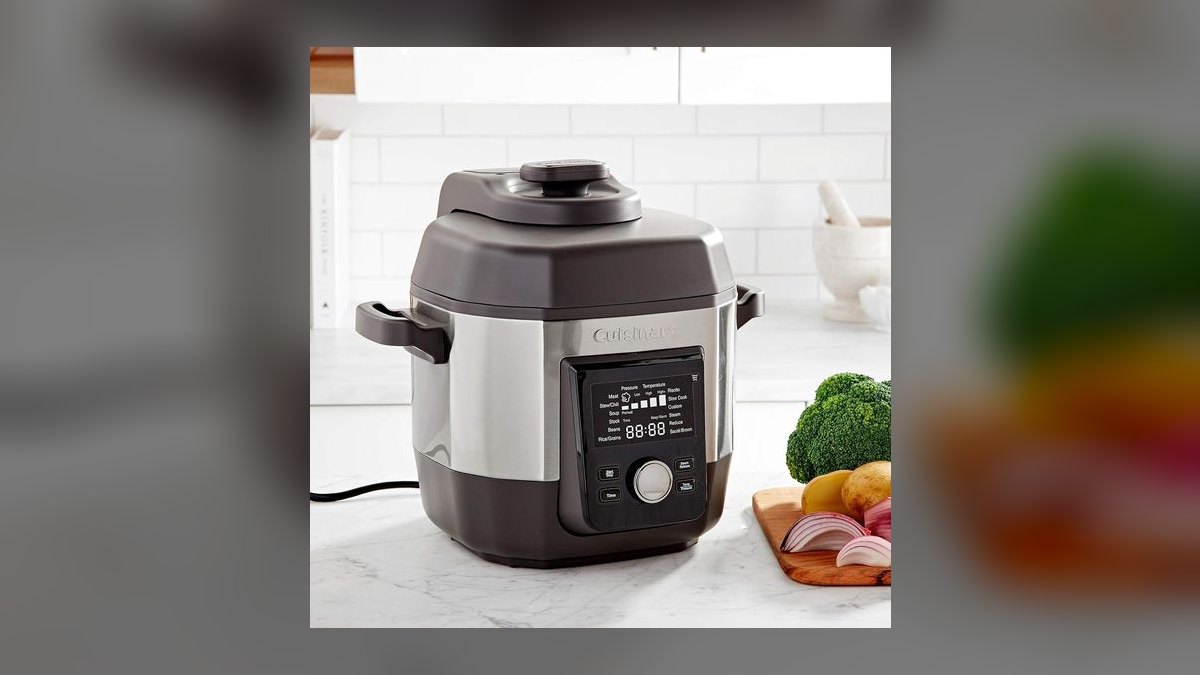
Fourth because it strips the category down to what works, at $129 with the longest warranty here. The 6-quart brushed stainless unit pressure-cooks, browns, simmers, sautés, and warms with no WiFi and no inflated function count. Three-way safety locking and a nonstick anodized aluminum cooking pot keep operation forgiving. Consumer Reports flagged the backlit LCD with simple up-down controls as the most senior-friendly interface tested, and a glass lid ships for slow-cook use.
This is for buyers who distrust apps and want a three-year warranty behind the purchase. The real cost is speed: max 10 PSI runs 20-30 percent longer than the Instant Pot units above on tough cuts and dried beans. Against the Breville at $249, you lose automatic release and slow-cook depth but keep $120. The aluminum pot will not match stainless longevity.
5Ninja Foodi SmartLid 8Qt OL701
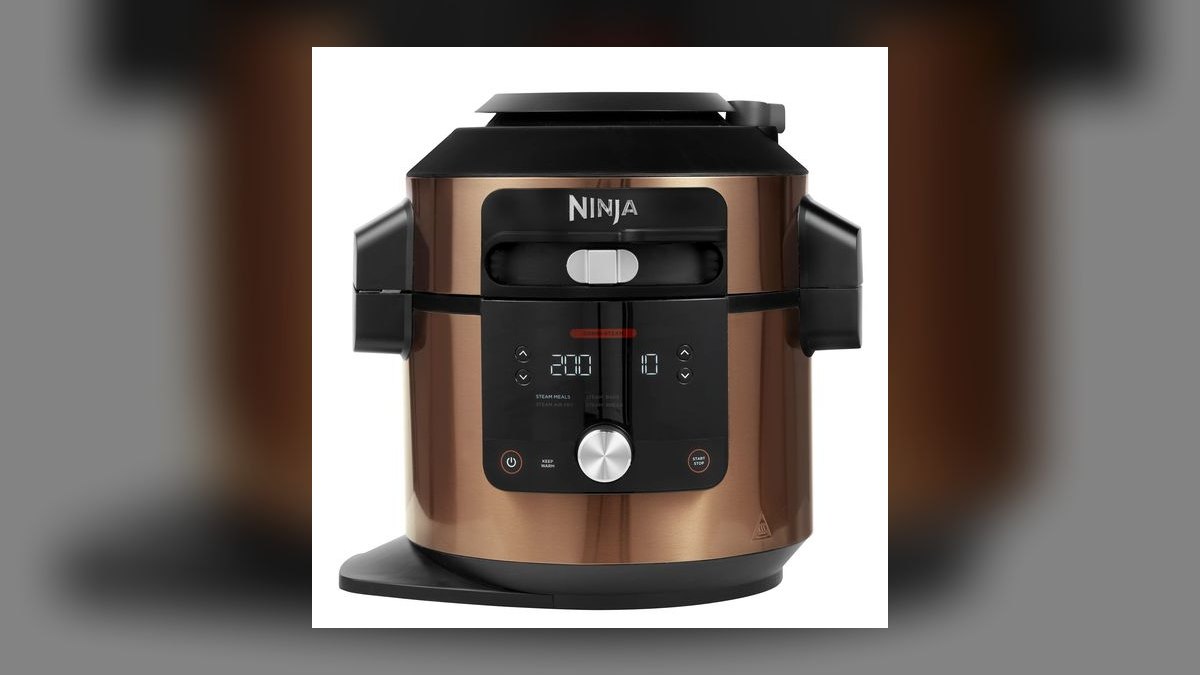
Fifth because it is the only pressure cooker here that also air-fries, which is worth real counter space at $249. The patented SmartLid switches between pressure, air-crisp, and steam-crisp without swapping lids. The 8-quart pot runs 14 functions including dehydrate, proof, sous vide, and yogurt, with a ceramic-coated nonstick pot and a separate air-crisp basket included. Max pressure measures 10.5 PSI, below the Instant Pot flagships.
Small apartments benefit most, since one box replaces a pressure cooker, air fryer, and dehydrator. The trade is bulk and pressure: the lid is heavy and awkward to store, and 10.5 PSI cooks slower than the 12 PSI units ranked above it. Dedicated air fryers still crisp faster and better. At the same $249 as the Breville, you swap premium build and slow-cook quality for versatility.
6Instant Pot Duo 6Qt
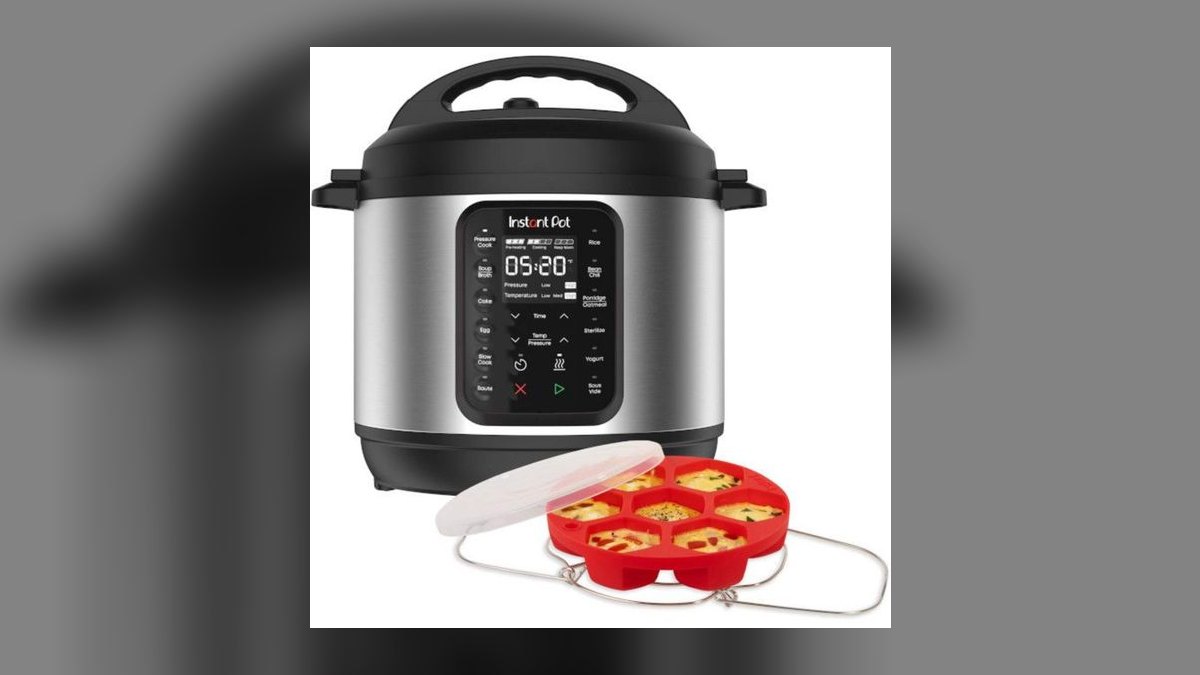
Sixth on the list but the best value in pressure cooking at $99, and Wirecutter's budget pick for seven straight years. The 6-quart pot runs seven functions with 14 underlying smart programs, dual pressure settings, and a 10-15 PSI range. Critically, Instant Pot kept the inner pot stainless steel at this price, so it outlasts every nonstick competitor in the bracket. Steamer rack, rice paddle, measuring cup, and sealing ring are included.
First-time buyers, students, and gift recipients should start here and stop here. You give up the whisper-quiet release and app scheduling that the Pro Plus at #1 provides, and the steam release is noticeably louder in an open kitchen. For $70 less with the same stainless pot, that is a reasonable exchange. It is also the most recipe-tested cooker on the planet, with a deep resale market.
7Crock-Pot Express Crock 6Qt
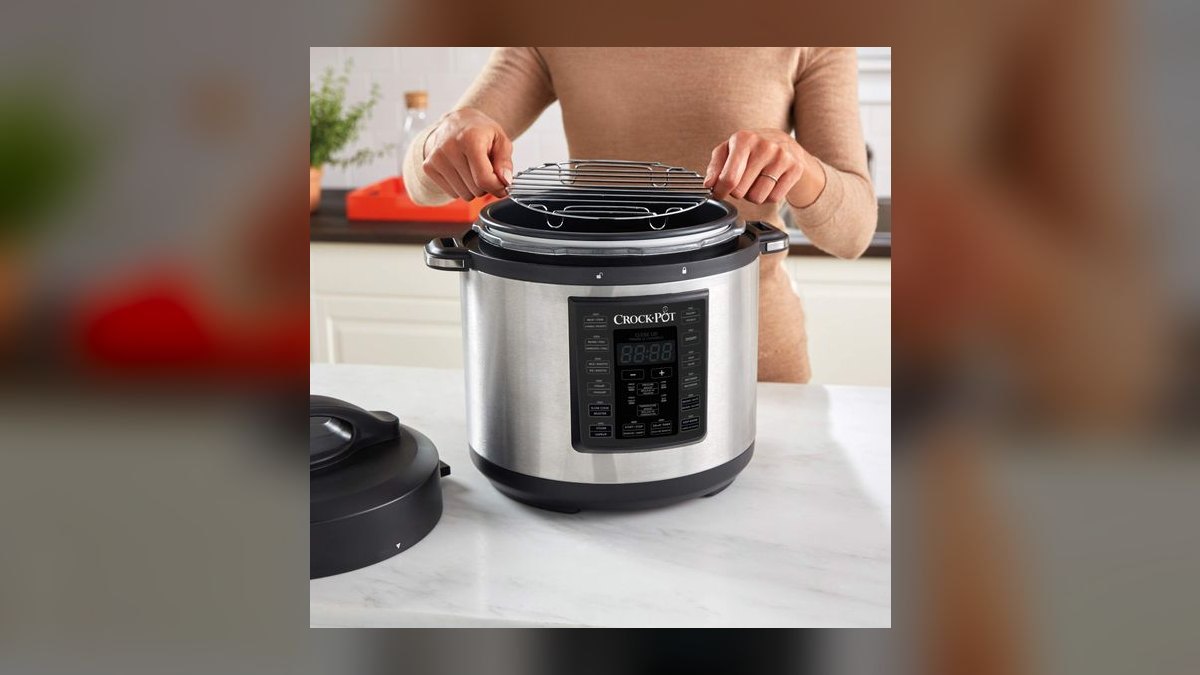
Seventh because it wins on slow cooking specifically, at $89. The 6-quart unit runs eight functions including pressure cook, slow cook, steam, sauté, yogurt, rice, warm, and a dedicated beans-chili preset. Both Serious Eats and America's Test Kitchen noted its slow-cook mode outperforms Instant Pot's, which tracks since Crock-Pot invented the format. The removable nonstick cooking pot is dishwasher-safe, and a trivet and recipe book ship in the box.
This is for households that already slow-cook several nights a week and want pressure capability added rather than the reverse. Max 10 PSI is the concession, meaning noticeably longer pressure cycles on short ribs and dried beans than the Duo above delivers at 10-15 PSI. The nonstick pot also caps its lifespan around year four. It costs $10 less than the Duo and keeps familiar Crock-Pot controls.
8Mealthy MultiPot 9-in-1 6Qt
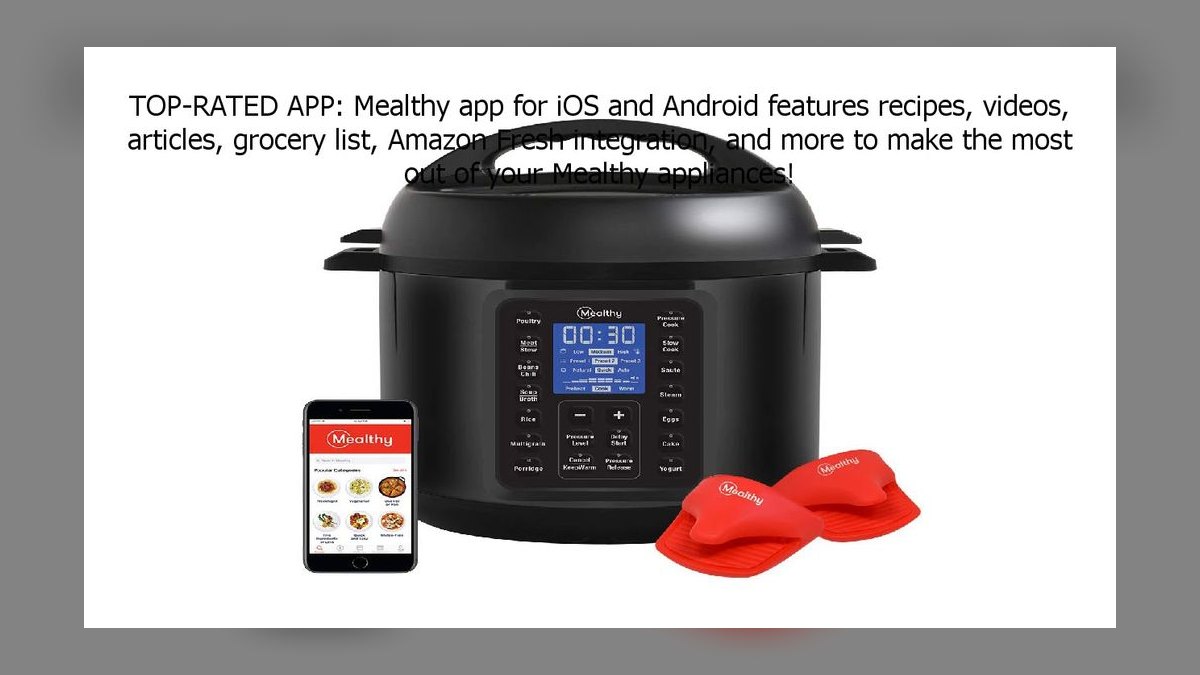
Eighth because it out-specs the Instant Pot Duo on paper at the identical $99 price. The 6-quart stainless steel inner pot pairs with nine functions, 14 smart programs, and max 12 PSI, higher than the Duo's typical working pressure. It is the only unit at this price shipping with both a stainless steamer basket and a glass lid, accessories that usually run $25 or more each. Manual pressure adjust is rare under $150.
This suits cooks who compare spec sheets rather than brand names and want stainless plus accessories without paying up. The trade is ecosystem: a far smaller installed base than Instant Pot means fewer YouTube tutorials, fewer tested recipes, and harder-to-source replacement parts three years out. The free Mealthy app carries 500-plus recipes. Against the Duo above, you gain PSI and hardware but lose the community safety net.
9Instant Pot Duo Mini 3Qt
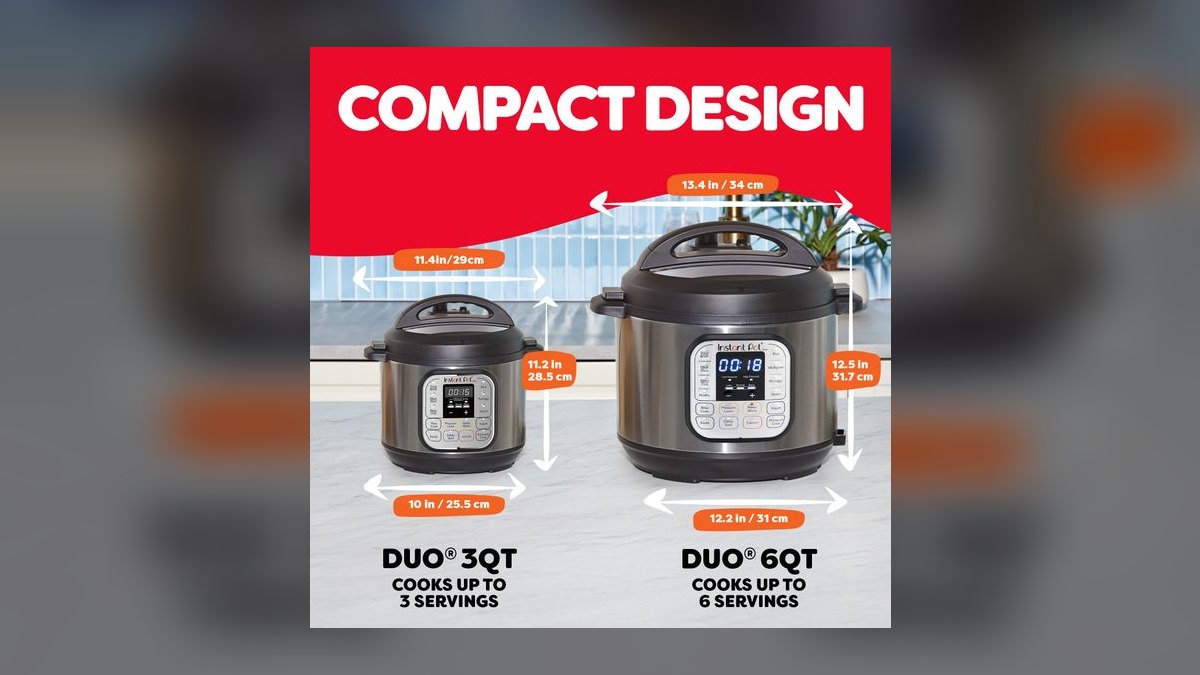
Ninth because capacity limits it, not quality, at $79. The 3-quart Duo Mini is Wirecutter's pick for one-to-two-person households and handles two portions of rice, a single chicken-thigh dinner, or two cups of yogurt. It runs the same seven functions as the full-size Duo and keeps the same stainless steel inner pot. The 11.5 by 10.5 by 10.9 inch footprint slides under a standard upper cabinet, and it weighs about 8 pounds.
Singles, dorm kitchens, and small apartments are the obvious buyers, as is anyone wanting a second cooker for side dishes while a 6-quart handles the main. What you surrender is scale: whole chickens and family batches will not fit, full stop. Compared with the $99 Duo above, you save $20 and half the counter space but lose half the volume. Pair it rather than substitute it.
10GoWise USA 8-in-1 6Qt
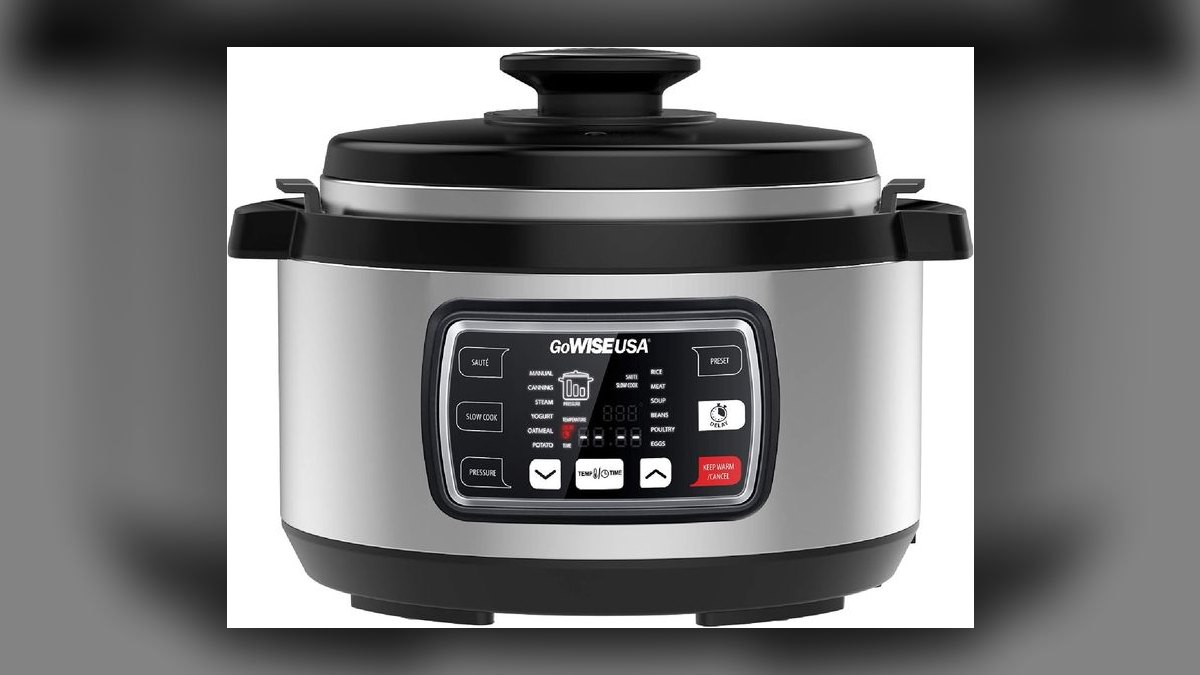
Tenth because the price is the only argument for it, at $79 for a full 6-quart. Eight functions cover pressure, slow cook, sauté, steam, rice, yogurt, soup, and warm across a 12-preset menu, and max pressure reaches a respectable 11.6 PSI. The box includes a steam rack, measuring cup, rice paddle, condensation collector, and recipe book, which is generous at this price. The inner pot is nonstick rather than stainless.
Low-frequency cooks and budget-first shoppers are the honest audience here. Build quality is the trade: plastic parts feel cheaper than Instant Pot's, and r/InstantPot ownership threads report higher failure rates around the 18-24 month mark. Customer support does not match the price leaders either. For the same $79, the Duo Mini above gives you a stainless pot and Instant Pot reliability at half the capacity.
How we ranked these
We scored ten electric pressure cookers on seven weighted axes: pressure performance and sustained PSI (25%), build quality and inner-pot material (20%), genuinely useful preset programs (15%), steam-release noise and safety systems (15%), smart features (10%), and price-to-feature ratio (15%). Long-run reliability data came from Wirecutter, Serious Eats, America's Test Kitchen, Consumer Reports, Hip Pressure Cooking, and accumulated failure reports from r/InstantPot.
We deliberately ignored preset counts as a headline number, because a "14-in-1" badge usually describes one pressure element running different time-temperature profiles. We also discounted WiFi and app connectivity heavily — most owners never open the app twice — and skipped LCD styling entirely. Marketing capacity claims were ignored in favor of realistic working volume, since a cooker cannot be filled past its two-thirds max-fill line safely.
What to look for
Two specs decide this purchase. Sustained PSI sets your actual cook time: units holding 11.6-15 PSI finish tough cuts roughly 25% faster than 10 PSI models like the Crock-Pot Express and Cuisinart CPC-600. Inner-pot material sets your ownership horizon: stainless steel outlasts the electronics, while nonstick coatings degrade in three to five years of frequent use, and replacement nonstick pots often cost half a new cooker.
The common mistake is buying capacity based on family size rather than recipe size. An 8-quart needs more liquid to reach pressure and takes longer doing it, so small-batch weeknight cooking suffers in a big pot. Most households cook better in a 6-quart. The second mistake is paying for smart features instead of the sealing ring and pot material that actually determine daily experience.
Related questions
Why does PSI matter more than the number of preset programs?
PSI determines internal cooking temperature, which drives cook time and browning quality. A cooker sustaining 12 PSI reaches roughly 244°F, while a 10 PSI unit sits near 240°F — a gap that adds 20-30% to tough-cut cook times. Presets are just stored time-temperature combinations for that same pressure element, so a 14-in-1 badge adds convenience, not capability.
Is a stainless inner pot really worth choosing over nonstick?
For frequent cooks, yes. Stainless tolerates aggressive sautéing, metal-free scrubbing, dishwasher cycles, and deglazing without degrading, and replacement pots run about $30. Nonstick coatings are easier to clean initially but flake after three to five years of daily use, and replacements often cost half the price of a whole new cooker. Occasional cooks may reasonably prefer nonstick convenience.
How often should the silicone sealing ring be replaced?
Every 12 to 18 months under regular use, at roughly $8 per ring. Old rings absorb odors from previous meals — curry and chili are notorious — and hardened or stretched rings stop sealing reliably, causing failure to pressurize. r/InstantPot users treat this as the single most common maintenance issue, and many owners keep separate rings for savory and sweet cooking.
Can an electric pressure cooker safely can food for storage?
No. USDA-safe pressure canning of low-acid foods requires sustained 15 PSI and verified temperature hold, which electric units do not maintain — including models advertising a canning preset. Hip Pressure Cooking and Consumer Reports both confirm this. Use a stove-top pressure canner with a calibrated gauge for preserving vegetables, meats, and stocks.
What capacity should most households actually buy?
Six quarts suits one to four people and handles a whole chicken, a doubled chili, or a pot roast. Three quarts fits singles, dorms, and side dishes. Eight quarts serves batch cooks and large families, but requires more liquid and longer come-to-pressure time, which makes small weeknight portions less efficient than in a 6-quart.
Do multicookers slow-cook as well as a dedicated Crock-Pot?
Most do not. Instant Pot's slow-cook mode heats from the bottom element only and runs cooler than a true stoneware slow cooker. Two exceptions stand out: the Breville Fast Slow Pro, which beat a dedicated Crock-Pot in side-by-side testing, and the Crock-Pot Express Crock, which carries the original brand's slow-cook calibration.
Why is come-to-pressure time not counted in recipe cook times?
Recipes list only the time at pressure. Reaching pressure adds 8 to 20 minutes depending on liquid volume, starting temperature, and pot size, and natural release can add another 10 to 25 minutes. A 20-minute recipe realistically occupies 45 minutes. Larger 8-quart cookers take longest, which surprises first-time buyers most often.
Does the whisper-quiet steam release actually change daily use?
It does in open-plan kitchens. Standard quick release vents at over 70 dB — comparable to a vacuum cleaner and startling enough that many owners use a towel over the valve. The Instant Pot Pro Plus releases near 51 dB. If your cooker lives on a counter beside a living space, this is the most tangible upgrade on the list.
FAQ
Is the Instant Pot Pro Plus worth $70 more than the basic Duo?
If you cook three or more times a week, yes — the quiet release, refined app scheduling, and 28 tested programs earn their premium in daily use. Both share a stainless inner pot, so durability is equal. For occasional cooking, the $99 Duo performs roughly 95% of the same work and remains the better value purchase.
Which model is the best value overall?
The Instant Pot Duo 6Qt at $99. It has been a budget recommendation for seven consecutive years, keeps the stainless inner pot that competitors drop at this price, offers dual pressure between 10 and 15 PSI, and has the largest recipe ecosystem of any cooker. Accessories and replacement parts are cheap and universally available.
Does the Ninja Foodi SmartLid replace a separate air fryer?
Largely, yes. Its SmartLid switches between pressure, air-crisp, and steam-crisp modes, saving significant counter space in small kitchens. Dedicated air fryers crisp somewhat faster and more evenly, and the Foodi's lid is heavy and awkward to store. For apartments consolidating appliances, it remains the strongest two-in-one option tested.
How long does an electric pressure cooker typically last?
Eight to ten years with normal household use, based on longevity threads from r/InstantPot. Electronics usually fail before the pot body. Replace the silicone sealing ring annually for about $8, and expect a nonstick inner pot to need replacing around year four or five. Stainless inner pots routinely outlast the control board.
Is pressure cooking genuinely safe in modern units?
Yes. Current electric cookers stack more than ten safety mechanisms: lid-locking interlocks, pressure sensors, thermal cutoffs, anti-block shields, and spring-loaded release valves. The lid physically cannot rotate open while the vessel is pressurized. The dramatic stove-top failures of the 1970s came from unregulated designs without electronic monitoring or mechanical lid locks.
Which pick handles large-batch cooking best?
The Instant Pot Duo Plus 8Qt at $149. Eight quarts fits whole chickens, two pork shoulders, or doubled chili without crowding, and its dedicated sterilize program drew a specific callout from America's Test Kitchen. The nonstick inner pot is the tradeoff against the Pro Plus, but it costs $50 less for two extra quarts.
What is the best option for one or two people?
The Instant Pot Duo Mini 3Qt at $79. It keeps the stainless inner pot and the same seven core functions as the full Duo, in an 11.5 by 10.5 by 10.9 inch footprint that fits under standard upper cabinets. It also works well as a second cooker for side dishes alongside a 6-quart.
Are Instant Pot alternatives like Mealthy worth considering?
Yes, on specs. The Mealthy MultiPot matches the Duo's $99 price with higher 12 PSI pressure, a stainless inner pot, and included stainless steamer basket and glass lid — accessories that usually cost $25 or more separately. The tradeoff is a smaller installed base, meaning fewer tutorials and less convenient replacement-part availability.
Why does food scorch or trigger a burn warning?
Insufficient thin liquid at the bottom, or thick sauces settling onto the heating element before pressurization. Deglaze thoroughly after sautéing, keep at least a cup of water or stock beneath the food, and layer tomato products or dairy on top without stirring. Scorched residue also blocks proper sealing and stops the cooker from reaching pressure.
Is a WiFi-connected pressure cooker worth the premium?
For most cooks, no. Remote scheduling and monitoring help if your kitchen sits far from where you work or you frequently delay-start meals. Otherwise you stand at the counter anyway, and survey data suggests roughly 90% of owners stop using the app after initial setup. Spend the difference on a better inner pot instead.
Sources
- https://www.nytimes.com/wirecutter/reviews/best-electric-pressure-cooker-multicooker/
- https://www.seriouseats.com/best-pressure-cookers-5209874
- https://www.americastestkitchen.com/equipment_reviews/2115-electric-pressure-cookers
- https://www.consumerreports.org/appliances/pressure-cookers/
- https://www.hippressurecooking.com/pressure-cooker-psi-faq/
- https://nchfp.uga.edu/how/can/general-canning-information/
- https://www.reddit.com/r/instantpot/
- https://www.instanthome.com/support
- https://www.cooksillustrated.com/equipment_reviews/2115-electric-pressure-cookers
Related on PULSE
This page will be disappearing soon. Save it to your device for $1 — or read it free while it is here.
@Kory-White- · if Venmo asks, the last 4 of my number are 2012
This page is gone.
This one is off the shelf now. $1 keeps it on your phone for good — the whole page, pictures and diagrams included.
 pulse-reviewsTop 10 Electric Snow Shovels — Best Overall + Best Value in 2027
 pulse-reviewsTop 10 Neck and Shoulder Massagers — Best Overall + Best Value in 2027
 pulse-reviewsTop 10 4K TVs — Best Overall + Best Value in 2027
 pulse-reviewsTop 10 Shop Vacuums — Best Overall + Best Value in 2027
 pulse-reviewsTop 10 Blue Light Glasses for Sales Reps in 2027
 pulse-reviewsTop 10 Car Backup Cameras — Best Overall + Best Value in 2027
 pulse-reviewsTop 10 Laptop Stands for Remote AEs in 2027
 pulse-reviewsTop 10 Smart Mirrors — Best Overall + Best Value in 2027
 pulse-reviewsTop 10 Noise-Cancelling Headphones for Sales Reps on Phone Calls in 2027
 pulse-reviewsTop 10 Electric Hot Pots — Best Overall + Best Value in 2027