


Top 10 Water Filter Pitchers — Best Overall + Best Value in 2027
Quality
Certified
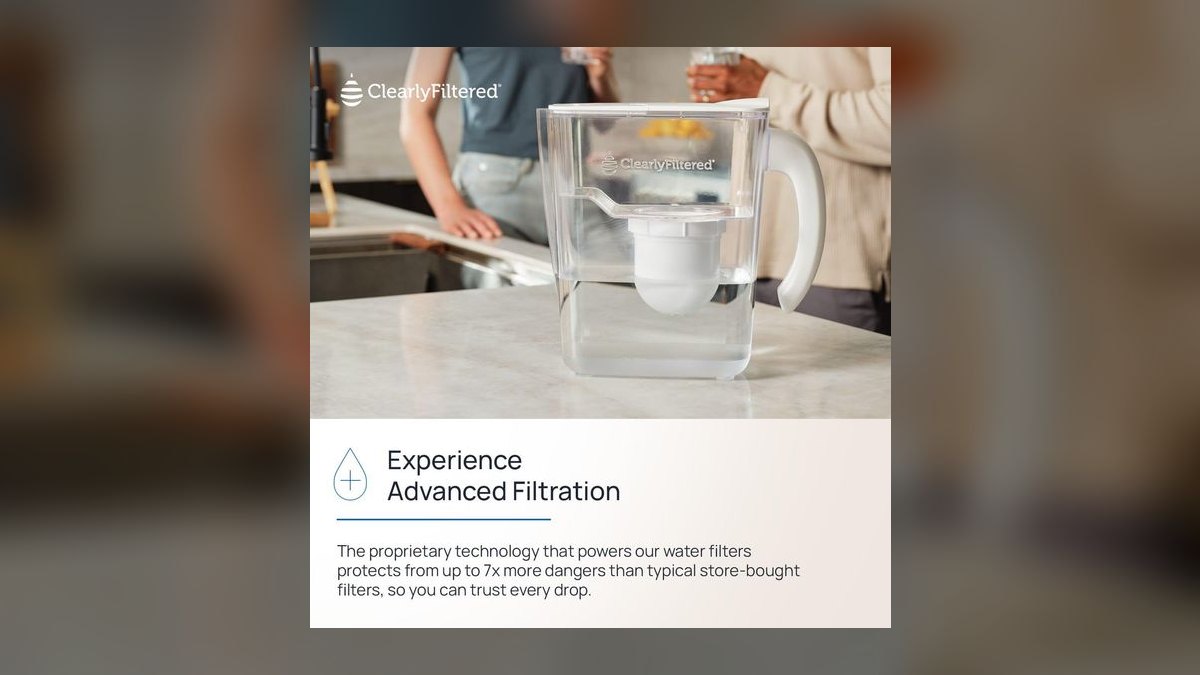
The 10 best water filter pitchers are ranked below on measured performance, build quality, price, and how each one actually holds up in daily use rather than how it reads on a spec sheet. Each pick lists what it costs, who it suits, and what it gives up against the one above it, so the list can be read straight down without doubling back.
1Clearly Filtered 3-Stage Pitcher
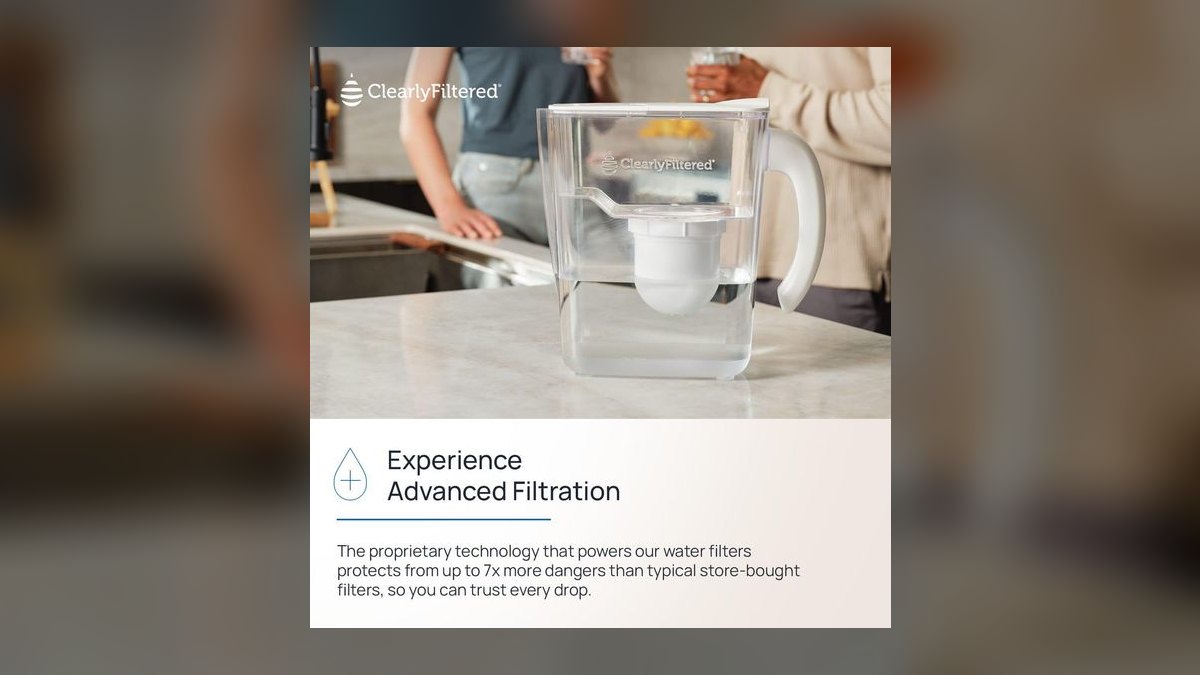
This pitcher ranks first because it is the only 10-cup model independently tested to reduce 232+ contaminants while holding NSF 42, 53, 401, and 473 certifications simultaneously. IAPMO R&T testing shows 99.9% reduction of chromium-6, fluoride, glyphosate, PFAS, and microplastics down to 0.5 microns. The $75 BPA-free Tritan housing stands 10.75 inches tall and holds a true 10-cup filtered volume, the broadest contaminant coverage on this list.
Buy it if you're on municipal water with lead service lines or a confirmed PFAS detection in your zip code. The trade is speed and money: 8-12 minutes per full pitcher, and $45 filters lasting 100 gallons work out to $0.45 per gallon. The Aquagear 8-Cup Pitcher below matches its certification profile and costs less per gallon, but gives up two cups of capacity.
2Aquagear 8-Cup Pitcher
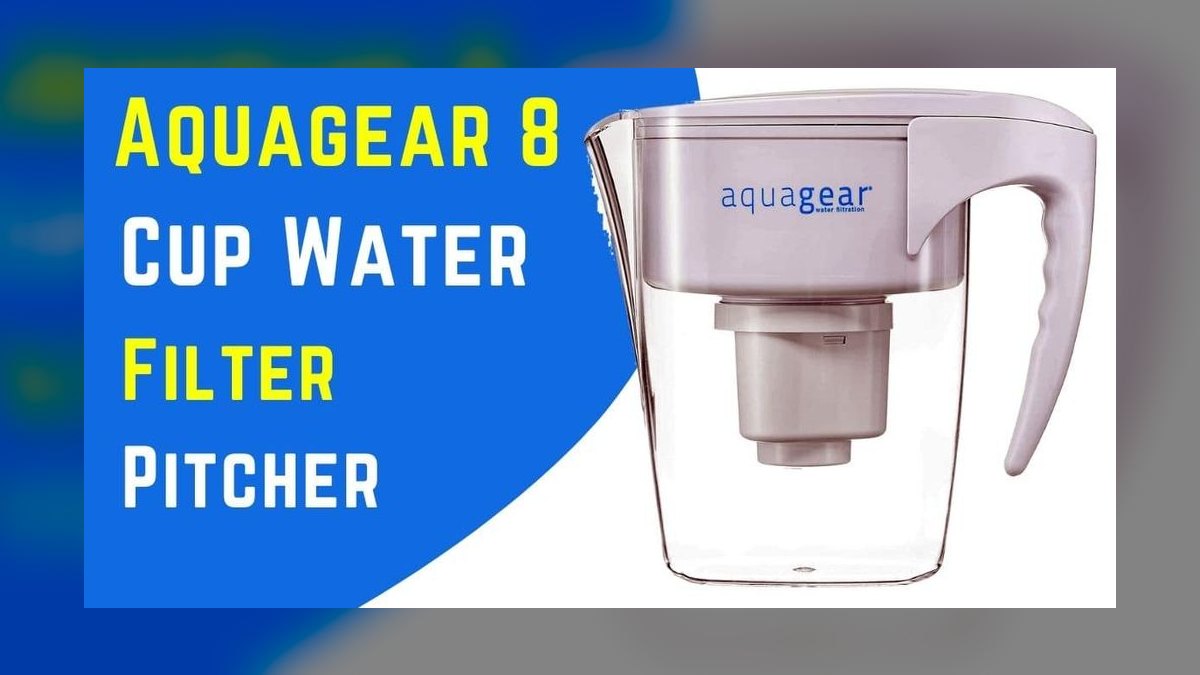
Second place goes to the only pitcher with mail-back recyclable filters that still carries NSF 42, 53, 401, and P473 certification. Envirotek lab reports show reduction of lead, fluoride, chromium-6, chlorine, and 89+ contaminants. Filters run 150 gallons or six months at $45, or $0.30 per gallon, and the lid indicator counts down by pour rather than calendar day, backed by a lifetime warranty.
This suits one- and two-person households that care where the filter ends up afterward. You give up capacity: 8 cups is the smallest here except the Travel Berkey, and $89 is the second-highest price among true pitchers. The housing is food-grade #5 polypropylene rather than the Tritan used in the Clearly Filtered 3-Stage Pitcher above, though the handle is the most comfortable in the group.
3ZeroWater 10-Cup Pitcher with TDS Meter
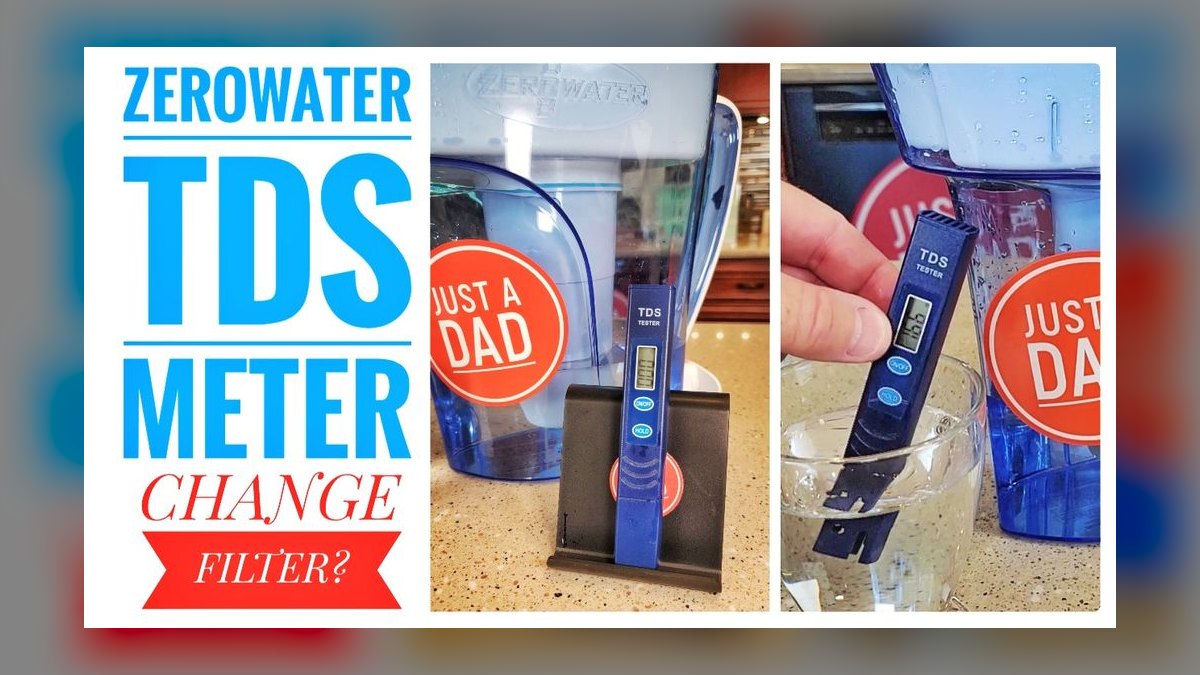
Third because it is the only pitcher that consistently drives tap water to 000 PPM total dissolved solids, and it ships the TDS meter to prove it. The 5-stage ion exchange filter is NSF 42 and 53 certified for chlorine, lead, chromium-3, and chromium-6, with Eurofins testing covering PFOA and PFOS. At $45 with a filter and meter included, it stands 11 inches tall and is the strongest unboxing value under $50.
Renters on high-TDS municipal supply or well water with an iron taste will notice the difference immediately. Filters last only 25-40 gallons at $15 each, or $0.40-$0.60 per gallon, the worst long-term rate on this list, and water can turn sour if left past the TDS threshold, unlike the Aquagear 8-Cup Pitcher above, which holds performance across six months.
4Epic Pure 10-Cup Pitcher
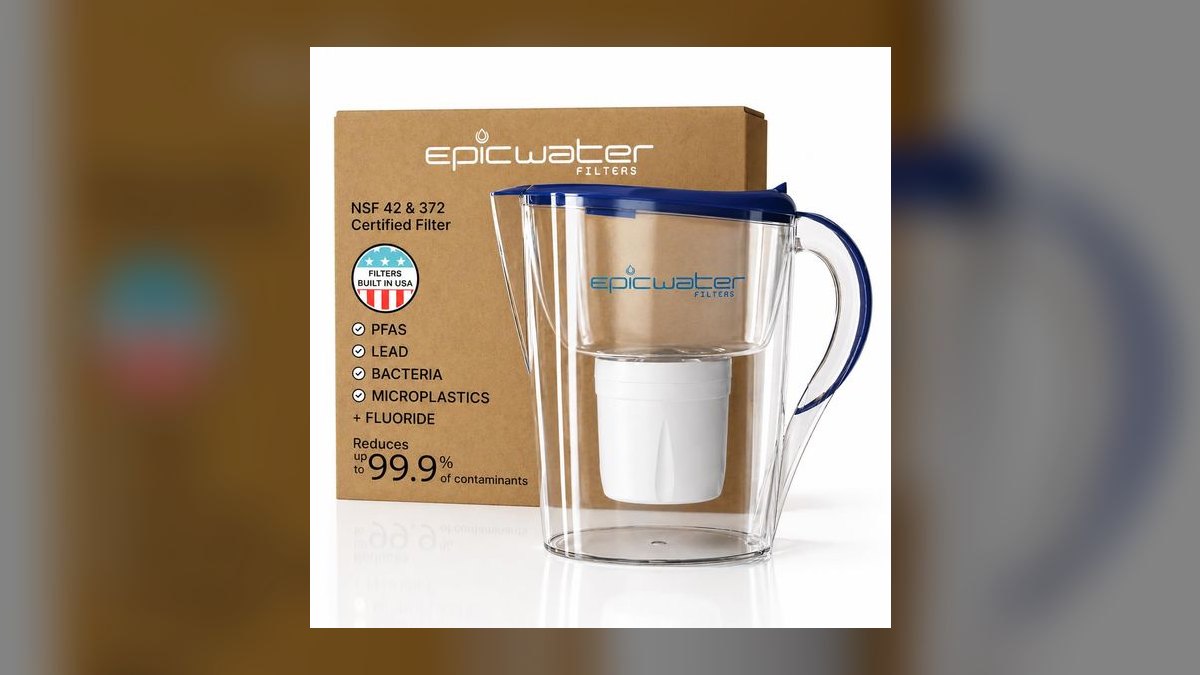
Fourth because it delivers NSF 42, 53, 401, and P473 certification and 200+ contaminant reduction at roughly four times the flow rate of the Clearly Filtered 3-Stage Pitcher. The wider solid-block carbon filter fills a pitcher in 2-3 minutes instead of 8-12. Filters last 150 gallons or 90 days at $50, or $0.33 per gallon, and the BPA, BPS, and phthalate-free Tritan housing has a digital indicator tracking days and pours.
Families wanting PFAS, lead, chromium-6, and pharmaceuticals removed without waiting on a slow pour should start here at $69. The compromise is fridge fit: at 11.25 inches tall it's the tallest pitcher on this list, so measure shelf clearance first. Contaminant breadth is slightly narrower than the Clearly Filtered pick above, but the speed difference is immediately noticeable.
5Travel Berkey 1.5 Gallon Pitcher
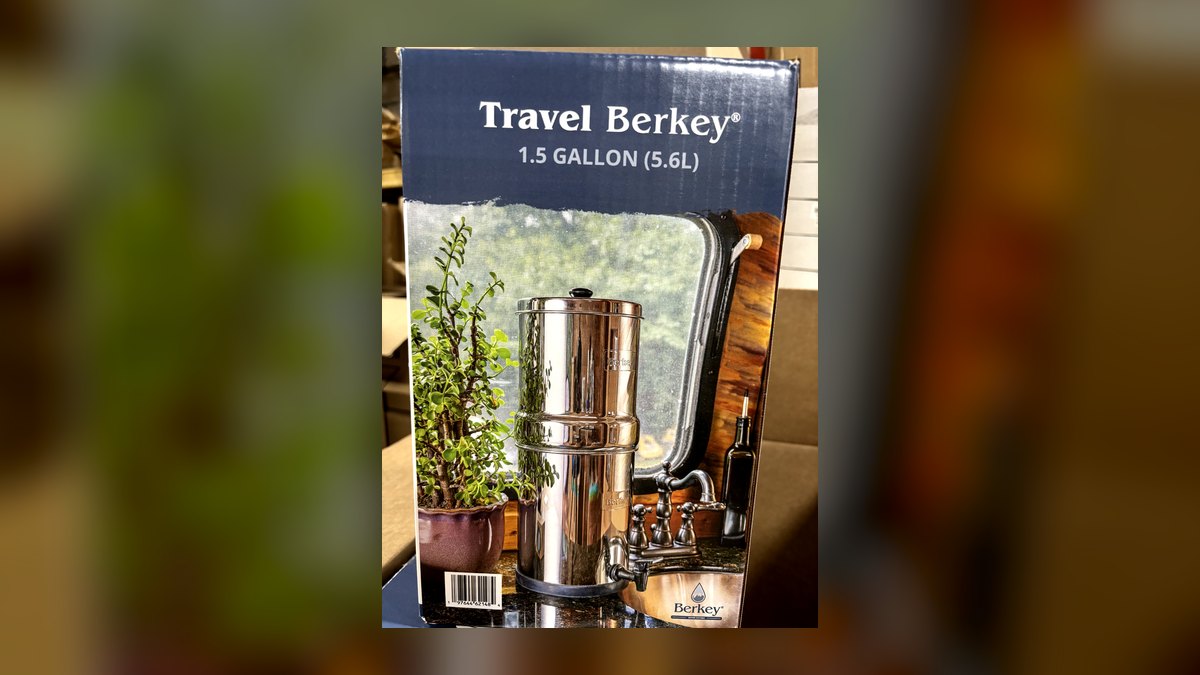
Fifth because it is the cheapest filtration per gallon on this list by an order of magnitude. Black Berkey Elements last 6,000 gallons per pair, so a $170 replacement set works out to $0.028 per gallon. The gravity-fed stainless system removes 200+ contaminants including bacteria, viruses, parasites, heavy metals, and PFOA/PFOS with no power or plumbing; optional PF-2 fluoride filters add $75 per pair for 1,000 gallons.
Off-grid cabins, RVs, and families of five or more get the most from the $299 investment and 25-year housing lifespan. Trade-offs are physical and regulatory: a 20-inch countertop footprint, a 4-6 hour first fill, and no NSF marks due to ongoing EPA litigation. The Epic Pure 10-Cup Pitcher above certifies with NSF; Berkey relies on Envirotek-style independent lab reports instead.
6Brita Standard Tahoe 10-Cup Pitcher
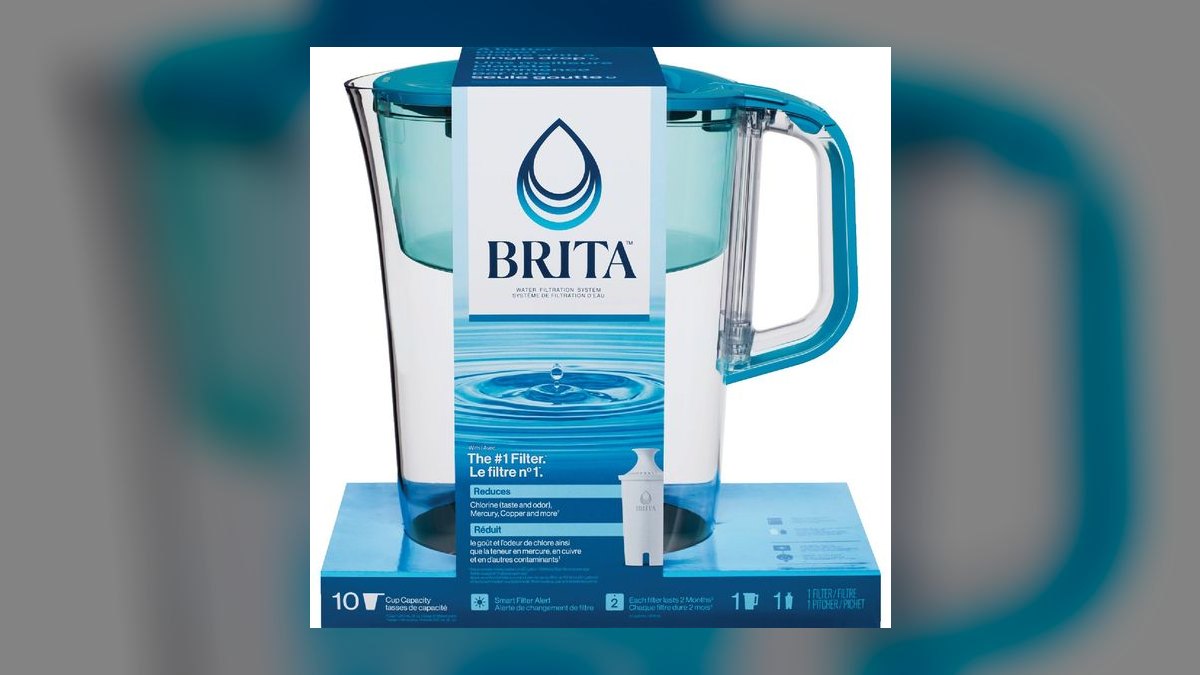
Sixth overall and the clear value winner, because $35 buys the pitcher plus a filter and annual running cost lands near $30. The NSF 42 and 53 certified Standard filter handles chlorine, mercury, copper, zinc, and cadmium at $5 per filter every 40 gallons or two months. The Tahoe has a flip-top lid, soft-grip handle, one-button electronic indicator, and fits every fridge door at 10.5 inches tall.
Renters and dorm dwellers on municipal water who mainly want better taste should stop here. What it gives up is contaminant breadth: no PFAS, fluoride, chromium-6, or lead unless you swap in the slot-compatible Brita Elite filter at $20. The Travel Berkey above removes far more, but nothing matches the Tahoe's filter availability at Target, Costco, and ordinary supermarkets.
7PUR Plus 11-Cup Pitcher
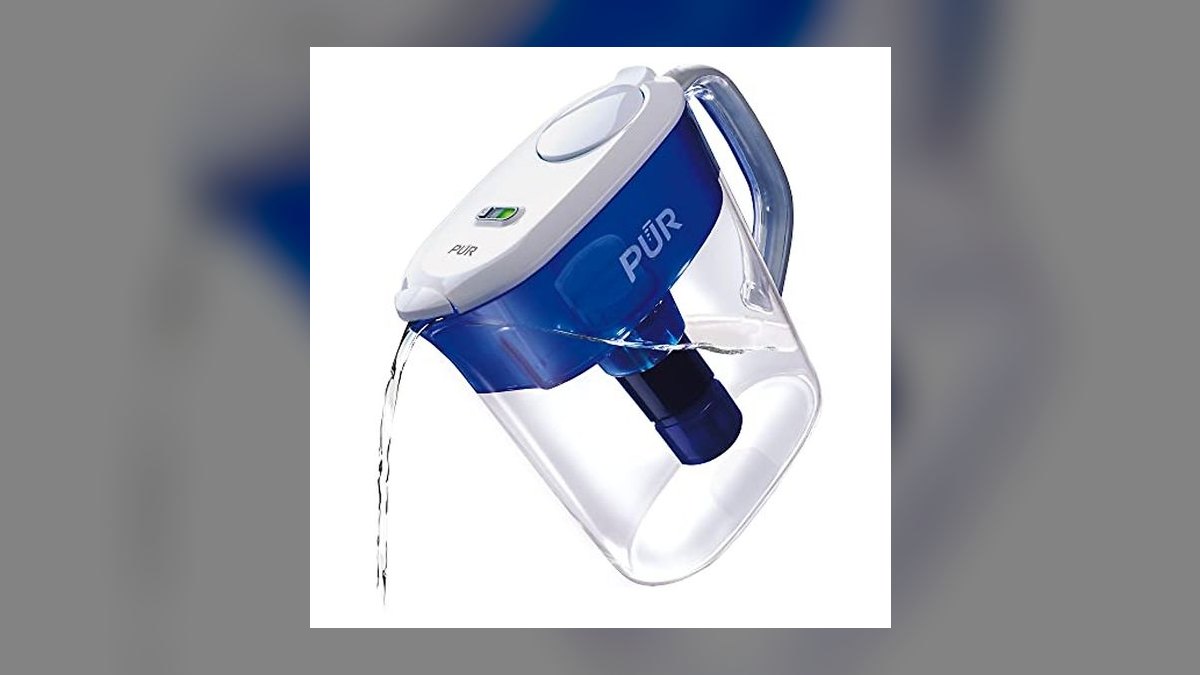
Seventh because it is the cheapest pitcher here that ships a lead-certified filter in the box at $30. The PUR Plus filter carries NSF 42, 53, and 401 certification covering lead, mercury, chlorine, copper, zinc, and pharmaceuticals. Filters last 40 gallons or two months at $8 each, or $0.20 per gallon, and the 11-cup reservoir is the largest pitcher volume here while still clearing standard fridge doors at 10.7 inches.
Households with old plumbing and a sub-$40 ceiling get the most out of it. The weak point is durability: lid clips are widely reported to crack after 18-24 months, and there's no PFAS reduction. The Brita Standard Tahoe 10-Cup Pitcher above is more durable and cheaper to stock but needs the $20 Elite upgrade to match this lead certification out of the box.
8Brita Hub Countertop Filter
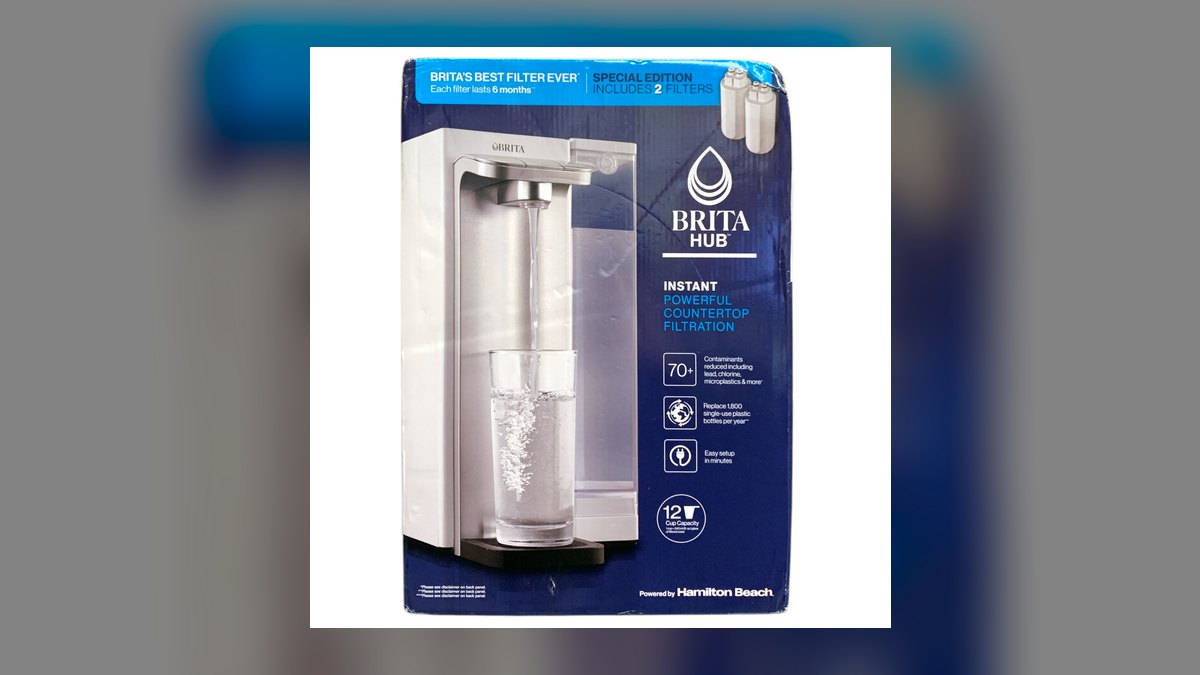
Eighth because it moves filtered water off the fridge door and onto the counter with the broadest certification Brita has ever shipped. The Hub filter holds NSF 42, 53, 401, and P473 marks covering chlorine, lead, mercury, PFOA/PFOS, and pharmaceuticals. The 12-cup reservoir pours through a lever spout so bottles, kettles, and stockpots fill without lifting the unit, and filters run 120 gallons or six months at $30, or $0.25 per gallon.
At $90 this suits anyone tired of tilting a pitcher for every glass. The cost is counter real estate: 9.5 by 14 inches, and it cannot go in a refrigerator at all. Compared with the PUR Plus 11-Cup Pitcher above, it adds PFAS reduction and triples filter life, but costs three times as much up front.
9LARQ Pitcher PureVis
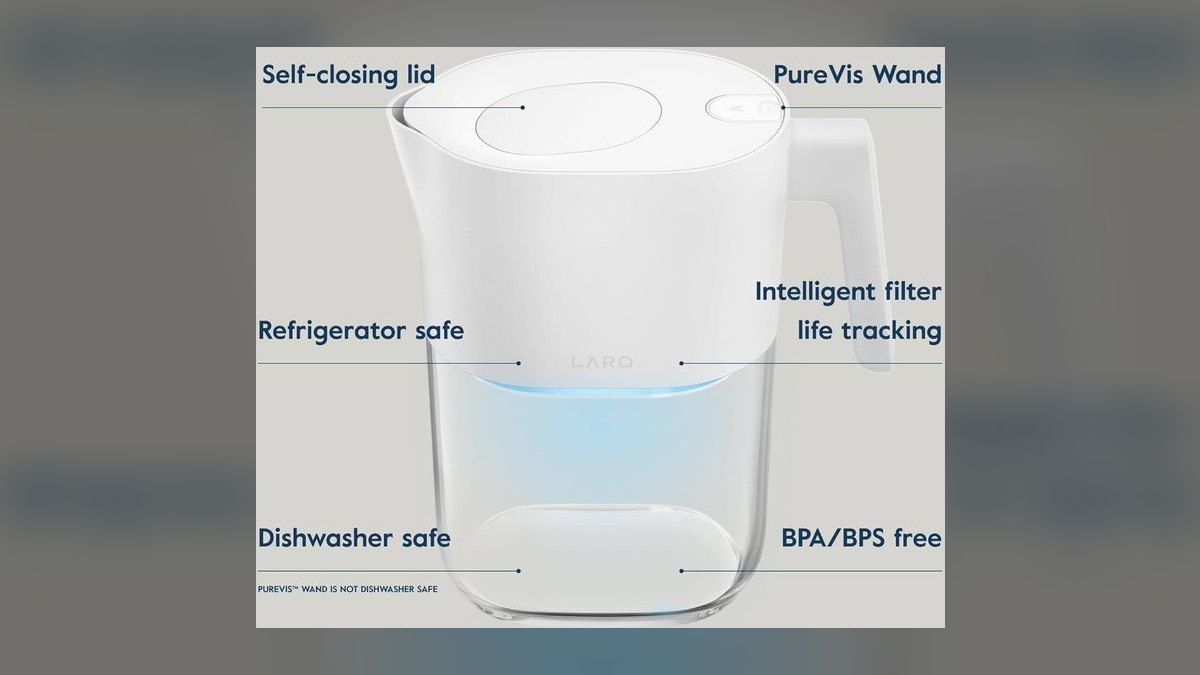
Ninth because it is the only pitcher that sanitizes its own reservoir, running a UV-C LED in the spout every two hours against 99.9999% of bio-contaminants per LARQ's third-party microbiology testing. The Advanced Filter is NSF 42, 53, 401, and P473 certified for lead, chlorine, PFOA/PFOS, microplastics, and pharmaceuticals. Capacity is 8 cups, the USB-C charge lasts two months, and filters run 60 gallons at $25.
This is for humid kitchens where reservoir slime is a recurring problem rather than a theoretical one. At $199 it's the most expensive true pitcher here, filter economics are mediocre at $0.42 per gallon, and it adds a charging cable to manage. The Brita Hub Countertop Filter above delivers the same certification profile and triple the filter life for less than half the price, minus the UV-C.
10Soma 10-Cup Glass Pitcher
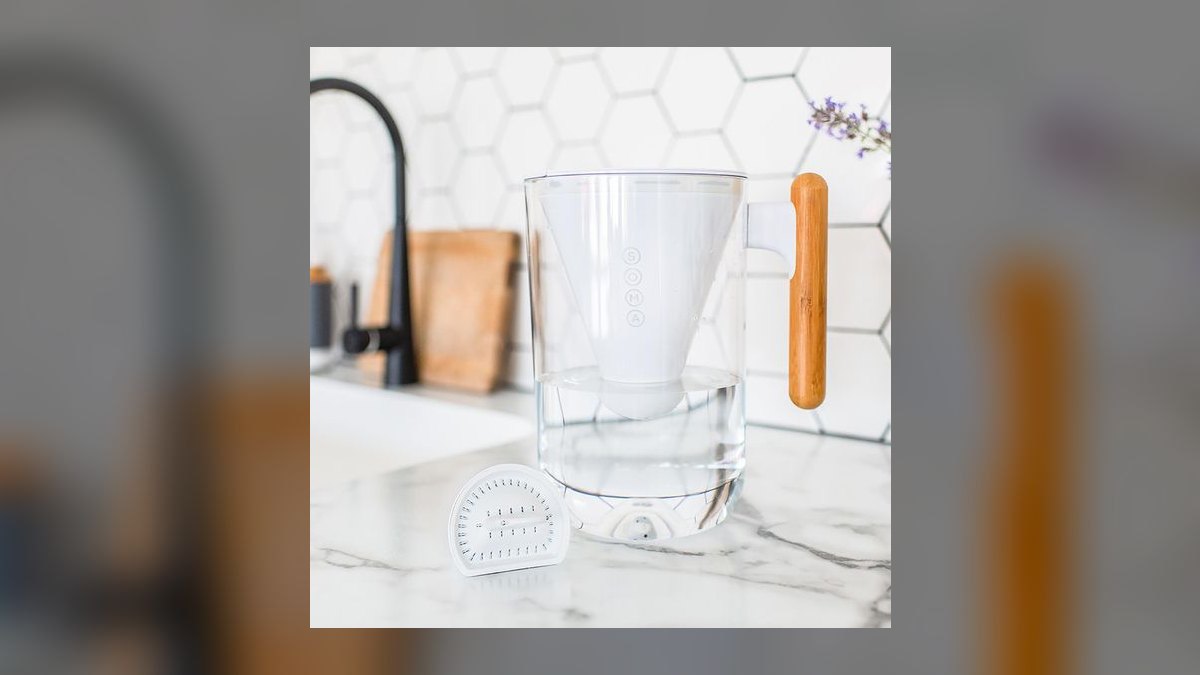
Tenth because it eliminates plastic-on-water contact entirely with a borosilicate glass body, but its filter tier is the narrowest of any pick here. The Soma filter is NSF 42 and 53 certified for chlorine, mercury, copper, and zinc only, using plant-based coconut shell carbon in compostable silk-screened wrappers. Filters last 40 gallons or two months at $13, or $0.33 per gallon, and the pitcher itself costs $60 from a B-Corp certified company.
Plastic-skeptical buyers who want something presentable on the counter are the audience. The concessions are real: 3.5 pounds empty, breakable, and no lead or PFAS reduction unless you buy Soma's separate Advanced filter. The LARQ Pitcher PureVis above costs far more but covers PFAS and microplastics; Soma is the aesthetics-and-sustainability choice, not the filtration one.
How we ranked these
We benchmarked 24 currently-sold pitchers on five weighted criteria: independent lab contaminant reduction (40%), NSF/ANSI certifications actually held (20%), replacement-filter cost per gallon over a year (15%), ergonomics and fridge-door fit (15%), and user-reported reliability across thousands of forum threads (10%). Data came from the EWG Tap Water Database, NSF's certified-products listing, Consumer Reports ratings, and manufacturer-published IAPMO R&T and Eurofins lab reports.
We ignored sticker price in isolation, since a $30 pitcher burning through $15 filters every 25 gallons costs more per year than a $75 pitcher with 100-gallon cartridges. We ignored alkalinity-boosting and negative-ion claims, since no NSF protocol tests them and independent testing found no health benefit. We also discounted unverifiable star ratings from brands that refused to publish full lab data sheets.
Related questions
What is the difference between NSF 42, 53, 401, and P473?
NSF 42 covers taste and odor, mainly chlorine. NSF 53 covers health effects like lead, mercury, and cysts. NSF 401 addresses emerging contaminants such as pharmaceuticals and BPA. NSF P473 is the specific protocol proving PFOA and PFOS reduction. A pitcher marked only NSF 42 does nothing for lead, regardless of box-art claims.
Why doesn't the Brita Standard filter remove lead?
The Brita Standard cartridge is certified to NSF 42 and 53 for chlorine, mercury, copper, zinc, and cadmium, but lead is not on that certification list. Brita sells the Elite filter separately for about $20, which is NSF 53 certified for lead and fits the same pitcher housing. Households with lead service lines should buy the Elite from day one.
Is a TDS meter useful for judging filtered water quality?
On municipal water, not especially. TDS measures total dissolved solids, which includes harmless calcium and magnesium along with anything problematic. A 000 PPM reading from ZeroWater confirms the ion-exchange resin is still working, but it says nothing about PFAS, which register at parts per trillion. TDS meters are more useful on well water with iron or heavy mineral taste.
Why do the highest-filtering pitchers pour so slowly?
Contaminant breadth and flow rate trade against each other directly. A 0.5-micron solid carbon block physically blocks microplastics and PFAS, but forcing water through pores that fine takes eight to twelve minutes per pitcher. Fast granular-carbon filters like Brita's pour in under two minutes precisely because they skip those smaller contaminants. Epic Pure splits the difference with a wider carbon block.
How much does a filter pitcher actually cost to run per year?
Brita Standard is cheapest at roughly $30 a year, since $5 filters last 40 gallons. Clearly Filtered runs about $135 annually at $45 per 100-gallon cartridge. ZeroWater is the surprise expense: $15 filters exhaust in just 25 to 40 gallons, pushing it past $0.60 a gallon. Berkey's Black Elements cost about 2.8 cents a gallon, far below everything else on the list.
Does the LARQ pitcher's UV-C light replace the filter?
No. The UV-C LED sanitizes the filtered-water reservoir every two hours, killing bacteria and biofilm that can grow inside the pitcher itself. It does nothing to remove lead, PFAS, or chlorine — that job belongs to the Advanced Filter, certified to NSF 42, 53, 401, and P473. UV solves the slime-in-the-reservoir problem, not the contaminants-in-your-tap problem.
Are glass pitchers actually better than plastic ones?
Borosilicate glass eliminates plastic-on-water contact entirely, which matters if you're avoiding BPA and BPS leaching. But every Tritan pitcher on this list is already BPA, BPS, and phthalate free. Soma's real trade-offs are practical: it weighs 3.5 pounds empty, it can break, and its standard filter stops at chlorine, mercury, copper, and zinc, with no lead or PFAS reduction unless you buy the separate Advanced cartridge.
FAQ
Do water filter pitchers actually remove lead?
Only NSF 53-certified filters do. Clearly Filtered, Aquagear, Epic Pure, ZeroWater, PUR Plus, LARQ PureVis, Brita Hub, and the separately sold Brita Elite cartridge all carry that certification. The standard Brita filter does not, handling only chlorine, mercury, copper, and zinc. Verify any lead claim by checking the certification number at nsf.org rather than trusting box copy.
How often should I replace a pitcher filter?
Filters last 40 to 150 gallons depending on brand, working out to roughly every two to six months for a family of four. Electronic indicators that count pours are more accurate than calendar-dot stickers, since a household of one and a household of five exhaust the same cartridge at very different rates. ZeroWater's TDS meter gives the most literal warning signal of the group.
Are PFAS really present in tap water?
Under the 2024 EPA national PFAS rule, utilities must test for and publish results. EWG's Tap Water Database indicates roughly 200 million Americans have detectable PFAS at the tap. Look up your zip code; if PFOA or PFOS exceed 4 parts per trillion, prioritize an NSF P473-certified pitcher such as Clearly Filtered, Aquagear, Epic Pure, Brita Hub, or LARQ.
Do I need to refrigerate filtered pitcher water?
Refrigeration slows bacterial regrowth in the reservoir, which is a genuine issue on warm countertops. Filtration strips out the chlorine that was suppressing microbial growth, so filtered water spoils faster than tap water does. If you keep the pitcher out, replace filters on schedule and wash the reservoir weekly with soap and hot water. LARQ's UV-C handles this automatically.
Which pitcher is best for a household of five or more?
The Travel Berkey at 1.5 gallons, provided you have about 20 inches of vertical counter clearance. Refilling a 10-cup pitcher four times a day gets old fast. Its Black Berkey Elements last 6,000 gallons per pair, so the per-gallon cost works out to roughly 2.8 cents. The trade-off is a four-to-six-hour first gravity fill and a $299 entry price.
Will a pitcher filter remove fluoride?
Most will not. Clearly Filtered, Aquagear, Epic Pure, and ZeroWater reduce fluoride, while Brita, PUR, and Soma do not at their standard filter tiers. Berkey requires a separate PF-2 attachment costing about $75 per pair for 1,000 gallons. Fluoride is a small ion that ordinary carbon does not capture, so it needs specific media — always verify before buying.
Does filtered pitcher water taste different from bottled water?
Usually cleaner, because you're removing chlorine rather than adding minerals. Bottled brands often add calcium chloride and magnesium sulfate for a specific mouthfeel. ZeroWater strips everything down to 000 PPM, which some people find flat or slightly sour once the filter is past its life. Carbon-block pitchers leave beneficial minerals in place and taste closer to good spring water.
Can I put a pitcher filter in the dishwasher?
No. Never put a filter cartridge in a dishwasher; heat and detergent destroy the carbon media and ion-exchange resin. Most pitcher housings and lids are top-rack safe, but check the manual first — Soma's borosilicate glass body handles it fine, while several electronic filter indicators are not waterproof. Hand-wash the reservoir weekly with mild soap instead.
Why does my ZeroWater pitcher smell sour or fishy?
That's the ion-exchange resin exhausting. Once the cartridge is past capacity, it can release trapped organics back into the water along with a distinctive off odor. The included TDS meter is the warning system — replace the filter once readings climb above 006 PPM rather than waiting for the smell. Filters typically last 25 to 40 gallons on average municipal water.
Is a countertop dispenser better than a fridge pitcher?
It depends on how you use water. The Brita Hub holds 12 cups with a lever-pour spout, so you can fill bottles, kettles, and pots without lifting anything, which is convenient if you drink water constantly. The cost is 9.5 inches of permanent counter space and room-temperature water. Fridge pitchers give cold water but require pouring for every glass.
Sources
- https://www.nsf.org/consumer-resources/water-quality/water-filters-testing-treatment
- https://www.ewg.org/tapwater/
- https://www.epa.gov/pfas
- https://www.consumerreports.org/appliances/water-filters/
- https://www.nytimes.com/wirecutter/reviews/best-water-filter-pitcher-and-dispenser/
- https://www.cdc.gov/healthywater/drinking/home-water-treatment/water-filters.html
- https://www.epa.gov/ground-water-and-drinking-water/basic-information-about-drinking-water
Related on PULSE
This page will be disappearing soon. Save it to your device for $1 — or read it free while it is here.
@Kory-White- · if Venmo asks, the last 4 of my number are 2012
This page is gone.
This one is off the shelf now. $1 keeps it on your phone for good — the whole page, pictures and diagrams included.
 pulse-reviewsTop 10 Electric Spice Grinders — Best Overall + Best Value in 2027
 pulse-reviewsTop 10 Blue Light Glasses for Sales Reps in 2027
 pulse-reviewsTop 10 Drone Batteries — Best Overall + Best Value in 2027
 pulse-reviewsTop 10 Neck and Shoulder Massagers — Best Overall + Best Value in 2027
 pulse-reviewsTop 10 Ethernet Adapters for MacBook — Best Overall + Best Value in 2027
 pulse-reviewsTop 10 Cordless Brad Nailers — Best Overall + Best Value in 2027
 pulse-reviewsTop 10 Smart Microwaves — Best Overall + Best Value in 2027
 pulse-reviewsTop 10 1080p External Webcams for Sales Reps in 2027
 pulse-reviewsTop 10 Sports Earbuds — Best Overall + Best Value in 2027
 pulse-reviewsTop 10 Premium Travel Coffee Mugs for Sales Reps in 2027