


Top 10 Battery Leaf Blowers — Best Overall + Best Value in 2027
Quality
Certified
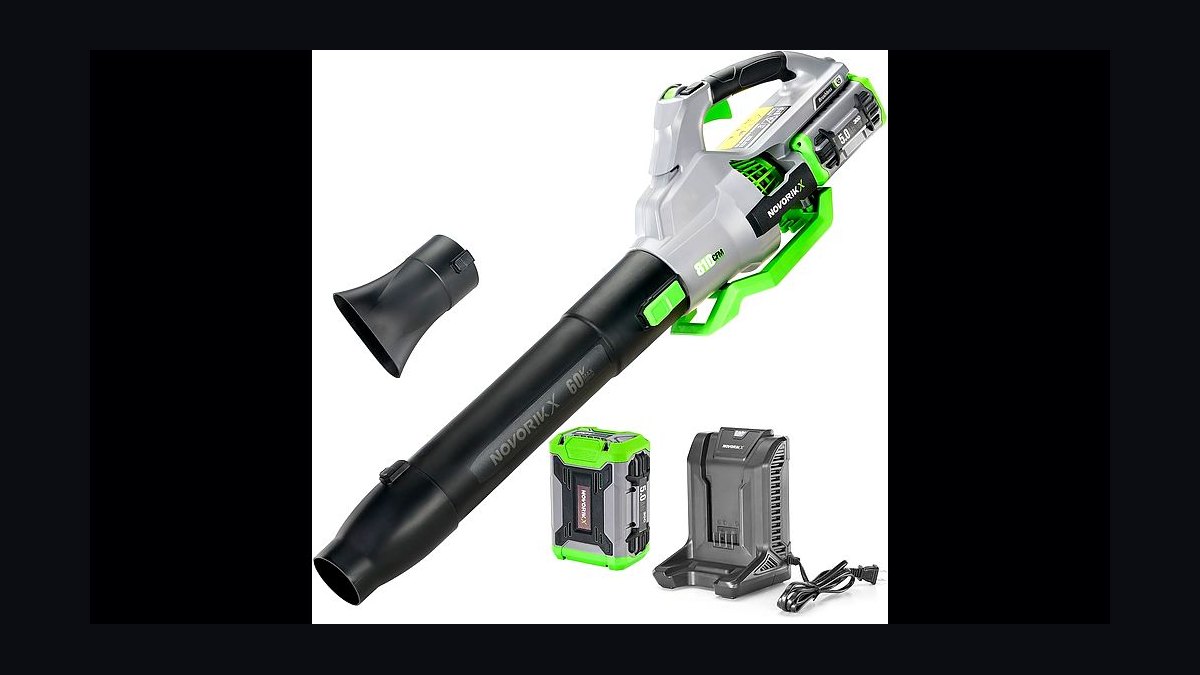
The 10 best battery leaf blowers are ranked below on measured performance, build quality, price, and how each one actually holds up in daily use rather than how it reads on a spec sheet. Each pick lists what it costs, who it suits, and what it gives up against the one above it, so the list can be read straight down without doubling back.
1EGO Power+ LB7654
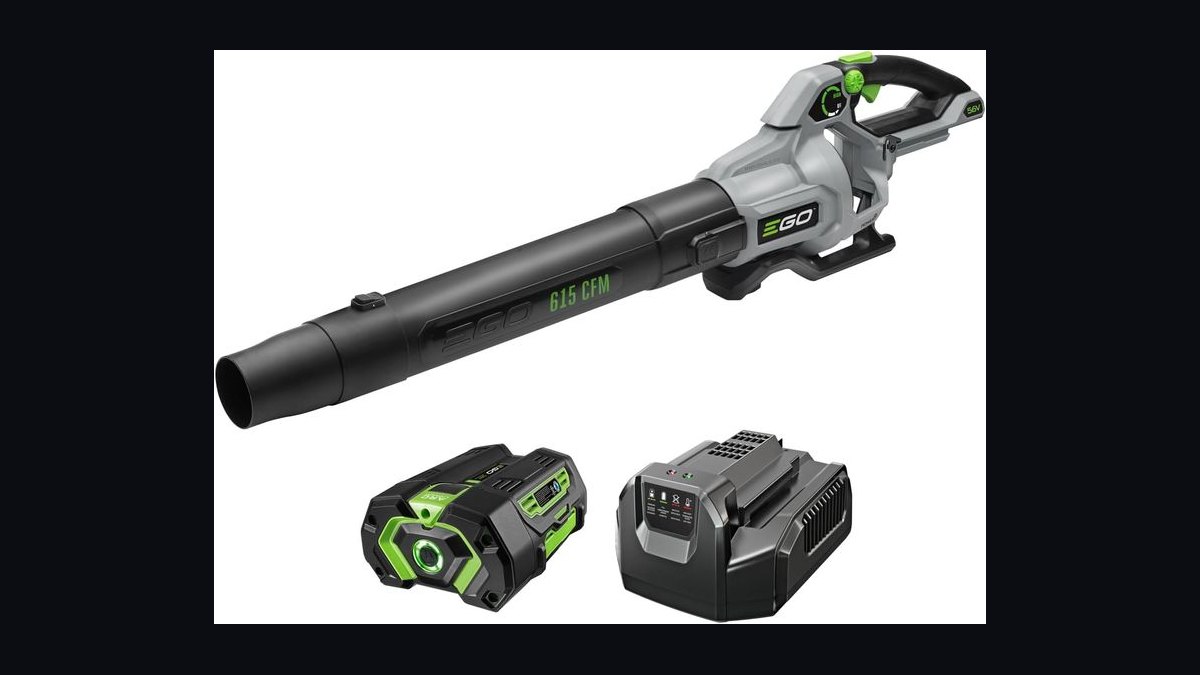
It ranks first because it out-blows entry-level gas units without leaving the handheld form factor: 765 CFM at 200 MPH on the turbo trigger, with a 140 MPH cruise setting for control around mulch beds. The brushless 56V motor runs roughly 25 minutes on high with the included 5.0Ah pack and about 45 minutes with the 7.5Ah upgrade, weighing 10.4 lbs with battery and carrying a 5-year tool warranty.
This is the pick for half-acre to 1.5-acre yards with wet leaves, pine needles, or matted grass. What it trades away is price: $329 for the kit, $229 bare, which stings if you own no EGO tools yet. Compared to the EGO Power+ LB6004 Backpack below it, you save $100 and gain more raw airflow, but your wrist absorbs the load, with forearm fatigue expected past 20 minutes of continuous blowing.
2EGO Power+ LB6004 Backpack
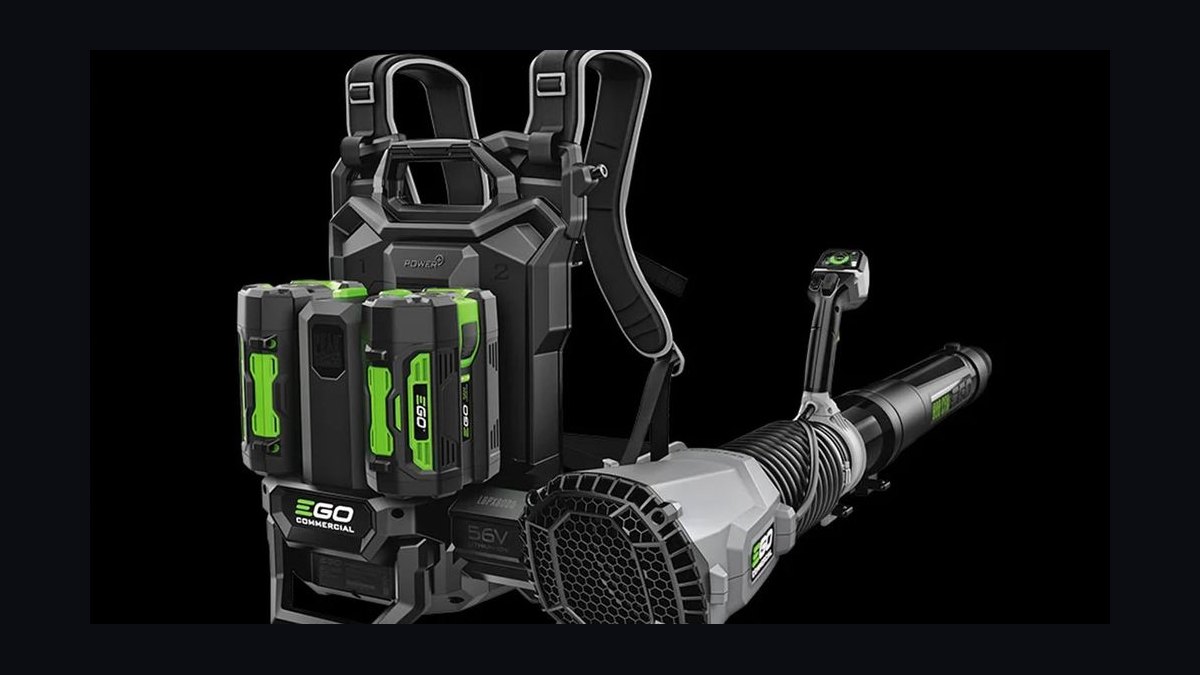
It ranks second because it fixes the handheld's core failure, wrist and forearm burn, while still moving 600 CFM at 180 MPH. The padded harness and hip belt spread 14.6 lbs across both shoulders, so it reads lighter than a 10-lb handheld after half an hour. A cruise-control thumb dial replaces the squeeze trigger, and runtime is about 60 minutes on medium and 30 minutes on max with the 5.0Ah pack.
This suits acre-plus properties and anyone blowing for an hour at a stretch; a dual-port adapter runs two batteries in parallel for roughly two hours. The trade is $429 for the kit and 165 fewer CFM than the EGO Power+ LB7654 above it. For sessions under 20 minutes, the handheld is the smarter buy, since the harness only pays for itself over long jobs.
3Ryobi 40V Whisper RY40406
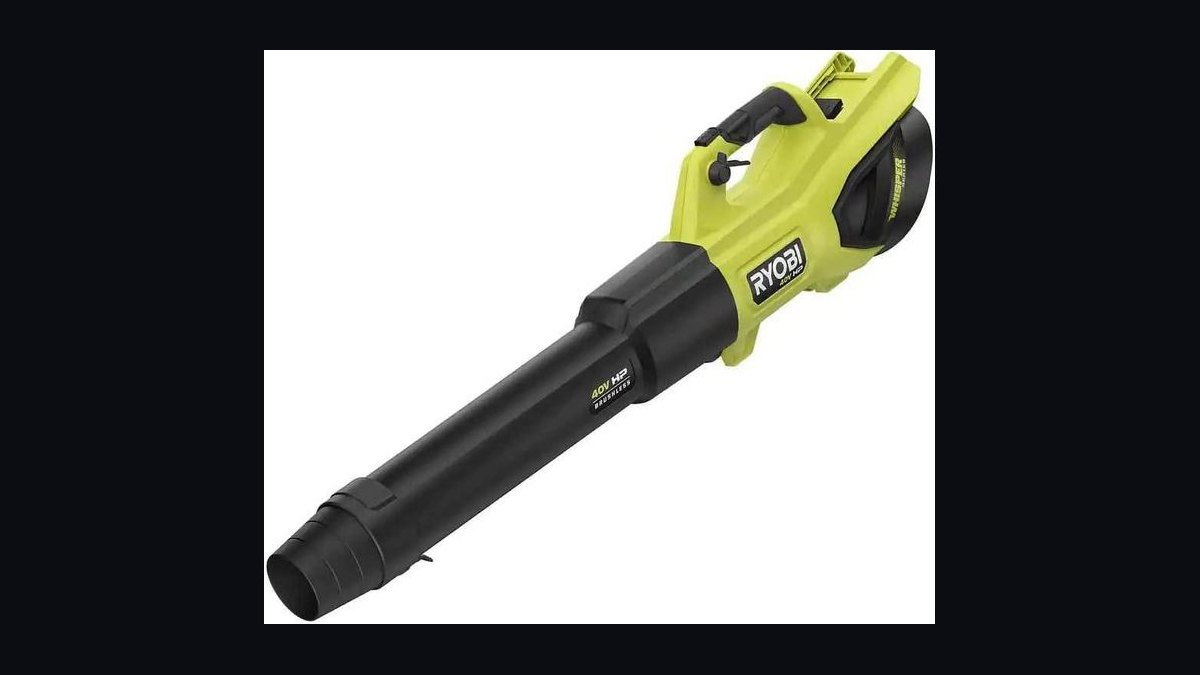
Third place goes to the quietest serious blower sold: 59 dB at 50 feet, against roughly 65 dB for the EGO Power+ LB7654 and 75 to 78 dB for two-stroke gas. Quiet costs nothing here, since it still moves 730 CFM at 190 MPH through an HP brushless motor. Runtime lands near 35 minutes on high with the 6.0Ah HP battery and 80 minutes on low, weighing 9.5 lbs with battery and carrying a 5-year warranty.
Buy this if your suburb or HOA caps blowers at 65 dB, a limit already in force in Washington DC and parts of California. The catch is pricing honesty: the bare tool is $179 but the usable kit runs $299. Against the EGO Power+ LB7654 above, you give up 35 CFM and turbo-trigger immediacy, and gain the Home Depot 40V ecosystem of 80-plus tools.
4Stihl BGA 200
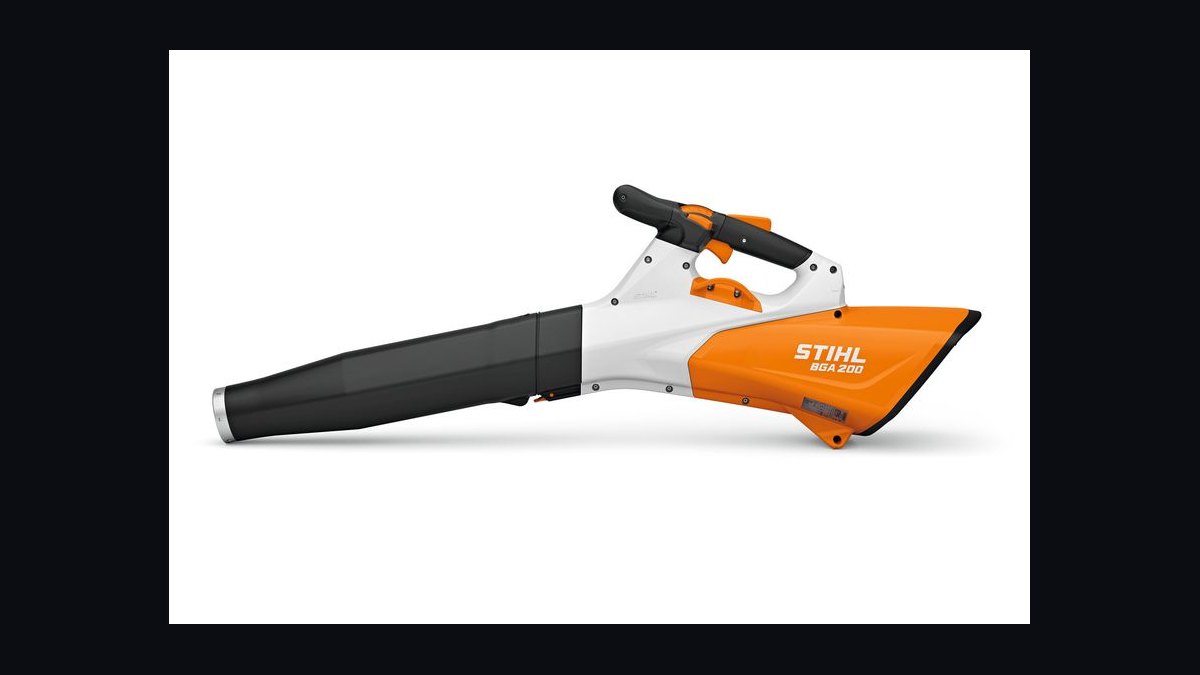
It lands fourth on build quality rather than specs: a magnesium housing, brushless EC motor, and a 3-year professional warranty, with Tool Box Buzz rating it first in construction among 2026 battery blowers. Output is 705 CFM at 199 MPH, close to the EGO Power+ LB7654's numbers. The AP 300 S battery delivers 25 to 40 minutes at full throttle depending on trigger discipline, weighing 8.2 lbs bare and about 11.7 lbs ready to blow.
The justification for $519 over $329 is the Stihl AP platform: the same pack runs the MSA chainsaw, FSA trimmer, and HSA hedger a pro already owns, plus dealer service instead of box-store returns. That is contractor pricing, and a casual homeowner gets no return on it. If you own no Stihl gear, the EGO Power+ LB7654 above delivers more airflow for $190 less.
5Husqvarna 525iB Mark II
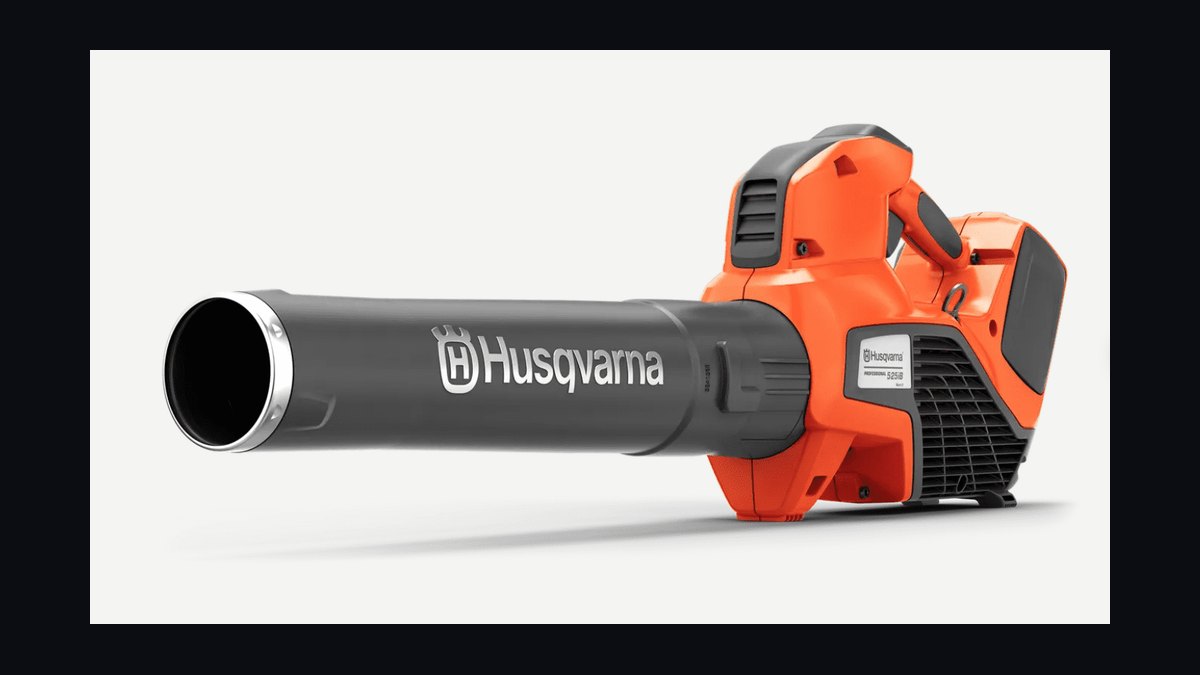
Fifth because it brings commercial-blower handling to battery power but not commercial airflow: 425 CFM at 145 MPH is mid-pack against every model ranked above it. What it does deliver is control, with a cruise-control collar, a brushless motor, and 8.1 lbs with battery, lighter than the spec sheet implies. The BLi200X 5.2Ah pack runs roughly 25 minutes on high, and warranty is 2 years residential, 1 year commercial.
The buyer here already owns Husqvarna equipment; the BLi platform spans the 540iXP chainsaw and 520iLX trimmer, with dealer support behind it. Pros report better tip control for stacking leaves into piles rather than blasting them across a lawn. The trade is raw volume: if airflow is the deciding factor, the EGO Power+ LB7654 moves 340 more CFM for $100 less.
6Greenworks 40V Brushless BL40L4111
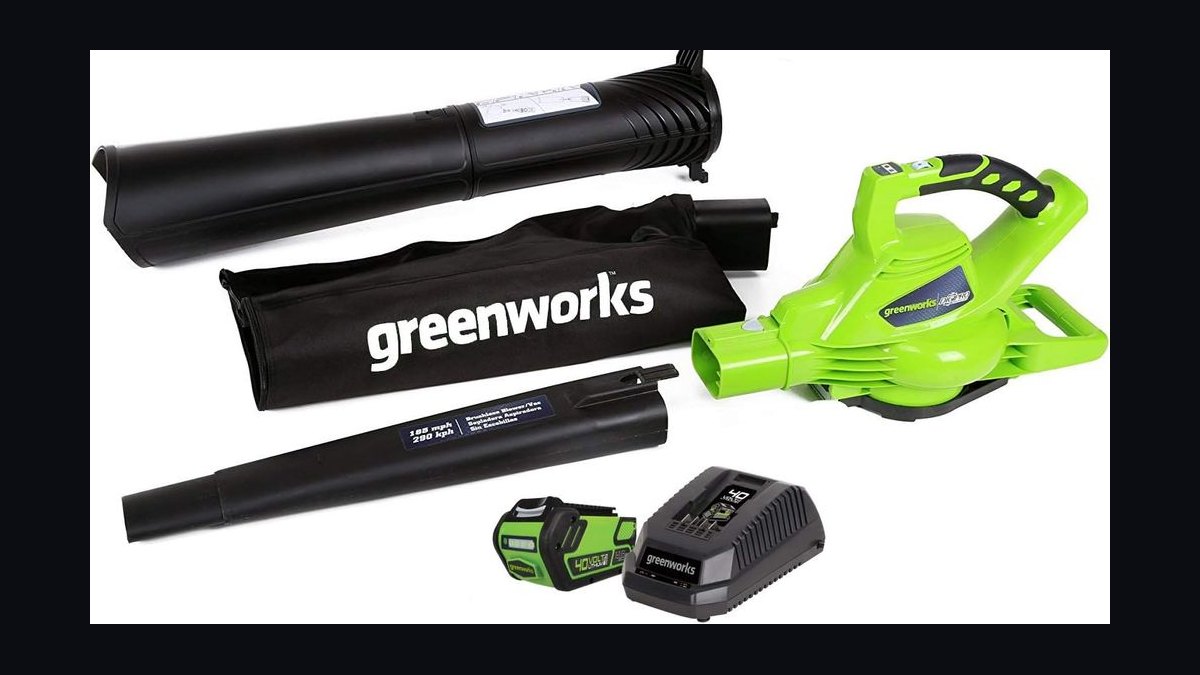
This wins on price-to-performance: 580 CFM at 165 MPH from a brushless motor for a $199 kit, roughly 80 percent of the EGO Power+ LB7654's output at 60 percent of its cost. The 4.0Ah pack runs about 22 minutes on high and 70 minutes on low, weighing 8.4 lbs with battery and using an axial fan that runs less whiny than older Greenworks 40V units. Warranty is 4 years tool, 2 years battery.
This fits homeowners who want real blower power without buying into a premium platform; the Greenworks 40V line covers 75-plus tools with packs undercutting EGO by about 30 percent. The compromise is capacity: 4.0Ah means more swaps on a big lawn, so budget $99 for a spare. Against the Ryobi 40V Whisper RY40406 above, you save $100 but run 64 dB instead of 59.
7Black+Decker LSWV36
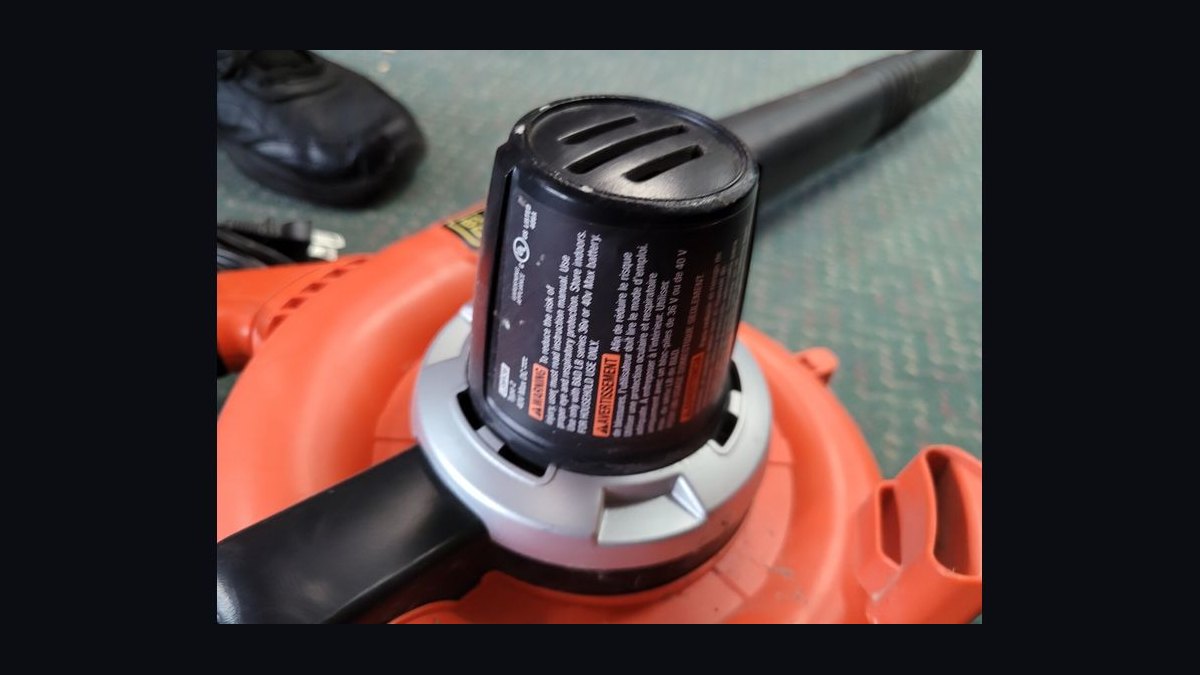
Seventh because it does a job nothing ranked above it does: sweep, vacuum, and mulch in one tool, switching modes by swapping the tube and zipping on the collection bag. The 16:1 mulch ratio turns a bag of leaves into about a cup of compost. Output is 150 MPH blowing and 90 CFM vacuuming, with roughly 30 minutes from the included 2.5Ah pack, weighing 8.1 lbs blowing and 9.8 lbs in vac mode with the bag.
This is a patio, deck, garage, and short-driveway tool for people who would otherwise rake and bag leaves by hand. It is not a yard tool: 150 MPH will not move wet leaves or clear half an acre. Every blower ranked above it out-blows it by a wide margin, but none of them collect and mulch, and none cost $179 for the full kit.
8Worx WG591 Turbine
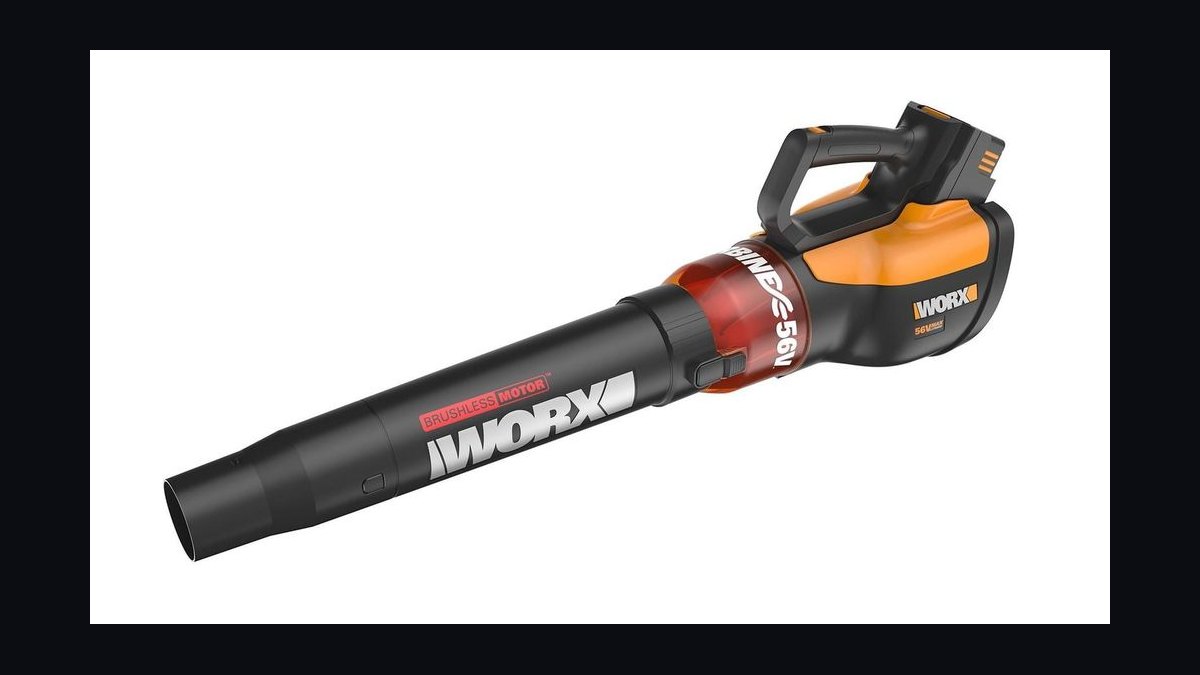
It ranks eighth because its 470 CFM at 125 MPH sits below every non-combo pick above it, though the brushless turbine fan is efficient for the class. It runs two 20V PowerShare batteries in series for 40V output, delivering about 32 minutes with both 4.0Ah packs installed. Weight is 8.5 lbs with both batteries, a hyper-stream nozzle concentrates the air, and controls are a 2-speed switch plus a turbo button, with a 3-year warranty.
The reason to choose it is platform, not power: PowerShare 20V packs fit 75-plus Worx tools including drills, saws, trimmers, and the Landroid mower, so no new battery system is required. The kit includes two batteries at $229. The dual-pack design is fiddly, since when one battery dies you must stop and swap both, unlike the single-pack Greenworks 40V Brushless BL40L4111 above it.
9DEWALT DCBL722B FLEXVOLT
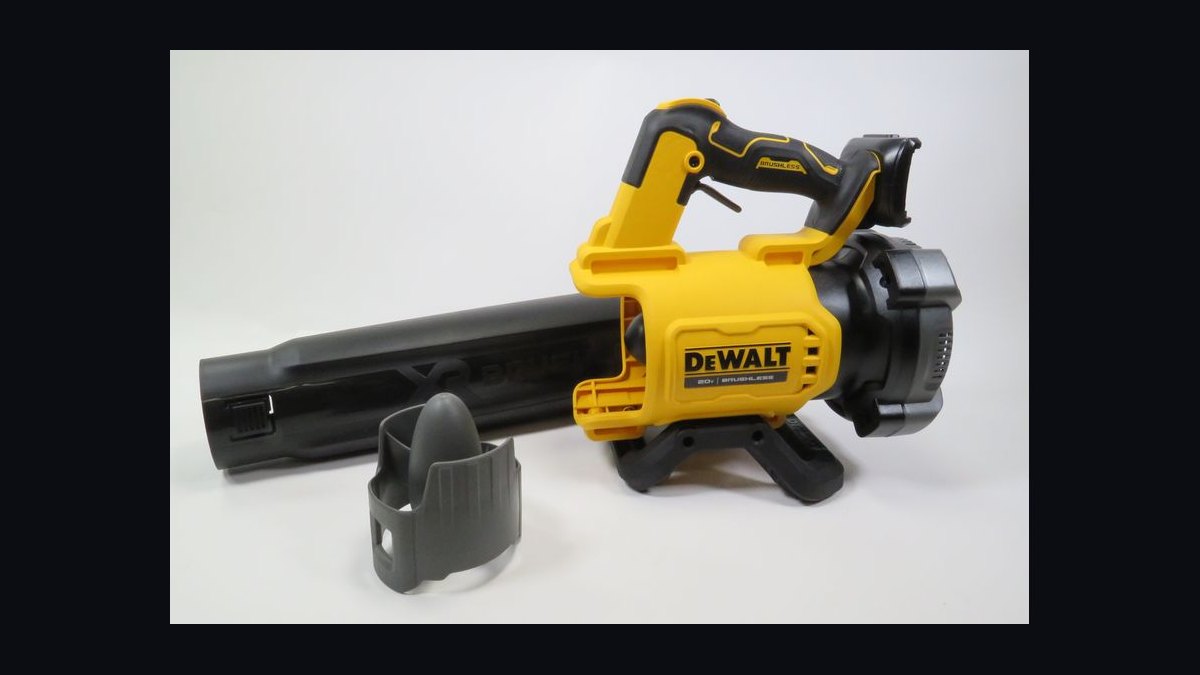
Ninth because the $249 sticker is bare-tool only, and the 9.0Ah FLEXVOLT pack it needs costs another $249, pushing a full kit past $450 for 600 CFM at 175 MPH. Runtime with that 9.0Ah brick is roughly 15 minutes on high and 60 minutes on low, the shortest high-speed window on this list, weighing 7.2 lbs bare and about 12 lbs loaded with the battery installed.
This makes sense for one buyer: someone whose garage already holds FLEXVOLT batteries from the 200-plus tool DEWALT 20V/60V lineup. Bought fresh, it costs more than double the Greenworks 40V Brushless BL40L4111 for essentially the same airflow. The 15-minute high runtime also means a second pack is not optional on any yard bigger than a city lot. Skipping the second pack turns a half-acre job into two separate charging waits.
10Milwaukee M18 FUEL 2825-21HD
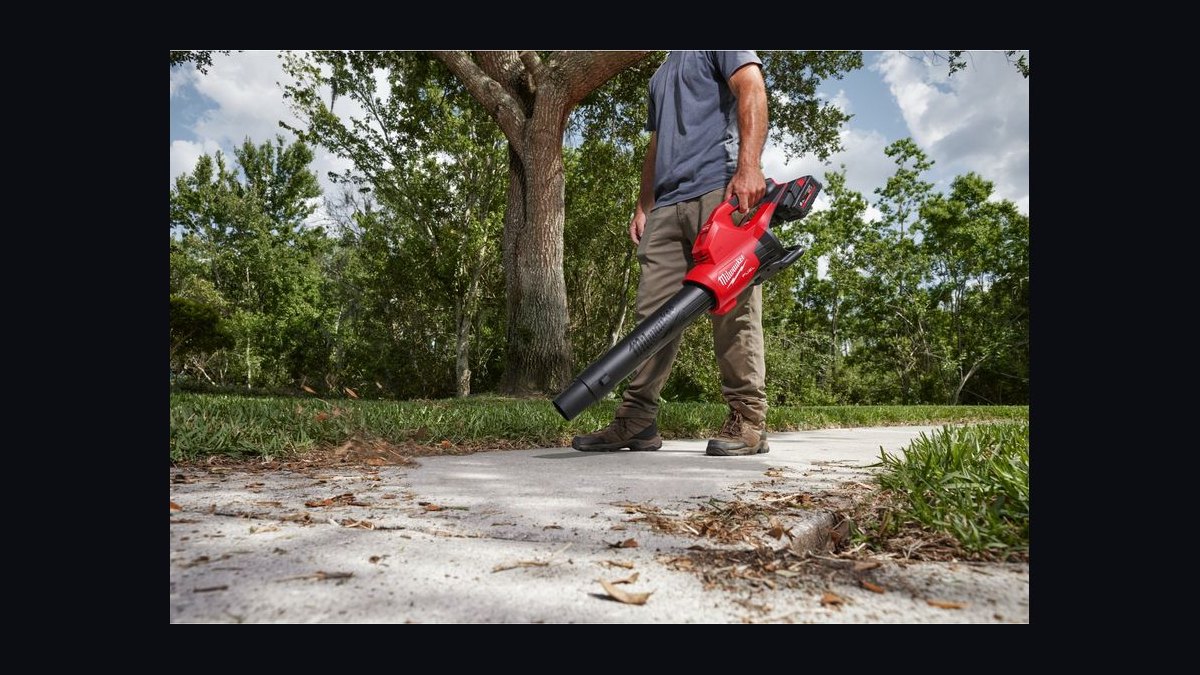
Last because it is the heaviest and among the priciest models here for mid-pack output: 600 CFM at 145 MPH, 11.6 lbs with both batteries, and $449 for the kit. It runs two M18 packs in series for 36V through a POWERSTATE brushless motor with REDLINK PLUS electronics. Runtime is the redeeming number, at roughly 50 minutes on dual HD12.0 batteries, longer than anything else on this list, with a variable trigger, turbo, and lock-on switch.
The buyer is a tradesman whose truck already carries M18 packs, the largest pro cordless lineup in North America at 300-plus tools, who wants one blower covering jobsite and home use. The lock-on switch helps on long fence-line work. For casual yard duty it is the wrong tool: heavy, expensive, and out-blown on MPH by the $199 Greenworks 40V Brushless BL40L4111.
How we ranked these
We weighted air volume (CFM) at 30% because volume, not tip speed, is what actually pushes a leaf pile across a lawn, with air speed (MPH) at 15%. Measured runtime on high took 20%, noise at 50 feet 10%, weight and ergonomics 10%, battery-platform breadth 10%, and build quality plus warranty 5%. Data came from Wirecutter, Project Farm, Consumer Reports, and Pro Tool Reviews testing.
We ignored manufacturer-rated runtime, which is measured on the lowest setting and often triples the number delivered at full trigger. Peak turbo CFM claims that can't sustain a full battery cycle were discounted, along with nozzle marketing language and Amazon star averages, which conflate shipping damage with tool performance. Corded and gas models were excluded entirely, including commercial backpacks above 700 CFM where gas still wins outright.
What to look for
What actually matters is CFM on high and measured runtime on high, not tip speed. A 150 MPH/600 CFM blower clears wet fall leaves faster than a 200 MPH/400 CFM machine. After that, pick the battery platform before the blower itself — a 5.0Ah pack you already own turns every future tool into a bare-tool purchase, saving $150 to $200 each time. Then check your municipal noise cap.
The most common mistake is buying peak specs for a yard that never needs them — a city lot with dry leaves is handled by 400 CFM, and paying $519 for a Stihl BGA 200 buys dealer service, not faster cleanup. The second mistake is skipping the spare battery: one 4.0Ah pack on a half-acre means a 40-minute recharge break mid-job, which a $99 spare fixes outright.
Related questions
Does CFM or MPH matter more for leaf blowers?
CFM matters more for general cleanup. MPH is air velocity at the nozzle tip, useful for breaking loose caked debris or scouring curb edges. CFM is the total volume of air moved per minute, which is what actually pushes a leaf pile forward. Wirecutter, Project Farm, and Pro Tool Reviews all weight CFM heavier in their scoring for this reason.
Why is rated runtime so much longer than what I get?
Manufacturers quote runtime at the lowest speed setting. A blower advertised at 90 minutes typically delivers 20 to 35 minutes at full trigger. The EGO LB7654 gets about 45 minutes on high with a 7.5Ah pack, the Ryobi Whisper roughly 35 minutes with a 6.0Ah HP battery. Always look for the high-speed figure before buying.
When is a backpack blower worth the extra money?
Past about 20 minutes of continuous blowing. Handhelds fatigue the wrist and forearm within 15 to 20 minutes; a backpack shifts the load to hips and shoulders and feels lighter after half an hour despite weighing more. The EGO LB6004 runs $429 versus $329 for the LB7654 handheld — worth it on an acre or more, not on a city lot.
What noise limit do most suburban blower ordinances use?
65 dB measured at 50 feet is the common threshold, in force in Washington DC, parts of California, and a growing number of Northeastern towns. The Ryobi Whisper Series measures 59 dB and the EGO LB7654 around 65 dB, both compliant. Older two-stroke gas blowers run 75 to 78 dB and fail outright. Check your local code first.
How much does battery platform lock-in actually cost?
It cuts both ways. Committing to one platform means every subsequent tool can be bought bare, saving roughly $150 to $200 per tool. Switching platforms means buying batteries and chargers again. EGO 56V, Ryobi 40V, Greenworks 40V, DEWALT 20V/60V, Milwaukee M18, Stihl AP, and Husqvarna BLi all span dozens of tools — choose the ecosystem, then the blower.
Is a vacuum and mulch combo worth buying?
Only for small yards, patios, and decks where the alternative is raking and bagging by hand. The Black+Decker LSWV36 mulches at 16:1, turning a bag of leaves into about a cup of compost. On anything over half an acre it is too slow — a real blower plus a mower bag attachment or dedicated leaf vacuum finishes faster.
Can battery blowers replace gas in 2027?
For handheld and light backpack work, yes. The EGO LB7654 at 765 CFM out-blows most entry-level gas handhelds, and the EGO LB6004 and Stihl BGA 200 match commercial gas backpacks under 600 CFM. Above 700 CFM in the commercial backpack class, units like the Stihl BR 800 and Echo PB-9010T still hold a peak-airflow advantage.
Why do two-battery blowers exist?
They let manufacturers hit higher voltage without launching a new battery line. The Worx WG591 runs two 20V PowerShare packs in series for 40V output; the Milwaukee 2825-21HD pairs two M18 packs for 36V. The upside is using batteries you already own. The downside is you must charge and swap both packs together, which slows changeovers.
FAQ
What is the best overall battery leaf blower in 2027?
The EGO Power+ LB7654, at $329 for the kit with a 5.0Ah battery and charger. It delivers 765 CFM at 200 MPH on turbo, cruises at 140 MPH on variable trigger, weighs 10.4 lbs with the battery, and carries a 5-year tool warranty. Project Farm's 2026 shootout ranked it first in debris moved per minute against every battery competitor.
What is the best value battery leaf blower?
The Greenworks 40V Brushless BL40L4111 at $199 with a 4.0Ah battery and charger. It moves 580 CFM at 165 MPH from a brushless motor, weighs 8.4 lbs, and includes a 4-year tool warranty. That is roughly 80% of the EGO LB7654's performance for about 60% of the kit price, on a platform with 75+ tools.
Which battery blower is quietest?
The Ryobi 40V HP Brushless Whisper Series RY40406, measured at 59 dB at 50 feet — well under the 65 dB cap common in suburban ordinances. It does not trade away power to get there, producing 730 CFM at 190 MPH with roughly 35 minutes of runtime on high using the 6.0Ah HP battery. The kit runs $299.
How long do battery leaf blowers run on high?
Expect 20 to 35 minutes with a 5.0 to 7.5Ah pack. The EGO LB7654 reaches about 45 minutes with a 7.5Ah battery, the Ryobi Whisper about 35 minutes on a 6.0Ah HP pack, and the Stihl BGA 200 between 25 and 40 minutes on an AP 300 S depending on trigger discipline. Low-speed figures run two to four times longer.
How much CFM do I need for my yard?
A city lot or patio is fine at 300 to 500 CFM. A half-acre with dry leaves wants 500 to 700 CFM. An acre or more with wet leaves, pine needles, or matted grass needs 700 CFM or better, which points to the EGO LB7654 handheld or a backpack. Buying above your actual need mostly adds weight and cost.
Should I buy a bare tool or a full kit?
Buy the kit unless you already own compatible batteries. The DEWALT DCBL722B lists at $249 bare, but a 9.0Ah FLEXVOLT pack is another $249, pushing the real cost past $450. The Ryobi Whisper is $179 bare and $299 as a kit. Bare-tool pricing only makes sense once your platform is established.
Which blower is best for professional landscapers?
The Stihl BGA 200 for build quality — magnesium housing, brushless EC motor, 705 CFM at 199 MPH, dealer service network, and a 3-year professional warranty at $519. For all-day comfort instead, the EGO LB6004 backpack at $429 accepts a dual-port adapter for two batteries in parallel, which Pro Tool Reviews rated as genuinely run-all-day capable.
Do I need a spare battery?
On anything larger than a small yard, yes. A single 4.0Ah pack gives about 22 minutes on high, then you wait 40 or more minutes for a recharge. A spare Greenworks 4.0Ah runs $99 — cheaper than upgrading to a higher-CFM tool and a bigger practical improvement, since it doubles working time rather than shaving minutes.
Are turbo buttons better than variable triggers?
Neither is clearly better; pick by feel. A turbo button gives instant full power without holding the trigger down, which helps on caked debris. A variable trigger gives finer control around mulch beds and flower borders. Most premium blowers, including the EGO LB7654 and Ryobi Whisper, include both. This spec should not decide your purchase.
What warranty should I expect on a battery blower?
Three to five years on the tool and two to three on the battery is the current norm. EGO offers 5 years tool and 3 years battery, Ryobi 5 years, Greenworks 4 years tool and 2 years battery, and Milwaukee 5 years. Stihl's 3-year professional coverage is shorter but backed by a dealer service network rather than mail-in depot repair.
Sources
- https://www.nytimes.com/wirecutter/reviews/best-leaf-blower/
- https://www.consumerreports.org/home-garden/leaf-blowers/
- https://www.protoolreviews.com/best-cordless-leaf-blower/
- https://www.egopowerplus.com/
- https://www.stihlusa.com/products/blowers-and-shredder-vacs/professional-blowers/bga200/
- https://www.ryobitools.com/
- https://www.greenworkstools.com/
- https://www.husqvarna.com/us/leaf-blowers/525ib-mark-ii/
- https://www.dewalt.com/
- https://www.milwaukeetool.com/
Related on PULSE
This page will be disappearing soon. Save it to your device for $1 — or read it free while it is here.
@Kory-White- · if Venmo asks, the last 4 of my number are 2012
This page is gone.
This one is off the shelf now. $1 keeps it on your phone for good — the whole page, pictures and diagrams included.
 pulse-reviewsTop 10 Tire Inflators — Best Overall + Best Value in 2027
 pulse-reviewsTop 10 Drone Batteries — Best Overall + Best Value in 2027
 pulse-reviewsTop 10 Outlet Testers — Best Overall + Best Value in 2027
 pulse-reviewsTop 10 Hair Dryers — Best Overall + Best Value in 2027
 pulse-reviewsTop 10 Car Backup Cameras — Best Overall + Best Value in 2027
 pulse-reviewsTop 10 Laptop Stands for Remote AEs in 2027
 pulse-reviewsTop 10 Rugged Phones — Best Overall + Best Value in 2027
 pulse-reviewsTop 10 DDR5 RAM Kits — Best Overall + Best Value in 2027
 pulse-reviewsTop 10 Multimeters — Best Overall + Best Value in 2027
 pulse-reviewsHow do I reduce echo in a home office for sales calls in 2027?