


Top 10 Portable Air Compressors — Best Overall + Best Value in 2027
Quality
Certified
The 10 best portable air compressors are ranked below on measured performance, build quality, price, and how each one actually holds up in daily use rather than how it reads on a spec sheet. Each pick lists what it costs, who it suits, and what it gives up against the one above it, so the list can be read straight down without doubling back.
1California Air Tools 8010
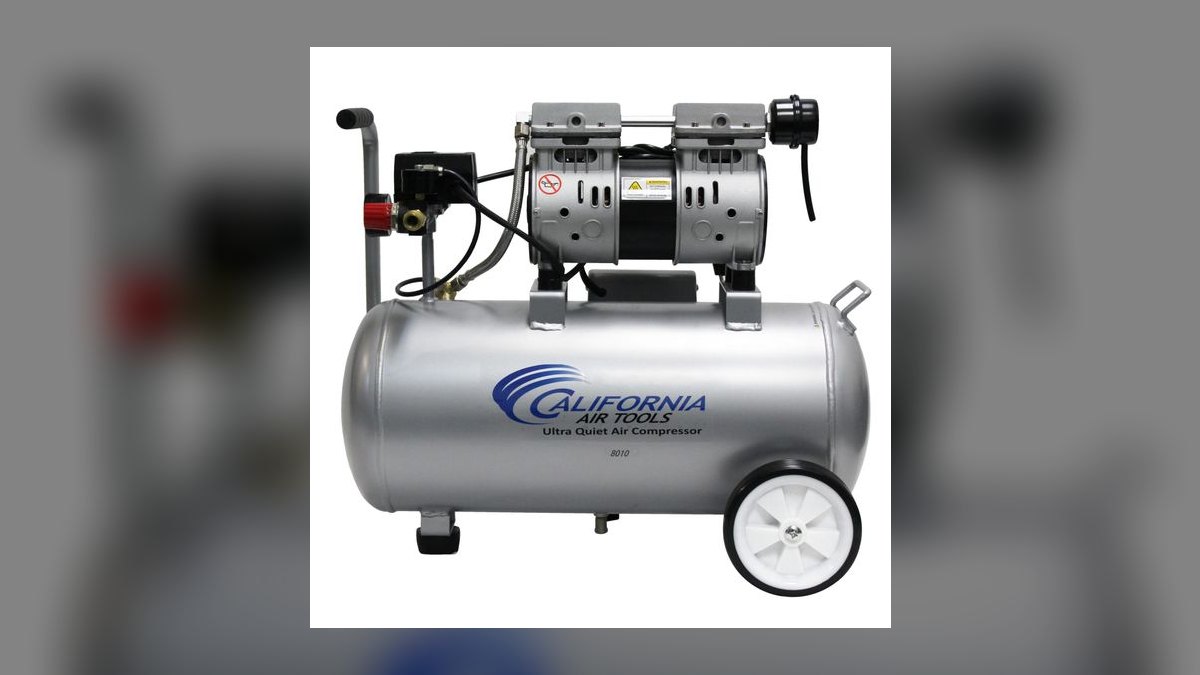
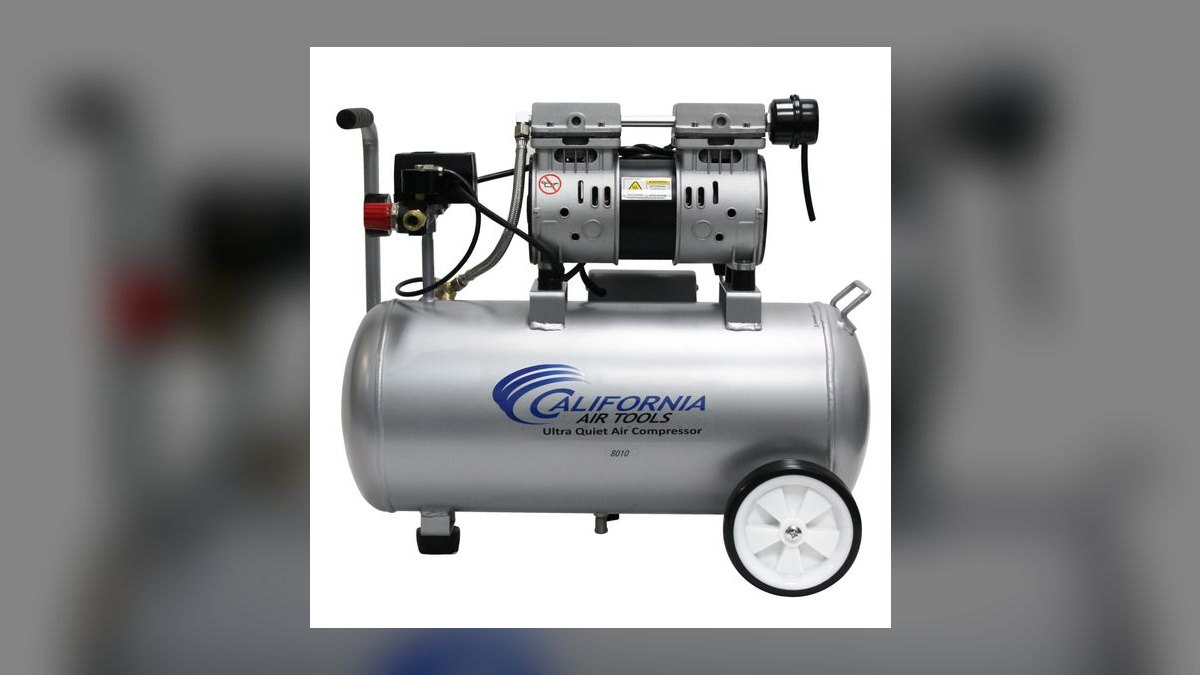
The California Air Tools 8010 ranks first because it is the only mainstream compressor pairing 60 dB operation with real working CFM. Its 1.0 HP oil-free dual-piston pump turns at 1,680 RPM instead of the 3,400+ RPM typical of pancake compressors, which is where the low noise comes from. It delivers 2.20 CFM at 90 PSI, tops out at 120 PSI, and recovers from 90 to 120 PSI in 75 seconds.
This suits garage woodworkers and finish carpenters whose shop shares a wall with living space, running 16-gauge finish nailers or HVLP touch-up guns on standard 120V/15A power. The trade is portability: 48 lbs on 8-inch flat-free wheels means it lives on a cart, not in one hand. The DEWALT DWFP55126 Pancake below it posts higher headline CFM at 2.6 and weighs 18 lbs less, but runs at 78.5 dB.
2DEWALT DWFP55126 Pancake
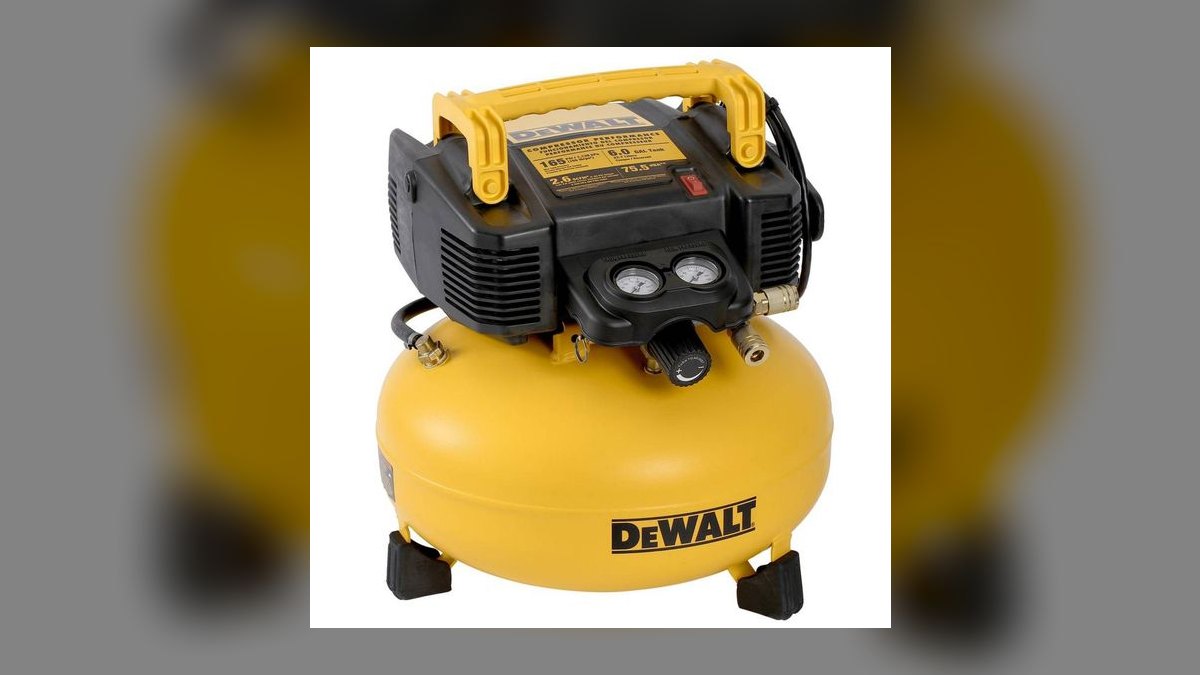
The DEWALT DWFP55126 Pancake earns second place on raw output per dollar: 2.6 CFM at 90 PSI from a 6-gallon steel pancake tank at $229, a figure that beats the California Air Tools 8010 above it. Max pressure is 165 PSI, the highest among the mainstream pancakes here. The oil-free pump uses high-efficiency motor windings rated for 120V cold starts down to 0°F, with a console-style cover shielding the regulator and gauges from drop damage.
This suits the all-around trim carpenter who wants a name-brand workhorse with a real service network behind it, and unheated garages where cold starting actually matters. It gives up pump longevity — roughly 1,500 hours before rebuild versus 3,000 for the California Air Tools 8010 — and at 78.5 dB it requires hearing protection. At 30 lbs with rubber anti-walk feet, it carries far easier than the 48-lb 8010 above it.
3Makita MAC2400 Twin Stack
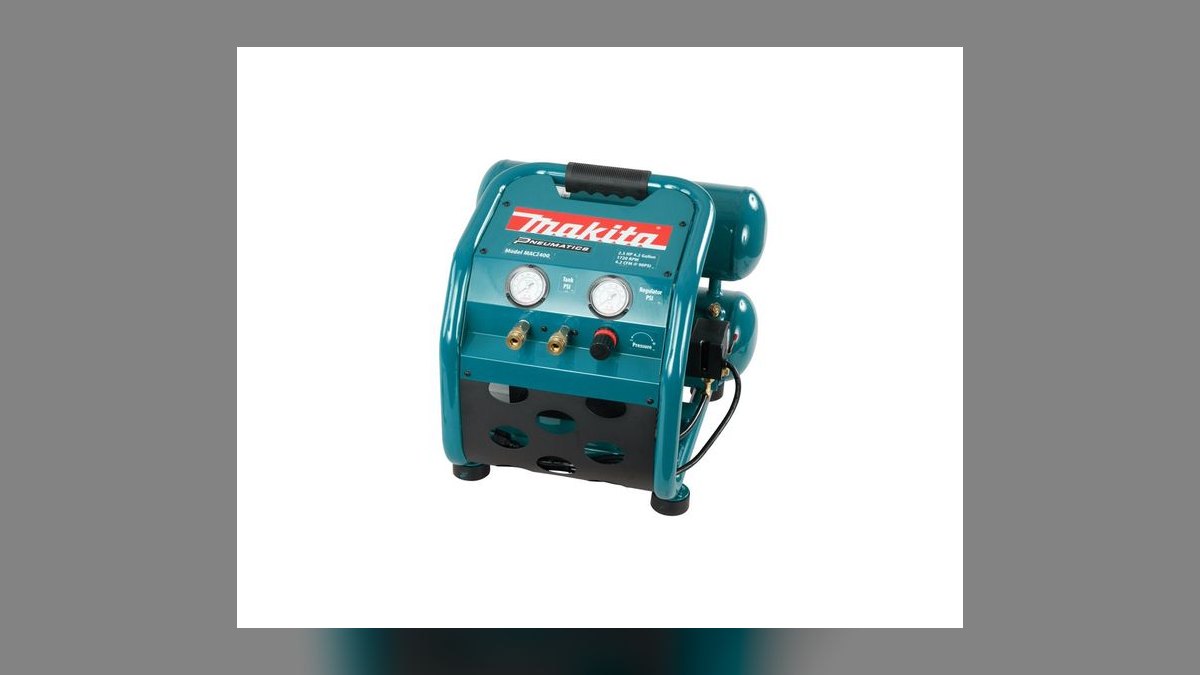
The Makita MAC2400 Twin Stack ranks third on pump durability and framing-grade output rather than price. Its 2.5 HP oiled cast-iron Big Bore pump delivers 4.2 CFM at 90 PSI from a 4.2-gallon twin-stack tank at 130 PSI max, enough to sustain a framing nailer firing 60 nails per minute. Rated pump life is 5,000+ hours, the longest on this list, with owners commonly reporting decade-plus service. Noise measures 79 dB at $499.
Buy this if you are past hobby tier and want the last compressor you need — framing, sheathing, and mid-grade impact work on 120V without tripping breakers. The costs are real: 80 lbs of cast iron with a roll-cage handle, an optional wheel kit, and an oil check every 50 hours. The DEWALT DWFP55126 above it weighs 30 lbs and needs no maintenance, but rebuilds three times sooner.
4Rolair JC10 Hand Carry
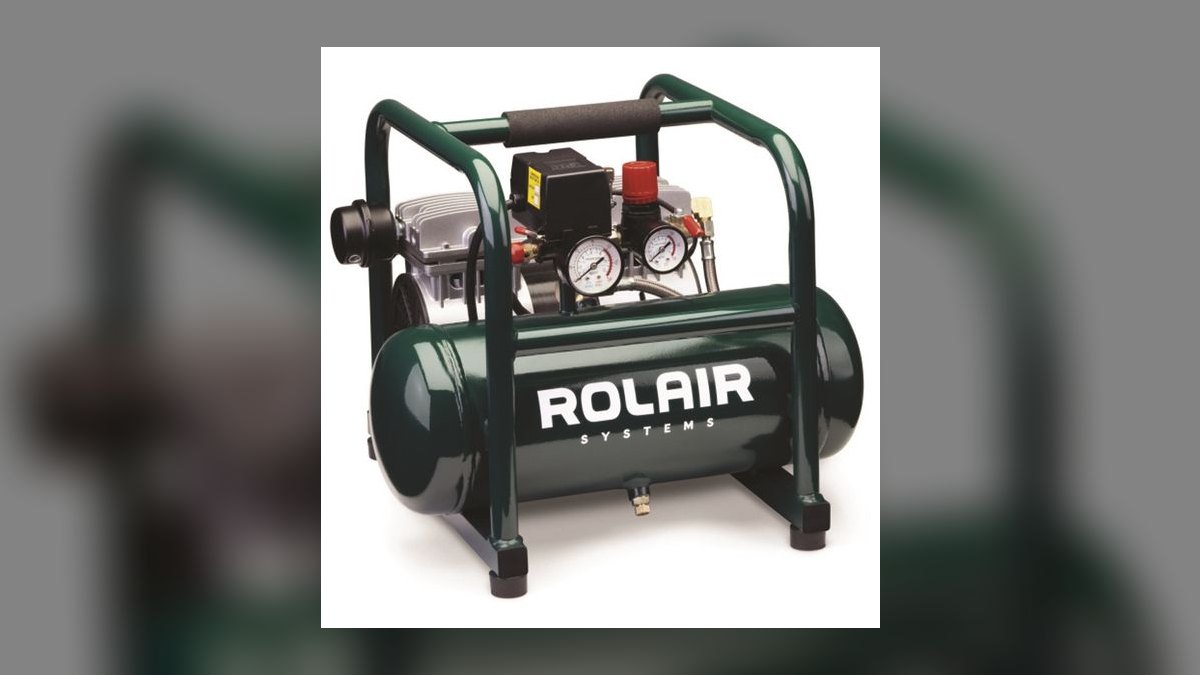
The Rolair JC10 Hand Carry ranks here for delivering 2.35 CFM at 90 PSI from a 39-lb hand-carry frame — more usable air than the California Air Tools 8010 in a fraction of the footprint. Its 1 HP oiled pump hits 125 PSI max and is rated near 3,000 hours. Noise is 60 dB, matching California Air Tools without any quiet-tech branding.
This is the mobile trim carpenter's compressor: ladders, second floors, and finished interiors where a cart cannot follow. A fully enclosed roll cage and rubber-coated handle absorb jobsite drops. The 1-gallon tank is the hard limit — no HVLP spraying, no impact wrenches, strictly nailers. The California Air Tools 10020C below it carries eight times the tank and more than double the CFM, but at 89 lbs it never leaves the shop floor.
5California Air Tools 10020C
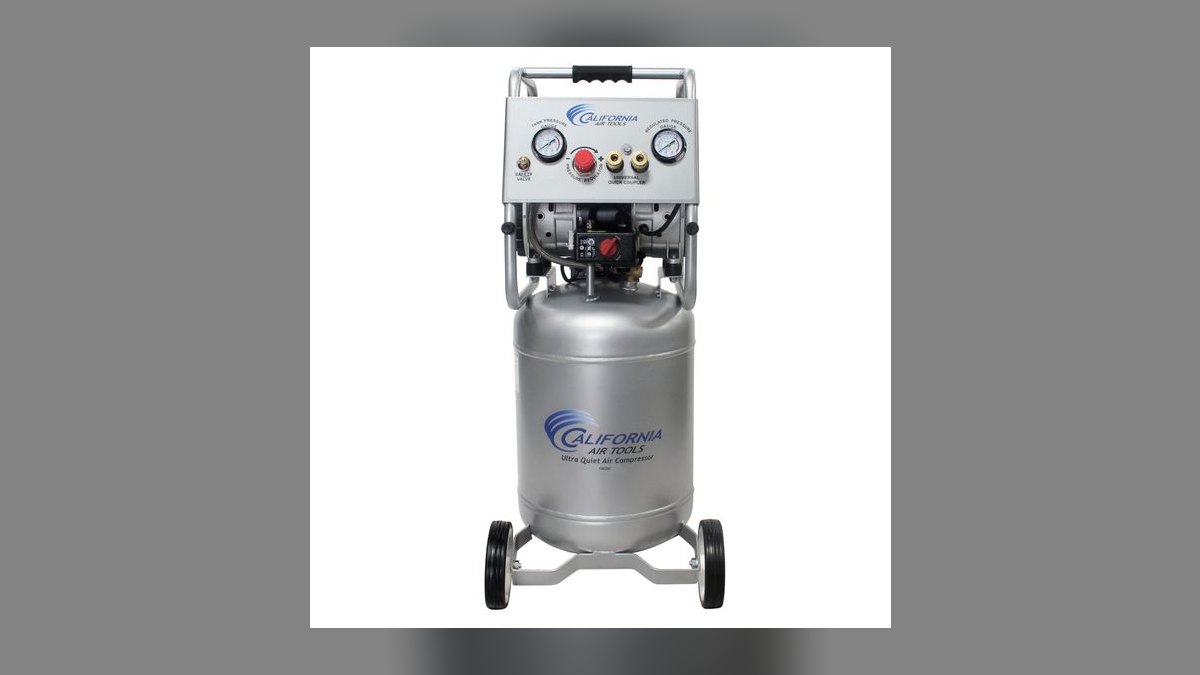
The California Air Tools 10020C ranks fifth as the capacity upgrade to the 8010, holding 60 dB while scaling to 2.0 HP and a 10-gallon steel wheelbarrow tank. It delivers 5.30 CFM at 90 PSI and 6.40 CFM at 40 PSI, enough to feed two finish nailers off a manifold or a continuous HVLP gun without short-cycling.
This is the two-nailer crew or solo cabinet painter's machine, running plug-and-play on 120V rather than requiring a 240V circuit. At 89 lbs with flat-free wheels and a steel handle, it rolls around a shop but never goes up stairs. Against the Porter-Cable C2002 below it, the 10020C costs nearly three times as much and doubles the CFM in exchange.
6Porter-Cable C2002 Pancake
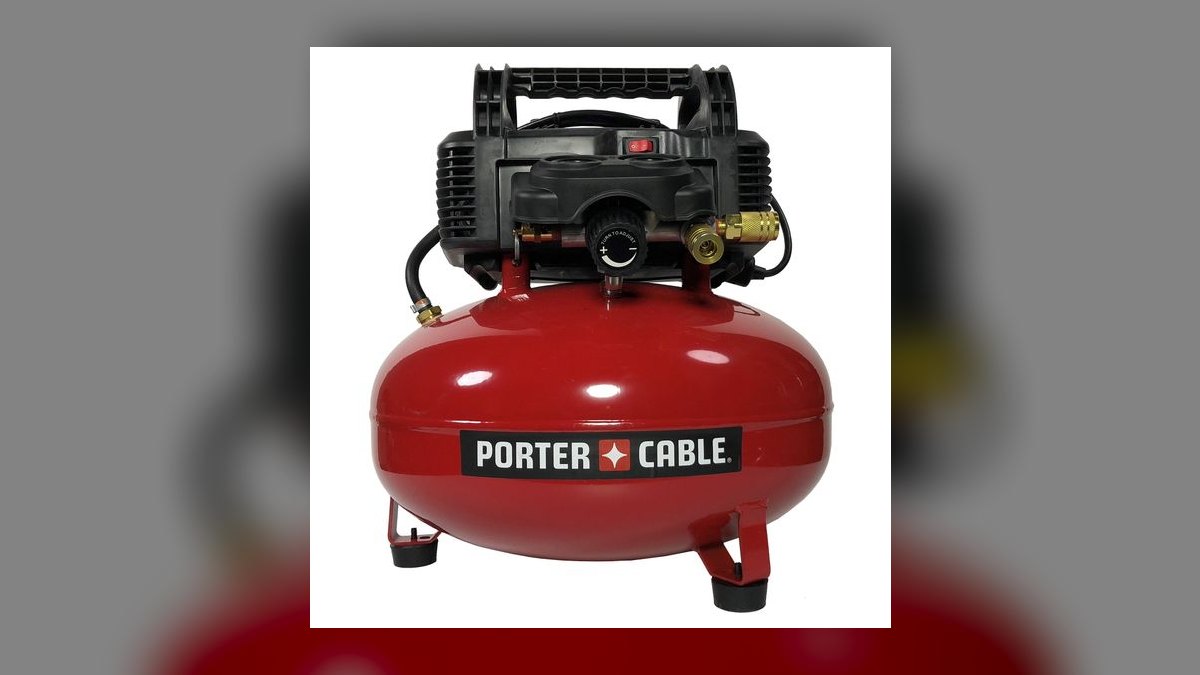
The Porter-Cable C2002 Pancake takes this slot on price-to-performance alone: 2.6 CFM at 90 PSI for under $170, matching the DEWALT DWFP55126's CFM at a fraction of the cost. The 6-gallon oil-free pancake reaches 150 PSI max and weighs 34 lbs with a wrap-around handle. Most retailer bundles include a hose, tire chuck, blow gun, and inflator kit worth $40 to $60. Pump life runs 1,000 to 1,200 hours.
This fits the budget DIY remodeler running brad, finish, and crown staple guns roughly 40 hours a year, where short pump life never becomes the binding constraint. It is the loudest pick here at 82 dB, so muffs are mandatory. The Craftsman CMEC6150 Pancake below it matches every spec and runs 78.5 dB — quieter for about $20 more, if you can find it in stock.
7Craftsman CMEC6150 Pancake
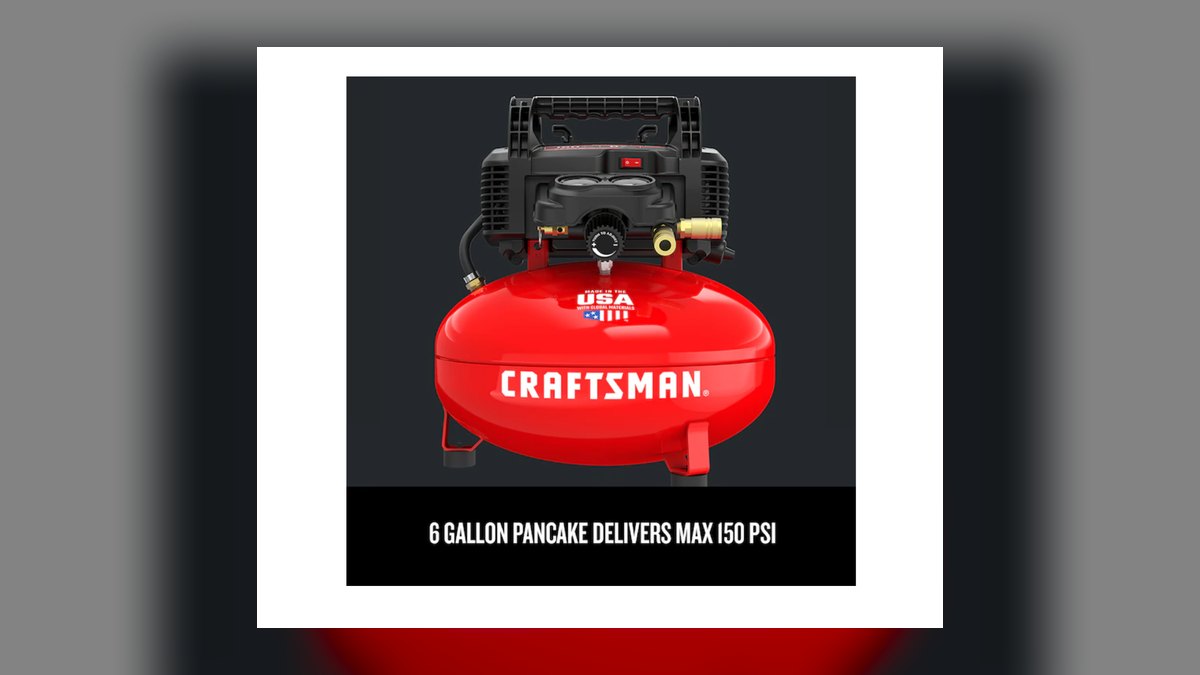
The Craftsman CMEC6150 Pancake ranks just below the Porter-Cable C2002 because it is effectively the same machine from the same Stanley Black & Decker family with one meaningful improvement: 78.5 dB versus 82 dB. Everything else matches — 6-gallon pancake tank, 150 PSI max, 2.6 CFM at 90 PSI, oil-free pump, roughly 1,000 to 1,500 hours of pump life. It weighs 30 lbs, four less than the C2002, and adds a rubber-overmolded handle at $189.
This is for the DIYer who wants Lowe's or Ace warranty service within driving distance and values the noise reduction enough to pay a $20 premium. What it trades away is nothing functional — it is a re-badge, so there is no performance argument for it over the Porter-Cable C2002 above it. Pick it on availability, warranty channel, or a sale price, not on specs.
8Bostitch BTFP02012 Pancake
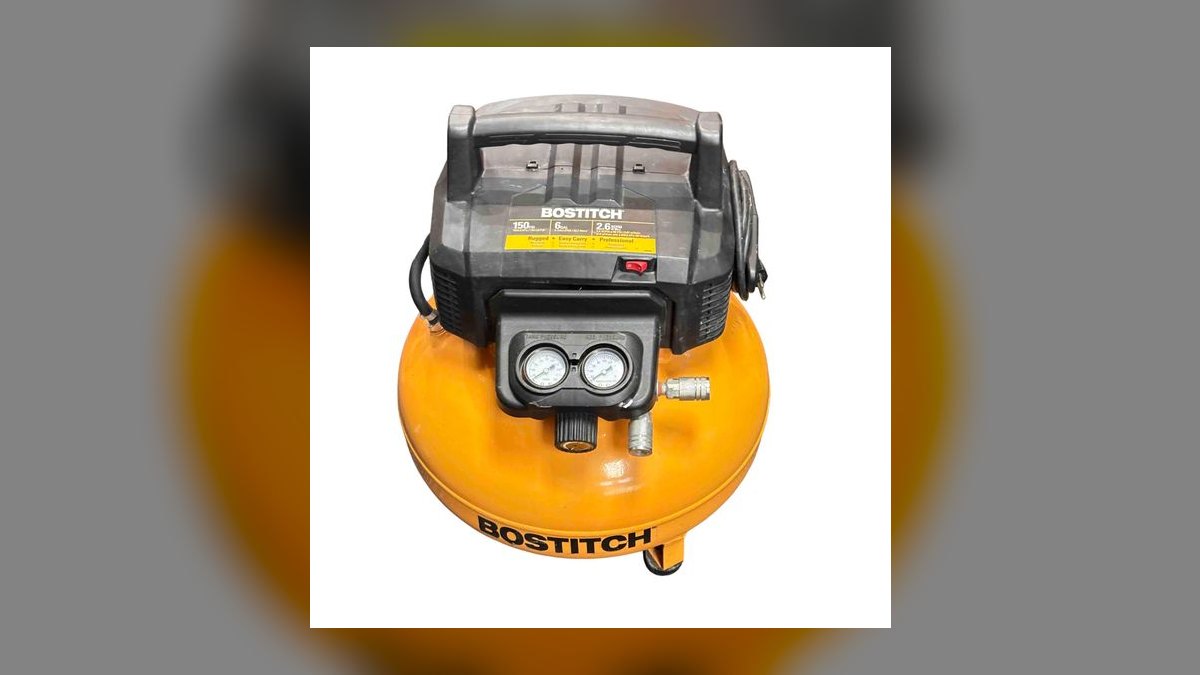
The Bostitch BTFP02012 Pancake lands here as the lightest pancake on this list at 29 lbs, with the same 6-gallon oil-free platform: 150 PSI max, 2.6 CFM at 90 PSI, 78.5 dB. It ships with a high-flow regulator and quick-connect coupler in the box rather than as an upsell. Reported pump life of 1,500 to 2,000 hours edges out its Porter-Cable and Craftsman siblings. Street price sits under $180.
Roofers and siders running Bostitch coil and framing nailers in rotation get the cleanest brand match here, and the high-flow regulator matters when a coil gun draws hard. Like both siblings above it, this is duty-cycle-limited — no HVLP spraying, no impact wrenches, no continuous sanding. Against the Craftsman CMEC6150 above it, it saves a pound and adds a better regulator for about $10 less.
9Husky 4-Gallon Twin Stack
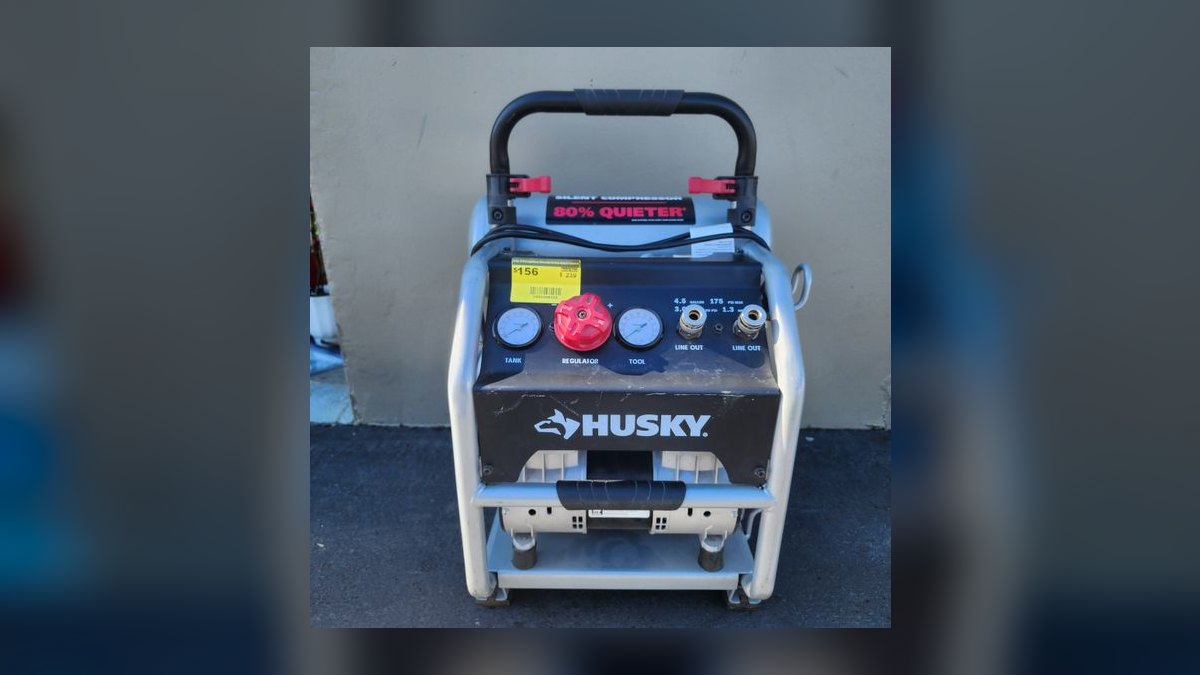
The Husky 4-Gallon Twin Stack ranks ninth because its 1.5 SCFM at 90 PSI is the lowest output on this list, well under the 2.6 CFM the pancakes above it deliver at the same $179. It compensates with the highest max pressure in the bracket at 175 PSI, which stretches run-time per fill for low-draw tools. The oil-free twin-stack tank weighs 40 lbs and runs 80 dB on 120V, with a 1-year warranty.
This is the big-box grab-and-go for brad nailing and tire inflation when you need a compressor today and shipping is not an option. Home Depot stock and return policy are the actual purchase argument. The 1.5 CFM ceiling is disqualifying for continuous-fire framing nailers and any HVLP gun. The Bostitch BTFP02012 above it costs the same, weighs 11 lbs less, and delivers 73% more air.
10Industrial Air ILA1883054 Belt-Drive
The Industrial Air ILA1883054 Belt-Drive ranks last only because 170 lbs stretches the word portable to its limit — on capability it outclasses everything above it. A 1.9 HP oiled cast-iron belt-drive pump feeds a 30-gallon vertical tank at 155 PSI max, delivering 5.7 CFM at 90 PSI and 7.0 CFM at 40 PSI. It runs on 120V, unusual at this capacity where 240V is the norm. Pump life exceeds 5,000 hours with maintenance.
This is the mobile auto shop or dedicated jobsite pick: half-inch impact wrenches, die grinders, sandblasters, and continuous-duty paint guns all stay fed at 100% duty cycle. Six-inch pneumatic wheels and a handle make it van-portable, not ladder-portable — you need a tailgate or ramp. Noise is 78 dB, quieter than most belt-drives. The California Air Tools 10020C at the same $499 gives up duty cycle but weighs 81 lbs less.
How we ranked these
Each compressor was scored on delivered CFM at 90 PSI (35%), since that figure determines whether a nailer, impact wrench, or spray gun actually runs. Noise in decibels carried 20%, tank size and recovery time 15%, oil-free versus oiled pump longevity 15%, portability 10%, and price-to-performance with bundled accessories the final 5%.
Measured CFM came from independent dyno testing by Project Farm, Pro Tool Reviews, and Tool Box Buzz between 2024 and 2026, not manufacturer nameplate claims.
Peak horsepower claims were ignored entirely, since that figure is unregulated marketing that collapses under real load. SCFM ratings quoted at 40 PSI were also excluded because almost no pneumatic tool actually runs at that pressure, making the number misleading. Max PSI above 150 earned no credit either, since no common jobsite tool needs more than 120. Cordless battery compressors were excluded outright — they inflate tires but can't sustain a nailer or spray gun.
What to look for
What actually separates these ten is matching CFM at 90 PSI to your loudest tool with 30% headroom, not chasing tank size or max PSI. A framing nailer firing continuously needs 4+ CFM, ruling out every pancake here; a brad nailer barely needs 2. HVLP spray guns are the real filter, since continuous draw demands sustained air only the CAT 10020C or Industrial Air belt-drive can supply without stalling.
The mistake most buyers make is assuming a bigger tank means more air — it only means the pump cycles less often, which matters for grinders and sanders and barely at all for intermittent nailing. Buyers also underestimate noise until the unit is running six feet away in a closed garage; 80 dB means hearing protection every session. Oiled pumps cost 30 extra pounds but outlast oil-free pumps by 3 to 5x.
Related questions
What CFM do I need for a framing nailer?
A framing nailer firing a sustained 60 nails per minute needs roughly 4 CFM at 90 PSI. Intermittent framing gets by on less, but continuous sheathing or decking work will outrun any 2.6 CFM pancake within minutes. The Makita MAC2400 at 4.2 CFM is the smallest compressor on this list that keeps pace without the pump running nonstop.
Is an oiled compressor worth the extra maintenance?
If you use it daily, yes. Oiled pumps typically last 5,000+ hours versus 1,000 to 3,000 for oil-free, and run quieter at the same output. The cost is an oil check every 50 hours, keeping the unit level during transport, and roughly 30 extra pounds. Weekend users rarely log enough hours for that longevity to pay back.
Why is the California Air Tools 8010 so much quieter than a pancake?
Pump speed. The 8010 spins its dual-piston oil-free pump at 1,680 RPM, while most pancakes run 3,400 RPM or higher. Halving rotational speed dramatically cuts mechanical and airflow noise, landing the 8010 at 60 dB versus 78 to 82 dB for the pancake class. The trade-off is slower recovery time and considerably more weight.
Can a portable compressor run an HVLP paint sprayer?
Only the larger ones. Continuous HVLP draw demands sustained CFM that pancakes can't supply without short-cycling and pressure drop, which shows up as spitting and uneven finish. The CAT 10020C at 5.30 CFM and the Industrial Air belt-drive at 5.7 CFM handle it fine. A 6-gallon pancake at 2.6 CFM will frustrate you on the first panel.
What does duty cycle mean on a compressor spec sheet?
Duty cycle is the share of each hour the pump can safely run. Consumer pancakes are typically rated 50%, meaning 30 minutes on and 30 minutes cooling. Belt-drive units like the Industrial Air 30-gallon are rated 100% continuous. Exceeding the rating overheats the pump and shortens its life, so sustained sanding or grinding requires a belt-drive unit.
Do I need 240V for a 30-gallon compressor?
Usually, but not always. Most 30-gallon vertical compressors require a 240V circuit, which is why the Industrial Air ILA1883054 stands out — it delivers 5.7 CFM at 90 PSI on standard 120V household power. That means it plugs in anywhere, including job trailers and rental units, without an electrician. The compromise is a slower fill rate than 240V equivalents.
How much does tank size really matter?
Less than most buyers assume. The tank is a buffer, not a supply — pump output determines how much air you get over time. A larger tank simply reduces cycling frequency, which matters for continuous tools and barely registers for nailing. The Rolair JC10 proves it with a 1-gallon tank that keeps a finish nailer fed through fast recovery alone.
Are the Porter-Cable, Craftsman, and Bostitch pancakes the same compressor?
They come from the same Stanley Black & Decker family and share the core spec: 6-gallon tank, 150 PSI max, 2.6 CFM at 90 PSI, oil-free pump. Differences are real but narrow — the Craftsman and Bostitch run 78.5 dB versus the Porter-Cable's 82 dB, and the Bostitch is lightest at 29 pounds. Buy on price, noise, or warranty access.
FAQ
What's the quietest portable air compressor you can buy?
The California Air Tools 8010 and 10020C both hit 60 dB, quieter than normal conversation, and the Rolair JC10 matches that in a hand-carry format. Everything else on this list runs 78 to 82 dB, which OSHA guidance says warrants hearing protection. If your shop shares a wall with living space, the 60 dB tier is the only comfortable option.
What is the best overall portable air compressor for 2027?
The California Air Tools 8010 8-Gallon Ultra Quiet at $399. It combines 60 dB operation, 2.20 CFM at 90 PSI, 120 PSI max, and a 3,000-hour rated oil-free dual-piston pump — roughly triple the life of a typical pancake. Its 48-pound weight makes it a cart tool rather than a ladder tool, which is the one real compromise.
Which portable air compressor is the best value?
The Porter-Cable C2002 6-Gallon Pancake at $169. It delivers 2.6 CFM at 90 PSI, matching compressors costing $60 more, runs every brad, finish, and crown staple gun a remodeler owns, weighs 34 pounds, and usually ships with a hose, chuck, blow gun, and inflator worth $40 to $60. The trade-offs are 82 dB noise and shorter pump life.
How long should a portable air compressor pump last?
It depends on pump type. Budget oil-free pancakes run 1,000 to 1,500 hours before rebuild, the DEWALT around 1,500, California Air Tools rates its units at 3,000, and oiled pumps like the Makita MAC2400 and Industrial Air belt-drive routinely exceed 5,000 hours. For a homeowner using 40 hours a year, even the shortest figure is decades of service.
Will a portable compressor start in a cold garage?
Cold-start capability varies and is worth checking. The DEWALT DWFP55126 uses high-efficiency motor windings rated to start at 0°F on 120V, which is why it's a common pick for unheated garages and winter jobsites. Oiled pumps get thicker in cold and turn over harder. Extension cords compound the problem by dropping voltage at startup.
Do I need hearing protection with an air compressor?
Above 80 dB, yes, by OSHA standard. That covers the Porter-Cable C2002 at 82 dB and the Husky at 80 dB outright, and the 78.5 dB units sit close enough that muffs are still smart in an enclosed garage. Only the 60 dB California Air Tools and Rolair units are genuinely comfortable to work beside unprotected.
What's the difference between CFM at 40 PSI and CFM at 90 PSI?
Ninety PSI is the standard rating pressure stamped on pneumatic tools, so it's the number to match. Manufacturers advertise the 40 PSI figure because compressors move more air at lower pressure — the CAT 10020C shows 6.40 CFM at 40 PSI but 5.30 at 90. Comparing a 40 PSI claim against a 90 PSI requirement will leave you badly underpowered.
Can I run an impact wrench off a pancake compressor?
Not reliably. A half-inch impact wrench draws well past what 2.6 CFM sustains, so a pancake gives you a few seconds of trigger before pressure collapses and the pump can't recover. Lug nuts might come off; sustained automotive work won't happen. The Industrial Air 30-gallon at 5.7 CFM is the entry point for real impact wrench duty.
Is a higher max PSI better?
Rarely. Almost no common pneumatic tool needs more than 120 PSI, so the difference between 150 and 175 max mostly affects how long a tank lasts between cycles on low-draw tools like brad nailers and tire inflators. The Husky's 175 PSI headline doesn't compensate for its 1.5 CFM ceiling, which is the spec that actually limits it.
Which compressor is best for a trim carpenter working in finished homes?
The Rolair JC10 at $379. Its 1-gallon oiled pump delivers 2.35 CFM at 90 PSI in a 39-pound hand-carry frame at 60 dB, so it goes up ladders and onto second floors without waking the household. Fast recovery keeps 16-gauge finish nailers and 23-gauge pinners fed. It's too small for HVLP or impact wrenches.
Sources
- https://www.protoolreviews.com/best-portable-air-compressor/
- https://www.familyhandyman.com/list/best-air-compressors/
- https://www.thisoldhouse.com/tools/reviews/best-air-compressor
- https://www.osha.gov/noise
- https://www.makitatools.com/products/details/MAC2400
- https://www.homedepot.com/p/Husky-4-Gal-Portable-Electric-Powered-Air-Compressor-BS1004W/206480997
- https://www.lowes.com/pd/craftsman-6-gallon-single-stage-portable-electric-pancake-air-compressor/1000595167
- https://toolboxbuzz.com/air-compressors/best-portable-air-compressor/
- https://www.cdc.gov/niosh/topics/noise/default.html
Related on PULSE
This page will be disappearing soon. Save it to your device for $1 — or read it free while it is here.
@Kory-White- · if Venmo asks, the last 4 of my number are 2012
This page is gone.
This one is off the shelf now. $1 keeps it on your phone for good — the whole page, pictures and diagrams included.
 pulse-reviewsTop 10 Blue Light Glasses for Sales Reps in 2027
 pulse-reviewsTop 10 Neck and Shoulder Massagers — Best Overall + Best Value in 2027
 pulse-reviewsTop 10 Battery Chainsaws — Best Overall + Best Value in 2027
 pulse-reviewsTop 10 Electric Spice Grinders — Best Overall + Best Value in 2027
 pulse-reviewsTop 10 NVMe SSD Enclosures — Best Overall + Best Value in 2027
 pulse-reviewsTop 10 Posture Correctors — Best Overall + Best Value in 2027
 pulse-reviewsTop 10 Standing Desks $500-$1500 in 2027
 pulse-reviewsTop 10 Multimeters — Best Overall + Best Value in 2027
 pulse-reviewsTop 10 Outdoor Smart Lighting — Best Overall + Best Value in 2027
 pulse-reviewsTop 10 Laptop Stands for Remote AEs in 2027