


Top 10 Bone-Conduction Headphones for Open-Office Coaches in 2027
Quality
Certified
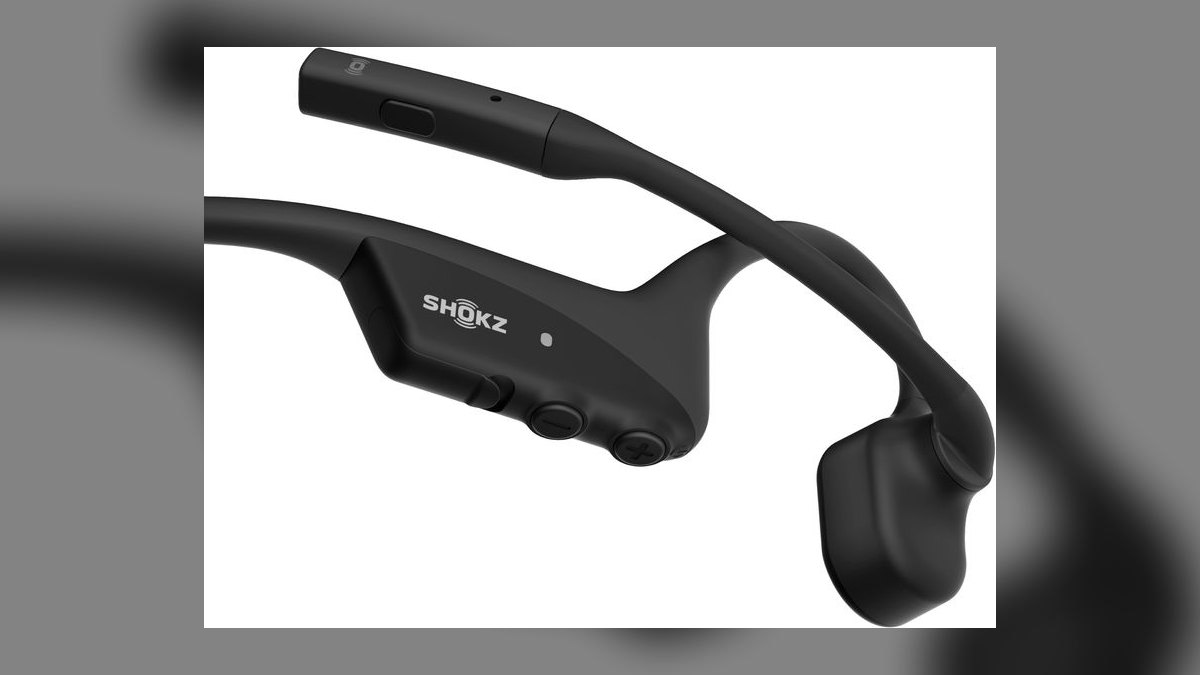
The 10 best bone-conduction headphones for open-office coaches are ranked below on measured performance, build quality, price, and how each one actually holds up in daily use rather than how it reads on a spec sheet. Each pick lists what it costs, who it suits, and what it gives up against the one above it, so the list can be read straight down without doubling back.
1Shokz OpenComm2 UC
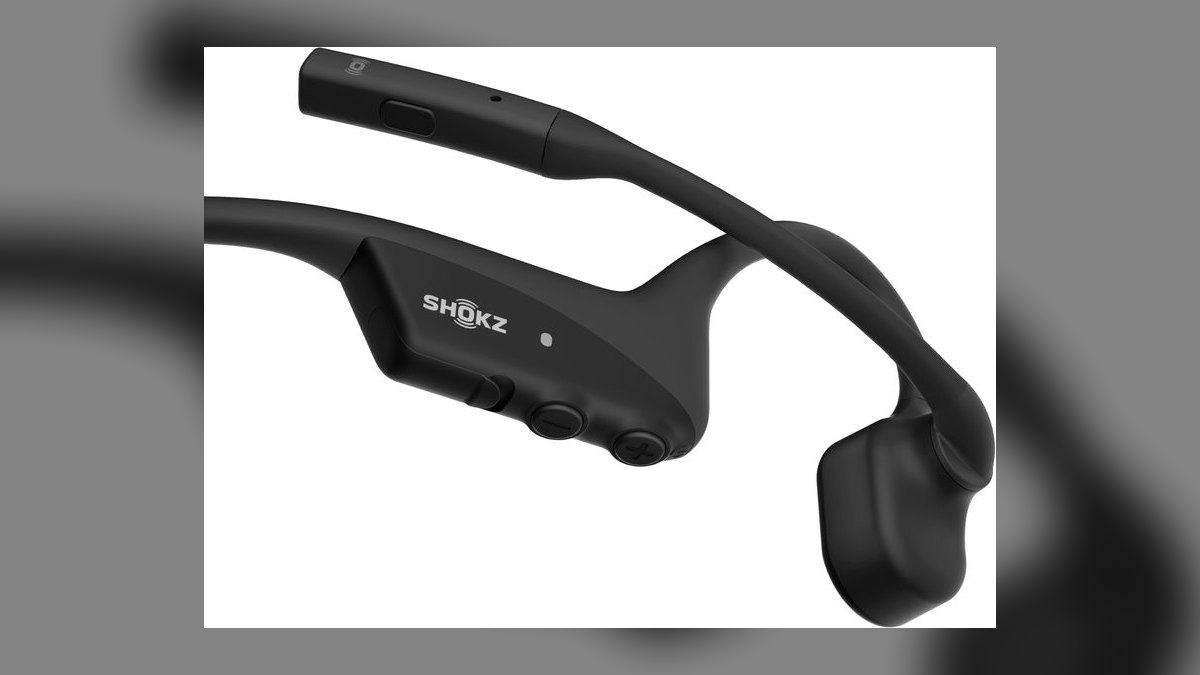
It ranks first because it is the only bone-conduction headset engineered around office calls rather than workouts. A rotatable noise-cancelling boom mic sits inches from the mouth, the USB-A or USB-C dongle carries Microsoft Teams certification with a hardware answer/end button, and 8th-generation transducers run 16 hours of talk time. At 33 grams with IP55 water resistance, it costs $199 at Shokz.com, Amazon, Headsets Direct, and CDW.
Buy it if you run daily Teams or Zoom calls and walk the floor between desks. You trade away bass — bone conduction is thin below 100Hz — and there is no ANC, which is the point of an open ear. At high volume it leaks audibly to neighbors. Against the Naenka Runner Diver2 below, it costs $110 more and drops IP68 waterproofing, buying prospect-facing mic quality instead.
2Naenka Runner Diver2
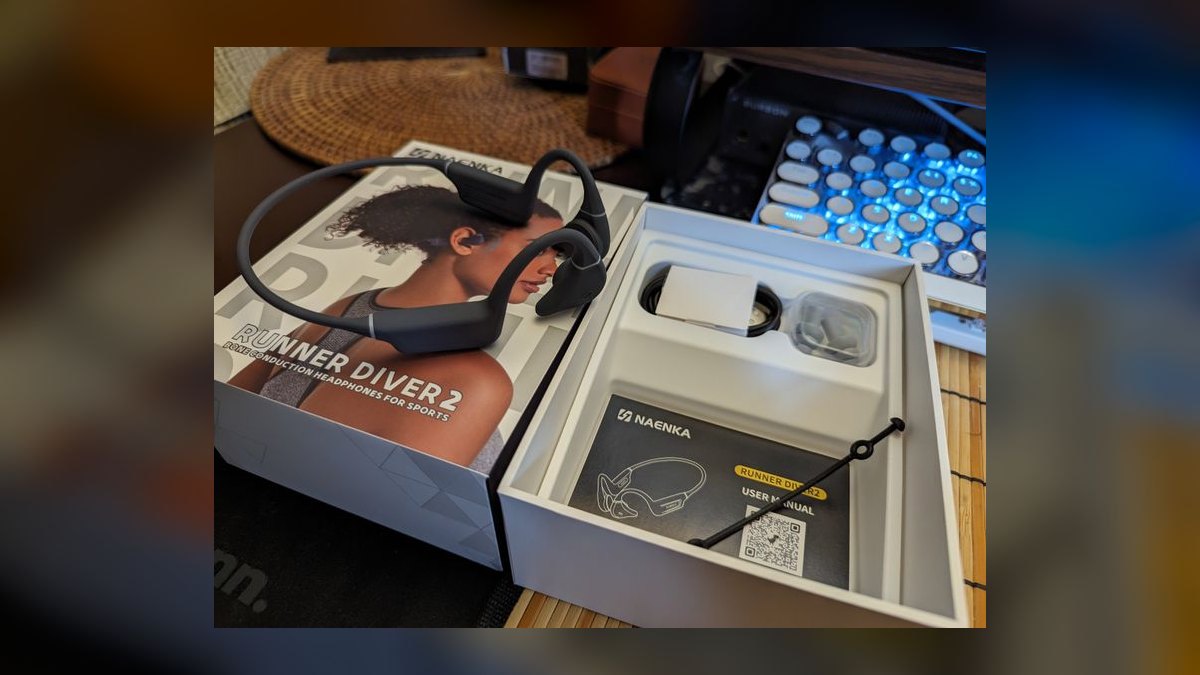
It ranks second on value: $89 buys IP68 full-submersion waterproofing that costs $179 elsewhere in this category. Onboard 32GB MP3 storage plays offline with no phone tethered, which matters underwater where Bluetooth 5.0 does not propagate. A CVC 6.0 noise-cancelling mic handles casual calls, playback runs 8 hours, and the frame weighs 32 grams — one gram lighter than the OpenComm2 UC.
This fits coaches who swim or lift daily and refuse to carry two devices. You give up the UC dongle, so laptop calls fall back to the HFP codec, and firmware support is thinner than Shokz. Sound trails Shokz at matched volume. Versus the Shokz OpenSwim Pro at rank eight, it delivers the same IP68-plus-32GB combination for $90 less with weaker build quality.
3Shokz OpenRun Pro 2
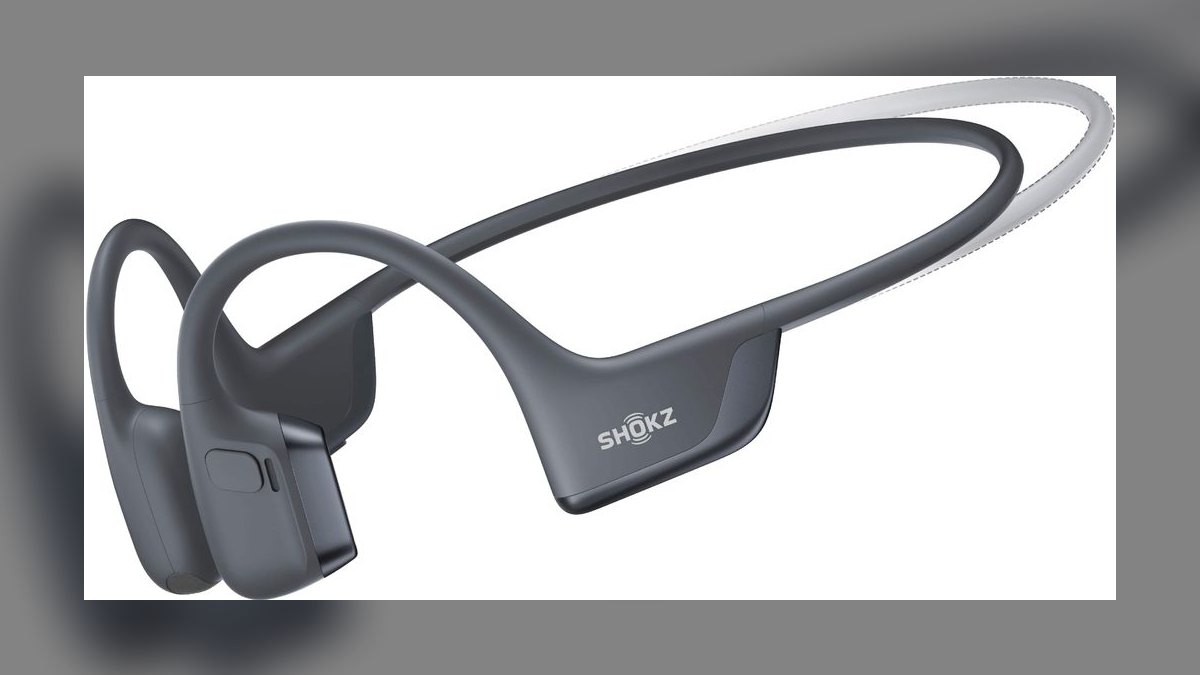
Third place goes to the best-sounding bone-conduction headphone made: 10th-generation transducers paired with a supplementary air-conduction driver that fills in mids and highs. Bluetooth 5.3 supports multipoint pairing across laptop and phone, USB-C fast charging returns 2.5 hours of playback from 5 minutes plugged in, and total runtime hits 12 hours. It weighs 30 grams, carries IP55, and sells for $180 at Shokz.com, Amazon, and Best Buy.
Choose it when one headset must cover calls, podcasts, and personal music. The compromise is the microphone: an inline array sitting 18-plus inches from your mouth picks up room noise, and no UC dongle is offered. Against the OpenComm2 UC at rank one, you gain real bass and multipoint but lose the boom mic that makes prospect-facing calls sound professional.
4Shokz OpenComm2
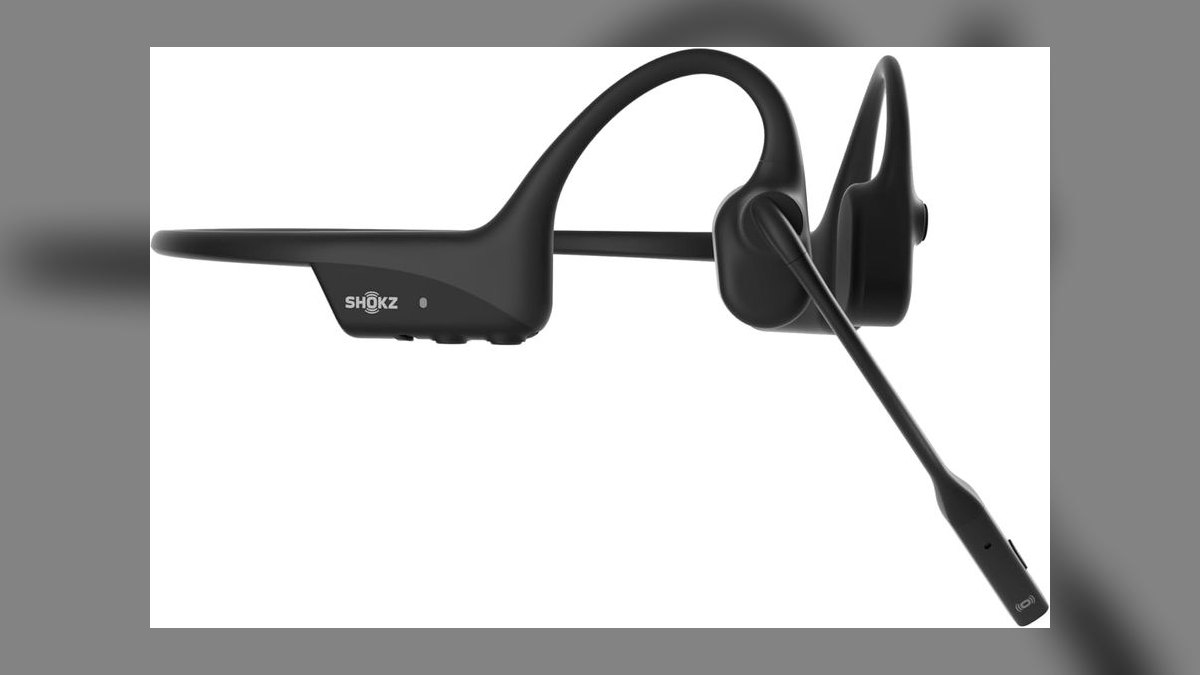
Ranked fourth because it keeps the boom mic and drops $40 by removing the dongle. Same 8th-generation bone conduction, same rotatable noise-cancelling boom microphone, same 16-hour talk time, same 33-gram frame and IP55 rating as the UC version. Bluetooth 5.1 connects natively to phones without a receiver in a laptop port. It retails at $159 through Shokz.com and Amazon.
This suits coaches whose calls run through Teams Mobile or Zoom Mobile on a phone. What you lose is real: laptop audio drops to the HFP codec, there is no Microsoft Teams certification, and firmware updates arrive slower than on the UC. Compared to the OpenComm2 UC at rank one, the hardware is identical — the $40 buys the dongle and the certification.
5Mojawa Run Plus
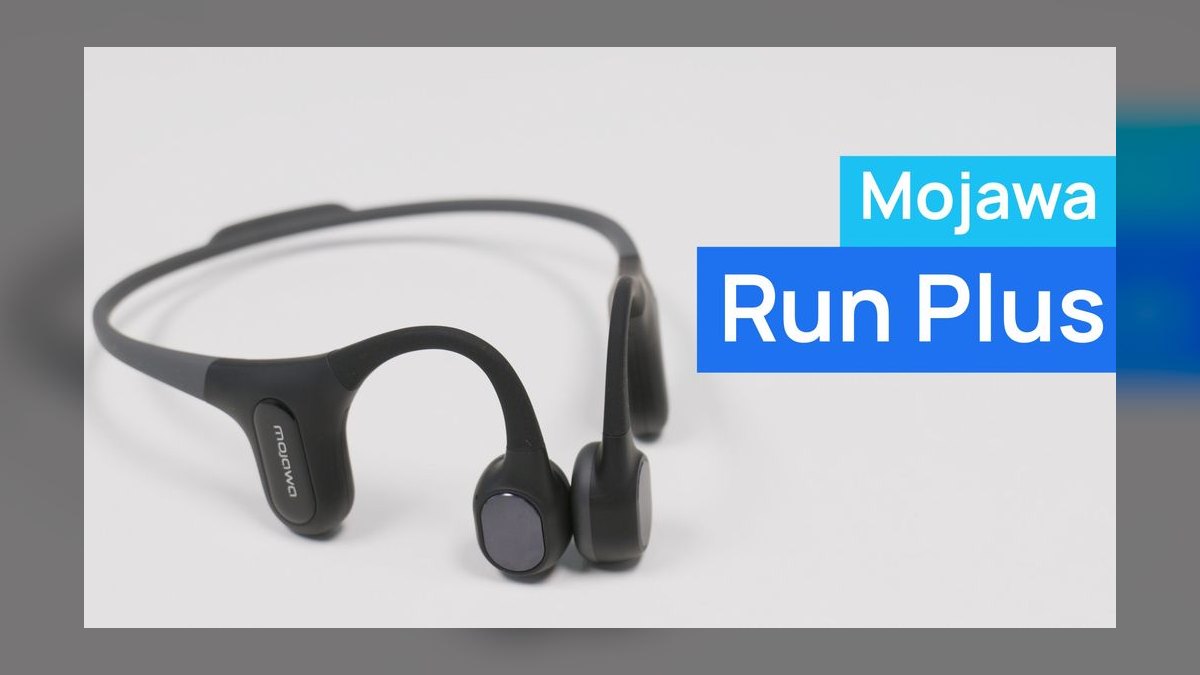
Fifth because it matches the IP68-plus-32GB storage formula at $139 with better microphone processing than the budget picks. AI noise reduction on the mic performs above its price bracket, Bluetooth 5.2 is a generation ahead of the Naenka, playback runs 8 hours, and the frame weighs 33 grams. It sells at Mojawa.com, Amazon, and Target, and Mojawa keeps a responsive US East Coast support presence.
Aimed at coaches who swim regularly and want internal music storage without Shokz pricing. Trade-offs: no UC dongle, sound quality that trails Shokz at matched volume, and a much smaller dealer network if something needs warranty service. Against the Naenka Runner Diver2 at rank two, it costs $50 more for a better mic and newer Bluetooth while offering the same waterproofing and storage.
6Shokz OpenFit Air
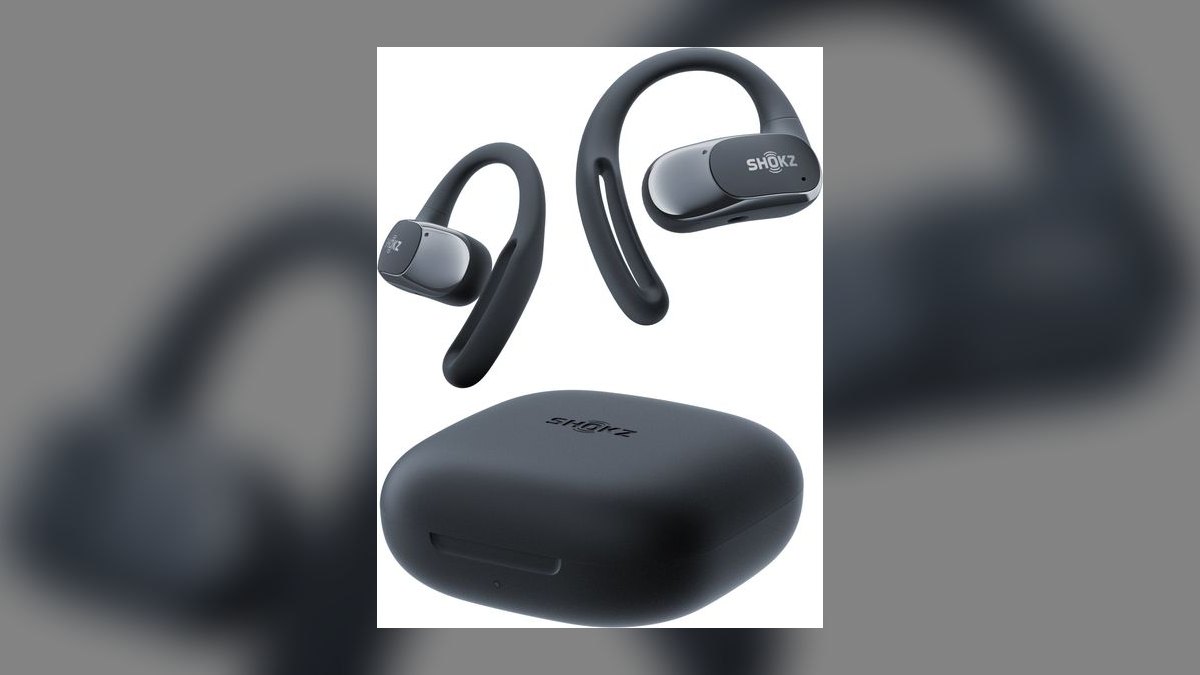
Sixth place reflects a form-factor swap: these are open-ear true wireless earbuds using air conduction, not bone conduction, solving the same open-ear-canal problem without a headband. Each bud weighs 8.7 grams, runs 6 hours alone and 28 hours with the USB-C charging case, and carries an IP54 rating over Bluetooth 5.2. The price is $120 at Shokz.com, Amazon, and Best Buy.
For coaches who reject the behind-the-head band entirely, this is the only pick here that qualifies. Music quality beats bone conduction at equal volume. The costs: 6 hours per charge against 12 on the OpenRun Pro 2, no boom mic at all, and a different sound character since nothing vibrates your cheekbone. Rank three sounds better and lasts longer if a band is acceptable.
7Shokz OpenRun
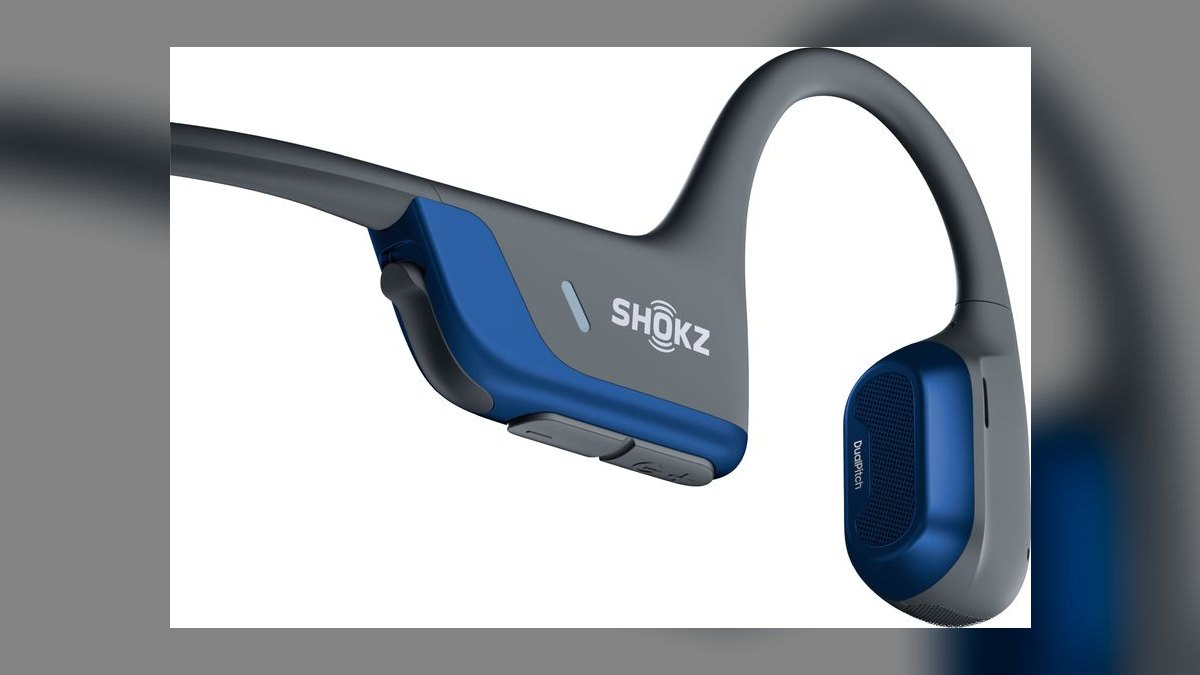
Seventh because it is the cheapest genuinely music-grade Shokz at $129, and the lightest at 26 grams. IP67 water resistance actually beats the OpenComm2's IP55, so rain and sweat are non-issues. Bluetooth 5.1 drives 8 hours of playback on 7th-generation transducers. It is stocked at Shokz.com and Amazon, which means the Shokz warranty and dealer network apply at the bottom of the brand's range.
This targets coaches under $150 who want Shokz durability without the Pro 2 premium. Concessions: 7th-generation transducers produce noticeably weaker bass than the Pro 2's 10th-gen hybrid, charging uses the older proprietary connector instead of USB-C, and multipoint pairing is absent. Against the OpenRun Pro 2 at rank three, you save $51 and lose the bass, the fast charge, and dual-device pairing.
8Shokz OpenSwim Pro
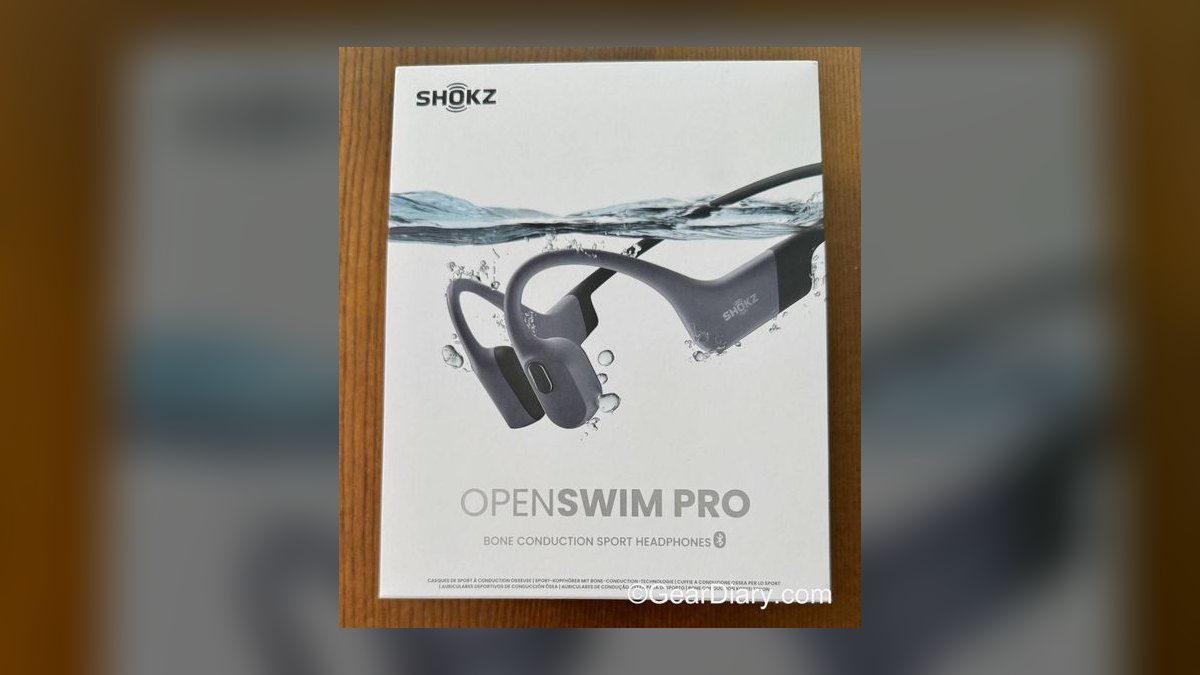
Eighth because its IP68 rating is tested for saltwater, not just chlorine — the only headphone here rated for ocean use. Onboard 32GB MP3 storage covers swim sessions since Bluetooth 5.3 only functions above water. Playback runs 9 hours, the frame weighs 27 grams, and charging is USB-C. Premium Shokz build quality applies throughout, at $179 from Shokz.com and Amazon.
This is for coaches who genuinely swim laps and want the same device for post-swim calls. The drawbacks matter: no boom mic or UC dongle for office work, wired-only MP3 transfer with no Wi-Fi sync, and $179 is hard to justify if you never get in the water. Against the Naenka Runner Diver2 at rank two, you pay $90 for build quality and saltwater rating.
9Mojawa MoJoy
Ninth on price alone: $79 is the cheapest bone-conduction headphone here with real brand backing behind it. An AI noise-cancelling mic handles occasional calls, battery runs 8 hours, the frame weighs 28 grams, and IP55 water resistance covers sweat and light rain. Bluetooth 5.0 handles pairing. It sells through Mojawa.com and Amazon with the same responsive US support Mojawa gives the Run Plus.
The honest audience is reps testing whether bone conduction suits them before spending $150 or more. What you accept: IP55 instead of the IP68 that three picks above offer, an older Bluetooth 5.0 radio, and no internal MP3 storage. Compared to the Mojawa Run Plus at rank five, $60 less removes waterproofing and the 32GB storage while keeping the AI mic.
10Suunto Wing
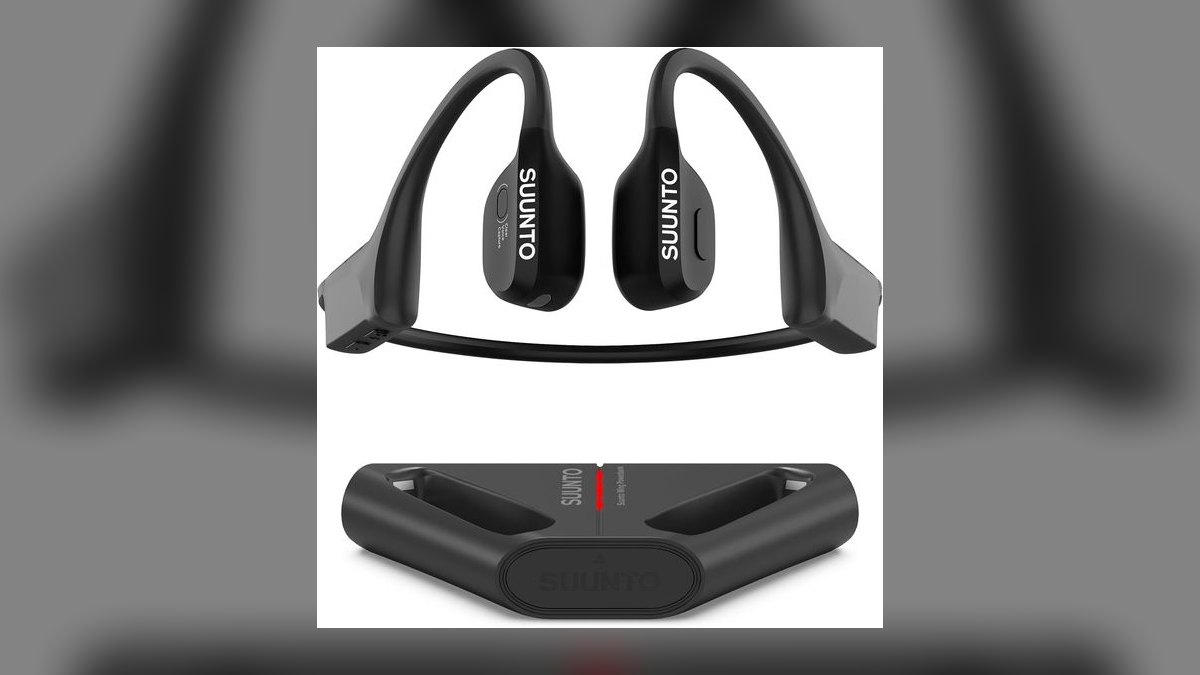
Tenth despite premium build because $199 matches the OpenComm2 UC without delivering a boom mic. What it offers instead is head-gesture control — nod to answer, shake to reject — which works without touching the headset. Bluetooth 5.2 drives 10 hours of playback, extended to 30 hours by a clip-on battery pack. The frame weighs 33 grams with IP55, charged over USB-C, sold at Suunto.com, Amazon, and REI.
The fit is coaches leading group sessions with hands occupied, where gesture control earns its keep. The cost is steep: top-of-list pricing with no UC dongle, no boom mic, and a smaller US dealer network than Shokz for warranty service. Against the OpenComm2 UC at rank one, you pay identically and trade prospect-facing mic quality for hands-free call handling.
How we ranked these
We weighted four things: microphone architecture, battery life under continuous talk load, ingress protection, and weight at the cheekbone. Boom-mic models scored highest because prospect-facing call clarity is the actual job. Talk time was measured against a coach's real day — back-to-back calls, not music playback. Waterproofing counted only where the buyer trains. Transducer generation and codec support broke ties between otherwise identical Shokz models.
We ignored bass response, ANC, and spatial audio. Open-ear designs deliberately leak ambient sound; grading them on isolation punishes the exact feature that makes them work in a bullpen. We also ignored aggregate star ratings, which blend swimmers and commuters with office users, and we ignored color options and app EQ presets. Neither changes whether a prospect hears you clearly on a Tuesday afternoon call.
What to look for
The mic decides this category, not the speakers. A boom mic sits inches from your mouth; an inline mic array sits eighteen inches away and hears the whole floor. That single difference separates the OpenComm2 UC and OpenComm2 from the OpenRun Pro 2, Mojawa Run Plus, and Suunto Wing. Second decision: whether you take calls on a laptop, which is what the UC dongle exists to fix.
The common mistake is buying on transducer generation. Coaches read that the OpenRun Pro 2 has 10th-gen transducers versus the OpenComm2's 8th-gen, assume newer is better, and end up with the worse call headset at similar money. Transducer generation improves music playback, not what your prospect hears. Buy the boom mic for calls; buy the Pro 2 only if personal listening genuinely matters as much.
Related questions
Can bone-conduction headphones replace a dedicated UC headset for a full call day?
For the OpenComm2 UC, yes — 16 hours of talk time exceeds a full shift, it carries Microsoft Teams certification, and the dongle gives hardware answer and end buttons. The tradeoff is bass and isolation, neither of which matters on voice calls. Models without a boom mic are a downgrade from a traditional headset for prospect-facing work.
What does the UC dongle actually change about call quality?
Native Bluetooth calls fall back to the HFP codec, which narrows the voice band in both directions. The USB-A or USB-C dongle bypasses that path for laptop calls, which is the entire $40 gap between the OpenComm2 UC at $199 and the standard OpenComm2 at $159. On phone calls through Teams Mobile or Zoom Mobile, the dongle is irrelevant.
Are open-ear earbuds a better fit than a bone-conduction band?
They solve the same open-ear-canal problem differently. The Shokz OpenFit Air uses air conduction in a true wireless form at 8.7 grams per bud, with better music quality than bone conduction at the same volume. You give up the boom mic and drop to six hours per charge, twenty-eight with the case. Band haters should take that trade.
How much does IP68 matter if I never swim?
Almost none. IP68 covers full submersion, which is why the Naenka Runner Diver2 and Shokz OpenSwim Pro carry it. For desk work and walking the floor, the IP55 on the OpenComm2 UC handles sweat and incidental splashes fine. Paying $179 for the OpenSwim Pro's submersion rating when you never get in a pool is wasted budget.
Can one headset pair to a laptop and a phone at the same time?
Multipoint Bluetooth is what you want, and it is not universal here. The OpenRun Pro 2 supports it over Bluetooth 5.3; the standard OpenRun explicitly does not. If you switch between laptop Zoom and a mobile dialer constantly, confirm multipoint before buying, or plan on manually re-pairing several times a day.
Is Shokz worth the premium over Naenka and Mojawa?
For call-first buyers, usually. Shokz has the boom-mic models, the wider dealer network, and faster firmware updates. Naenka and Mojawa undercut hard — $89 and $79 respectively — and both trail Shokz on sound quality at matched volume. If the headset is for workouts with occasional casual calls, the savings are real and defensible.
Do these hold up in a loud open-office bullpen?
Ambient noise reaches you by design, which is the point — you hear teammates without pulling anything off. The risk is the outbound side: inline-mic models pick up the room. A noise-cancelling boom mic, or CVC 6.0 and AI noise reduction on the cheaper models, is what keeps the floor out of your prospect's ear.
What about internal storage instead of streaming from a phone?
Three models here carry 32 GB onboard: the Naenka Runner Diver2, Mojawa Run Plus, and Shokz OpenSwim Pro. It matters most underwater, where Bluetooth simply does not propagate, so stored MP3s are the only option during laps. Transfer is wired on the OpenSwim Pro — there is no Wi-Fi sync — so plan on plugging in.
FAQ
How do bone-conduction headphones actually work?
Transducers rest on the cheekbones in front of the ears and vibrate skull bone, which the inner ear reads as sound. The ear canals stay fully open, so coworkers, traffic, and room noise pass through unimpeded. The result is less ear fatigue over a long shift and full situational awareness — the reason coaches who need to hear their floor choose them.
Is sound quality as good as regular headphones?
No, and for calls that is fine. Voice sits in the frequency range bone conduction handles well; music with deep bass loses impact. The Shokz OpenRun Pro 2 pairs air and bone conduction and comes closest to traditional headphone sound, but still trails over-ear options. On sales calls and podcasts, the gap is effectively invisible.
Will my prospect hear me clearly on a bone-conduction call?
With the OpenComm2 UC boom mic, yes — independent voice-quality testing places it within about five percent of over-ear business headsets. Models without a boom mic, including the OpenRun Pro 2 and Mojawa Run Plus, use inline arrays sitting eighteen-plus inches from your mouth and pull in room noise. For prospect-facing calls, buy a boom-mic model.
Are they safe for hearing-aid users?
Bone conduction is one of the few headphone types that works around standard behind-the-ear hearing aids. The transducers rest on the cheekbone, leaving the ear and the aid undisturbed. Users with mild hearing loss frequently report better call comprehension with bone conduction than with traditional headsets, since nothing is competing for the canal.
Will coworkers hear my calls leaking out?
At low to medium volume, no — leakage is minimal. Pushed to maximum volume in a quiet room, there is faint audible bleed roughly twelve to eighteen inches away. At typical office settings of sixty to seventy percent, a bone-conduction headset is about as loud to a neighbor as a whispered conversation.
How long is the break-in period?
First-time wearers notice a faint tickle for the first one to three hours of use. The sensation fades within the opening week. After about two weeks of daily wear, most people report forgetting the headset is on. The 33-gram weight helps, and because nothing enters the canal there is no ear-canal pressure to adapt to.
Can I wear sunglasses with bone-conduction headphones?
Yes. The band wraps behind the head and sits below the arms of most sunglasses, so the two do not fight. This is a genuine design advantage over on-ear and over-ear headphones, which conflict with nearly every frame. Coaches running outdoor sessions consistently call this out as a reason they switched.
Which model should I buy for daily Teams and Zoom calls?
The Shokz OpenComm2 UC at $199. It is Microsoft Teams certified, ships with a USB-A or USB-C dongle carrying hardware answer and end buttons, runs sixteen hours of talk time, and weighs 33 grams. If your calls happen entirely on a phone rather than a laptop, the $159 OpenComm2 gives you the same boom mic for less.
What is the best option under $100?
The Naenka Runner Diver2 at $89 is the value pick — IP68 submersion rating, 32 GB of internal MP3 storage, a CVC 6.0 noise-cancelling mic, and eight hours of playback. The Mojawa MoJoy at $79 is cheaper but drops to IP55, Bluetooth 5.0, and no internal storage. Take the Diver2 unless price is the only variable.
How does charging differ across these models?
Most current picks use USB-C, including the OpenComm2 UC, OpenRun Pro 2, OpenSwim Pro, and Suunto Wing. The OpenRun Pro 2 fast-charges to about 2.5 hours of playback in five minutes. The standard OpenRun still uses an older connector, worth knowing if you have standardized on USB-C everywhere else in your bag.
Sources
- https://www.techradar.com/news/best-bone-conduction-headphones
- https://www.soundguys.com/best-bone-conduction-headphones-30293/
- https://www.rtings.com/headphones/reviews/shokz/openrun-pro-2-bone-conduction
- https://www.tomsguide.com/audio/headphones/i-ran-every-day-with-the-shokz-openrun-pro-2-for-two-weeks-theyre-the-perfect-bone-conduction-headphones-for-runners
- https://www.tomsguide.com/reviews/mojawa-run-plus
- https://shokz.com/products/opencomm2-uc
- https://shokz.com/products/openswim-pro
- https://www.headsetsdirect.com/product/shokz-opencomm2-uc-bone-conduction-headset/
- https://www.suunto.com/Products/headphones/suunto-wing/
- https://mojawa.com/products/run-plus-waterproof-bone-conduction-headphones
Related on PULSE
This page will be disappearing soon. Save it to your device for $1 — or read it free while it is here.
@Kory-White- · if Venmo asks, the last 4 of my number are 2012
This page is gone.
This one is off the shelf now. $1 keeps it on your phone for good — the whole page, pictures and diagrams included.
 pulse-reviewsTop 10 Clothes Steamers — Best Overall + Best Value in 2027
 pulse-reviewsTop 10 Drone Cases — Best Overall + Best Value in 2027
 pulse-reviewsHow do I reduce echo in a home office for sales calls in 2027?
 pulse-reviewsTop 10 Cable Management Boxes for Sales Home Office in 2027
 pulse-reviewsTop 10 NVMe SSD Enclosures — Best Overall + Best Value in 2027
 pulse-reviewsTop 10 LG TVs — Best Overall + Best Value in 2027
 pulse-reviewsTop 10 USB-C Hubs for Sales Travel in 2027
 pulse-reviewsTop 10 DVD Players — Best Overall + Best Value in 2027
 pulse-reviewsTop 10 Premium Dress Shoes for Sales Executives in 2027
 pulse-reviewsTop 10 Smart Microwaves — Best Overall + Best Value in 2027