


Top 10 Headset Microphones for Sales SDR Floors in 2027
Quality
Certified
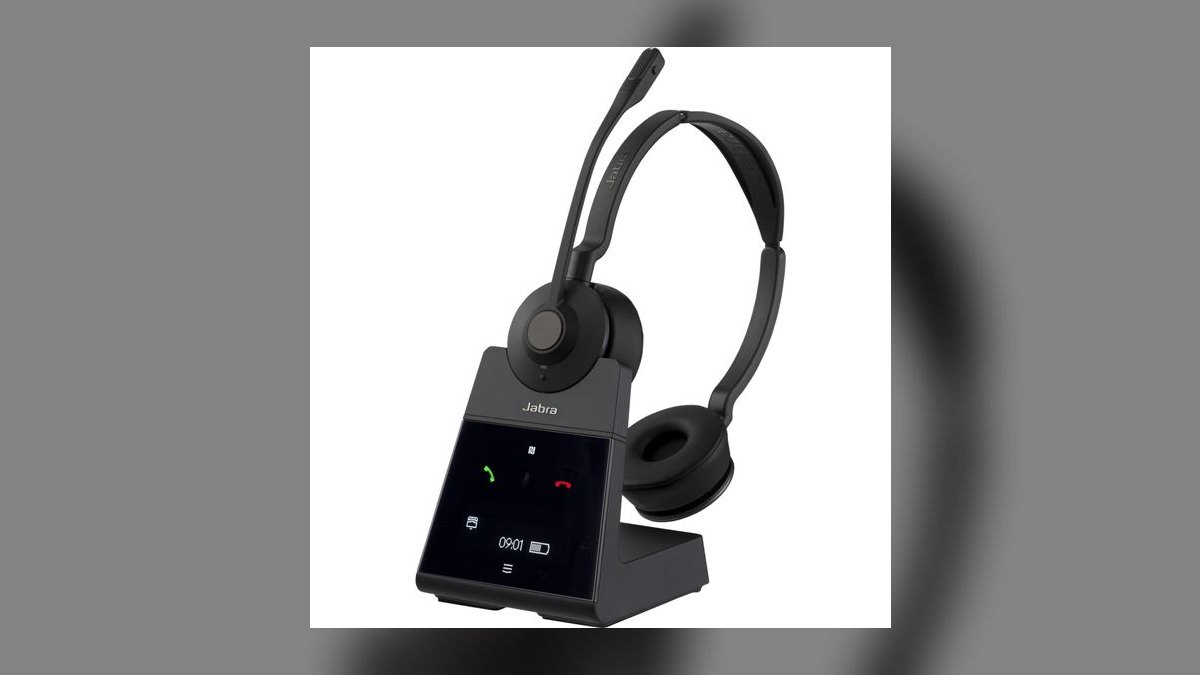
The 10 best headset microphones for sales sdr floors are ranked below on measured performance, build quality, price, and how each one actually holds up in daily use rather than how it reads on a spec sheet. Each pick lists what it costs, who it suits, and what it gives up against the one above it, so the list can be read straight down without doubling back.
1Jabra Engage 75 Stereo
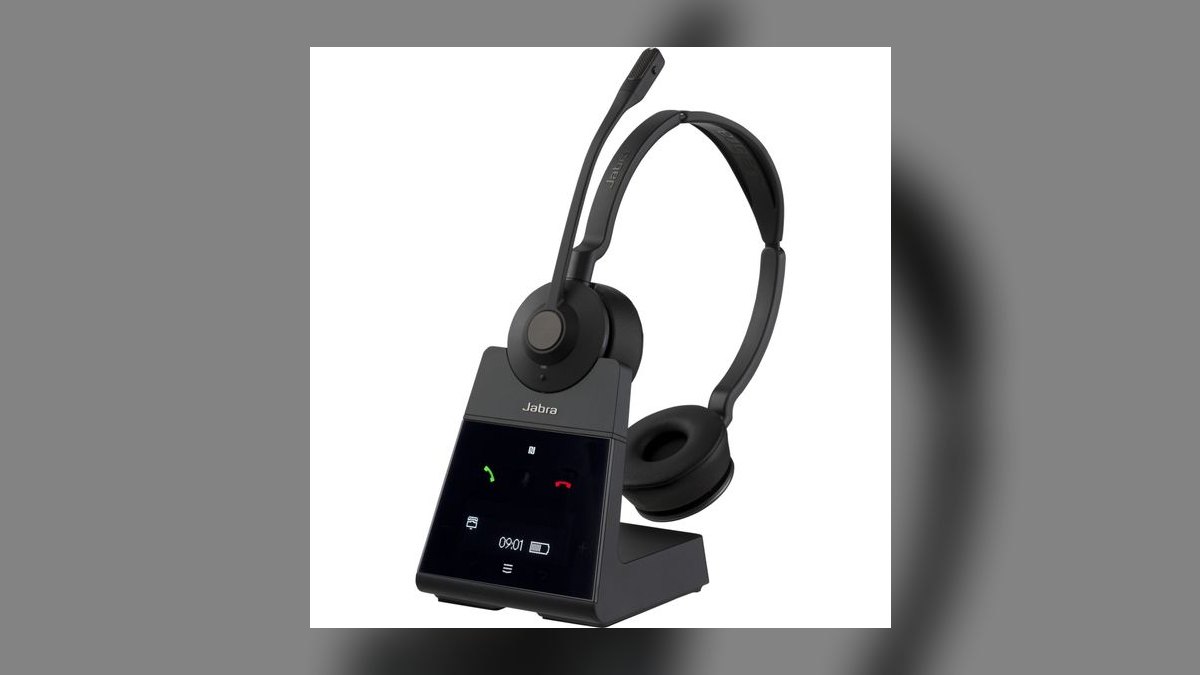
It ranks first because DECT density, not raw audio, is what breaks a packed floor, and the Engage 75 supports up to 5x the wireless density of competing DECT headsets in a single room. The 4-microphone noise-cancelling boom with SoundClear DSP outperforms the 3-mic arrays found on cheaper Jabra models. It delivers 13-hour talk time, 150-meter DECT 1.9 GHz range, and busylights on both earcups at $429.
This is the seat headset for 50-300 rep outbound floors on predictive or parallel dialers, where every rep dials simultaneously. It trades away casual portability: DECT means a base station, so reps who work from home get less value than floor-bound reps. Against the Evolve2 65 below it, you pay roughly 60% more for density and a fourth microphone. Certification covers Teams, Zoom, Genesys, Five9, NICE CXone, and Amazon Connect.
2Jabra Evolve2 65
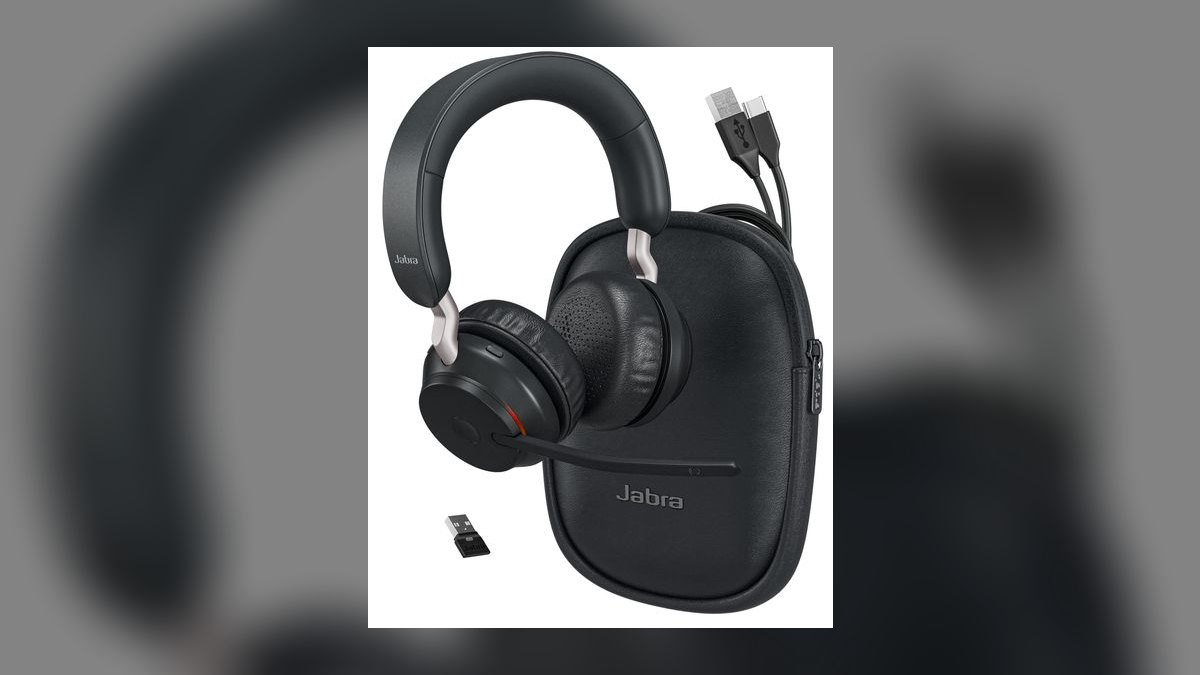
Second place is a price-to-performance verdict: $269 buys roughly 85% of the Engage 75's call clarity at about 63% of the cost. The 3-microphone ClearVoice array cuts 23% more background conversation noise than the prior generation, and passive isolation blocks 48% more ambient noise than the Evolve 65. Battery runs 37 hours, with Class 1 Bluetooth reaching 30 meters and a Link 380 dongle in USB-A or USB-C.
Buy this for hybrid SDRs who split the week between a floor desk, a home office, and a coffee shop. The trade is density: Bluetooth congests on wall-to-wall floors in a way DECT does not, so it cannot replace the Engage 75 at 100 seats. Memory-foam leatherette earcups hold up through 8-hour shifts, and it carries Teams, Zoom, and Google Meet certification.
3Poly Voyager Focus 2 UC
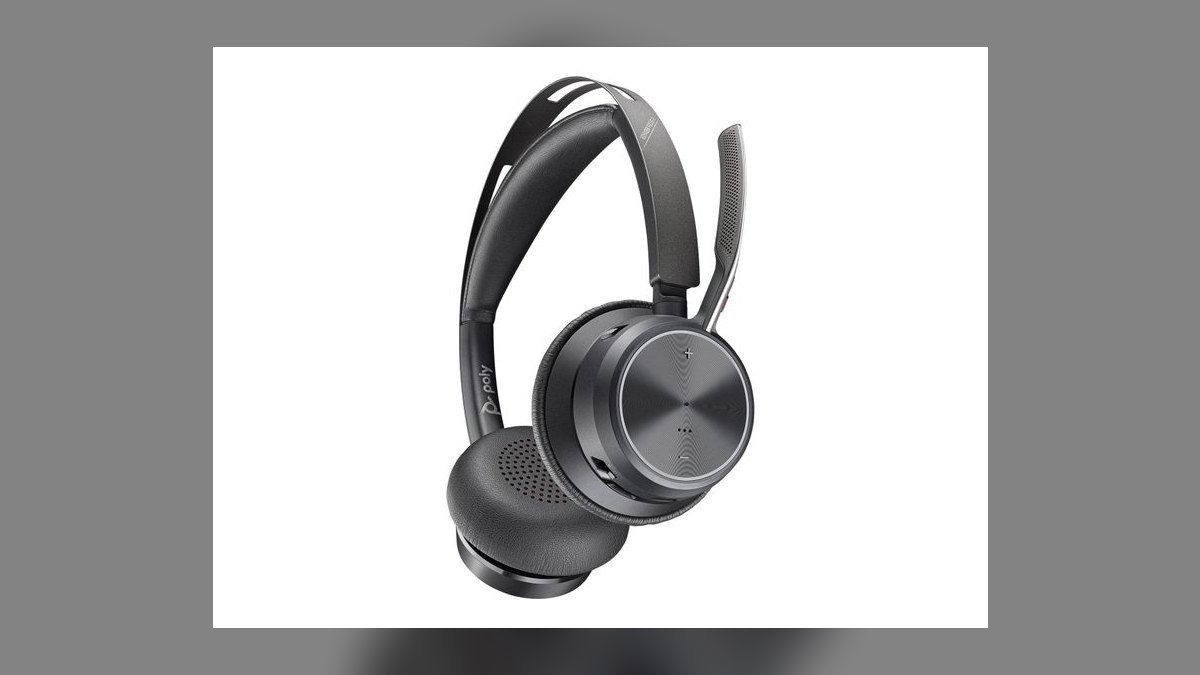
Third position goes to fleet control: Poly Acoustic Fence is a virtual microphone array that blocks voices falling outside a defined cone in front of the boom, which is the only software-defined mic gate that holds up above 70 decibels. Three boom microphones plus a fourth ear-cup mic handle ANC sampling. Talk time is 19 hours with ANC engaged, 40 hours of music with ANC off, at $329.
This suits SDR managers whose IT team wants to push firmware and acoustic-policy profiles to 500 headsets from one Poly Lens console. It gives up DECT density to the Engage 75 because it runs Bluetooth, and it costs $60 more per seat than the Evolve2 65 above it. Three selectable ANC levels and Teams, Zoom, and Webex certification round out the spec.
4EPOS Impact 1000
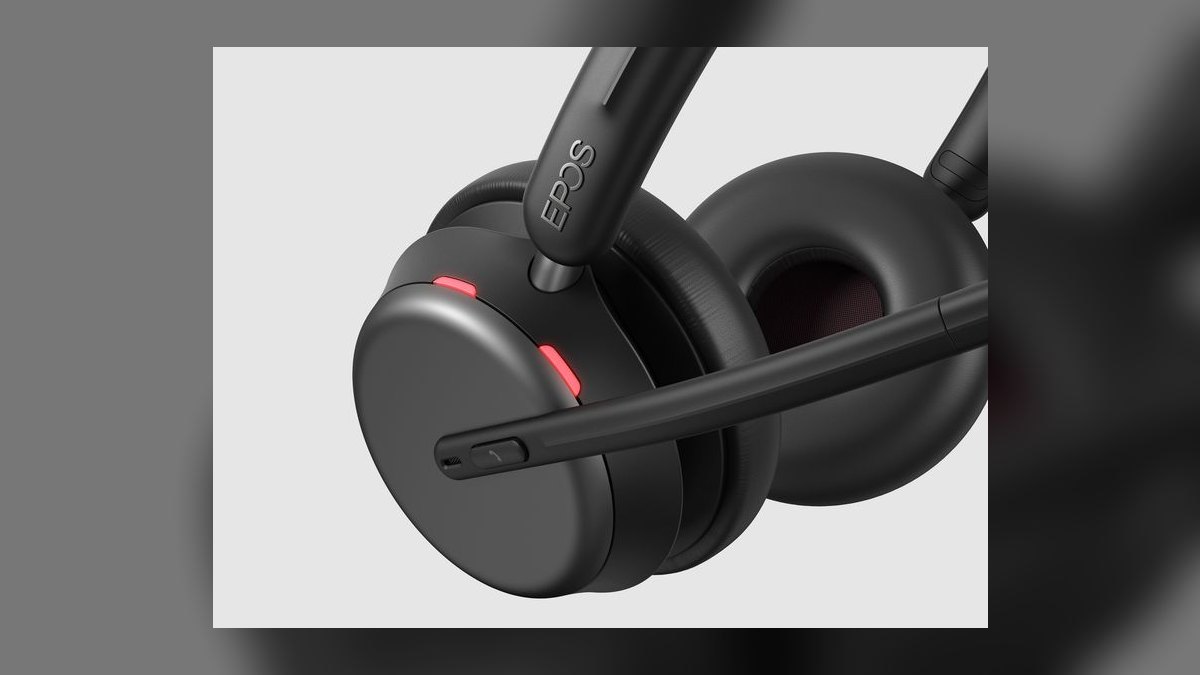
Fourth is a deliberate split between audio quality and procurement math: the Impact 1000 posts the strongest speech-intelligibility results here, but $549 per seat prices it out of bulk SDR buys. Adaptive ANC retunes to the ambient noise spectrum every 200 milliseconds, and the 3-microphone EPOS AI boom suppresses keyboard clatter without clipping consonants. Battery lasts 27 hours with ANC and busylight running.
Reserve these for premium AE and CRO seats where accent-heavy or non-native-English buyers make audio a deal-breaker on six-figure calls. The trade is pure dollars-per-seat ROI against the Voyager Focus 2 UC above it, which costs $220 less. Triple connectivity covers DECT dongle, Bluetooth 5.2, and USB-C wired fallback, and IP55-rated cushions survive daily cleaning on shared desks.
5Yealink WH67
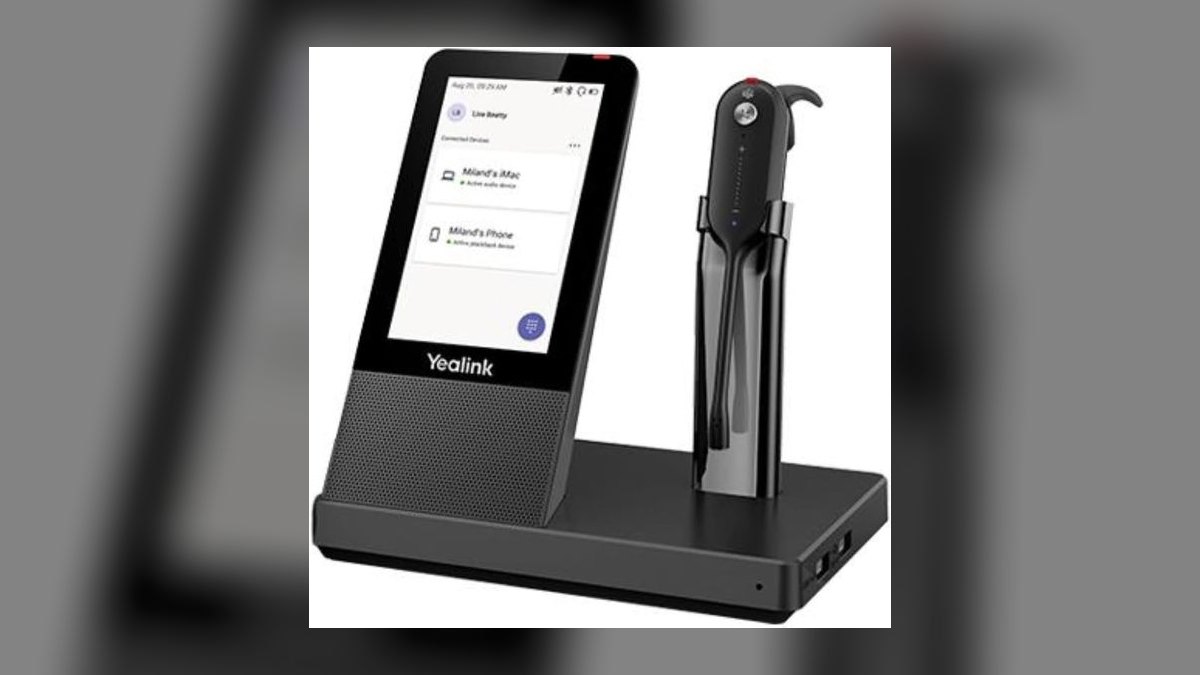
Fifth reflects the best multi-device handoff on this list paired with a weaker microphone. A hybrid DECT 1.9 GHz and Bluetooth 5.2 base lets the headset hop between desk phone, softphone, and mobile without re-pairing, and a 3.5-inch color touchscreen handles hold, transfer, and mute with no software dependency. The 3-microphone Acoustic Shield 2.0 covers a 160-degree pickup pattern across 13 hours of DECT talk time.
This is built for floors still running physical desk phones such as Yealink T-series, Cisco 8800, or Polycom VVX alongside a dialer. The trade is mic-array sophistication: it trails the Jabra and Poly picks above it despite costing $359. Standby runs 35 hours, and certification spans Teams, Zoom Phone, RingCentral, 8x8, and Yealink UC.
6Logitech Zone Wireless 2
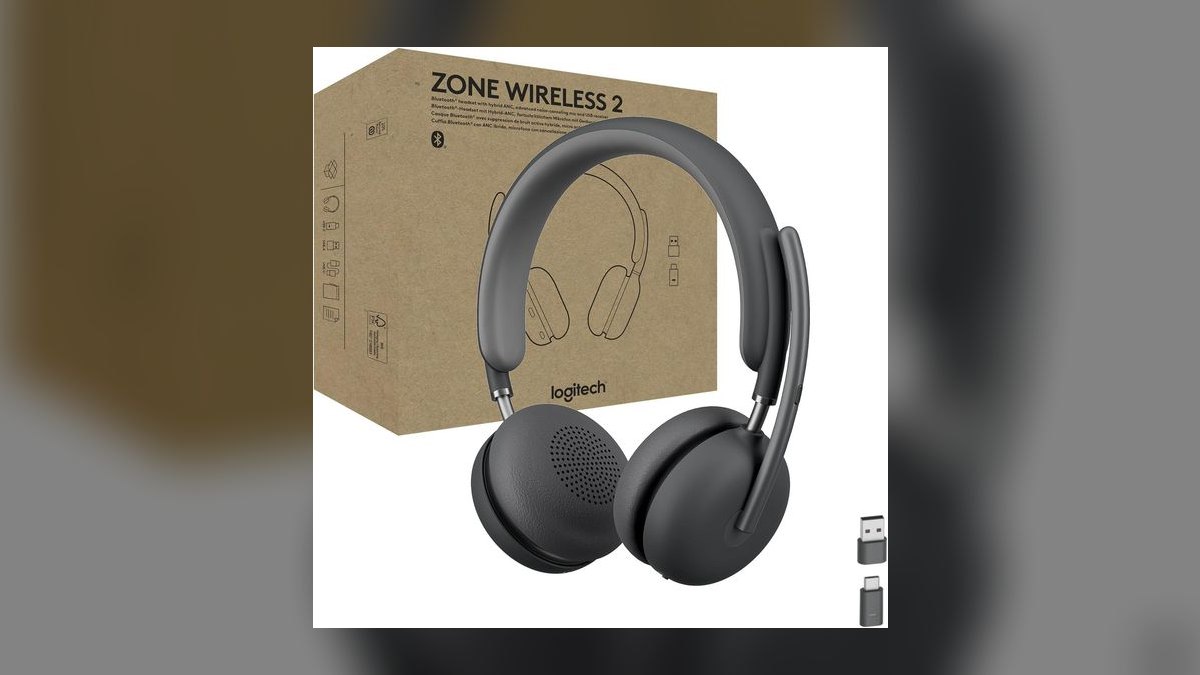
Sixth is the broadly-excellent-nowhere-best position: at $299 the dual-mic beamforming boom with AI noise suppression is credible, but the AI processing occasionally gates the first syllable of a sentence. For cold-open SDRs whose opening three words decide the call, that is a real defect. Talk time reaches 18 hours with hybrid ANC engaged, over a USB-C Logi Bolt receiver plus Bluetooth 5.2 multipoint for two devices.
This fits Google Workspace and Chromebook-heavy floors that already standardize on Logi Bolt for keyboards and mice, so one receiver protocol covers the desk. It gives up microphone count to the Yealink WH67 above it, which fields three mics against two. Logi Tune handles EQ, sidetone, and admin-pushed firmware, with Teams, Zoom, and Google Meet certification.
7Poly Blackwire 8225
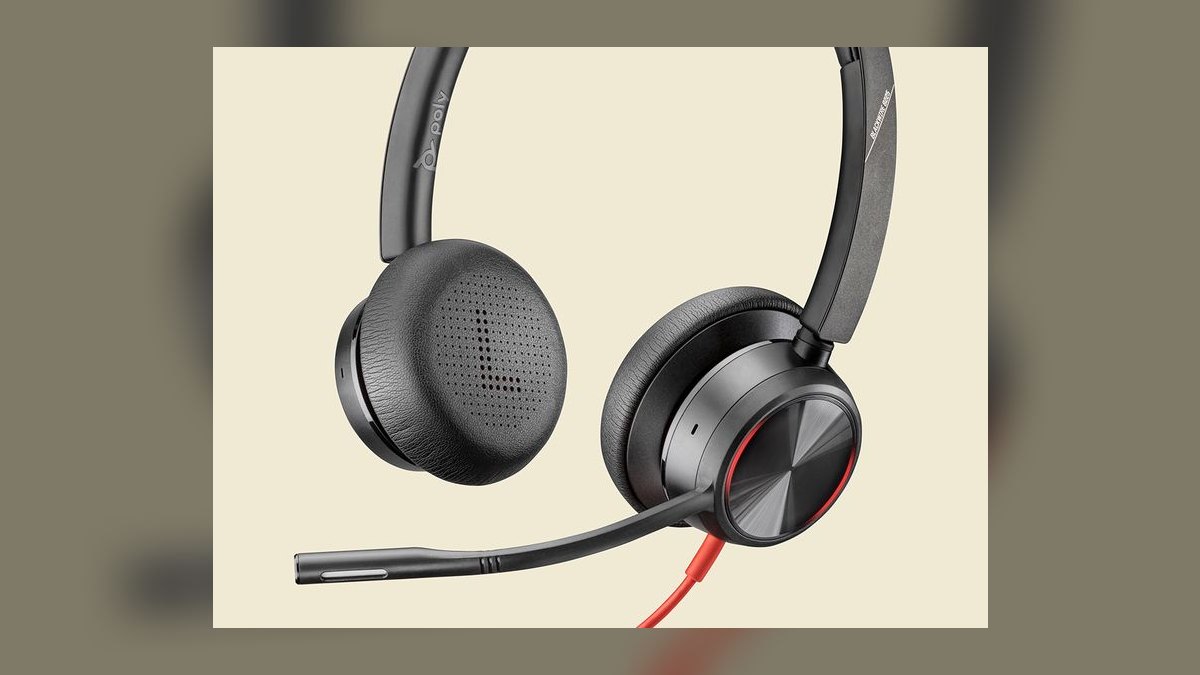
Seventh is the wired argument: at $269 the Blackwire 8225 removes battery anxiety and firmware updates entirely while still fielding three boom microphones and a fourth in-cup mic for ANC sampling. Three ANC levels are selectable from the inline control unit. Connection is USB-A or USB-C with a 3.5mm passthrough for mobile fallback, and memory-foam leatherette earcups are rated for 10-hour shifts.
Put these on new-hire pods where plug-and-play onboarding matters more than mobility during a rep's first 90 days. The trade is obvious: reps are tethered to the desk, so this loses every roaming scenario to the wireless picks above it at the same $269 as the Evolve2 65. Certification covers Teams, Zoom, Genesys Cloud CX, and Five9.
8EPOS Adapt 660
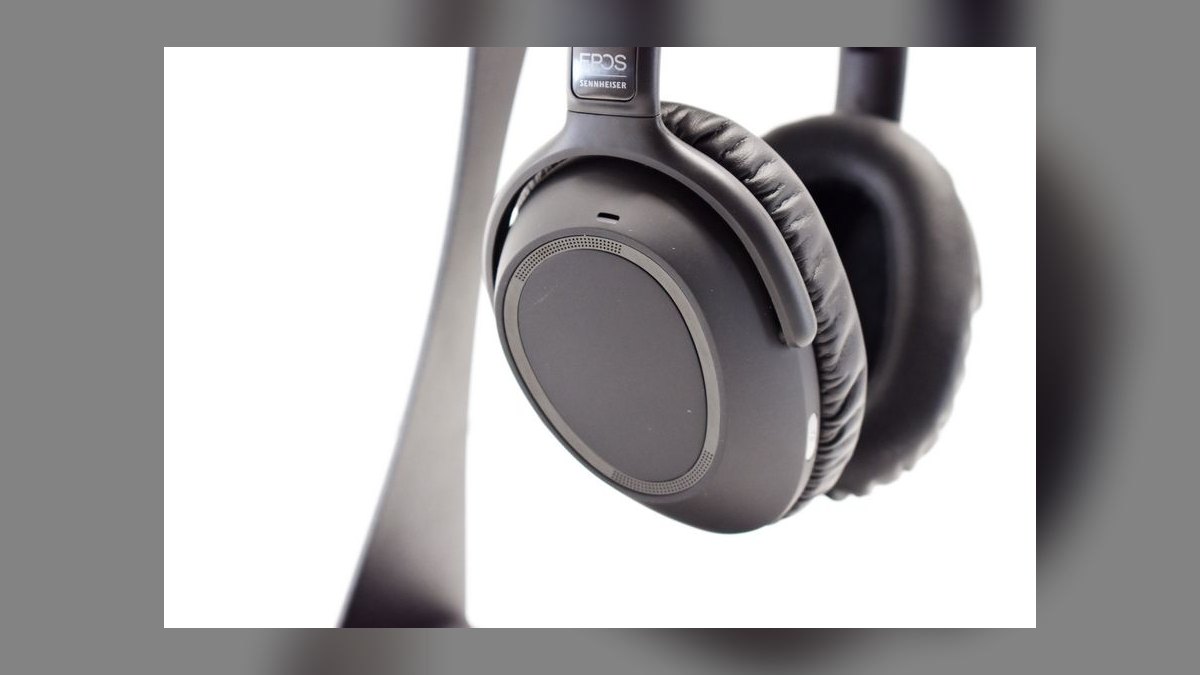
Eighth because it optimizes for the wrong job: the Adapt 660 is the best dual-purpose headset here, with a 17 Hz to 23 kHz driver range built for music fidelity that does not move pipeline. Adaptive ANC uses EPOS BrainAdapt psychoacoustic tuning, and the 3-microphone EPOS Voice system handles speech. Battery runs 30 hours with ANC on, over a USB-C dongle plus Bluetooth 5.0 multipoint, at $319.
This is for hybrid SDRs and AEs who use one headset for dial blocks and focus work between them, and it folds into an included hard travel case for travel. The trade is that purpose-built call-only designs beat it on the floor. Against the Blackwire 8225 above it, you pay $50 more for wireless and lose a boom mic. Teams, Zoom, and Cisco Webex certified.
9Jabra Evolve2 85
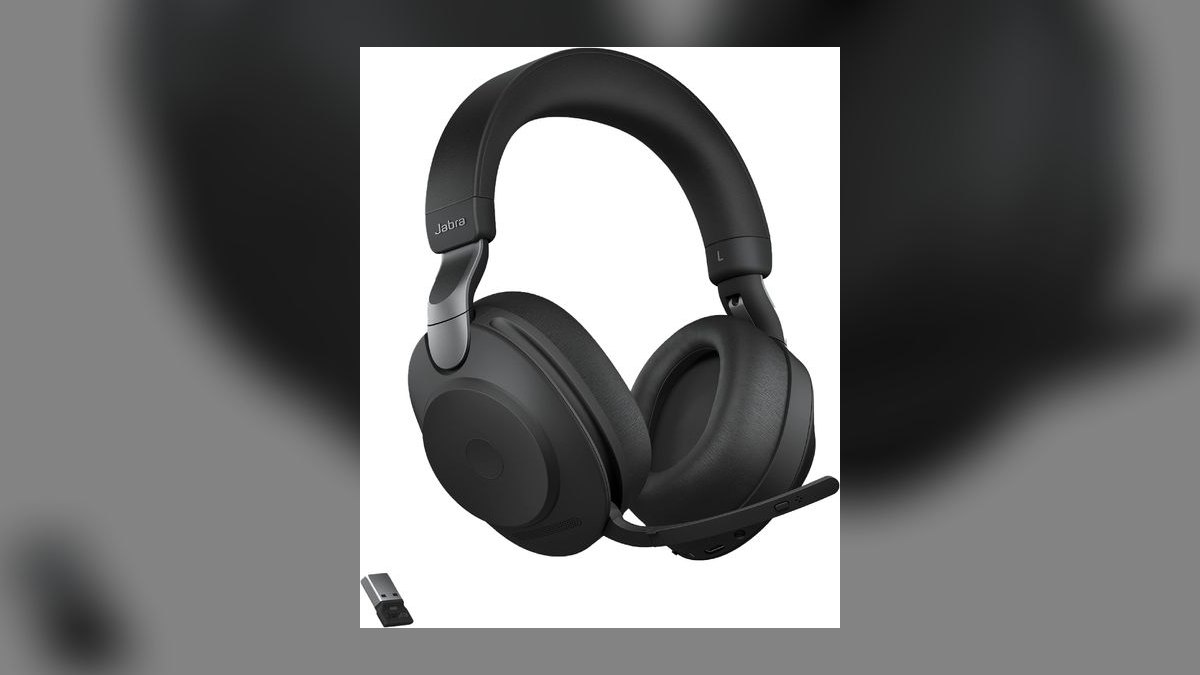
Ninth is a price-per-SDR-seat verdict rather than a quality one: 10 built-in microphones, 8 dedicated to ANC and 2 to call audio, block 54% more ambient noise than the Evolve 80, but $499 is hard to justify across a dialing floor. Battery runs 37 hours with ANC on over dual Bluetooth multipoint. The boom-arm busylight auto-mutes on lift.
This belongs in AE and Account Manager seats running back-to-back demos who need deep ANC to reset between calls, not in an SDR pod. The trade against the EPOS Impact 1000 at rank 4 is call-audio quality: the Evolve2 85 spends its mic budget on cancellation, EPOS spends it on voice. Memory-foam leatherette earcups, with Skype for Business, Teams, Zoom, and Cisco certification.
10Yealink UH38
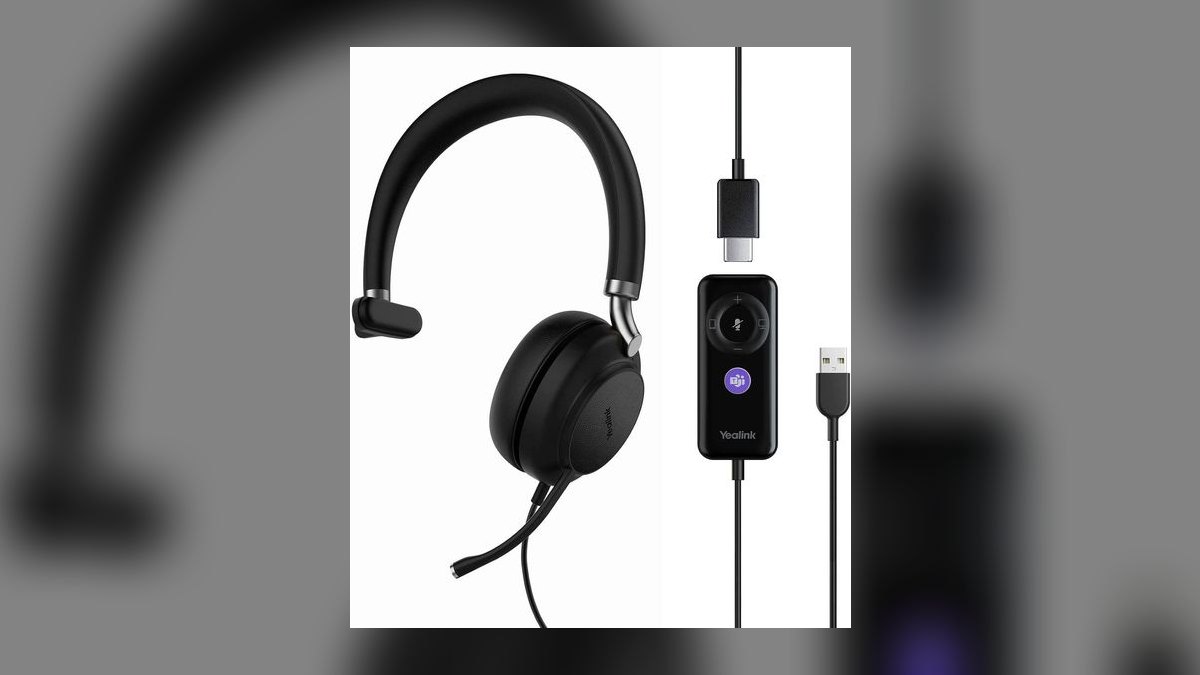
Tenth is honest positioning: the UH38 is the best dollar-per-feature headset here at $119, but dual-mic ENC noticeably trails every 3- and 4-mic array above it on a loud floor. What $119 does buy is unusual at this tier — wired or Bluetooth dual-mode, USB-A or USB-C, busylights on both earcups, and 35-hour Bluetooth standby. Inline controls handle mute, hold, and volume.
This is a bulk-procurement pick for sub-$120-per-seat BDR onboarding pods, contractor SDR teams, and offshore APAC and LATAM floors. The trade is the microphone, which is the one component that matters most on a packed floor, so it should not be your core-seat headset. Against the Blackwire 8225, you save $150 and give up a boom mic and selectable ANC. Teams, Zoom, and Yealink UC certified.
How we ranked these
Ranking weighted four things: microphone array count and architecture (4-mic boom beats 3-mic beats dual-mic ENC), wireless density on a shared floor (DECT 1.9 GHz versus congested Bluetooth), platform certification breadth across Teams, Zoom, Genesys, Five9, and NICE CXone, and dollars-per-seat at 50-plus seat volume. Battery under real load and fleet-management tooling like Jabra Xpress and Poly Lens broke ties between otherwise close models.
Deliberately ignored: music fidelity, driver frequency range, and codec support. An SDR headset transmits a human voice through a 8 kHz softphone codec, so a 17 Hz to 23 kHz driver changes nothing about pipeline. Also ignored: travel cases, foldability, and app-based EQ. Those move the Adapt 660 up a consumer list and down this one. Aesthetics and color options carried zero weight.
What to look for
Density is the failure mode nobody budgets for. A headset that sounds perfect at your desk during evaluation degrades at 9:05 Monday when 80 reps key up simultaneously. That is why the Engage 75's DECT density rating, up to 5x competing DECT headsets, matters more than its 4-mic array. Second: count the microphones on the boom. Four beats three beats two, and the gap is audible exactly when the floor is loudest.
The common mistake is buying one headset SKU for the whole revenue org. AE seats running back-to-back demos need deep ANC for focus between calls; SDR seats need transmit clarity and never need 54 percent ambient blocking. Buying Evolve2 85s for dialers wastes $230 a seat. The second mistake: evaluating a headset solo in a quiet room, then deploying it into a 70-decibel bullpen.
Related questions
Why does DECT beat Bluetooth on a packed sales floor?
DECT 1.9 GHz sits on dedicated spectrum that Wi-Fi access points and Bluetooth peripherals never touch. Bluetooth shares 2.4 GHz with every router, mouse, and keyboard in the building, so a 100-seat floor creates congestion the headset cannot route around. The Engage 75 also carries a per-room density rating specifically engineered for shoulder-to-shoulder dialing.
How much does microphone count actually change call quality?
Materially, and only under load. A dual-mic ENC boom like the Yealink UH38's handles a quiet room fine. Add 60 concurrent conversations and the three-mic ClearVoice array in the Evolve2 65 or the four-mic array in the Engage 75 has enough spatial data to separate the rep's voice from the wall of chatter behind it. That gap is the whole ranking.
What is Poly Acoustic Fence and does it work?
It is a virtual microphone array that defines a cone in front of the boom and rejects voices originating outside it. Unlike broadband noise suppression, it gates by direction rather than by frequency, which is why it holds up in a 70-decibel bullpen where spectral filters smear. It is the standout feature of the Voyager Focus 2 UC at $329.
Should new SDR hires get wired headsets?
Usually yes. Wired removes battery anxiety, pairing failures, and firmware drift from a rep's first 90 days, when every technical hiccup costs dial time. The Poly Blackwire 8225 at $269 gives ANC and three boom mics on USB; the Yealink UH38 at $119 covers onboarding pods and offshore floors where per-seat cost dominates the decision.
Why is the EPOS Impact 1000 ranked fourth if it sounds best?
Because $549 a seat does not survive a 100-seat procurement review. Its adaptive ANC retunes every 200 milliseconds and its three-mic EPOS AI boom suppresses keyboard clatter without clipping consonants, which is genuinely best-in-class. The rank reflects dollars-per-seat ROI, not audio quality. For a CRO or senior AE seat closing six figures, it is the right buy.
What does a headset certification actually guarantee?
Call control that works: mute sync between the headset button and the softphone, answer and end from the earcup, and presence status that updates the busylight. Without certification, a rep can mute the headset while the dialer stays hot. Look for Teams Certified or UC Optimized against your actual stack, whether that is Five9, Genesys Cloud CX, NICE CXone, or Amazon Connect.
Do AI noise-suppression features ever hurt SDR calls?
Yes. Aggressive gating can clip the first syllable of a sentence, which matters most on a cold open where the prospect is already half-disengaged. The Logitech Zone Wireless 2 shows this occasionally despite otherwise credible dual-mic beamforming. Test any AI-suppression headset by recording a cold-open script, not by talking continuously into it during a vendor demo.
Is fleet-management tooling worth paying for?
At 200-plus seats, yes. Poly Lens and Jabra Xpress push firmware and acoustic-policy profiles to hundreds of headsets from one console, which turns a week of desk-side IT work into an afternoon. Below roughly 50 seats the tooling rarely justifies the price delta, and a cheaper certified headset with manual updates is the better allocation.
FAQ
What is the single best headset for a 100-seat outbound floor?
The Jabra Engage 75 Stereo at $429. Its four-microphone noise-cancelling boom and DECT density rating, up to 5x competing DECT headsets in one room, are built for exactly this: every rep on a call at once with no wireless bleed. It also carries 13-hour talk time, dual-earcup busylights, and certification across Teams, Zoom, Genesys, Five9, NICE CXone, and Amazon Connect.
What is the best value pick if $429 a seat is too much?
The Jabra Evolve2 65 at $269. It runs the same three-mic ClearVoice pickup that cuts 23 percent more background conversation noise than the prior generation, plus 37-hour battery, Class 1 Bluetooth at 30 meters, and a Link 380 dongle in the box. It lands near 85 percent of the Engage 75's call clarity at roughly 63 percent of the price.
Which headset suits hybrid reps who split desk and home?
Again the Evolve2 65. The Bluetooth-plus-dongle architecture lets a rep walk from desk to huddle room to a Monday QBR without unplugging or re-pairing, and its passive isolation blocks 48 percent more ambient noise than the original Evolve 65. For hybrid teams that also need desk-phone support, the Yealink WH67 at $359 handles the handoff better.
How long do these batteries actually last on a dial day?
Talk time is the number that matters, not standby. The Engage 75 gives 13 hours on DECT, the Evolve2 65 and Evolve2 85 give 37 hours, the Voyager Focus 2 gives 19 with ANC on, and the Impact 1000 gives 27 with ANC and busylight active. Every one of those clears a full shift with margin.
What if reps still use physical desk phones?
Buy the Yealink WH67 at $359. Its hybrid base combines DECT 1.9 GHz and Bluetooth 5.2 so the headset hops between desk phone, softphone, and mobile without re-pairing, and the 3.5-inch color touchscreen handles hold, transfer, and mute without any software dependency. It works with Yealink T-series, Cisco 8800, and Polycom VVX deployments.
Is the Jabra Evolve2 85 worth $499 for SDRs?
No, and that is why it ranks ninth. Its ten microphones, eight dedicated to ANC, block 54 percent more ambient noise than the Evolve 80, which is superb for an AE running back-to-back demos who needs focus between calls. Dialers do not need that. Spend the $230 delta on more seats of the Evolve2 65 instead.
What is the cheapest headset that is still acceptable?
The Yealink UH38 at $119. Dual-mode wired or Bluetooth is rare at that price, and it includes dual-mic ENC, dual-earcup busylights, inline call controls, and Teams, Zoom, and Yealink UC certification. The dual-mic array clearly trails the three- and four-mic booms above it, so reserve it for onboarding pods, contractors, and offshore floors.
Does keyboard noise get through these microphones?
On the better arrays, mostly not. The EPOS Impact 1000's three-mic EPOS AI boom is specifically tuned to suppress keyboard clatter without clipping consonants, and Poly's Acoustic Fence rejects it by direction on the Voyager Focus 2 and Blackwire 8225. Cheaper dual-mic ENC booms pass more of it through, especially on mechanical keyboards during a live pitch.
Should the whole revenue team get the same headset?
No. SDR seats optimize for transmit clarity and wireless density; AE seats optimize for receive-side ANC and focus between demos; new hires optimize for wired simplicity. A three-SKU standard, Engage 75 for the floor, Evolve2 85 for AEs, Blackwire 8225 for onboarding pods, costs less overall than forcing one premium SKU across every seat.
How should I evaluate a headset before a bulk buy?
Test it in the noise environment it will live in, not at a quiet desk. Record a cold-open script to catch first-syllable gating from AI suppression. Run five to ten units on the floor during a live dial block to surface density problems. Confirm mute sync with your actual dialer, since certification lists vary by platform and firmware version.
Sources
- https://www.jabra.com/business/office-headsets/jabra-engage/jabra-engage-75
- https://www.jabra.com/business/office-headsets/jabra-evolve/jabra-evolve2-65
- https://www.hp.com/us-en/poly/headsets/bluetooth-headsets/voyager-focus-2.html
- https://www.yealink.com/en/product-detail/dect-headset-wh67
- https://www.logitech.com/en-us/products/headsets/zone-wireless-2.html
- https://www.hp.com/us-en/poly/headsets/usb-headsets/blackwire-8225.html
- https://www.jabra.com/business/office-headsets/jabra-evolve/jabra-evolve2-85
- https://www.yealink.com/en/product-detail/headset-uh38
- https://headsetadvisor.com/blogs/headset/epos-impact-1000-review
- https://www.headphonecheck.com/test/epos-adapt-660/
Related on PULSE
This page will be disappearing soon. Save it to your device for $1 — or read it free while it is here.
@Kory-White- · if Venmo asks, the last 4 of my number are 2012
This page is gone.
This one is off the shelf now. $1 keeps it on your phone for good — the whole page, pictures and diagrams included.
 pulse-reviewsTop 10 Car Phone Mounts for Field Sales Reps in 2027
 pulse-reviewsTop 10 Thermal Label Printers — Best Overall + Best Value in 2027
 pulse-reviewsTop 10 Hair Dryers — Best Overall + Best Value in 2027
 pulse-reviewsTop 10 Circular Saws — Best Overall + Best Value in 2027
 pulse-reviewsTop 10 Clothes Steamers — Best Overall + Best Value in 2027
 pulse-reviewsTop 10 Heat-Pump Dryers — Best Overall + Best Value in 2027
 pulse-reviewsTop 10 DDR5 RAM Kits — Best Overall + Best Value in 2027
 pulse-reviewsTop 10 1080p External Webcams for Sales Reps in 2027
 pulse-reviewsTop 10 DVD Players — Best Overall + Best Value in 2027
 pulse-reviewsTop 10 Cable Management Boxes for Sales Home Office in 2027