


Top 10 Fountain Pens for Sales Executives in 2027
Quality
Certified
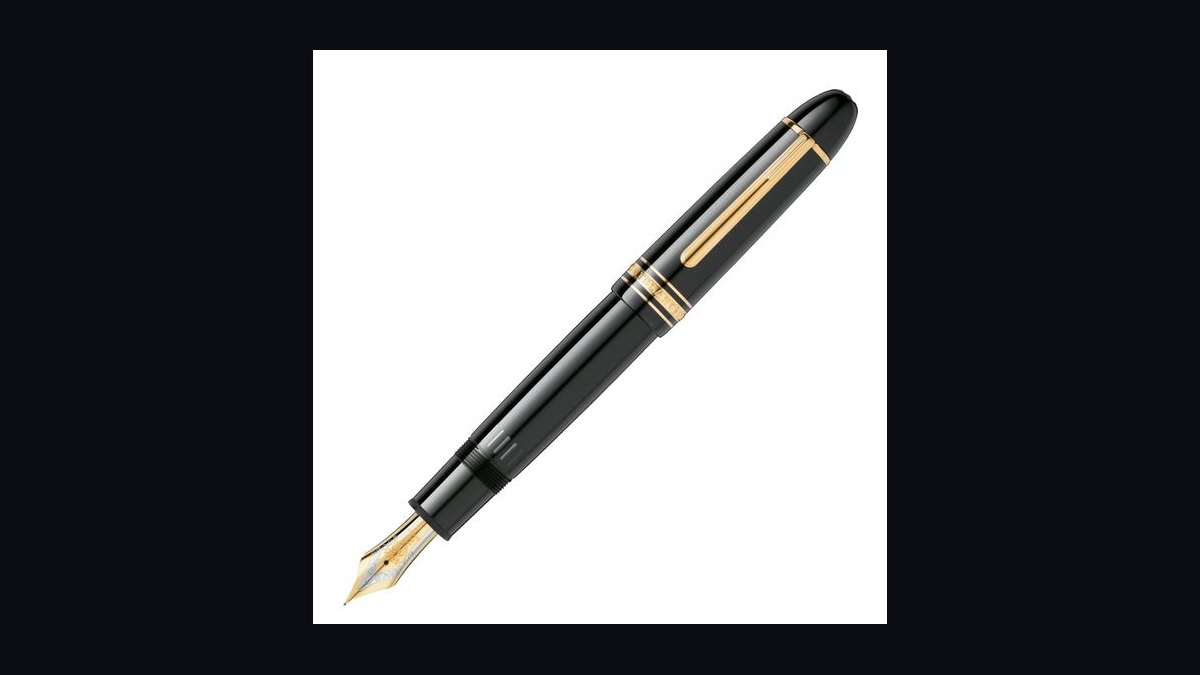
The 10 best fountain pens for sales executives are ranked below on measured performance, build quality, price, and how each one actually holds up in daily use rather than how it reads on a spec sheet. Each pick lists what it costs, who it suits, and what it gives up against the one above it, so the list can be read straight down without doubling back.
1Montblanc Meisterstück 149
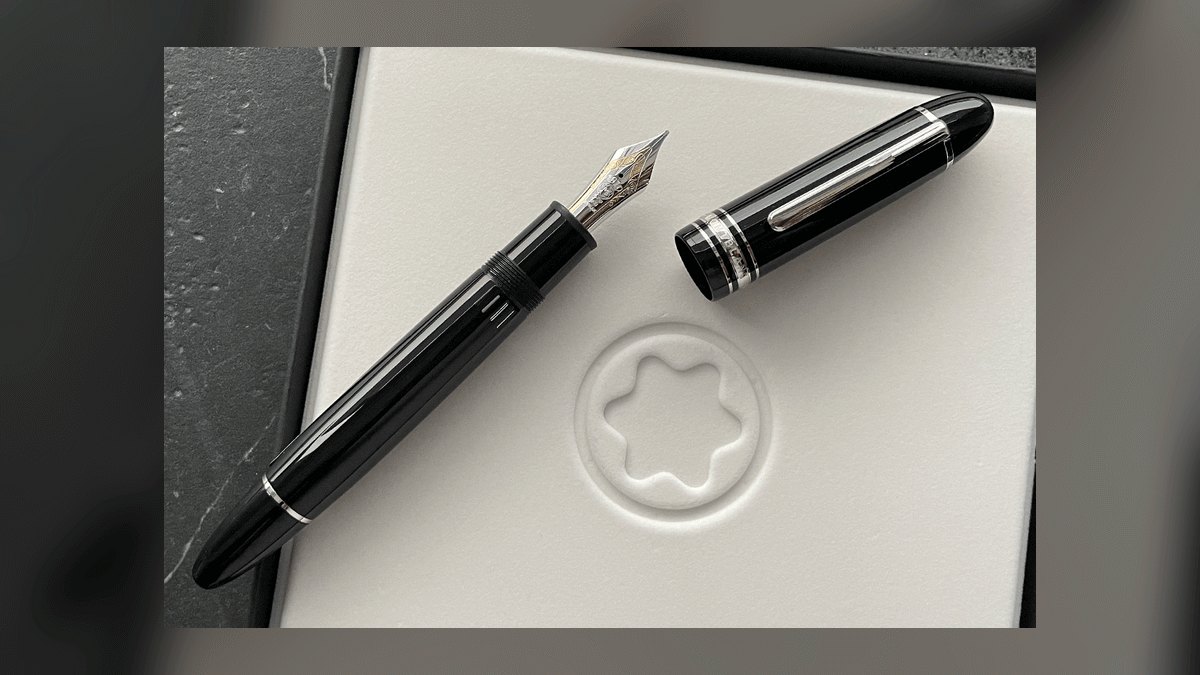
It ranks first because no other fountain pen carries the same instant recognition in C-suite settings, which is the entire point of a pen you sign in front of a customer. The 18k gold nib is hand-ground in Hamburg and offered in EF through OBB. The piston-fill barrel is black precious resin with a platinum-coated cap, 6.1 inches capped and 31 grams. Price runs about $1,055 with a two-year international warranty.
This is for enterprise AEs, VPs of Sales, and CROs who sign contracts in customer-facing settings where the snowcap emblem gets read from across the table. What it trades away is discretion and money: it is the most obvious pen in the room and costs roughly twice the Pelikan M800 below it. Most reviewers find the M800 nib smoother out of the box, so you are paying the gap for recognition, not writing feel.
2Pelikan Souverän M800
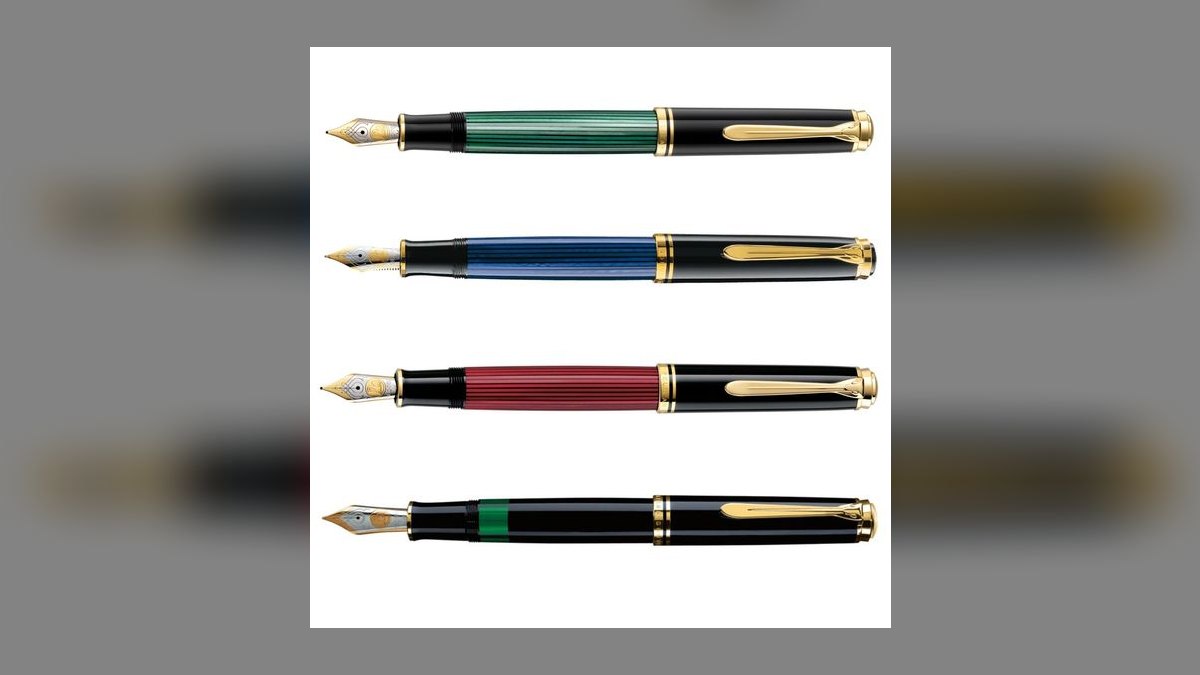
It ranks second because it is widely considered the best-writing piston-filler under $1,000, losing the top spot only on recognition outside pen circles. The 18k bi-color gold nib is hand-tuned in Hannover, and the differential piston mechanism uses brass and holds about 1.5ml of ink. The striped cellulose acetate barrel comes in black/green, black/blue, tortoise, and all-black. It measures 5.5 inches capped at 28 grams, $548.
This suits executives who want European craftsmanship without Montblanc's price or obviousness — common among lawyers, bankers, and senior consultants. What it gives up is the cross-table recognition the 149 above it delivers; a prospect's CFO may not clock the green stripes. In exchange you get a nib most enthusiast reviews rate smoother than the 149 out of the box, at roughly half the cost, lifetime serviceable.
3Pilot Vanishing Point
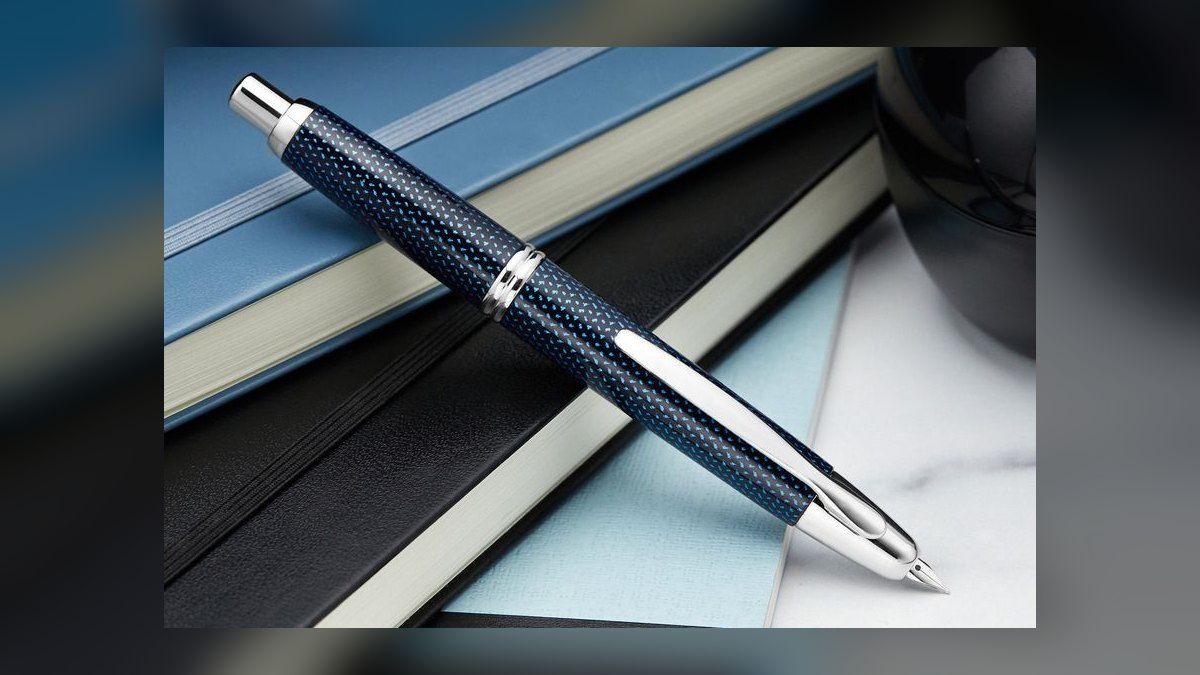
It ranks third on portability: it is the only premium retractable fountain pen on the market, with an 18k gold nib that deploys by click. There is no cap to lose and no cap-off fumbling on a tray table. The cartridge system — CON-70 converter or IC-100 cartridges — survives cabin pressure changes without leaking into a suit pocket. The aluminum body runs 5.5 inches and 30 grams at $192, lifetime US warranty.
This is the road warrior's pen: outside reps, regional VPs, and field AEs who fly weekly. The trade is the clip mounted near the nib end, which is genuinely divisive until your grip adapts to it, plus lower ink capacity than the piston-fillers ranked above. Against the $548 M800, it gives up writing luxury entirely and wins on one-handed operation and an 18k nib for under $200.
4Lamy 2000
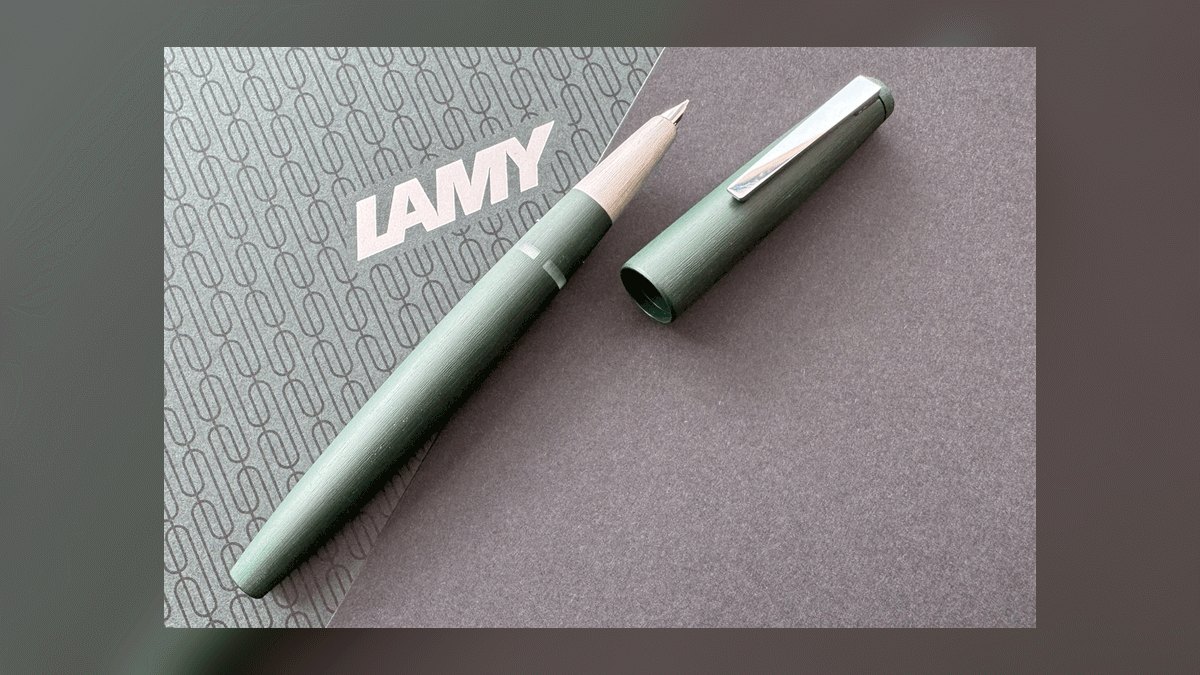
It ranks fourth as the design pick: a 1966 Bauhaus instrument on permanent display at MoMA, carrying a genuine 14k gold nib at $279. The nib is partially hooded and semi-flex, offered EF through B. The Makrolon body is fiberglass-reinforced polycarbonate with brushed stainless cap segments, and the piston fill hides its ink window in the material. Two-year Lamy warranty backs it.
This fits executives who want to signal design literacy rather than wealth — it carries no visible logo, which is the whole appeal in design-led companies and creative agencies. The trade-offs are real: the hooded nib writes less wet than the 149 or M800 above it, and the grip section can feel slick when hands are warm. Against the Vanishing Point, it wins on writing character and loses on travel convenience.
5TWSBI Eco
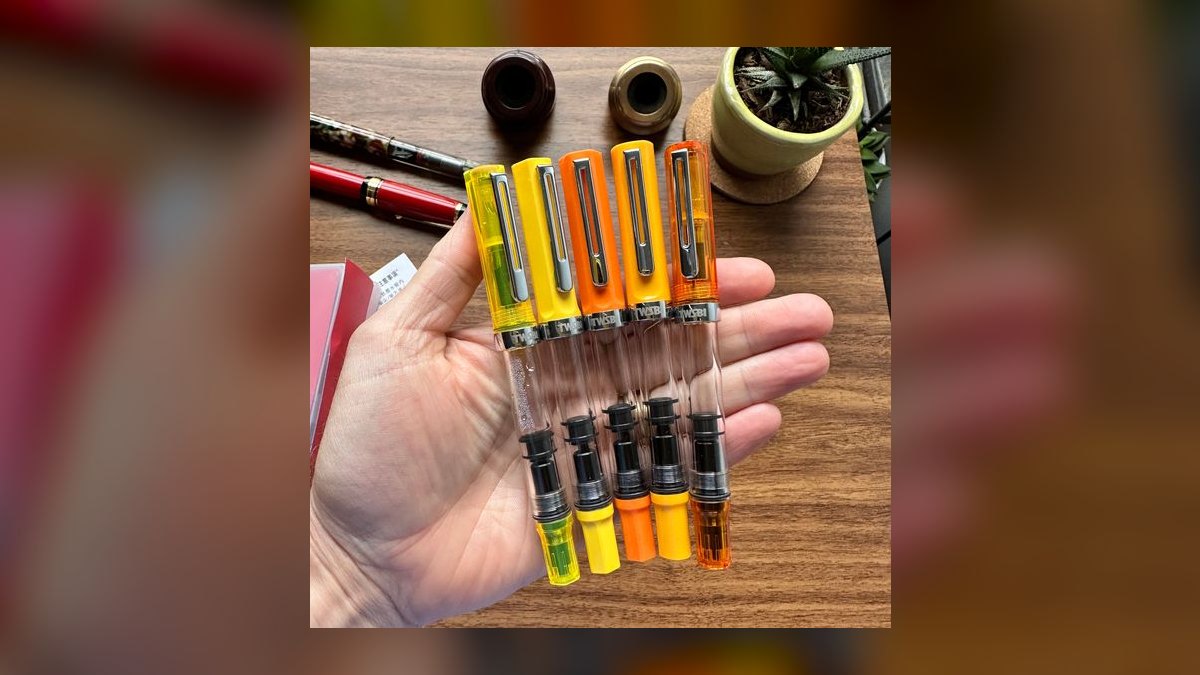
It ranks fifth on price-to-performance, which no other pen here approaches: a true piston-filler at $37 when competitors charge $150 or more for the same mechanism. The demonstrator body shows the full 2ml reservoir, and the stainless steel nib comes in EF, F, M, B, and 1.1mm stub. It weighs 21 grams at 5.5 inches capped. TWSBI backs it one year and sells replacement parts direct.
This is the pen for any rep testing whether they actually like fountain pens — daily call notes, account journaling, handwritten cards to top accounts. It trades prestige and long-session writing feel to the gold-nibbed tier above it, and the ABS plastic body reads modern rather than formal in a client meeting. Pair it with the 149 as a desk pen and you cover both realities for under $1,100.
6Sailor Pro Gear Slim
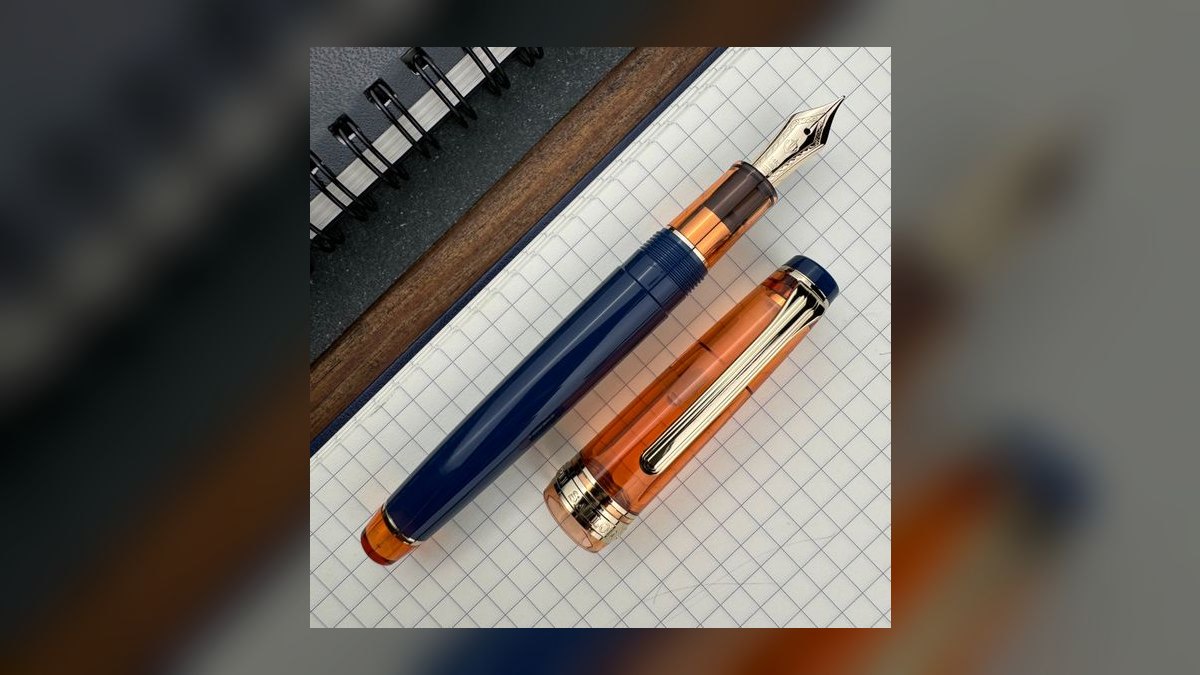
It ranks sixth on nib quality: the hand-finished 14k gold nib from Hiroshima is arguably the best gold nib under $250. It delivers a distinctive pencil-like feedback that r/fountainpens reviewers rate highest for detailed note-taking. The cigar-shaped resin body weighs just 16 grams at 5.1 inches capped, making it one of the lightest 14k-nib pens sold. It costs $216 with a one-year US warranty.
This is for executives with smaller hands or anyone who prefers a light, analytical writing feel over a wet one. The trade is size — users over six feet often find it cramped in hand, and that alone keeps it out of the top five. Against the $37 TWSBI Eco above it, you are paying roughly six times more for gold-nib feedback and Sailor's 50-plus color and edition options.
7Parker Sonnet
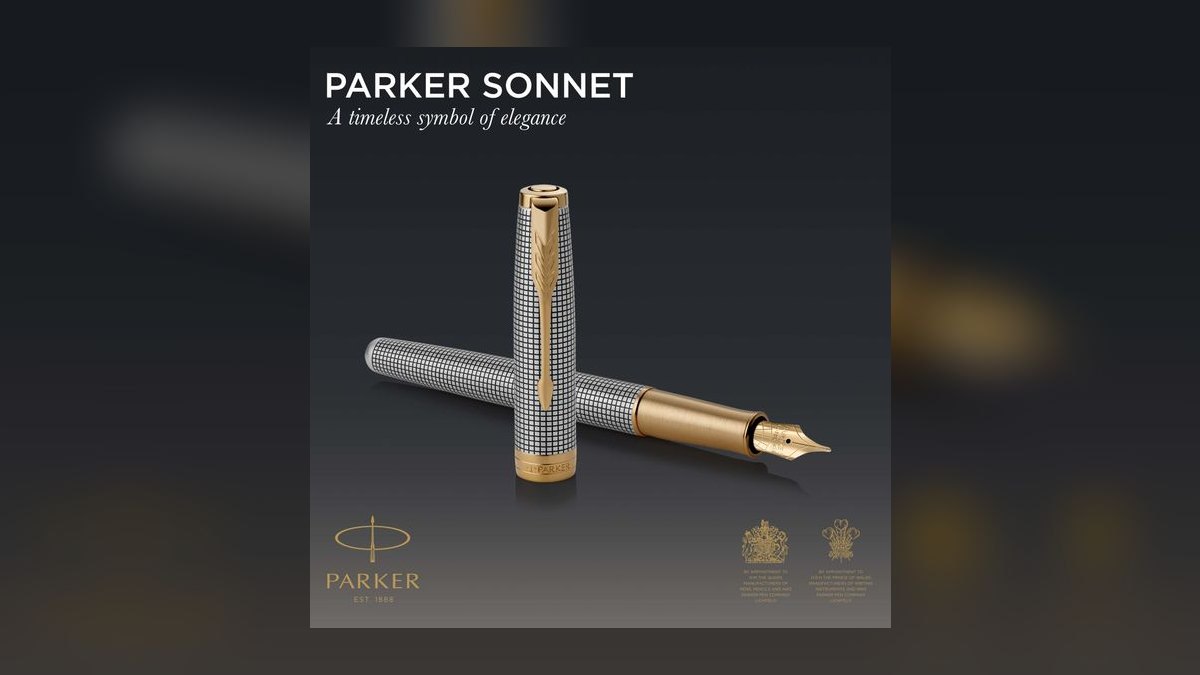
It ranks seventh on recognition rather than performance: Parker is the most-recognized pen brand globally, which makes the Sonnet the default promotion and quota-club gift. It runs $179 with a stainless steel or 18k gold-plated nib, with true gold-nib versions also offered. The lacquered brass body comes in Black Lacquer GT, Stainless Steel GT, and Silver Ciselé, 5.4 inches capped at 30 grams, two-year warranty.
This is the first real pen many early-career AEs and SDRs own, and it works best bought for someone else. The trade is the writing: the steel nib is stiff next to gold competitors, and recent QC reports on Pen Addict and FPN have been mixed. The Sailor Pro Gear Slim above it costs $37 more and gives a hand-finished 14k nib — a better pen, a weaker gift box.
8Cross Townsend
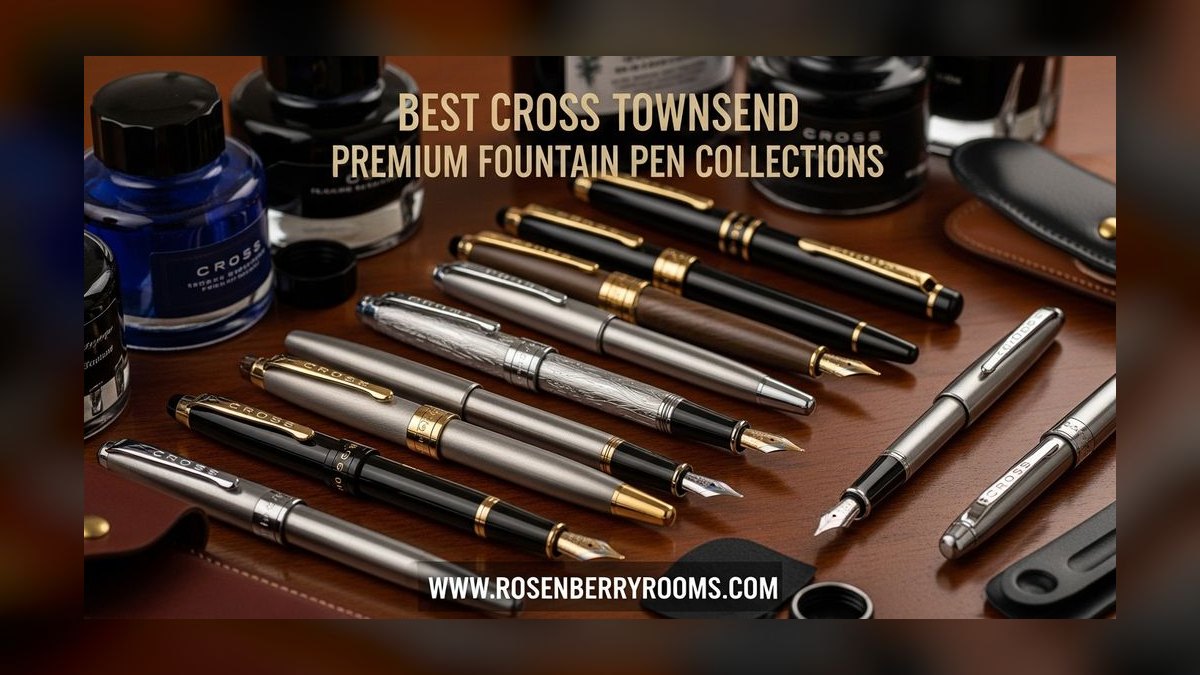
It ranks eighth on heritage: Cross is the official pen of the US Presidency, which carries real weight in DC, defense, and public-sector rooms. The $325 Townsend uses a 23k gold-plated steel nib in medium, fine, or broad, filled by cartridge or converter. The lacquer-over-brass body comes in Black with 23kt Gold or Medalist chrome-and-gold, 6.0 inches capped at 35 grams. The Lifetime Mechanical Guarantee is unusual at any price.
This is for American-brand loyalists and federal or public-sector sales reps where establishment credibility reads louder than nib pedigree. The trade is the writing experience — gold-plated steel gives noticeably more feedback than true gold nibs at the same money, including the Pilot Custom 823 below it and the Sailor above. Buy it for the brand story and the lifetime warranty, not the nib.
9Pilot Custom 823
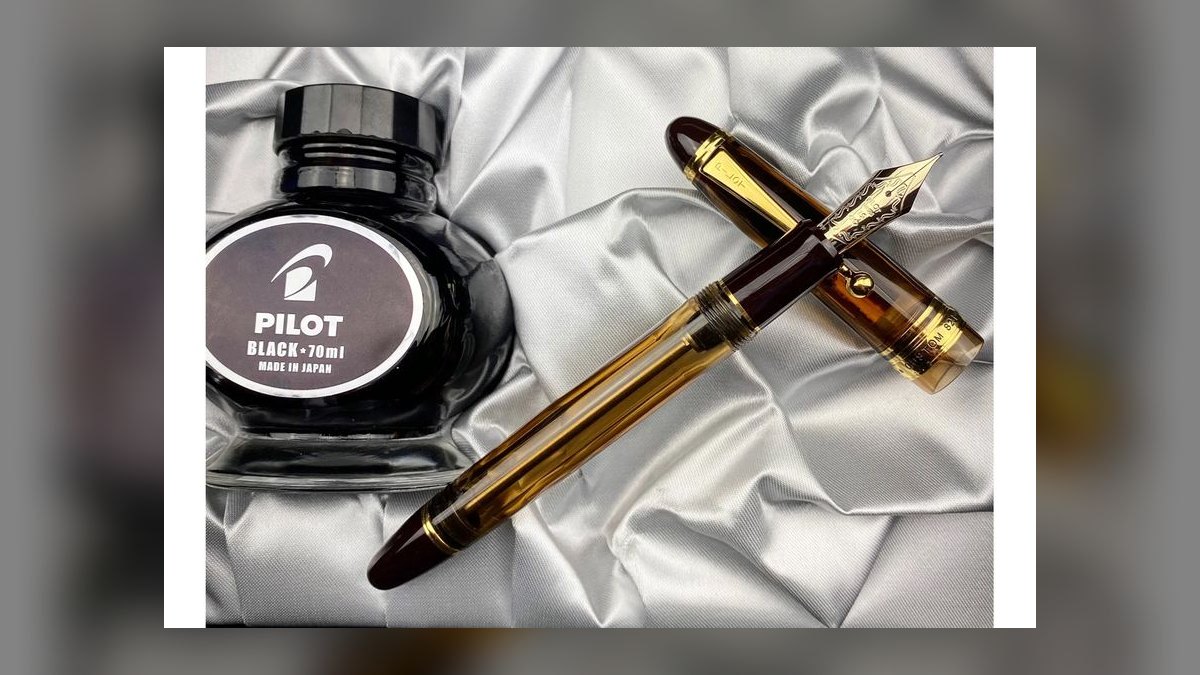
It ranks ninth despite being the best pure writer here, held back by a workflow quirk. The 14k gold nib is regarded as Pilot's finest, staying glassy-smooth across hours without hand fatigue. The vacuum-fill system holds roughly 2.2ml, the largest capacity on this list, so one fill covers weeks of heavy use. The translucent amber, smoke, or clear body runs 5.7 inches at 27 grams, $416, lifetime US warranty.
This is for executives who genuinely write volume — strategy memos, war-room recaps, account plans, QBR scripts. The trade is the blind cap: you must give it a quarter turn to free the reservoir before each session, which is fine at a desk and awkward when a customer slides a contract across the table. That is exactly what the Cross Townsend above it does not ask of you.
10Visconti Homo Sapiens Dark Age
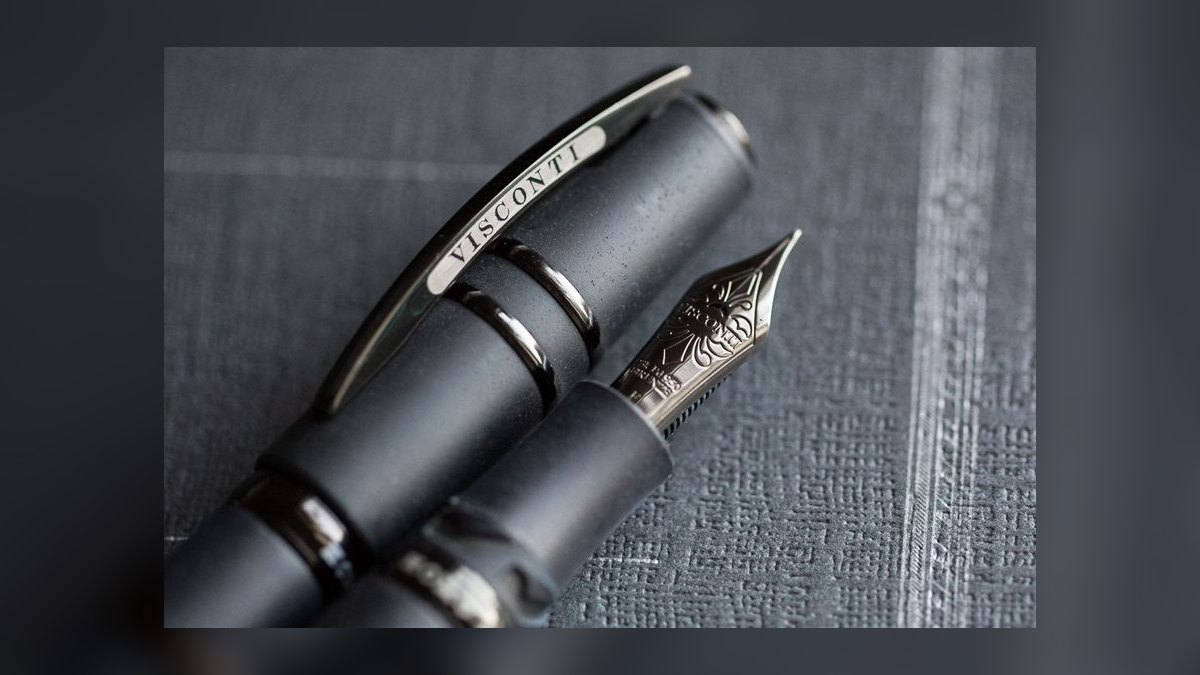
It ranks tenth because it is a personality piece rather than a dependable daily driver. The body is hardened basaltic lava from Mount Etna — matte black, hygroscopic, and warm in hand within seconds. The 23kt palladium Dreamtouch nib writes unusually soft and wet, and the Power-Filler vacuum system holds about 1.8ml. It runs $920 at 5.6 inches capped and 35 grams, two-year warranty.
This is for founder-CEOs, boutique-firm partners, and executives who prefer distinctiveness over tradition and want the pen to start the conversation. The trade is consistency: the palladium nib is unpredictable for some writers, and Visconti QC has been uneven over the past three years per Goulet Pens and Fountain Pen Hospital service notes. At $920 the Montblanc 149 costs $135 more and never surprises you.
How we ranked these
Ranking weighted five measurable things: nib material and grind quality (18k/14k gold and palladium scored above plated steel), fill system capacity and refill friction, capped length and gram weight as proxies for in-hand presence, warranty term and serviceability through an actual boutique or US service center, and brand recognition in customer-facing settings — the last weighted heavily because a signing pen is seen before it is written with.
Deliberately ignored: limited editions and discontinued colorways, since they cannot be reliably rebought or serviced. Ignored resale and collector value, which tracks scarcity rather than daily usefulness. Ignored ink brand pairings and paper preference — those are per-user variables, not pen properties. Ignored nib-grinder customization, because a $150 aftermarket regrind changes the writing experience enough to invalidate any stock comparison across ten models.
What to look for
The two variables that actually decide this are fill system and where the pen lives. A vacuum-filler like the Pilot Custom 823 holds 2.2ml and needs a blind-cap quarter-turn before writing — fine at a desk, awkward when a prospect slides a contract across the table. Cartridge systems survive cabin pressure; piston-fillers with a half-empty barrel can burp ink at altitude. Match the mechanism to the room.
The mistake is buying nib grade before nib width. Buyers upgrade from steel to 18k gold expecting transformation, then order a Western Medium and get a broad, wet line that feathers on cheap conference-room paper and takes ten seconds to dry — visible smearing during a signature. Japanese Fine from Sailor or Pilot runs roughly a Western Extra-Fine and handles bad paper far better than any gold upgrade will.
Related questions
How much does a fountain pen cost to maintain per year?
Ink runs $18 to $30 per bottle and lasts most users six to twelve months. Beyond that, maintenance is water — a flush every three to four ink changes. Professional nib work is optional and runs $40 to $75. A Montblanc factory service costs more but is rarely needed inside a decade of normal use.
Does a fountain pen signature hold up legally?
Yes. No jurisdiction requires ballpoint ink for a valid signature. The practical concern is archival permanence: standard fountain pen inks are water-soluble and will run if a document gets wet. For contracts and notarized documents, use an iron-gall or pigmented ink such as Platinum Carbon Black, which is permanent once dry.
Which nib width should a first-time buyer order?
Fine, and if you are choosing a Japanese brand like Sailor or Pilot, still Fine — that runs about a Western Extra-Fine. Wider nibs feel luxurious on good paper and terrible on the recycled stock in most conference rooms. A finer nib also dries faster, which matters when someone is waiting to counter-sign.
Can a left-handed writer use a fountain pen comfortably?
Yes, with two adjustments. Choose a fine or extra-fine nib so less ink sits on the page, and pick a fast-drying ink rather than a heavily saturated one. Underwriters have almost no trouble; overwriters who hook their hand above the line should test on their own paper before committing to a wet writer like the Visconti.
What is the actual difference between a gold and a steel nib?
Gold is softer, so it flexes slightly under pressure and gives line variation and a cushioned feel. Steel is stiffer and more consistent. Neither writes objectively better — a well-tuned steel nib beats a poorly tuned gold one every time. The TWSBI Eco's steel nib outperforms plenty of pens costing five times more.
How do you clean a fountain pen that has been sitting unused?
Flush with room-temperature water until it runs clear, which may take several cycles on a piston-filler. Never use hot water — it can damage resin and adhesives. For dried-in ink, soak the nib section overnight in water with a drop of dish soap. Avoid alcohol and ultrasonic cleaners on gold-trimmed or celluloid pens.
Is it rude to hand a fountain pen to a client to sign with?
It is not rude, but it is a small risk. Fountain pens have a nib orientation and are pressure-sensitive; someone accustomed to ballpoints may press hard enough to spring the tines. If you hand yours over, do it deliberately as a gesture, and keep a second pen for anyone who looks unsure holding it.
Why do some pens leak on airplanes and others do not?
Cabin pressure drops, and air trapped in a partly empty barrel expands, pushing ink out through the feed. A full pen has little air to expand, so it rarely leaks. Cartridge-converter systems and retractables like the Pilot Vanishing Point handle this best. Store any pen nib-up and fly with it full or empty, never half.
FAQ
Which fountain pen is best for signing contracts in boardrooms?
The Montblanc Meisterstück 149 at roughly $1,055. Its 18k gold nib and snowcap finial carry more recognition across C-suite settings than any competitor, and the piston-fill barrel holds enough ink that it will never run dry mid-signature. It is also the pen most likely to be recognized by the person sitting across the table.
Is a TWSBI Eco professional enough for client meetings?
For note-taking, yes — the writing quality is genuinely good. The demonstrator body reads as functional rather than formal, so it does not carry the same signal as a resin or metal-bodied pen in a signing context. Use it for call notes, account journaling, and daily pipeline work, and keep a second pen for customer-facing signatures.
Can I use a fountain pen on an airplane without leaks?
Yes, if you pick the right model and carry it correctly. The Pilot Vanishing Point's retractable nib and sealed cartridge system handle pressure changes well. Piston-fillers like the 149 are riskier when partly full, since trapped air expands. Fly with the pen completely full or completely empty, and store it nib-up in a pocket.
What is the typical lifespan of a high-end fountain pen?
Decades, often a working lifetime. The Montblanc 149 and Pelikan M800 are both fully serviceable — piston seals and nibs can be replaced by the manufacturer. Routine flushing every few ink changes is the entire maintenance burden. Pens from the 1950s still write daily, which is the actual argument for the higher upfront cost.
Are fountain pens worth the investment for daily sales work?
At the TWSBI Eco's $37, unambiguously — you get a piston-filler for what a pack of gel pens costs. Above $200 you are buying nib feel and recognition rather than function. If your role includes signing in front of customers or boards, that recognition has real value. If it does not, the value case gets thin fast.
How do I choose between a cartridge and a piston-filler fountain pen?
Cartridges refill in seconds and travel cleanly, which suits field reps and frequent flyers. Piston-fillers hold two to three times more ink, open the full range of bottled inks, and cost far less per fill. If you write for hours at a desk, take the piston. If you refill in an airport, take the cartridge.
Which pen on this list is best for someone with small hands?
The Sailor Pro Gear Slim at $216. At 5.1 inches capped and 16 grams, it is the lightest 14k-nib pen here by a wide margin, and the slim cigar profile suits a tighter grip. The Visconti at 35 grams and the Cross Townsend at the same weight are the two to avoid if hand fatigue is a concern.
Do fountain pens work on standard office and conference-room paper?
Not always well. Cheap copier paper feathers and bleeds with wet, broad nibs — the Visconti's palladium nib is the worst offender on this list. A fine or extra-fine nib and a less saturated ink solve most of it. If you take notes on whatever paper is in the room, buy the finest nib the model offers.
Which pen should I buy as a promotion or quota-club gift?
The Parker Sonnet at $179 for a first pen — the brand is globally recognized and the price sits in normal gift territory. For a milestone that deserves more, the Pilot Vanishing Point at $192 is the better writer and the retractable nib makes it usable immediately by someone who has never owned a fountain pen.
What ink should I use if the document needs to be permanent?
A pigmented or iron-gall ink. Platinum Carbon Black is pigmented, waterproof once dry, and widely available. Standard dye-based inks — including most Montblanc and Pelikan house colors — will smear or run if the page gets wet. Flush a pigmented ink out more often, since it can dry and clog a feed left unused.
Sources
- https://www.jetpens.com/blog/The-Best-Fountain-Pens-for-Every-Budget/pt/368
- https://www.gouletpens.com/products/twsbi-eco-fountain-pen-espresso-bronze
- https://www.montblanc.com/en-us/meisterstuck-gold-coated-149-fountain-pen-(m)-MB132113.html
- https://www.penchalet.com/reviews/pilot_vanishing_point_fountain_pen_review.html
- https://www.lamy.com/en-gb/p/lamy-2000-fountain-pen
- https://www.gouletpens.com/collections/sailor-pro-gear-slim-fountain-pens
- https://cross.com/pages/townsend-collection
- https://www.reviewed.com/home-outdoors/content/montblanc-meisterstuck-fountain-pen-review
- https://www.gentlemanstationer.com/the-curated-shop/pilot-custom-823-fountain-pen
Related on PULSE
This page will be disappearing soon. Save it to your device for $1 — or read it free while it is here.
@Kory-White- · if Venmo asks, the last 4 of my number are 2012
This page is gone.
This one is off the shelf now. $1 keeps it on your phone for good — the whole page, pictures and diagrams included.
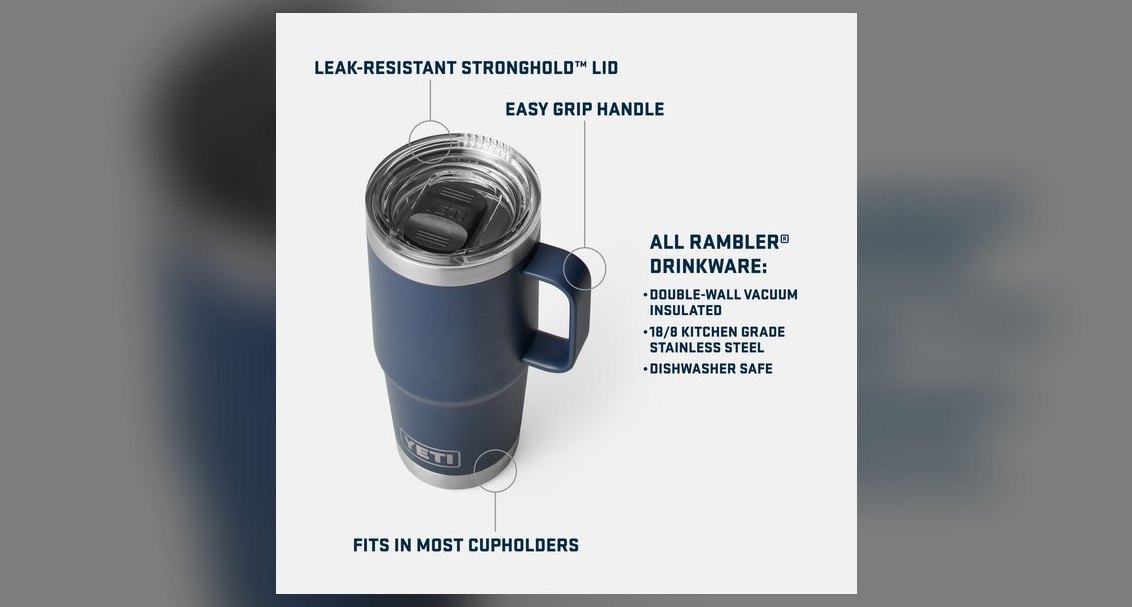 pulse-reviewsTop 10 Premium Travel Coffee Mugs for Sales Reps in 2027
 pulse-reviewsTop 10 Ethernet Adapters for MacBook — Best Overall + Best Value in 2027
 pulse-reviewsHow do I reduce echo in a home office for sales calls in 2027?
 pulse-reviewsTop 10 USB-C Hubs for Sales Travel in 2027
 pulse-reviewsTop 10 Smart Water Leak Detectors — Best Overall + Best Value in 2027
 pulse-reviewsTop 10 Outdoor Smart Lighting — Best Overall + Best Value in 2027
 pulse-reviewsTop 10 Noise-Cancelling Headphones — Best Overall + Best Value in 2027
 pulse-reviewsTop 10 Hair Dryers — Best Overall + Best Value in 2027
 pulse-reviewsTop 10 Spot Welders — Best Overall + Best Value in 2027
 pulse-reviewsTop 10 Electric Snow Shovels — Best Overall + Best Value in 2027