
Top 10 Monitor Privacy Filters — Best Overall + Best Value in 2027
 Curated byKory White · Fractional CRO · Maryland
 PULSEKNOWLEDGE LIBRARY
Quality
Certified
The 10 best monitor privacy filters are ranked below on measured performance, build quality, price, and how each one actually holds up in daily use rather than how it reads on a spec sheet. Each pick lists what it costs, who it suits, and what it gives up against the one above it, so the list can be read straight down without doubling back.
1. 3M GF270W9B Gold Privacy Filter
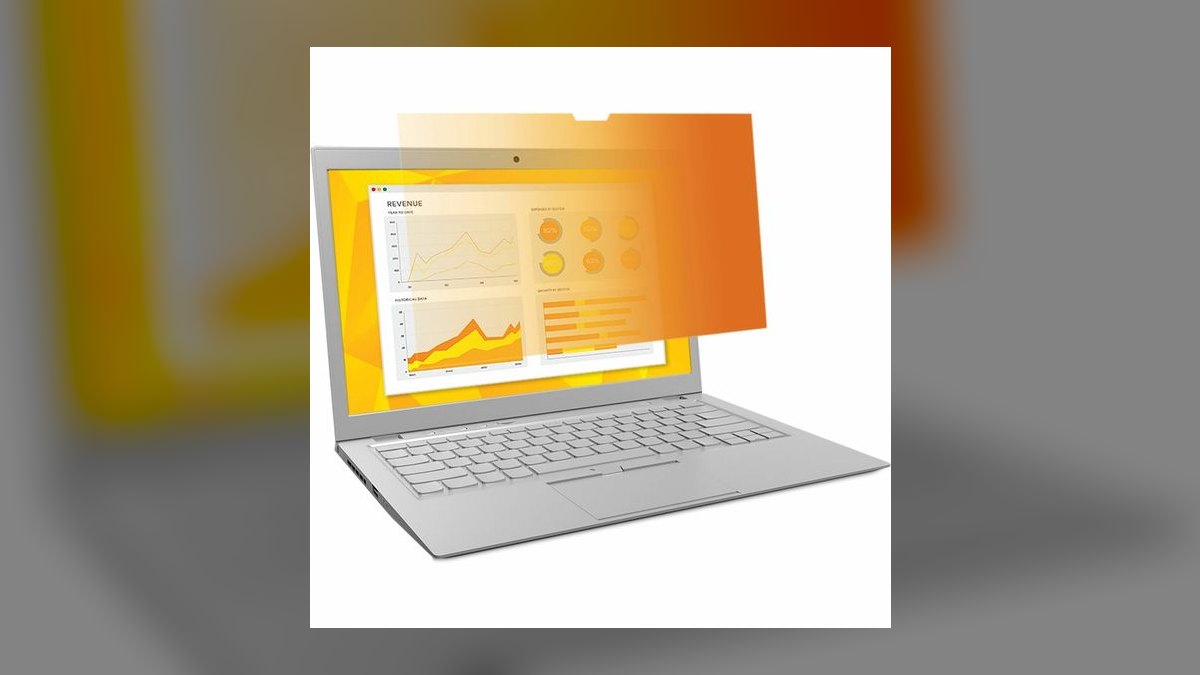
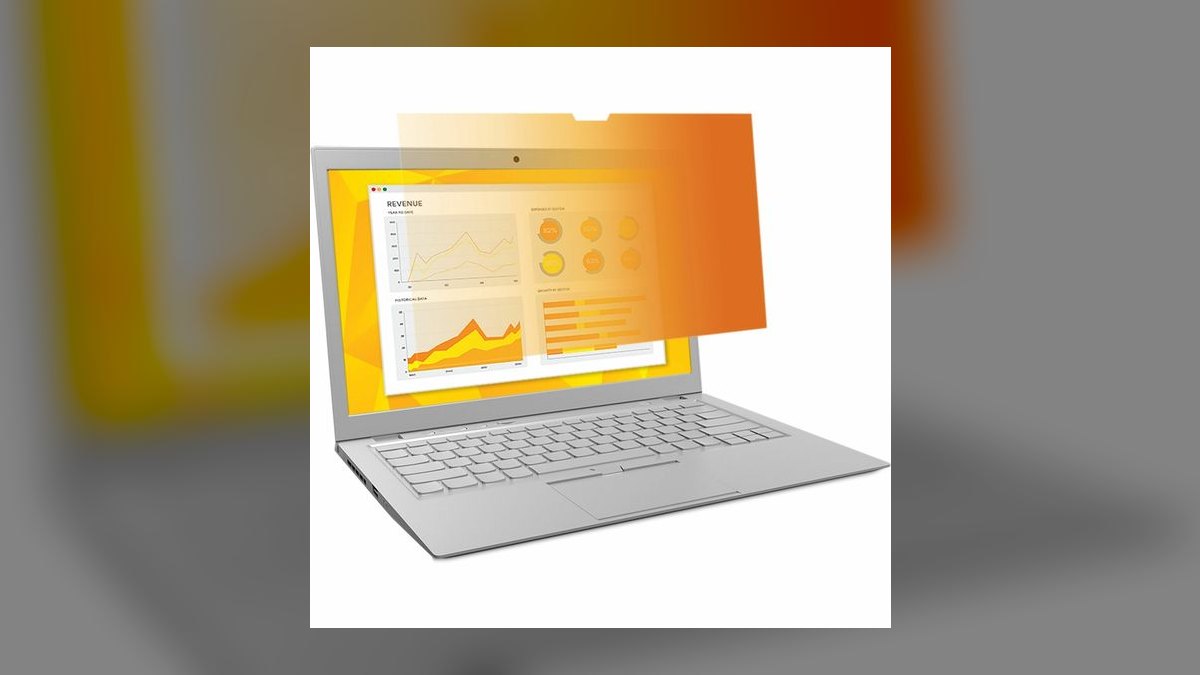
It ranks first because it is the clarity benchmark among mainstream privacy filters at roughly $110 for a 27-inch 16:9 monitor. The gold-tinted micro-louvers keep the straight-on image brighter than standard black filters, answering the usual complaint that privacy screens muddy your own view. Off-axis, the screen goes dark outside roughly a 60-degree total viewing cone. It also blocks up to 97% of UV and trims blue light.
This suits anyone whose work depends on accurate, bright image quality in an open office — designers, analysts, and executives reading dense spreadsheets all day. What it trades away is price: it costs roughly four times a budget two-pack and is a fixed, committed install rather than a snap-off panel. Against the VINTEZ two-pack below it, the 3M dims noticeably less on-axis, which is exactly what the extra money buys.
2. VINTEZ 24-Inch Privacy Screen
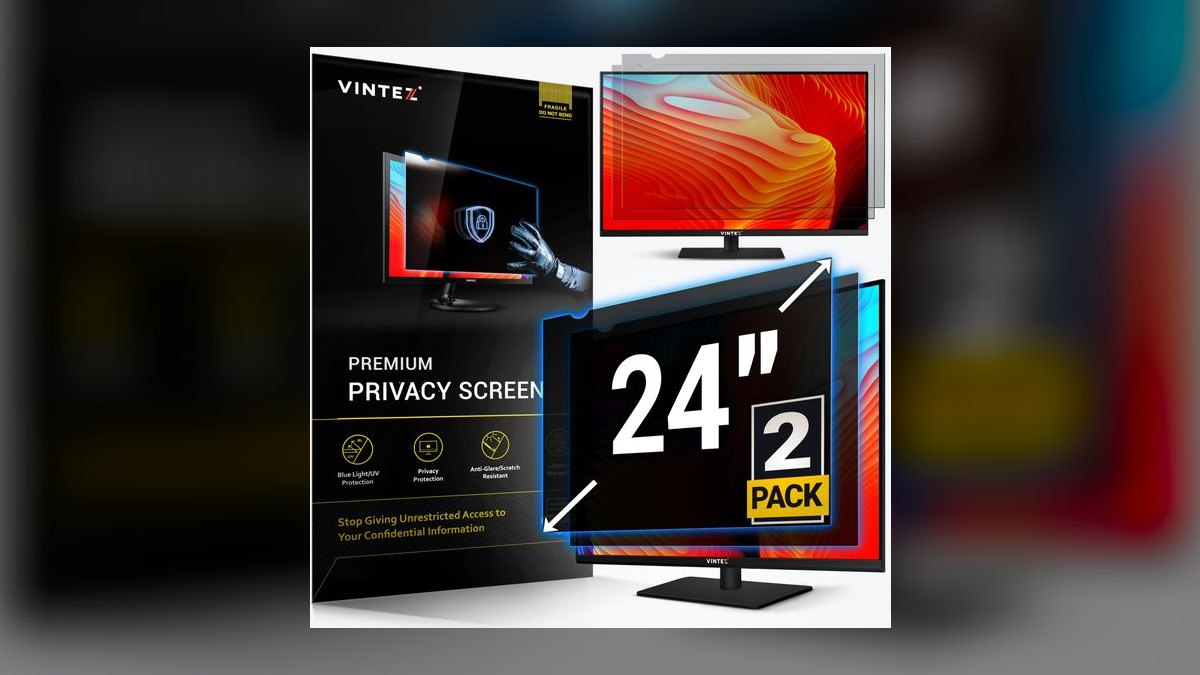
It ranks second on pure value: roughly $25 for a two-pack, meaning two filters cost less than most single-panel competitors. Each panel carries an anti-glare coating and a blue-light filter over a micro-louver layer that narrows usable viewing to about plus or minus 30 degrees. Sized for 24-inch 16:9 monitors. Clarity lands at good rather than great, dimming somewhat more than the 3M Gold.
This is the pick for outfitting dual-monitor desks, new-hire stations, or a whole team on a fixed budget. What it trades away is optical polish — expect a slightly darker, less color-accurate on-axis image than premium panels deliver. Compared to the 3M Gold above it, you accept measurably more dimming; compared to single-panel budget filters below, you get twice the coverage for the same outlay.
3. Kensington MagPro 27-Inch K58359WW
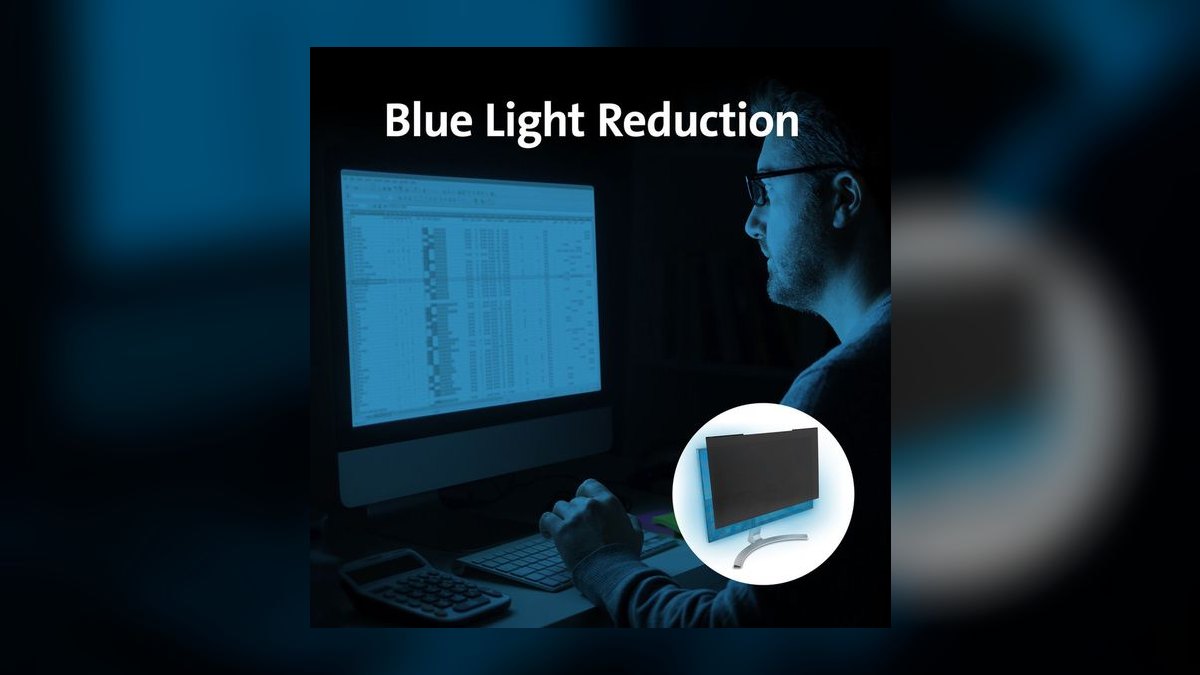
It ranks third as the convenience champion at roughly $90 for a 27-inch monitor. A thin magnetic strip frame attaches to the bezel, and the filter snaps on and lifts off in seconds with no adhesive residue and no repeated peel-and-restick cycle. Kensington rates it to limit viewing to plus or minus 30 degrees, reduce blue light by about 22%, and cut glare. It ships reversible matte or glossy with a cleaning cloth and storage case.
This fits people who toggle between private deep work and screen-sharing or video calls where a colleague needs to see the display. What it trades away is a small price premium over fixed filters and a magnetic frame that must sit on your bezel. Against the 3M Gold above it, on-axis clarity is a step behind; the removability is the reason to choose it anyway.
4. Fellowes PrivaScreen Privacy Filter
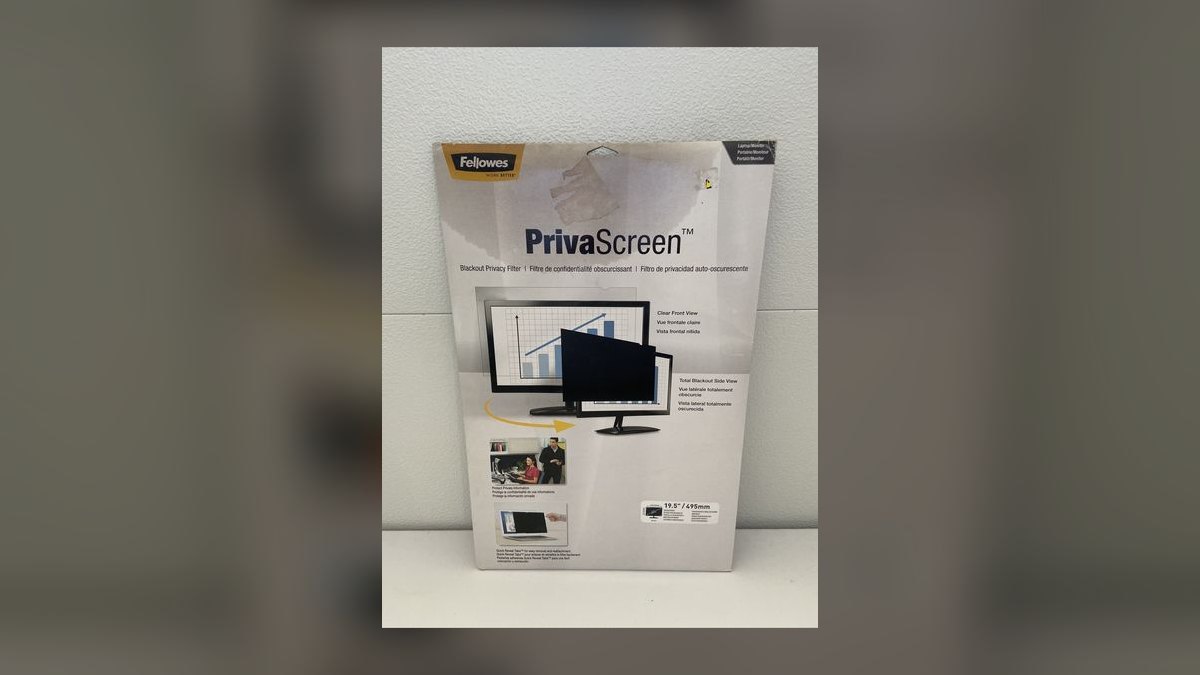
It ranks fourth because it is among the darkest filters sold, at roughly $55. Viewed from the sides, the screen goes solidly black rather than merely dim or blurred, which is the specific behavior compliance policies care about. That blackout comes from aggressive louver geometry rather than an added tint layer. It installs as a standard fixed filter using edge adhesive strips or slide-in bezel mounting.
This belongs on healthcare, legal, and finance desks where a passerby catching even a partial glance is unacceptable — HIPAA-protected records or privileged documents. What it trades away is your own view: the aggressive blackout dims the on-axis image more than gentler filters do. Compared to the Kensington MagPro above it, privacy is stronger and the price lower, but you lose snap-off removability entirely.
5. Photodon 23-Inch Universal Privacy Filter
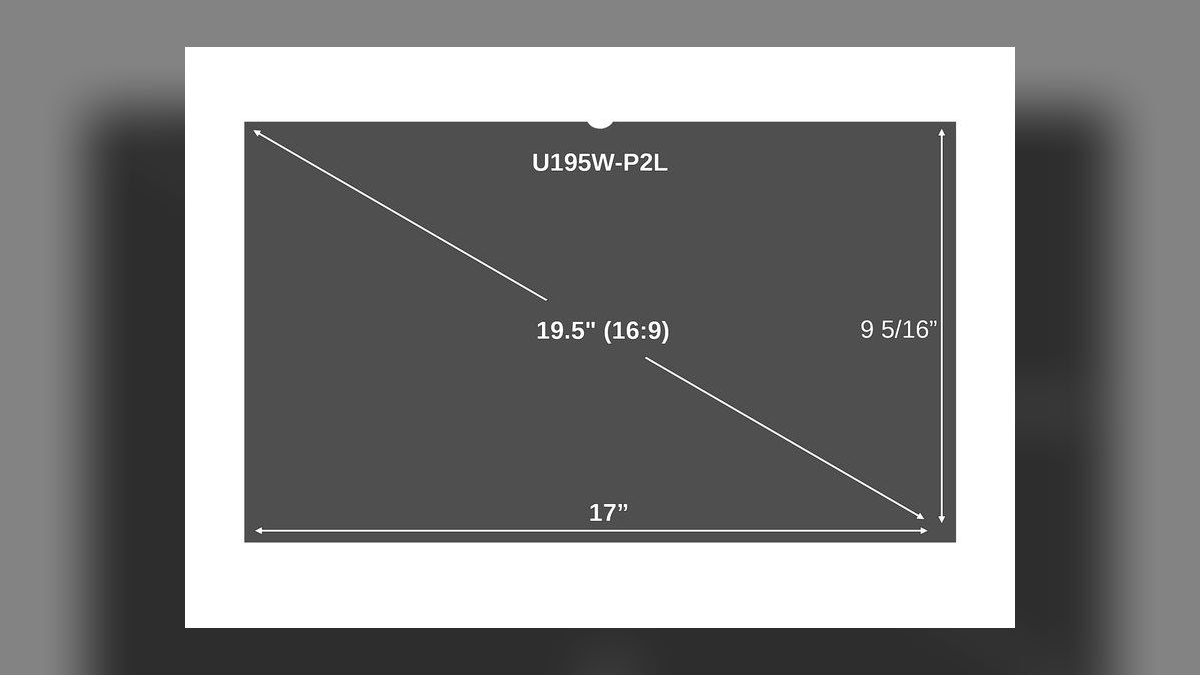
It ranks fifth for fit flexibility at roughly $45. It mounts without permanent glue, and Photodon backs it with genuine sizing support — an actual person helps confirm the filter matches your panel before you buy. The two-way louver narrows horizontal viewing while leaving vertical viewing open. Optical quality is clean, without the color shift cheap generic panels often introduce.
This is for anyone whose monitor is not a standard 16:9 size — 16:10 business panels, odd bezels, or discontinued displays that mainstream brands never cut a filter for. What it trades away is the deep blackout of dedicated compliance panels, since horizontal-only louvers leave the screen readable from above. Against the Fellowes PrivaScreen above it, privacy is less absolute but fit is far more accommodating.
6. Akamai Office Products 23.8-Inch Privacy Screen
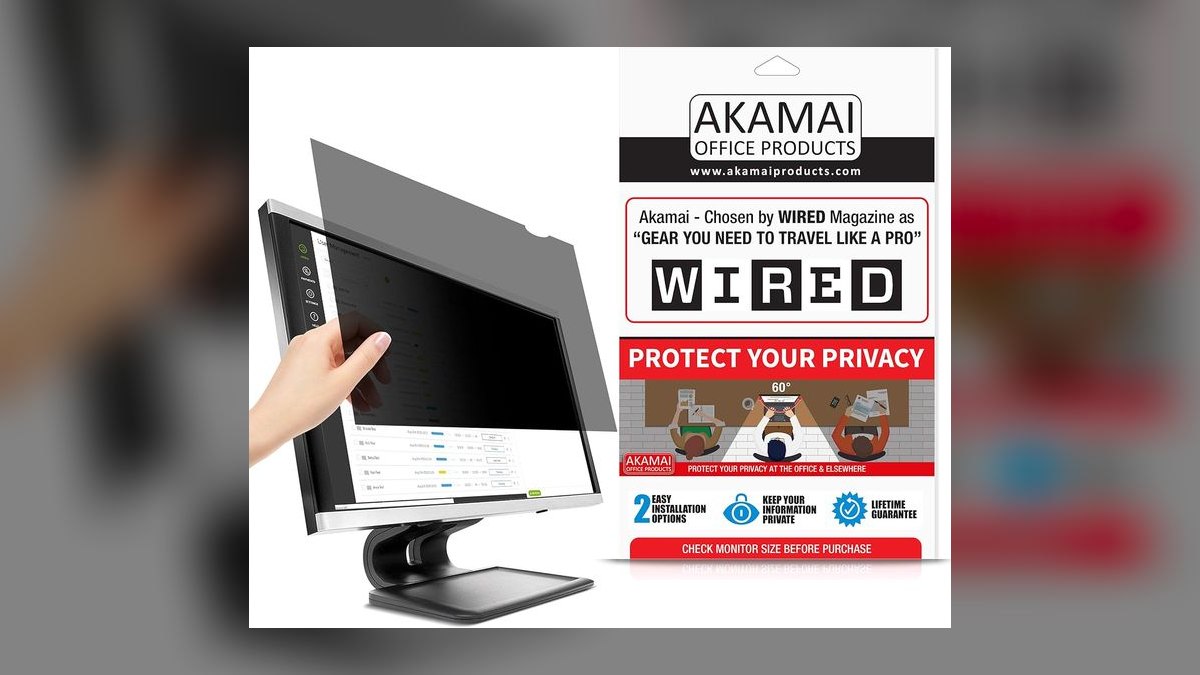
It ranks sixth as the ultra-budget single-panel pick, coming in under $30 for a 23.8-inch 16:9 monitor. Performance is solid rather than remarkable: standard micro-louver construction that blocks side views at typical desk seating distance. It sits in the generic-brand price tier where filters run $25 to $50. Expect the color shift and roughly 15-30% brightness reduction common at this price.
This fits a single home-office monitor, a temporary setup, or a spare desk where spending premium money makes no sense. What it trades away is durability and optical refinement — cheaper filters skip the dual-side anti-glare coatings that premium panels include. Compared to the VINTEZ two-pack above it, you pay more per screen for one panel, so it only wins if you genuinely need just one.
7. 3M Black Privacy Filter for 27-Inch
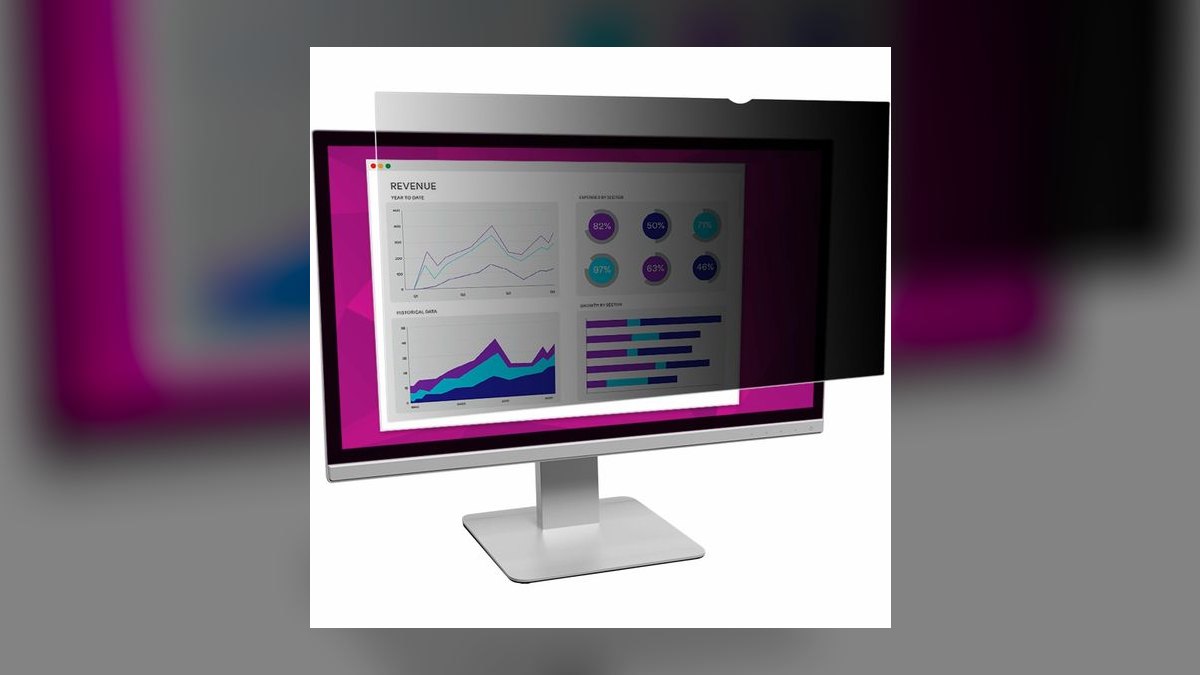
It ranks seventh because it delivers 3M's original micro-louver engineering without the gold series premium, sitting in the $90 to $160 premium band. 3M invented the micro-louver category, and the black filters remain the durability reference with multi-layer construction and anti-glare coatings on both sides. Viewing narrows to roughly 30 degrees total. The outer layer cuts overhead-light reflections while the inner layer prevents rainbow patterning on the screen.
This suits buyers who want 3M build quality and warranty backing but do not need the gold series' brightness advantage. What it trades away is exactly that: black louvers dim your own on-axis view more than the gold-tinted version. Against the Gold above it, you save real money for a measurably darker screen — the tradeoff 3M created the gold line to solve.
8. Targus 4Vu Privacy Screen
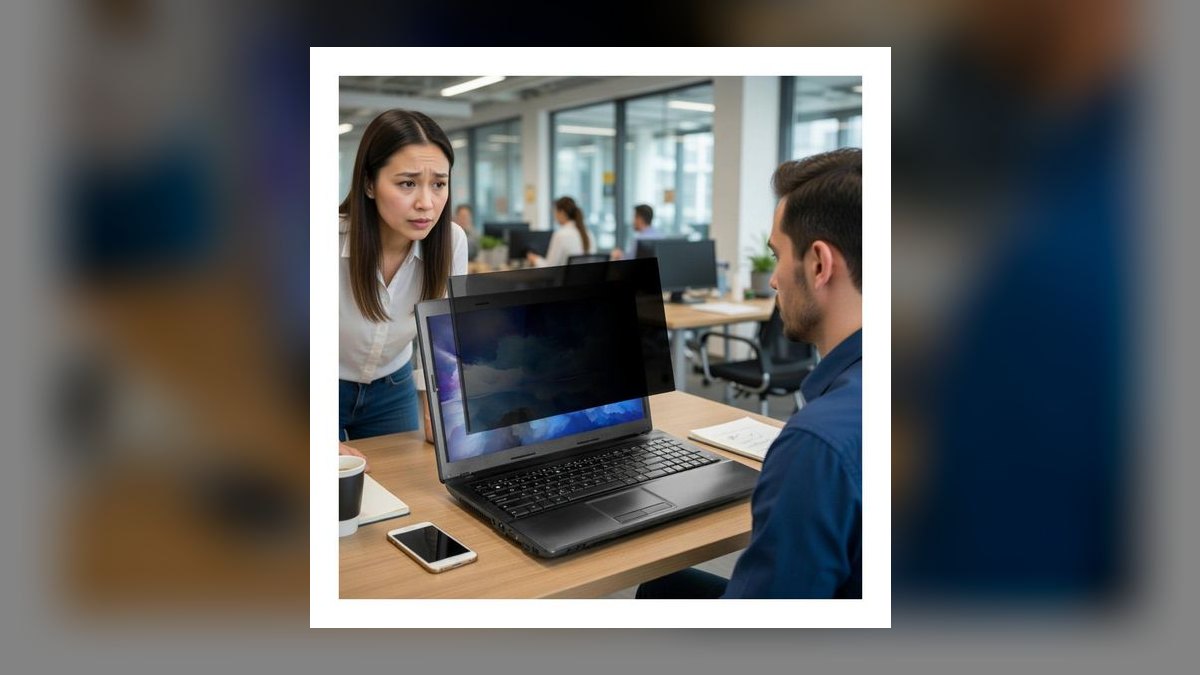
It ranks eighth as the mid-range option at $50 to $90, sitting between generic budget panels and the 3M and Kensington premium tier. Targus builds to the standard 30-degree viewing angle with a reversible matte and glossy surface, letting you pick glare diffusion or contrast retention per room. Construction quality exceeds unbranded filters, with proper edge finishing and consistent louver spacing across the panel.
This fits corporate IT buyers standardizing across a floor who need a known brand and consistent replacement supply without premium per-seat cost. What it trades away is the optical top end — anti-glare layering is less thorough than 3M's dual-coated build. Compared to the 3M Black above it, you save $30 to $70 per screen and accept slightly more visible color shift when viewed straight on.
9. Kensington MagPro Elite Magnetic Filter
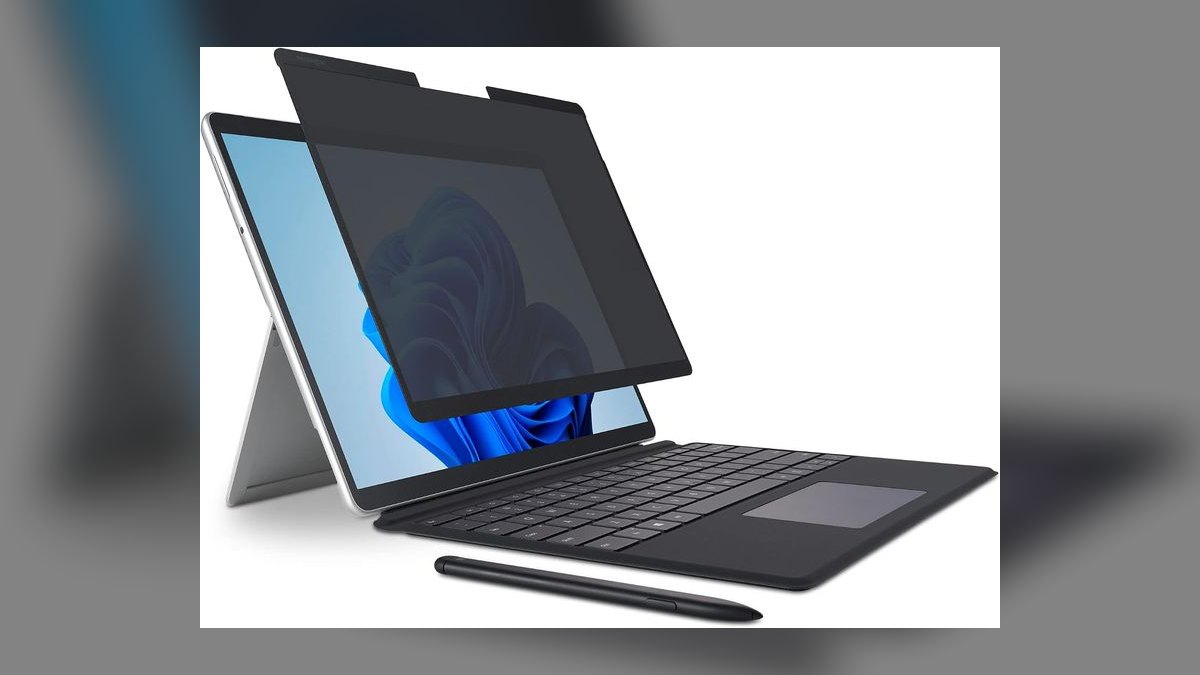
It ranks ninth because it extends the magnetic snap-on system to larger and laptop-class displays, but at a higher cost per screen than the standard MagPro. The magnetic bezel frame delivers the same seconds-fast attach and detach with no adhesive residue and no degrading sticky strips over repeated cycles. Kensington rates the line to roughly 30-degree viewing with blue-light reduction. Reversible matte and glossy surfaces are included.
This is for travelers and hybrid workers who move between an office monitor and a laptop and want one removable system across both. What it trades away is price — magnetic frames run above fixed adhesive filters at every size. Against the standard MagPro 27-inch higher on this list, the privacy performance is comparable; you pay for size coverage rather than better optics.
10. Generic Two-Way Full Privacy Filter
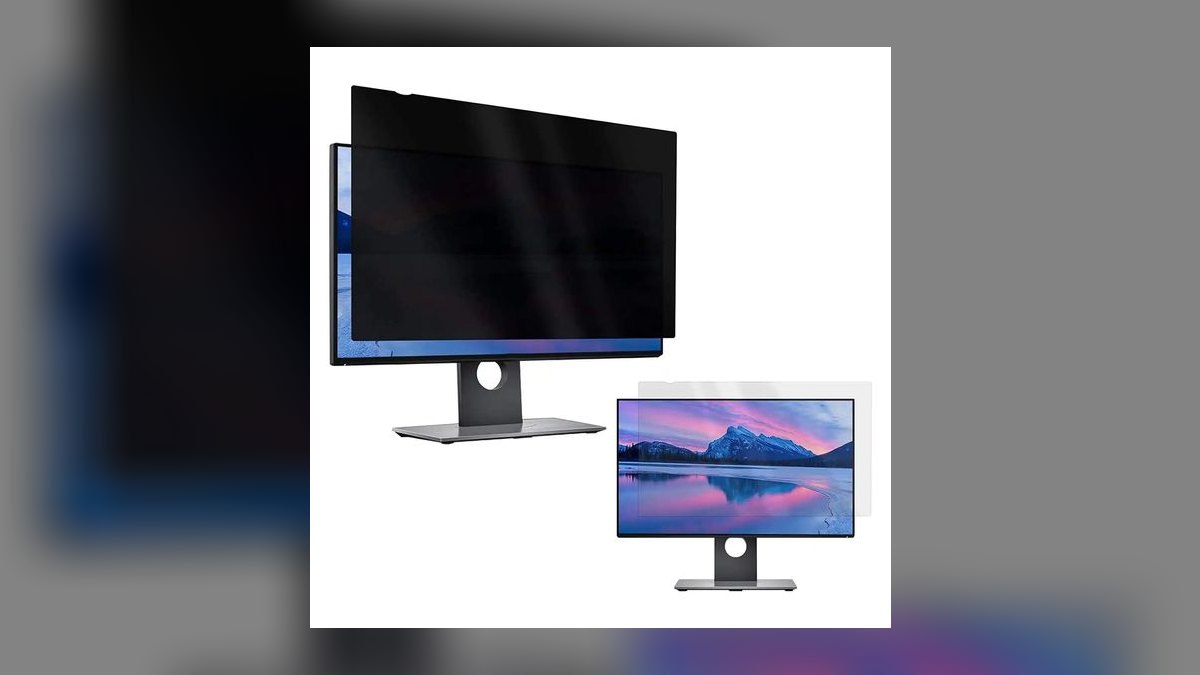
It ranks tenth because four-directional blocking is genuinely useful but costs roughly 30-50% more than an equivalent standard filter. Two-way filters block viewing from above and below in addition to left and right, closing the overhead gap that horizontal-only louvers leave wide open. The added louver layer compounds dimming, cutting more brightness than the typical 15-30% single-direction penalty. Sizing follows standard 16:9 dimensions.
This matters in standing-desk floors, mezzanine layouts, or offices with glass ceilings and upper walkways where someone can literally look down at your screen. What it trades away is on-axis brightness and money for a threat most desks never face. Compared to the Photodon universal above it, coverage is more complete in every direction but the image you personally see is noticeably darker.
How we ranked these
Ranking weighted four measurable things: effective viewing-cone width (the 3M GF270W9B Gold blocks beyond roughly 60 degrees total; VINTEZ and Kensington MagPro narrow to about +/- 30 degrees), on-axis brightness retention, attachment method durability, and price per screen. Fellowes PrivaScreen scored highest on blackout darkness. Photodon earned points for non-standard sizing support and glue-free mounting. Cost was measured per monitor, not per package.
Deliberately ignored: manufacturer blue-light percentage claims, which vary by measurement method and rarely change purchase outcomes. Also ignored bundled accessories like cleaning cloths and storage sleeves, brand-name recognition on its own, and star ratings from retail listings where verified-purchase status cannot be confirmed. Anti-fingerprint marketing language was skipped because every matte filter shows smudges. Warranty length was noted but not weighted, since filters rarely fail mechanically.
What to look for
Attachment method matters more than the privacy spec, because every mainstream filter lands near 30 degrees anyway. If you remove the filter for video calls or design review, buy magnetic — the Kensington MagPro snaps off in seconds with no adhesive residue. If it never comes off, adhesive or slide-tab is cheaper and thinner. Measure bezel width first: frameless monitors reject slide-in rails entirely.
The common mistake is buying by diagonal inches alone. A 24-inch 16:10 business panel and a 24-inch 16:9 monitor need different filters, and ordering the wrong aspect ratio leaves a visible gap along one edge. Second mistake: assuming a darker filter is better. Fellowes-grade blackout dims your own view noticeably, which is right for HIPAA desks and wrong for spreadsheet work in a dim room.
Related questions
Does a privacy filter reduce monitor brightness?
Yes. Expect roughly 15 to 30 percent loss on standard filters, and more on the darkest compliance-grade models like the Fellowes PrivaScreen. Premium filters with gold-tinted louvers, such as the 3M GF270W9B, retain more on-axis brightness than black-louver equivalents. Most people compensate by raising monitor brightness one or two notches, which slightly increases power draw.
What is the difference between a two-way and a four-way privacy filter?
Two-way filters use vertical louvers that block left and right views while leaving the screen readable from above and below. Four-way filters block all four directions, which matters at standing desks, in mezzanine offices, or under glass ceilings. Four-way costs roughly 30 to 50 percent more and dims your own view further because of the denser louver grid.
Do privacy filters work on curved and ultrawide monitors?
Only if the filter is specifically rated for the curvature radius. Rigid acrylic panels will not conform and will bow away from the panel edges, creating light gaps. Flexible film versions handle gentle curves. Ultrawide 21:9 panels need dedicated 21:9 filters — a 16:9 filter sized to the same diagonal leaves both side thirds exposed.
Are magnetic privacy filters worth the extra cost?
They are if you remove the filter regularly. The Kensington MagPro at roughly $90 uses a thin magnetic strip on the bezel so the filter lifts off in seconds with no adhesive to re-seat. If the filter stays on permanently, that convenience is wasted money — a fixed adhesive filter at half the price delivers the same viewing-angle protection.
Can two people share a screen through a privacy filter?
Within about 15 degrees of center on a 30-degree filter, yes — two people sitting shoulder to shoulder at normal desk distance can usually both read it. Beyond that the image darkens quickly. If regular side-by-side review is part of your workflow, a wider 60-degree filter or a removable magnetic mount is the better fit.
Do privacy filters help with glare and eye strain?
Most include an anti-glare matte layer that diffuses overhead light reflections, and many add a blue-light-reducing tint. Kensington rates the MagPro at about 22 percent blue-light reduction. The 3M Gold blocks up to 97 percent of UV. These are genuine secondary benefits, but a dedicated matte anti-glare film costs less if privacy is not the goal.
How long does a privacy filter last before it needs replacing?
The optical film itself lasts years — the failure point is almost always the adhesive strips or the tab mounts, which weaken after repeated removal. Slide-tab and magnetic designs outlast adhesive for anyone who detaches the filter often. Scratches on the outer matte layer are the other end-of-life signal, since matte coatings cannot be buffed out.
Should the filter go on glossy or matte side out?
Reversible filters like the 3M Gold and Kensington MagPro let you choose. Matte out is right for bright offices and rooms with windows, since it diffuses reflections. Glossy out preserves contrast and color accuracy, which matters for photo editing and design work, but it shows fingerprints and mirrors ceiling lights in dim rooms.
FAQ
What is the best overall monitor privacy filter in 2027?
The 3M GF270W9B Gold Privacy Filter, at roughly $110 for 27 inches. 3M developed micro-louver technology, and the gold-tinted louvers address the standard complaint that privacy screens dim and muddy your own view. It blocks the screen beyond about 60 degrees of total viewing cone, filters up to 97 percent of UV, and reverses between matte and glossy.
What is the best value monitor privacy filter?
The VINTEZ 24-inch 16:9 privacy screen at roughly $25 for a two-pack — two filters for what most brands charge for one. Each has an anti-glare coating, a blue-light filter, and micro-louvers narrowing the view to about plus or minus 30 degrees. Clarity is good rather than excellent; it dims slightly more than the 3M Gold does.
How do monitor privacy filters actually work?
A thin polymer film holds thousands of microscopic vertical louvers per inch, functioning like miniature Venetian blinds. Viewed straight on, light passes between the louvers at full brightness. Past roughly 30 to 35 degrees off center, the louvers intercept the light and the screen reads as dark or unreadably blurred to anyone standing beside you.
What does a 30-degree viewing angle actually mean?
It describes the total cone in which the screen stays visible — about 15 degrees left and 15 degrees right of dead center. A 60-degree rating means roughly 30 degrees each way. For desk use, 30 degrees is the practical sweet spot: it defeats shoulder-surfers while still letting a colleague seated directly beside you read the display.
Which privacy filter is darkest for compliance work?
The Fellowes PrivaScreen, at roughly $55, is among the darkest filters sold — from the sides the screen goes solidly black rather than merely dim. The trade-off is more dimming of your own straight-on view. That makes it the right pick for healthcare, legal, and finance desks where a passerby's glance genuinely cannot be tolerated.
Do privacy filters work on OLED monitors?
Less reliably than on IPS and VA panels. OLED's deeper blacks and wider native viewing angles can let visibility bleed through at steeper angles. If you run an OLED display, look for a filter explicitly rated for OLED, which uses tighter louver spacing to compensate. Test it at your actual seating distance during the return window.
How do I fit a privacy filter to a frameless monitor?
Slide-in rails need a bezel to grip, so frameless and ultra-thin-bezel monitors require an adhesive-strip filter that bonds to the screen edge without overlapping. Measure bezel width before ordering — under about 5mm, slide-in tabs usually will not seat. Photodon offers genuine sizing help for non-standard panels and mounts without permanent glue at roughly $45.
Will removing a privacy filter leave residue on my screen?
Properly applied adhesive-strip and slide-tab filters normally come off clean, since the adhesive bonds to the bezel or screen edge rather than the active display area. Repeated removal weakens the tack over time. If you plan to detach the filter daily, buy magnetic — the Kensington MagPro's bezel strip eliminates the residue question entirely.
How much should I budget for a 27-inch privacy filter?
Generic budget brands run $25 to $50 with possible color shifts and durability issues. Mid-range names like Targus and Fellowes sit at $50 to $90. Premium 3M and Kensington filters land at $90 to $160 with the best optical clarity and anti-glare layers. Enterprise compliance-grade filters for 32-inch and larger panels reach $130 to $200.
Do privacy filters stop someone standing directly behind me?
No. Standard filters use vertical louvers that block only left and right angles, so anyone positioned behind your chair sees the screen normally. Four-way filters block vertical angles too, but even those do not defeat a direct over-the-shoulder view. Screen position and desk orientation remain the only real defense against that angle.
Sources
- https://www.3m.com/3M/en_US/p/d/b40068717/
- https://www.kensington.com/p/products/device-security/privacy-screens/
- https://www.nytimes.com/wirecutter/reviews/best-monitors/
- https://www.pcmag.com/picks/the-best-computer-monitors
- https://www.consumerreports.org/electronics-computers/computers/
- https://www.ftc.gov/business-guidance/privacy-security
- https://www.hhs.gov/hipaa/for-professionals/security/index.html
- https://www.fellowes.com/us/en/products/office-supplies/privacy-screens
Related on PULSE
- [More monitor privacy filters rankings and buying guides](/knowledge)
- [PULSE Tools and calculators](/tools)
- [Everything on PULSE RevOps](/)
This page will be disappearing soon. Save it to your device for $1 — or read it free while it is here.
@Kory-White- · if Venmo asks, the last 4 of my number are 2012
This page is gone.
This one is off the shelf now. $1 keeps it on your phone for good — the whole page, pictures and diagrams included.
 pulse-reviewsTop 10 Cool Mist Humidifiers — Best Overall + Best Value in 2027
 pulse-reviewsTop 10 USB Conference Microphones for Home-Office Sales Calls in 2027
 pulse-reviewsTop 10 Gaming Mice — Best Overall + Best Value in 2027
 pulse-reviewsTop 10 TSA-Approved Toiletry Bags for Sales Travel in 2027
 pulse-reviewsTop 10 Battery Leaf Blowers — Best Overall + Best Value in 2027
 pulse-reviewsTop 10 Cordless Stick Vacuums — Best Overall + Best Value in 2027
 pulse-reviewsTop 10 Portable DAC/AMP Combos — Best Overall + Best Value in 2027
 pulse-reviewsTop 10 Electric Pressure Cookers — Best Overall + Best Value in 2027
 pulse-reviewsTop 10 Electric Nail Drills — Best Overall + Best Value in 2027
 pulse-reviewsTop 10 Air Fryers — Best Overall + Best Value in 2027