


Best Headsets for Sales Teams in 2027: Top 10 Ranked
Quality
Certified

The best sales headsets in 2027 win on microphone clarity first, all-day comfort second, and central fleet management third. Wireless UC models in the $150–$250 range cover most inside-sales floors; active noise cancellation above $300 only pays off in genuinely loud open rooms. Match the wearing style to how reps actually dial, not to spec sheets.
The outcome you should expect
Buying the right headset is not a productivity revolution. It is a defect-removal exercise, and the honest framing matters because it shapes what you should measure afterward. A rep on a bad headset does not close 20% fewer deals. What a rep on a bad headset does is lose four or five minutes per day to "sorry, you cut out — say that again," take off the device by 2pm because the clamp force has become a headache, and occasionally blow a discovery call because the prospect's objection arrived as garbled syllables and got answered as if it were something else.
Aggregate those small failures across a 30-rep floor and you get real money, but it arrives as the *absence* of friction rather than a visible lift. The realistic outcomes you should expect from an upgrade, in rough order of confidence:
Fewer audio restarts per call. This is the most reliable and most measurable improvement. If your dialer or conversation-intelligence tool logs call duration, you will often see average handle time on connected calls tick *down* slightly after a headset refresh, because the "can you hear me" preamble shrinks. Do not expect a dramatic shift — a minute or two per rep per day is a defensible expectation, not ten.

Higher wear-time compliance. This is the outcome most teams underrate. The headset that never leaves the rep's head is worth more than the technically superior headset that gets swapped for earbuds at lunch. If you can walk the floor at 4pm and see the same devices on heads that were there at 9am, the purchase worked. If reps have quietly reverted to their personal earbuds, you bought the wrong thing regardless of what the review sites said.
Cleaner conversation-intelligence transcripts. This one is genuinely underappreciated and it is the strongest secondary argument for a mic upgrade in 2027. Gong, Chorus, and the transcription layers inside modern dialers all degrade when the input audio is noisy or clipped. Poor transcription means poor keyword tracking, poor talk-ratio analysis, and coaching insights built on a corrupted record. A better microphone improves every downstream analytics product you have already paid for. When a headset refresh is hard to justify on its own, this is often the argument that lands with a CRO — you are not buying headsets, you are repairing the input to the coaching stack.
Lower IT ticket volume. Consolidating on one or two SKUs with a central management console reduces the "my headset won't pair" ticket class substantially. Mixed fleets — where every rep bought whatever they liked on the company card — generate a long tail of support work that nobody tracks but everybody feels.
What you should *not* expect: a measurable jump in connect rate, a change in win rate you can attribute cleanly, or reps thanking you unprompted. Audio equipment is infrastructure. It is noticed when it fails and invisible when it works, and any vendor promising a conversion lift from a headset is selling something the category cannot deliver.
What drives that outcome

Four variables do nearly all the work, and they are not weighted equally.
Microphone system (heaviest weight). The prospect's experience of the call is decided entirely by the mic — the speaker quality only affects your rep. A single omnidirectional mic picks up the whole room and makes reps sound distant and hollow. Dual- and triple-mic arrays with beamforming isolate the voice and suppress ambient noise, which is the entire ballgame on an open floor. Poly's Acoustic Fence approach and Jabra's multi-mic arrays are the reference points here; EPOS, built on the former Sennheiser enterprise line, is the specialist's alternative when call clarity is genuinely the top constraint. Look for wideband audio support rather than narrowband — the wider frequency range is the difference between "phone call" and "in the room."
Comfort and clamp force (second heaviest, and the one spec sheets hide). Reps wear these six to eight hours. Weight matters — under roughly 150 grams for over-ear, under 100 for on-ear or mono designs — but clamp force matters more and is almost never published. Memory foam with breathable fabric beats sealed leatherette for heat over a long shift, though leatherette isolates better. Rotating ear cups on mono headsets let a rep switch ears mid-day, which sounds trivial and is the reason some devices survive month three.

Connectivity and battery. A USB dongle gives more reliable wireless than laptop Bluetooth on most corporate machines, and it is the single most common source of "it keeps dropping" complaints when omitted. DECT is the outlier worth knowing: longer range, interference-resistant, and the right answer when desk phones are still in the mix. Battery should clear a full shift with margin — 12 to 15 hours of talk time minimum — and fast-charge matters more than total capacity, because the failure mode is a dead headset at 3pm, not one at hour 20.
Manageability. Past roughly 20 reps this stops being optional. Jabra Xpress, Poly Lens, and Logi Tune let IT push firmware, standardize EQ and sidetone settings, and see battery health without touching a desk. Below 20 reps you can live without it. Above 50 you cannot.
Benchmarks and realistic ranges
Street pricing moves with volume, region, and channel, so treat these as bands rather than quotes — and get a real quote from a reseller before budgeting, because list price and what a 50-unit order actually costs are rarely the same number.
Roughly $100–$160 — the volume tier. Lightweight UC headsets and value wireless models live here. The Logitech Zone Vibe 130 sits at the light-and-comfortable end with Logi Tune management behind it. The Anker PowerConf H700 is the budget pick that does not feel like one, with decent ANC and a charging stand. The Poly Voyager 4320 is the standout in this band — it carries Poly's mic pedigree at a price that makes outfitting an entire SDR floor realistic. Yealink's WH63 lands near the top of the band and is the DECT answer for desk-phone environments. This tier is correct for SDR and BDR pods, early-stage teams, and anyone equipping at scale where the marginal $80 per rep across 60 reps is a real budget line.

Roughly $200–$290 — the mainstream tier. This is where most inside-sales and account-management teams should land. The Jabra Evolve2 65 is the default recommendation for a reason: strong dual-mic pickup, comfortable across a shift, solid dongle-based wireless, and Jabra Direct/Xpress behind it for fleet work. The Poly Voyager Focus 2 sits at the upper end and adds active noise cancellation to Poly's class-leading mic, which makes it the right pick for reps who split time between calls and heads-down work in a room that is busy but not chaotic.
Roughly $300–$400 — the premium tier. The Jabra Evolve2 75 brings strong ANC, an eight-mic call system, and dual Bluetooth so a rep stays connected to laptop and phone simultaneously — genuinely useful for hybrid and field-adjacent sellers. EPOS Adapt 660 is the clarity specialist. Bose Headset 700 UC has the class-leading noise cancellation for floors where ambient noise is the actual enemy. Sony's WH-1000XM5, paired with a UC dongle, offers arguably the best comfort and ANC available, with the honest caveat that its mic is tuned more for music than for calls — it suits reps who take fewer, longer conversations rather than high-volume dialers.
Budget planning heuristics. Assume a three-year replacement cycle for wireless devices; batteries degrade, and by year four you are managing failures rather than assets. Add 10–15% spare units on top of headcount for breakage, new hires, and the ones that vanish. Amortized, a $230 headset on a three-year cycle is roughly $6.40 a month per rep — comfortably below what the same team spends per seat on the dialer, the CRM, or the conversation-intelligence tool whose transcripts the microphone is feeding.

Adjacent spend worth folding into the same budget cycle. If you are refreshing audio, look at the rest of the call stack at the same time. A webcam refresh matters for demo-heavy AEs. A USB-C dock or hub matters if reps are docking laptops daily and fighting for ports — a dongle competing with a monitor cable for the last port is a real source of headset complaints that get misattributed to the headset. Buying these in one cycle also gets you better volume pricing than three separate purchase orders.
Risks, edge cases, and failure modes
The mixed-fleet trap. The most common failure is not buying the wrong headset — it is buying six different ones. Every SKU adds a firmware baseline, a pairing procedure, a support article, and a class of ticket. Standardize on one primary model plus one alternate for people the primary genuinely does not fit. Two SKUs is manageable. Six is a support tax paid forever.
Buying ANC you do not need. Active noise cancellation solves a rep's *listening* problem, not the prospect's *hearing* problem. If your complaint is "prospects say I sound muffled," ANC does nothing for that — you have a microphone problem. Teams routinely overspend on ANC to fix an issue that a better mic array at half the price would have solved. Diagnose which side of the call is broken before you shop.
The comfort spec you cannot read. Clamp force and long-wear heat build-up do not appear on spec sheets and do not show up in a fifteen-minute demo. This is why a pilot is non-negotiable. A device that feels great for twenty minutes can be intolerable at hour six, and you will not find that out from reviews written by people who wore it for an afternoon.
Bluetooth density on a crowded floor. Forty reps on Bluetooth in one open room is a genuinely different RF environment from one person at a home desk. Dropouts, stutter, and pairing failures cluster in dense floors and are frequently misdiagnosed as defective hardware. Dongle-based wireless is more resilient than native laptop Bluetooth; DECT is more resilient still. Pilot at floor density, not at one desk.
Battery degradation on the three-year edge. Wireless headsets that comfortably cleared a shift in year one start dying at 3pm in year three. Reps rarely file a ticket for this — they just start plugging in mid-day and quietly resent the device. Track battery health through the management console if you have one, and treat a cluster of mid-day charging as a replacement signal rather than a user habit.
Home and hybrid environments break the loud-office assumption. A rep working from a quiet spare bedroom needs different things than one on a sales floor: less noise cancellation, more multipoint connectivity for switching between a personal phone and a work laptop, and more tolerance for a device that also has to work for personal use. If half your team is remote, the "best headset for the floor" is not automatically the best headset for the team.
The Sony/consumer-headphone edge case. Premium consumer ANC headphones are excellent products with mic systems tuned for the wrong job. They are legitimate for managers, executives, and low-volume/high-value sellers, and they are a mistake for a 60-dial-a-day SDR. Buying them because reps asked for them by name is how floors end up with beautiful headphones and worse call audio than before.
Hygiene and shared devices. If you hot-desk or run shifts, ear cushions are consumables, not permanent parts. Budget replacement cushions and confirm they are user-replaceable before you commit — a fleet where cushions cannot be swapped becomes a fleet you replace entirely a year early.
Certification gaps with your actual platform. Teams-certified and Zoom-certified are not marketing decoration; they change how mute buttons, call answer, and presence behave. A device that is certified for the platform you do not use will still work, but reps lose the hardware call controls that make the device feel integrated, which quietly erodes adoption.
A practical rollout plan

Treat a headset refresh like any other tooling rollout: pilot, standardize, deploy, verify.
Week 1 — diagnose before you shop. Establish what is actually broken. Pull a sample of recent call recordings and listen to the rep-side audio, not the prospect side. Ask reps two questions: do prospects ask you to repeat yourself, and are you still wearing this thing at 4pm. The answers point you at mic quality or comfort, and those lead to different products. Also count what is currently on the floor — most teams are surprised by how many distinct devices are already in use.
Week 2 — shortlist two, not five. Pick one mainstream candidate and one alternate wearing style (mono if your primary is stereo, or vice versa). Evaluating five models triples the pilot burden and rarely changes the outcome. Order enough units for six to eight reps, deliberately including your loudest talker, your longest-shift dialer, and someone who has complained about every previous headset — that last person is your best signal.
Weeks 3–4 — pilot at real conditions. Two weeks minimum, on the actual floor, at actual call volume. One week is not enough to surface comfort failures. Collect structured feedback at the end: comfort at hour six, dropout frequency, whether prospects commented on audio, and whether the rep would keep it. Simultaneously have IT test the management console — enroll a device, push a firmware update, and change a setting remotely before you commit to the platform, not after.

Week 5 — decide and negotiate. Pick the primary SKU, keep the alternate for fit exceptions, and get a volume quote. Order 10–15% spares. Confirm replacement-cushion availability and warranty terms in the same conversation — those details are far easier to negotiate before the purchase order than after.
Weeks 6–7 — deploy in waves. Roll out by pod or team, not all at once. The first wave surfaces the deployment problems your pilot missed, and fixing them for 8 reps is far cheaper than fixing them for 60. Spend ten minutes per pod on setup: sidetone level, mute behavior, dongle placement, and charging routine. This tiny bit of onboarding is the difference between adoption and a drawer full of expensive hardware.
Week 8 onward — verify and maintain. Re-listen to call audio from the same reps you sampled in week 1 and confirm the defect actually went away. Walk the floor at 4pm and count devices still on heads. Set a quarterly battery-health check in the management console and a calendar reminder at the 30-month mark to start budgeting the next cycle.
Related questions
Should remote reps get a different headset than office reps?
Often yes. Remote reps need less noise cancellation and more multipoint connectivity for switching between laptop and phone. Office reps on a loud floor need stronger mic isolation. Standardizing on one model across both is convenient but usually means one group is overpaying and the other is underserved.
Do wired headsets still make sense in 2027?
For dedicated call-center seats, yes. Wired removes battery management, pairing failures, and RF density problems entirely, and it costs less. The trade-off is mobility — reps who stand, walk, or step away mid-call will resent the tether. Wired is a fit for fixed-desk, high-volume dialing.
How long should a sales headset fleet last?

Plan three years for wireless, longer for wired. Battery capacity is the limiting factor: by year three, devices that once cleared a full shift start needing a mid-day charge. Set a 30-month reminder to begin budgeting rather than waiting for widespread failures to force an emergency purchase.
Does a better microphone actually improve conversation-intelligence data?
Yes, and this is underrated. Transcription accuracy degrades with noisy or clipped input, which corrupts talk-ratio metrics, keyword tracking, and coaching insights. Improving mic quality improves the input to every analytics tool you already pay for — often the strongest budget argument available.
Is DECT still worth considering?
If desk phones remain in your environment, yes. DECT offers longer range and better interference resistance than Bluetooth, which matters on dense floors. If you are fully softphone-based, dongle-based wireless is simpler and the DECT advantage largely disappears.
FAQ
What is the single most important feature in a sales headset?
Microphone clarity, without close competition. The prospect's entire experience of the call is determined by the mic, not the speaker. Everything else — noise cancellation, battery, weight — improves the rep's experience. Only the microphone improves the customer's, and that is the side of the call that closes deals.
How much should a team budget per rep in 2027?

Roughly $100–$160 covers solid value models for SDR pods at scale, $200–$290 is the mainstream sweet spot for most inside-sales teams, and $300–$400 buys premium ANC or specialist clarity. Add 10–15% spare units and plan a three-year replacement cycle when you build the budget.
Are wireless headsets reliable enough for all-day calling?
Yes, provided you use a USB dongle rather than relying on laptop Bluetooth, and you buy something rated well past a single shift. Fast charging matters more than headline battery numbers, because the real failure is a dead headset at 3pm, not one at hour twenty.
Does every sales team need active noise cancellation?
No. ANC solves the rep's listening problem on a loud open floor. It does nothing for how the rep sounds to the prospect — that is the microphone's job. Quiet offices and home setups can skip ANC entirely and put the savings into a better mic array.
Can one headset serve both phone calls and video meetings?
Mostly yes. Modern UC headsets connect to a laptop and a phone simultaneously via multipoint. Stereo models suit reps who take video calls and want both ears engaged; mono suits heads-down dialers who need to stay aware of the room. Pick the wearing style by workflow, not by price.
How do I manage headsets across a large team?
Use a fleet management console — Jabra Xpress, Poly Lens, Logi Tune, or the equivalent from your chosen vendor. These let IT push firmware, standardize settings, and monitor battery health remotely. Past roughly 20 reps this stops being a convenience and becomes the thing that keeps the fleet functional.
Sources
- https://www.jabra.com/business/office-headsets
- https://www.poly.com/us/en/products/headsets
- https://www.logitech.com/en-us/business/products/headsets.html
- https://www.bose.com/
- https://www.sony.com/electronics/headband-headphones
- https://www.eposaudio.com/en/us/enterprise
- https://www.yealink.com/en/product-list/headset
- https://www.techradar.com/best/best-office-headsets
- https://www.pcmag.com/picks/the-best-headsets-for-conference-calls
- https://learn.microsoft.com/en-us/microsoftteams/devices/certified-hardware
Related on PULSE
- Top 10 USB-C Hubs for Mac-Based Sales Teams in 2027
- Best Noise-Cancelling Earbuds for Sales Reps in 2027: Top 10 Ranked
- Best Business Laptops for Sales Reps in 2027: Top 10 Ranked
- Best Webcams for Sales Demos in 2027: Top 10 Ranked
- Top 10 Wireless Headsets with Mic for Sales Reps in 2027
- Top 10 Wired Pro Headsets with Mic for Call Centers in 2027
This page will be disappearing soon. Save it to your device for $1 — or read it free while it is here.
@Kory-White- · if Venmo asks, the last 4 of my number are 2012
This page is gone.
This one is off the shelf now. $1 keeps it on your phone for good — the whole page, pictures and diagrams included.
 pulse-reviewsTop 10 Drone Batteries — Best Overall + Best Value in 2027
 pulse-reviewsTop 10 Neck and Shoulder Massagers — Best Overall + Best Value in 2027
 pulse-reviewsTop 10 Lap Desks for Remote AE Couch Work in 2027
 pulse-reviewsTop 10 Clothes Steamers — Best Overall + Best Value in 2027
 pulse-reviewsTop 10 Clip-On Phone Lenses — Best Overall + Best Value in 2027
 pulse-reviewsTop 10 Standing Desks for Remote AEs in 2027
 pulse-reviewsTop 10 Camera Sliders — Best Overall + Best Value in 2027
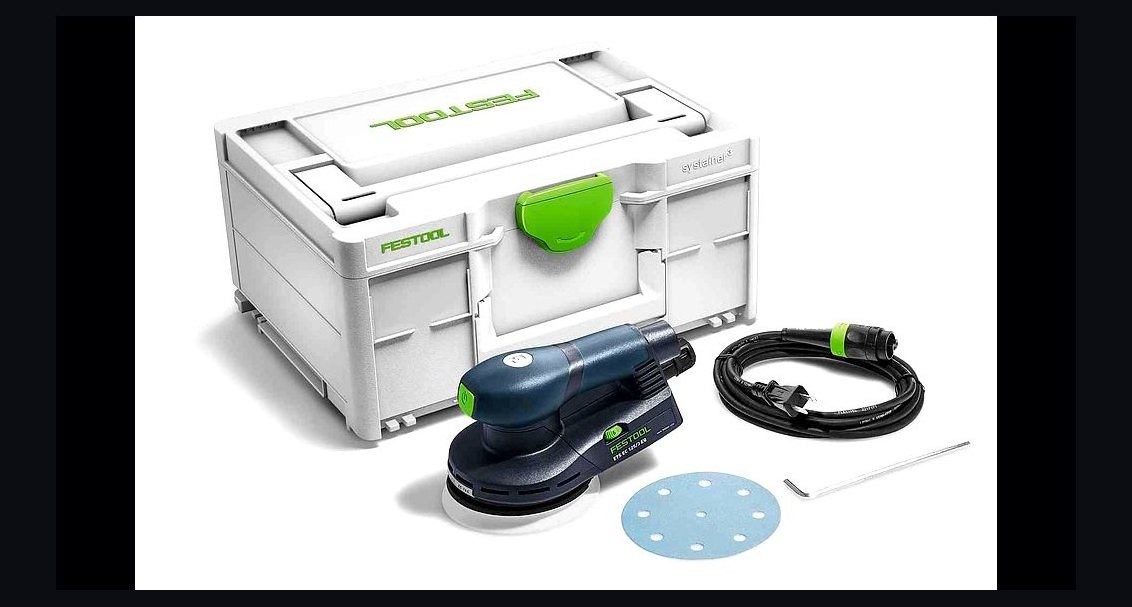 pulse-reviewsTop 10 Random Orbital Sanders — Best Overall + Best Value in 2027
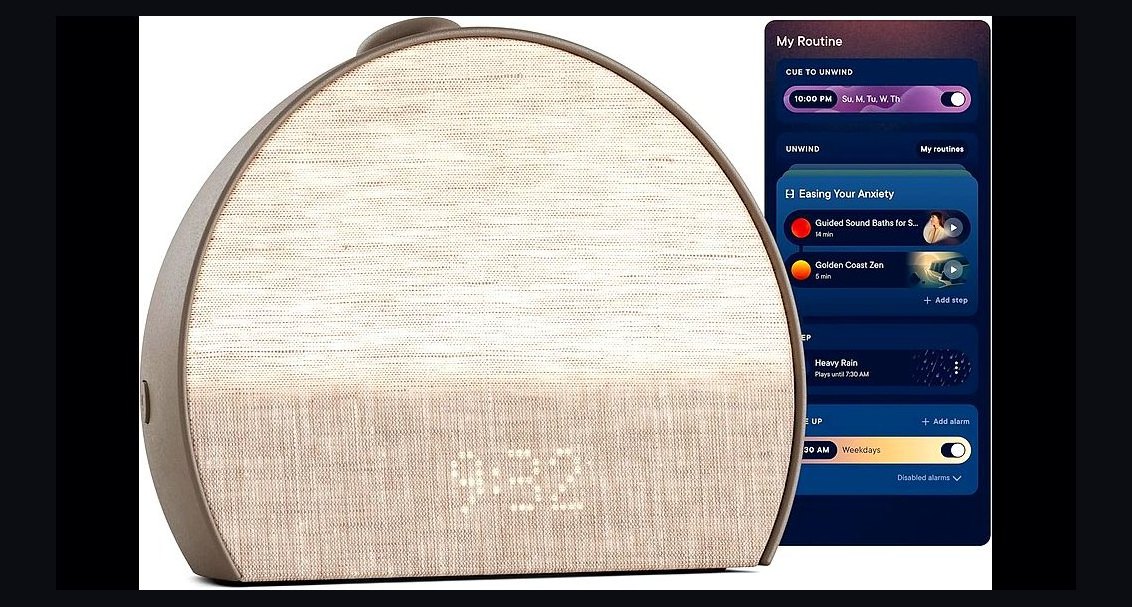 pulse-reviewsTop 10 Sunrise Alarm Clocks — Best Overall + Best Value in 2027
 pulse-reviewsTop 10 Open-Ear Earbuds — Best Overall + Best Value in 2027