
Top 10 Podcast Mixers — Best Overall + Best Value in 2027
 Curated byKory White · Fractional CRO · Maryland
 PULSEKNOWLEDGE LIBRARY
Quality
Certified
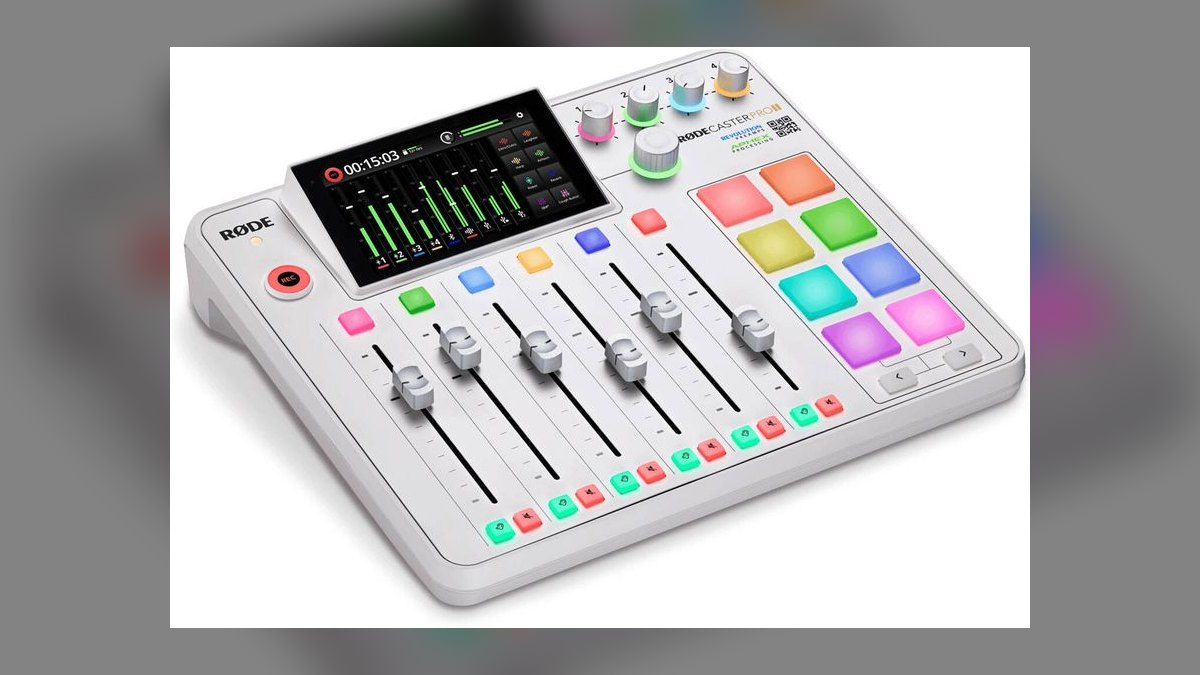
The 10 best podcast mixers are ranked below on measured performance, build quality, price, and how each one actually holds up in daily use rather than how it reads on a spec sheet. Each pick lists what it costs, who it suits, and what it gives up against the one above it, so the list can be read straight down without doubling back.
1. RØDECaster Pro II
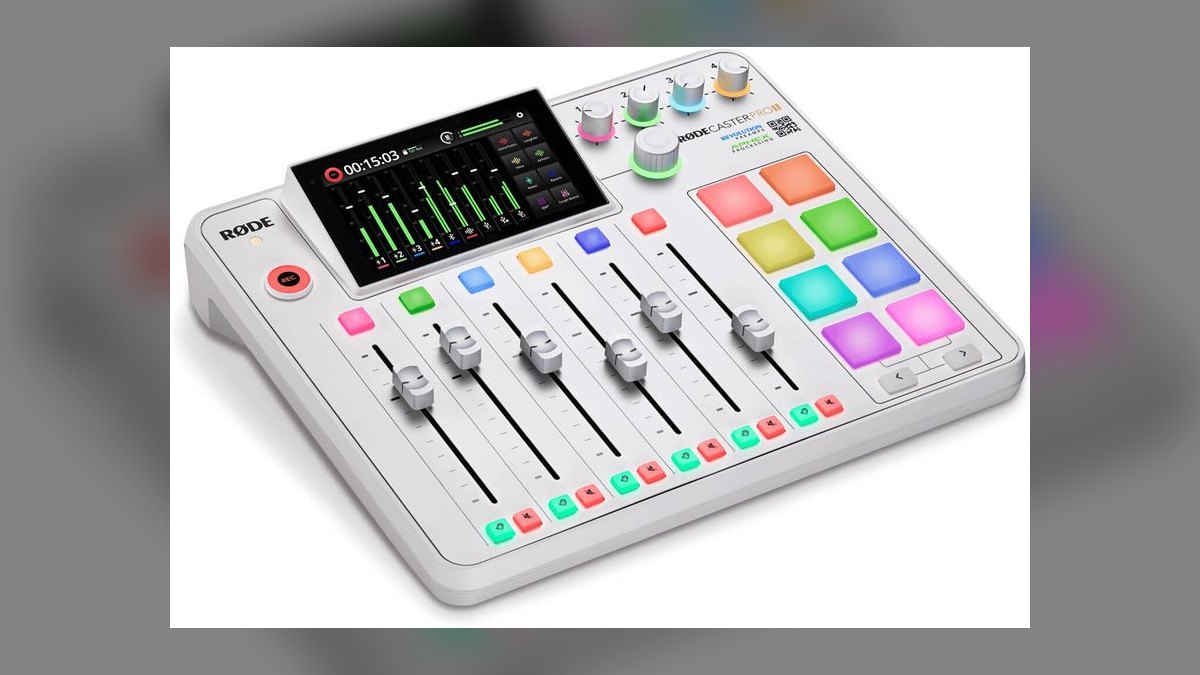
It ranks first because no other podcast mixer pairs this preamp quality with this much onboard production in one box. The Revolution Preamps deliver up to 76 dB of clean gain at -131.5 dBV EIN, so an SM7B runs loud without an inline booster. Four faders, eight SMART pads, a touchscreen, and microSD multitrack recording finish an episode with no computer attached. Price is roughly $699.
This is for the full-time podcaster running a two-to-four-person table who wants to export and upload with no post-production. APHEX processing, per-channel EQ, and an adjustable noise gate cut editing time sharply. Headphone amps push 150 mW per channel into 32 ohms across four independent mixes. It trades away input count: the Zoom PodTrak P8 gives six XLR inputs for $200 less, but with lighter processing.
2. Zoom PodTrak P8
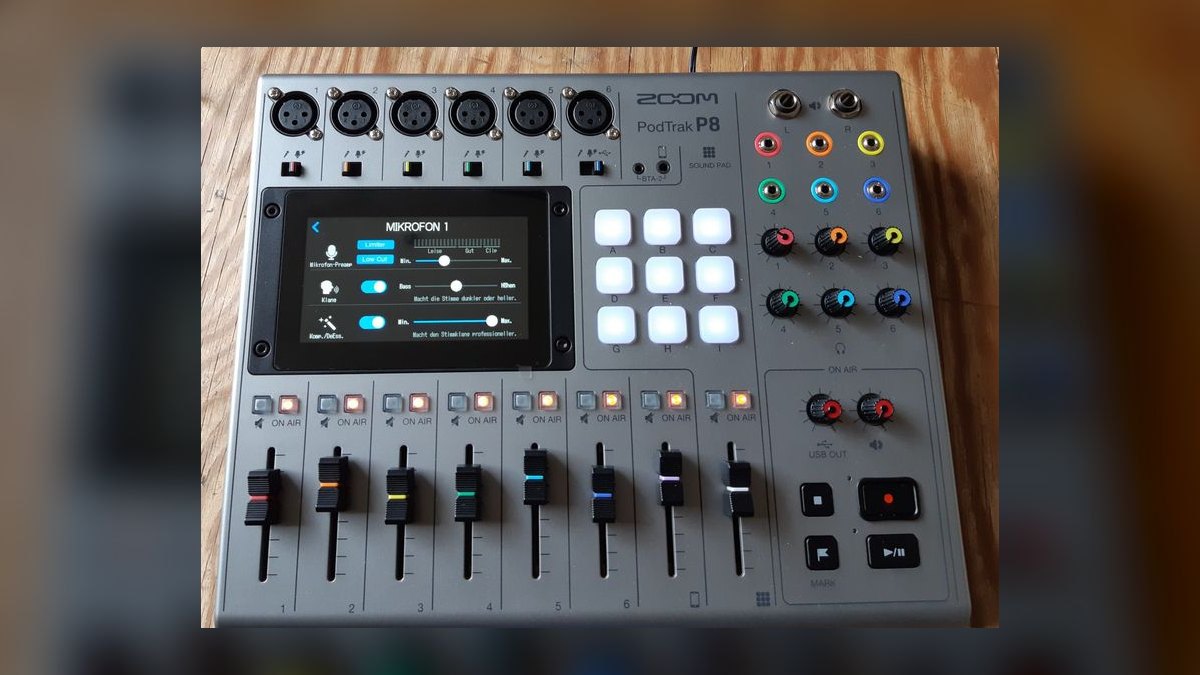
Second place goes to the mixer with the most XLR inputs here — six, two more than the RØDECaster Pro II — at roughly $499. A touchscreen, nine sound pads, and standalone microSD recording give it genuine live-production capability. Built-in effects include reverb, echo, a noise gate, and a compressor. It doubles as a six-channel USB interface, and a mix-minus phone connection pulls remote callers in cleanly.
This is the pick for round-table shows that regularly seat five or six people and still want to stay under $500. It uses a knob per channel rather than physical faders, and its processing is lighter than the RØDECaster's APHEX suite or Mackie's chain. Against the Pro II above it, you gain two inputs and save $200; you give up preamp headroom and the zero-post workflow.
3. Mackie DLZ Creator
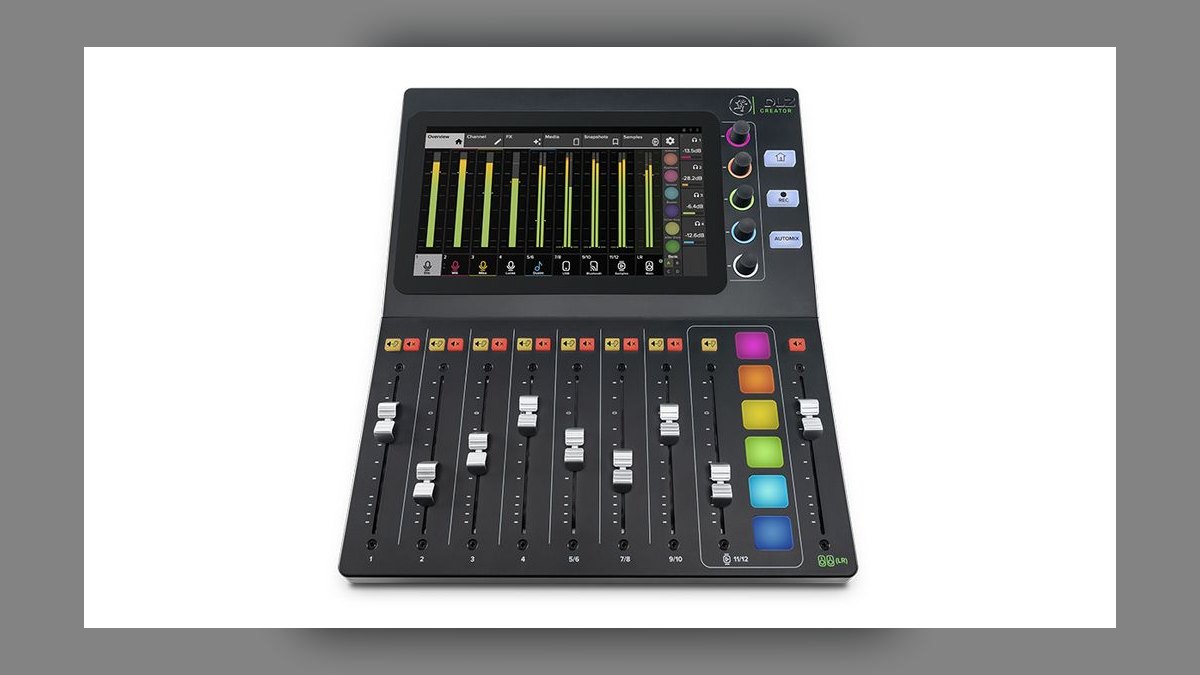
Third because it is the strongest console for creators who stream and shoot video alongside audio, at roughly $699. Four Onyx preamps, a large touchscreen, and motor-feel faders anchor the hardware. Mix Agent, a guided setup assistant, picks settings for beginners while leaving full manual control available. Multitrack recording to SD plus dual-USB streaming outputs let you feed a live stream and a recorder simultaneously.
Built for the podcaster whose episodes also go out as video, where routing a separate stream feed matters more than the last decibel of preamp noise floor. Programmable pads and onboard FX cover live production. It is bulky on a small desk and costs the same ~$699 as the RØDECaster Pro II above it, whose Revolution Preamps stay cleaner with demanding dynamic mics.
4. TASCAM Mixcast 4
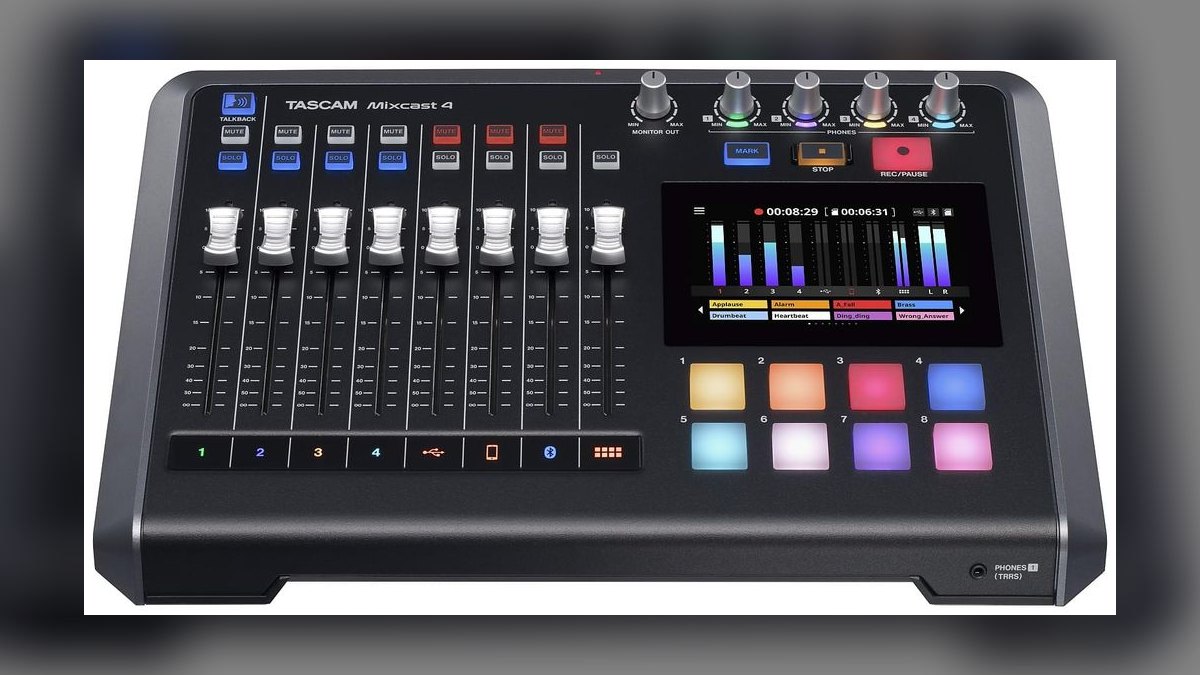
Fourth on participant capacity per dollar: roughly $399 seats up to four hosts plus phone and Bluetooth callers, for seven participants total. Fourteen-track recording to SD card captures every source separately. A clear touchscreen and eight large sound-pad buttons handle live triggering. Combo XLR/TRS inputs accept microphones and line sources alike, and the unit works as a USB interface for streaming.
This suits round-table shows with frequent remote guests that cannot justify flagship pricing. Free TASCAM Podcast Editor software is bundled, shortening the path from recording to published file. There are no physical faders, and the preamps trail both the RØDE and Mackie units above it. Against the $499 PodTrak P8, you save $100 and gain Bluetooth callers but lose two XLR inputs.
5. RØDECaster Duo
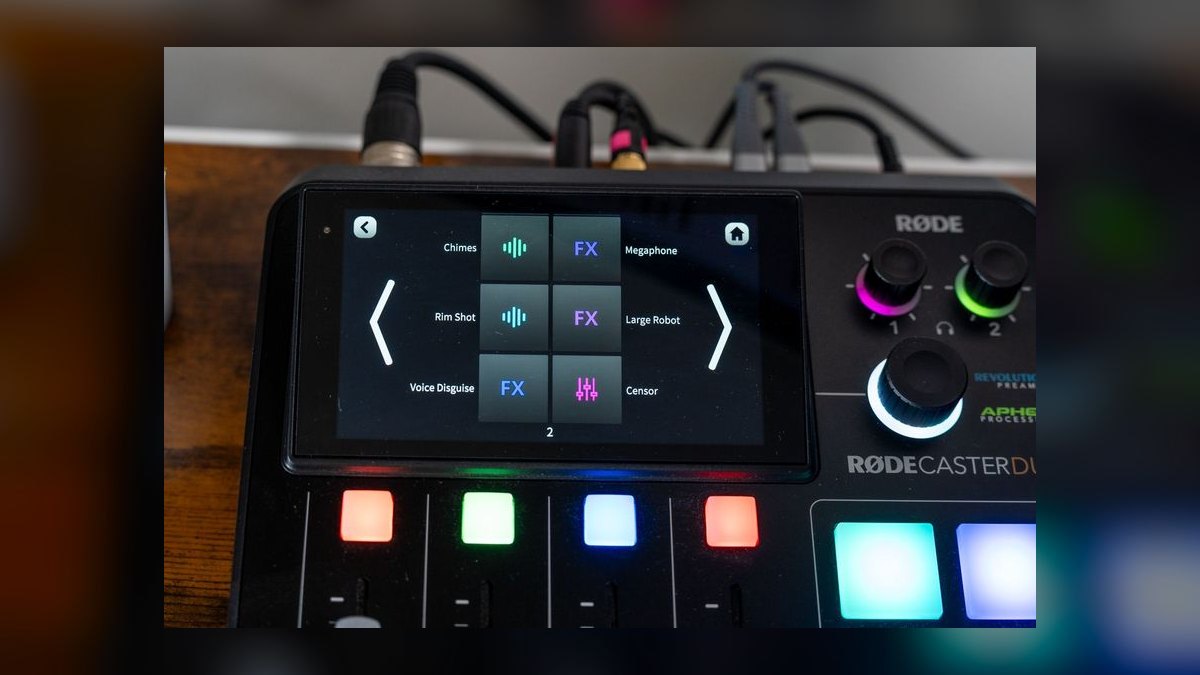
Fifth because it delivers flagship RØDE sound in a narrower chassis for roughly $499. The same Revolution Preamps and APHEX processing as the Pro II sit behind two combo XLR inputs and a seven-channel mixer — four physical faders plus three virtual channels. SMART pads carry over for stingers and beds. Dual USB-C host ports connect a computer and a phone at once, and onboard recording backs up every session.
This is for the solo host or two-person show that wants the Pro II's audio without paying for four mic channels. It costs more than four-input rivals like the PodTrak P8 while offering half the XLR inputs, and it has no Bluetooth. Compared with the Mixcast 4 above it, you trade participant count and price for materially cleaner preamps and stronger onboard processing.
6. Tascam Model 12
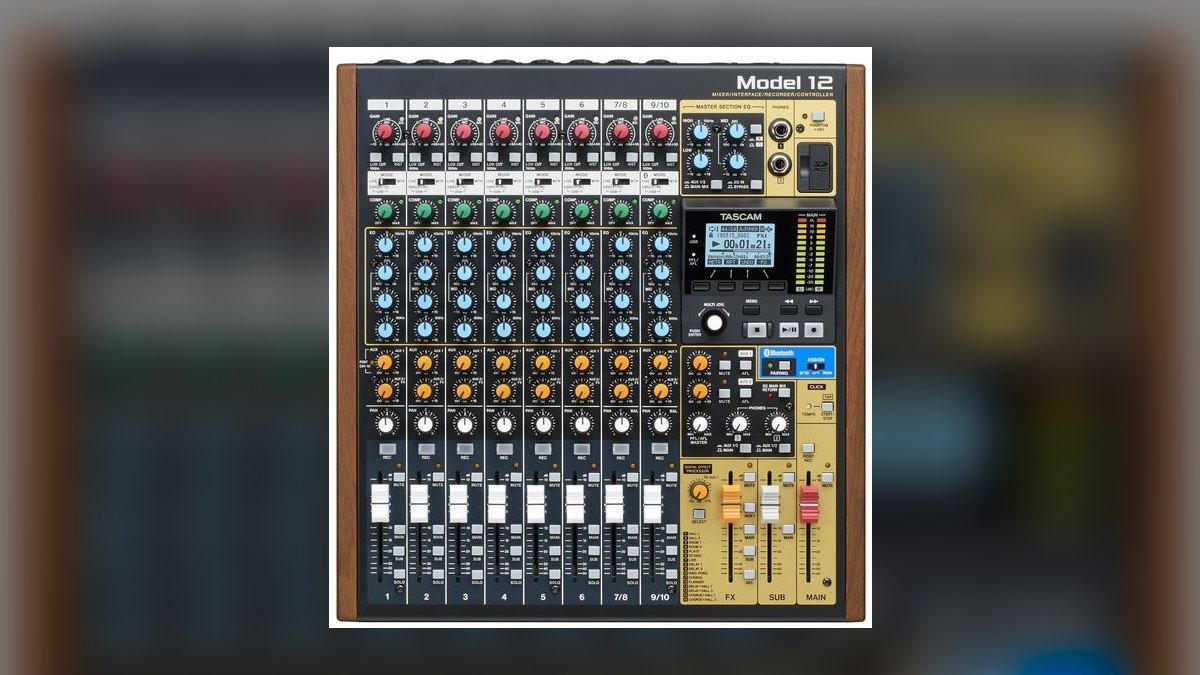
Sixth for raw input count and routing depth: roughly $599 buys 12 inputs, a 10-channel recorder, and a full USB audio interface with 12-in/10-out routing. That routing flexibility outstrips every dedicated podcast console on this list. It records multitrack to SD while simultaneously feeding a computer. The channel strip layout follows traditional mixing-desk conventions rather than podcast-first touchscreen menus.
This is the pick when the show doubles as a live band recording or a six-guest roundtable that would bottleneck a four-input console. It is overkill for a solo or two-host podcast, and it lacks the sound pads, guided setup, and one-touch processing that make the RØDECaster Duo above it faster to operate. Expect a steeper learning curve and more post-production work.
7. Mackie DLZ Creator XS
Seventh because it keeps Mackie's Mix Agent workflow and touchscreen in a compact two-XLR unit at roughly $499. Streaming-friendly routing carries over from the full DLZ Creator, so stream and recording feeds stay separate. The smaller footprint fits desks where the full-size console does not. Onyx preamp quality and the guided assistant remain intact for beginners who want help dialing in levels.
This is for the one- or two-host streamer working on a cramped desk who values portability over channel count. It trades away the sound pads and the SD recorder, meaning a computer must be in the loop for capture — a real limitation next to the RØDECaster Duo, which costs the same $499, records standalone, and keeps its pads. Choose it for Mackie's workflow specifically.
8. Yamaha MG10XU
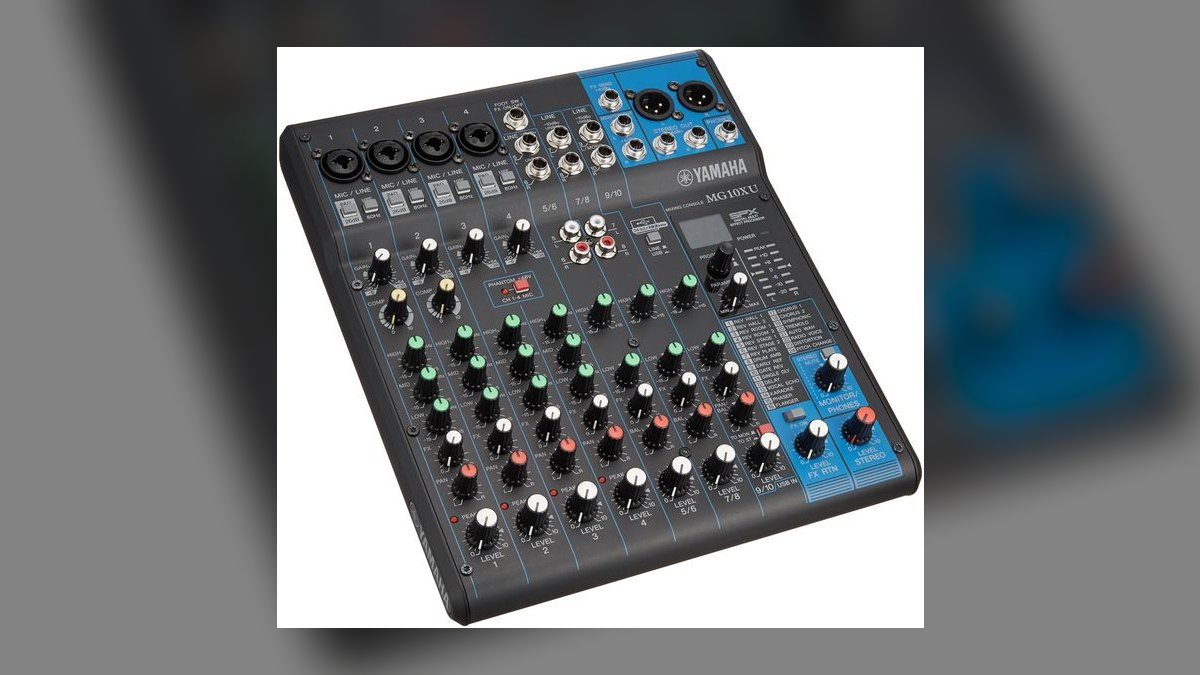
Eighth as the analog-desk option: roughly $249 for 10 inputs, a built-in USB audio interface, and a one-knob compressor on each channel. Headphone output measures a respectable 100 mW, well above budget-mixer norms. It is built as a general-purpose live mixer rather than a podcast appliance, so signal routing follows conventional console logic. No touchscreen menus stand between you and a gain adjustment.
This suits podcasters who already understand mixing desks and want many inputs cheaply. There is no Bluetooth, so wireless call-in requires a roughly $30 adapter, and there is only one headphone output — a co-host needs a splitter or separate amp. There is no onboard recorder either. Against the Model 12 above it, you save $350 but lose multitrack SD capture entirely.
9. Zoom PodTrak P4
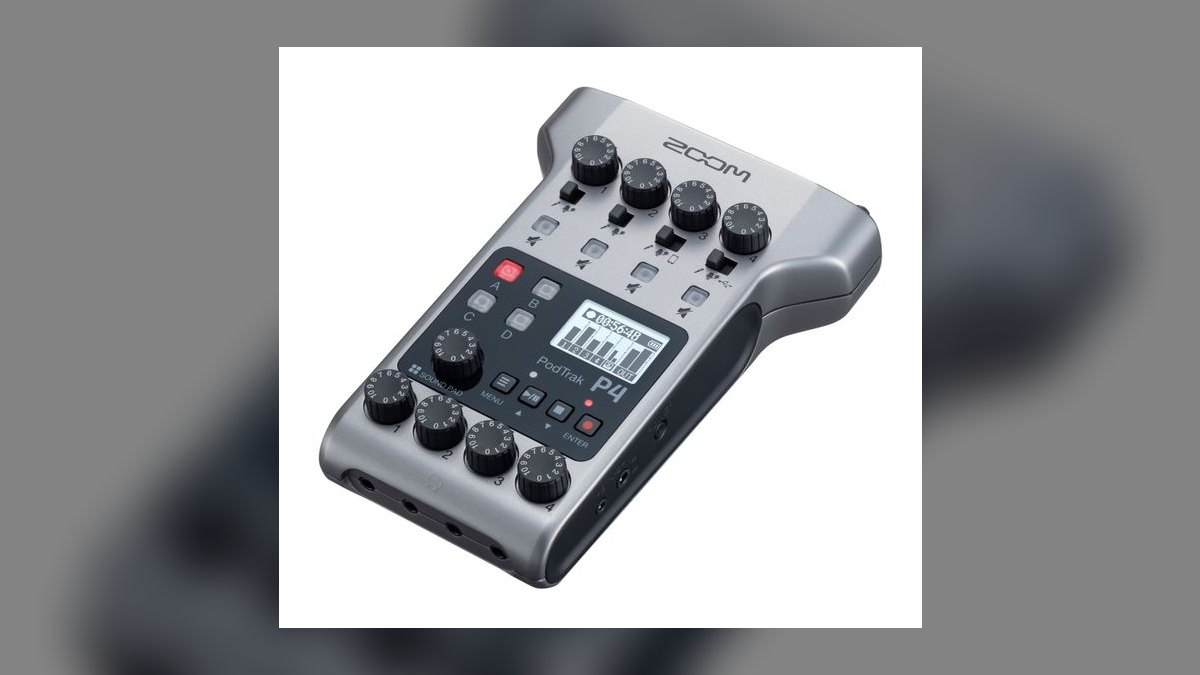
Ninth on price-to-capability: roughly $199 is the cheapest credible way to seat four people and capture clean, separate audio. Four XLR inputs, four headphone outputs with independent volume, and standalone microSD recording fit in a palm-sized box that runs on two AA batteries. Four sound pads trigger jingles, and a dedicated mix-minus phone jack pulls a remote caller in cleanly. USB turns it into a multitrack interface.
This is the device most new podcasters should buy first, and it travels anywhere. The compromises are real: no physical faders, no onboard EQ or compression beyond a basic limiter, and only 30 mW of headphone power, which strains 80-ohm cans like the DT 770 Pro. USB carries just two channels. Budget for a DAW pass or a standalone headphone amp.
10. Behringer Xenyx Q1202USB
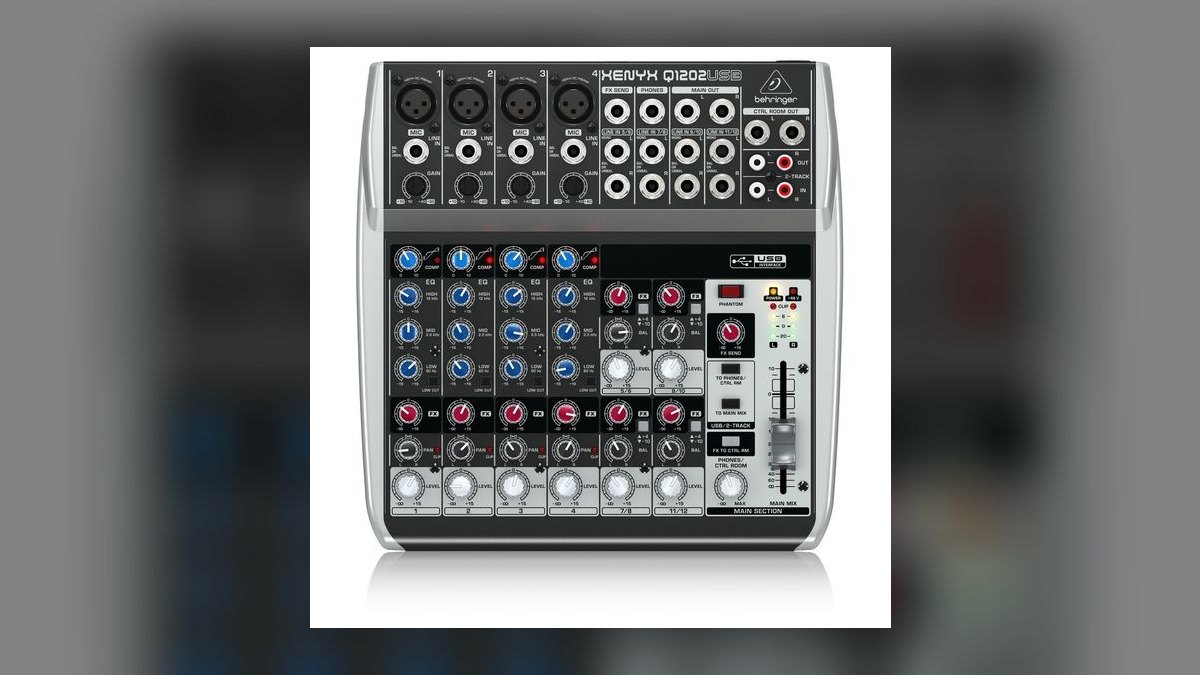
Tenth as the entry point: this Xenyx model lands in the sub-$200 tier that makes multi-mic podcasting possible on the smallest budget. It combines XENYX mic preamps, per-channel EQ, and a built-in USB audio interface in a conventional analog desk layout. Multiple inputs accept mics and line sources, and the USB connection feeds a computer directly without a separate interface purchase.
This is for someone who needs channel count immediately and will do all processing in software. Preamps are noticeably noisier than the RØDE, Mackie, and Yamaha units above — acceptable for spoken voice, weak for music. Headphone output power is not published in the specs, which is a warning sign; assume you will need an amp. There is no onboard recorder, so a computer is mandatory.
How we ranked these
We weighted preamp noise floor and available clean gain, XLR input count against realistic table size, onboard processing depth (gate, compressor, EQ, APHEX-class voicing), standalone SD recording, headphone output power per channel into 32 ohms, and USB channel count for hybrid remote workflows. Price was scored against those capabilities rather than in isolation, so a $499 six-input unit and a $699 four-input console were judged on what each actually removes from your editing session.
We deliberately ignored bundled cable kits, boom-arm promotions, and manufacturer-claimed frequency-response numbers, which are effectively identical across every unit here and never decide a purchase. We ignored music-production features like aux sends for guitar amps, multi-band parametric EQ, and DAW control surfaces, because a spoken-word show never touches them. We ignored aesthetic finish and app-store ratings. Retail price volatility was noted but not scored.
Related questions
Does a podcast mixer make a cheap microphone sound expensive?
Partly. Better preamps give you cleaner gain and a lower noise floor, so a modest dynamic mic sounds fuller and less hissy. What a mixer cannot fix is the room. Echo off bare walls, HVAC rumble, and desk thumps come through any preamp. Treat the space first, then the preamp upgrade actually shows.
Why does the SM7B need so much gain?
The Shure SM7B is a dynamic mic with low output sensitivity, so it needs roughly 60 dB or more of clean gain to reach usable levels. Weak preamps hit their noise floor before they hit that number, producing audible hiss. The RØDECaster Pro II's Revolution Preamps supply up to 76 dB, which is why SM7B owners gravitate toward it.
What is mix-minus and why do podcasters care?
Mix-minus sends a remote caller everything in the mix except their own voice. Without it, callers hear themselves delayed back through the line, which makes speaking nearly impossible. The Zoom PodTrak P4 and P8 and the TASCAM Mixcast 4 handle it on a dedicated phone jack, so a phone guest sounds natural with no configuration.
Is multitrack recording worth the extra cost?
Yes, if you edit at all. Multitrack keeps each mic on its own stem, so you can cut one person's cough without touching another's sentence, or fix one host who sat too far from the mic. A single mixdown file locks every mistake in permanently. The Mixcast 4 records 14 tracks; the P4 records four.
Do I need Bluetooth on a podcast mixer?
Only if guests routinely join by phone without a cable. Bluetooth introduces a small latency penalty and a compressed codec, so it is the lowest-fidelity input on any board. Use it for call-ins and quick contributions, never for a primary host. A wired TRRS connection to the same phone almost always sounds noticeably better.
How many XLR inputs do I actually need?
Count your maximum in-room table, then stop. Most shows are one or two hosts, which two inputs cover. Four inputs handle a host, co-host, and two guests. Six inputs, as on the Zoom PodTrak P8, only pay off for standing panels of five or six. Paying for unused channels buys nothing.
Why does headphone output power matter for recording?
Underpowered headphone amps force you to max the volume knob, which raises the amp's own hiss and tires your ears. Studio cans like the Beyerdynamic DT 770 Pro at 80 ohms need real current. Roughly 100 mW per channel into 32 ohms is the working floor; the P4's 30 mW leaves professional headphones sounding thin.
Can one mixer feed both a live stream and a recording?
Yes, on units with dual USB outputs or separate USB and SD paths. The Mackie DLZ Creator offers dual-USB streaming plus SD recording, so your stream and your archive file are captured independently. That redundancy matters: if the stream drops mid-episode, the local recording keeps running and you still publish a full show.
FAQ
What is the best overall podcast mixer in 2027?
The RØDECaster Pro II at roughly $699. Four Revolution Preamps deliver up to 76 dB of clean gain at -131.5 dBV EIN, a touchscreen and eight SMART pads sit under your hands, and onboard microSD multitrack recording means no computer is required. APHEX processing, per-channel EQ, and a noise gate cut editing time substantially. It is the console full-time podcasters converge on.
What is the best value podcast mixer?
The Zoom PodTrak P4 at roughly $199. It gives you four XLR inputs, four independently controlled headphone outputs, standalone microSD recording, and a mix-minus phone jack in a palm-sized box that runs on two AA batteries. It is the cheapest credible way to seat four people with separate tracks. It doubles as a USB multitrack interface when you plug into a computer.
Should I buy a mixer or an audio interface?
A mixer if you record live with multiple people and want faders, mute buttons, pads, and onboard processing during the session. An interface if you record solo into a DAW and prefer fixing everything in post. Interfaces like the PreSonus Revelator io24 and Focusrite Vocaster One cost less and take up less desk, but they add no live control.
Can I record without a computer connected?
Yes. The RØDECaster Pro II, Zoom PodTrak P4 and P8, TASCAM Mixcast 4, and RØDECaster Duo all record to a memory card on their own. That removes driver crashes, sleeping laptops, and USB dropouts from your failure list. It also lets you record in a car, a hotel, or a client office with no machine present at all.
How much should I actually spend?
Sub-$200 units work but bring noisy preamps and minimal processing. The $400 to $800 band is where clean gain, onboard compression, and standalone recording all arrive together, with the RØDECaster Pro II at ~$699 as the common landing spot. Start at $199 with the PodTrak P4 if you are unproven; upgrade once you are publishing on a real schedule.
Which mixer handles the most people at once?
The TASCAM Mixcast 4 at roughly $399 seats four hosts on XLR plus phone and Bluetooth callers, for seven participants total. The Zoom PodTrak P8 at ~$499 offers six XLR inputs, the most wired channels here, plus a mix-minus phone connection. For large in-room panels the P8 wins; for mixed remote-and-local tables the Mixcast 4 does.
Does the RØDECaster Duo make sense over the Pro II?
For solo hosts and duos, yes. At ~$499 it carries the same Revolution Preamps, APHEX processing, and SMART pads in a narrower chassis with two combo XLR inputs and a seven-channel mixer. Dual USB-C host ports let a computer and a phone connect simultaneously. If you will ever seat four people in the room, buy the Pro II instead.
What is Mix Agent on the Mackie DLZ Creator?
A guided setup assistant that selects gain, gate, and processing settings for beginners while leaving full manual control available for experienced users. It ships on the DLZ Creator at ~$699 and the compact DLZ Creator XS at ~$499. It meaningfully lowers the learning curve if you are also streaming or shooting video and cannot babysit levels mid-session.
Will onboard processing really cut my editing time?
Substantially, yes. A per-channel noise gate kills laptop fan and clock noise at the source, a transparent compressor evens out speakers who lean in and out, and voicing effects add presence without plugins. Episodes recorded through a well-set RØDECaster can go out with no post-processing. On a P4 you will still run the file through a DAW or repair suite.
Do I need a separate headphone amp?
If the mixer costs under $300, budget for one. The Zoom PodTrak P4 supplies about 30 mW per channel, fine for earbuds and thin with studio headphones. The Yamaha MG10XU manages 100 mW but has a single headphone output, so a second listener needs a splitter. The RØDECaster Pro II's 150 mW across four outputs needs no help.
Sources
- https://www.sweetwater.com/store/detail/RodeCastPro2--rode-rodecaster-pro-ii-integrated-audio-production-studio
- https://www.bhphotovideo.com/c/product/1710489-REG/rode_rodecaster_pro_ii_integrated.html
- https://www.soundonsound.com/reviews/rode-rodecaster-pro-ii
- https://www.nytimes.com/wirecutter/reviews/best-podcasting-gear/
- https://zoomcorp.com/en/us/podcasttrak/podcast-recorders/podtrak-p4/
- https://tascam.com/us/product/mixcast_4/top
- https://mackie.com/en/products/mixers/dlz-creator/
- https://www.thepodcasthost.com/equipment/best-podcast-mixer/
Related on PULSE
- [More podcast mixers rankings and buying guides](/knowledge)
- [PULSE Tools and calculators](/tools)
- [Everything on PULSE RevOps](/)
This page will be disappearing soon. Save it to your device for $1 — or read it free while it is here.
@Kory-White- · if Venmo asks, the last 4 of my number are 2012
This page is gone.
This one is off the shelf now. $1 keeps it on your phone for good — the whole page, pictures and diagrams included.
 pulse-reviewsTop 10 Sony TVs — Best Overall + Best Value in 2027
 pulse-reviewsTop 10 Battery Hedge Trimmers — Best Overall + Best Value in 2027
 pulse-reviewsTop 10 Robot Vacuums — Best Overall + Best Value in 2027
 pulse-reviewsTop 10 Portable Washing Machines — Best Overall + Best Value in 2027
 pulse-reviewsTop 10 FDM 3D Printers — Best Overall + Best Value in 2027
 pulse-reviewsTop 10 OTC Hearing Aids — Best Overall + Best Value in 2027
 pulse-reviewsTop 10 Water Flossers — Best Overall + Best Value in 2027
 pulse-reviewsTop 10 Waterproof Bluetooth Speakers — Best Overall + Best Value in 2027
 pulse-reviewsTop 10 Transmission Jacks — Best Overall + Best Value in 2027
 pulse-reviewsTop 10 Gaming Chairs — Best Overall + Best Value in 2027