


Is Espresso worth it in 2027?
Quality
Certified
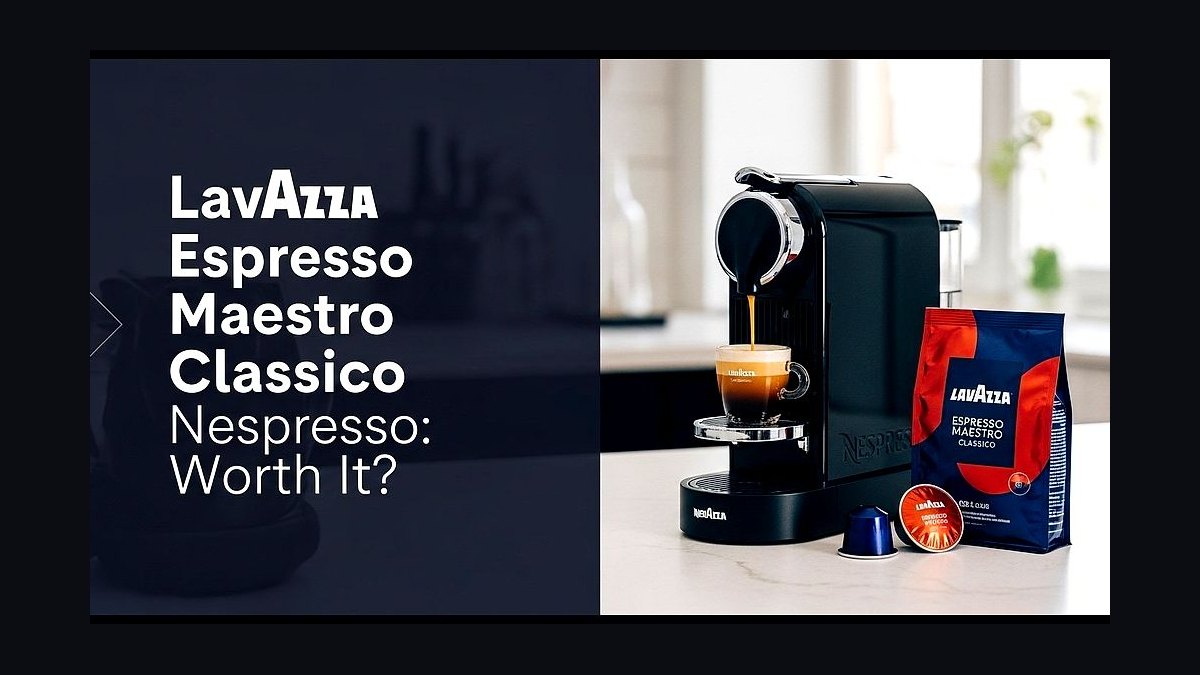
It depends. Whether Espresso is worth it in 2027 hinges on your specific need for a lightweight, low-code automation tool that prioritizes speed and simplicity over deep, enterprise-grade functionality. For small teams, freelancers, or organizations with straightforward workflows, Espresso can be an excellent choice; however, for complex, multi-departmental operations requiring robust integrations, advanced data management, and extensive customization, it may fall short.
Espresso has carved a niche as a rapid deployment platform for automating repetitive tasks, particularly in marketing and sales operations. Its value proposition in 2027 remains centered on ease of use, fast setup, and a clean interface, making it ideal for teams that need to automate quickly without a steep learning curve. However, the decision to invest in Espresso should be weighed against its evolving competitive landscape and feature set, as well as your organization's specific growth trajectory and operational complexity.
What core capabilities does Espresso offer in 2027?
Espresso in 2027 continues to focus on workflow automation, allowing users to connect various apps and services with minimal coding. Its core strengths lie in its visual builder, which enables drag-and-drop logic for creating automated sequences, such as lead routing, email notifications, and data syncing. The platform has improved its trigger and action library, now supporting hundreds of popular business tools like CRM systems, email marketing platforms, and project management software. This makes it particularly effective for teams that rely on a stack of SaaS tools and need to eliminate manual data entry and repetitive tasks. For example, a marketing team can set up a workflow that automatically captures leads from a landing page form, sends a welcome email via Mailchimp, and creates a task in Asana for the sales team—all within minutes and without writing a single line of code. The platform also offers conditional logic, allowing workflows to branch based on specific criteria, such as lead score or geographic location, which adds a layer of sophistication to otherwise simple automations.
However, compared to more comprehensive RevOps platforms, Espresso's capabilities are more limited in areas like advanced reporting, complex data transformation, and multi-step conditional logic. While it excels at simple "if this, then that" workflows, users seeking to build intricate, data-dependent automation may find its current iteration less flexible than alternatives like Zapier or Make. The platform has invested in its developer API, allowing for custom integrations, but this requires technical expertise that its low-code promise aims to circumvent. For more on choosing the right automation tool, see our guide on RevOps technology stack. Additionally, Espresso lacks native support for complex data mapping and transformation, which can be a significant drawback for teams that need to handle large datasets or perform sophisticated data manipulation as part of their automation workflows. This limitation means that users may need to rely on external tools or custom scripts to achieve the desired level of data processing, adding complexity to the automation setup.

How does Espresso's pricing compare to its value in 2027?
Pricing remains a critical factor in determining worth. In 2027, Espresso offers tiered subscription plans, typically starting with a free or low-cost entry-level tier that includes a limited number of tasks and integrations. As usage grows, teams can scale to paid plans that unlock higher task limits, premium integrations, and priority support. This pricing model is attractive for small businesses and startups that need to automate without significant upfront investment. However, as task volumes increase, the cost can escalate, potentially making it less economical than flat-rate platforms for heavy users. For instance, a team running 50,000 tasks per month might find that Espresso's per-task pricing becomes more expensive than a competitor's flat monthly fee, which could include unlimited tasks. This cost structure requires careful budgeting and forecasting to avoid unexpected expenses as automation usage expands.
The value proposition is strongest for teams that can operate within the platform's constraints. For example, a marketing team automating lead capture and follow-up emails will find Espresso's pricing reasonable, while a sales operations team needing to synchronize complex data between a CRM and an ERP system may find the cost-per-task model prohibitive. It's essential to evaluate your projected usage and compare it against competitors like Integromat (now Make) or Workato, which may offer more generous task limits for similar prices. For a deeper dive into evaluating automation costs, read our RevOps ROI framework. Furthermore, Espresso's pricing transparency has improved in 2027, with clearer breakdowns of what each tier includes, but users should still be wary of hidden costs such as charges for premium integrations or additional user seats. Conducting a thorough total cost of ownership analysis, including potential costs for training, support, and any necessary custom development, is crucial for determining whether Espresso offers genuine value for your specific use case.
What are the key limitations of Espresso to consider before adopting?

Despite its strengths, Espresso has notable limitations that may affect its worth in 2027. First, its integration library, while growing, may not cover niche or legacy systems common in larger enterprises. For example, if your organization relies on a custom-built CRM or an older ERP system like SAP R/3, you may find that Espresso lacks a native connector, forcing you to rely on webhooks or third-party middleware, which adds complexity and potential points of failure. Second, the platform's error handling and debugging tools are less sophisticated than those of competitors, making it challenging to troubleshoot complex automation failures. When a workflow breaks, Espresso provides basic error logs and notifications, but it lacks features like step-by-step debugging, rollback capabilities, or detailed error analytics that can help users quickly identify and resolve issues. This can lead to significant downtime and frustration, especially for mission-critical automations.
Third, data privacy and compliance features, such as GDPR or SOC 2 certifications, may be less robust, posing risks for organizations in regulated industries like healthcare or finance. Espresso offers standard security measures like encryption in transit and at rest, but it may not have the comprehensive compliance documentation or data residency options required by strict regulatory frameworks. This limitation can be a deal-breaker for companies that must adhere to HIPAA, PCI-DSS, or other industry-specific standards. Another significant limitation is scalability. As your organization grows, the number of automated workflows can increase exponentially, and Espresso's performance may degrade with high volumes of tasks. The platform also lacks advanced features like predictive analytics, machine learning integration, or real-time data streaming, which are becoming standard in modern RevOps stacks. For teams anticipating rapid growth or requiring enterprise-level functionality, this limitation could make Espresso a temporary solution rather than a long-term investment. Understanding these constraints is crucial for making an informed decision, and it may be worth conducting a proof-of-concept with a high-volume workflow to test Espresso's performance under load before committing to a full rollout.
How does Espresso compare to alternative automation platforms in 2027?
When evaluating Espresso, it's essential to consider alternatives. Zapier remains the market leader with the largest app ecosystem and advanced multi-step workflows, but it can be more expensive and complex. Zapier's interface, while powerful, can be overwhelming for new users, and its pricing often scales quickly with task volume. Make (formerly Integromat) offers superior data transformation capabilities and visual scenario building, making it better for technical users. Make's visual editor allows for complex data manipulation, such as filtering, aggregating, and transforming data between steps, which is a significant advantage for teams that need to handle intricate data flows. Workato focuses on enterprise-grade integration with strong governance and security, but its pricing is significantly higher, often requiring annual contracts and dedicated support. For teams prioritizing simplicity and speed, Espresso's streamlined interface gives it an edge over these more feature-rich platforms, as users can set up basic automations in minutes without needing to navigate complex menus or learn advanced concepts.

The choice ultimately depends on your team's technical skill and workflow complexity. Espresso is ideal for non-technical users who need to automate quickly, while Zapier or Make may be better for power users requiring detailed control. In 2027, the gap between these platforms is narrowing, but Espresso's differentiation lies in its minimalistic approach. If your automation needs are straightforward and you value time-to-value over extensive customization, Espresso is likely worth it. For a comprehensive comparison, see our automation platform comparison. Additionally, consider the ecosystem and community support around each platform. Zapier and Make have large, active communities with extensive libraries of pre-built templates and integrations, which can accelerate development and troubleshooting. Espresso's community is smaller, which may mean fewer shared resources and slower support for emerging issues. Evaluating the strength of the community and the availability of third-party resources should be part of your decision-making process.
What is the future outlook for Espresso beyond 2027?
Looking ahead, Espresso's worth will depend on its ability to evolve. The low-code automation market is becoming increasingly crowded, with major players like Microsoft (Power Automate) and Salesforce (Flow) integrating automation natively into their ecosystems. These platforms benefit from deep integration with their respective suites, offering seamless connectivity with tools like Dynamics 365, Office 365, and Salesforce CRM. Espresso must continue to innovate, particularly in areas like AI-driven workflow suggestions, enhanced error recovery, and deeper native integrations with popular business tools. For instance, incorporating machine learning to suggest optimal workflow paths or automatically detect and resolve common errors could significantly enhance the user experience and reduce the need for manual troubleshooting. If it can maintain its focus on user experience while expanding functionality, it could remain a viable option for specific use cases, such as small marketing teams or solo entrepreneurs who need a quick, no-frills automation solution.

However, the platform faces existential risks if it fails to keep pace with industry trends. The rise of AI agents and autonomous workflows may render simple automation tools obsolete, or conversely, create new opportunities for lightweight platforms to serve as orchestration layers. For now, Espresso's worth in 2027 is clear for its target audience, but long-term viability requires strategic investment. Teams should monitor its product roadmap and community feedback to ensure alignment with their future needs. Additionally, consider the financial health and stability of the company behind Espresso. A smaller, independent vendor may be more agile but also more vulnerable to market shifts or acquisition, which could impact product direction and support. Evaluating the company's track record, funding, and strategic partnerships can provide insights into its long-term prospects. For teams that are heavily reliant on Espresso, it may be prudent to develop contingency plans or maintain flexibility to migrate to alternative platforms if necessary.
Related questions
Is Espresso suitable for enterprise-level automation?
No, generally not. Espresso lacks advanced security, governance, and scalability features required by most enterprises, making it better suited for small to medium-sized teams.
Can Espresso replace a CRM or ERP system?
No, Espresso is an automation layer, not a data storage or management system. It works best alongside a CRM or ERP to automate processes, not replace them.
How long does it take to set up Espresso for a standard workflow?
Typically, a few hours to a day for simple workflows, thanks to its intuitive visual builder. Complex workflows may take longer but are still faster than coding from scratch.
Does Espresso support real-time data sync?
Partially. It supports near-real-time triggers for many integrations, but true real-time sync may be limited to certain apps or require premium plans.
What is Espresso's biggest competitor in 2027?
Zapier remains the primary competitor due to its extensive app library and brand recognition, though Make and Workato are strong alternatives for more technical users.
FAQ
Is Espresso free to use? Espresso offers a free tier with limited tasks and integrations, but full functionality requires a paid subscription. Pricing scales with usage, so it's not entirely free for heavy automation needs.

Can I use Espresso for marketing automation? Yes, Espresso is well-suited for marketing automation tasks like lead capture, email sequences, and social media posting, though it may lack advanced features like A/B testing or analytics found in dedicated marketing platforms.
Does Espresso integrate with Salesforce? Yes, Espresso has a native Salesforce integration, allowing for automated lead creation, update triggers, and data syncing between Salesforce and other apps.
Is Espresso secure for handling sensitive data? Espresso offers standard security measures like encryption and access controls, but it may not meet strict compliance requirements (e.g., HIPAA, SOC 2) needed for highly regulated industries.
How does Espresso handle errors in workflows? Espresso provides basic error logs and notifications, but its debugging tools are less advanced than those of competitors like Make, making complex error resolution more challenging.
Can I build custom integrations with Espresso? Yes, through its developer API, but this requires coding knowledge, which may contradict its low-code promise. Pre-built integrations are simpler to use.
What is the maximum number of tasks I can run on Espresso? This depends on your plan; free tiers have low limits (e.g., 100 tasks/month), while paid plans offer higher limits (e.g., 10,000+ tasks/month), but exact numbers vary and are subject to change.
Does Espresso offer customer support? Yes, paid plans include email and chat support, with priority support available on higher tiers. Free users have limited access to community forums and documentation.
Can Espresso handle complex multi-step workflows with conditional logic? Yes, to a moderate extent. Espresso supports branching and conditional logic, but it may struggle with highly complex, nested conditions that are better suited for platforms like Make or Workato.
Is Espresso suitable for teams with non-technical members? Yes, its low-code visual builder is designed for non-technical users, making it accessible for marketing, sales, and operations teams without programming skills.
Sources
- Espresso Official Website
- G2 Reviews for Espresso
- Capterra Espresso Reviews
- Zapier vs Espresso Comparison
- Make (Integromat) Official Site
- Workato Official Site
- Forrester Low-Code Automation Report 2027
- Gartner Magic Quadrant for Integration Platforms 2027
- TechCrunch Analysis of Low-Code Market Trends
- Reddit r/automation Discussion on Espresso
Related on PULSE
- What is RevOps?
- How to choose a RevOps automation tool?
- What is a low-code platform?
- RevOps ROI framework
- Automation platform comparison
Recently Added — Related
This page will be disappearing soon. Save it to your device for $1 — or read it free while it is here.
@Kory-White- · if Venmo asks, the last 4 of my number are 2012
This page is gone.
This one is off the shelf now. $1 keeps it on your phone for good — the whole page, pictures and diagrams included.
 pulse-estatesHow do you get started with Espresso in 2027?
 pulse-estatesHow much does Espresso cost in 2027?
 pulse-estatesWhat are the most common mistakes in Espresso in 2027?
 pulse-estatesWhat should you know before investing in Espresso in 2027?
 pulse-estatesTop 10 best Espresso options in 2027
 pulse-estatesIs the La Marzocco Linea Mini worth the price in 2027?
 esTop 10 Luxury Neighborhoods in Chicago in 2027
 esTop 10 Luxury Neighborhoods in Aspen in 2027
 pulse-estatesTop 10 Lake Communities in Phoenix in 2027
 pulse-estatesTop 10 Beach Towns in Seattle in 2027