
Should I open or buy a Jet’s Pizza franchise or open an independent sandwich shop in 2027?
 Curated byKory White · Fractional CRO · Maryland
 PULSEKNOWLEDGE LIBRARY
For 2027, buy the Jet's Pizza franchise if you want a proven system, faster staffing ramp, and built-in delivery/carryout demand, and can absorb royalty and franchise fees. Choose an independent sandwich shop if you want full menu and pricing control, lower total investment, and are prepared to build your own brand, systems, and local marketing from zero.
A concrete scenario that frames the problem
Picture two people with roughly $150,000 in savings and financing capacity, both looking at a 1,400-square-foot end-cap space in the same strip center. One signs a franchise agreement with Jet's Pizza, pays an initial franchise fee, commits to a build-out that follows the brand's kitchen-line specification, and opens under a name that already shows up in local delivery-app searches. The other leases the same box, names it something personal, designs a sandwich-forward menu from scratch, buys equipment piecemeal, and spends the first six months teaching the neighborhood that the shop exists.
Both people are solving the same underlying problem — converting a lease and a kitchen into repeat local customers — but they are solving it with opposite tools. The franchise buyer is renting a playbook: recipes, supplier contracts, a point-of-sale system, marketing templates, and a territory that (ideally) has already been vetted for demographic fit. In exchange, that buyer gives up menu flexibility, accepts an ongoing royalty on gross sales (commonly in the mid-single-digit percentage range across pizza QSR franchises, plus a separate marketing/ad fund contribution), and is bound by a multi-year agreement with defined renewal and transfer terms.
The independent operator keeps 100% of decision rights — pricing, hours, sourcing, even whether to pivot the concept entirely if sandwiches underperform — but has to build every system that the franchisee inherited on day one: a POS workflow, a repeatable prep line, vendor relationships, food-safety documentation, and a marketing engine with no existing brand recognition to lean on. That operator also carries all the downside risk of an unproven concept in a real estate market that, in 2027, is still working through elevated commercial lease rates and labor costs relative to the pre-2023 baseline.
The choice is not really "pizza versus sandwiches" as food categories. It's a choice between paying for a de-risked, standardized operating system versus keeping every dollar of equity and control in a business you build from a blank page. Franchise buyers are underwriting the fee and royalty stack against a materially shorter path to break-even and a lower first-year failure rate than most independent restaurant concepts experience. Independent operators are underwriting their own execution ability — menu development, hiring, local marketing, and operations — against the possibility of building an asset with no royalty ceiling on future profit and full freedom to sell it, franchise it themselves, or expand it however they choose.
How the mechanism actually works
The core mechanical difference is where the "system" lives. In a franchise, the operating system — recipes, supplier pricing, kitchen layout, training curriculum, brand marketing, delivery-platform integration — is centrally built and licensed to you. You pay for access to it up front (the initial franchise fee), you pay to keep using it (an ongoing royalty, typically calculated as a percentage of gross sales and paid weekly or monthly), and you pay into a shared marketing fund that buys regional and national advertising you couldn't afford alone. Jet's Pizza, like most pizza QSR franchisors, also requires approved-supplier purchasing for dough, cheese, sauce, and packaging, which locks in food cost consistency but removes your ability to shop for cheaper inputs.
In an independent sandwich shop, you are the entire operating system. You design the menu, source ingredients from whatever vendors you can negotiate with (which, at low volume, often means paying more per case than a franchise system's centralized purchasing achieves), build your own training materials, and construct your own marketing — local SEO, social media, delivery-app onboarding, community partnerships — with no shared fund and no brand recognition subsidizing your customer acquisition cost.
This is why the two paths diverge so sharply in month one. A franchise opening under an established name typically sees a meaningful share of first-week sales come from people who already know the brand from another location or from delivery-app familiarity. An independent sandwich shop's first-week sales are almost entirely a function of foot traffic and whatever pre-opening marketing the owner personally executed — there's no brand equity doing work in the background. That gap narrows over time as an independent shop builds local reputation, but it means the independent operator's break-even timeline is more exposed to execution quality in months one through six, while the franchisee's break-even timeline is more exposed to the fixed cost stack (fees, royalty, required equipment) baked into the agreement.
Real numbers, ranges, and benchmarks
Exact current figures for any specific franchise system live in its Franchise Disclosure Document (FDD), Item 7 (estimated initial investment) and Item 19 (financial performance representations, if the franchisor provides one) — those numbers change year to year and should be pulled directly from the current FDD before any commitment, not estimated from general industry data. That said, the following ranges reflect what pizza-segment QSR franchises and independent fast-casual sandwich shops commonly report across the industry as of the mid-2020s, and are useful for sizing the decision rather than for exact budgeting:
- Initial franchise fee (pizza QSR segment): commonly in the $15,000–$30,000 range for a single unit, sometimes discounted for veterans, existing multi-unit operators, or specific development markets.
- Total initial investment, franchise (build-out, equipment, opening inventory, initial fees): frequently falls in the $300,000–$600,000 range for a full build-out pizza QSR location, though smaller footprints, delivery/carryout-only formats, or conversion spaces can land lower.
- Ongoing royalty: typically 5%–8% of gross sales across pizza franchise systems, paid on a recurring schedule regardless of location profitability.
- Marketing/ad fund contribution: often an additional 2%–5% of gross sales, separate from the royalty.
- Independent sandwich shop total startup cost: for a comparable 1,200–1,800 sq ft space, independent fast-casual sandwich concepts commonly range from $150,000–$400,000, with the wide range driven mostly by whether the space needs a full kitchen build versus a lighter reheat/assembly-line format, and by regional construction and permitting costs.
- Food cost as % of sales: pizza concepts with centralized purchasing often report food cost in the high-20s to low-30s percent range; independent sandwich shops without volume purchasing power frequently run several points higher until volume grows, unless the owner secures strong local supplier relationships.
- Time to profitability: established franchise systems with strong territory vetting often target profitability within the first 12–18 months; independent concepts frequently take longer — commonly cited industry ranges run 18–24 months or more — because brand-building and system-building happen simultaneously with operations.
The financial comparison isn't just "which costs less to open." It's total cost of capital over the agreement term. A 10-year franchise agreement with a 6% royalty plus a 4% ad fund means 10% of every gross dollar leaves the business before the owner sees profit — for the life of the agreement, win or lose. An independent shop has no royalty ceiling, so once it clears its own fixed and variable costs, every incremental sales dollar drops through at whatever margin the operator has engineered — but that margin engineering, supplier negotiation, and menu-cost discipline is entirely the owner's job, with no franchisor systems team to lean on.
Trade-offs and alternatives
The decision usually comes down to which risk the buyer is more willing to carry: execution risk or ceiling risk. A franchise reduces execution risk — you're following a tested recipe, kitchen layout, and marketing calendar — but it imposes a hard ceiling on long-run margin because the royalty and ad-fund percentages never go away, and territory, pricing, and menu changes typically require franchisor approval. An independent concept removes that ceiling entirely but pushes almost all execution risk back onto the owner: menu-market fit, staffing systems, local marketing, and brand-building all have to work simultaneously with no fallback playbook.
There is also a middle path worth naming: some operators buy into an established sandwich franchise instead of going fully independent, trading some of the flexibility of an independent concept for some of the system support of a franchise, without taking on a pizza-specific build-out and equipment stack (pizza ovens, dough-handling equipment, and delivery-optimized packaging represent a meaningfully different capital outlay than a sandwich line built around a flat-top, panini press, and cold-case prep). That option isn't in the original either/or framing, but it's a legitimate third lane for someone who wants brand support without pizza-specific capital intensity.
Another underweighted factor: exit strategy. A franchise unit is generally easier to sell to another buyer inside the same system, because the buyer inherits a known brand, known supplier terms, and (often) franchisor-facilitated transfer processes — though the sale still requires franchisor approval and the new owner still inherits the royalty structure. An independent shop's resale value depends entirely on the local reputation and financials the specific owner built; it can be sold for a premium if the brand and customer base are strong, or it can be very hard to sell if the business is inseparable from the founder's personal following. If a five-to-seven-year exit is part of the plan, that difference in exit liquidity deserves as much weight as the opening-year cost comparison.
Common pitfalls and how to avoid them
The single most common mistake on the franchise side is underestimating the royalty's effect on downside scenarios. Buyers frequently model the royalty against a rosy sales forecast and forget that the percentage is owed on gross sales even in a slow month — it doesn't flex down with profitability the way a percentage-of-profit arrangement would. Before signing, run the royalty and ad-fund percentage against a conservative sales case (not just the franchisor's Item 19 average, if one is even provided — many franchisors don't include financial performance representations at all) to see what the fixed-cost stack looks like in a bad first year, not just a good one.
The most common mistake on the independent side is underestimating how much of the first year's owner time gets consumed by system-building rather than customer-facing work — menu costing, vendor negotiation, hiring processes, a POS and inventory setup, and marketing infrastructure all have to be built from nothing, and that work competes directly with the hours needed to actually run the floor and build the local reputation the business depends on. Independent operators who succeed tend to either bring prior restaurant-operations experience into the venture or bring in a partner/early hire who covers the systems side while the owner covers the floor.
A pitfall on both sides is under-capitalizing for the ramp period. Whether franchised or independent, a new food-service location commonly needs working capital beyond opening costs to cover several months of below-breakeven operations — payroll, rent, and inventory don't pause while the customer base builds. Franchise buyers sometimes assume the brand recognition will shorten the ramp enough to skip this reserve; independent buyers sometimes assume they'll hit their numbers faster than a genuinely new, unknown local brand realistically can. In both cases, building in a reserve equal to several months of fixed operating costs — beyond the opening budget — is what keeps a slow first two quarters from becoming a forced closure.
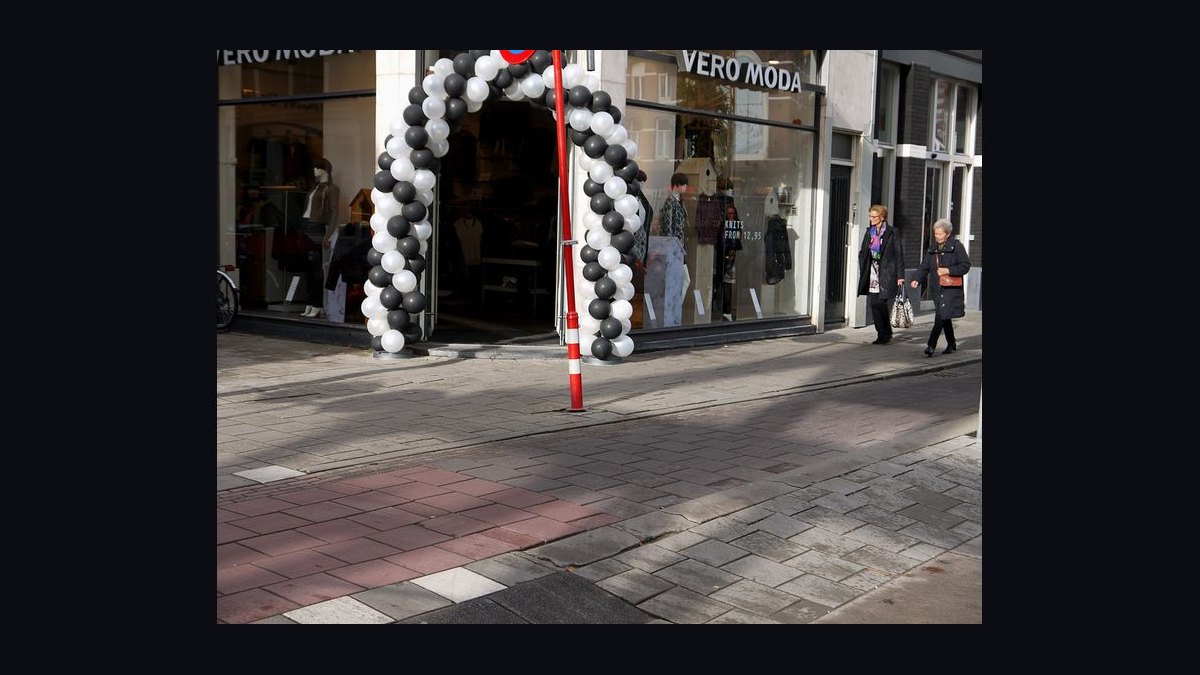
Finally, both paths are exposed to a labor-market pitfall specific to the current environment: quick-service and fast-casual food labor costs and availability have remained tight relative to the pre-2020 baseline in most metro markets, and that pressure shows up faster in a new location that hasn't yet built a stable staff or a manager bench. A franchise's training curriculum can shorten the ramp to a competent crew, but it doesn't eliminate the local hiring difficulty; an independent operator has to build the hiring and training pipeline from nothing while simultaneously running the business.
Related questions
How much does a Jet's Pizza franchise cost to open in 2027?
Exact current figures are in the franchise's FDD Item 7, which changes periodically — but pizza QSR franchises broadly report total initial investments commonly in the $300,000–$600,000 range depending on footprint and market, plus an initial franchise fee typically in the $15,000–$30,000 range.
Is an independent restaurant more profitable than a franchise long-term?
Potentially, because there's no ongoing royalty or ad-fund percentage capping margin — but only if the independent concept reaches comparable sales volume, which typically takes longer and carries more execution risk than a franchise with an established local customer base.
Can I negotiate the royalty rate on a pizza franchise?
Rarely for a single new unit; royalty and ad-fund percentages are usually fixed system-wide in the franchise agreement, though multi-unit development deals sometimes carry different fee structures for later units.
What's a realistic break-even timeline for a new sandwich shop?
Independent fast-casual sandwich concepts commonly target 18–24 months to profitability, though a strong location, prior operator experience, and disciplined food-cost management can shorten that window meaningfully.
Does franchise brand recognition really speed up sales in the first year?
Generally yes for well-known regional or national brands — new locations under an established name typically see faster initial trial than a brand-new independent concept has to earn from zero, though the effect size varies by market saturation and how well-known the brand already is locally.
FAQ
Is a Jet's Pizza franchise a good investment in 2027? It can be, for a buyer who values a tested operating system, faster customer ramp from brand recognition, and is comfortable with an ongoing royalty and territory/menu restrictions for the life of the agreement — the actual current fee, royalty, and investment figures should come from the current FDD before deciding.
What's the biggest financial difference between franchising and going independent? The ongoing royalty and ad-fund percentage on a franchise — commonly 10% or more of gross sales combined across pizza systems — is a permanent cost that an independent shop doesn't carry, but the independent shop gives up the brand recognition, supplier terms, and training systems that often shorten a franchise's path to steady sales.
Do I need restaurant experience to open an independent sandwich shop? It's not legally required, but operators without prior food-service experience take on meaningfully more execution risk, since they're building menu, staffing, and operations systems from scratch with no franchisor training curriculum to fall back on.
Which option has lower startup risk? A franchise generally has lower execution risk because the concept, recipes, and operations are pre-tested, but it has a fixed cost ceiling on long-run margin; an independent concept has higher execution risk but no royalty ceiling on profit once it's established.
Can I switch from independent to franchised later, or vice versa? You can convert a sandwich shop into a franchise of that or another brand later, or you could develop your own concept into a franchisable system if it succeeds — but a signed franchise agreement itself typically restricts converting that specific location to an independent or competing concept for the life of the term.
How important is the specific location in this decision? Very — a strong location can make an independent concept work despite having no brand recognition, while a weak location can undercut even a well-known franchise brand's advantage, so site selection and local demographic fit deserve at least as much diligence as the franchise-versus-independent decision itself.
Sources
- https://www.ftc.gov/business-guidance/resources/franchise-rule
- https://www.sba.gov/business-guide/plan-your-business/franchise-businesses
- https://www.franchise.org/
- https://www.jetspizza.com/franchising
- https://www.irs.gov/businesses/small-businesses-self-employed/franchise-taxes
- https://www.restaurant.org/research/
- https://www.bls.gov/opub/mlr/food-service-labor.htm
- https://www.score.org/resource/business-planning-tools
Related on PULSE
- How much working capital do I need to open a restaurant?
- What's the real cost of a QSR franchise royalty over 10 years?
- Franchise vs. independent: how to compare exit value
- How to negotiate a commercial lease for a food-service space
- What food cost percentage should a fast-casual restaurant target?
- How long does it take a new restaurant to reach profitability?
This page will be disappearing soon. Save it to your device for $1 — or read it free while it is here.
@Kory-White- · if Venmo asks, the last 4 of my number are 2012
 franchiseShould I open or buy a Closets by Design franchise in 2027?
 franchiseShould I open or buy a Carrabba’s Italian Grill franchise in 2027?
 franchiseShould I open or buy a Sharetea franchise in 2027?
 franchiseShould I open or buy a Cheba Hut franchise in 2027?
 franchiseShould I open or buy a Tutti Frutti franchise in 2027?
 franchiseShould I open or buy a BFT franchise in 2027?
 franchiseShould I open or buy a Pizza Inn franchise in 2027?
 franchiseShould I open or buy a Public Storage franchise in 2027?
 franchiseShould I open or buy a Dippin’ Dots franchise in 2027?
 franchiseShould I open or buy Crumbl Cookies franchise or open an independent sandwich shop in 2027?