


How much does a gaming subscription cost per year in 2027?
Quality
Certified
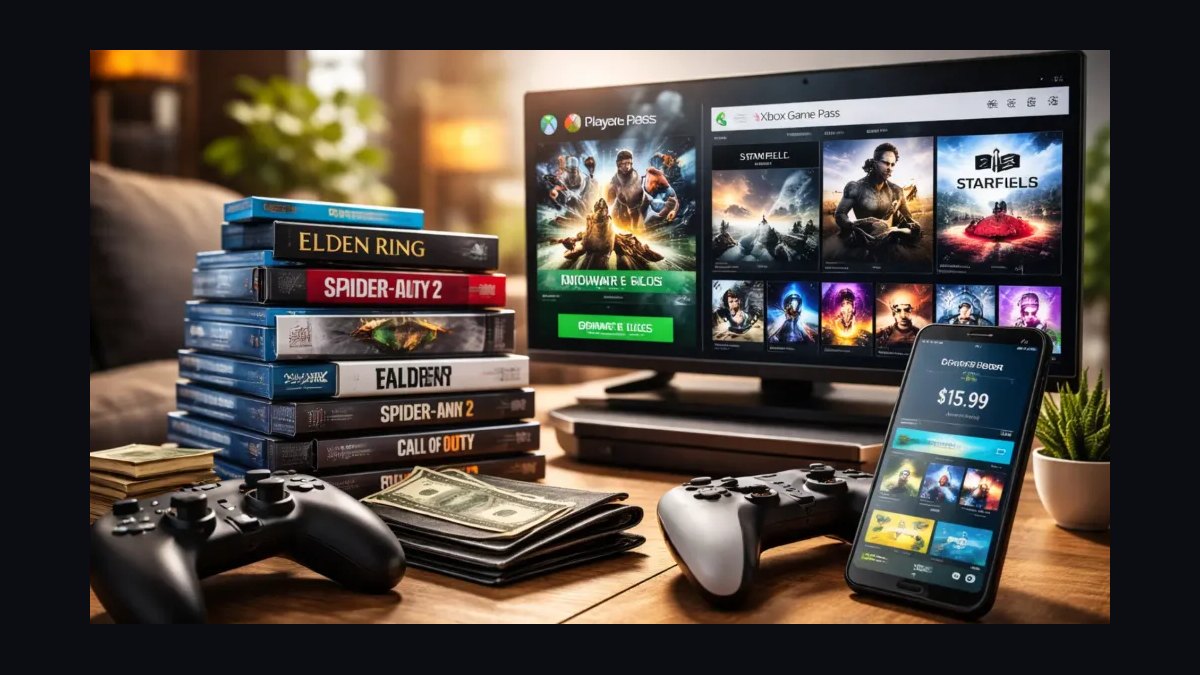
A single gaming subscription in 2027 typically costs $60–$220 per year depending on tier: entry online-play plans run $60–$100, mid-tier library plans $120–$180, and premium multi-device tiers $180–$220. Most households stacking two or three services spend roughly $300–$500 per year before tax.
What the annual gaming subscription cost actually represents
The phrase "gaming subscription" collapses at least four distinct products into one word, and the annual cost swings by a factor of three or four depending on which one you mean. Getting the number right starts with separating them, because a reader who compares a $60 online-play plan against a $200 cloud tier is not comparing like with like.
The first category is online-play access. This is the fee a console platform charges simply to play multiplayer games over the internet, plus a small rotating library of downloadable titles and a cloud-save allowance. Historically these have been the cheapest tier, and in 2027 they remain the floor of the market — expect something in the neighborhood of $60 to $100 per year when purchased as a 12-month block. The 1-month and 3-month versions of the same tier are deliberately priced worse per month; buying monthly typically costs 40–70% more across a full year than buying the annual block outright.
The second category is the game-library subscription — an all-you-can-play catalog of dozens to hundreds of titles, often including new first-party releases on launch day. This is the tier that has absorbed the most price increase over the last several years, and it is where the $120–$180 annual band lives. The value proposition is straightforward arithmetic: a single new AAA game at full retail is $60–$80, so a library subscription pays for itself if you would have bought two or three games that year and you actually play them.
The third category is cloud streaming, where the game runs on a remote server and streams video to your device. Cloud tiers are usually sold either as a standalone streaming plan or as an upgrade riding on top of a library subscription. Because the provider is renting you GPU time rather than shipping you a license, streaming tiers price closer to compute cost and land in the $100–$200 per year range, with premium performance tiers (higher resolution, higher frame rate, longer session length, priority queueing) at the top of that band.

The fourth category is the publisher-specific subscription — a single studio's own catalog, usually much narrower but much cheaper, frequently in the $30–$60 per year range. These are the ones people forget they are paying for, and they are the most common line item in an unaudited household gaming budget.
Why this matters beyond trivia: the annual number you should plan around is not any single tier's sticker price, it is your stack. The median engaged household in 2027 is not on one subscription. It is on a console online-play plan, a library plan, and at least one publisher plan, sometimes on two separate platforms because different family members play on different hardware. That stack is where a "$15 a month" mental model quietly becomes a $400+ per year line item.
Two structural forces are pushing the annual cost up rather than down. First, the industry has broadly moved from single-tier to three-tier pricing (basic / standard / premium), and the features people actually want — day-one releases, cloud streaming, multi-device access — have migrated upward into the premium tier. The basic tier still exists at a friendly price, but it does progressively less. Second, most major platforms now let you convert existing prepaid time to a higher tier at a conversion ratio rather than at face value, which quietly erodes the old strategy of stockpiling cheap annual codes during sales.
Two structural forces push the other way. Regional pricing remains substantially cheaper in lower-income markets, and platform holders continue to run aggressive first-month and win-back promotions ($1 for the first month, discounted 3-month bundles, hardware bundles that include 3–12 months). Both matter to the annual number, but neither is a durable baseline — build your budget on the renewal price, not the acquisition price.

The reason the annual figure, rather than the monthly one, is the honest unit of comparison is that subscriptions are retention machines. Monthly framing is designed to keep the perceived cost below the threshold where you bother to audit it. Once you multiply by twelve, the number becomes large enough to compete with things you consciously choose — a console game, a weekend trip, a year of a different service — and that competition is exactly what the pricing architecture is built to avoid.
The step-by-step process for pricing your actual annual cost
Do not start with a vendor's advertised monthly rate. Start with your own usage and work forward. The following sequence produces a defensible annual number in about twenty minutes.
Step one — inventory every charge. Open the subscription-management screen on each platform you use (console account settings, PC storefront account page, mobile app-store subscriptions page) and write down every active recurring charge with its renewal date and its exact price. Do this on every platform, not just the one you play on most. Then cross-check against your card or bank statement for the last twelve months, filtering for the platform names. The statement is the source of truth; the platform screens miss anything billed through a third party, a gift-card balance, or a family member's account.
Step two — normalize everything to an annual figure. A monthly plan is its price × 12. A quarterly plan is its price × 4. An annual plan is its price × 1. Do not average, do not estimate — you want the actual twelve-month outflow. This is where most people discover that three "cheap" $6.99 plans are $252 a year.

Step three — separate the fixed floor from the discretionary layer. The floor is what you need to play at all: usually the online-play fee, if you play multiplayer on console. Everything else is discretionary. This distinction matters because the floor is nearly inelastic and the discretionary layer is where every dollar of savings actually lives.
Step four — compute cost per hour played. Take each subscription's annual cost and divide by the hours you actually spent inside content that subscription gave you access to. Most platforms expose a playtime figure per title; add up the ones that came from the subscription rather than from games you own outright. A library subscription at $180/year against 120 hours of subscription-sourced play is $1.50/hour — excellent against a $70 game you finished in 15 hours ($4.67/hour). The same subscription against 15 hours is $12/hour, which is a straightforward cancel.
Step five — compute the buy-instead counterfactual. List the games you actually played through the subscription this year and price them at what you would have paid to own them — usually not full retail, since most people wait for sales. If that number is below the subscription cost, the subscription is losing to ownership for your play pattern.
Step six — decide, then set a calendar reminder before each renewal date. The single largest recoverable waste in this category is auto-renewal on a service you stopped using in month three.
The output of this process is not a vendor price — it is *your* price, which is the only one that supports a decision. Run it once a year, ideally in the same month each year so the comparison is clean.
Costs, timelines, and typical ranges

Here is the practical shape of the market in 2027, expressed as ranges rather than specific vendor prices, because tiers and names change faster than the underlying economics do.
Entry / online-play tier: roughly $60–$100 per year. Twelve months of console multiplayer access, cloud saves, a modest rotating game library, and member discounts in the storefront. Bought monthly, the same access typically runs $8–$12 per month, so $96–$144 across a year — the annual block is usually 25–40% cheaper. This tier is the most price-stable in the market because it is effectively a toll on multiplayer, and platform holders raise it in small, infrequent increments.
Mid / library tier: roughly $120–$180 per year. A catalog of games on one platform, often including that platform's own new releases at launch. Monthly equivalents sit around $11–$16. Annual pre-payment, where offered, saves roughly one to two months' worth. This is the tier most affected by the industry's shift toward premium bundling — features that used to be included here have moved up.
Premium / multi-device tier: roughly $180–$220 per year. Library access across console *and* PC *and* cloud streaming, day-one releases, and often a bundled partner perk. Monthly equivalents run $18–$25. This is where the heaviest players land and where the annual figure most often surprises people, because the monthly framing ($20/month sounds modest) obscures a $240 annual outflow at the top of the band.
Publisher-specific tier: roughly $30–$60 per year. One studio's catalog, early-access trials, and an in-store discount. Cheap individually, and the most likely to be forgotten.
Cloud-streaming standalone: roughly $100–$200 per year depending on performance tier. Note that this tier carries a hidden cost most people omit: bandwidth. Cloud gaming at high settings consumes meaningful data — enough that a metered or capped home internet plan can add real dollars to the effective annual cost. If your ISP caps you, price the overage into the subscription, not into the internet bill, when you compare options.

Family and multi-user plans. Where offered, family tiers typically cost 1.6× to 2× a single plan while covering four to six accounts. If two or more people in the household would otherwise each hold an individual plan, the family tier is almost always the correct choice — the break-even is at two users, not three.
The stacking math, which is the number most people actually want. One entry plan plus one library plan is roughly $200–$280 per year. Add a publisher plan and you are at $240–$340. A household on two platforms with a premium tier and a couple of publisher plans reaches $400–$500 per year comfortably. Against that, the ownership alternative — buying six new games a year at $60–$80 — is $360–$480, which is why the subscription-versus-ownership comparison is genuinely close for moderate players and only decisively favors subscriptions for high-volume, high-variety players.
Timelines worth knowing. Price increases are typically announced 30 days ahead of the effective date, and most platforms honor already-purchased prepaid time at the old rate until it expires — which makes the announcement window a legitimate arbitrage opportunity if you were going to renew anyway. Promotional pricing is heaviest in the November–December window and around major hardware launches. Cancellation is usually effective at the end of the current paid period, not immediately, so cancelling early in a billing cycle does not produce a refund on most platforms; it simply stops the next charge.
Tax and currency. Digital subscriptions are taxable in most jurisdictions and the advertised price rarely includes it. Depending on location, add roughly 5–15% to every figure above. On a $200 stack that is $10–$30 a year of pure arithmetic error, and on a $500 household stack it is $25–$75.
Where teams get it wrong

Mistake one: quoting the monthly price as if it were the whole story. A $17.99 monthly plan is $215.88 a year, not "about $18." The monthly framing is a pricing tactic, and it works. Always multiply before you compare.
Mistake two: ignoring the annual-versus-monthly spread. On most platforms, twelve months of monthly billing costs materially more than a single annual purchase — commonly one to two months' worth of extra spend. If you are confident you will keep a service for a full year, monthly billing is a straightforward loss. If you are not confident, monthly billing is cheap optionality and worth the premium. Decide which situation you are in rather than defaulting.
Mistake three: forgetting tax. Digital subscriptions are taxable in most jurisdictions, and the advertised price rarely includes it. Depending on your location, add roughly 5–15% to every figure above to reach the amount that actually leaves your account.
Mistake four: counting a bundled trial as the ongoing rate. Hardware bundles and $1 introductory offers are acquisition pricing. They are real money saved in year one and completely irrelevant to year two. Budget the renewal rate.
Mistake five: missing conversion penalties on upgrades. Several platforms convert existing prepaid time to a higher tier at a ratio rather than at dollar value — three months of a basic plan may become substantially less than three months of premium. Stockpiling cheap lower-tier codes with a plan to upgrade later frequently does not work the way people assume. Check the current conversion terms before buying time you intend to upgrade.
Mistake six: paying for overlapping catalogs. Two library subscriptions with heavy overlap in the titles you actually play is duplicated spend. Before adding a second library service, list the ten games you most want to play and check how many are exclusive to the new service. If it is fewer than three, the marginal value is thin.

Mistake seven: not counting the currency and region you are billed in. Regional pricing differences are real and large, but account region is usually tied to payment method and residence, and platforms actively enforce it. Treat published cheaper-region prices as informational, not as a plan.
Mistake eight: leaving auto-renew on for seasonal use. Many people play a service heavily for two months around a specific release and then stop. That pattern is best served by two months of monthly billing, not twelve months of annual billing at a discount you never realize.
Mistake nine: omitting the hardware and bandwidth tail. Cloud streaming needs a stable connection and, ideally, a wired one; a controller, an adapter, or a router upgrade are one-time costs that belong in the first-year total honestly. So does an ISP data overage if your plan is capped.
Mistake ten: comparing a discounted first year against a competitor's full-price first year. The only fair comparison is renewal rate against renewal rate, because that is the number you will pay in year two and every year after.
Decision framework: when to choose what
The right annual spend is a function of three variables: how many hours you play, how much variety you want, and how many people share the account. Work through them in that order.
If you play under about 5 hours a week and mostly replay a small number of favorites, buy games outright and hold only the online-play tier if you need multiplayer. Annual cost: $60–$100 plus occasional game purchases. A library subscription at this volume almost never clears its cost-per-hour bar.

If you play 5–15 hours a week and value trying new things, a single library subscription is usually the best value in the entire market. Annual cost: $120–$180, plus the online-play tier if it is not already bundled. At this volume you will typically play six to fifteen subscription titles a year, which comfortably beats buying them.
If you play more than 15 hours a week, across multiple devices, and want day-one releases, the premium tier is defensible at $180–$220 a year — but only if you genuinely use the cloud and multi-device features. If you play on one console and never stream, you are paying a premium for capability you do not exercise; downgrade a tier and pocket $60–$80 a year.
If two or more household members subscribe separately, move to a family plan the moment it exists on your platform. The break-even is at two users and the savings scale from there.
If your play is seasonal — heavy for two months around a release, then dormant — use monthly billing and cancel. Two months at $16 is $32 against $180 annual; the monthly premium is irrelevant when you only buy two of them.
One last rule that survives every tier change: re-run this decision every twelve months, in the same month, using last year's actual playtime rather than your intentions for next year. Play patterns drift, tier contents change, and the subscription that was excellent value in one year is frequently mediocre in the next. An annual review takes twenty minutes and routinely recovers $100 or more of spend that had gone quietly automatic.
Related questions
Is an annual gaming subscription cheaper than monthly billing?
Usually yes. Annual pre-payment typically saves the equivalent of one to two months compared with twelve monthly charges, roughly a 15–30% discount. The trade-off is flexibility — monthly billing lets you cancel the moment you stop playing, which is worth the premium for seasonal or uncertain use.
How much do most households spend on gaming subscriptions per year?

A household stacking an online-play tier, a library tier, and a publisher plan typically lands around $300–$500 per year before tax. Single-service households sit closer to $60–$180. The stacking effect, not any single price, is what drives the total.
Does a gaming subscription actually save money versus buying games?
It depends on volume. At six or more new games a year, a library subscription clearly wins against $60–$80 retail prices. At two or fewer, buying outright is cheaper and you keep permanent access. The crossover is roughly three new games annually.
What hidden costs should be added to the sticker price?
Sales tax (typically 5–15% depending on jurisdiction), ISP data overage if you cloud-stream on a capped plan, and one-time hardware such as a controller, wired network adapter, or router upgrade. These commonly add 10–20% to a first-year total.
Can I keep access to games after cancelling?
Generally no for library and streaming subscriptions — access ends when the subscription lapses, though save data usually persists and often any progress resumes if you resubscribe. Games you purchased at a member discount remain yours permanently.
FAQ
How much does a gaming subscription cost per year in 2027?
Roughly $60–$220 per year for a single service, depending on tier. Entry online-play plans sit at $60–$100, library plans at $120–$180, and premium multi-device plans at $180–$220. Publisher-specific plans are cheaper at $30–$60. Households running multiple services commonly total $300–$500 annually before tax.

Why does the same subscription cost so much more when billed monthly?
Because monthly billing prices in optionality. You are paying a premium for the right to cancel at any time, and platforms deliberately widen that gap to steer people toward annual commitments that improve retention and cash flow. Across twelve months the monthly path typically costs one to two extra months' worth.
Is the premium tier worth the extra $60–$80 a year?
Only if you use what it adds — cloud streaming, multi-device access, and day-one releases. If you play on a single console and never stream, the premium tier delivers capability you never exercise. Audit your last year of actual play before renewing at the top tier.
How do I calculate whether a subscription is worth it for me?
Divide the annual cost by the hours you spent playing subscription-sourced content. Compare that cost per hour against a $70 game divided by the hours you played it. If the subscription's cost per hour is lower, it is winning; if it is higher, downgrade or cancel.
What is the cheapest legitimate way to lower an annual gaming subscription bill?
Consolidate to one library service, move to a family plan if two or more people in the household subscribe, switch confident-keeper services to annual billing, and cancel anything with under 20 hours of use in the last twelve months. Those four moves typically cut a stacked household bill by 30–40%.
Do prices go up mid-subscription?
Platform holders generally announce increases roughly 30 days ahead and honor already-purchased prepaid time at the old rate until it expires. That announcement window is a legitimate opportunity to buy another year at the current price if you were renewing anyway.
Sources
- https://www.xbox.com/en-US/xbox-game-pass
- https://www.playstation.com/en-us/ps-plus/
- https://www.nintendo.com/us/switch/online/
- https://www.ea.com/ea-play
- https://store.ubisoft.com/us/ubisoftplus
- https://www.nvidia.com/en-us/geforce-now/
- https://support.apple.com/en-us/HT211840
- https://www.ftc.gov/business-guidance/blog/2024/10/ftcs-click-cancel-rule-what-businesses-need-know
- https://www.consumerfinance.gov/consumer-tools/
Related on PULSE
- How much does a streaming video subscription cost per year in 2027?
- How much does cloud gaming bandwidth actually cost per month?
- Is a game library subscription cheaper than buying games outright?
- How do family subscription plans change per-user cost?
- What is the real cost per hour of a gaming subscription?
- How do subscription price increases get announced and grandfathered?
This page will be disappearing soon. Save it to your device for $1 — or read it free while it is here.
@Kory-White- · if Venmo asks, the last 4 of my number are 2012
This page is gone.
This one is off the shelf now. $1 keeps it on your phone for good — the whole page, pictures and diagrams included.
 pulse-recentWhat is the average lifespan of a gaming laptop before it needs replacing in 2027?
 pulse-recentTop 10 Most Expensive Yu-Gi-Oh! Trading Card Game Booster Boxes to Buy in 2027
 gamingTop 10 Gaming Graphics Cards — Best Overall + Best Value in 2027
 pulse-gamingThe 10 Best Video Games from the 1990s in 2027
 pulse-gamingTop 10 Gaming Consoles — Best Overall + Best Value in 2027
 pulse-gamingHow much does Gaming cost in 2027?
 pulse-recentTop 10 Most Valuable Sealed Sega Dreamcast Games to Buy in 2027
 gamingBest Free-to-Play Mobile Games for Low-End Phones in 2027 (Top 10 Ranked)
 pulse-recentThe 10 Best Fighting Games for Competitive Play in 2027
 pulse-recentTop 10 Most Expensive Video Game Special Editions to Buy in 2027